Lombok
Lombok, Indonesia
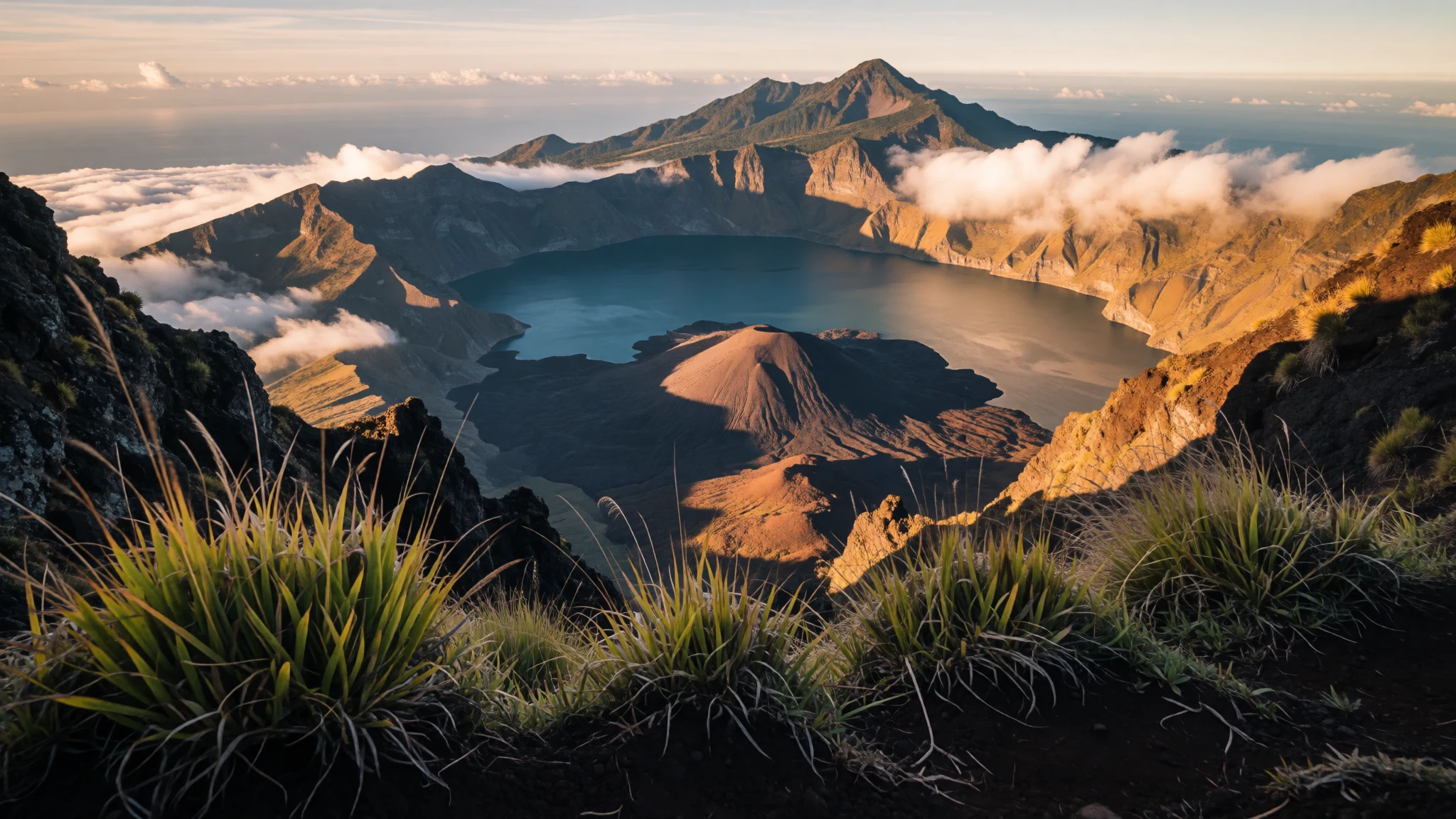
Lombok keeps a quieter coast than its neighbour Bali, with a volcano, Sasak villages and small islands a short boat ride offshore.
The place
Lombok sits in the Indonesian province of West Nusa Tenggara, in the Lesser Sunda chain. Bali is the neighbour across the Lombok Strait to the west, and Sumbawa lies across the Alas Strait to the east. The island's outline is nearly round, and the Sekotong Peninsula runs out towards the southwest. Smaller islands just offshore are known locally as the Gilis.
Mataram, on the west of the island, is the provincial capital and Lombok's largest city. Settlement and trade concentrate on the coastal plains, while the north is dominated by the volcanic bulk of Mount Rinjani. The population is 4,056,621. The island shares stretches of custom and temple life with Bali, yet it is administered with Sumbawa, and the Sasak majority gives towns and villages a character of their own.
Travellers often meet Lombok first through its beaches: Senggigi on the west coast, the southern bays around Kuta, and the Gili islands a short boat hop from the northwest shore. Behind those shores are weaving villages, waterfall valleys at Senaru, and rice country that stays green where irrigation reaches it. Roads link the coasts to Mataram, so a single base can reach both a city market and a quiet bay, though distance and traffic decide how easy that is.
This is not a quieter copy of Bali dropped into the same sea. Mosques mark Lombok's towns, Balinese Hindu temples remain in the west, and away from Senggigi and the Gilis the pace follows farming and fishing. Heat sits over the island through the year. In the drier months the known beaches and the Rinjani trails draw crowds, while the east coast and Sekotong stay quieter.
Its story
Lombok's early political map was a patchwork of small Sasak realms, each led by its own prince and often at odds with the next. That lack of a single court left openings for neighbours. Balinese rulers pushed into the west, while Makassarese forces, already settled on Sumbawa, pressed into the east. Dutch ships called in 1674. The Dutch East India Company later signed an agreement with a Sasak princess, which pulled European trade into a quarrel already running between island houses and outside powers.
Written memory of anything earlier is thin. A fourteenth-century Majapahit court poem, the Nagarakretagama, lists Lombok Mirah among islands under that kingdom's sway. The palm-leaf Babad Lombok is the other early witness; it records the Samalas eruption of 1257 and, in a later religious telling, a mission sent to spread Islam. Beyond those pages, the island's story before the seventeenth century is mostly a gap.
By 1750 Balinese rule had been extended across Lombok, but rivalry among Balinese nobles then broke the island into four kingdoms. In 1838 the Mataram kingdom forced its rivals into line. Where Balinese and Sasak families lived side by side in the west, marriage between them was ordinary and daily relations were largely easy. In the east the same rule felt more like occupation: Balinese troops held the forts, and the mood between the communities was cooler. That west-east split is still visible in Lombok's temples and mosques.
What to see
- Mount Rinjani — North Lombok
Mount Rinjani stands over the north of Lombok, a volcano whose crater holds the lake Segara Anak and a natural hot spring. Guided overnight hikes camp high above the cloud and continue down toward the water. The trail is long, nights are cold, and dry-season departures are busy, so it suits walkers who can carry a pack and start early. A further path climbs from the lake toward the summit.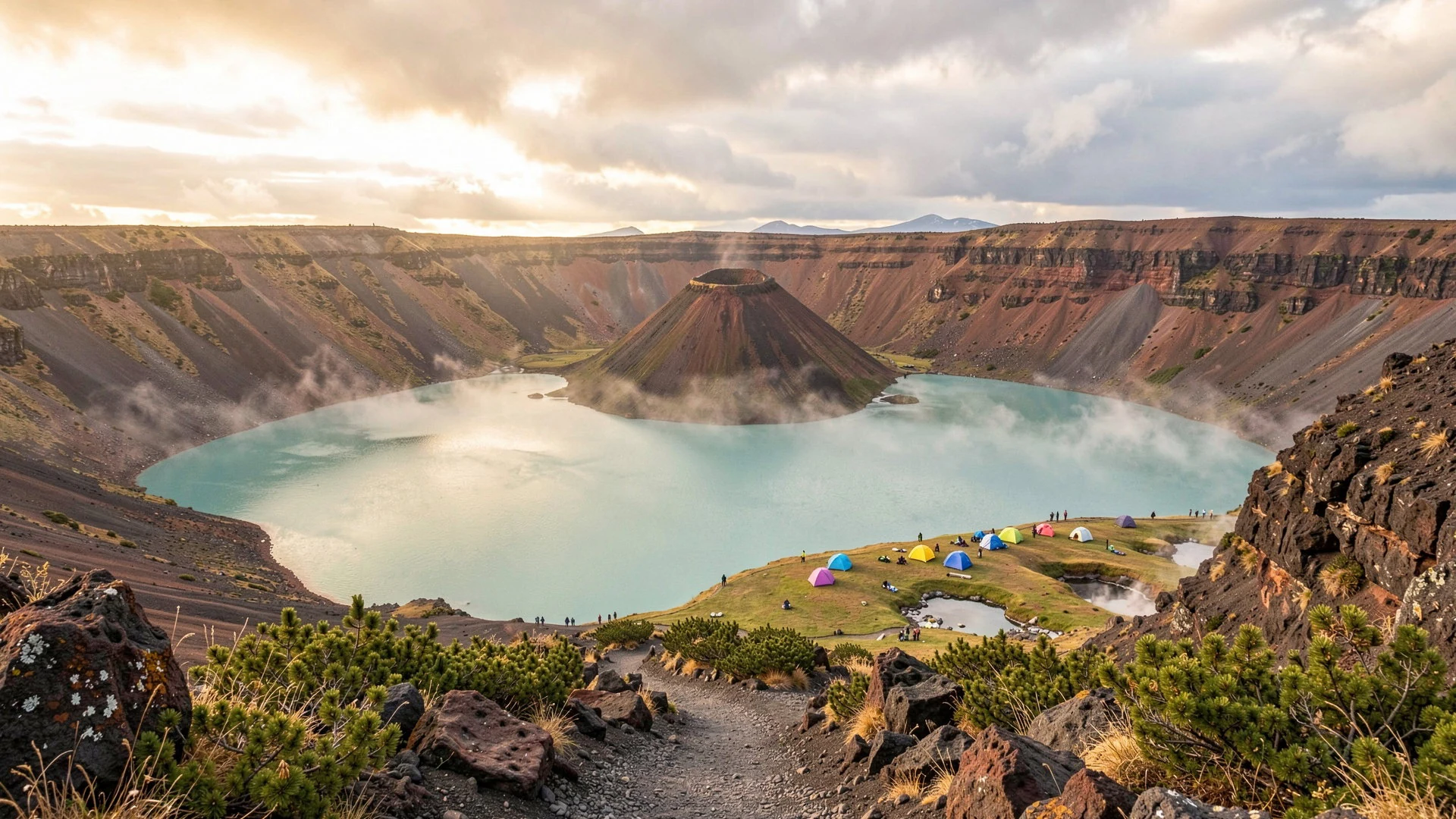
- Senaru waterfalls — Senaru, North Lombok
Senaru, on the northern slopes of Lombok, is both a Rinjani trailhead and a village of waterfalls. Air Terjun Sindang Gila, Air Terjun Tiu Kelep and Air Terjun Betara Lenjang fall through forest a short walk from the houses. Tiu Kelep needs a wade and a scramble; the others are gentler. Mornings are the easier time, before the paths fill.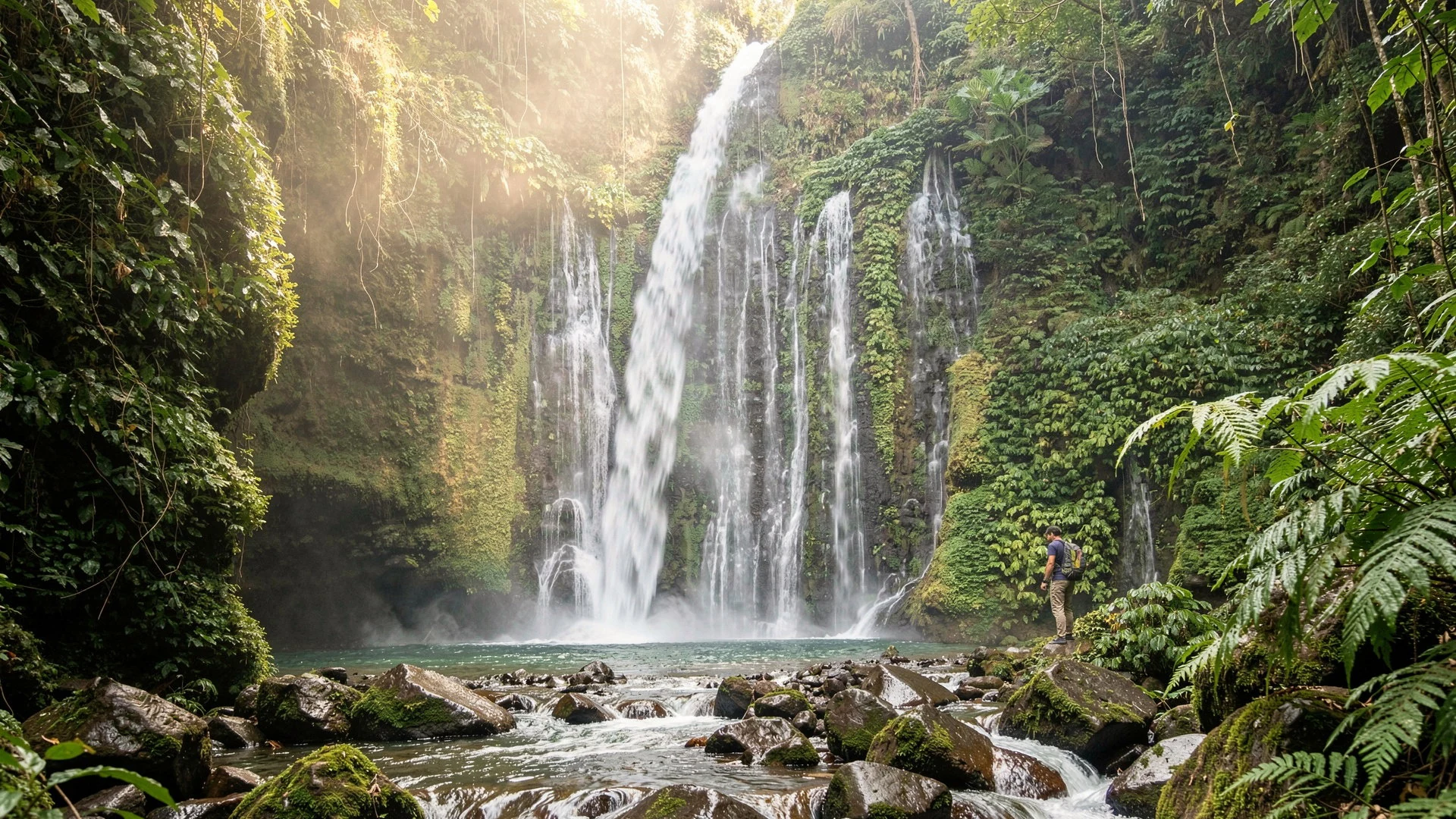
- Senggigi — Senggigi, west coast
Senggigi is the long-established beach strip on Lombok's west coast, with the headland temple Pura Batubolong looking over the sand. The shore is a working mix of fishing boats, swimmers and sunset traffic rather than an empty bay. Balinese Hindu ritual still has a foothold here, which is why a temple sits beside the beach. Evenings draw the most people; midday is simply hot.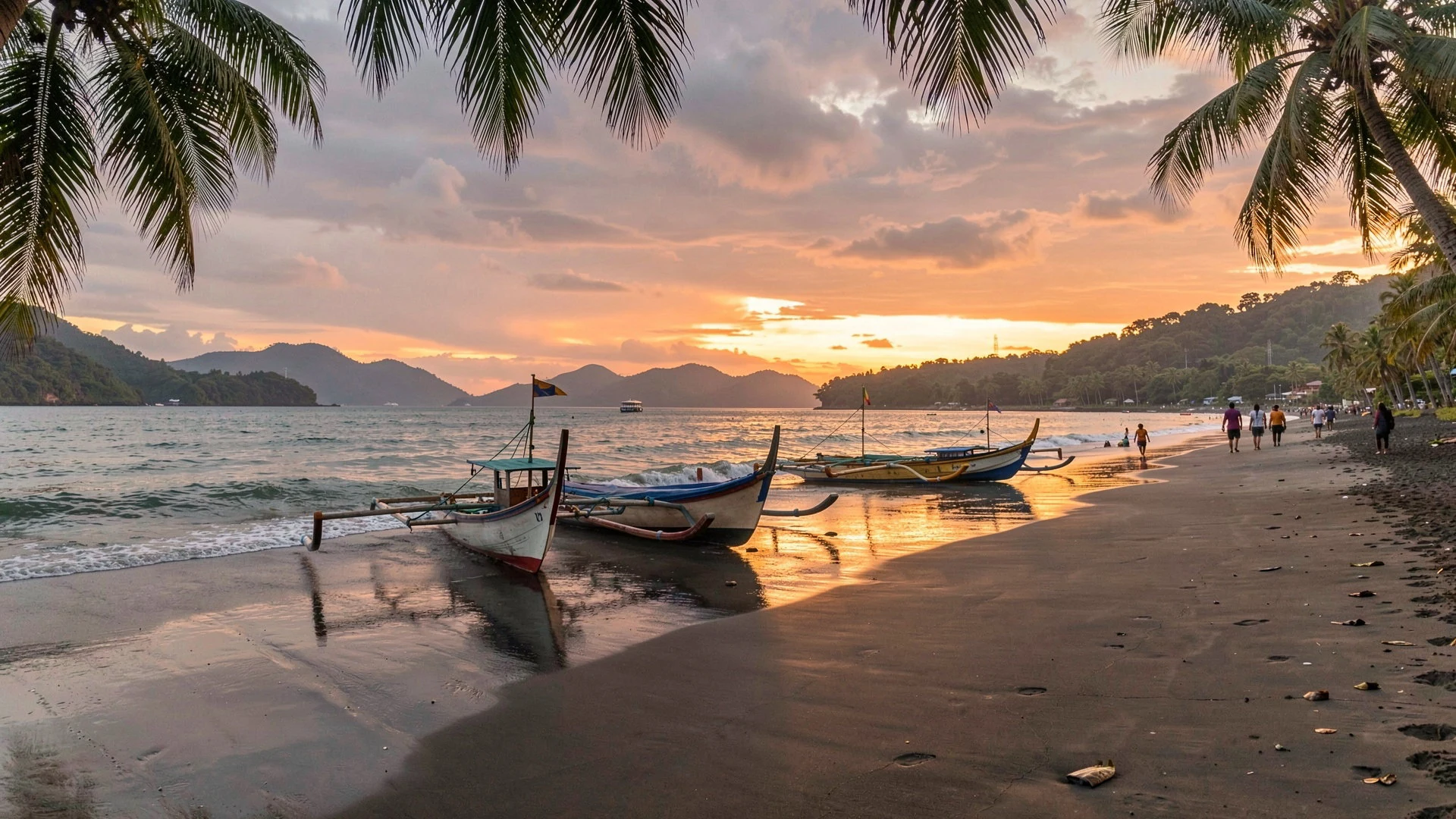
- Tanjung Aan — South coast, near Kuta
Tanjung Aan sits on Lombok's south coast near Kuta, a beach backed by low headlands. Dark grains fleck the pale sand, which people on the island compare to ground pepper. The water is usually clearer where the bay is sheltered. Building is lighter here than along Senggigi, though day-trip traffic grows in the dry months and the midday sun is fierce.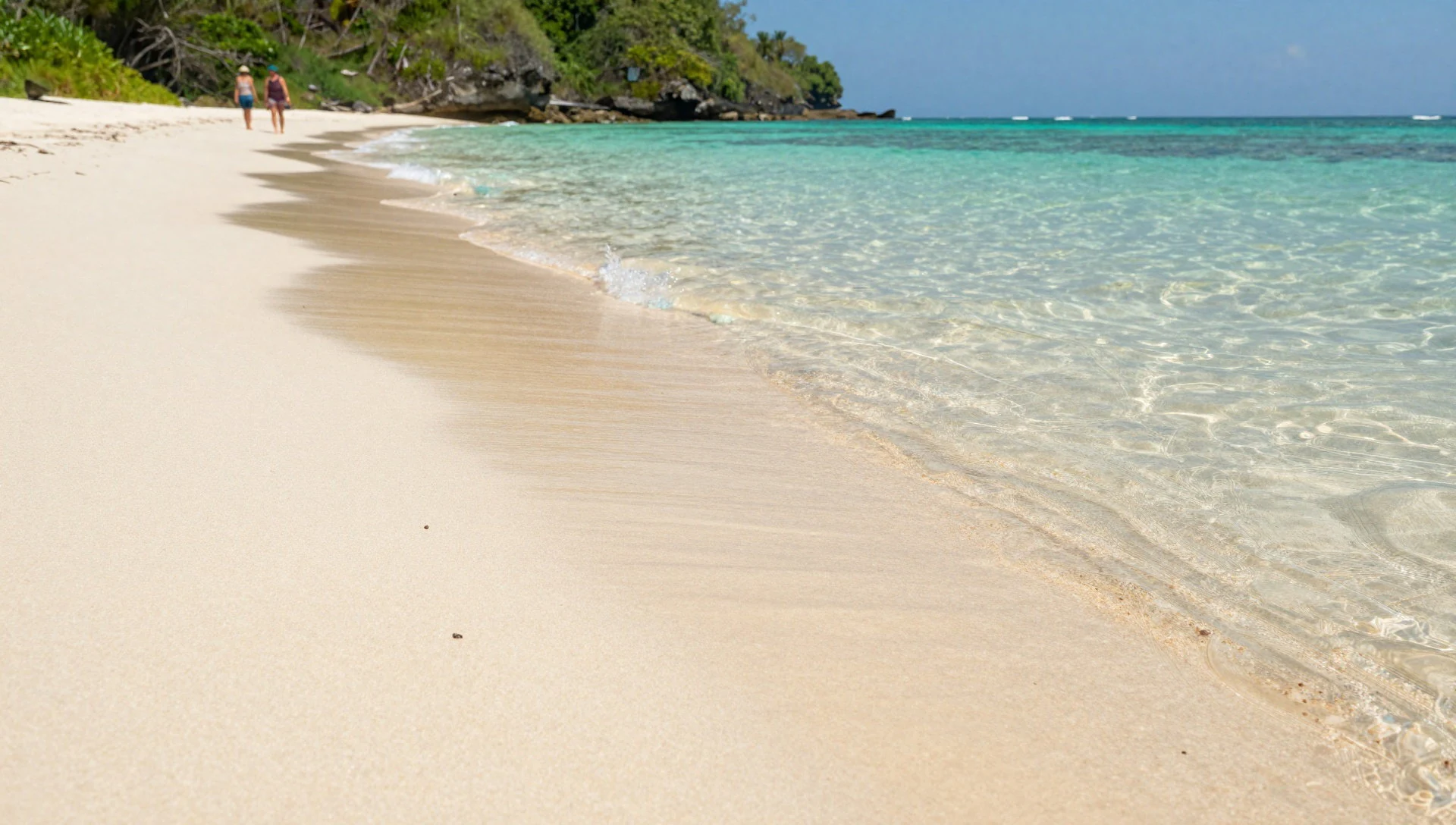
- Sukarare weaving — Sukarare, South Lombok
Sukarare, in the south of Lombok, is a weaving village where songket and ikat are still made on handlooms inside family compounds. Visitors can watch the warp set and the pattern worked by hand, then buy cloth in the same lanes. Songket is slow work, so watching a weaver for a while beats grabbing the first hanging at the gate. A close photograph needs a request first.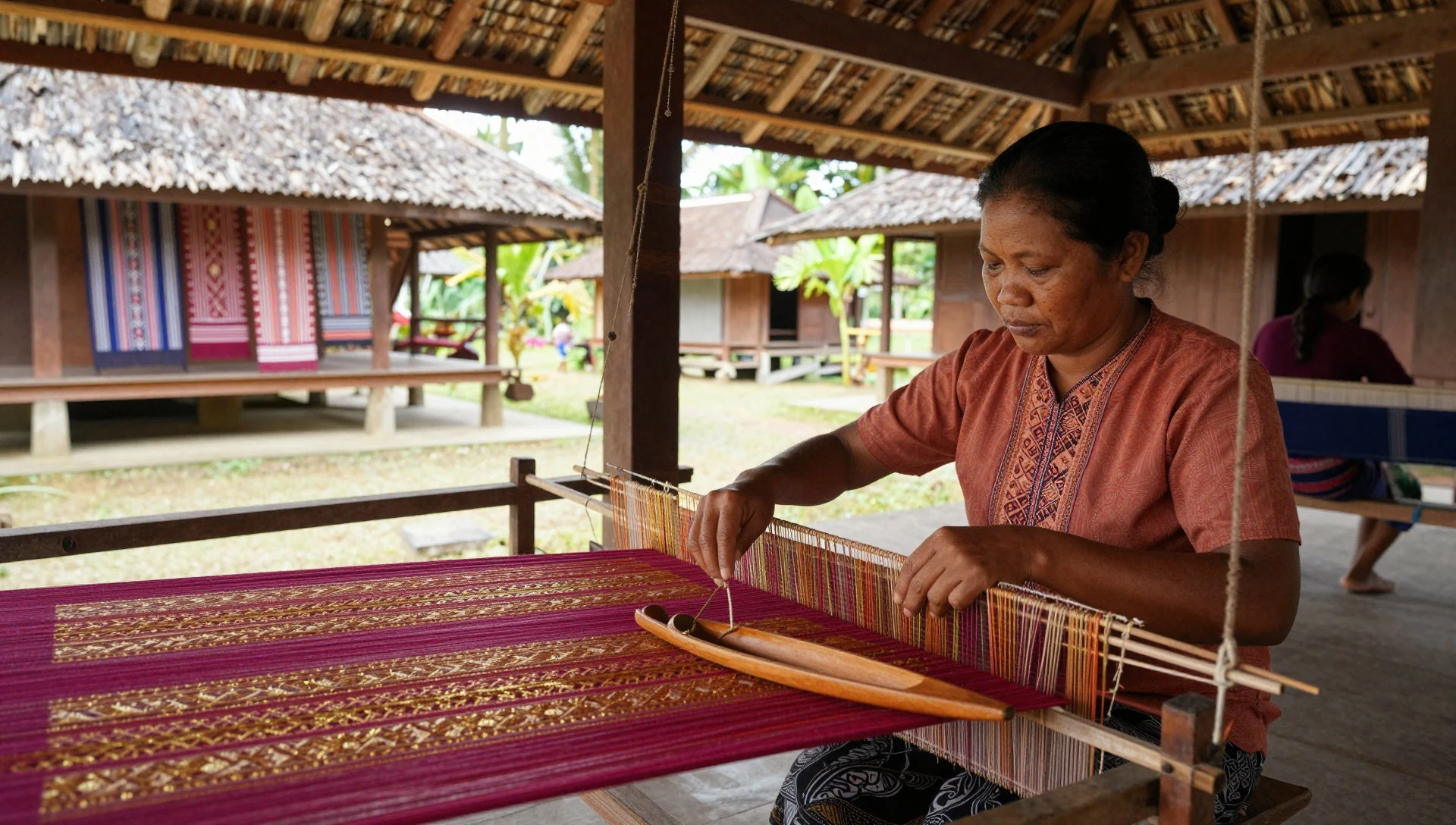
- Gili snorkelling — Gili islands, off the northwest coast
The Gili islands off northwest Lombok hold several snorkelling sites in the channels between them. Boats leave from the mainland, and the reefs suit both a first session with a mask and people who already know how to fin. Staying with the marked sites, rather than wandering into open water, is the sensible habit when the tide is running.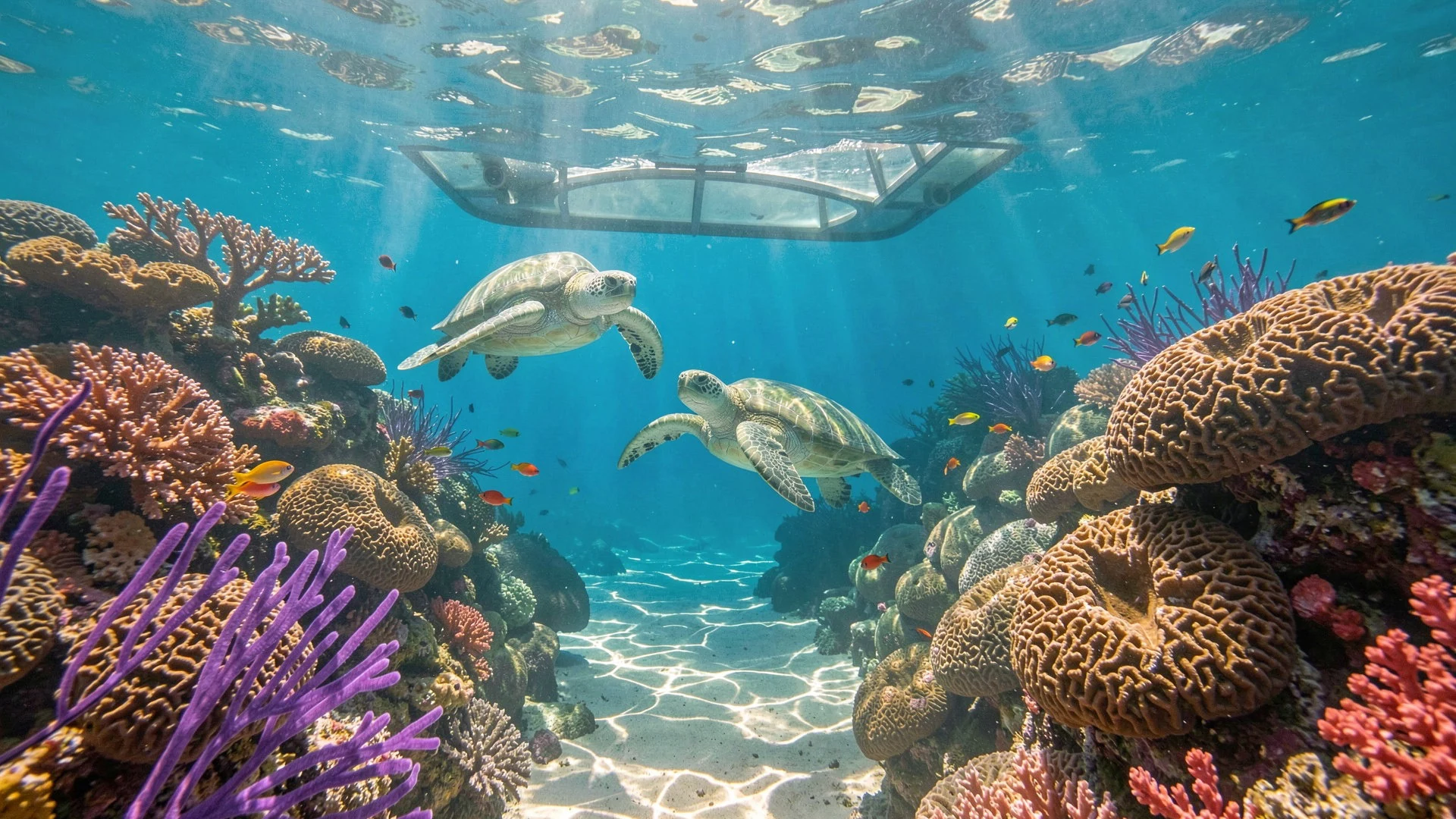
Culture
Lombok's indigenous people are the Sasak, and most of them are Muslim. Hindu and Buddhist currents had already come across from Java, and they left a long mark before Islam. A Balinese Hindu minority remains, above all in the west, with its own temples and household rites. How Islam arrived is told in more than one way. Traders from Sumbawa are one path, a seventeenth-century link that put down roots in the east. A second telling sets the first contact in the opening half of the sixteenth century. The Babad Lombok, a palm-leaf history, has Sunan Prapen sent by his father, the Susuhunan Ratu of Giri, with a force whose aim was to bring Lombok and Sumbawa over to the new faith. By the early twentieth century a stricter practice was spreading, and it is the public rhythm now: the call to prayer carries over the towns, and Friday fills the mosques.
Weddings still move through Lombok's lanes as processions, and ceremonial cloth comes off the looms in the weaving compounds. There is a plain line between the public lane and the raised floor of a house. On Lombok, take your shoes off before you step onto a mosque veranda or a beruga, and ask before you photograph a wedding procession or anyone at prayer.
What to wear
Lombok's ceremonial dress is built around handwoven cloth. For a wedding or a village feast, Sasak women wear a songket or ikat sarong with a fitted blouse and a selendang over the shoulder. Men wrap a sarong and a sapuq, a headcloth, and a formal shirt. Fine cloth is woven in villages such as Sukarare: cotton or silk threads, a supplementary weft that raises the motif, and colours that mark the piece as gift-cloth rather than everyday wear. Those textiles appear when people marry, when a child is celebrated, and when a guest is being honoured, not on an ordinary morning in the market.
Day to day, Lombok dresses for heat and for faith. Many Sasak women wear a hijab with a long-sleeved tunic and trousers or a modest skirt; men wear T-shirts, shirts and trousers, with a sarong still common at home and at the mosque. Brighter beach clothes show up in Senggigi and on the Gili islands, where the crowd is mixed, and much less so in inland villages.
A visitor does well with light, covering clothes: shoulders and knees covered away from the beach, a scarf for a mosque, and swimwear kept for the sand and the boat. Flip-flops suit the coast; a Rinjani hike needs broken-in closed shoes, a layer for the cold rim, and a rain jacket. Sarongs are often at hand at temple gates such as Pura Batubolong if knees are bare.
What to eat
- Ayam Taliwang — Evening warungs in Mataram and eateries towards Senggigi
Ayam Taliwang is young chicken grilled with a chili sambal, and it is a plate closely tied to Lombok. Rice and a dish of extra sambal come with it. The chili hits hard, then settles. Evening warungs in Mataram, and eateries along the road towards Senggigi, sell it nightly.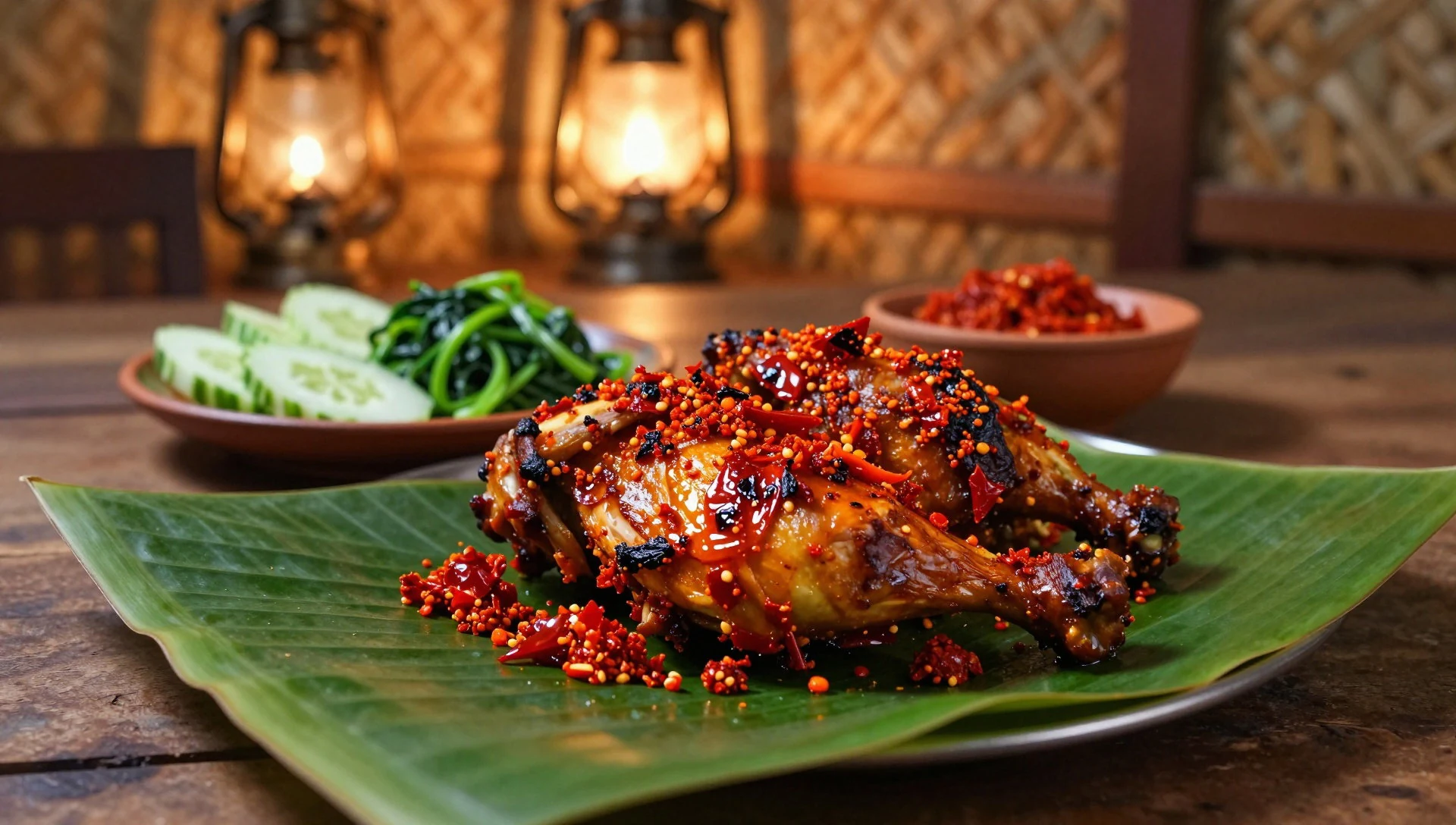
- Plecing kangkung — Warungs on the west coast
Lombok's plecing kangkung is water spinach dressed with a sambal of chili, tomato and lime. On Lombok it comes beside grilled fish or chicken. The sauce is sour, salty and hot. Lombok means chili in Indonesian, yet this is not always that hot. Warungs on the west coast serve it.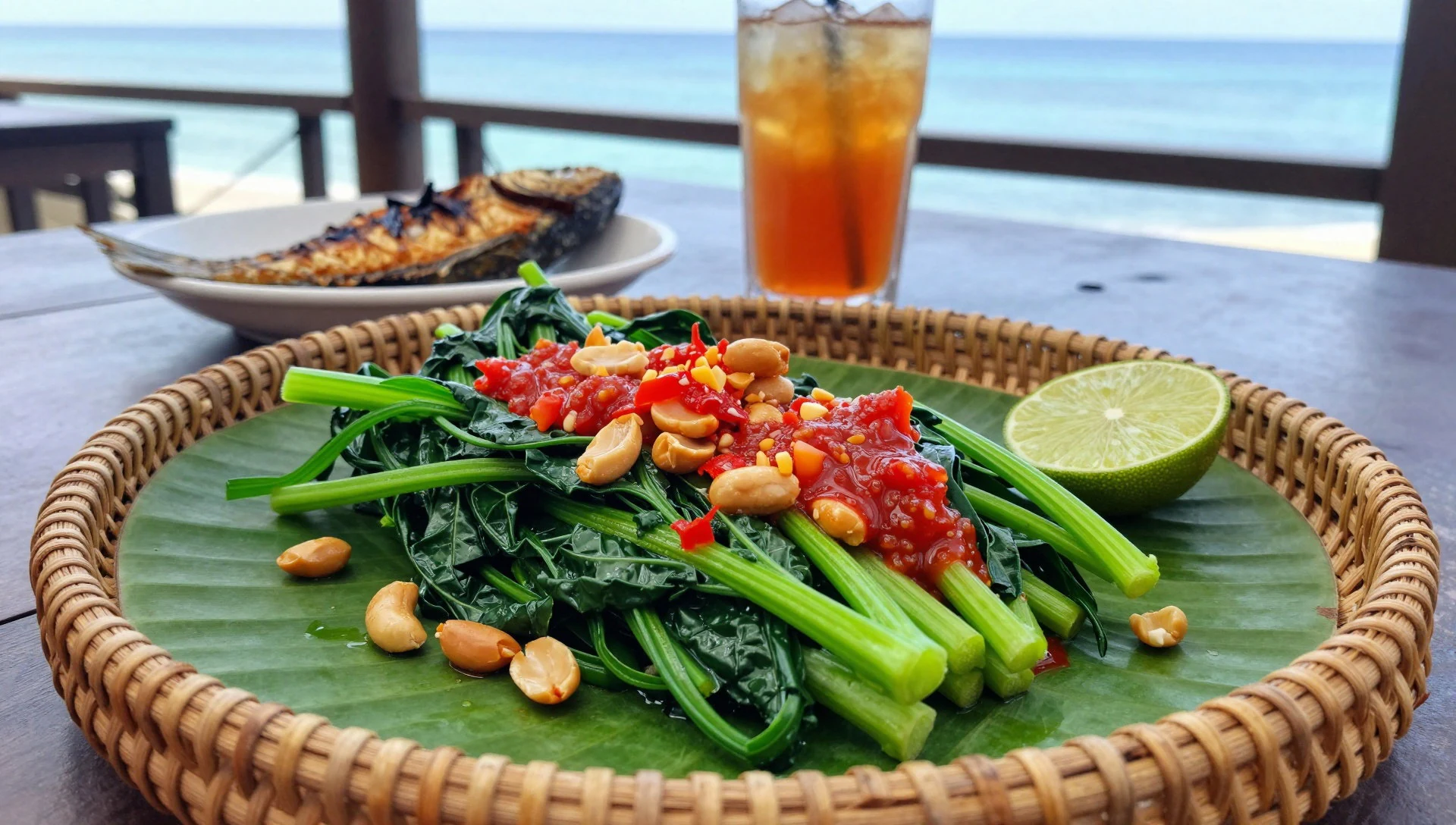
- Sate Rembiga — Street grills in Rembiga and night stalls in Mataram
Sate Rembiga is beef satay from the Rembiga quarter of Mataram on Lombok, hotter than the sweet peanut satay found across much of Indonesia. The meat is grilled and finished with a chili sauce, then eaten with rice. Street grills in Rembiga, and night stalls elsewhere in Mataram, sell it. - Ares — Village warungs inland from the south coast, and smaller eateries in Mataram
Ares is a Lombok curry of tender banana stem simmered in spiced coconut milk. On Lombok it is home cooking as much as street food, gentler than the chili grills, and it comes with rice. Village warungs inland from the south coast, and smaller eateries in Mataram, still make it. - Sate pusut — Market stalls and roadside grills
On Lombok, sate pusut is minced fish or beef pressed around a lemongrass stick and grilled. Market stalls and roadside grills sell it with sambal. Town kitchens are mostly halal; Senggigi and the Gilis sell pork and alcohol more freely.
Plan it
Best time. The more comfortable time on Lombok is June to August, when the days are milder and the paths on Rinjani are less slick. January is the wettest month and December the hottest, while the south coast runs rougher from late March through September. The middle of the dry season is when trails and the Gili boats are busiest.
How long. 4–5
Getting there. Lombok's airport has domestic flights from Jakarta and Surabaya, plus short hops from Bali's Ngurah Rai airport. From the airport a road transfer continues to Mataram, Senggigi or the jetties for the Gili islands. Confirm flights close to the date of travel.
Budget. mid
Tips
- Book Rinjani treks and Gili boats ahead for the busiest weeks of the dry season.
- Start Senaru and the south-coast beaches early; midday heat is harsh.
- Carry some cash for village stalls, warungs and boat tickets.
- Tap water is not for drinking; buy sealed bottles.
Etiquette
- Remove shoes before a mosque, a home or a beruga.
- Ask before photographing people, weavers or a ceremony.
- Dress to cover shoulders and knees away from the beach, and borrow a sarong at a temple gate if one is offered.
Nearby
Sources
- Wikidata Q7564 (CC0)
- Wikipedia (rev 1381708958) (CC BY-SA 4.0)
- Wikivoyage (rev 5386153) (CC BY-SA 4.0)
- Vyacheslav Argenberg — Lombok Island and Mount Rinjani under clouds (CC BY 4.0)
- Paxson Woelber — Camping above the clouds at Rinjani (CC BY-SA 4.0)
- anoldent — Lombok Wedding Party 1998 (CC BY-SA 2.0)
- Midori — Senggigi Beach by Pura Batubolong (CC BY 3.0)
- JVan — Senaru Waterfall (CC BY 3.0)
- Sadalmelik — Lombok topography (CC BY 3.0)
- Takeaway — 75 ct diamond, Lombok treasure, Museum Volkenkunde Leiden (CC BY-SA 4.0)
- J. Hoynck van Papendrecht — Lombok 1894 (Public domain)


