Loktak Lake
Loktak Lake, India
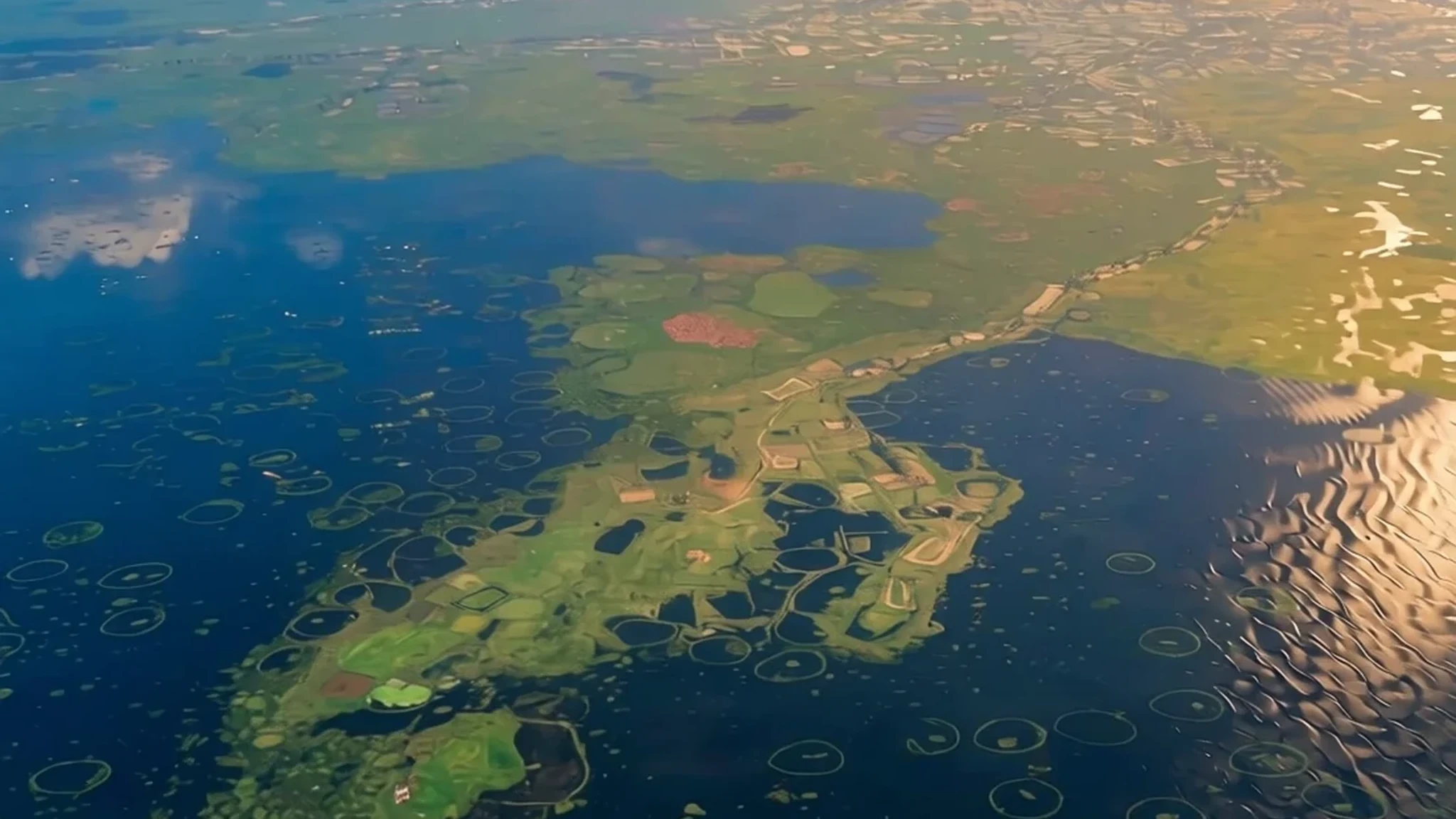
A lake of drifting vegetation islands, a deer found nowhere else and floating homestays, worth two or three slow days.
The place
Loktak Lake lies near Moirang in Manipur, in India's far northeast, and it is the biggest freshwater lake in that part of the country. The name comes from the Meitei language and combines two words, roughly 'stream' and 'the end', a fitting description for a broad body of water where rivers slow down and settle. The surface rises and falls through the year. In a typical season the lake covers about 287 square kilometres, and it spreads much wider when the rains arrive.
Most visitors come for the phumdi, the floating islands that drift across the water. They are mats of soil, plant matter and decaying organic material at different stages of breakdown, and they carry small plots, shelters and wildlife. The largest one sits on the south-eastern shore. Keibul Lamjao National Park occupies part of this mass, and it is the last stronghold of the Sangai, the brow-antlered deer, the state animal of Manipur.
The lake matters well beyond its scenery. Hydropower generation, irrigation and drinking water all depend on it, and fishing families live along the shoreline and out on the phumdis. Those demands have put heavy strain on the ecosystem, which is why its condition is watched so closely. Time on the water is slow. Boats move between villages, floating homestays and the park edge, and the view changes with the light and the wind.
Its story
The lake's modern story is tangled up with its usefulness. Its water feeds hydropower generation, irrigates fields and supplies drinking water to towns around the shore. People have lived beside it for a very long time. Fishing families build homes on the edge and on the phumdis themselves, and their livelihood depends on understanding how the mats drift and where the catch gathers.
International recognition arrived in 1990. In March of that year Loktak was given Ramsar status, the international treaty that protects wetlands, in recognition of its ecological value and the variety of life it supports. Three years later, in June 1993, it was added to the Montreux Record, the list of Ramsar sites where ecological character has changed, is changing or seems likely to change. That listing reads as a warning as much as an honour: heavy use of the lake has left its mark.
Some 55 hamlets, both rural and urban, sit around the lake. Local observance centres on Loktak Day, held each year on 15 October at the lake's edge in Manipur, when communities gather along the periphery.
The park at Keibul Lamjao grew into the refuge for the Sangai, which feeds and shelters on the floating vegetation there. Conservation here means balancing the needs of people who fish, farm and generate power against a habitat that remains under pressure.
What to see
- Loktak Folklore Museum — Moirang area, south-western shore
A folk museum that gathers artistic, cultural and historical objects connected with the lake. It is a sensible first stop, because the displays explain the phumdis, the fishing life and local traditions far better than a quick boat briefing can. Allow about an hour, go in the morning, and check opening times on arrival, since hours can change.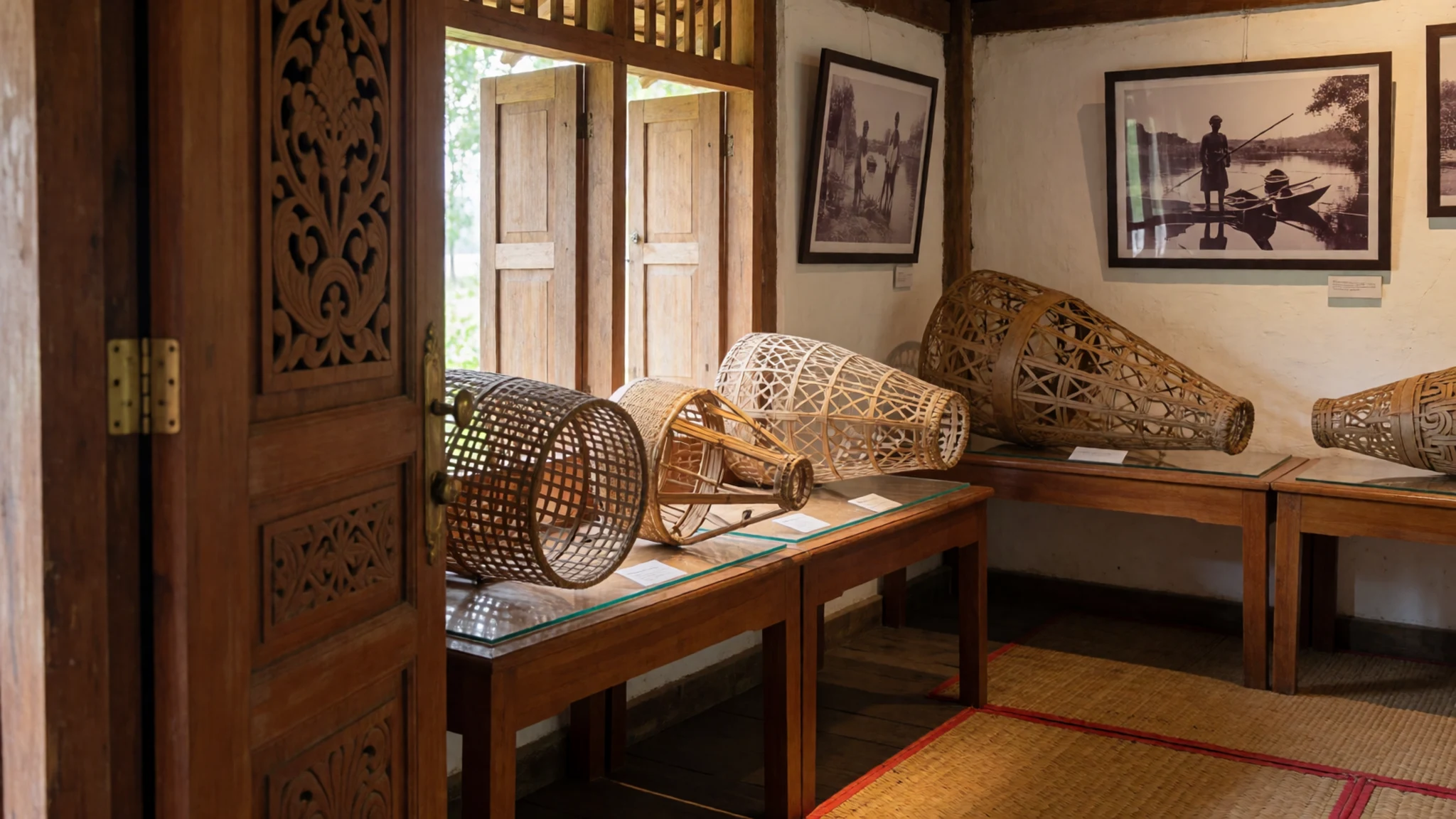
- Ema Loktak Family Home Stay — Eastern lake, floating phumdi
A floating homestay built on a phumdi and easy to spot from the shore, because its mat is hung with many coloured flags. Staying here means you wake on the water and can join boat trips without a long transfer. Rooms are simple, so pack light. Ask the hosts about meals and whether they can arrange fishing trips.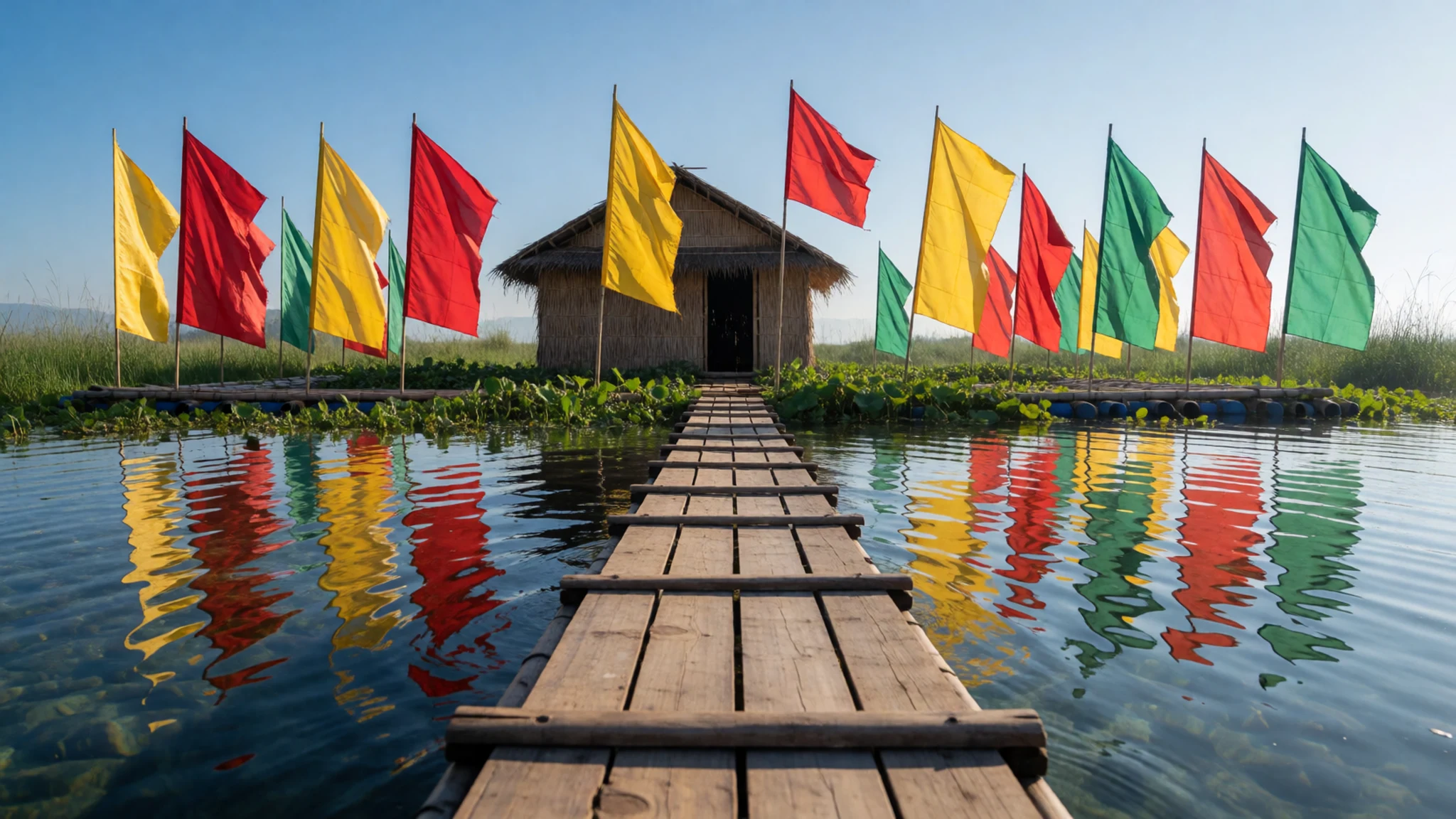
- Loktak Floatel — Southern lake, floating
A floating restaurant-style stop where you can try Meitei dishes alongside international options. It makes a practical lunch or dinner point during a day on the lake, especially if your boatman wants a pause. Menus and drinks vary, so confirm what is available on the day before you order.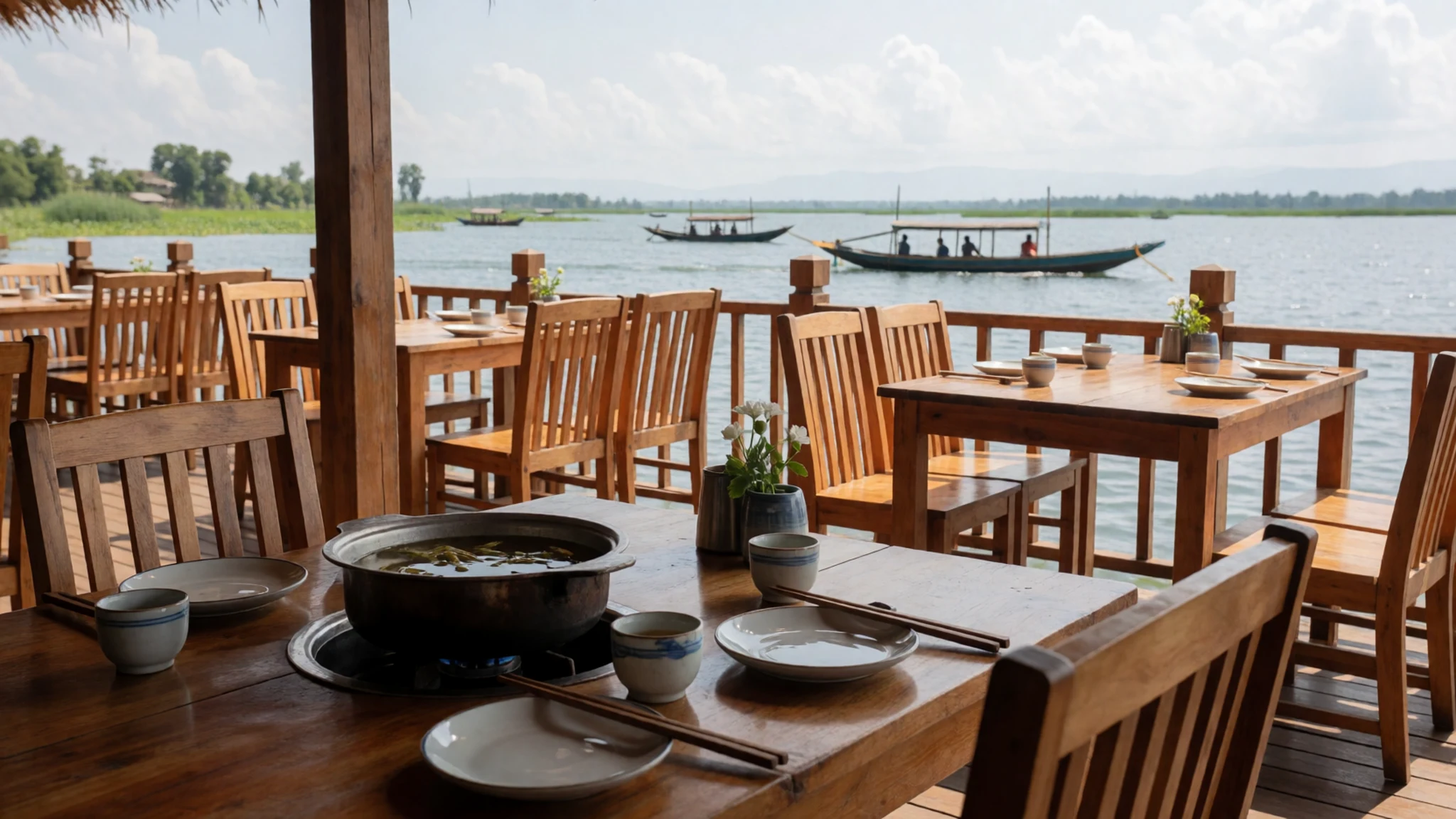
- Keibul Lamjao National Park — South-eastern shore, on a floating mass
The park occupies part of a large phumdi on the south-eastern side of the lake and protects the Sangai, the brow-antlered deer. It is the last natural refuge for this endangered animal, so visits are about watching quietly rather than chasing sightings. Check the official site for entry rules and timings before you go, and keep to the designated paths.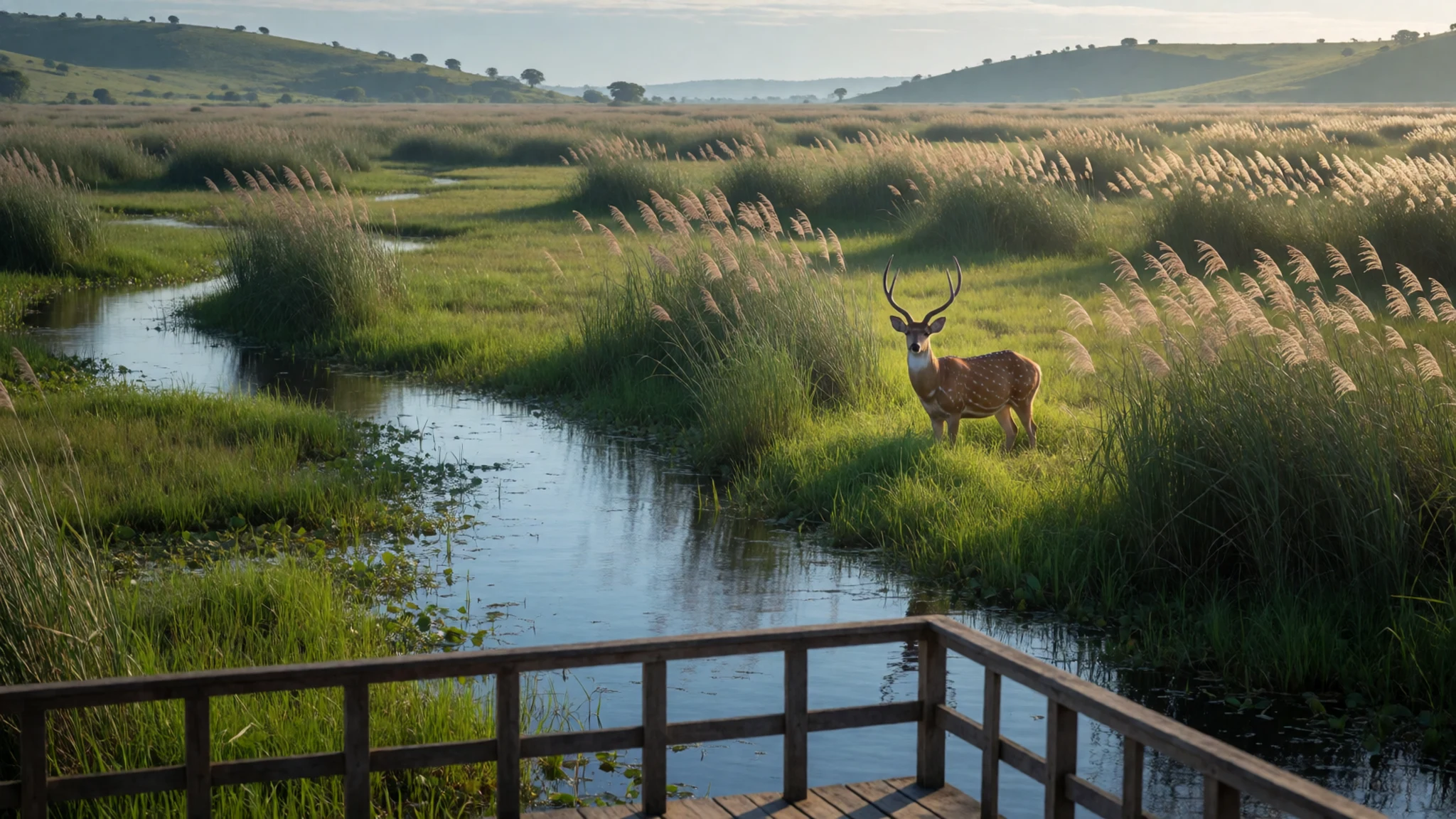
- Moirang — Shoreline town, Manipur
Moirang is the most practical base on the shoreline, with the widest access to the lake's outer areas. It is often called the cradle of Manipuri culture, and its scenery has inspired poets for generations. Boats, guides and simple places to stay cluster here, so it is a good place to arrange your trip and hear local stories.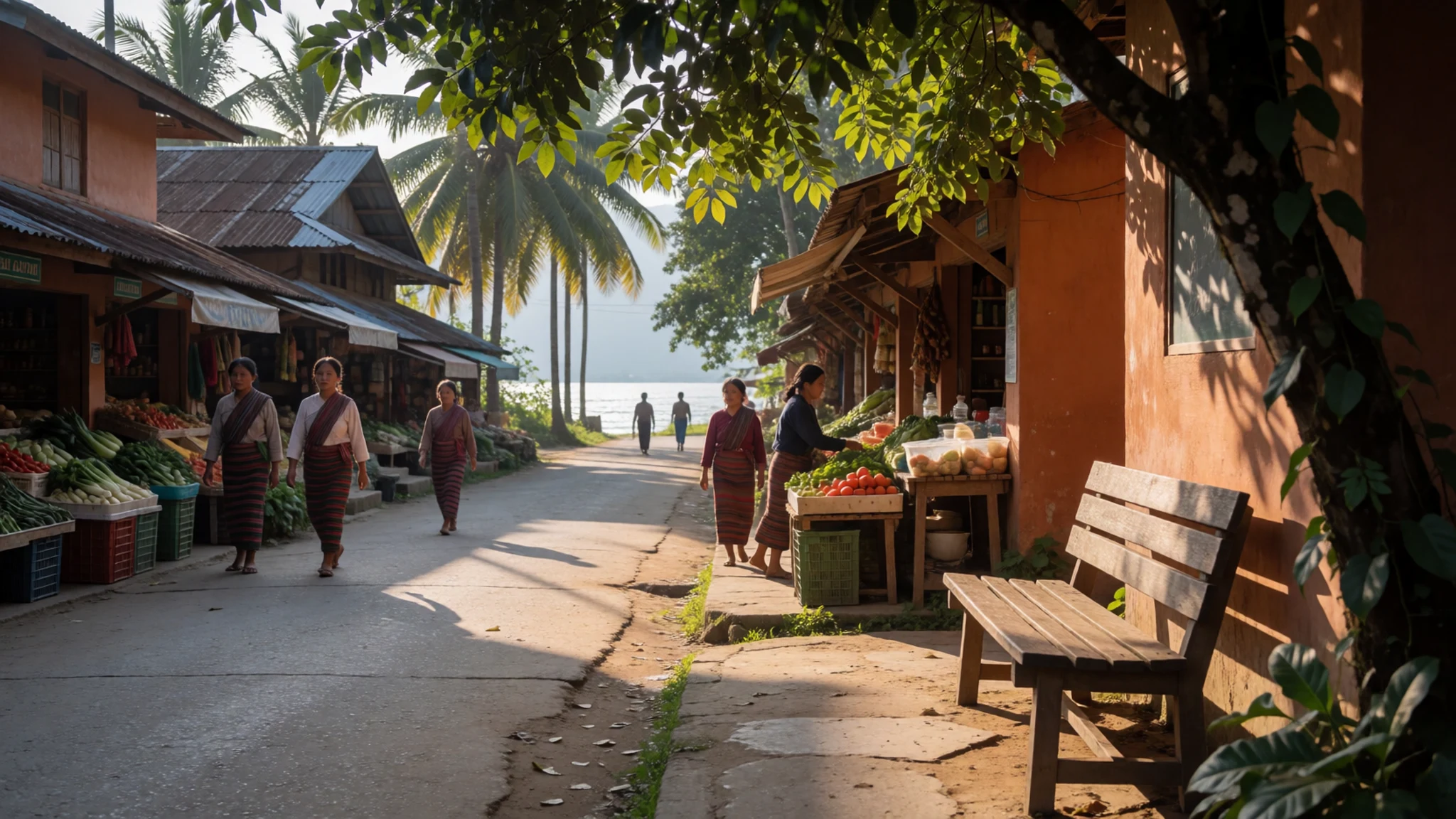
Culture
Loktak Lake is worked by people for whom it is home, not a backdrop. Fishing families, farmers and boat operators share the water with visitors, and many villages on the edge were there long before the homestays. Manipuri hospitality is unhurried. You will likely be offered a cup of tea, often made from lotus stems, bamboo leaves, ginger or herbs, and it is polite to accept it and sit a while.
Expect curiosity. Some villagers, especially away from the towns, will want to photograph you or join a group selfie. Let them do so, and be generous in return. Attention is far less common in urban areas, where people may simply assume you are local if you look like one. Keep voices and music moderate in villages, and avoid walking into homes without an invitation. Ask before you photograph anyone and do not try to swim the lake, which is wider and deeper than it looks.
What to wear
Loktak Lake sits in Manipur, where the traditional dress is built around handloom textiles. Women have long worn the phanek, a wraparound skirt, paired with an innaphi, a fine shawl or wrap, and both are woven in cotton and, for finer occasions, silk. Patterns and borders differ between communities, and many women still weave at home. Men traditionally wear a wrap with a shirt. These outfits appear most at festivals, weddings and ceremonies rather than in daily life.
In towns and on the lake edge, people now wear jeans, kurtas and ordinary Western clothes, and school uniforms are common. Handloom wear is kept for special days, and a phanek seen on a village woman is usually a sign of an occasion or a family tradition rather than a costume.
For a visitor, loose, light cotton clothing works best in the heat and damp, with a hat and sunscreen for long hours on open water. Cover your shoulders and knees when walking through villages or visiting a shrine. Wear shoes with a good grip, since phumdi edges and landing stages can be wet and uneven, and carry a light layer for cooler evenings on the water.
What to eat
- Singju — Roadside stalls and market corners in the shoreline towns
Singju is the dish to try in the towns around the lake. It is a salad of finely cut vegetables and herbs, lightly seasoned, and it tastes far livelier than its plain look suggests. Buy it from a roadside stall in Moirang or any shoreline town, then eat it from a bench at the water's edge.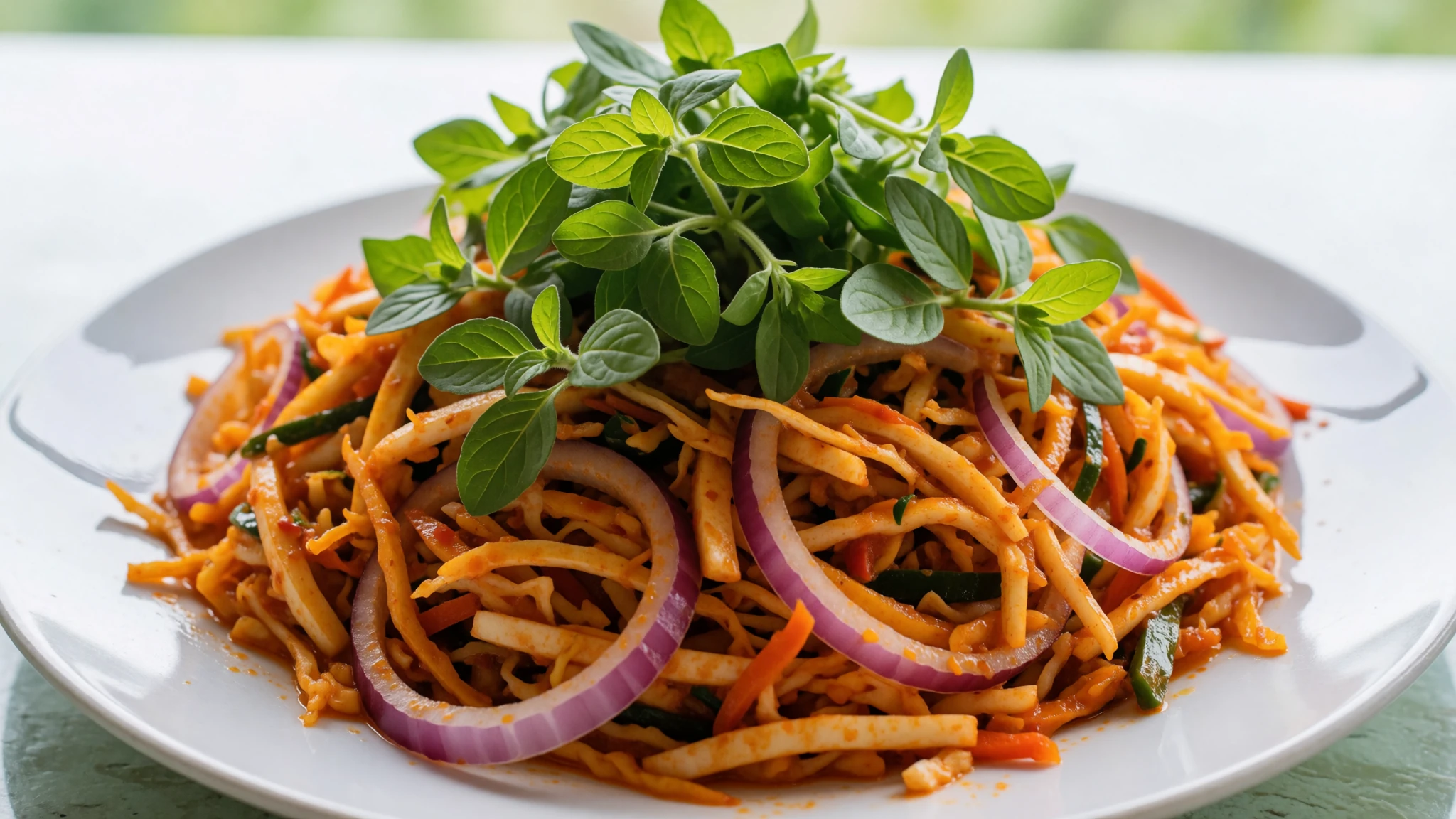
- Ngaa Thongba — The morning fish market by the lake, and shoreline eateries
Ngaa thongba is the Manipuri name for fish dishes made from the lake's own catch. Fresh fish is cooked simply with local seasonings, so the flavour depends on the morning's haul. Ask a shoreline eatery or a floating restaurant what came in that day, and go early for the best choice.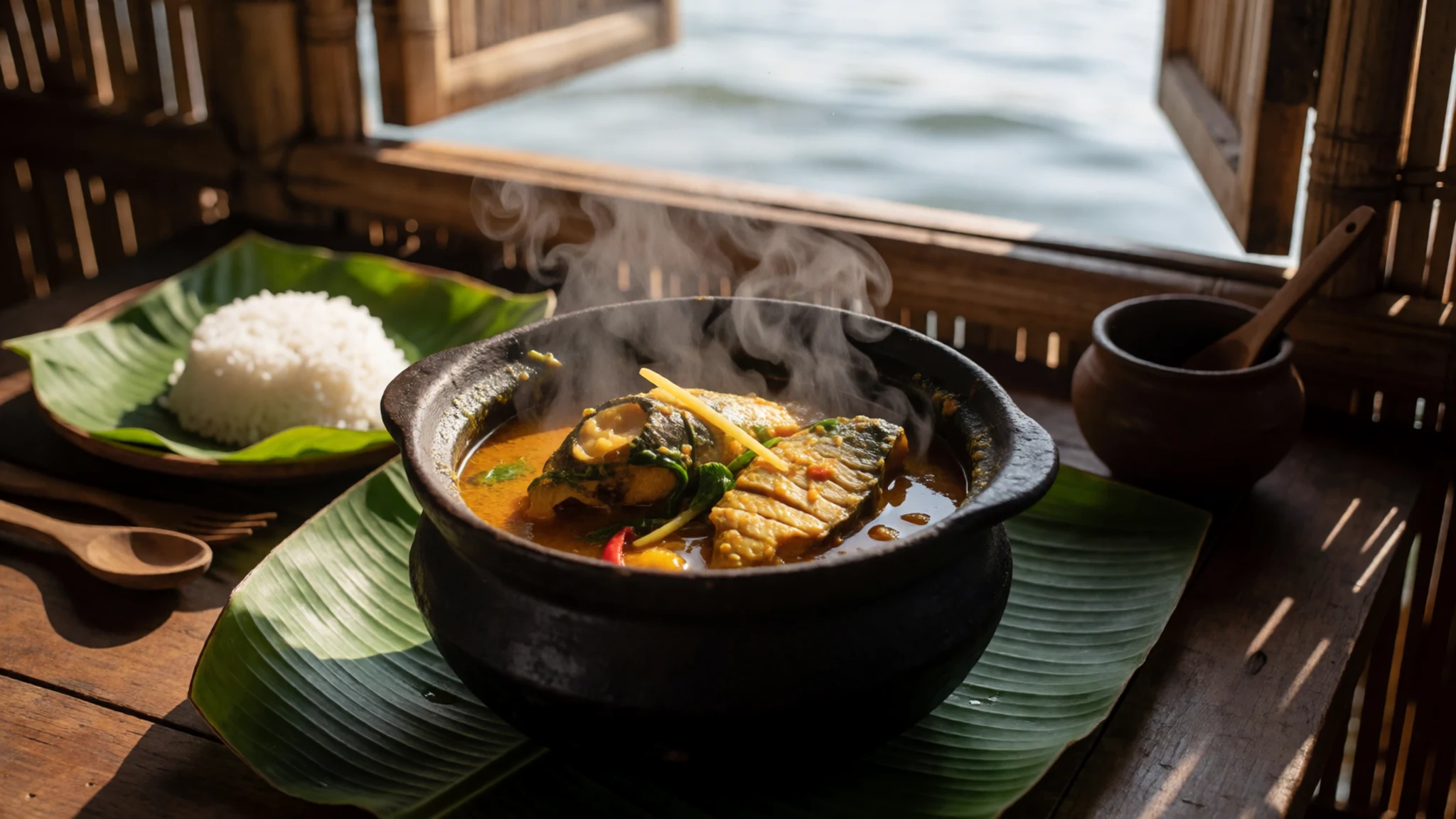
- Lotus-stem and herbal tea — Homestay verandahs and small tea stalls by the shore
Visitors are usually offered tea made from lotus stems, bamboo leaves, ginger or traditional herbs. It is light and earthy, and Manipuri households drink tea far more often than coffee, so coffee can be hard to find. Take a cup on a homestay verandah or at a stall near the lake. - Dinner on a lake boat — Scheduled lake boats and floating restaurants
Some regular lake boats serve dinner, and the floating restaurants take orders for meals as well. Eating over the water, with the phumdis drifting past, is the most memorable way to sample local food. Drinks vary, and alcohol may or may not be available, so ask before you order.
Plan it
Best time. January to March, when rain is lightest and the weather is driest, and November to December, which are also fairly dry. The rainy season swells the lake, which changes the shoreline and makes boat travel wetter and slower.
How long. 2–3
Getting there. Fly to Imphal and continue by road to Moirang. By train, the nearest station is Jiribam, which is linked to Silchar and Guwahati, with Dimapur as another option. The last leg is by road or shared taxi.
Budget. low
Tips
- Base yourself at Moirang or a floating homestay for the easiest boat access
- Go out early or in late afternoon for softer light and calmer water
- Carry cash for small boats, stalls and homestay extras
- Confirm your boat transfer and meals with the homestay before you arrive
- Bring drinking water and sun protection for long hours on open water
Etiquette
- Let villagers photograph you, and ask before photographing them
- Stay on marked paths and follow your boatman across the phumdis
- Do not try to swim the lake; it is wider and deeper than it looks
Nearby
Sources
- Wikidata Q2995601 (CC0)
- Wikipedia: Loktak Lake (rev 1375505425) (CC BY-SA 4.0)
- Wikivoyage: Loktak Lake (rev 5409564) (CC BY-SA 4.0)
- A fisherman searches for catch at Loktak lake (photo 01) (CC BY-SA 4.0)
- A part of Loktak Lake near Sendra (photo 02) (CC BY-SA 4.0)
- Fishing boats in Loktak Lake near Moirang (photo 03) (CC BY 2.5)
- Loktak Lake, Manipur, India (photo 04) (CC BY-SA 4.0)
- Loktak Lake, Manipur, India (photo 05) (CC BY-SA 4.0)
- Another view of Loktak lake (photo 06) (CC BY 3.0)
- Loktak lake and Hydropower Project layout plan (photo 07) (CC BY 3.0)
- Sangai-Brow Antlered Deer (photo 08) (CC BY 3.0)


