Liverpool
Liverpool, United Kingdom
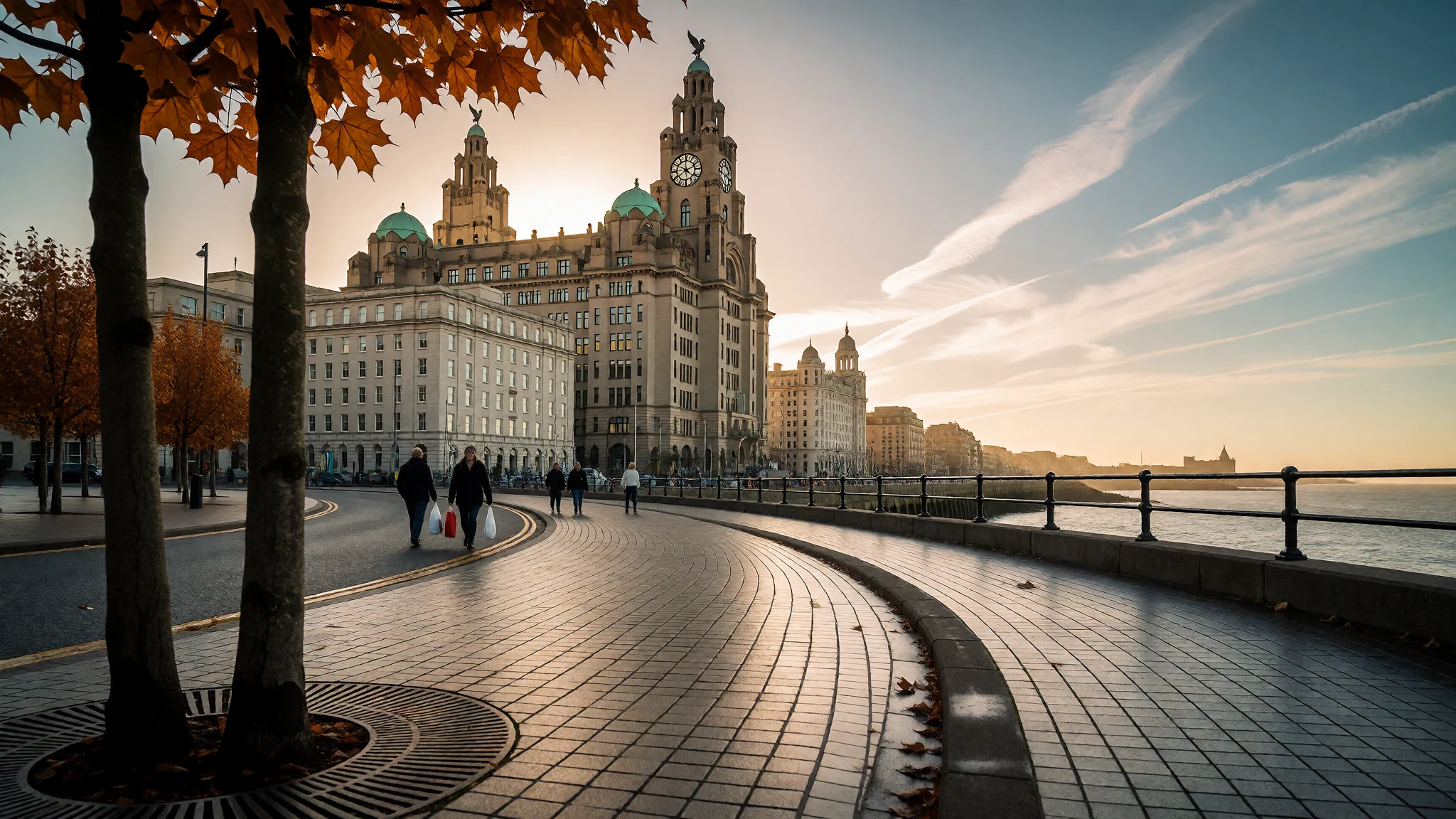
Liverpool is a working port city where river views, grand merchant architecture, serious museums and a famous music scene sit within an easy walk of each other.
The place
Liverpool sits on the eastern bank of the Mersey estuary, close to where the river meets the Irish Sea, in the north-west of England. About 513,000 people live in the city itself, and it anchors a wider city region of more than a million residents, so it feels bigger than its centre suggests. The city stands about 70 metres above sea level, and the ground rises gently from the water, which is why the waterfront buildings read so clearly from the river and from the ferries crossing it.
The centre is compact and easy to walk. Down by the water are the old commercial buildings of Pier Head and the converted warehouses of the Albert Dock. Inland, the streets climb past the shopping district and the grand civic buildings to the two cathedrals, which face each other along a single road. Neighbourhoods around the universities add cafés, galleries and theatres, and the pubs are everywhere.
The character is hard to separate from the port. Ships, trade and migration shaped the street plan, the architecture and the accent, and locals tend to be direct, funny and fiercely proud of the place. Weather is changeable, with wind off the river and rain at almost any time of year, so the city suits visitors who are happy to duck into a museum or a pub when the sky turns. Football and music run through conversation as much as history does.
Its story
Liverpool began on paper before it began as a town. In 1207 King John issued letters patent founding a borough on the north bank of the Mersey, and historians generally think his motive was practical: a sheltered spot from which to ship soldiers and supplies across the Irish Sea. Before that, the site seems to have been farmland beside a tidal inlet called the Pool, which gave boats a natural anchorage. A castle was planned, but for centuries the settlement stayed small, a huddle of farmers, fishermen and traders overshadowed by Chester down the coast.
Things changed from the late seventeenth century. The port grew rich, and a large share of that wealth came from the Atlantic slave trade, in which Liverpool ships played a leading part; the city's museums and memorials now address that history directly. Cotton arriving for the Lancashire mills added to the traffic, and emigrants from England and Ireland queued at the quays for passage to North America.
In the nineteenth century the city pushed technology as hard as it pushed trade, with an early railway between cities, fireproof warehouses at the Albert Dock and an elevated electric line above the docks. Later reorganisation moved Liverpool out of Lancashire into the new county of Merseyside. Today's waterfront, with its grand commercial buildings, is the visible residue of those boom decades, and it carries both pride and uncomfortable memory.
What to see
- Albert Dock — Waterfront, south of Pier Head
Albert Dock in Liverpool is a ring of brick warehouses around a quiet basin of water, built to be fireproof and now holding galleries, shops and cafés. The listed buildings look best in the morning before the crowds arrive. Walk the quayside, then step inside for the museums and exhibitions.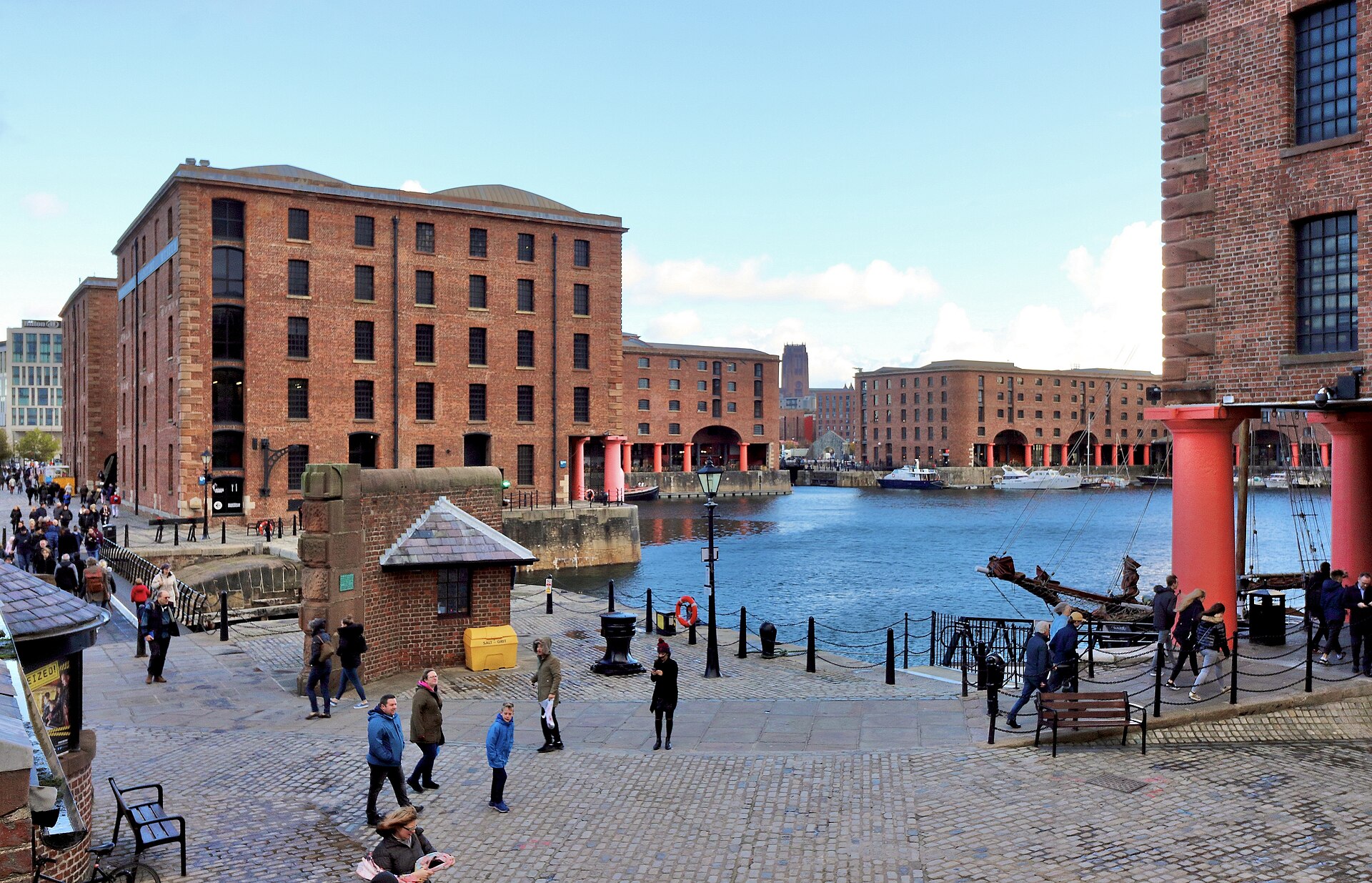
- Pier Head and the Three Graces — Waterfront, city centre
Pier Head in Liverpool is where the Royal Liver Building, topped by its pair of Liver Birds, stands beside two other grand commercial buildings known as the Three Graces. Canada Boulevard, a line of maples with plaques for lost Canadian ships, runs along the front. Come at dusk for the best light on the stone.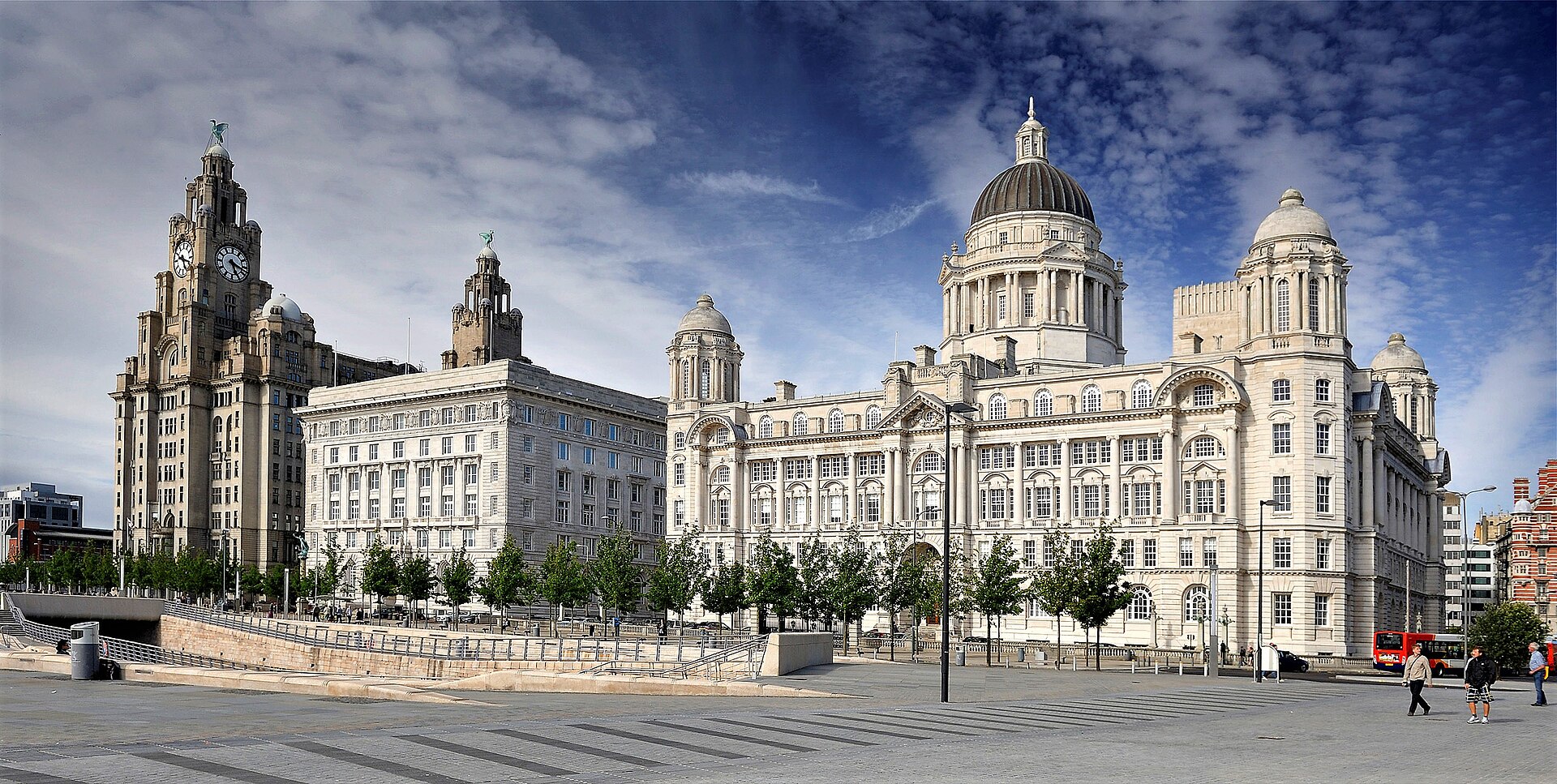
- Museum of Liverpool — Waterfront, beside Pier Head
The Museum of Liverpool tells the story of the city from its earliest inhabitants to its modern revival, covering the port, the people, football and music. It is free to wander through on a wet afternoon. Do not confuse it with the World Museum, which has a broader, global collection. Check the official site for opening times. - Mersey Ferries — Pier Head landing stage
The Mersey Ferries cross the estuary from Pier Head, and the crossing is the easiest way to see the skyline as sailors once did. The boats are small and the river is often breezy, so bring a jacket. Some sailings include commentary. Check the operator's website for current routes and times.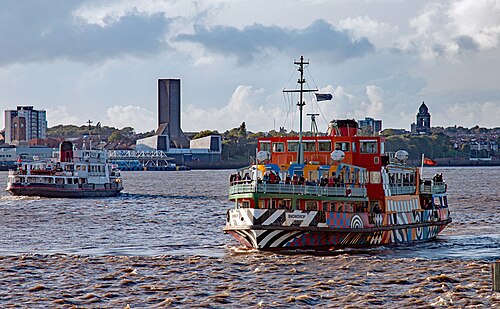
- St George's Hall — Lime Street, city centre
St George's Hall is a neoclassical building facing Lime Street station, with tall columns, a vaulted hall and a tiled floor that is only uncovered on special occasions. It was built as a concert hall and law courts. The plateau outside is a popular meeting place and a good spot to people-watch.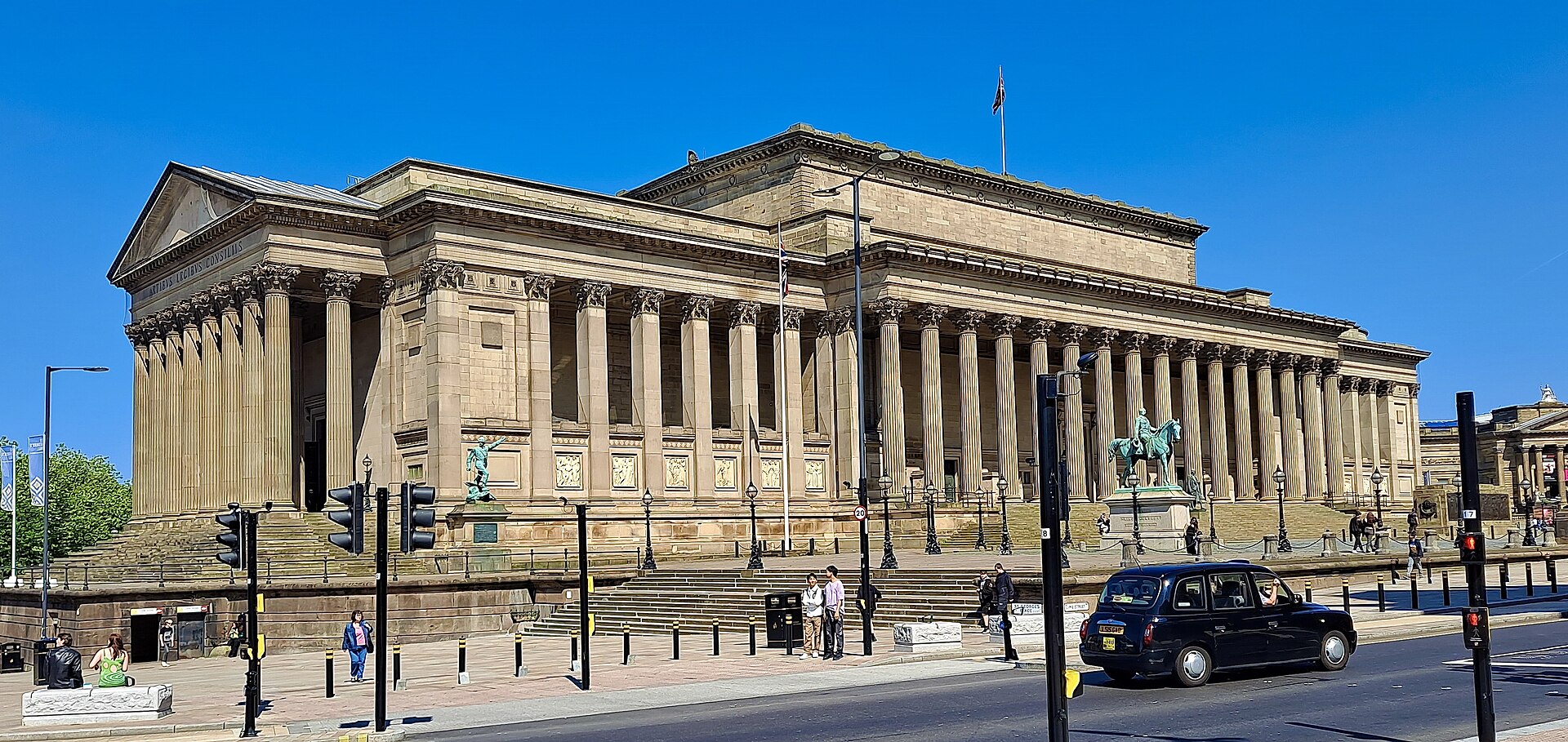
- The two cathedrals — Along Hope Street
Liverpool's Anglican and Metropolitan cathedrals stand at either end of one road and could hardly look more different: a vast sandstone Gothic hulk at one end, a modern circular Catholic building with a crown of glass at the other. Walking between them takes about ten minutes and makes a satisfying half-day.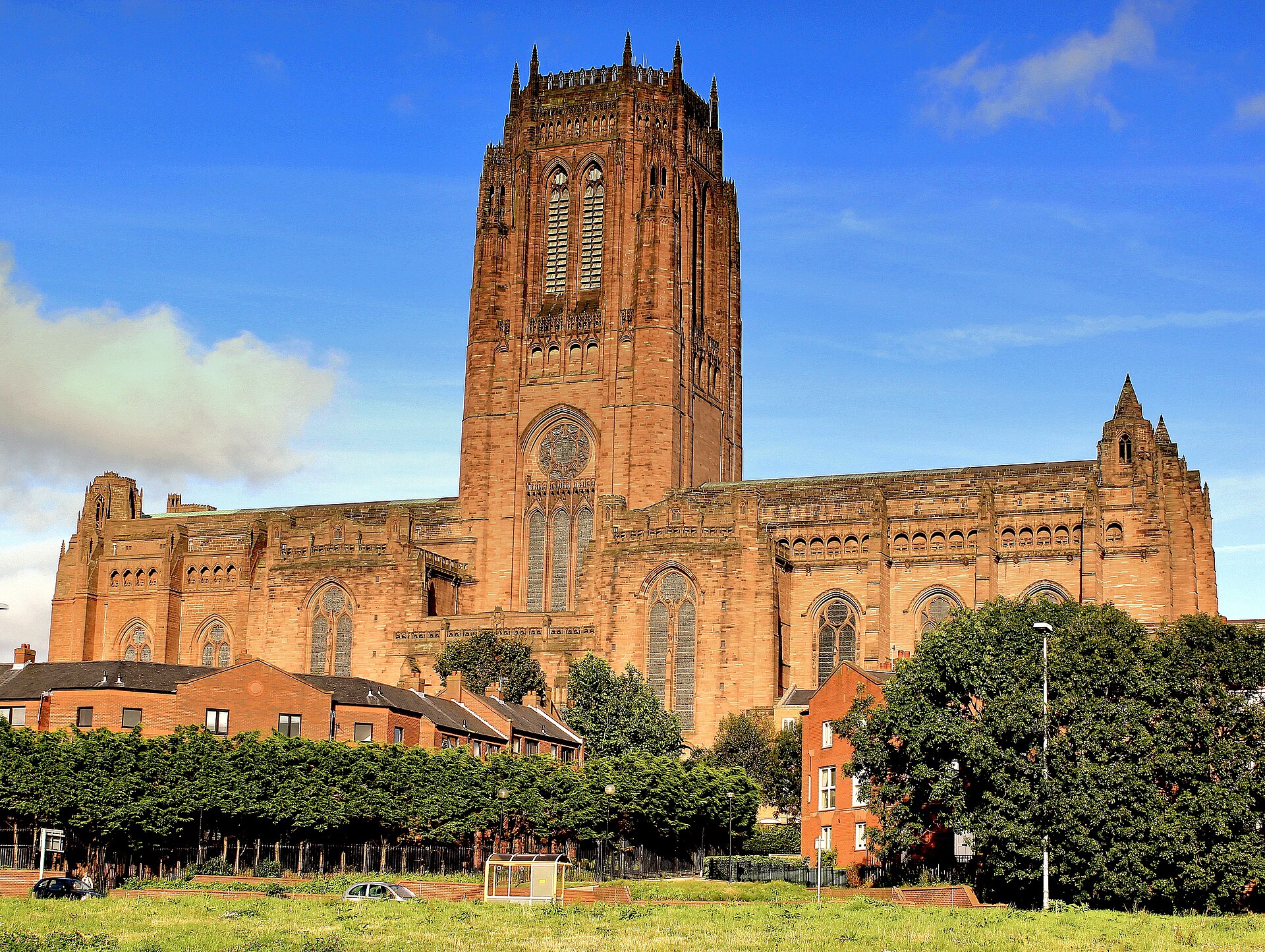
Culture
Liverpool is known worldwide for music, and Guinness World Records has recognised it as the World Capital City of Pop. The brief's headline figure is that its musicians have produced 58 chart-topping singles, though what visitors notice day to day is the live scene: pubs with open-mic nights, small venues in the old warehouse streets, and street musicians near the docks. The Beatles are the obvious draw, with museums, tours and murals, but the local pride in newer acts is just as strong.
The city has a long record as a cultural centre more broadly. It held the title of European Capital of Culture, which left behind public art, refurbished galleries and festivals that still run. Theatres, poetry and comedy are part of ordinary life, and the university districts keep the evening scene busy.
The accent, known as Scouse, is distinctive and the humour is quick and teasing; being gently mocked is usually a sign of friendliness. Football divides the city between red and blue, and a match day changes the mood of the centre and the pubs. The port's history also means that the Irish, Welsh, Chinese and African communities have all left a mark on the city's food, faith and festivals.
When visiting the slavery and migration displays, speak quietly, take your time, and ask before photographing other visitors or staff.
What to wear
Liverpool has no single traditional costume in the way some regions do. Its textile history is tied to the cotton that came through the port for the Lancashire mills, so cloth, workwear and warm wool coats are part of local heritage more than any ceremonial dress. The dockers' flat cap and the oilskin coat were everyday working clothes for generations, and Irish and Welsh communities brought their own festival outfits at parades and celebrations.
What people wear now is casual and quite sharp. Trainers, jeans and a good jacket are standard, football shirts and scarves appear on match days, and nights out lean smart and bold. The Beatles' influence lives on in tailored jackets, polo necks and Cuban-heeled boots in vintage shops, and the independent boutiques around the Bold Street area reward browsing.
Visitors should dress for changeable weather rather than for the occasion. A light waterproof, layers and comfortable shoes with grip matter most, because the waterfront is exposed to wind and the old setts and quay stones are slippery when wet. Summer can be warm, but evenings by the river cool quickly. Nowhere in the city has a strict dress code, though shoulders and knees are best covered inside the cathedrals during services, and smart-casual is the sensible choice for fine-dining rooms and theatres.
What to eat
- Scouse — Traditional pubs and cafés across the centre
Scouse is the city's signature stew of meat and root vegetables, slow-cooked until thick and traditionally eaten with pickled red cabbage or beetroot and bread. Look for it on the menus of traditional pubs and cafés, especially in cooler months, and ask for a vegetarian version if needed. - Bacon or sausage barm — Breakfast cafés near the university and docks
A barm is a soft bread roll, and in Liverpool it usually arrives filled with crisp bacon or sausage and a splash of sauce. It is a morning staple that fuels dockers and students alike. Look for small cafés that open early near the university and the waterfront. - Fish and chips — Neighbourhood chip shops, or by the waterfront
Fish and chips are a dependable northern meal: battered fish, thick chips, mushy peas and a wedge of lemon or a splash of vinegar. A local chip shop is cheaper and quicker than a sit-down place. Eat them while hot, outdoors if possible, on a bench by the river. - Chinatown dishes — Chinatown, near Berry Street
Liverpool's Chinatown, marked by a large ceremonial arch, has restaurants serving Cantonese roast meats, dim sum and noodle soups, and the community has deep roots in the port. It is a good choice when the weather turns and you want a long lunch with a group. - Café cakes and tea — Bluecoat courtyard and the Mount Pleasant area
Liverpool's gallery cafés and student cafés serve homemade cakes, sandwiches and proper pots of tea, a good pause between museums. The courtyard cafés around the Bluecoat arts centre are calm and central, and Kimo's near Mount Pleasant is a long-standing student favourite for a cheap, filling lunch.
Plan it
Best time. May to September is the most comfortable stretch, with the longest days and the best chance of dry weather for walking the waterfront; Liverpool is mild and often damp, so a waterproof is useful in any month. Winter is cold and wet, but museums, pubs and theatres stay lively and crowds are thin.
How long. 2–3
Getting there. Liverpool John Lennon Airport has taxis and buses outside arrivals, with a limited-stop bus service running to the city centre; Manchester Airport is the main alternative, with onward trains. Trains from London and the north arrive at Lime Street station, a short walk from the centre.
Budget. mid
Tips
- Check opening times and tickets on each museum's official site before you go, because some sights need booking ahead
- Visit the Albert Dock and Pier Head early in the morning, before the tour groups arrive
- Bring a waterproof and shoes with good grip, as the quays and old stone streets are slippery in rain
- Use contactless payment on buses and in most places, but carry a little cash for small cafés and market stalls
- Check the football fixture list, because a home match fills pubs and trains and can push up hotel rates
Etiquette
- Queue in order at bars and bus stops, and say thank you to the driver as you leave
- Keep your voice low and ask before taking photographs inside the cathedrals and slavery-history displays
- In pubs, order at the bar and pay as you go; tipping is welcome but not expected
Nearby
Sources
- Wikidata Q24826 (CC0)
- Wikipedia — Liverpool (rev 1384860030) (CC BY-SA 4.0)
- Wikivoyage — Liverpool (rev 5426534) (CC BY-SA 4.0)
- Photo: Liverpool montage (Daviessimo) (CC BY 3.0)
- Photo: Pier Head, Liverpool (Peter Tarleton) (CC BY-SA 2.0)
- Photo: Royal Albert Dock from Mermaid Court (Rodhullandemu) (CC BY-SA 4.0)
- Photo: Mersey Ferries (Murgatroyd49) (CC BY 4.0)
- Photo: St George's Hall, Liverpool (Brit in Seoul) (CC BY-SA 4.0)
- Photo: Liverpool Town Hall (Rept0n1x) (CC BY 3.0)
- Photo: Liverpool Metropolitan Cathedral at dusk (Chowells) (CC BY 3.0)
- Photo: Liverpool Anglican Cathedral (Stephen J Mason Photography Collection) (CC BY-SA 2.0)


