Li River
Li River, People's Republic of China
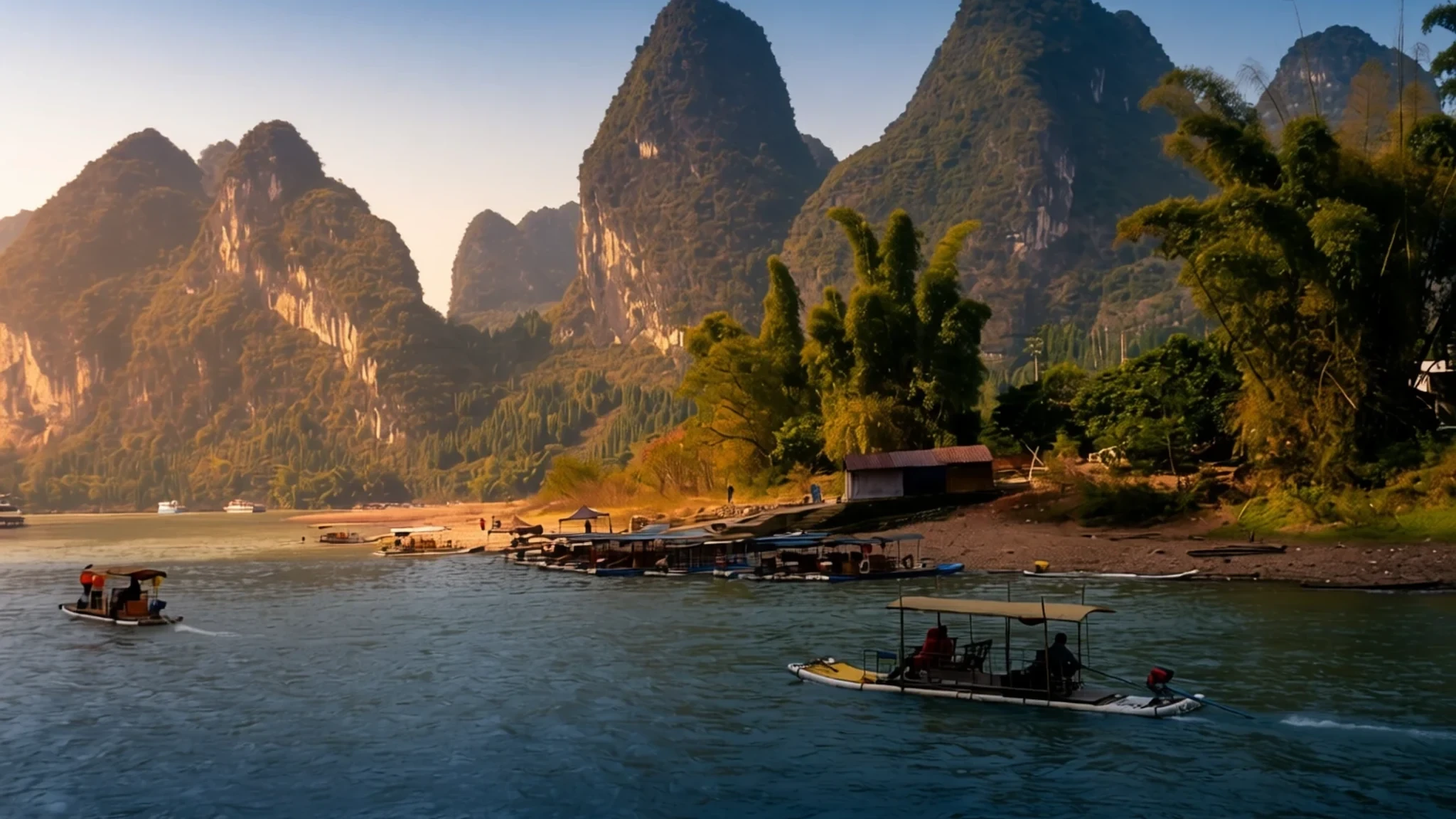
Drift down a timeless waterway carved through extraordinary limestone karst towers that have inspired Chinese painters for centuries.
The place
The Li River forms the upper reaches of the Gui River system within the Guangxi region of the People's Republic of China, flowing through a dramatic landscape of ancient limestone formations. Across its course, the waterway drains a vast basin, carrying alluvial sediments that build fertile floodplains and low terraces alongside the current. The terrain itself represents millions of years of geological evolution across ancient limestone layers, creating two distinct types of karst scenery that define the region.
Along the upper stretches, fengcong karst dominates the topography. This landscape features dense clusters of limestone hills sharing a common base, separated by deep dolines and rugged depressions. Hundreds of hidden caverns weave through these rock formations, including extensive cave systems with long subterranean passages stretching beneath the gorge. Further downstream towards Yangshuo, the scenery shifts into fenglin terrain, characterised by isolated tower karst. These dramatic limestone pillars rise abruptly from flat alluvial plains with near-vertical walls, creating the classic silhouettes immortalised in ink paintings and on currency notes.
Navigating this watery corridor reveals an ecosystem shaped by seasonal monsoon rains and constant river flow. Mist frequently clings to the jagged peaks at dawn, softening the horizon before burning off under the midday sun. Riverside villages, bamboo groves, and small farming communities occupy the narrow flatlands between the riverbanks and the towering stone walls, maintaining a quiet rhythm of life that has persisted alongside the waterway for generations.
Its story
The Li River has occupied a central place in Chinese artistic imagination, serving as a living muse for poets, calligraphers, and landscape painters since imperial times. Scholars and officials travelled to these Guangxi riverbanks seeking solitude and inspiration among the mist-shrouded peaks, recording their impressions in verses carved directly into cliff faces and onto silk scrolls.
Geologically, the valley tells a much older story spanning millions of years. Subtropical warmth and abundant rainfall slowly dissolved the thick layers of ancient limestone, carving out subterranean rivers, hollow caverns, and towering stone pillars through persistent chemical weathering. As the water level shifted over millennia, the surrounding plains filled with alluvial deposits, leaving behind the striking contrast between flat agricultural earth and jagged vertical stone that defines the basin today.
For local communities, the river has always been a vital highway and source of sustenance. Traditional fishing fleets relied on trained cormorants to catch river fish in the shallow currents, working in harmony with the misty waters at dusk. While modern tourism has transformed many of the settlements along the banks, the underlying relationship between the people, the seasonal floods, and the ancient stone towers remains unbroken, preserving a cultural landscape deeply rooted in the natural geography of southern China.
What to see
- Guilin River Banks — Guilin city waterfront and northern banks
The northern stretches of the Li River near Guilin showcase classic fengcong karst formations, where clusters of steep limestone hills rise above deep depressions and narrow winding channels. Walking along these quiet banks in the early morning offers an atmospheric view of local life, bamboo thickets, and misty waters before the daytime excursion boats depart.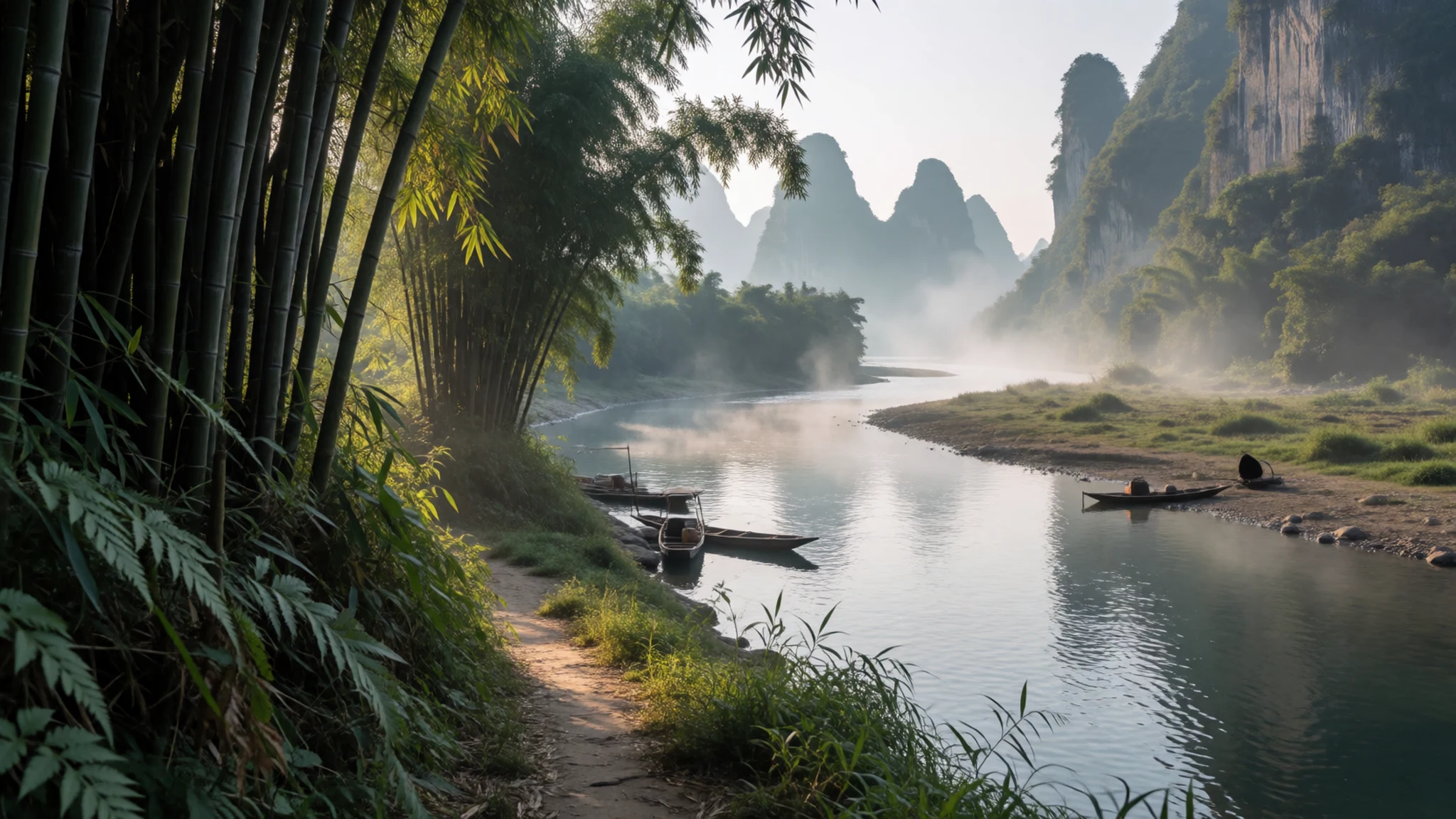
- Caoping Gorge — Caoping village area along the middle river
Located along the middle course of the Li River, this rugged section features extensive cave systems and dramatic limestone gorges carved into the rock face. Subterranean passages run deep into the surrounding hills, while the surrounding riverbanks present some of the most concentrated peak cluster terrain found anywhere in the Guangxi basin.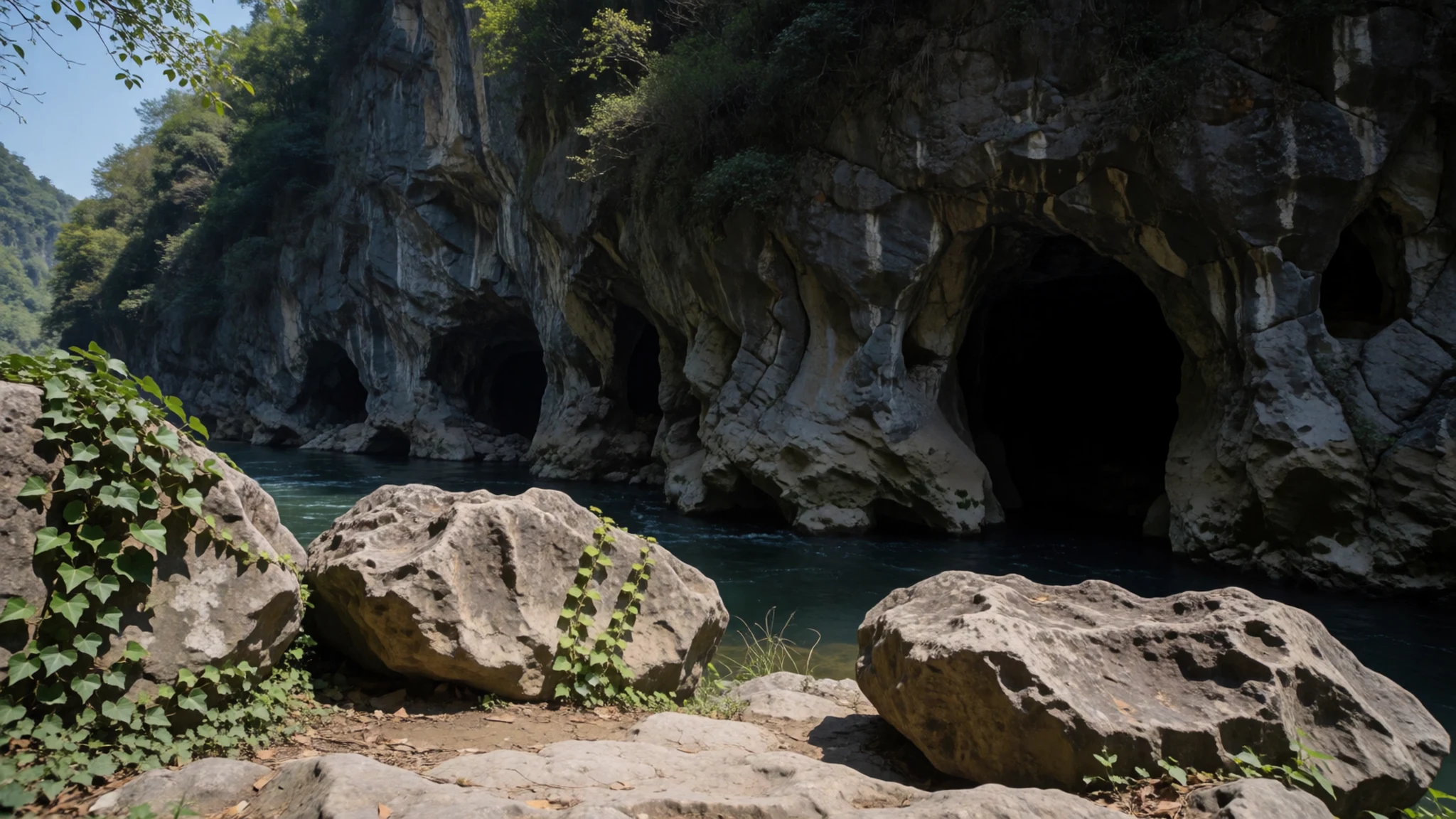
- Yangshuo Tower Karst — Yangshuo county and surrounding river plains
The southern basin around Yangshuo is famous for its fenglin tower karst, where isolated limestone pillars stand like massive vertical fingers above flat alluvial plains. These dramatic stone formations create an unforgettable panorama, especially when viewed from the river level during a traditional bamboo raft journey through the shallow channels.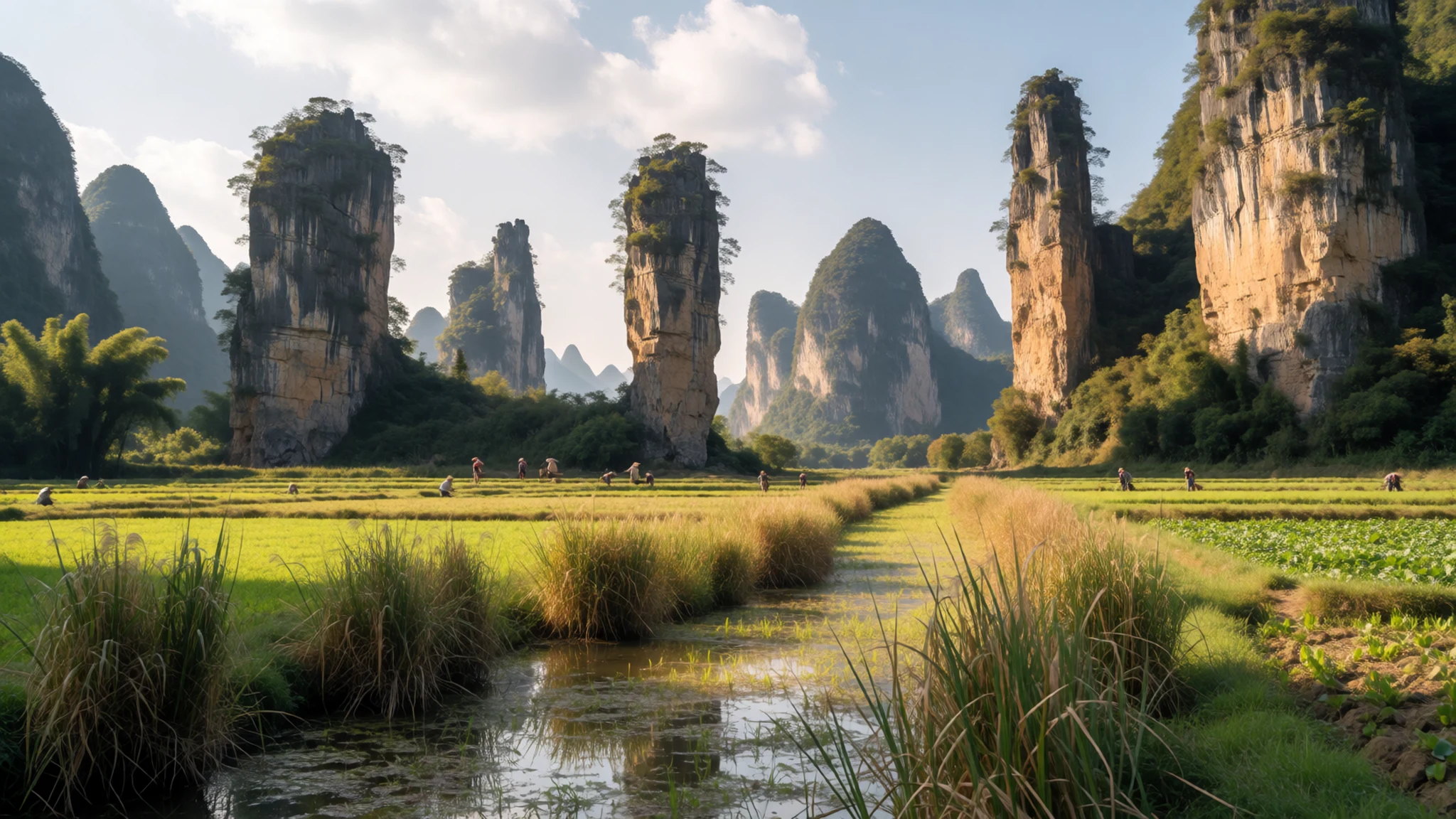
- Xiangshan Waters — Xiangshan district riverfront
Near the confluence points in the upper basin, the river flows past distinctive rocky outcrops that resemble natural sculptures rising straight out of the current. These scenic river bends have drawn travellers for centuries, providing classic vantage points to observe local boat traffic and the interplay of water, mist, and stone.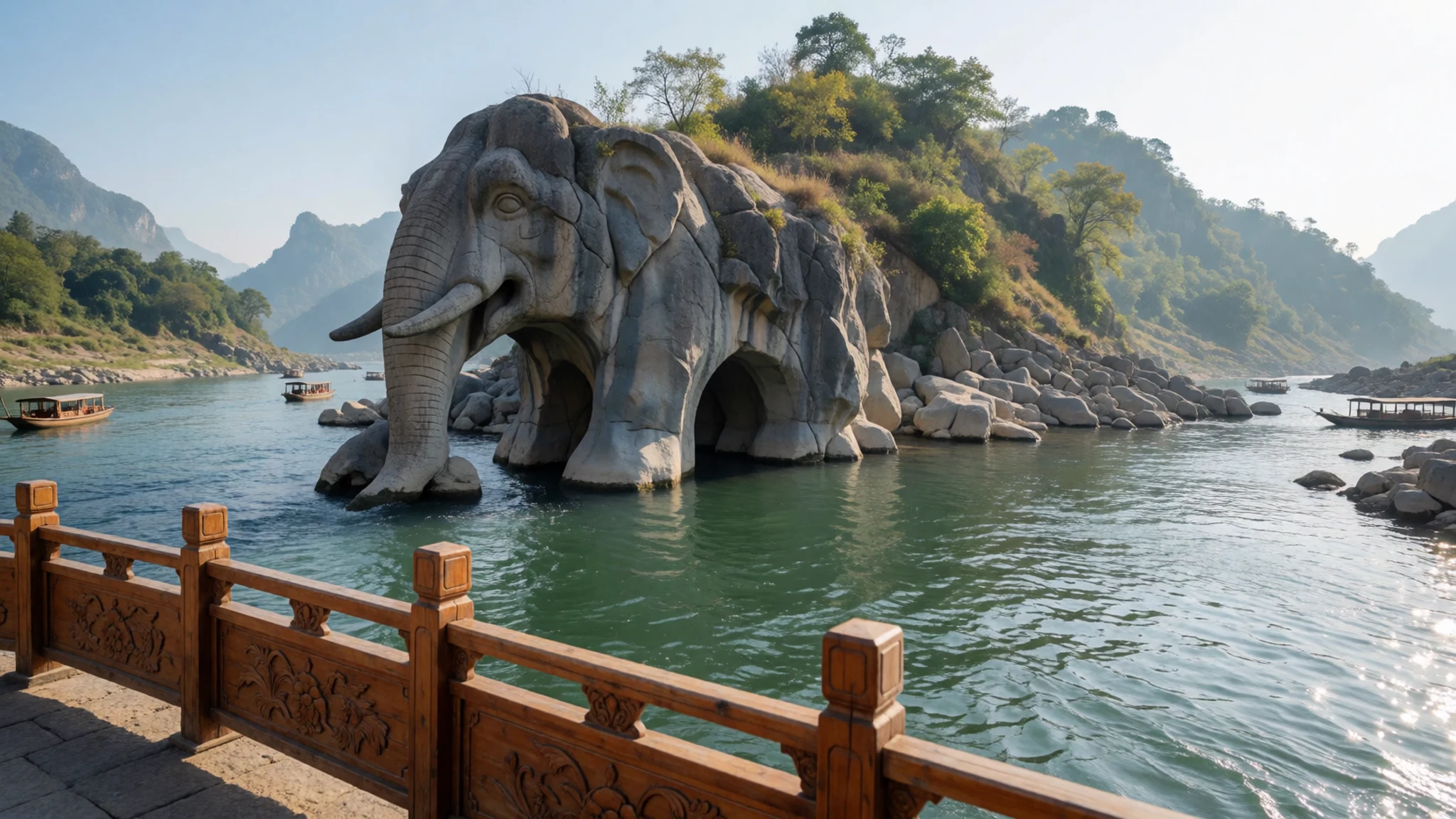
Culture
Life along the Li River is deeply intertwined with the rhythms of water, agriculture, and seasonal tourism across Guangxi. Traditional customs in the river villages reflect a blend of regional folk practices, rural traditions, and Zhuang ethnic heritage, visible in local festivals, culinary habits, and community gatherings. Artisans and farmers have lived in harmony with the karst topography for generations, maintaining age-old crafts such as bamboo weaving and river navigation. Visitors should always ask permission before taking photographs of local residents and working fishermen along the riverbanks.
What to wear
Traditional attire in the Li River region historically reflected practical needs for farming and river life, utilising durable cotton and local textiles suited to the warm, humid climate of southern China. While traditional garments are now largely reserved for cultural festivals and ceremonies, regional ethnic minority communities still preserve distinct ceremonial dress featuring intricate embroidery and silver ornaments. Today, local residents wear everyday modern clothing suited to subtropical weather. Visitors exploring the river should pack lightweight, breathable fabrics, a waterproof jacket or umbrella for sudden monsoon showers, and sturdy walking shoes or sandals with good grip for exploring damp cave floors, slippery stone steps, and uneven riverbanks.
What to eat
- Guilin Rice Noodles — Morning markets and noodle shops across Guilin
A regional staple served at morning markets and street stalls across the river basin, featuring smooth rice noodles topped with sliced beef, fermented beans, peanuts, pickled vegetables, and a rich bone broth.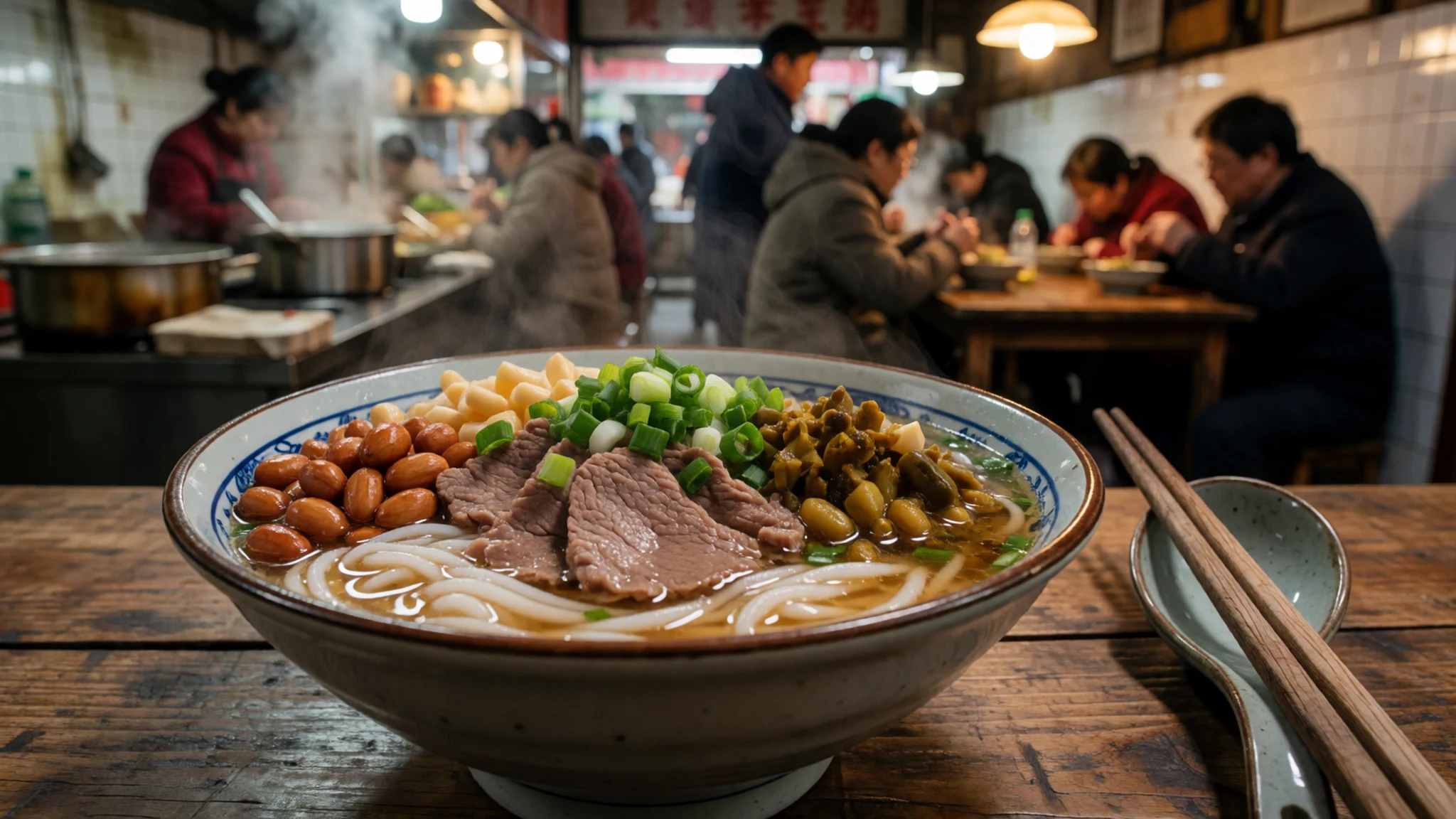
- Beer Fish — Riverside restaurants and night markets in Yangshuo
A signature local speciality prepared along the river in Yangshuo, combining fresh catches from the waterway with local beer, tomatoes, peppers, and spicy soy-based sauces in a shallow wok.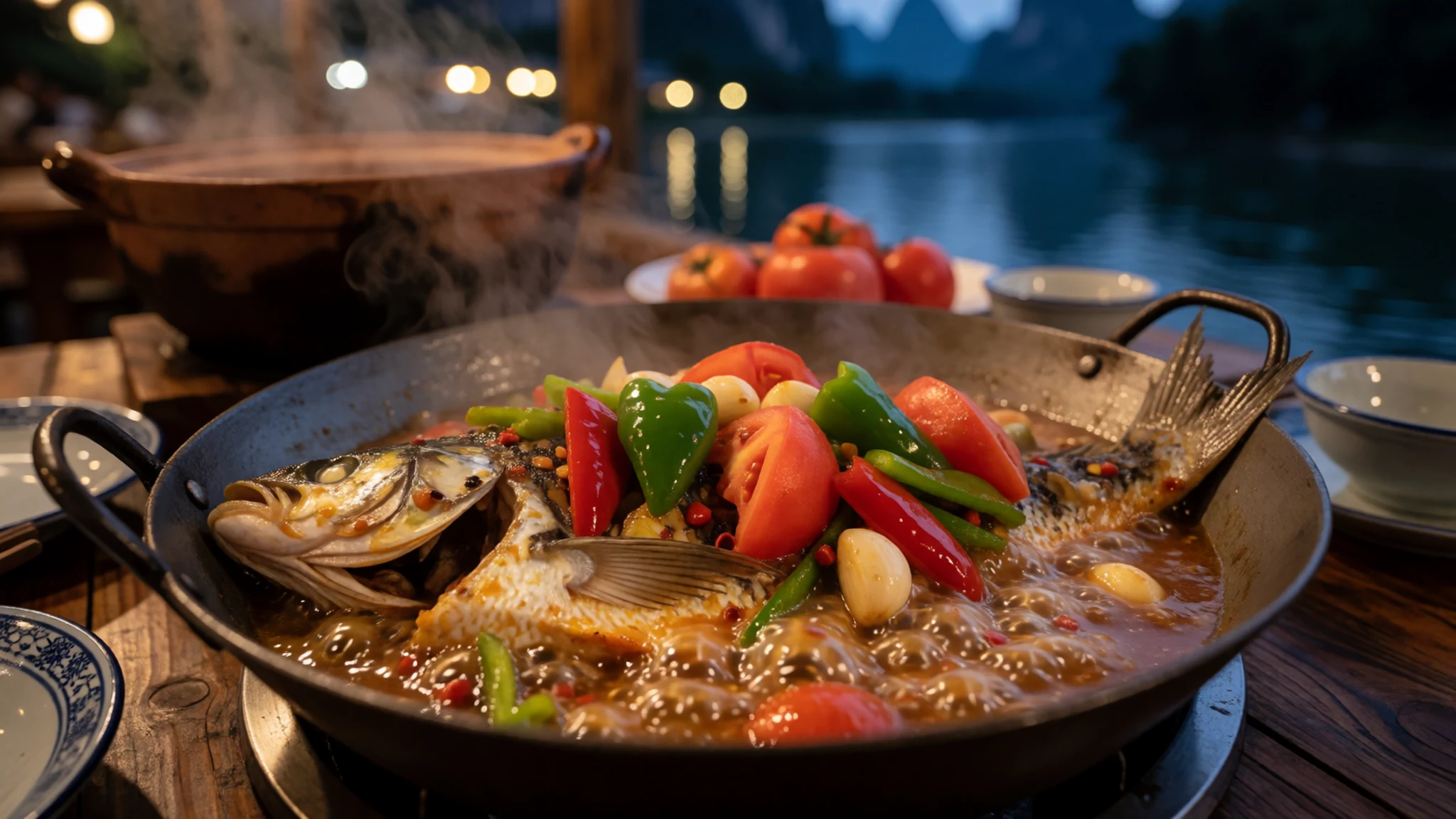
- Taro Pork — Traditional family eateries throughout Guangxi
Layered pork belly and local purple taro steamed together with fermented bean curd and five-spice seasoning, creating a rich, tender dish traditionally served during celebrations. - Li River Snail Rice Noodles — Night food stalls and local diners in riverside towns
A bold, aromatic noodle soup featuring river snail broth, sour bamboo shoots, fried peanuts, and chilli oil, known for its intense aroma and deeply savoury profile.
Plan it
Best time. October to November offers the most comfortable conditions, with milder temperatures and much drier weather, while March to April is warming up and getting wetter; avoid the hot, humid months from May to September, when June brings the heaviest monsoon rains.
How long. 3–4
Getting there. Fly into Guilin Liangjiang International Airport, then take an airport bus or taxi into the city centre to access the river docks and onward transport to Yangshuo.
Budget. mid
Tips
- Book river cruises and bamboo raft trips in advance during peak travel seasons
- Start early in the morning to experience the river before the daytime tour boats arrive
- Carry cash for small rural shops, village markets, and independent boat operators
- Drink bottled or filtered water rather than tap water throughout the region
- Pack a sturdy waterproof jacket as sudden rain showers are common along the valley
Etiquette
- Always ask permission before photographing local fishermen and residents
- Dress modestly when visiting temples or rural community shrines
Nearby
Sources
- Wikidata Q334225 (CC0)
- Wikipedia (rev 1367592741) (CC BY-SA 4.0)
- Photo photos/01-rzeka-li.jpg (CC BY-SA 4.0)
- Photo photos/02-87318-li-river.jpg (CC BY 2.5)
- Photo photos/03-the-li-river.jpg (CC BY 3.0)
- Photo photos/04-li-flussfahrt-160-huegel-2012-gje.jpg (CC BY-SA 4.0)
- Photo photos/05-guilin-579528340.jpg (CC BY 2.5)
- Photo photos/06-liriver.jpg (CC BY 2.5)
- Photo photos/07-87496-li-river.jpg (CC BY 2.5)
- Photo photos/08-guilin-48278561562.jpg (CC BY 2.5)
- Wikivoyage (CC BY-SA 4.0)


