Leshan Giant Buddha
Leshan Giant Buddha, People's Republic of China
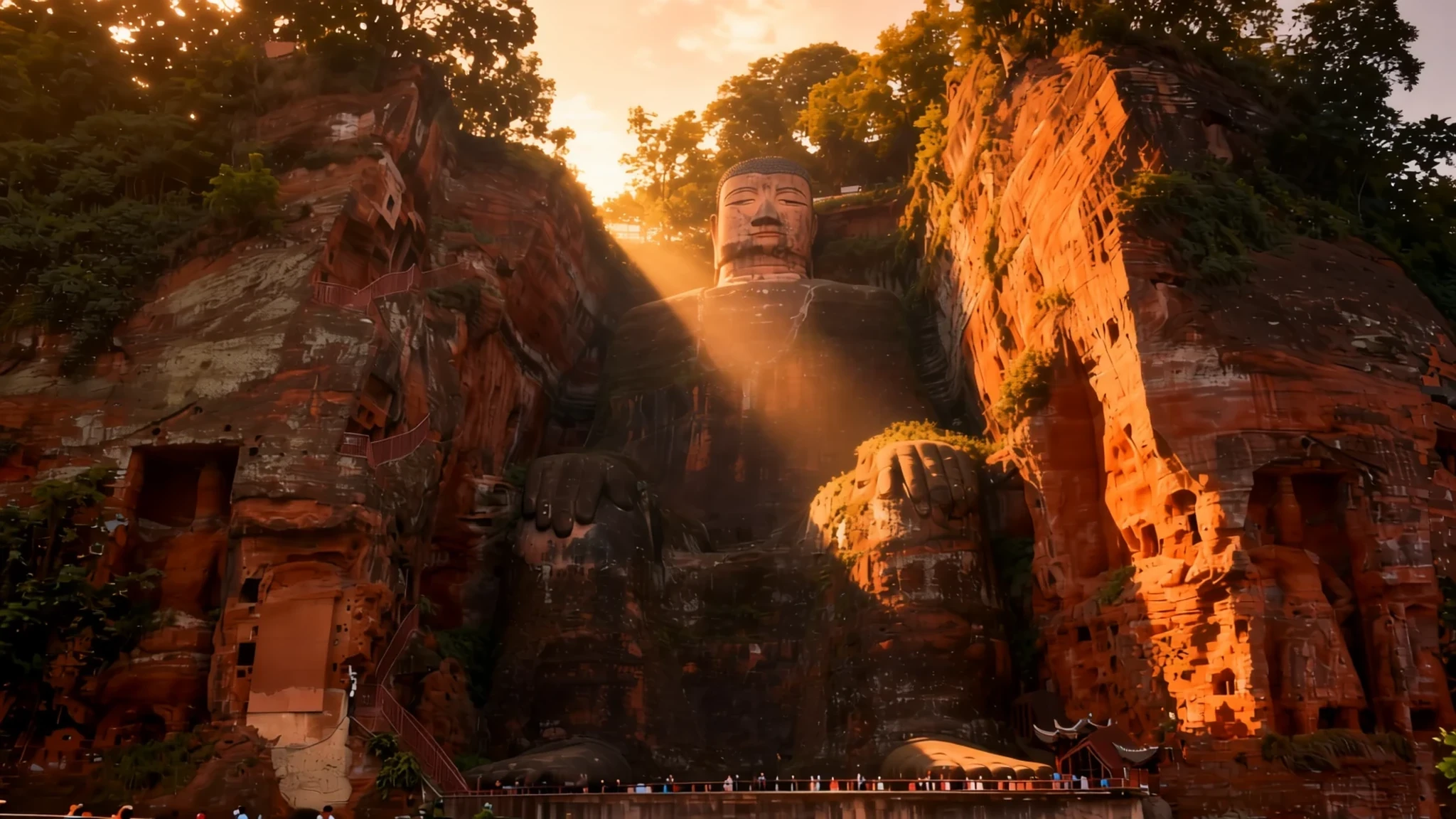
A 71 m cliff-carved Buddha watching over the meeting of three rivers in Sichuan, and worth the trip from Chengdu.
The place
The Leshan Giant Buddha is a seated figure cut into the face of Lingyun Mountain, on the edge of the city of Leshan in southern Sichuan. It stands 71 m tall and looks out over the point where the Min, Qingyi and Dadu rivers come together. From the water the figure is hard to miss, and from the hillside paths it breaks into a sequence of shapes: the head, the broad shoulders, the knees and the hands resting over them.
The statue is carved from reddish sandstone, a soft rock that weathers when wet, which is one reason the figure has needed repair over the centuries. The cliff also holds smaller carved niches and the older Mahao cliff tombs from the Han dynasty, so the whole hillside is layered with history.
The Buddha is part of the Mount Emei Scenic Area, which has been a UNESCO World Heritage Site since 1996. The routes down to the statue are steep and can be slippery in wet weather. Summer brings heat and humidity, and haze is common for much of the year. Bring water, walk slowly on the stairs, and allow a few hours so you can see the head close up as well as from the river.
Its story
The Leshan Giant Buddha grew out of one monk's faith in water. In the Tang dynasty, a monk named Hai Tong (海通) began the carving, believing that a figure of Maitreya, the future Buddha, would calm the dangerous currents where three rivers met and wrecked boats. The water here was fast and unpredictable, and every vessel passing the junction was at risk.
Money was the constant problem. Tradition holds that when donations ran short, Hai Tong gave up his own eyes as proof of his sincerity, a story that has stayed attached to the site ever since. He died before the work was finished, and for a time only the head and shoulders existed. His disciples carried on, supported first by a local official, who was then recalled to the court at Chang'an before the knees were reached. Work stopped for decades.
Later a regional governor, Wei Gao, put money back into the project, and the disciples finished the statue in 803. The figure was therefore built over many years by several generations, and its proportions still reflect that stop-start history.
Water and weather were the next challenge. By the early Northern Song period the figure had weathered badly: moss covered the body, and the timber shelter above it had fallen into ruin. Under Emperor Renzong it was repaired on a large scale and a new wooden pavilion was built. Later repairs followed, and the statue visitors see today is the result of centuries of care.
What to see
- Leshan Giant Buddha — Lingyun Mountain, at the river confluence
The figure is 71 m tall and carved straight into the cliff above the river. Give yourself time for the walk down, because the steps are steep and the statue reads best in stages. From the riverside you get the full scale, from the cliff path you see the shoulders and hands, and from close to the head you can make out the carved detail of the hair and face.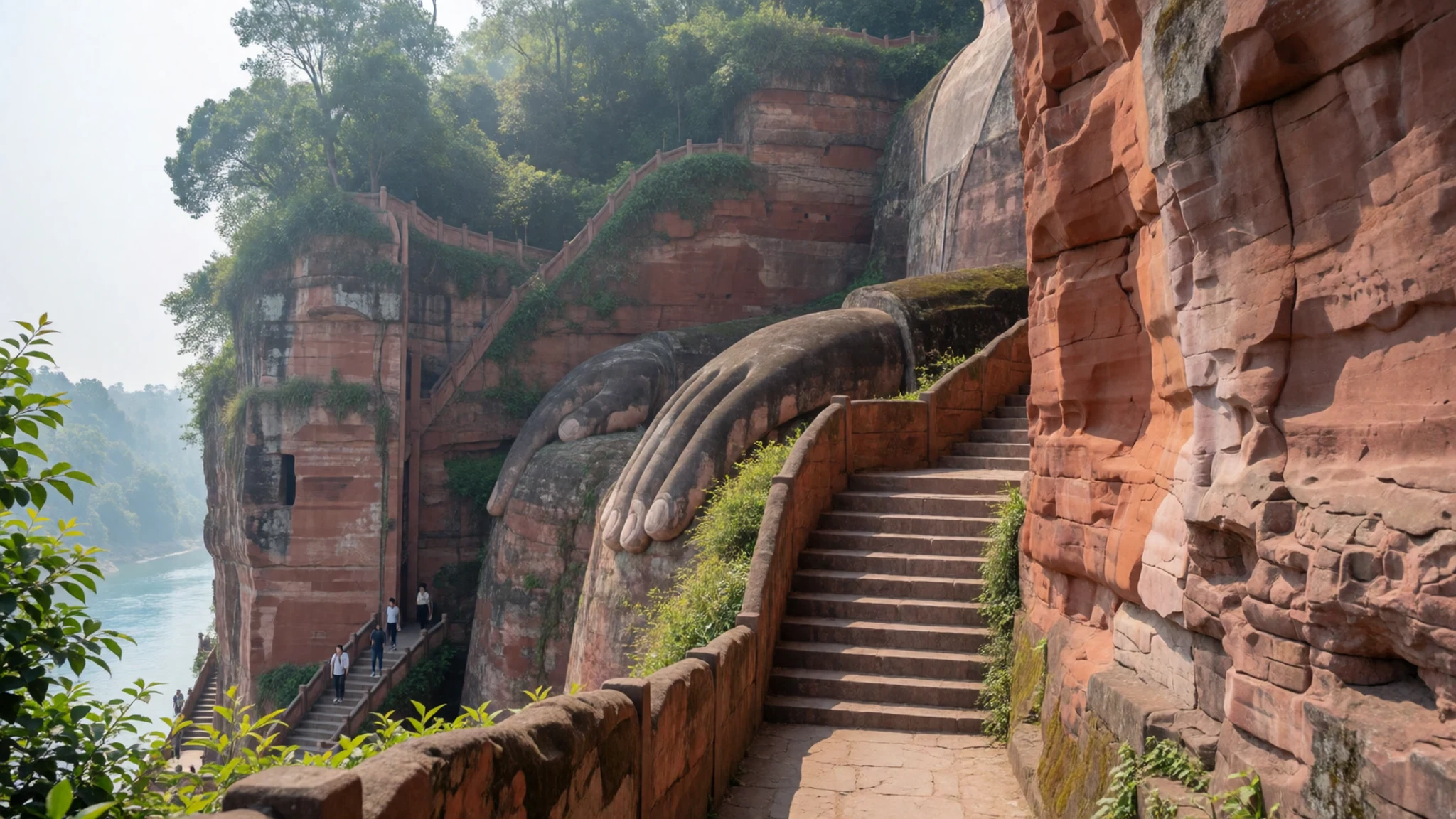
- Wuyou Temple — Scenic area, some distance from the statue
Wuyou Temple is a Buddhist temple that sits apart from the statue and is not a short stroll from it. It is the place to slow down, with quieter courtyards than the cliff path and worshippers at prayer through the day. Go in the morning if you can, dress modestly, and keep your voice low in the halls before you move on.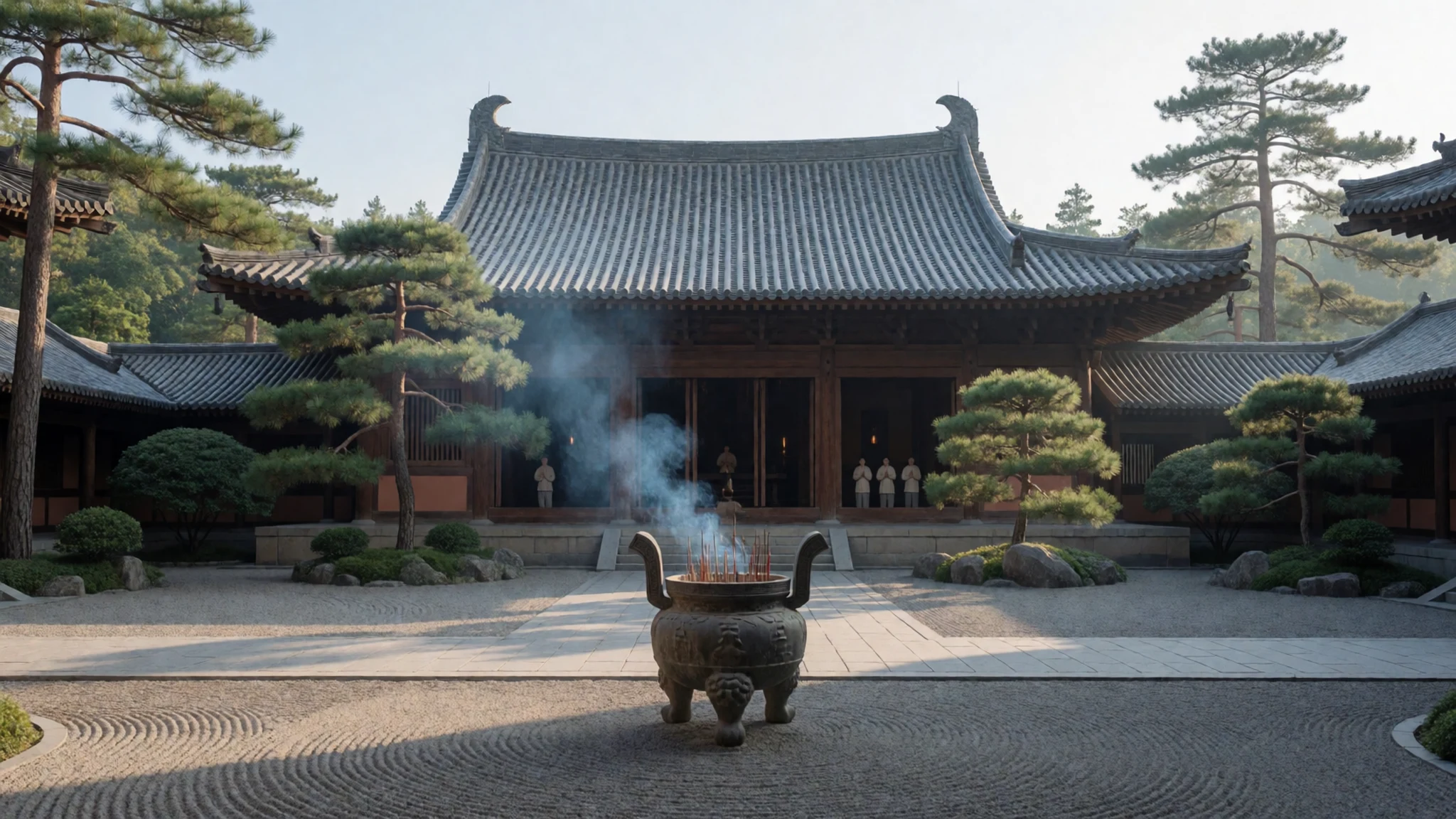
- Leshan Giant Buddha Museum — Scenic area, near the statue
The museum is a sensible stop for background on the carving before you walk down to the figure. It helps to know why the statue was built and how it has been looked after, which makes the climb more interesting. Plan it as a short visit rather than the centre of your day, and check the official site for current opening arrangements.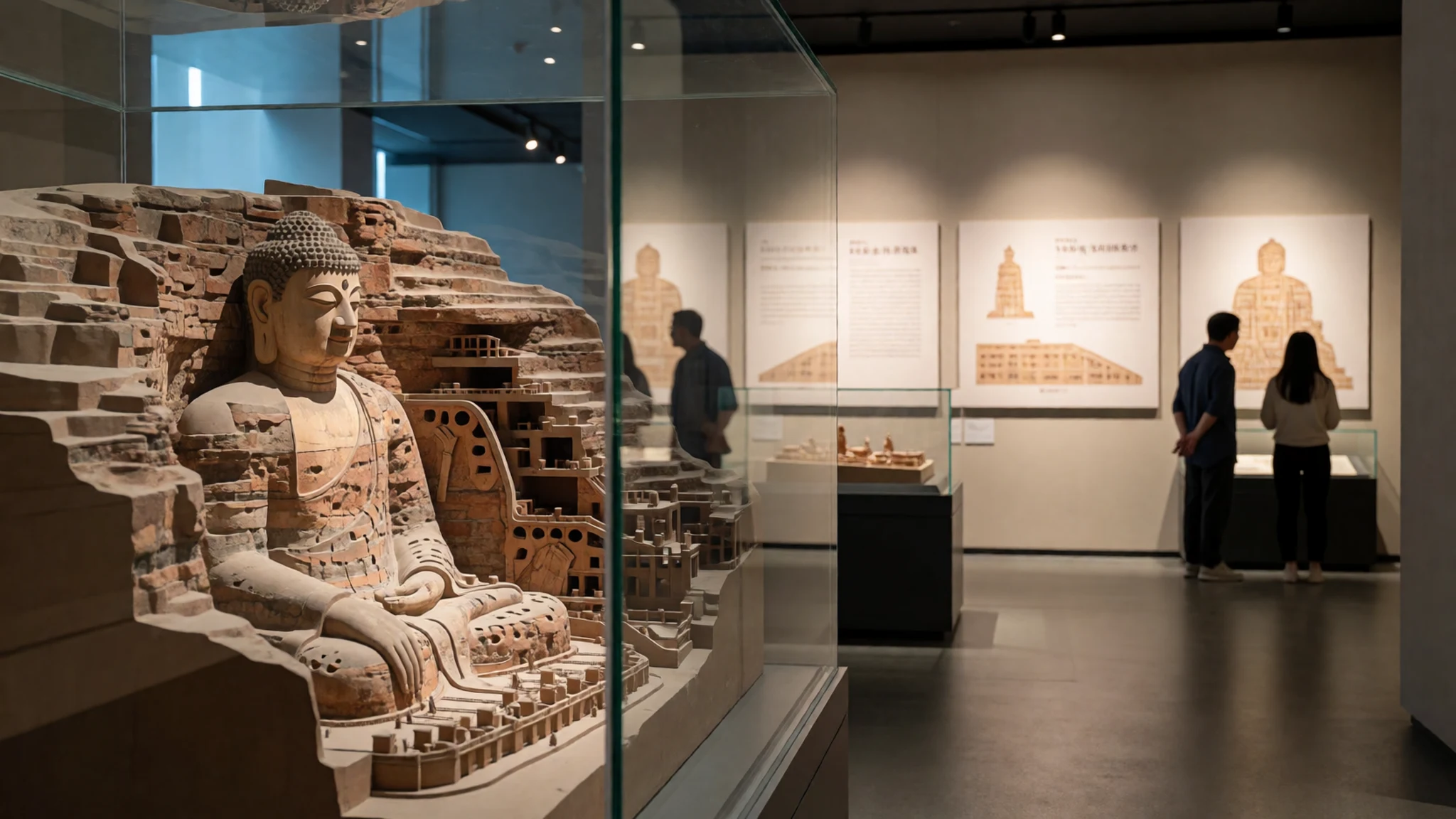
- Tieniu Gate — Old town, Leshan city centre
Tieniu Gate is one of the city gates that still survive from the old walls. It was built in the Song dynasty and rebuilt later, and it was once known as Lizheng Gate, so you may see both names on signs. Stop here on a walk through town to see how the old fortifications meet the modern street around them.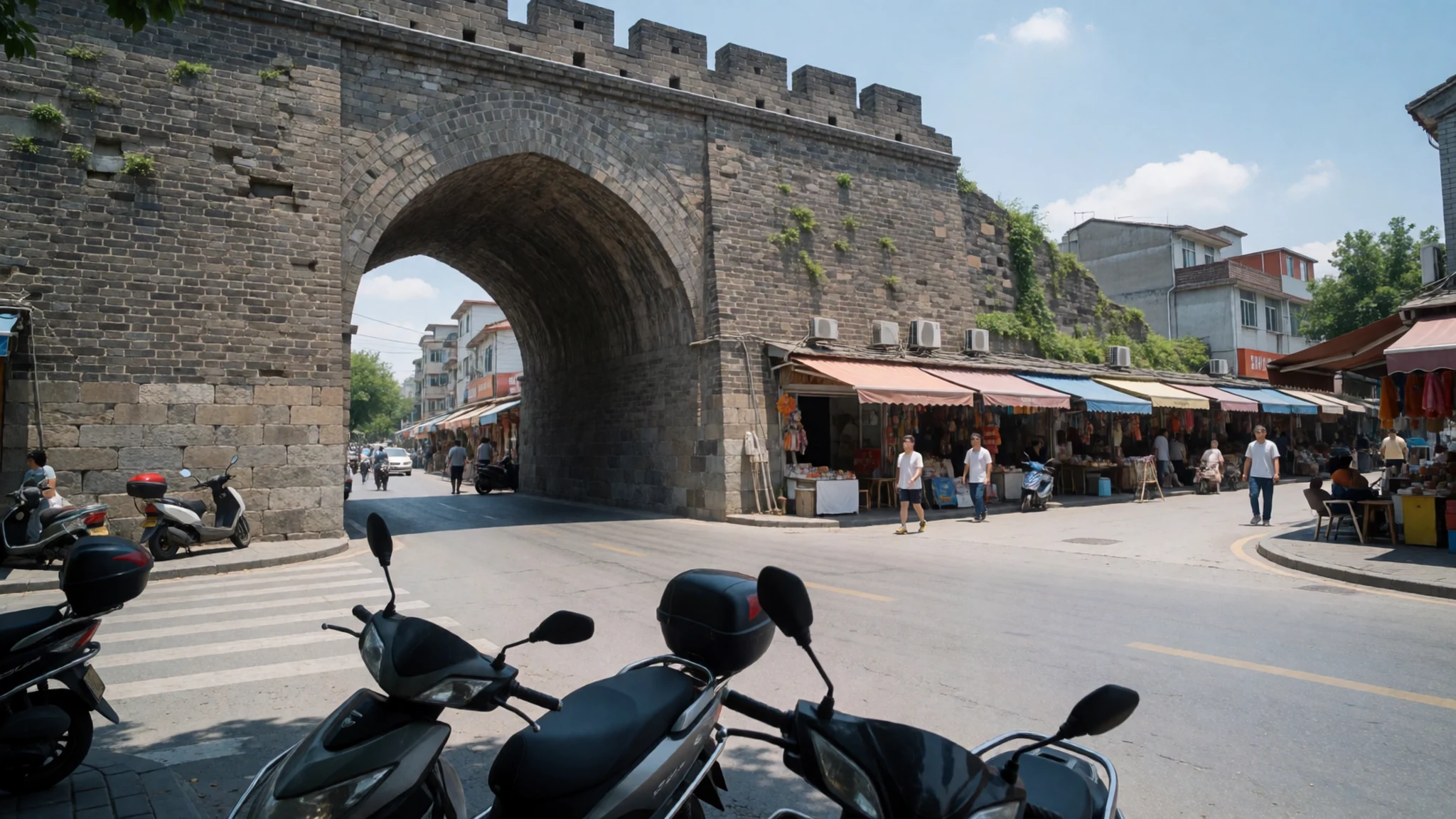
- Suji Ancient Town — Outskirts of Leshan
Suji Ancient Town began as a fort and post in the Southern Song dynasty, built around irrigation works. Its old streets and houses offer a slower contrast to the Buddha. Allow an afternoon, and eat at the local stalls rather than at the larger restaurants near the entrance.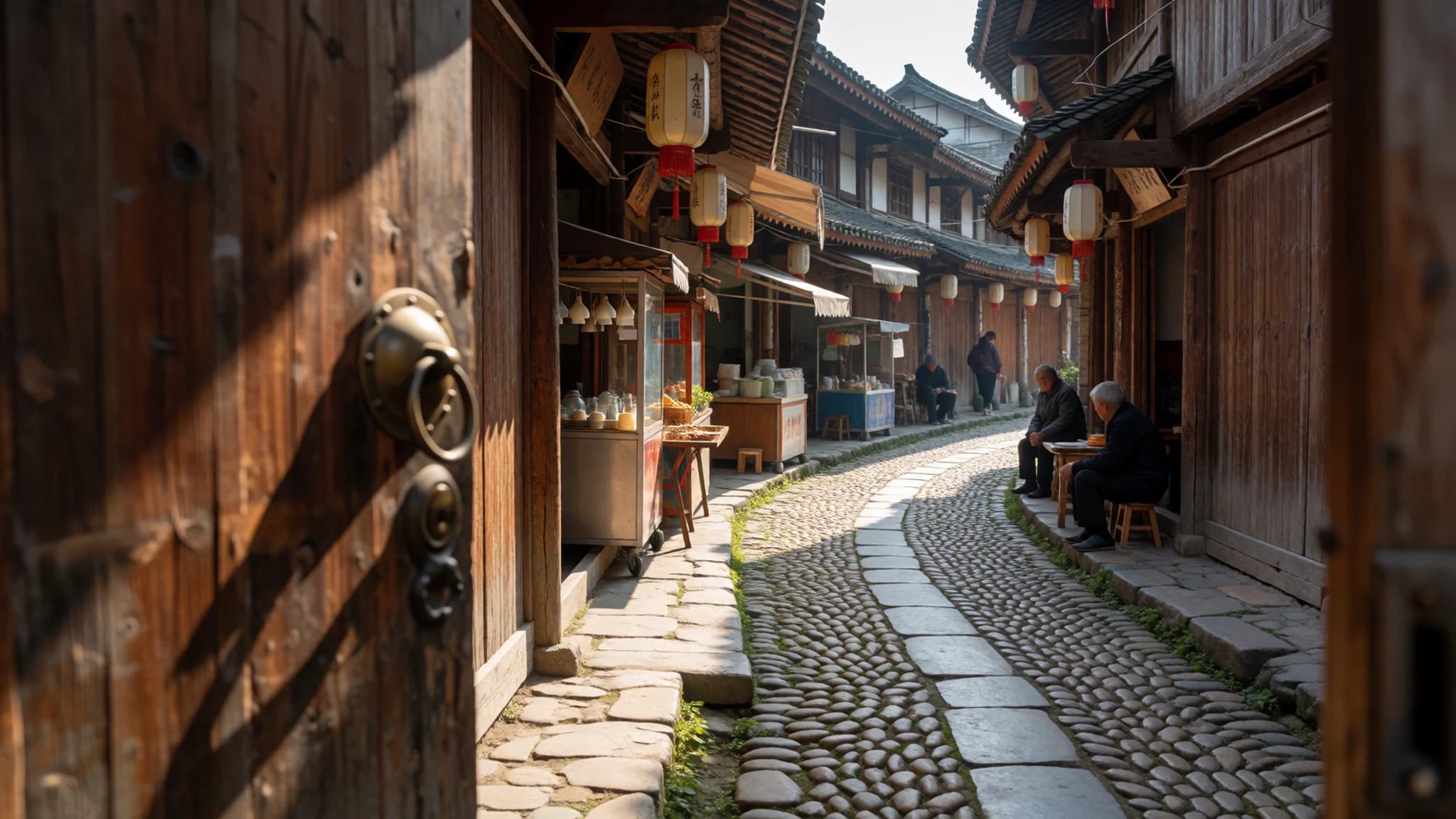
Culture
The Leshan Giant Buddha is a religious site as well as a tourist attraction, so the atmosphere asks for quiet and care. In temple courtyards and near the halls, people burn incense, make offerings and sit to pray, and that should be respected. Photographs are generally welcome from the viewing points, but flash is best avoided near the figure's face, where the stone is already fragile.
Wuyou Temple is an active monastery set apart from the statue. Dress modestly, lower your voice in the halls, and step aside for worshippers who are bowing. Avoid touching the carvings or climbing on the statue's shoulders, knees or hands, even when others are doing it. Many visitors come from Chengdu and nearby towns, and weekends can feel crowded with groups, so patience helps.
Some shrines sell incense and paper offerings. Buying a stick to light is a respectful gesture, but you do not need to join in. Monks and pilgrims may prefer to be left alone while they pray; if they signal this, give them room and move on.
Stay on the marked paths and keep your voice low near the temple halls and the statue's head.
What to wear
Traditional dress in the Leshan area has no single costume to point to, so the most visible historic clothing is religious. Buddhist monks and nuns at Wuyou Temple wear plain robes, usually grey, brown or dark red, cut loose for sitting and walking. The cloth is typically cotton or silk. Sichuan has long been known for silk, and Shu brocade, the textile associated with the ancient State of Shu that once held this region, remains the craft most people link with the province's history.
Most people in Leshan now dress much as they do in other Chinese cities. Local people wear jeans, cotton shirts, trainers and light jackets, and older women often wear quilted tops or padded coats in cooler months. Young people follow national fashion online, while summer clothing is short-sleeved and made for heat and humidity. Dark, practical colours are common, and few people wear anything formal for daily life.
For a visit, dress for humidity, rain and steep steps. Choose light, breathable cotton or linen, a waterproof layer for showers, and a hat or umbrella for sun. Footwear matters most: the routes down to the statue are stone and can be slippery, so wear closed, grippy shoes rather than sandals. At temples, cover your shoulders and knees, and avoid bright, revealing clothing inside the halls.
What to eat
- Tian Pi Ya / You Tang Ya (甜皮鸭 / 油烫鸭) — Shops and stalls in the old town, the usual place to buy it packed for taking home
A roast duck with a crisp, lightly sweet skin, often compared with Beijing duck. Local families buy it in airtight bags to share with friends and relatives over the following days, so it travels well. Buy it from a shop that sells it packed, and eat it within a couple of days.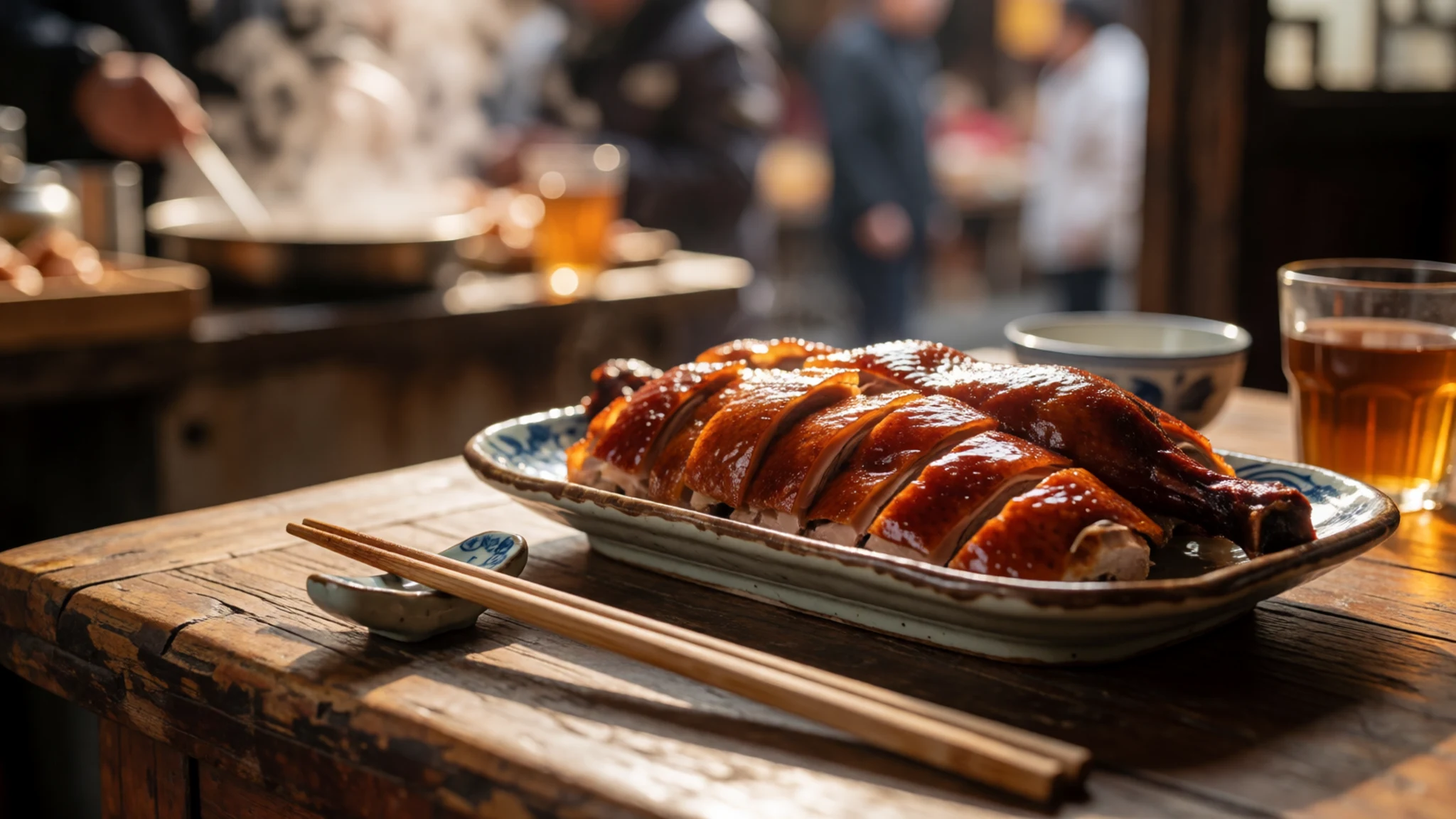
- Dou Fu Nao (豆腐脑) — Breakfast stalls by the morning market
Literally tofu brain, this is a soft bean curd served warm with a savoury sauce, nuts and chilli. It is a breakfast staple for locals, eaten early with a spoon. Go to a breakfast stall near the morning market, where the bowls are filled quickly.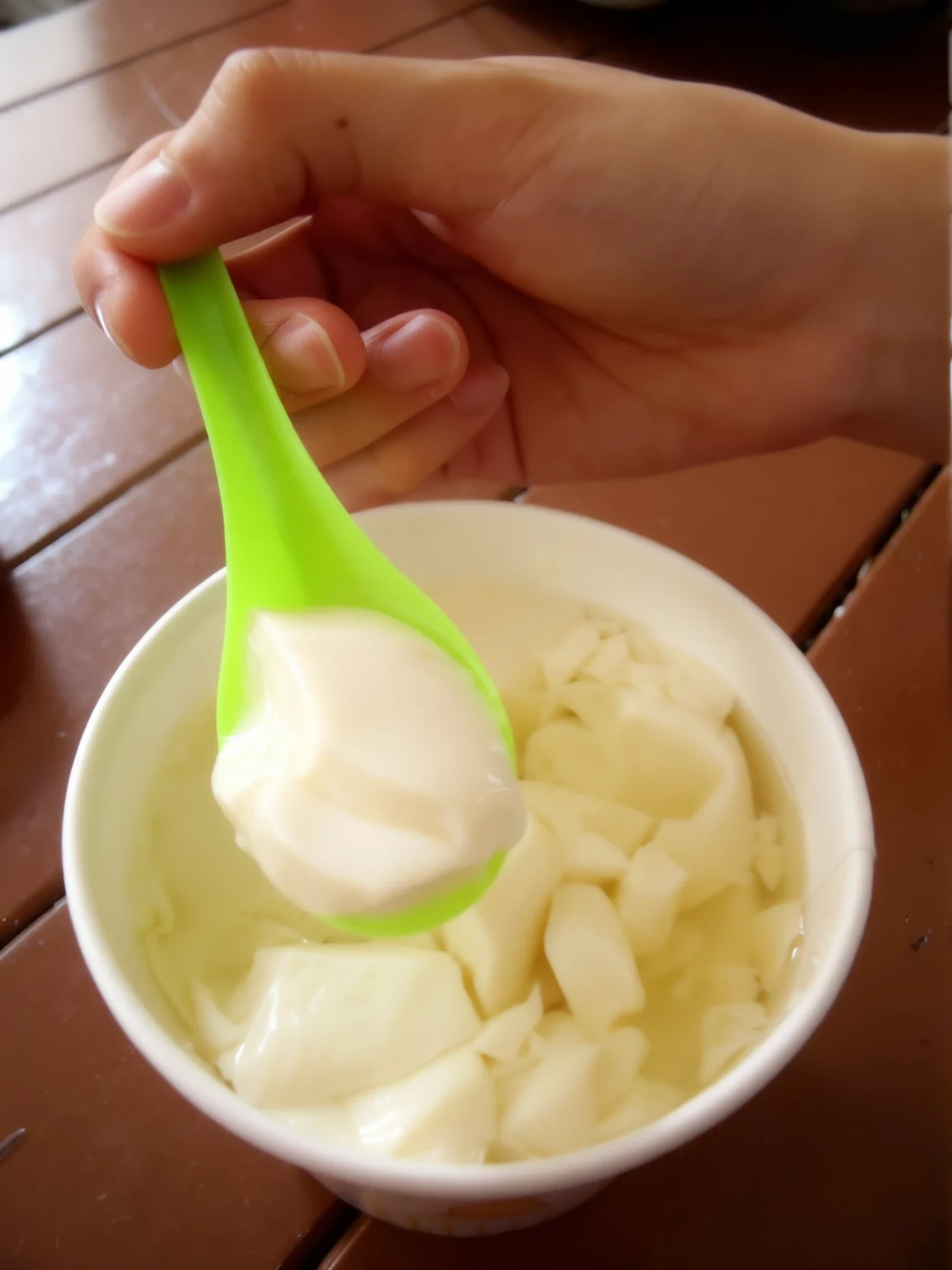
- Ka Bing (卡饼) — Breakfast stalls, the same places that sell Dou Fu Nao
A flatbread filled with minced beef, salt and local spice, usually eaten alongside Dou Fu Nao. The bread is pressed and griddled until it crisps, and the filling is seasoned strongly. Order one as a savoury partner to the tofu dish, and eat it while hot from the griddle. - Shao Kao (烧烤) — Street grills in the evening, on lanes near the town centre
Barbecued skewers of meat and vegetables, cooked over charcoal on street corners and in the evening. Groups order a mix of skewers and share them at small tables, which makes it a good way to eat with others. Look for grills along the busy lanes after dark.
Plan it
Best time. Spring (March–April) and autumn (October–November) are the most comfortable months, with milder weather than summer. Summer is hot and wet, and humidity makes the steep descent to the statue hard work.
How long. 2
Getting there. Fly into Chengdu, then take the intercity high-speed train from Chengdu East, Chengdu South or the Shuangliu airport station to Leshan Station, which takes about an hour from Chengdu East. Buses also run from Chengdu, Emei and surrounding towns.
Budget. mid
Tips
- Go in the early morning, before day-trippers from Chengdu arrive and the steps are at their coolest.
- Book your intercity train ahead for weekends, when Chengdu day trips peak.
- Carry cash for small stalls and snacks, and check the official site before you travel for current ticket rules.
- Carry water and wear grippy shoes, since the descent is hot in summer and slippery after rain.
Etiquette
- Dress modestly and keep your voice low in the temple halls.
- Do not climb on the statue or touch the carvings.
- Ask before photographing monks or pilgrims at prayer.
- Stay on marked paths and step aside for people who are bowing.
Nearby
Sources
- Wikidata Q205131 (CC0)
- Wikipedia: Leshan Giant Buddha (rev 1380031255) (CC BY-SA 4.0)
- Wikivoyage: Leshan (rev 5410118) (CC BY-SA 4.0)
- Leshan Giant Buddha (1), xiquinhosilva (CC BY 2.5)
- 36275-Leshan, xiquinhosilva (CC BY 2.5)
- 36273-Leshan, xiquinhosilva (CC BY 2.5)
- Cliff Side, Leshan Giant Buddha, rduta (CC BY 2.5)
- The Grand One, André Holdrinet (CC BY 3.0)
- Leshan Giant Buddha head, BrightRaven (CC BY 3.0)
- Mount Emei Scenic Area including Leshan Giant Buddha Scenic Area, Karalyn Monteil (CC BY-SA 3.0 igo)
- 2006 乐山大佛, 张元柏 (CC BY 3.0)


