Leptis Magna
Leptis Magna, Libya
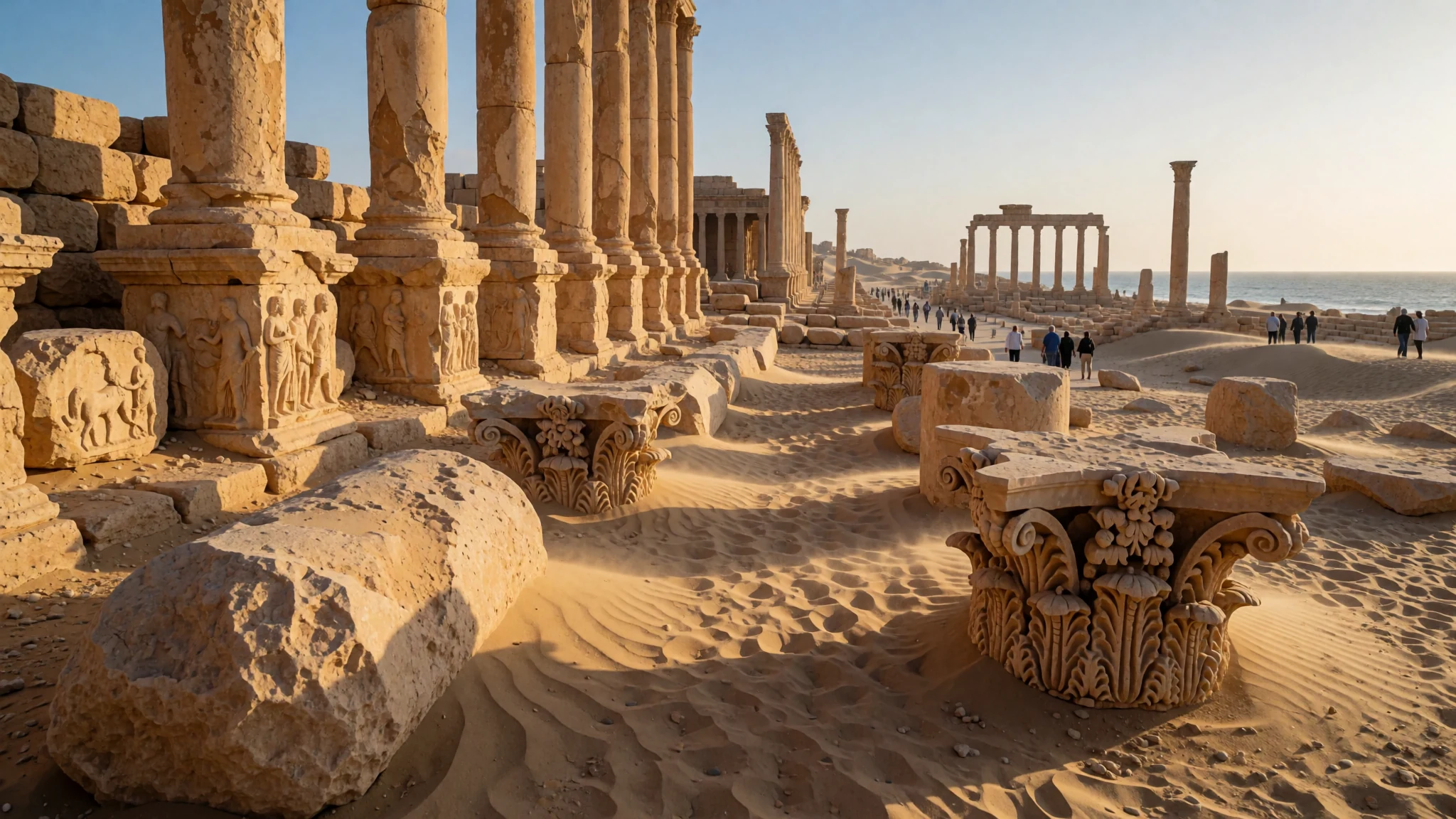
Leptis Magna keeps its Roman forum, theatre and arch largely intact on Libya's Mediterranean coast, a city the sand protected for centuries.
The place
Leptis Magna sits at the mouth of the Wadi Lebda on Libya's Mediterranean coast, about 130 km (81 mi) east of Tripoli, close to the modern town of Al-Khums. The site is usually called Leptis Magna, though you will also see Lepcis Magna, and in Arabic it is known as Libda al-Kubra. The ruins are generally described as the largest Roman remains in Libya, and specialists rank them among the best-preserved Roman sites around the Mediterranean. Most of what you see dates from the years when the city was at its most built-up, under the influence of Septimius Severus, who was born here and oversaw significant expansion. The history of the place runs through Punic, Roman, Vandal, Byzantine and Arab periods, but the stone you walk over is mostly Roman. The layout is easy to read once you get your bearings: a long colonnaded street runs towards the sea, with the forum, the market building and the monumental arch along the way. Much of the site is open ground with little shade, so the sun is a constant presence, and the distances are longer than they look. Give yourself at least two hours for a first look, and more if you want to see the outer quarters at a slower pace.
Its story
Leptis Magna first took shape as a Punic commercial settlement, set up in the latter half of the seventh century BC, and little written evidence survives for its earliest centuries. Around 515 BC it was strong enough to repel an attempt by the Greek Dorieus to plant a colony nearby, which suggests it was already well established. Like many Punic towns on this coast, it fell under Carthage and then, after the Punic Wars, under Rome. It nonetheless kept a surprising amount of independence. In 111 BC, during the Jugurthine War, the town sent envoys to Rome asking for friendship and alliance, and by 107 BC Roman troops had arrived to help it. The town remained within a Numidian kingdom with a privileged status, and later became part of the Roman province of Africa. It was allowed to mint its own silver and bronze coins, and these carried Punic lettering alongside images of Hercules and Dionysus, a mix that says a great deal about its identity. From the 40s to the 20s BC, many Italians who had lost land at home began settling across North Africa. Under Septimius Severus the city reached its most monumental phase. A legion stationed nearby was disbanded in 238, and raids in the later third century weakened the town. Diocletian restored its status as a provincial capital, but the Vandals seized it in 439. Byzantine rule returned in 533, though Berber raids continued. Arab forces took the city around 647, and it was gradually abandoned. Sand then buried the streets and buildings, which is why so much survived. Italian archaeologists uncovered the site in the 1920s, while Italy occupied Libya.
What to see
- The Arch of Septimius Severus — The city centre near the forum
Leptis Magna's most photographed monument is the triumphal arch built in honour of the emperor who was born in the town. Its carved reliefs and columns catch the low light well, so go in the late afternoon for the best photographs. Stand back a little to take in the full height, and look at the decorative detail on the stone. Treat it as the main anchor of your walk.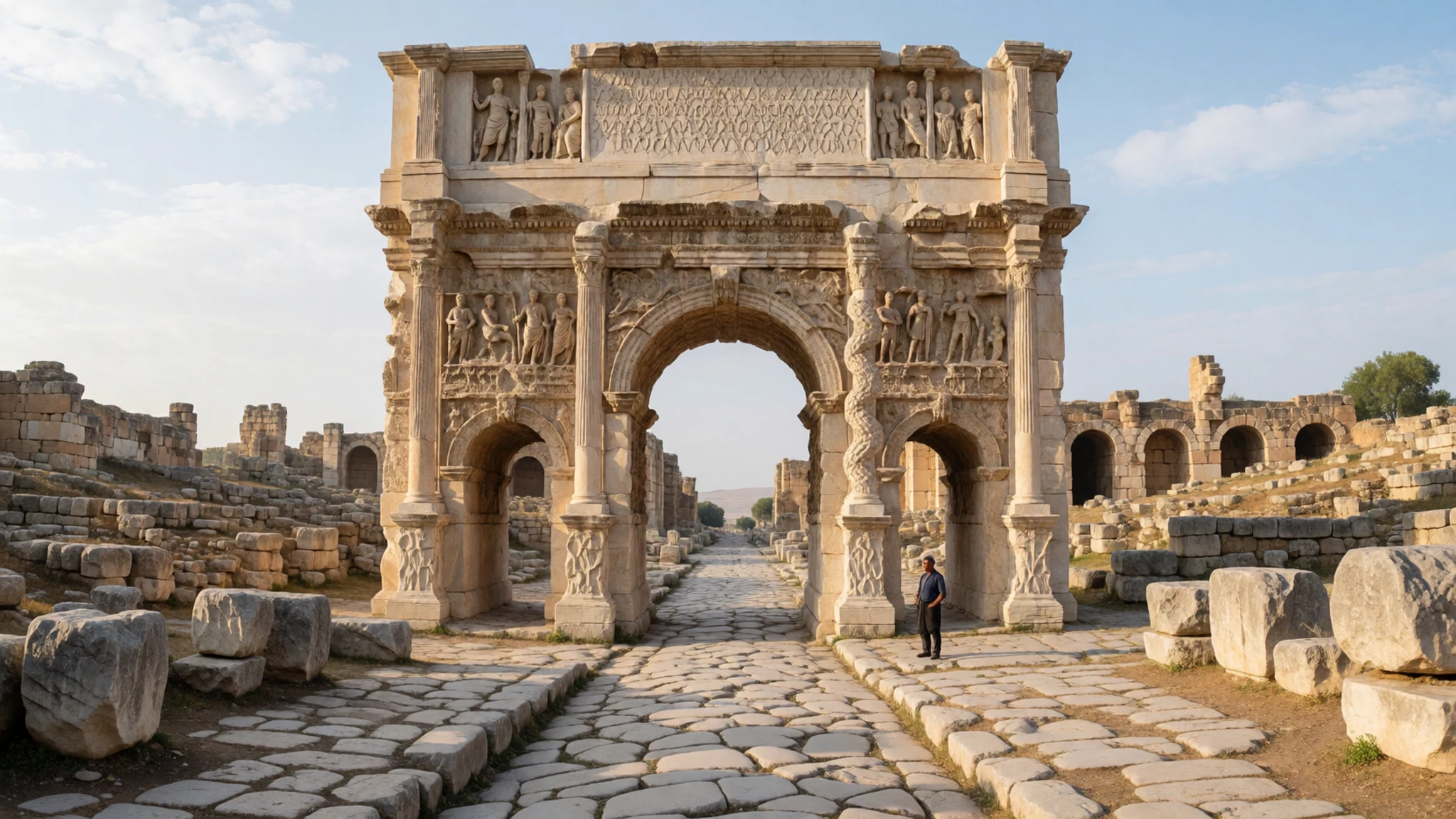
- The Forum — Central ruins, near the arch
The forum was the civic heart of the city, a wide open square where public life, business and ceremony once met. Walk its length and imagine the crowds around the colonnades. The paving and column bases give a good sense of how the space was laid out. There is little shade, so take a hat and water and time your visit for the cooler parts of the day.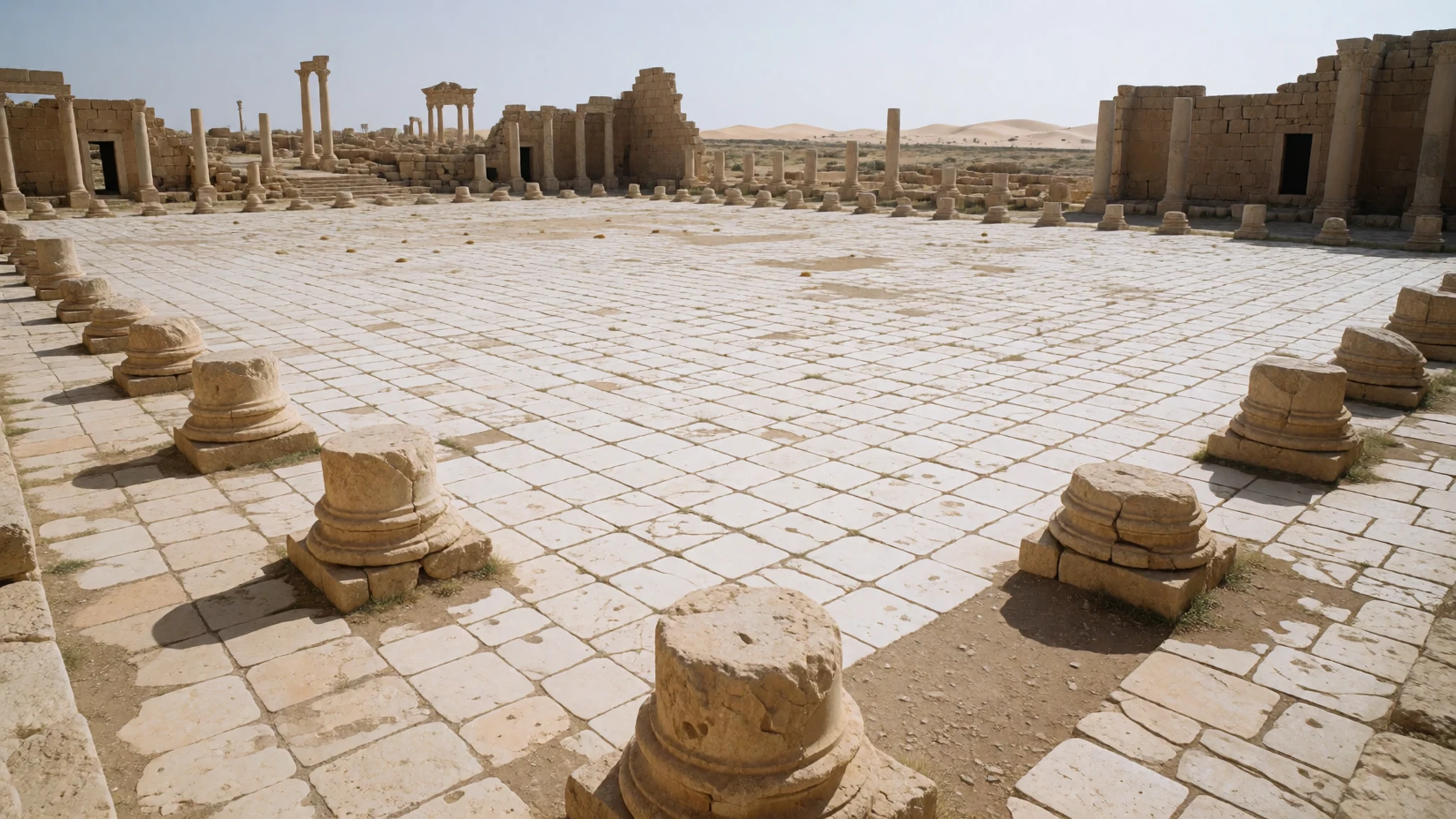
- The Theatre — Eastern area of the ruins
The Roman theatre is one of the best places to understand the scale of the city. Stand in the seating and look down at the stage, then turn to see the sea beyond the walls. Its acoustics were designed for performance, so a quiet voice carries well. It is a good spot to rest and recover from the heat before going on.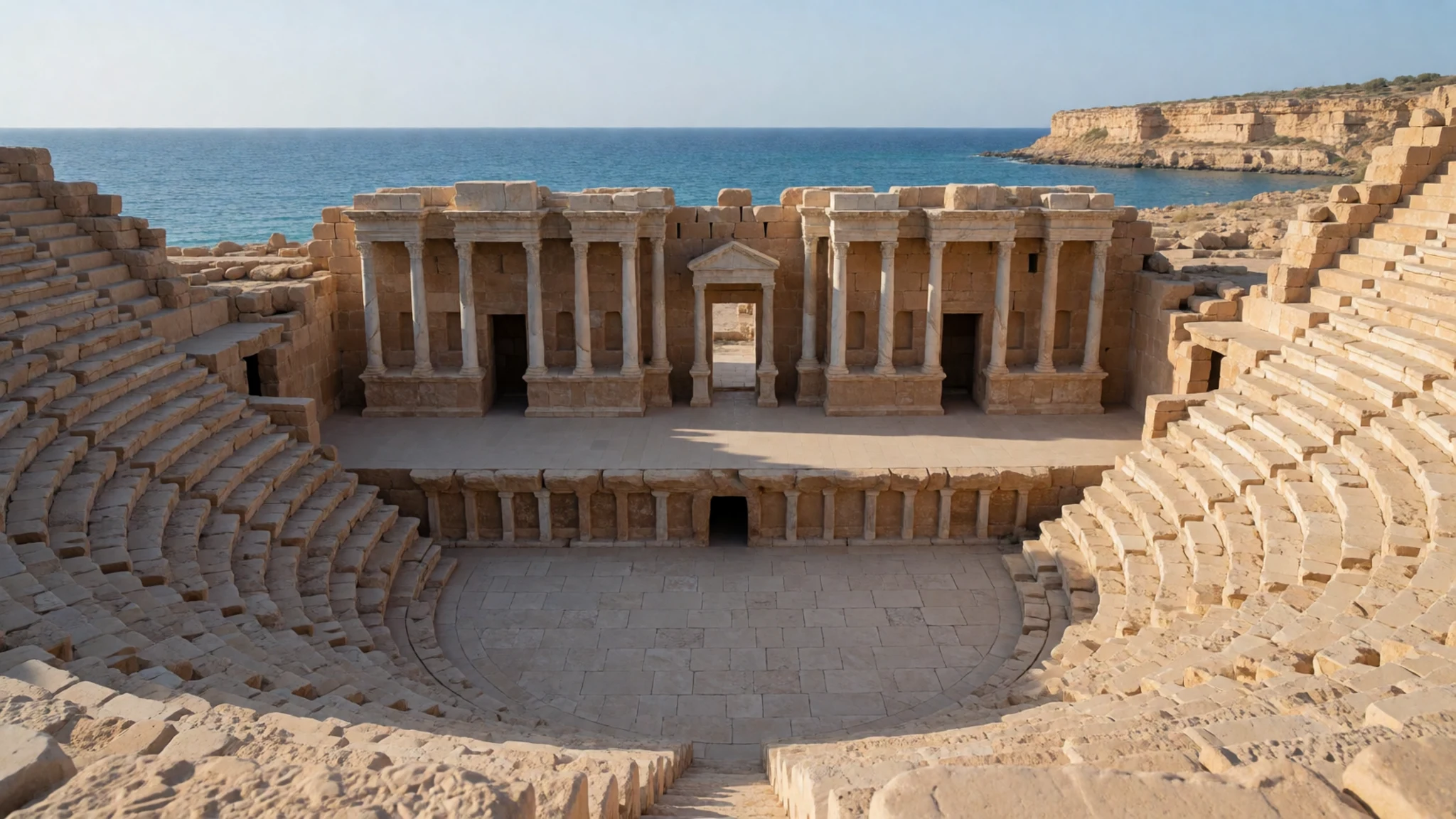
- The Amphitheatre — Outer ruins, a short walk from the theatre
The amphitheatre was built for spectacles and public gatherings, and its oval shape is clear even today. The tiers of seating and the curved outline make it easy to picture a full crowd. Walk around the outer edge to see how the structure sits in the landscape. It is quieter here than at the arch, which makes it a pleasant place to pause.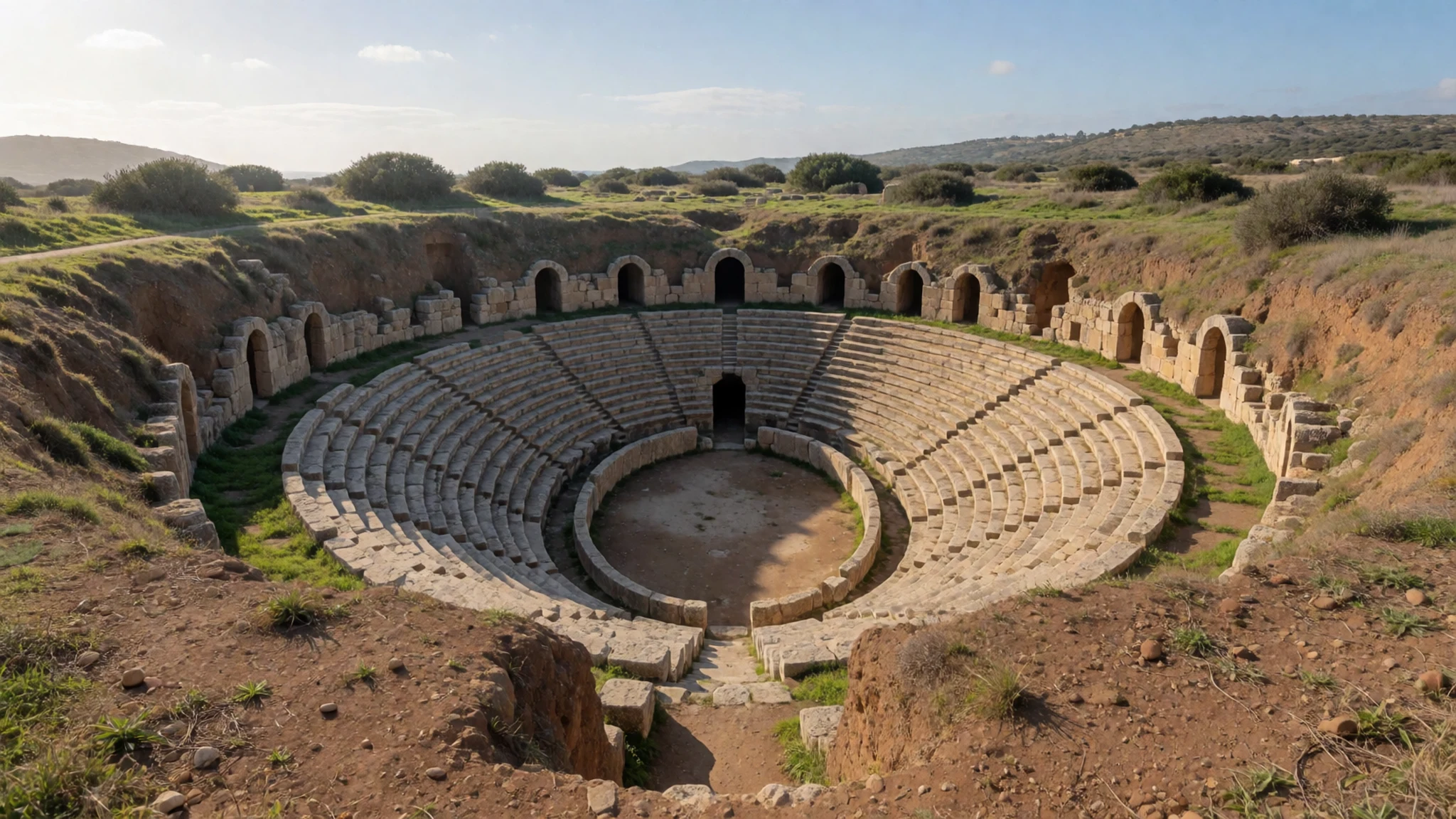
- The Macellum — The market area, near the forum
The macellum, a market building with a circular or domed hall, shows how the city handled trade and food. It sits among the other civic buildings and is a useful reminder that Leptis Magna was a working town as well as a monument. Look at the stonework and the layout of the shop-like rooms. Ask your guide to explain how it functioned, since the signage is limited.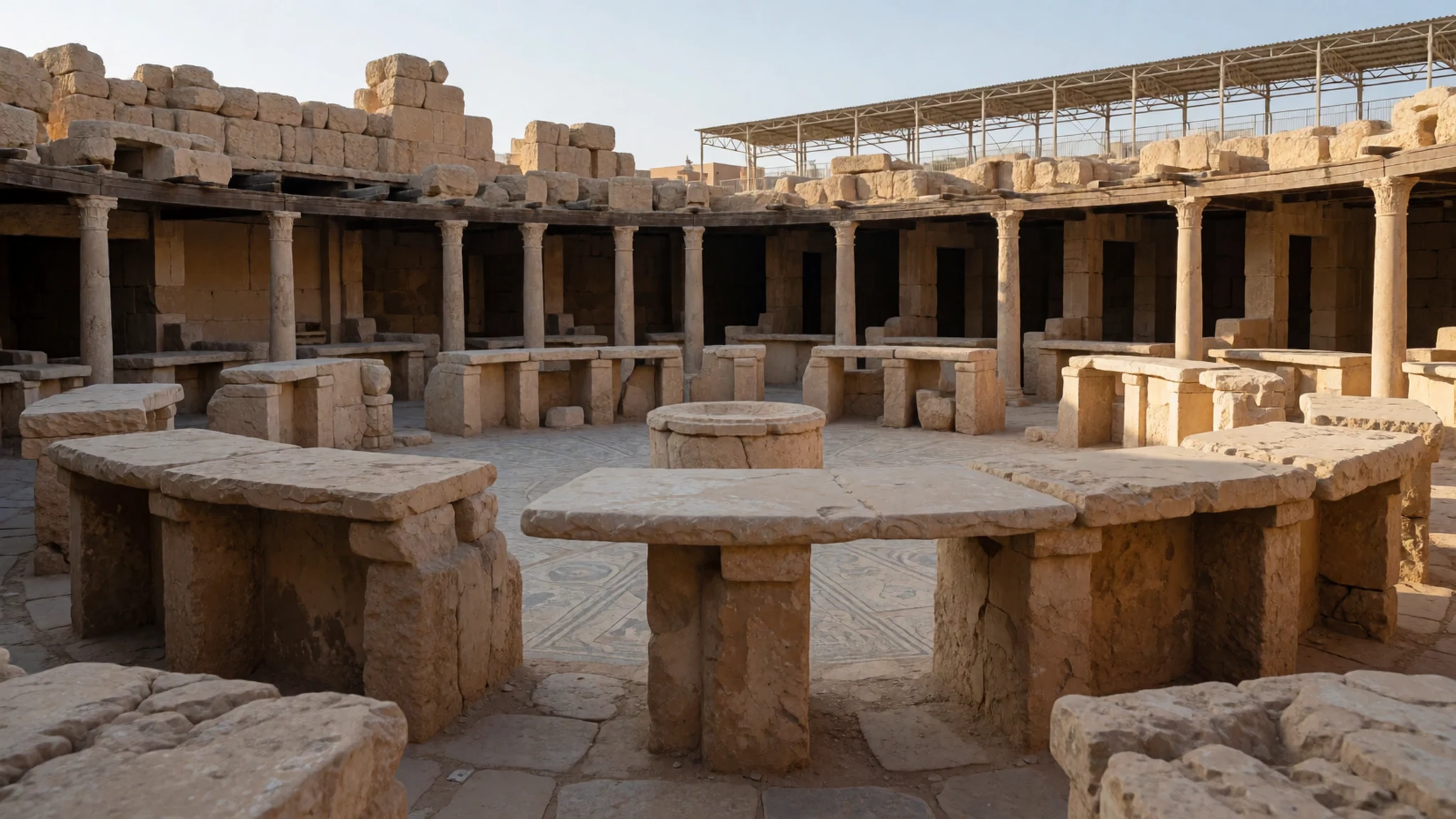
Culture
Leptis Magna is an archaeological site in a country where Islam shapes daily life, so the everyday customs of Libya are the best guide to how to behave. Visitors are generally expected to dress modestly, with shoulders and knees covered, and this is sensible on a site where you may also meet local families and guards. Greetings matter, and a polite word goes a long way with staff and guides. Ask before photographing people, especially women and children, and avoid pointing a camera at military or security personnel. Friday is the weekly holy day, and during Ramadan some cafés and shops may open at different hours, so plan accordingly. Guides are useful not only for history but for explaining local context, and it is customary to thank them and offer a fair tip for their time. Within the site, the ruins are fragile, and you should keep off mosaics and fallen stonework, and stay behind any barriers you see. Please do not climb on the arch or the columns, and follow the instructions of site staff at all times.
What to wear
The traditional dress around Leptis Magna is part of a wider Libyan heritage. Many older women wear the malhafa, a large wrap of fine cloth draped over the head and body, while men have long favoured the jellaba, a loose, hooded robe in wool or cotton. Woven and embroidered textiles, often in cotton or silk, show regional patterns and were once made for weddings and festivals. Today, most people in Al-Khums and along the coast wear Western-style clothes for work and study, with headscarves common among women and the jellaba or a long shirt and trousers worn by men on religious occasions. For a visit, dress for sun and open ground. Loose cotton or linen trousers and long-sleeved tops keep you cool and respectful. A light scarf is useful for shade, for a mosque, or for a meeting with local people. Wear closed, sturdy shoes with good grip, because the paving is uneven and sometimes sandy. Avoid shorts, sleeveless tops and very tight clothing in public.
What to eat
- Grilled fish from the coast — Seafront grills and eateries in Al-Khums and the harbour
Fresh fish grilled over charcoal is one of the simplest pleasures on this stretch of Libyan coast. Ask for whatever the fishermen landed that morning, usually served with lemon, salad and bread. Eat at a simple seafront eatery in Al-Khums or at the harbour, where the fish is cooked to order.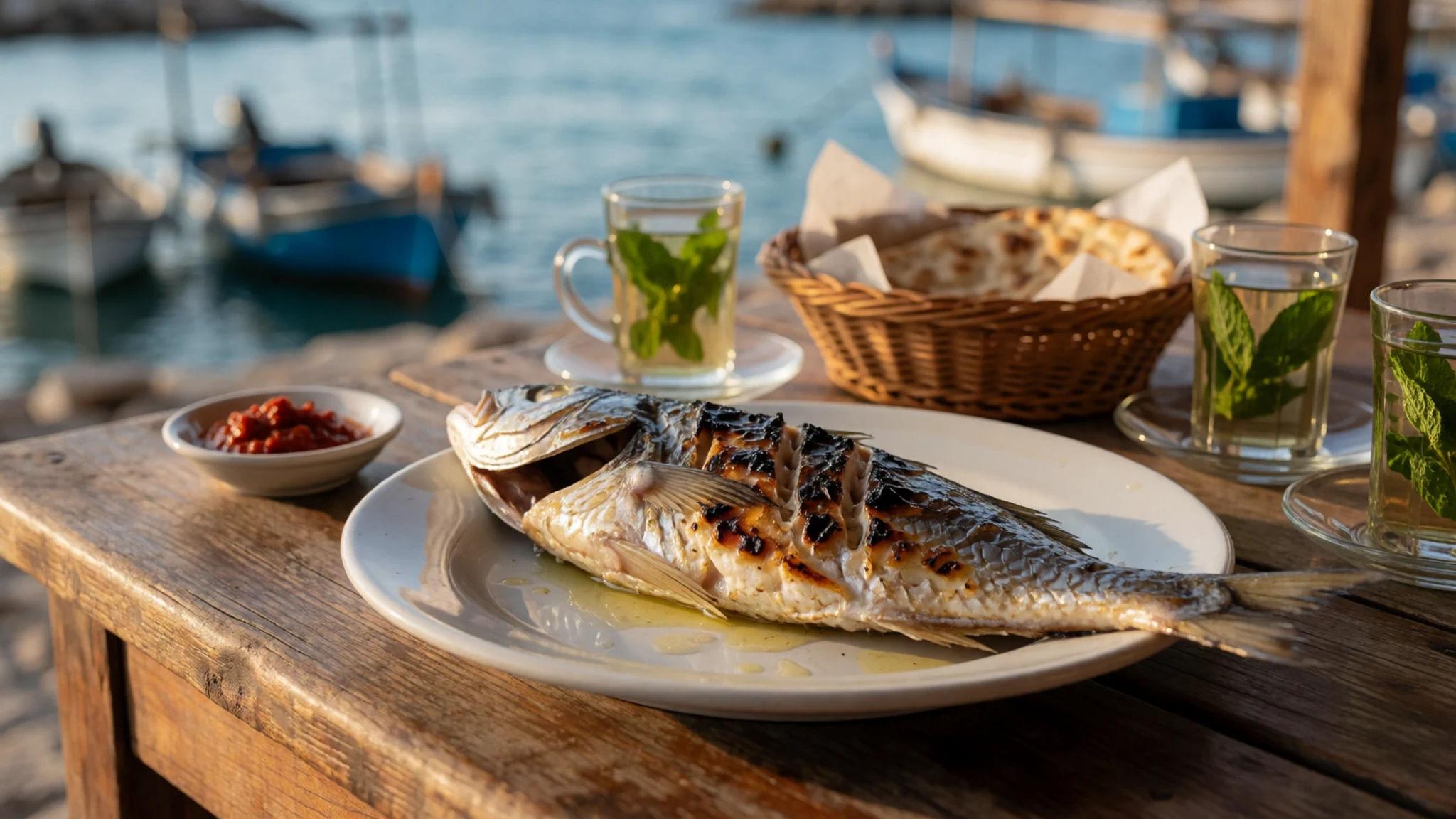
- Bazin — Family-run local eateries, often busy at lunchtime
Bazin is a traditional Libyan dish of barley dough shaped into a dome and served with a rich stew, often with potatoes, eggs and a tomato-based sauce. It is a filling meal and a good introduction to home cooking. Look for it at a family-run eatery serving local dishes, particularly at lunchtime.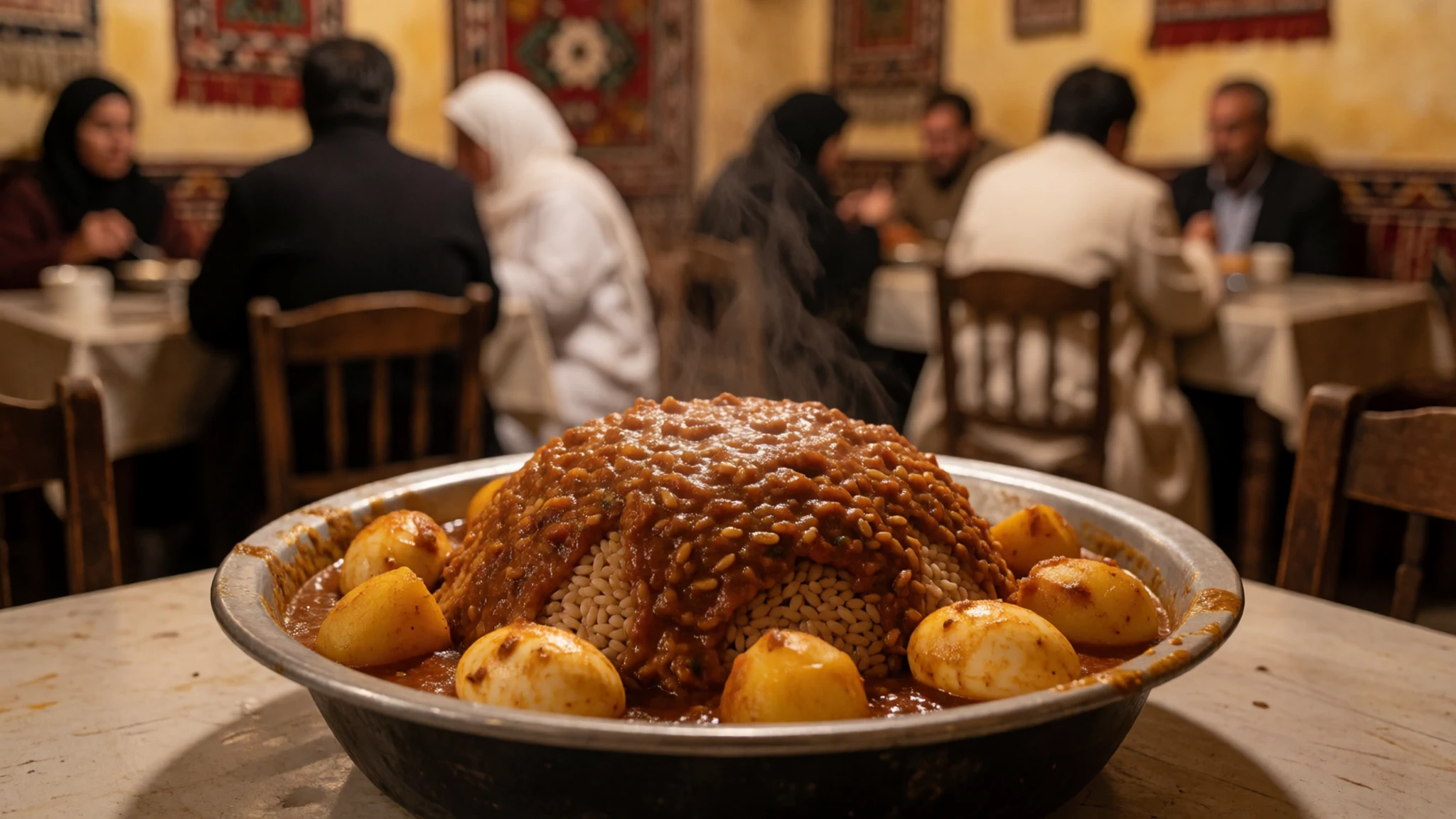
- Couscous with lamb — Local eateries and lunch counters in the town
Couscous, steamed slowly and served with lamb or chicken and vegetables, is a common meal across the Maghreb and appears widely in Libya. It is especially popular for family meals and celebrations. Ask in a local eatery whether it is available, since the menu may be limited in smaller places.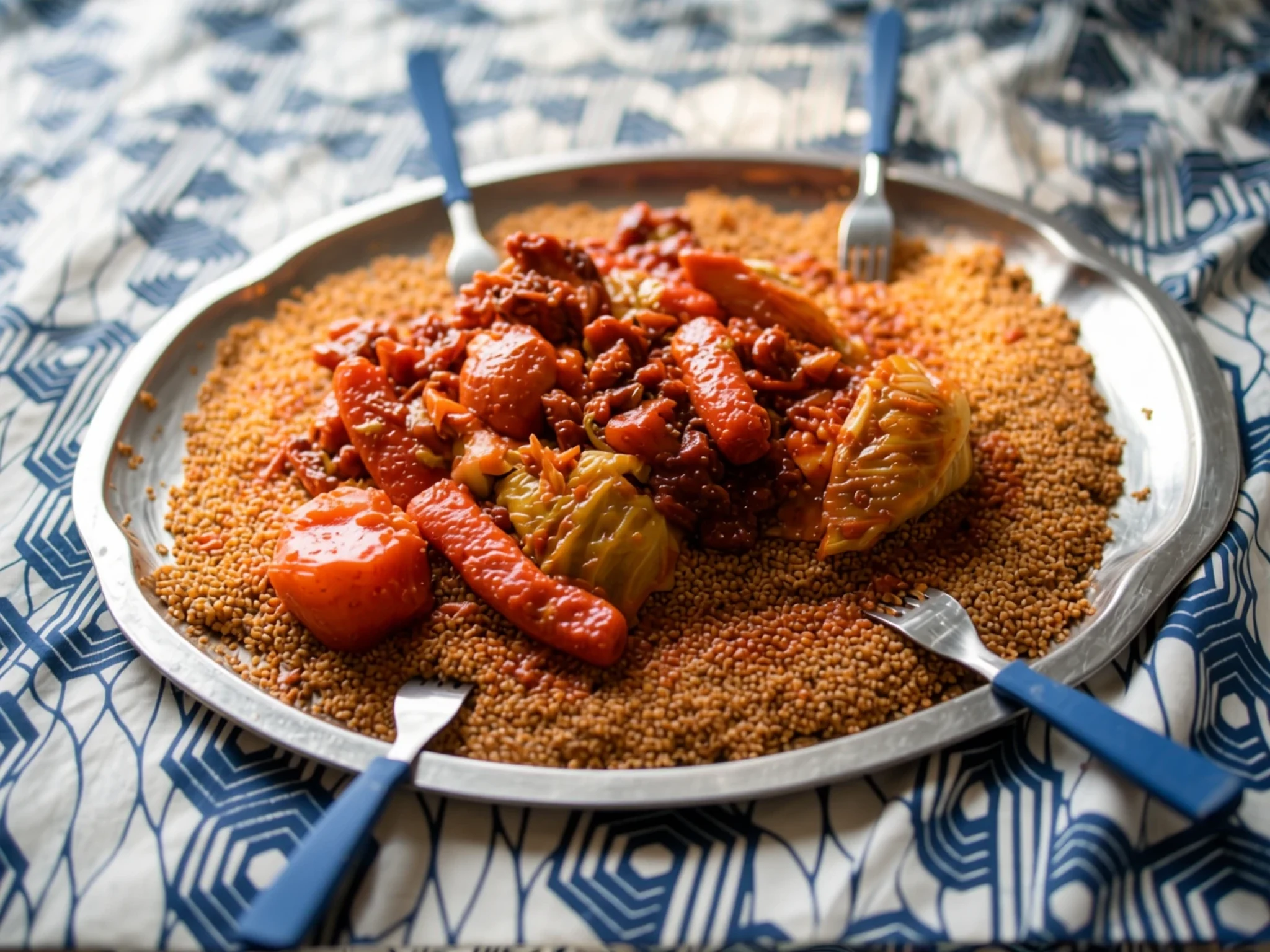
- Mint tea — Cafés in the town centre and on main streets
Mint tea, sweetened and poured from height, is served throughout the day as a social drink. It is an easy way to slow down after a long walk in the sun. Sit in a café near the town centre and ask for a glass, which is usually inexpensive and a relaxed way to meet people. - Dates and fresh bread — Neighbourhood bakeries and the morning market in Al-Khums
Dates are a staple of Libyan hospitality, often served with coffee or tea, and bread is baked fresh each morning. Buy both from a neighbourhood bakery or a market stall to take with you to the site. They keep you going through the heat and are easy to carry.
Plan it
Best time. Winter, from December to February, is the most comfortable season for walking the open ruins, with highs of about 25 to 30 C, though most of the coastal rain also falls in those months. Summer is hot and bright with little shade, and winter can be cooler and wetter on the coast, so pick a window with mild days if you can.
How long. 1–2
Getting there. Fly into Tripoli International Airport, then travel about 130 km (81 mi) east to Al-Khums and the site. Arrange a driver or guide in advance, since onward transport is limited, and check current travel advice for Libya before you book.
Budget. mid
Tips
- Check your government's current travel advice for Libya before booking, as the situation can change at short notice
- Arrange a licensed guide in advance through a reputable operator, because the information on site is limited
- Visit early in the morning or late in the afternoon to avoid the worst heat
- Carry cash in local currency, as card payments may not work outside larger hotels
- Buy water and snacks before you go in, since drinks are sold only at the entrance
Etiquette
- Dress modestly with shoulders and knees covered, and carry a scarf for shade or visits to religious sites
- Ask permission before photographing people, and avoid photographing security personnel
- Stay behind barriers and do not climb on the arch, columns or mosaics
Nearby
Sources
- Wikidata Q191504 (CC0)
- Wikipedia, Leptis Magna (rev 1382886486) (CC BY-SA 4.0)
- Wikivoyage, Leptis Magna (rev 4910183) (CC BY-SA 4.0)
- Leptis Magna (29), joepyrek (CC BY-SA 2.0)
- Forum in Leptis Magna, SashaCoachman (CC BY 3.0)
- Archaeological site of Leptis Magna, Nigel Hoult (CC BY 2.5)
- Leptis Magna ruins, Virginia Water (1), Stephen Craven (CC BY-SA 2.0)
- The ancient Roman theater at Leptis Magna, Daviegunn (Public domain)
- Leptis Magna - Marktgebäude (macellum), Franzfoto (CC BY-SA 2.0)
- Leptis Magna amphitheatre, Jan Hazevoet (CC BY 3.0)
- Arch of Septimius Severus, Luca Galuzzi (CC BY-SA 2.5)


