Lençóis Maranhenses National Park
Lençóis Maranhenses National Park, Brazil
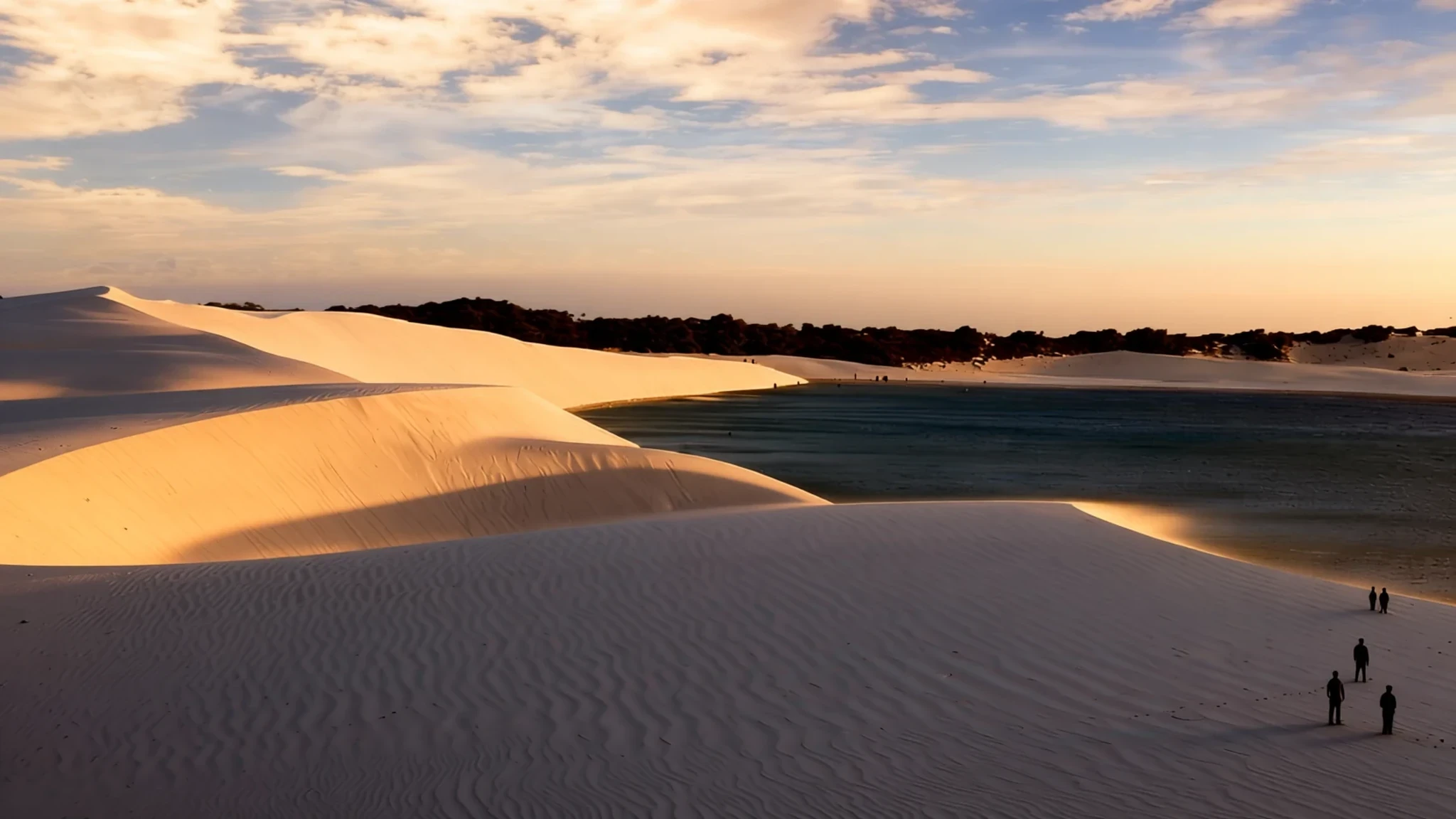
White sand dunes, rain-filled lagoons and a quiet Atlantic beach, all within one national park in northeast Brazil.
The place
Lençóis Maranhenses National Park sits on Brazil's northeast coast, in the state of Maranhão, just east of the Baía de São José. The park covers about 155,000 hectares and includes roughly 70 km of Atlantic beach. Inland, the landscape is a sea of white sand, with dunes that roll for long distances and climb as high as 40 m in places. Rain is the surprise. The region gets around 1,200 mm a year, and most of it falls between January and May, so the hollows between the dunes fill with fresh water. The lagoons can stretch as long as 100 m and reach about 3 m deep, and at the height of the wet season they can cover close to 41% of the park. As the dry months arrive, the water slowly sinks or evaporates, and the scene changes again. Most visitors come on day trips or treks from Barreirinhas, and the park draws tens of thousands of people a year, so the popular lagoons feel busy by mid-morning. Expect heat, glare and soft sand underfoot, and bring more water than you think you will need. Ecotourism is the main draw, with surfing, canoeing and horse riding also on offer near the coast.
Its story
Lençóis Maranhenses National Park owes its look to a long working relationship between rivers, wind and rock. Sand is carried down from the interior by the Parnaíba and Preguiças rivers, then pushed back inland by the prevailing winds, piling into dunes over an immense span of geological time. The park was set aside in 1981, when the coastline and its dune fields first received formal protection, and it has since grown into one of Brazil's best-known landscapes. The lagoons are the part that puzzles first-time visitors. Rain falls heavily in the wet months, yet the water does not soak away. A hard layer of rock beneath the sand acts like a basin, so each hollow holds its own pool. When the rains ease, the level drops, the lagoons shrink, and new ones take shape the following year. The park later joined the UNESCO World Heritage List, recognised for a landscape with very few real parallels anywhere else. For the communities in the villages on the dune edges, the seasons work as a practical calendar, with fishing, travel routes and guest bookings all shifting with the water. Understanding that cycle explains why a visit in one month can look so different from a visit in another.
What to see
- Lagoa Bonita and Lagoa Azul — day trips from Barreirinhas
Most visitors start with a day trip from Barreirinhas to one of these freshwater lagoons. The drive ends at the dunes, and the last stretch is on foot, so the first sight of blue water between white slopes is a real moment. Arrive early, because the lagoons fill with people by late morning.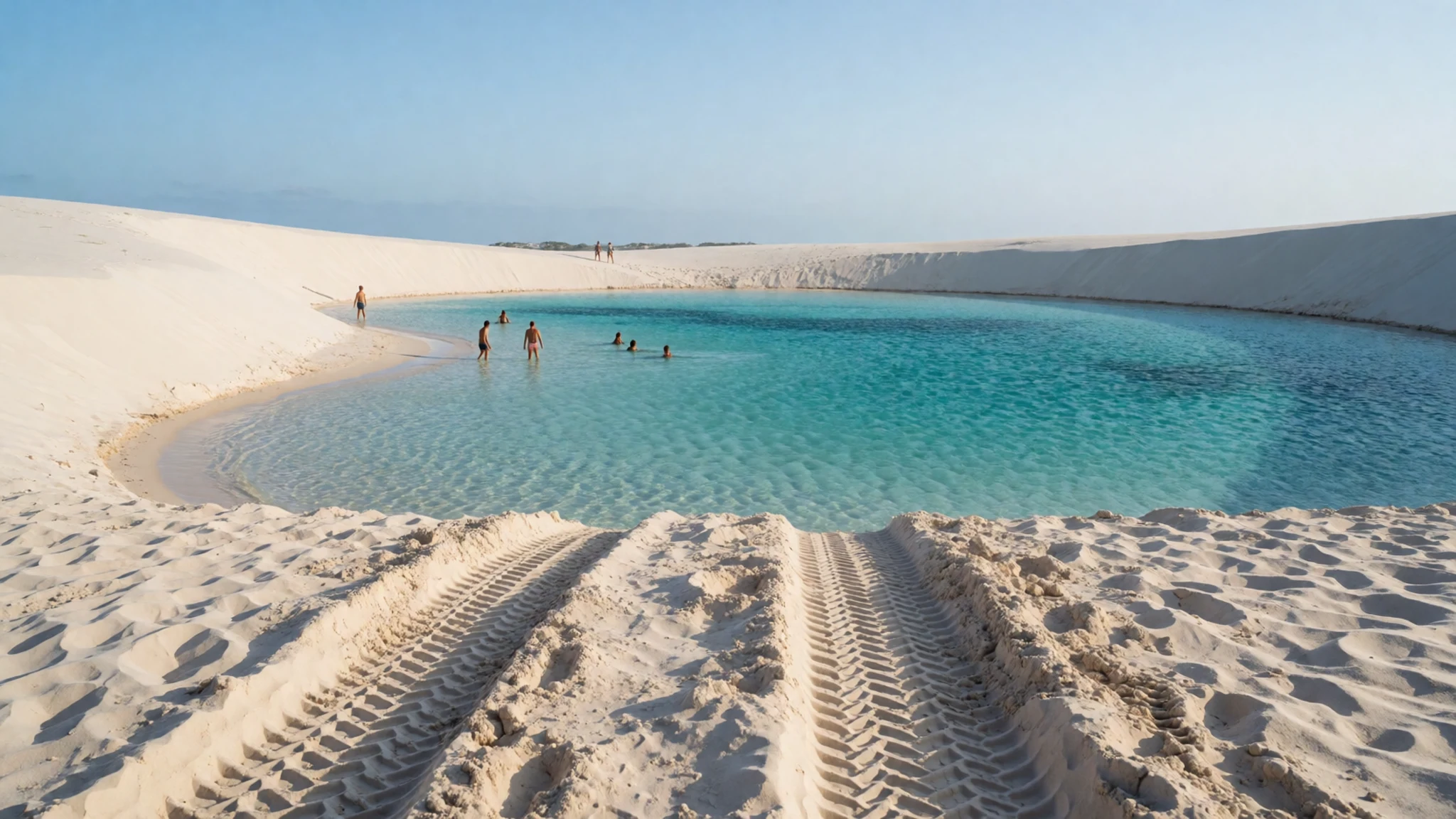
- The Atins to Santo Amaro trek — the eastern dunes, heading west
The longer walk runs roughly east to west, from the Atins side towards Santo Amaro, and the wind usually helps, pushing at your back rather than into your face. Stops along the way include Baixa Grande and Queimada dos Britos. Carry all your food and water, because nothing is sold inside the park except at a few local lodgings.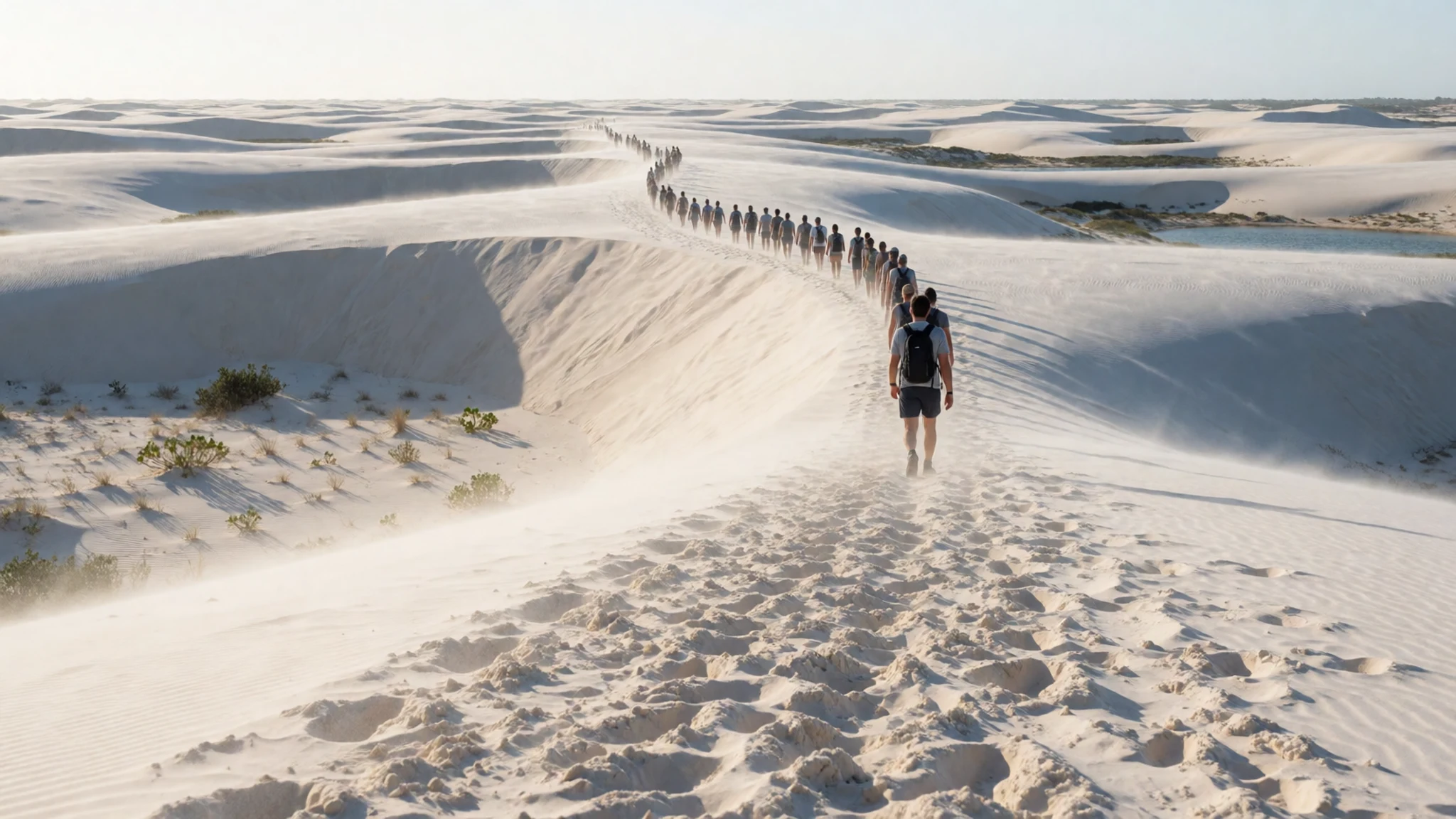
- Canto do Atins — the village on the eastern side
Canto do Atins is a village many travellers choose as a base for the eastern dunes. Staying here puts you closer to the sand than staying in Barreirinhas, so you can walk out before the heat settles in. The village is small and quiet, with simple guesthouses and a beach of its own. Ask a local guide about routes, as tracks shift with each season.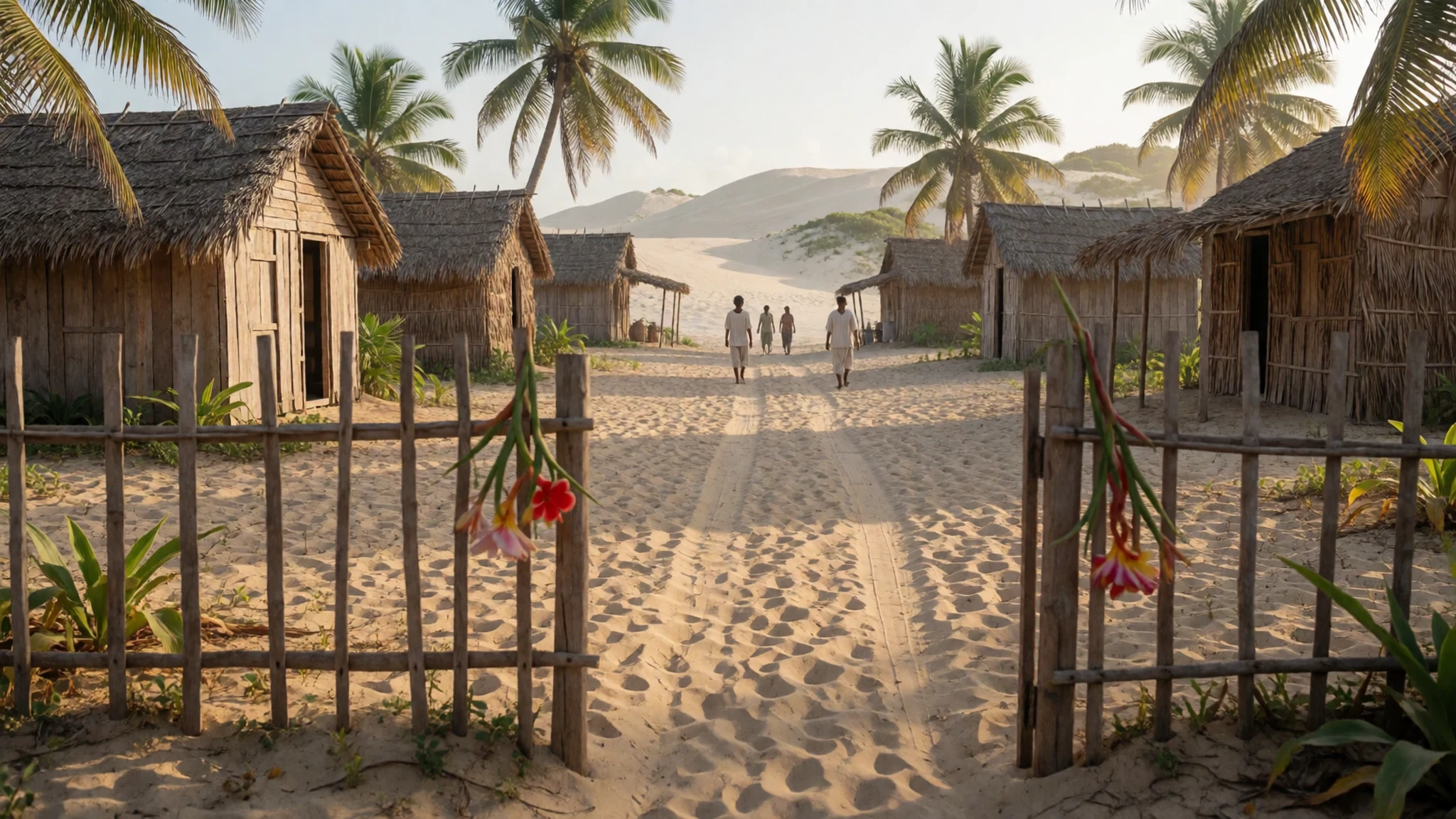
- The Atlantic beaches — the coast along the park's northern edge
The park's 70 km of coastline gives you a different mood from the dunes. The surf can be strong, so swim where locals do and check conditions before you go in. Fishing boats and sand tracks mark the edge of the beach, and at low tide the firm sand is good for a long walk. Shade is scarce, so start early or late.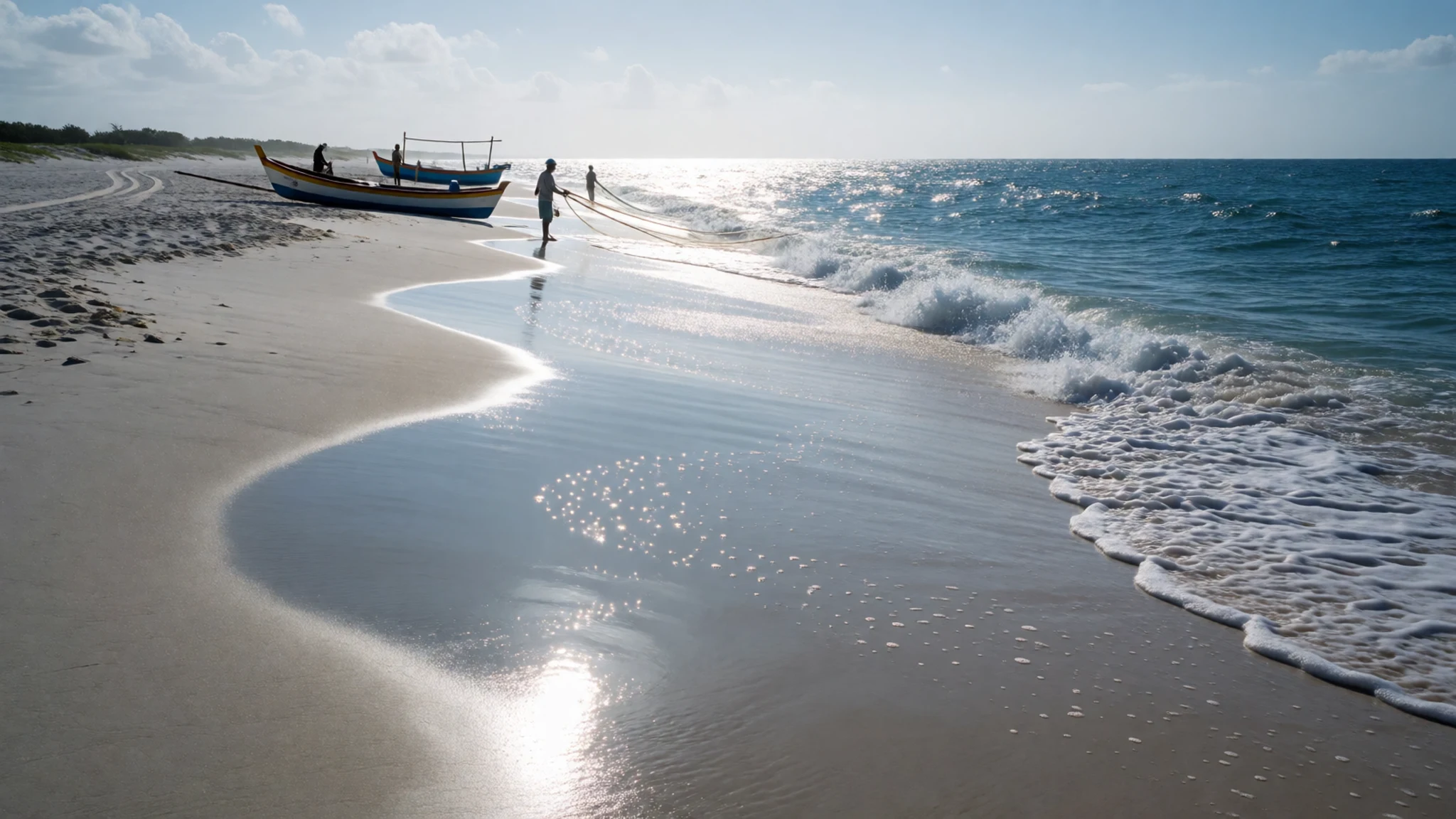
- Paulino Neves and the Pequenos Lençóis — a village just outside the park boundary
Paulino Neves, just outside the park boundary, offers similar dunes and lagoons known locally as the Pequenos Lençóis. It is a practical alternative and a useful stop if you arrive from Camocim. Sights here are not inside the national park itself, so check which area your guide is covering before you set out.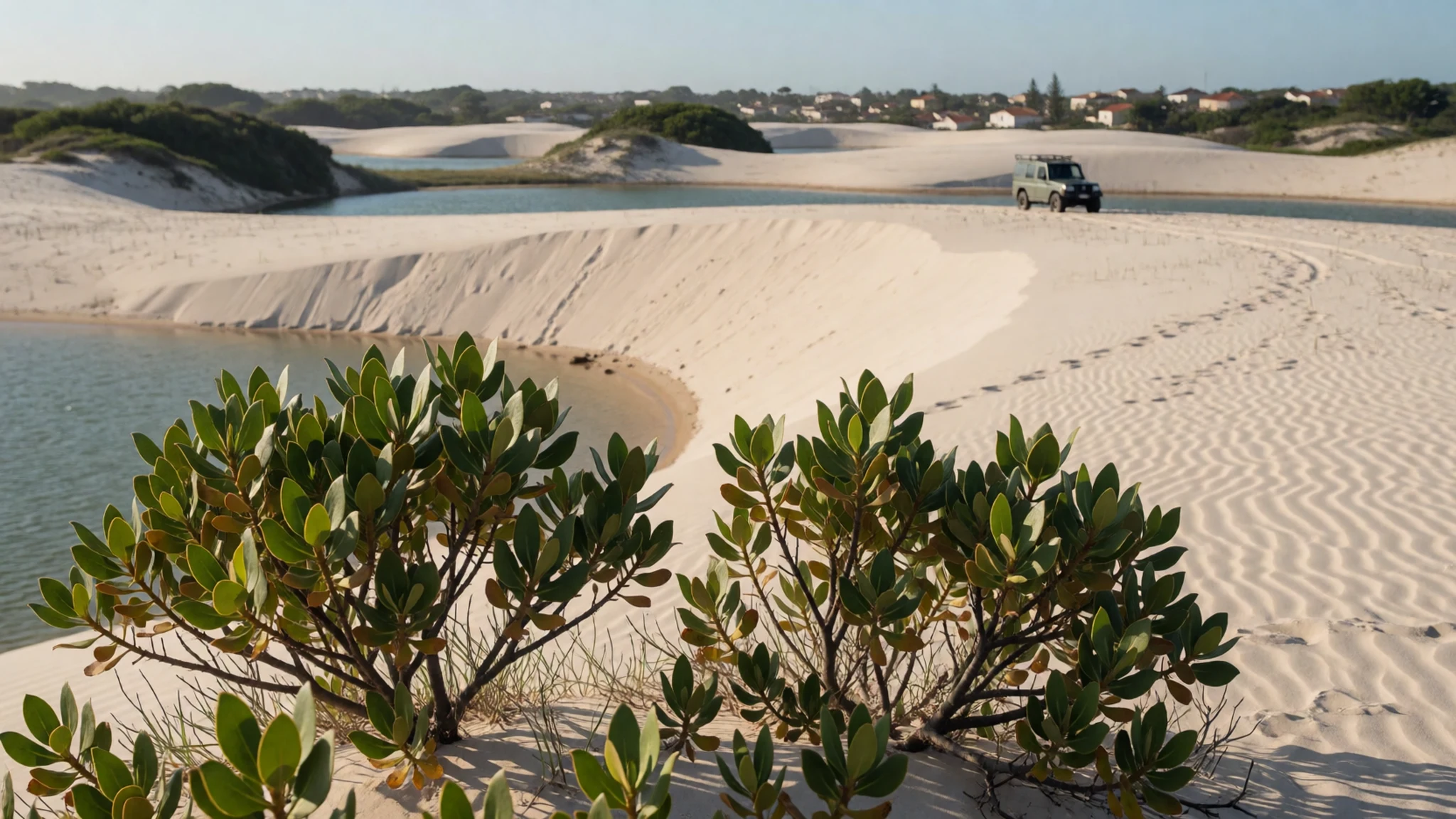
Culture
Lençóis Maranhenses National Park lies in a region where daily life still turns on fishing, small-scale farming and the seasonal tourist trade. The communities at the dune edges, including those around Atins and Barreirinhas, have long worked with the sand and the water, and you may find people more reserved at first than in the busier towns. Portuguese is the only language you will need, though a few words of greeting go a long way with guesthouse owners and boat drivers. Local guides know the tracks and the lagoons far better than any map, and hiring one puts money directly into the community. Peak hours at the most famous lagoons can be crowded and noisy with vehicles, so arriving early keeps the experience calmer for everyone. Festivals with drums, folk dance and costumed groups are a real part of the state's culture, so do not be surprised by music in the villages. Carry out everything you bring in, including bottle caps and food wrappers, and ask before photographing anyone in their home or at work.
What to wear
Lençóis Maranhenses National Park has no dress of its own, but the state of Maranhão has rich textile traditions. The best known are the costumes of the bumba-meu-boi folk festival, with embroidered and sequined fabric, feathers and bright colours, worn by dancers and musicians in performances across the state. Cotton and linen are the everyday fabrics of the coast, and lace and crochet appear in some household textiles. In the villages today, people dress much as they do elsewhere in Brazil: shorts, cotton shirts, flip-flops for the beach and simple dresses, with a light layer for cooler evenings. Visitors should dress for heat and glare. Light, long-sleeved cotton or linen protects you from the sun and the sand, a wide-brimmed hat and sunglasses are essential, and closed shoes with grip help on dune slopes. Sand gets into everything, so pack a dry bag and a spare layer. Modesty norms are relaxed on the beach, but cover up when you walk through villages or enter a church.
What to eat
- Arroz de cuxá — lunch counters in Barreirinhas and the central market
Arroz de cuxá is a rice dish from Maranhão, flavoured with a paste of ground vinagreira leaves and dried shrimp. It is green, slightly sour and a local favourite. Ask for it at a simple lunch counter after a morning on the dunes.
- Torta de camarão — seafood eateries on the Barreirinhas waterfront
Torta de camarão is a savoury shrimp pie with a creamy filling, usually served in generous slices. It is rich and filling, so it suits a late lunch after a long walk. Coastal eateries are the best places to find it made with local catch.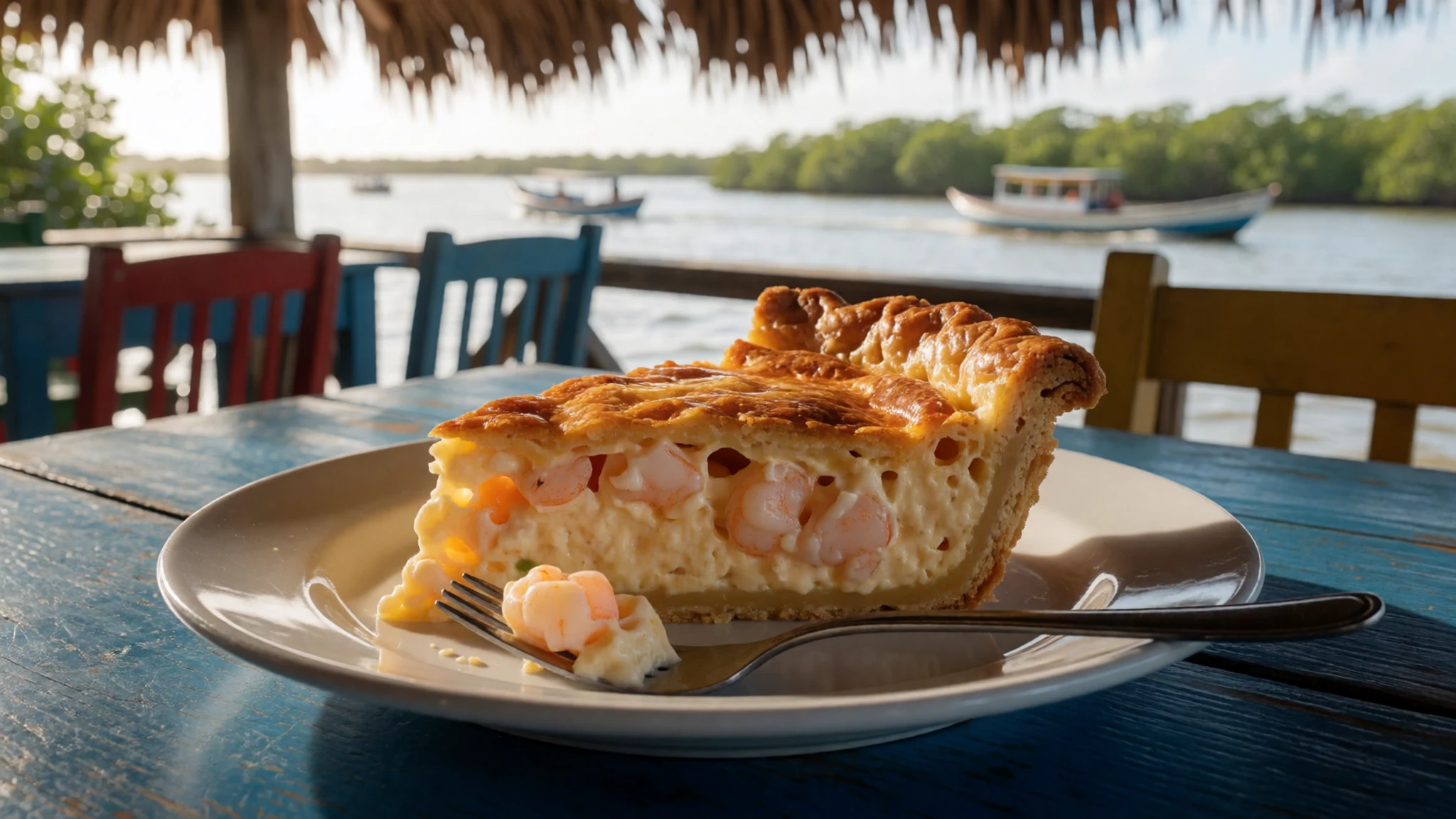
- Peixe frito — the riverside in Barreirinhas, where boats land their catch
Fried fish is the everyday staple along the riverside, usually served with rice, beans and a simple salad. The fish is often landed that morning. Go in the late afternoon, when the boats come in and the stalls are busiest. - Cocada — street sellers and bakeries in Barreirinhas
Cocada is a sweet made from grated coconut cooked with sugar, and it comes in soft or firm versions. Street sellers and small bakeries sell it, often wrapped in paper. It makes a good snack for the walk back to the vehicle. - Suco de cajá — juice stalls and guesthouses in Atins and Barreirinhas
Suco de cajá is a juice made from the cajá fruit, which is sweet with a sharp edge. It is refreshing after the heat of the dunes. Inside the park there is nothing to buy, so drink plenty before you set off.
Plan it
Best time. May to September suits trekking, with less rain and cooler mornings, though the lagoons shrink as the year goes on. Rain falls mostly from January to May, when the lagoons are at their fullest but roads and tracks can be hard going.
How long. 2–3
Getting there. Fly to São Luís, then take a bus to Barreirinhas, the usual base. From Fortaleza or Jericoacoara you can reach Barreirinhas or Paulino Neves by road, and the final leg is often by off-road vehicle.
Budget. mid
Tips
- Book guides and vehicles ahead in high season, and bargain for transport outside it.
- Start walks before the heat builds, since the sand reflects the sun hard.
- Carry more drinking water than you think you need, as there are no shops inside the park.
- Bring Brazilian reais in cash for small shops and boat rides, because card payment is not guaranteed in villages.
- Protect cameras and phones from sand with a dry bag.
- Check the official site, parquelencois.com.br, for current rules before you go.
Etiquette
- Keep to marked routes and leave the lagoon edges undisturbed.
- Take all rubbish out with you.
- Ask before photographing people in villages.
Nearby
Sources
- Wikidata Q647777 (CC0)
- Wikipedia (rev 1380208325) (CC BY-SA 4.0)
- Wikivoyage (rev 5293139) (CC BY-SA 4.0)
- Photo: 01-len-is-maranhenses-2018.jpg, Julius Dadalti (CC BY-SA 4.0)
- Photo: 02-parque-nacional-dos-len-is-maranhenses-paulo-cattelan-03.jpg, Paulo Cattelan (CC BY-SA 4.0)
- Photo: 03-lencois-01.jpg, Augusto Pessoa (CC BY 3.0)
- Photo: 04-maranh-o-19-06-21-5.jpg, andresumida (CC BY 2.5)
- Photo: 05-maranh-o-19-06-22-23.jpg, andresumida (CC BY 2.5)
- Photo: 06-maranh-o-19-06-23-35.jpg, andresumida (CC BY 2.5)
- Photo: 07-maranh-o-19-06-23-39.jpg, andresumida (CC BY 2.5)
- Photo: 08-maranh-o-19-06-23-43.jpg, andresumida (CC BY 2.5)


