Lemnos
Lemnos, Greece
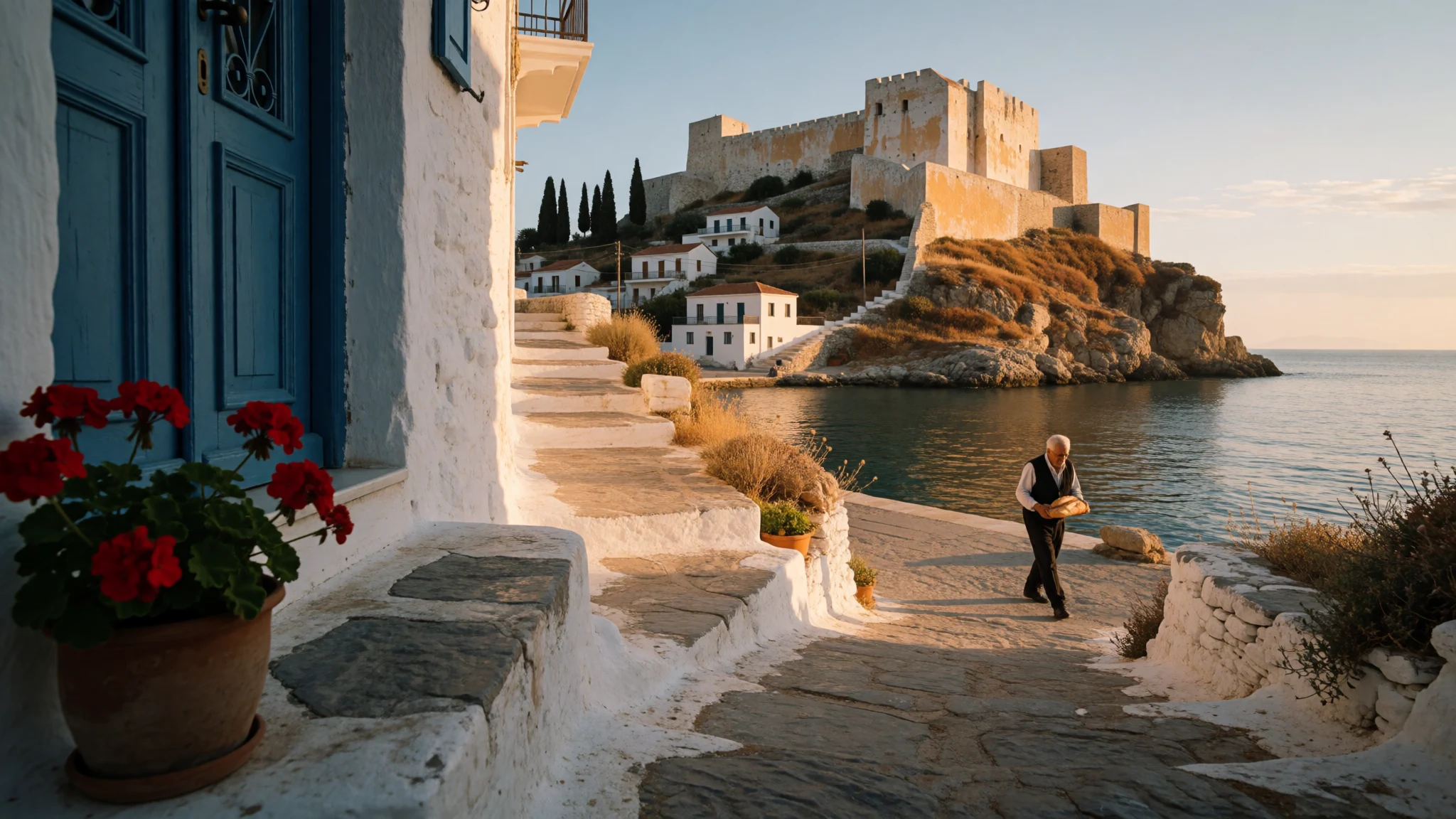
Lemnos is a windswept northern Aegean island of salt lake, pale dunes, Bronze Age ruins and unhurried village tavernas, quiet outside high summer.
The place
Lemnos sits in the northern Aegean, roughly halfway between Mount Athos on the Greek mainland and the Turkish coast, and belongs to the North Aegean region. About 16,700 people live here, mostly around Myrina, the main town and harbour on the west coast, and Moudros, which opens onto a big central bay. Unlike many Greek islands, Lemnos is mostly flat, with gentle farmland, shallow marshes and long sandy beaches. The northwest turns rockier and hillier, and Mount Skopia, at 430 metres, is the high point. The old nickname, the wind-ridden one, is earned: gusts are common in August and through the winter, which suits windsurfers and kite-flyers but can make a beach afternoon awkward. The climate is Mediterranean, with hot dry summers and mild winters that now and then bring snow. Myrina is the practical base. A castle (kastro) stands over the harbour, cafés line the waterfront, and the west coast holds most of the island's guesthouses and apartments. Villages inland and along the coast have tavernas, small churches and fields of wheat and vines. The island is big enough to need a car, yet small enough that the salt lake, the dunes and the ancient sites can each be reached in a day's drive from one base. It lacks the whitewashed postcard density of the Cyclades, and that is much of the appeal. Summer brings Greek families and a modest number of foreign visitors; outside July and August, many roads and beaches are close to empty.
Its story
Lemnos holds some of the oldest traces of settlement yet found on the Aegean islands. Excavations on the Louri coast near Moudros turned up stone tools left by hunters, gatherers and fishermen from the twelfth millennium BC. Much later, in the Bronze Age, Poliochni on the east coast grew into a proper town, and in the third millennium BC it was the best-known city of the northern Aegean after Troy. Its stepped, rectangular meeting hall is thought by archaeologists to have served as a kind of council chamber. Myth adds another layer: the island was tied to Hephaestus, the smith god, and the ancient site of Ifestia (Hephaistia) carries his name. Close by lies the sanctuary of the Great Gods, the Kaveiri, a religious centre whose use stretched from the Neolithic into early Christian times. The island's early inhabitants remain a puzzle. A grave stele from Kaminia bears an inscription in a language that scholars relate to Etruscan, which is why Italian archaeologists took a keen interest in Lemnos in the early twentieth century. According to Herodotus, the Pelasgians living here surrendered to the Athenian general Miltiades around 510 BC, and the island was gradually Hellenised. Today these layers sit close together: a Stone Age shore, a Bronze Age town, a sanctuary and a working Greek village, all within a short drive of one another.
What to see
- Poliochni — East coast, near Kaminia
Poliochni is a Bronze Age town on a low hill near the village of Kaminia, a short drive from Moudros. Stone foundations, narrow lanes and the stepped meeting hall are still readable. Little shade and a steady wind, so go early with a hat and water.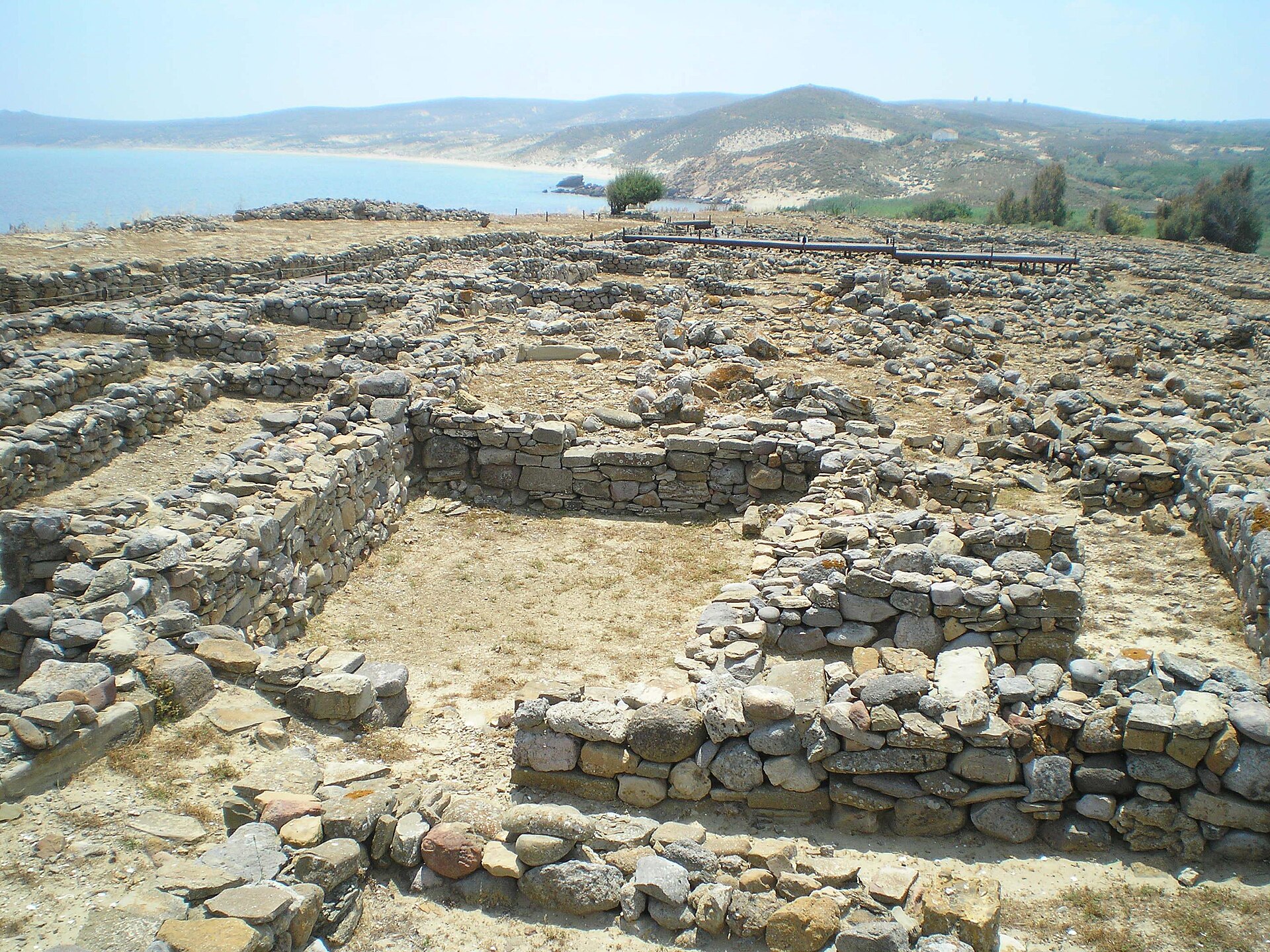
- Ifestia and Kavirion — North coast, near Kontopouli
Ifestia is an ancient city site near Kontopouli, in use from the Neolithic into early Christian times. A few kilometres away, the Kavirion is an old sanctuary of the Great Gods. Both are quiet, open-air places that reward an unhurried hour and a little reading beforehand. - Aliki salt lake — Near Moudros, east-central Lemnos
Aliki is a shallow salt lake that dries to a pale crust in summer and turns into a wetland in the rainy season. The look changes sharply with the month. Light is best early or late in the day, when the flat shore glows pink and birds gather.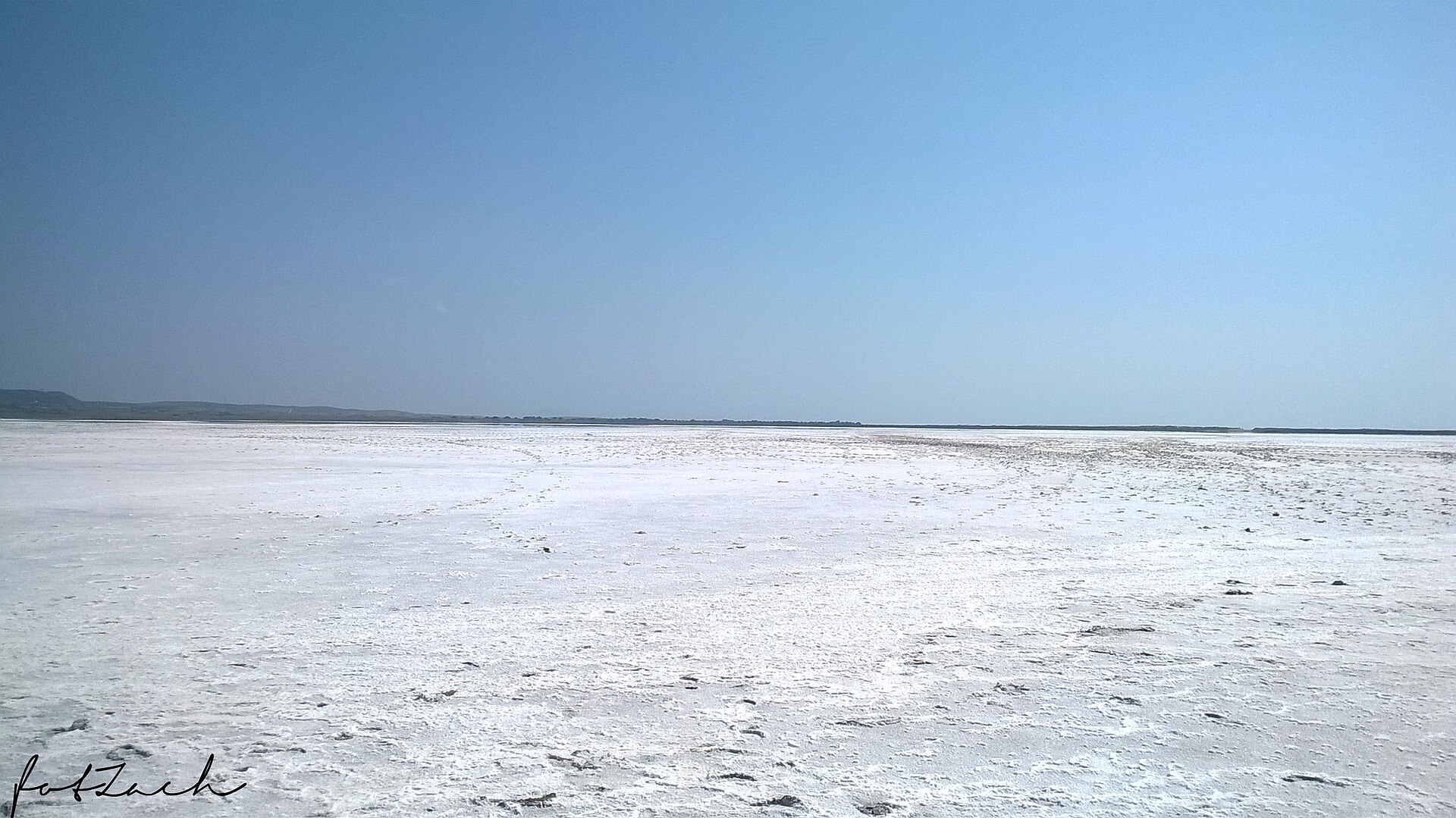
- Gomati dunes — Northwest coast
On the northwest coast, a field of pale sand dunes reached by a dirt road rises behind a quiet beach. Walking up the slopes is tiring in heat, and wind can sting bare legs. Nearby sand and sea are good for a swim, with a beach bar for shade.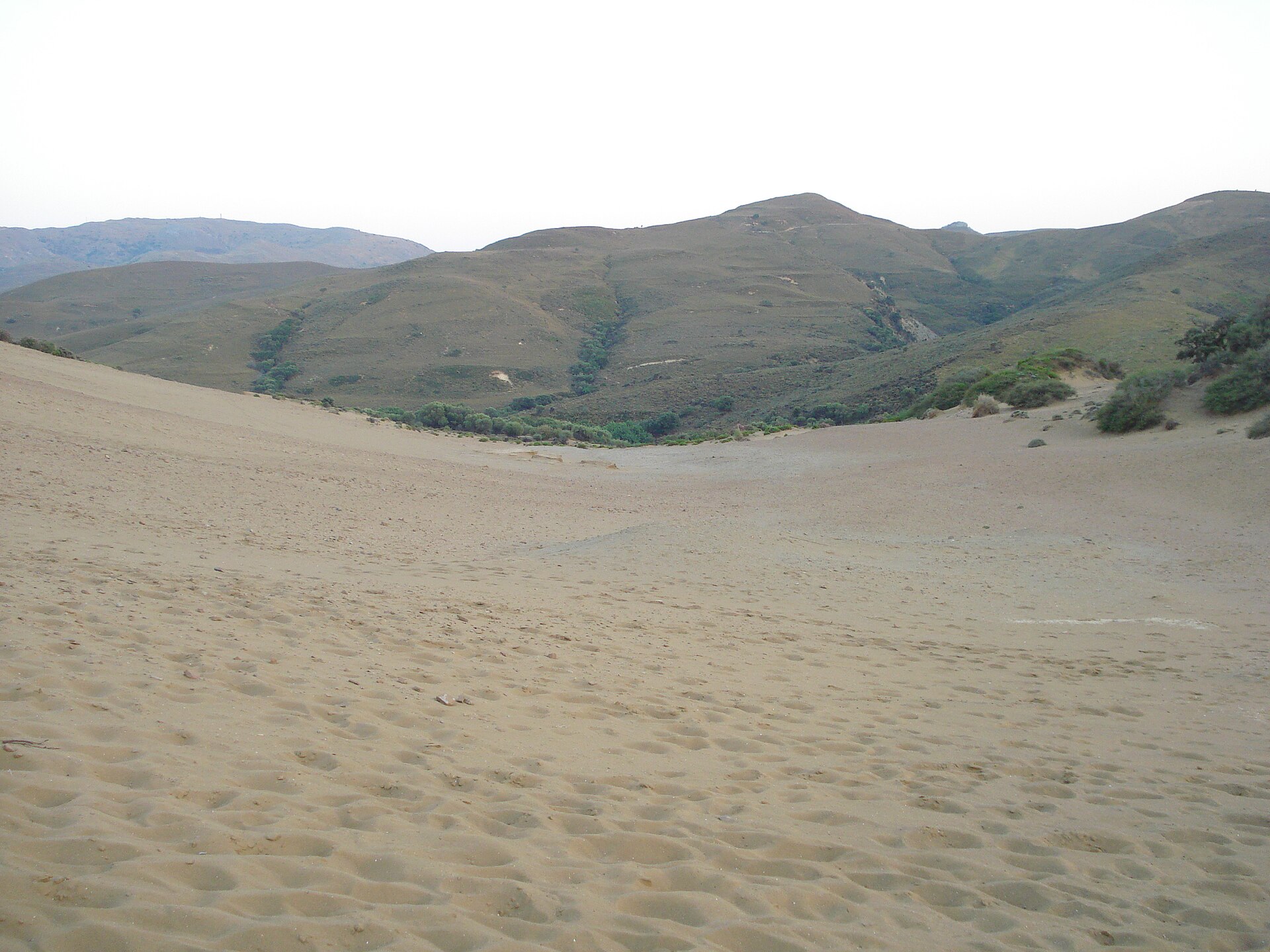
- Chortarolimni marsh — Central-east Lemnos
Chortarolimni is a marsh that fills with many bird species from autumn to spring, when migrants and winter residents use the shallow water. Binoculars help. In high summer it can be dry and unremarkable, so the cooler months are the time to visit.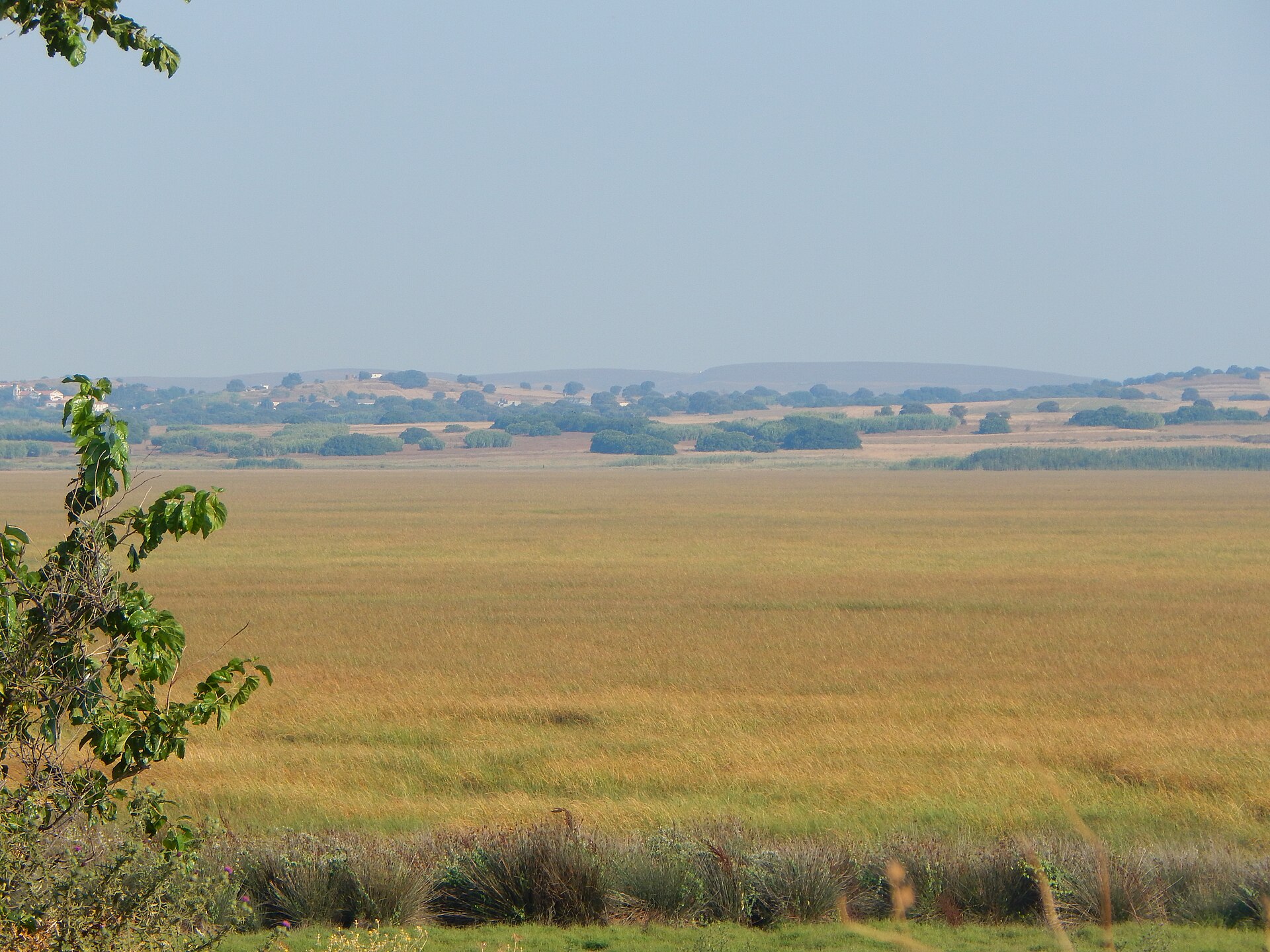
Culture
Lemnos has the rhythms of a Greek island that still farms as well as hosts visitors. Life centres on village squares, Orthodox churches and long tavern meals, and the pace slows noticeably in the afternoon heat. The island's food is a real part of its identity: local cheeses, hand-made pasta, fava, and wine from the Limnio grape appear at family celebrations and saints' day festivals as much as in restaurants. Name days and church feasts bring music, dancing and shared tables, and visitors who turn up at one are usually welcomed with curiosity and a plate. Archaeology also shapes local pride, from Poliochni to the sanctuary sites, and many islanders can point out where a find was made. Team sport has a following too, and Ifaistos Limnou, the island's basketball club, is a common topic in cafés. Strong winds are part of daily conversation, since they decide whether the ferry runs, the beach is usable and the washing stays on the line. Myrina is lively on summer evenings, with people strolling the waterfront and sitting in cafés late, while smaller villages go quiet early. Tavernas often serve generous portions meant for sharing, and ordering a few plates for the table is the usual approach. Cover your shoulders and knees when stepping into a village church, and keep your voice low if a service is under way.
What to wear
Lemnos, like the rest of the Aegean islands, had a traditional village dress made from home-woven cotton, linen and wool, with embroidered aprons, headscarves and layered skirts for women, and dark waistcoats, sashes and baggy trousers for men. Such costume is now seen mainly at church festivals, dance performances and local celebrations, where families bring out heirloom pieces. Everyday dress today is simple and practical: linen shirts, cotton dresses, shorts and sandals in summer, with fleece or wind jackets in the cooler months, since the island is breezy. Farmers and fishermen favour sturdy boots and caps against the sun. Evenings in Myrina are casual, though people tidy up a little for a taverna dinner. Visitors should pack light cotton or linen, a sun hat, sunglasses and high-factor sun protection, plus a windproof layer even in summer, because the wind can turn a hot day cool on the shore. Swimwear is fine on beaches but not in villages or on the streets of town. For churches, carry a scarf or shawl and wear clothes that cover shoulders and knees. Comfortable closed shoes or trainers suit the archaeological sites, where paths are dusty and uneven, and sandals with a firm sole or water shoes help on rocky shores and in the shallow salt marsh margins.
What to eat
- Kalathaki Limnou — Village dairies, grocers and tavernas across the island
Kalathaki Limnou is a local cheese, often served at the start of a meal with bread and olive oil. It has a firm, savoury character that pairs well with tomatoes and a glass of local white wine. - Melichloro — Village shops and market stalls in Myrina
Melichloro is a soft, fresh local cheese, mild and creamy, eaten with bread, honey or alongside salads. Buying it from a village dairy or small grocer is the surest way to taste it at its freshest. - Flomaria and valanes — Traditional village tavernas, especially inland
Flomaria and valanes are two kinds of hand-made pasta that turn up in home-style dishes. Inland villages are known for serving them with local meat, such as a slow-cooked rooster or hen, in a rich sauce. - Fava — Any island taverna, as a starter
Fava on Lemnos is a purée made from a local pulse and served smooth and warm with olive oil, onion and capers. It is simple, filling and a good first plate to share with bread. - Tiganopites and katimeria — Village bakeries and cafés, usually for breakfast or dessert
Tiganopites and katimeria are pan-fried pancakes, served with honey or sweet toppings as a breakfast or dessert. Cafés in Myrina and village bakeries make them fresh, and they go well with strong Greek coffee. - Limnio wine — Village tavernas and wine producers' tasting rooms
Limnio is a grape variety with a long history on the island, and the wine named after it is poured in tavernas across Lemnos. Ask for a local carafe with grilled meat, or a glass at sunset by the harbour.
Plan it
Best time. May–June and September–early October are the comfortable months: warm sea, open tavernas and less wind than the peak. July and August are hot and windy, and busiest. Winters are mild with the occasional snowfall, and many seasonal places are closed.
How long. 3–4
Getting there. Ferries run from Piraeus and Lavrio (both serving Athens), Thessaloniki and Kavala, with at least four or five sailings a week; Piraeus takes about 14 hours and Kavala about 5. Routes change month to month and delays are frequent, so confirm times on the day of travel. The island also has an airport with flights from Athens; check current schedules. The last leg is by road into Myrina or Moudros, and a hire car is the easiest way to get around.
Budget. mid
Tips
- Book accommodation early for late July and August, when the west coast fills up.
- Hire a car: public transport is limited and the main sights are spread across the island.
- Check ferry times on the day of travel and allow slack, as delays are common.
- Carry water, a hat and a windproof layer; archaeological sites have little shade and the wind rises quickly.
- Visit the salt lake and marsh in the cooler months or at dawn and dusk for the best light and birdlife.
Etiquette
- Cover shoulders and knees when entering village churches.
- Do not climb on or remove stones at the archaeological sites.
- Ask before photographing people at festivals or in their gardens.
Nearby
Sources
- Wikidata Q192483 (CC0)
- Wikipedia: Lemnos (rev 1375811486) (CC BY-SA 4.0)
- Wikivoyage: Lemnos (rev 5281083) (CC BY-SA 4.0)
- Photo: View on Mirina (User:Digr) (CC BY 3.0)
- Photo: Locator map for Limnos municipality (Pitichinaccio) (CC BY 3.0)
- Photo: Limnos from space (NASA) (Public domain)
- Photo: Salt lake (Zachariou Fotini) (CC BY-SA 4.0)
- Photo: Sand dunes in Lemnos (Anna Boukorou) (Public domain)
- Photo: Chortarolimni of Lemnos (Zachariou Fotini) (CC BY-SA 4.0)
- Photo: Poliochne (ale3andro) (CC BY-SA 2.0)
- Photo: Stele von Lemnos (Public domain)


