Leipzig
Leipzig, Germany
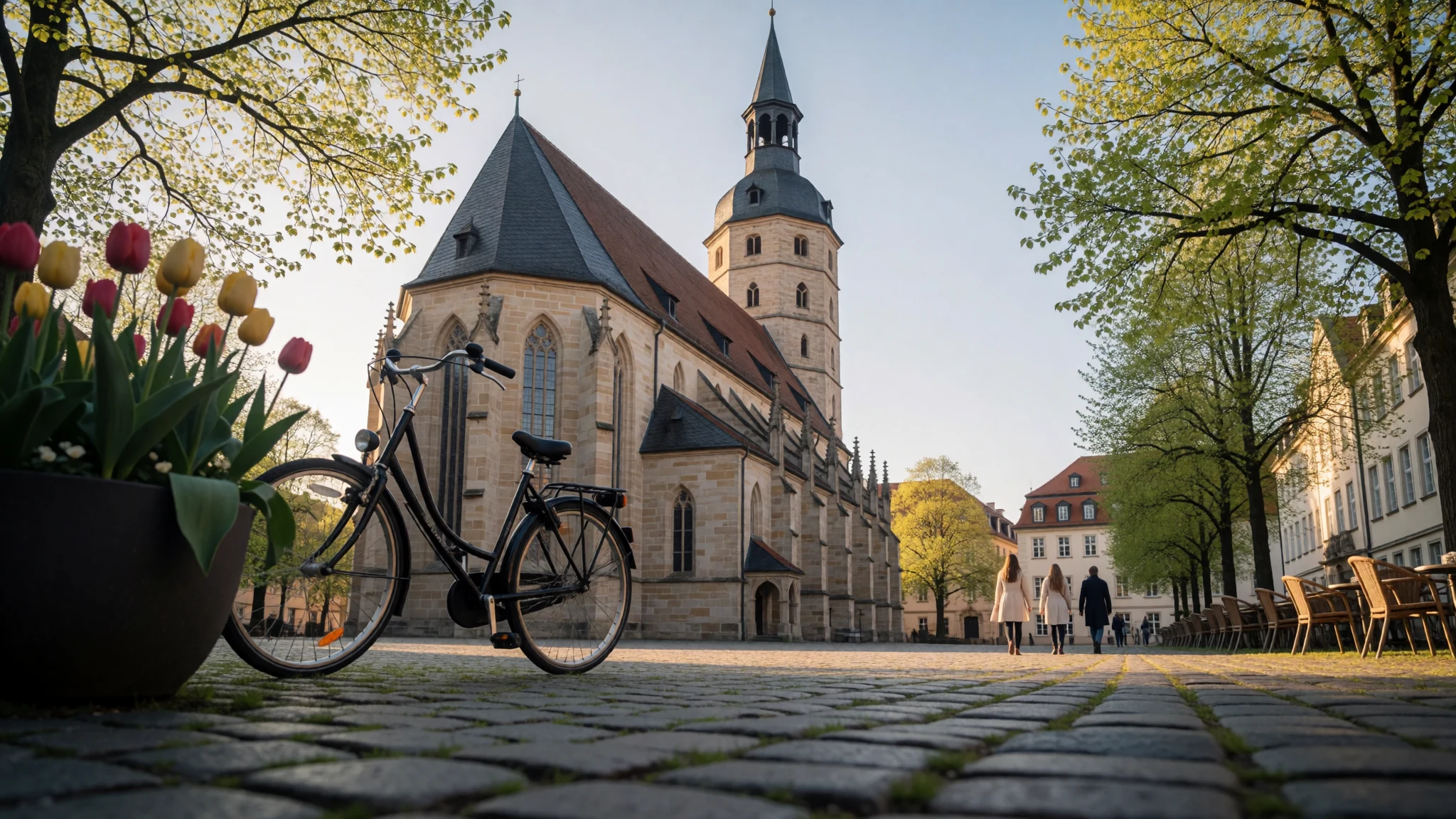
Leipzig is Saxony's largest city, a walkable trade-fair town where Bach's church and the peaceful revolution still set the tone.
The place
Leipzig lies in Saxony on low, river-cut ground, where the White Elster is joined by the Pleiße and the Parthe. It is the largest city in Saxony, with a population of 633,592, and the ground sits at 110 metres. A ring road follows the line of the old walls, the main station closes the north side, and inside that ring a mesh of arcades, courtyards and market streets grew up around the medieval trading place.
Exchange, not a port, made the city. The east-west Via Regia crossed the north-south Via Imperii here, and the Leipzig Trade Fair grew from that junction into a meeting that merchants across Europe still recognise by name. Publishing houses then dominated offices and warehouses from the later eighteenth century until the end of the Second World War. The German National Library, the German Music Archive and the Federal Administrative Court keep their seat in the city, and Leipzig University remains its academic centre.
The later twentieth century left two layers visible in the streets. After the war Leipzig stayed a major city of East Germany, so broad post-war avenues sit beside older lanes. In 1989 the gatherings that began at the Nikolaikirche became part of the peaceful movement that ended East German rule. Since the turn of this century the city has repaired housing and renewed its trams and trains.
Outside trade-fair weeks the centre feels like a working Saxon city that keeps a composer's church, a national library and a federal court within a short ride of one another. Fair weeks change the tempo: rooms fill and the station crowds. Beyond the ring, ordinary neighbourhoods take over from the monumental streets.
Its story
The name of Leipzig surfaces in 1015, inside the chronicle of Thietmar of Merseburg, as urbs Libzi: a fortified settlement, not yet the merchant city. Otto the Rich's charter of 1165 added market and civic rights and turned the river place into a legal town. The fair the city still runs is traced to 1190, and it was that recurring market, more than any palace, that enriched the burgher families.
Monastic houses once ringed the walls. Franciscan friars left their nickname on Barfußgäßchen, Barefoot Alley, and a community of Irish monks stood near the old Via Regia until the house was destroyed in 1544. In 1305 a margrave gave the church of St Thomas and its convent the right to fish the Pleiße, a small sign of how closely daily life hugged the water.
Scholars opened the university in 1409, and Leipzig grew into a centre of German law and of the book business. That is the thread that later brought the Reichsgericht, the imperial high court, and the German National Library to the city. From 1764 until 1945 publishing was the industry people meant when they spoke of Leipzig's work.
The Thirty Years' War reached the outskirts at Breitenfeld, with battles in 1631 and again in 1642. Napoleonic campaigns left memorials rather than a new street plan. The chapter that residents still explain to guests is 1989, when marches leaving the Nikolaikirche helped bring Communist rule in East Germany, and then in wider Europe, to an end. The fair, the university and those marches are still legible in the market streets and at the Nikolaikirche.
What to see
- Thomaskirche — inner city
Thomaskirche is the Leipzig church where Johann Sebastian Bach was cantor between 1723 and 1750, the year he died. A bronze plaque by the altar marks his grave, and the Bach Museum stands next door, so the church and the record of his working life share one square. The tower marks the inner-city roofscape. Services and concerts still use the nave.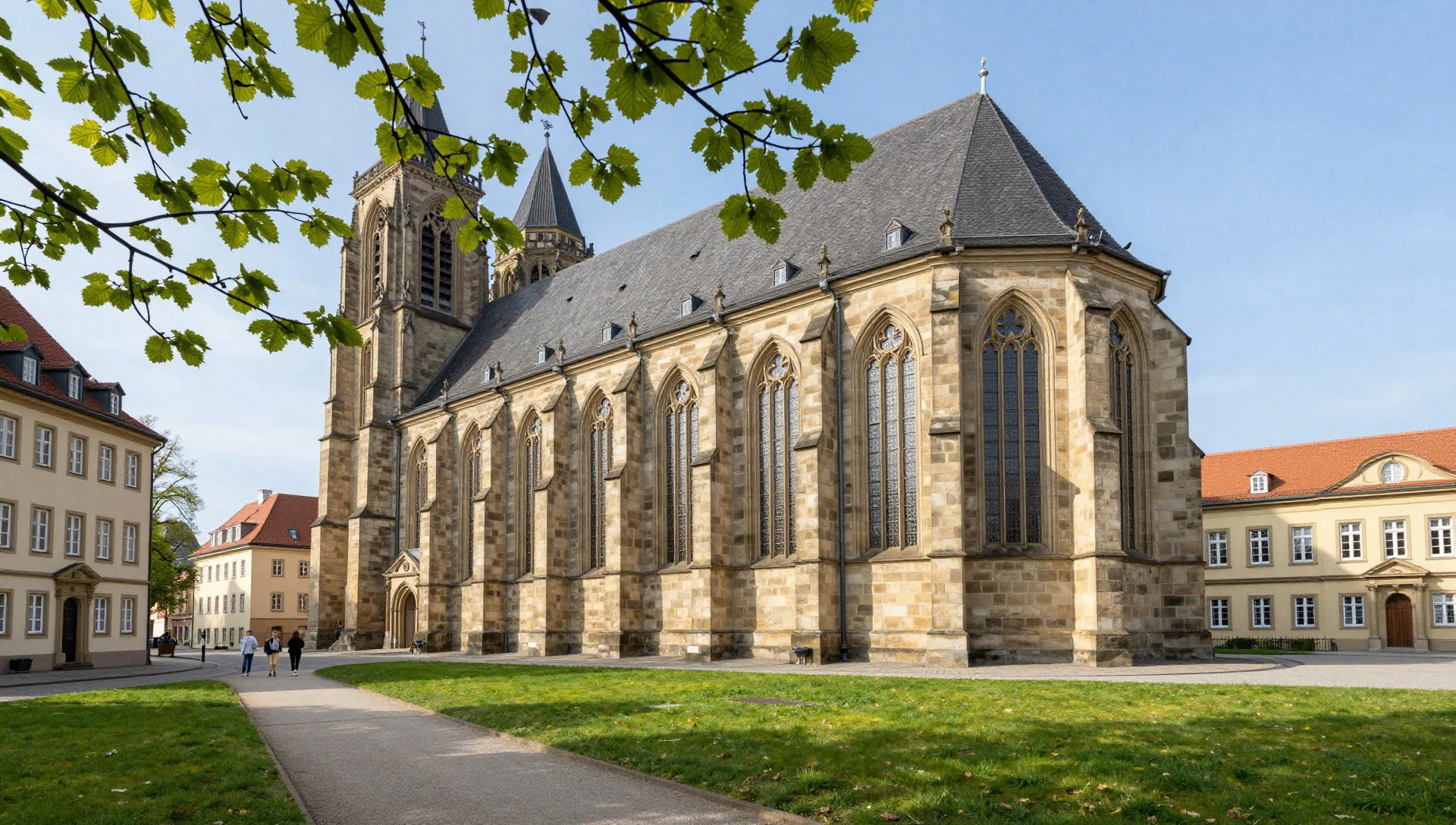
- Nikolaikirche — east of the market
Nikolaikirche stands in Leipzig, east of the market, and is the church from which the peaceful revolution moved into the streets. On 9 October 1989, 600 members of the ruling party, sent to disperse the crowd, joined it. The building remains a parish church as well as a civic landmark. A service or a concert takes priority over sightseeing.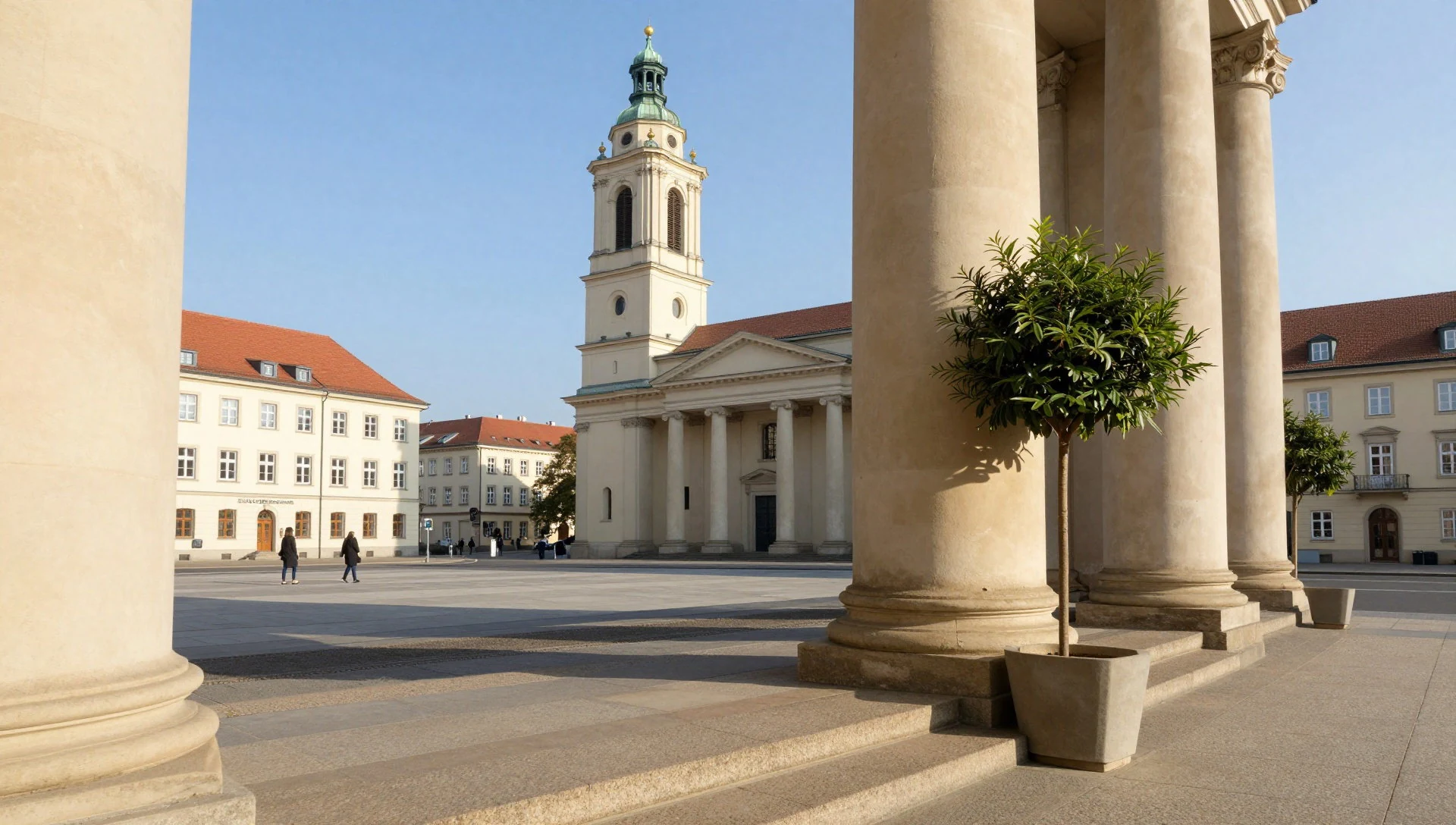
- Old Town Hall — Markt
The Old Town Hall faces Leipzig's market. Raised in 1556, it is a Renaissance town hall whose tower sits off the central axis, following an old rule of proportion. The building now holds the city museum, so the rooms that once served the council tell the town's story. Arcades beside it continue the commercial life the hall was built for.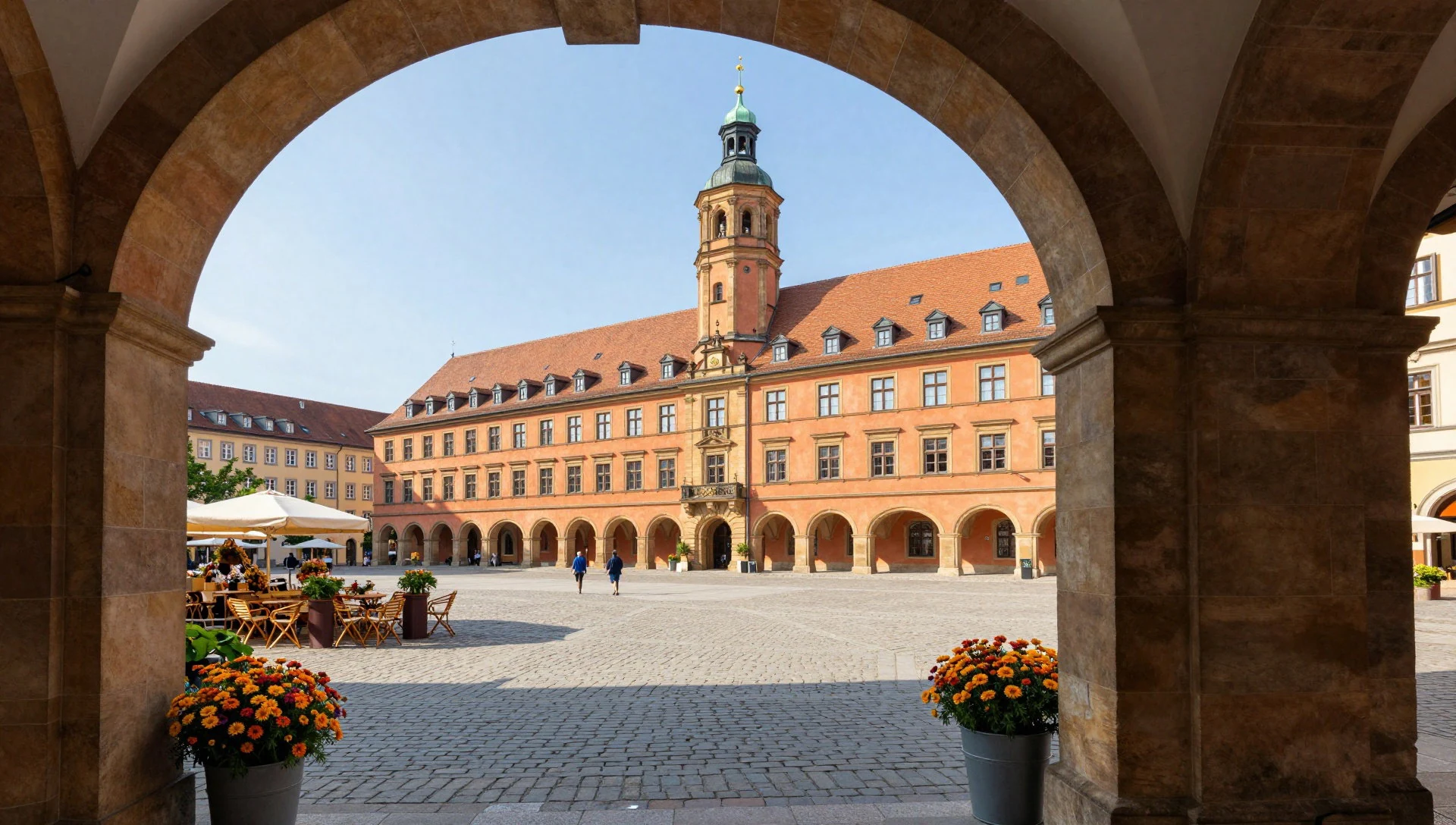
- New Town Hall — south-west of the centre
The New Town Hall has housed Leipzig's city government since 1905. It stands on the south-west edge of the old centre, a large civic building with a tower of 115 metres. Guided visits are the way up that tower, and the city website is the place to confirm whether a tour is running. The Pleiße flows beside the site.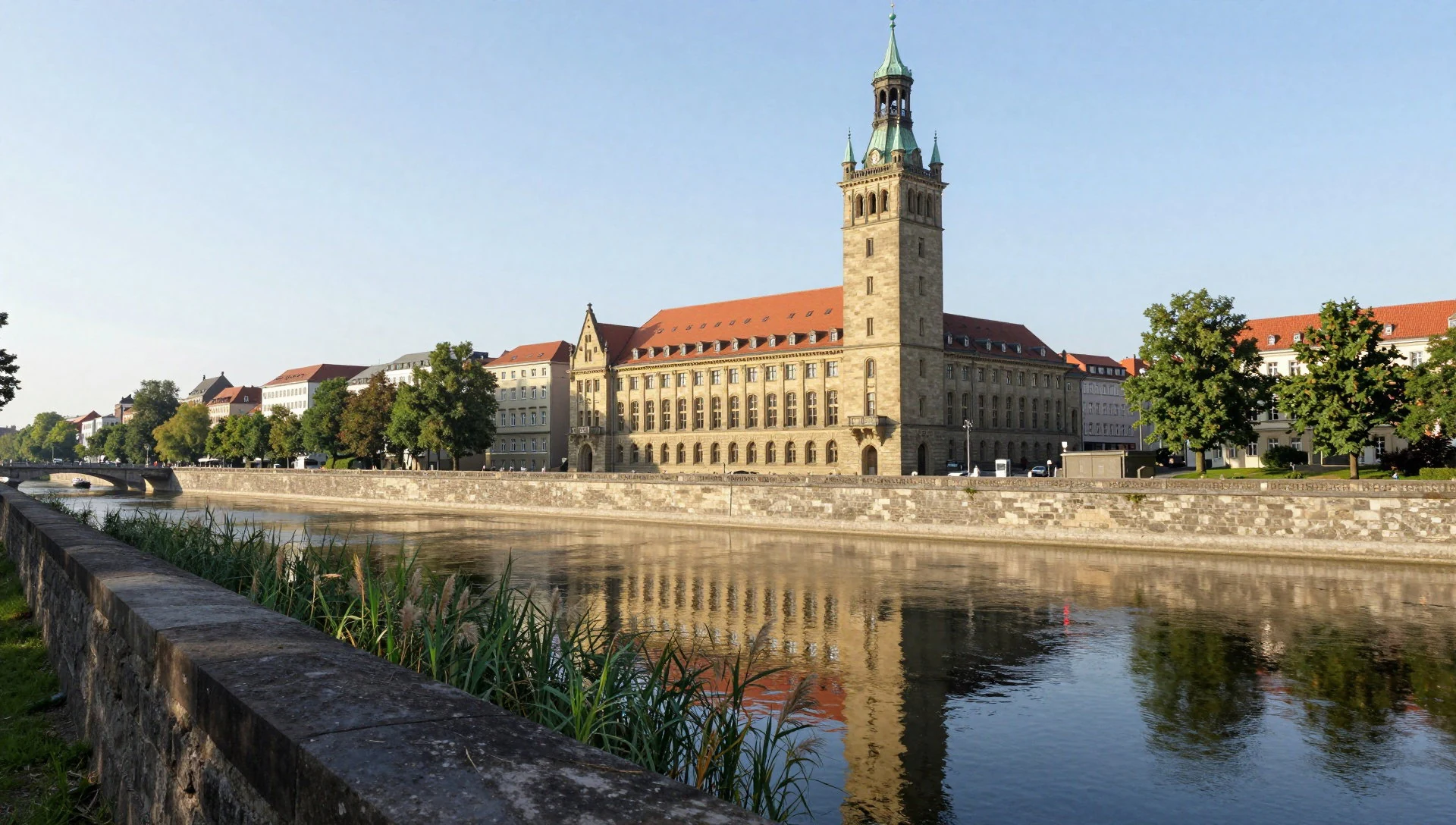
- Völkerschlachtdenkmal — south of the centre
The Völkerschlachtdenkmal, Leipzig's Monument to the Battle of the Nations, stands south of the centre. It is a massive stone memorial with a heavy dome, linked to the Napoleonic wars that the Russian memorial church also remembers. The park around the monument is part of the visit, and the tram links it to the ring.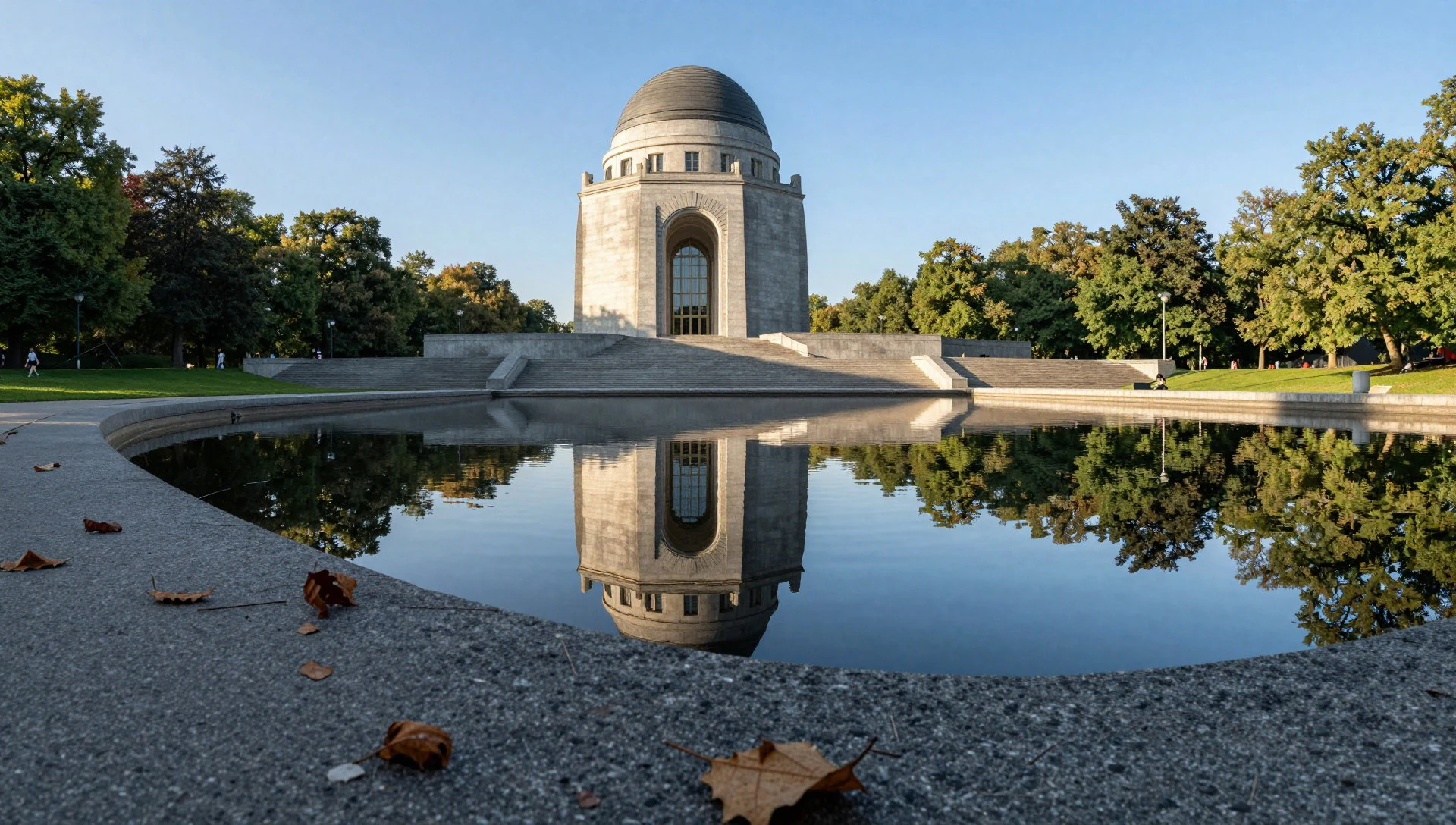
Culture
Leipzig's culture is civic, musical and bookish. The trade fair taught the city to host outsiders, and the publishing houses taught it to live by print. Bach's years as cantor left a tradition of church music that Leipzig still treats as repertoire: the church choir and a full concert calendar keep the composer audible in the same church where he worked. The German Music Archive and the German National Library give the centre a scholarly weight that sits oddly, and pleasantly, beside ordinary shopping streets.
The university still sets the tone of cafés, noticeboards and inexpensive eateries around the ring. East German decades added another habit: broad streets, housing estates beyond the centre, and a memory of assembly. The demonstrations of 1989 grew out of the Nikolaikirche and became the picture of Leipzig that the rest of the country remembers. People here are straightforward, humour is dry, and a stranger is not fussed over.
In a Leipzig church, keep your voice low during a service or a concert, and ask before you photograph people who are praying or singing.
What to wear
Leipzig has no costume that belongs on a weekday. People dress as they do in other large German cities: coats, scarves and solid shoes from autumn into early spring, and lighter shirts, dresses and trainers once the squares warm up. Students near the university lean towards cheaper, looser clothes; during a trade fair the centre fills with business jackets and rolling cases on the cobbles. Regional Saxon dress, with embroidered bodices, aprons, wool jackets and linen, appears at folk events and village festivals in the country around the city. It rarely appears on the Markt outside a procession or a festival.
What a visitor needs is less a code than a climate. The centre is paved, often uneven, and best covered in shoes that can walk for hours. Weather on this low plain turns during a day, so a waterproof layer and a warmer mid-layer earn their place in the bag for most of the year, even when a summer afternoon feels hot on an open square, while winter needs a hat and gloves against the wind. Churches expect ordinary modest clothes rather than formal dress; beachwear and loud gym kit look wrong at a service or a concert. Fair weeks are the time when smarter clothes dominate the arcades, and residents on the tram are dressed for work or for the weather, not for show.
What to eat
- Lerchen — bakeries in the centre
Lerchen are small Leipzig pastries: a basket of sweet dough with marzipan inside, found at bakery counters rather than served as a plated dessert. They sit beside morning rolls across the centre and can be taken away from the counter.
- Quarkkeulchen — Saxon eateries
Quarkkeulchen are small fried cakes made with quark, the fresh curd common in German cooking. In Leipzig they come as a dessert in eateries that cook Saxon food. They are a sit-down dish, so the place to look is a Saxon dining room rather than a snack bar.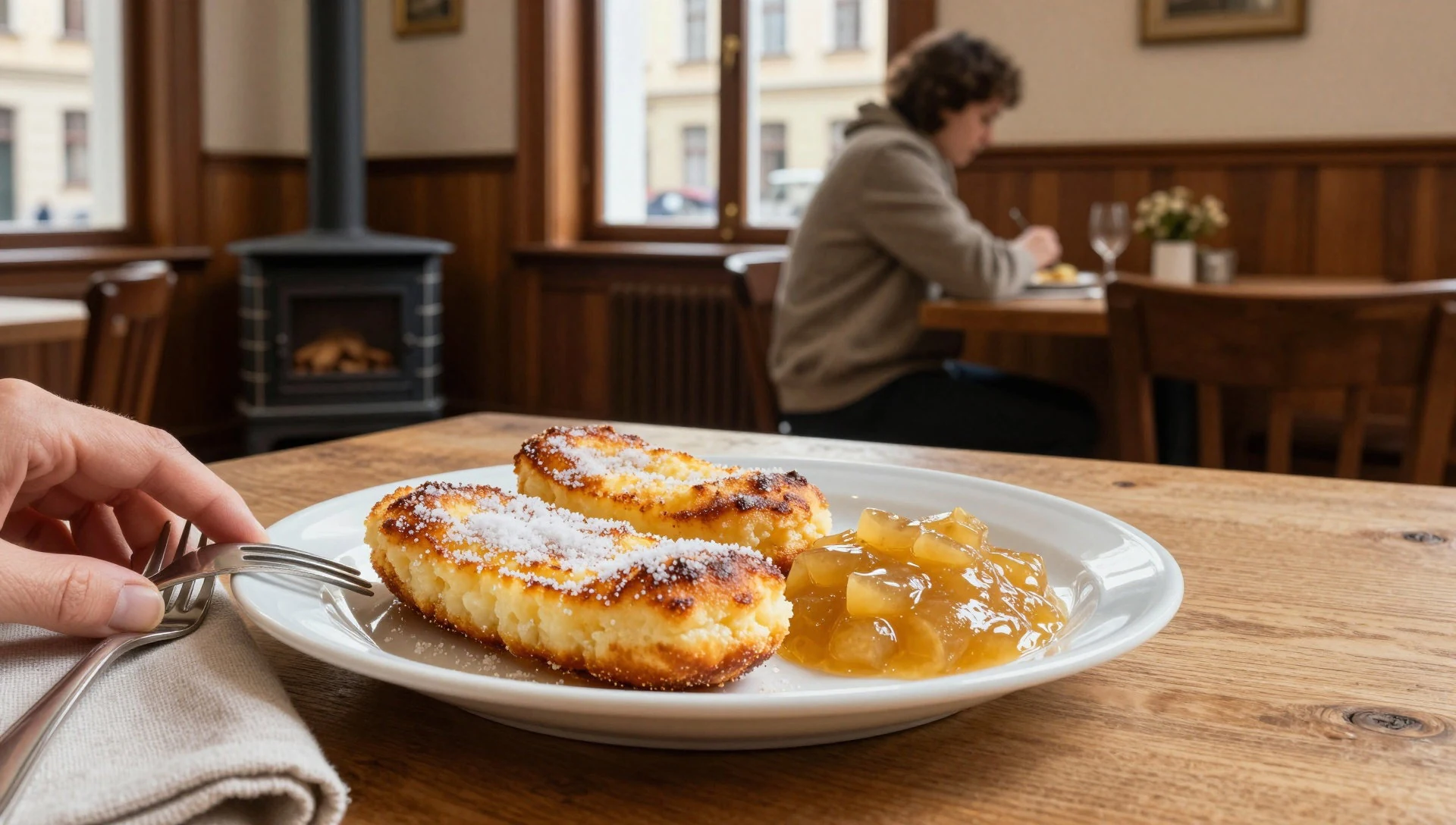
- Leipziger Allerlei — traditional eateries in the old town
Leipziger Allerlei is Leipzig's named vegetable dish, a mixture of vegetables cooked together and served as a side or a light plate. It belongs to Saxon cooking, not to the trade-fair calendar, and traditional eateries around the old town are where it appears. A snack bar will not have it. - Reformationsbrötchen — neighbourhood bakeries in October
Reformationsbrötchen are seasonal yeast pastries that bakeries in Leipzig bake in October, in the weeks before Reformation Day. Outside that month they disappear, and during it a busy shop can sell out before the afternoon. They are a counter purchase in neighbourhood bakeries, not a dessert in a dining room.
Plan it
Best time. Late spring and early autumn suit walking in Leipzig: the days are long and the air is milder than in midsummer or deep winter. Summer can be warm in the squares; winter suits concerts if you dress for wind. Check trade-fair dates on the city website before you travel, because those weeks fill rooms whatever the weather.
How long. 2–3
Getting there. Leipzig's main station is the rail hub. Long-distance trains run to Berlin, Dresden, Frankfurt, Hamburg and Munich, and regional trains link Halle, Weimar, Chemnitz, Dessau, Magdeburg and Jena. Leipzig/Halle Airport has its own station with trains into the city. Motorways approach from the north, the west and the south, and coaches stop by the east side of the main station. Check the railway operator and https://www.leipzig.de/ for times.
Budget. mid
Tips
- Check trade-fair dates on the city website before booking a room; those weeks pack the centre and the station.
- Begin at the Thomaskirche and the Nikolaikirche early if you want a quieter nave.
- Use the tram for sights south of the ring; the centre itself is walkable.
- Carry a bank card and some cash; bakeries and small stalls do not all take the same payment.
- Confirm any tower visit on the official site; do not assume a fixed daily tour time.
Etiquette
- Keep your voice low in churches, and do not walk the nave during a service or a concert.
- Ask before you photograph choir members, musicians or people at prayer.
- Stay out of marked cycle lanes; bikes and pedestrians share many Leipzig streets.
Nearby
Sources
- Wikidata Q2079 (CC0)
- Wikipedia (rev 1384882075) (CC BY-SA 4.0)
- Wikivoyage (rev 5408775) (CC BY-SA 4.0)
- Photo photos/01-innenstadt-leipzig-mit-thomaskirche-von-panorama-tower-2013.jpg (CC BY 3.0)
- Photo photos/02-blick-vom-city-hochhaus-leipzig-05.jpg (CC BY 4.0)
- Photo photos/03-augustusplatz-leipzig-2019.jpg (CC BY-SA 1.0)
- Photo photos/04-v-lkerschlachtdenkmal-2023-cropped.jpg (CC BY-SA 4.0)
- Photo photos/05-bundesverwaltungsgericht-leipzig-eingang-2013.jpg (CC BY 3.0)
- Photo photos/06-old-city-hall-of-leipzig-20.jpg (CC BY-SA 4.0)
- Photo photos/07-20090314110dr-leipzig-neues-rathaus-und-plei-eburg.jpg (CC BY-SA 4.0)
- Photo photos/08-belantis-cospudener.jpg (CC BY 3.0)


