Leeds
Leeds, United Kingdom
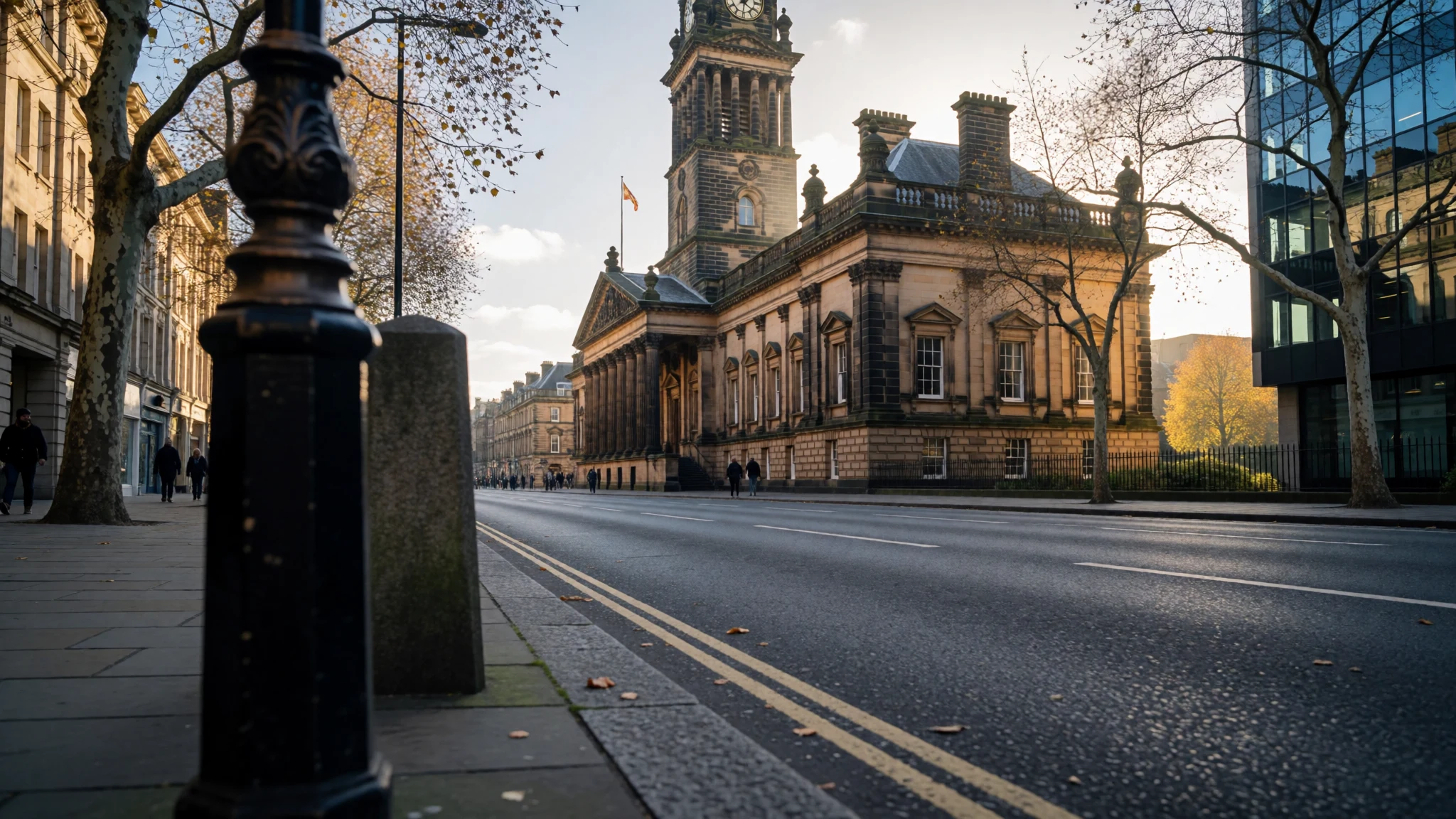
Leeds is a Yorkshire mill city turned arts, shopping and music hub, with Victorian arcades, canals and a Town Hall worth seeing inside.
The place
Leeds is a West Yorkshire city on the River Aire, where the Pennine foothills ease down into a wide valley. About 536,000 people live within the city proper, at roughly 51 m above sea level, and the wider metropolitan district is considerably larger, spreading into suburbs, former mill villages and farmland. The centre is compact enough to cross on foot, and it layers its eras closely: Victorian arcades with painted ironwork and glass roofs, civic buildings in dark stone, shopping centres from recent decades, and tall glass offices near the river. At the southern edge, old canal and river wharves have become flats, bars and offices, with narrowboats still moored alongside. Beyond the core, each district has its own character. Headingley is known for students and cricket, Chapel Allerton for cafés and independent shops, and Roundhay for its large park and lake. Leeds works as a regional capital for northern England, with banking, law, retail, universities and hospitals, so weekdays feel purposeful and weekends turn towards food, music and football. The population is mixed, with a large South Asian community whose influence shows in the food, shops and festivals. It is not a postcard city, and it does not pretend to be one. Rain is possible in any month, the wind can be sharp in the open squares, and the pace is brisk. What Leeds offers instead is good galleries, lively evenings and an easy route into the Dales and moors.
Its story
Leeds grew from a modest medieval borough and market town into one of England's industrial centres, and wool was the first engine. Before steam, merchants here organised the making of woollen cloth across the surrounding villages, and white broadcloth changed hands at a dedicated cloth hall. By 1770 the town was handling about one-sixth of England's export trade. Water and rail then widened the market. The Aire and Calder Navigation, begun in 1699 and extended through the eighteenth century, gave Leeds a route to the sea, and the Leeds and Liverpool Canal, finished in 1816, tied it to the west. The Leeds and Selby Railway opened in 1834, and later lines linked the city with Manchester, Liverpool and Hull, so goods could reach ports on both coasts. Engineering followed the cloth trade, first making tools and machines for textile mills and then diversifying, while flax, iron foundries and printing grew alongside it. Landowners were often manufacturers too, so mills, reservoirs and large houses sat close together on the edge of town. Queen Victoria granted Leeds a city charter in 1893. In the following century the city absorbed neighbouring villages and overtook nearby York in population. Heavy industry has since faded, and the economy now leans on services, retail, finance and education, but the canals, warehouses and arcades still trace the old routes of the money.
What to see
- Leeds Town Hall — Headrow, city centre
Leeds Town Hall is the city's Victorian showpiece, a columned stone building whose civic confidence reflects the wealth of the wool and engineering age. Look at it from the street first, then check whether the public spaces are open, since concerts and events decide access. It hosts the Leeds International Pianoforte Competition every three years.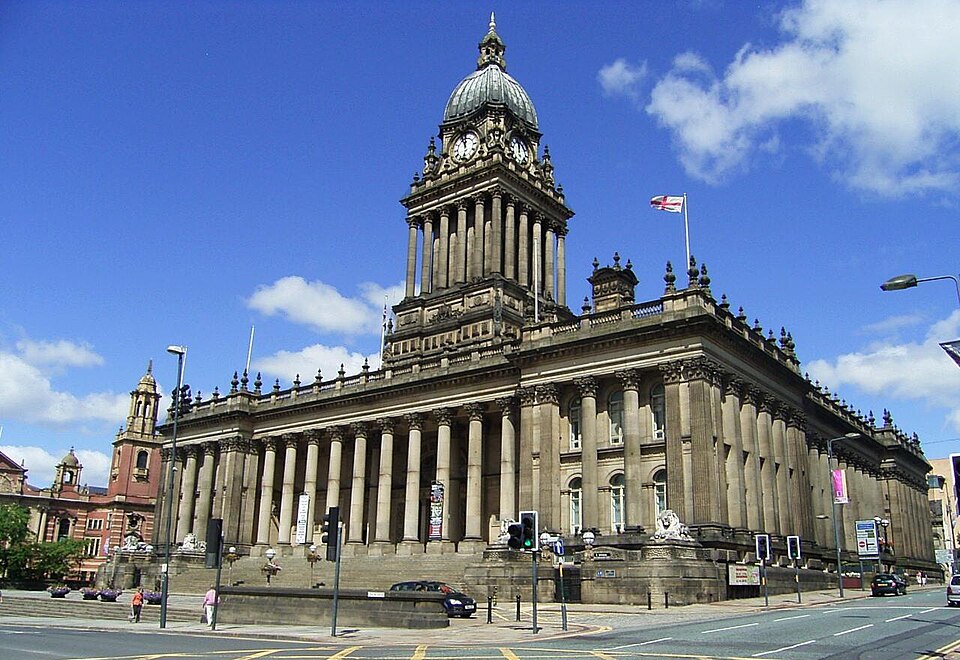
- County Arcade and the Victorian arcades — Briggate, city centre
The Victorian arcades around Briggate are Leeds at its most decorative: mosaic floors, carved stonework, glazed roofs and small independent shops beneath. County Arcade is the easiest place to start. The covered passages work in rain or sun, and mornings are noticeably quieter than Saturday afternoons.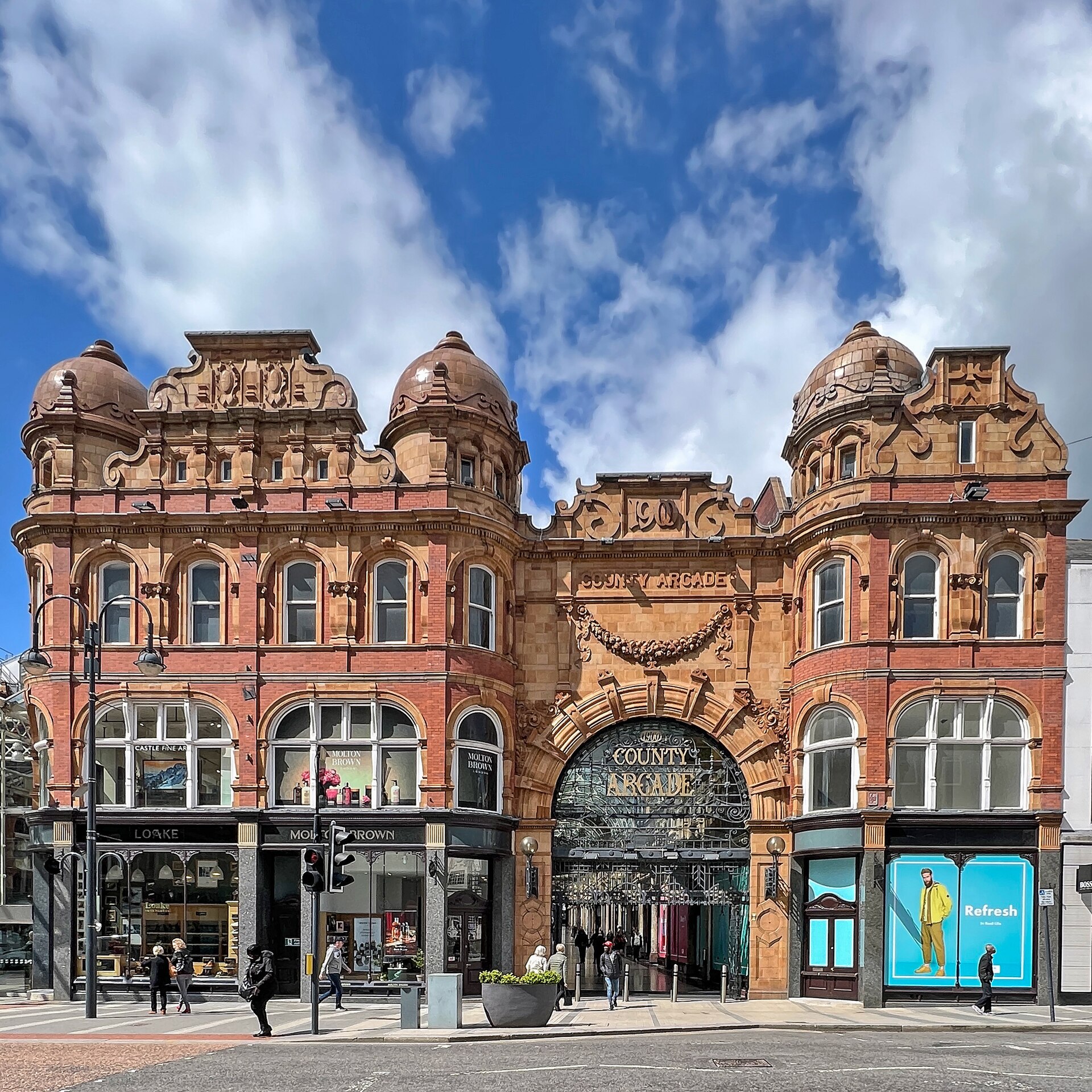
- Kirkgate Market — Kirkgate, east of the centre
Kirkgate Market is a working market under a Victorian-era hall, where stallholders sell fruit, fish, fabric, haberdashery and household goods alongside quick, inexpensive food. It is more useful than touristy, and a weekday morning is the best moment. Carry some cash for small stalls, though many now take cards. - Leeds Art Gallery and the Henry Moore Institute — The Headrow, city centre
Leeds Art Gallery opened in 1888 and is free to enter, with a strong twentieth-century collection and a colourful stairwell mural by Lothar Götz. Next door, the Henry Moore Institute stages sculpture exhibitions from many periods and countries. Together they fill a wet afternoon easily; check current exhibitions on the council website. - Granary Wharf — Canal basin, south of the station
Granary Wharf is where the Leeds and Liverpool Canal meets the river beside the centre, with restored warehouse arches, moored narrowboats and bars. It makes a calm walk after the busy shopping streets, and the towpath leads away from the centre for anyone wanting a longer stroll. Evening light on the water is the draw.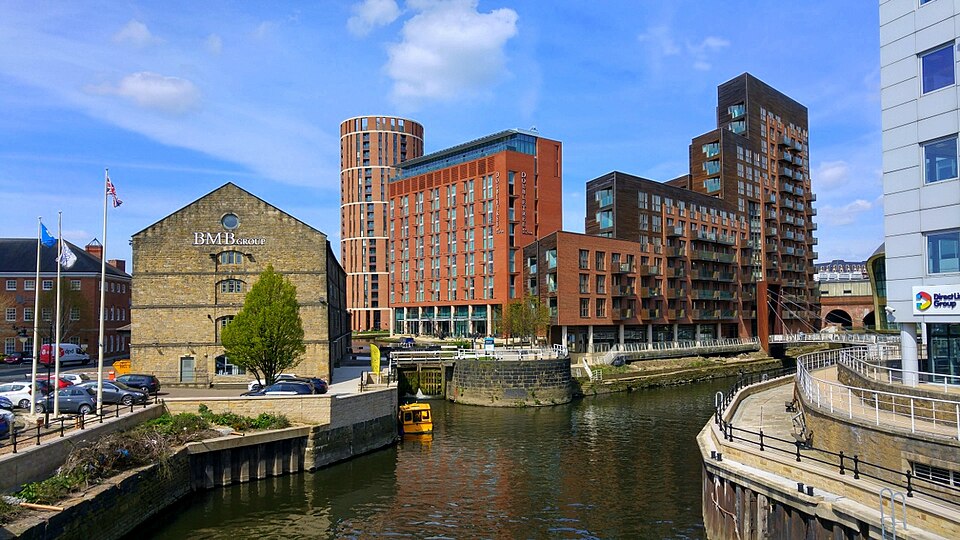
- Leeds Minster — Kirkgate, east of the centre
Leeds Minster is the parish church of the city centre, close to Kirkgate and the market, and a quiet pause between the shopping streets and the river. Its stone south side is worth a look from the churchyard. Opening times change with services and events, so check locally before planning a visit.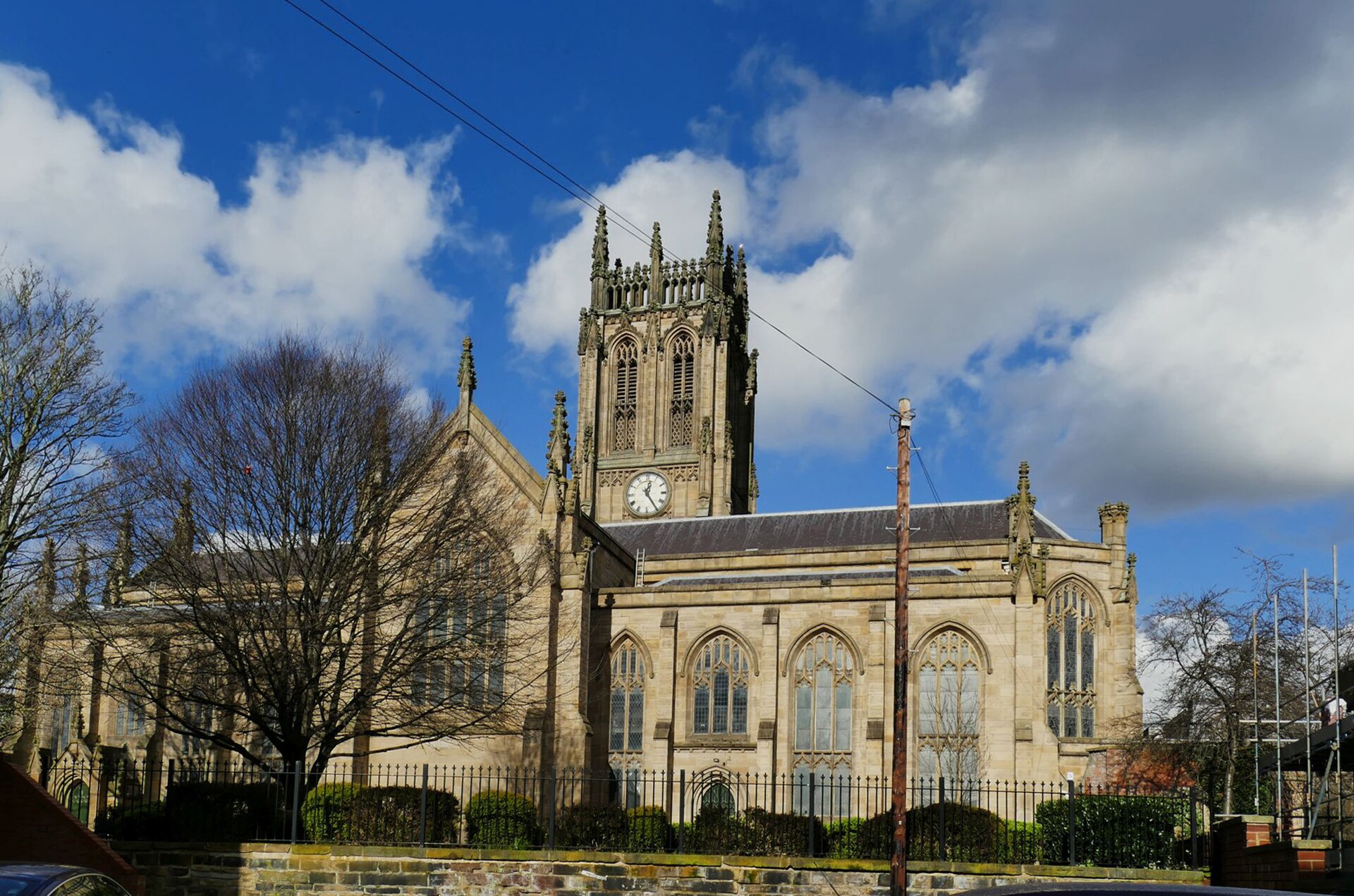
Culture
Leeds treats culture as part of civic life rather than a visitor add-on. A five-year investment programme that began in 2018 led to Leeds 2023, a year-long international festival, and the habit of free and low-cost events has stayed. Leeds Art Gallery, which opened in 1888, is free to enter, and the Henry Moore Institute next door shows sculpture from around the world. Smaller independent galleries show illustration, photography and design, though the Tetley, a contemporary art space in a former brewery headquarters, closed in 2023. Music runs deep: the Leeds International Pianoforte Competition fills the Town Hall every three years, while Leeds Festival draws large crowds over the summer bank holiday weekend. In winter, Leeds Lights decorates the centre from November into January. The city's large South Asian population shapes its food, shops and celebrations, especially around Eid and Diwali. Yorkshire manners tend to be direct and friendly: strangers chat at bus stops and bar counters, and plain speaking is meant as warmth rather than rudeness. Football matters too, with Leeds United a strong local loyalty, so match days change the mood in the centre. In pubs, order and pay at the bar rather than waiting for table service, and when drinking with a group, take your turn buying a round.
What to wear
Leeds built its name on wool, so the city's traditional dress is bound up with cloth rather than costume. Broadcloth and worsted from Yorkshire mills became tailored suits, overcoats and uniforms, while tweed, flat caps and waxed jackets remain familiar in the Dales and on country days out. The South Asian communities add another living tradition: the shalwar kameez, saris and lehengas in cotton, silk and chiffon, worn for weddings, Eid and Diwali and sold in shops around the city. Day to day, Leeds dresses casually. Jeans, trainers and padded jackets are the norm, students favour secondhand and streetwear finds, offices lean smart-casual, and weekend evenings in the centre bring out dressier outfits. Visitors should dress for changeable weather: layers, a compact waterproof, and comfortable shoes with grip for wet pavements and canal towpaths. Winter calls for a proper coat, hat and gloves, while summer still needs a light layer for cool evenings. There is no dress code for most sights, but clubs and some restaurants set their own rules. When visiting a mosque, gurdwara or temple, cover shoulders and knees, carry a scarf for covering hair where asked, and expect to remove shoes at the door.
What to eat
- Yorkshire pudding — traditional pubs across the city, especially at Sunday lunch
A crisp, risen batter baked in hot fat, served with roast beef and gravy, and sometimes as a large bowl filled with the whole dinner. Sunday lunch is when it appears most reliably, so plan a weekend visit around a proper roast. - Fish and chips — neighbourhood chip shops and takeaways
Battered fish with thick chips, often with mushy peas or curry sauce on the side. Good ones are fried to order, so a short wait is a healthy sign. Eat them hot, from the paper, on a bench or by the canal. - Curry — curry houses across the city; ask locals for neighbourhood favourites
Leeds has many curry houses because of its large South Asian population. Menus run from rich meat curries to lentil and vegetable dishes, served with naan, rice or chapatis. Ask about spice levels and which dishes are vegetarian. - Pork pie and meat pies — Kirkgate Market and local bakeries
Hand-held pies are everyday northern food. Pork pies are usually eaten cold with mustard or pickle, while meat-and-potato pies come warm, sometimes with mushy peas or gravy. Good for a cheap, filling lunch on the move. - Yorkshire forced rhubarb — restaurant dessert menus and market stalls in winter and early spring
Rhubarb grown in dark sheds has pale pink, tender stalks and a sharper, sweeter flavour than the summer garden kind. It appears in winter and early spring in crumbles, tarts and cocktails. Ask whether a dessert uses the local variety.
Plan it
Best time. May to September is the mildest stretch, with longer evenings and the summer festival season. November to January brings Leeds Lights but also cold, damp, dark days. Rain can arrive in any month, so pack for it whenever you come.
How long. 2–3
Getting there. Leeds Bradford Airport (LBA) is the nearest, but it has no motorway or direct rail link; the A1 Flyer bus runs to Leeds bus station in about 35 minutes, and taxis are plentiful. Manchester Airport is usually the better choice for long-haul flights. Leeds railway station is the main rail arrival; check operators for current timetables.
Budget. mid
Tips
- Check festival and piano competition dates before booking accommodation, because the summer bank holiday weekend fills quickly
- Carry a light waterproof, as showers can arrive in any month
- Visit Kirkgate Market on a weekday morning, with some cash for small stalls
- Check opening times and current exhibitions on official sites; for events and city information see https://www.leeds.gov.uk/
- Take normal city care at night: avoid badly lit, unfamiliar streets alone and never leave valuables unattended
Etiquette
- Order and pay at the bar in pubs, and take your turn when drinking in a round
- Queue in order at bus stops, counters and market stalls
- Remove shoes and cover shoulders, knees and, where asked, hair when entering a mosque, gurdwara or temple
Nearby
Sources
- Wikidata Q39121 (CC0)
- Wikipedia: Leeds (rev 1385111111) (CC BY-SA 4.0)
- Wikivoyage: Leeds (rev 5411953) (CC BY-SA 4.0)
- Leeds Montage, Lad 2011 (CC BY-SA 4.0)
- Leeds CBD at night, Lad 2011 (CC BY-SA 4.0)
- Leeds Town Hall, Andrew roberts uk (CC BY 3.0)
- County Arcade (2022), Tim Green (CC BY 2.5)
- Granary Wharf, Leeds, Mark Stevenson (CC BY-SA 2.0)
- South side of Leeds Minster, Stephen Craven (CC BY-SA 2.0)
- Civic Hall, Leeds 2023, Tim Green (CC BY 2.5)
- City Square, Leeds, Tim Green (CC BY 2.5)


