Lake Van
Lake Van, Turkey
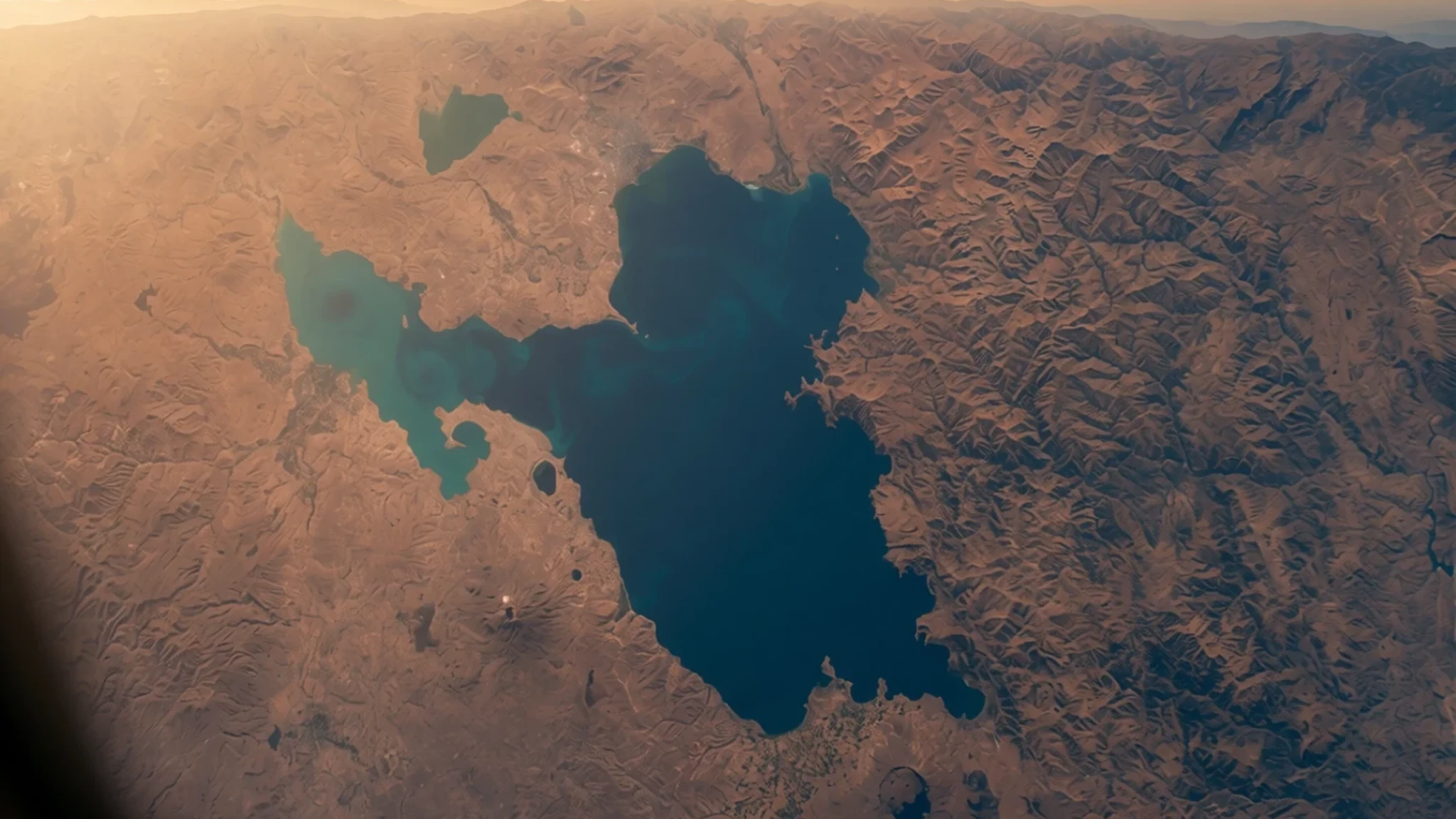
A vast soda lake at 1,640 metres in eastern Turkey, ringed by volcanoes, castles and a medieval island church.
The place
Lake Van lies in the Eastern Anatolia region of Turkey, spread across Van and Bitlis provinces in the Armenian highlands at 1,640 metres above sea level. It is the largest lake in Turkey and a saline soda lake, fed by many small streams that run down from the mountains around its shores. It is also one of the few lakes of its size on Earth with no outlet, so water leaves only by evaporation and the salts build up over time. Around 38% of the country's surface water, rivers included, lies in this basin.
The lake is essentially a tectonic lake. Over more than 600,000 years a large block of the Earth's crust has gradually sunk along several major faults that cross eastern Anatolia, and water filled the hollow. The southern margin shows metamorphic rock from the Bitlis Massif beside younger volcanic layers from the Neogene and Quaternary periods, while the deep western basin lies in a tectonic depression of its own.
Altitude and cold would normally freeze a lake this size, but the salt content keeps most of the water liquid through winters that average below freezing. Only the shallow northern section ices over, and even then rarely. The shoreline, particularly around the city of Van, softens the local climate. Summer afternoons are warm and winters are hard, and the landscape shifts quickly between the two.
Its story
The lake's history begins with Tushpa, the capital of the kingdom of Urartu, which stood near the shores on ground later occupied by the medieval city of Van. From about 1000 BC the lake was the heart of Urartu, and its rulers built their power around the basin. Below the southern flank of the crag that Van Castle occupies today, remnants of Tushpa can still be seen. They suggest the city was laid out to keep watch on the lake just as much as on the surrounding peaks.
Later the lake passed through the hands of several Armenian polities. It fell within the Satrapy of Armenia, then the Kingdom of Greater Armenia, and finally the Armenian Kingdom of Vaspurakan. That long Armenian presence still shows in the island church of Akdamar, while the carved headstones at Ahlat, on the western side of the lake, belong to the Ahlatshahs.
In 2017, archaeologists from Van Yüzüncü Yıl University worked alongside a team of independent divers exploring the lake. They reported a large underwater fortress stretching about one kilometre. Based on visual assessment, the team dated its construction to the Urartian period. The researchers believe the fortress, and other parts of the surrounding city, were gradually submerged as the lake rose over the millennia, so part of the old town now lies beneath the water.
The geology adds another layer. The basin was formed by faulting, and changing water levels have left old shorelines on the slopes of nearby volcanic craters, which is one reason geologists keep returning to the lake.
What to see
- Van Castle and the Tushpa rock — Van old town, above the city
Van Castle rises from a steep rock above the modern city, and the ruins of medieval Van lie below its southern slopes. The site is Tushpa, the Urartian capital, so it is worth walking around the rock to see how the old settlement was laid out. Go in the cooler morning hours, bring water, and check the official site for opening times before setting out.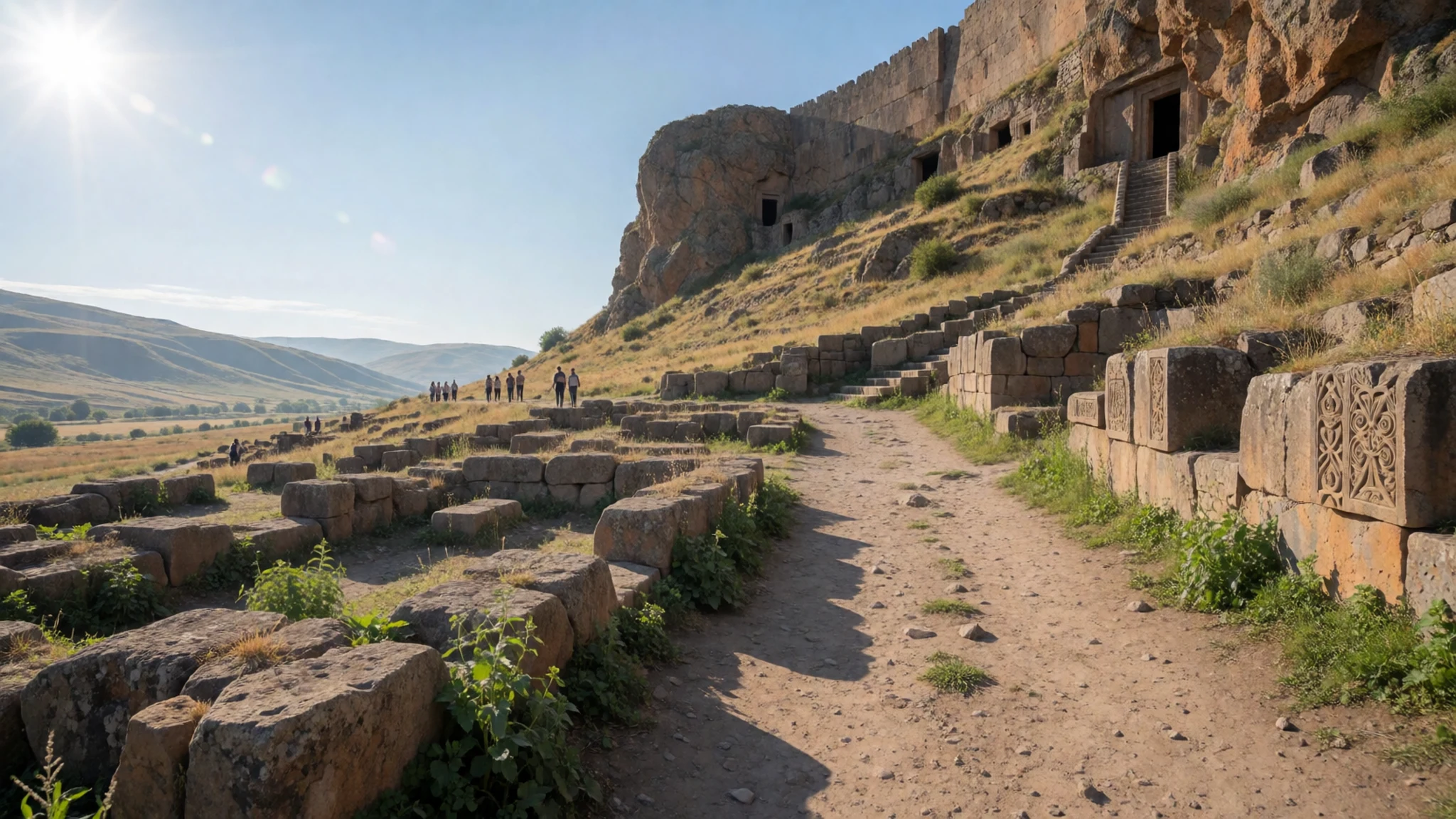
- Akdamar island and its church — Lake Van, reached by boat from the shore
Akdamar island holds the Cathedral of the Holy Cross, a 10th-century church from the Armenian kingdom of Vaspurakan era, with carved reliefs on its outer walls. The island is reached by boat, and the church is the main reason to make the trip. Boat times and visiting conditions change with the season, so check locally before you go.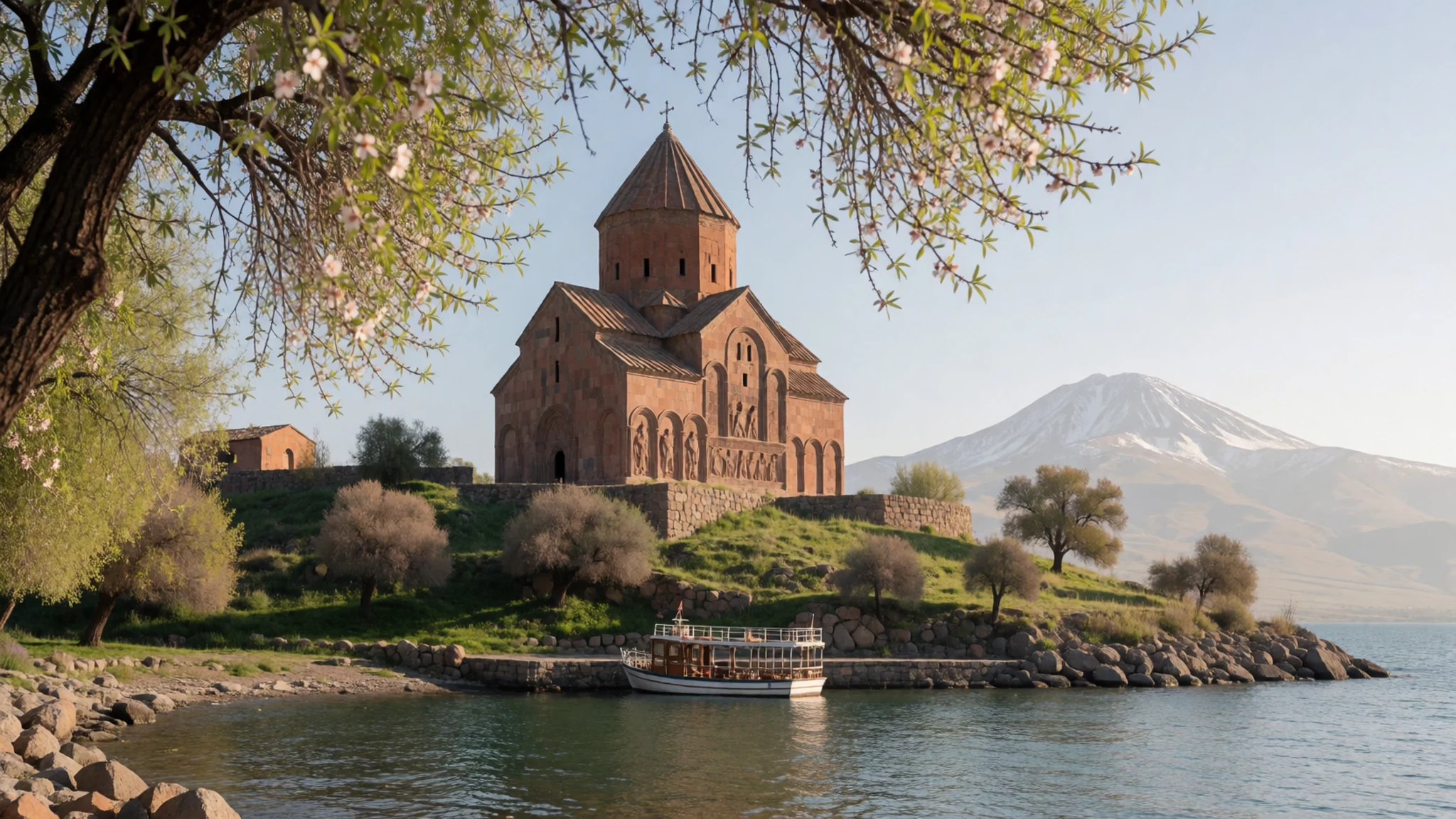
- Sheikh Ora crater near Tatvan — North-west shore, near Tatvan
Sheikh Ora is a volcanic crater on the lake's north-western side, near Tatvan. Its north rim carries old beach lines, flat terraces cut by the lake at higher levels in the past, which geologists read to trace changing water levels. The rim makes a good walk with wide views over the water. Bring layers, since the wind on the crest can be cold even in summer.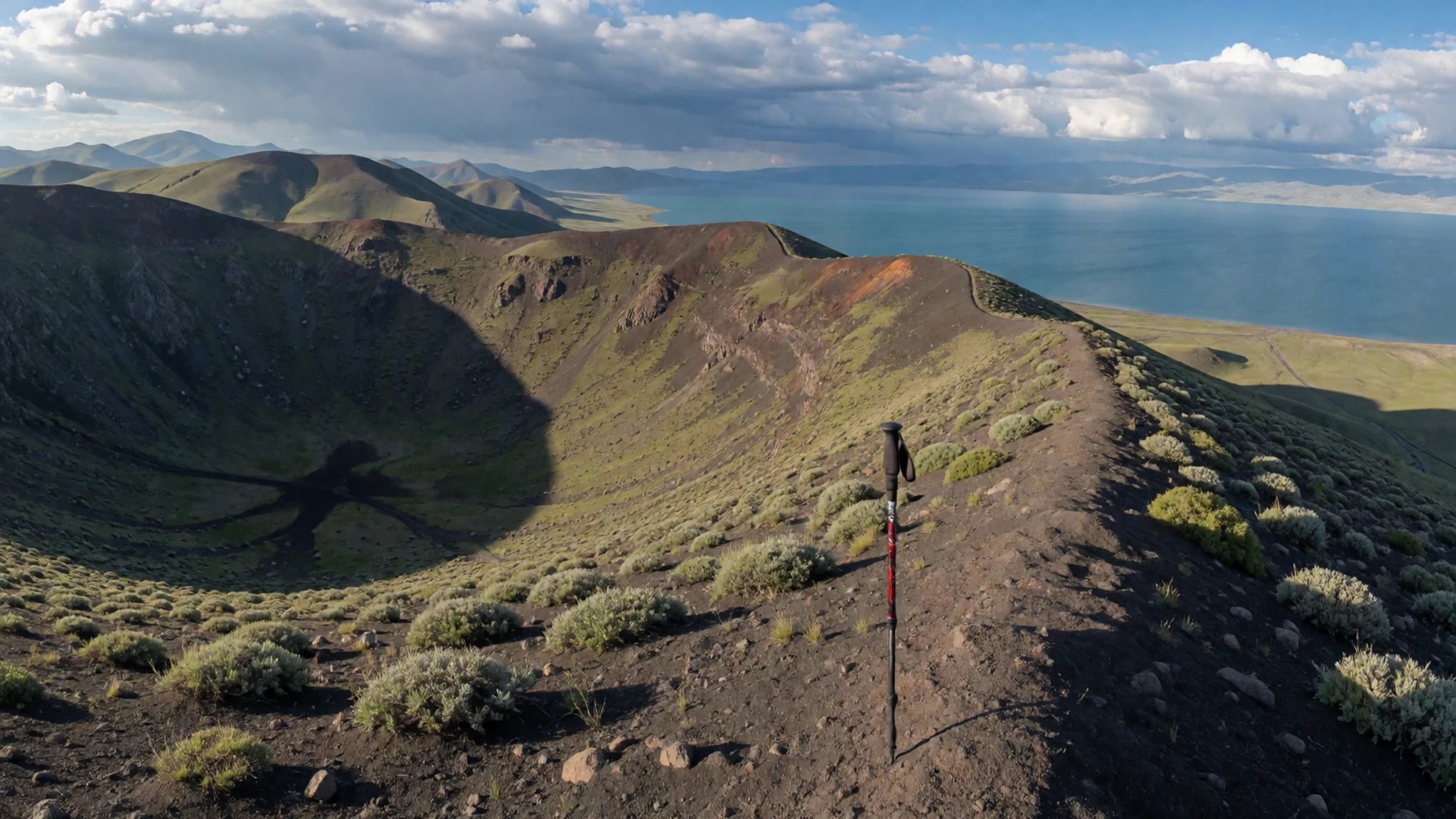
- The Van waterfront — Van city shore, evening promenade
Van's waterfront is the city's social edge, where families walk in the evenings and small cafés and tea gardens line the shore. The water softens the heat that builds on the plateau inland, so the promenade is pleasant on summer evenings. Go after sunset in summer, when the air cools and the lights reflect across the lake.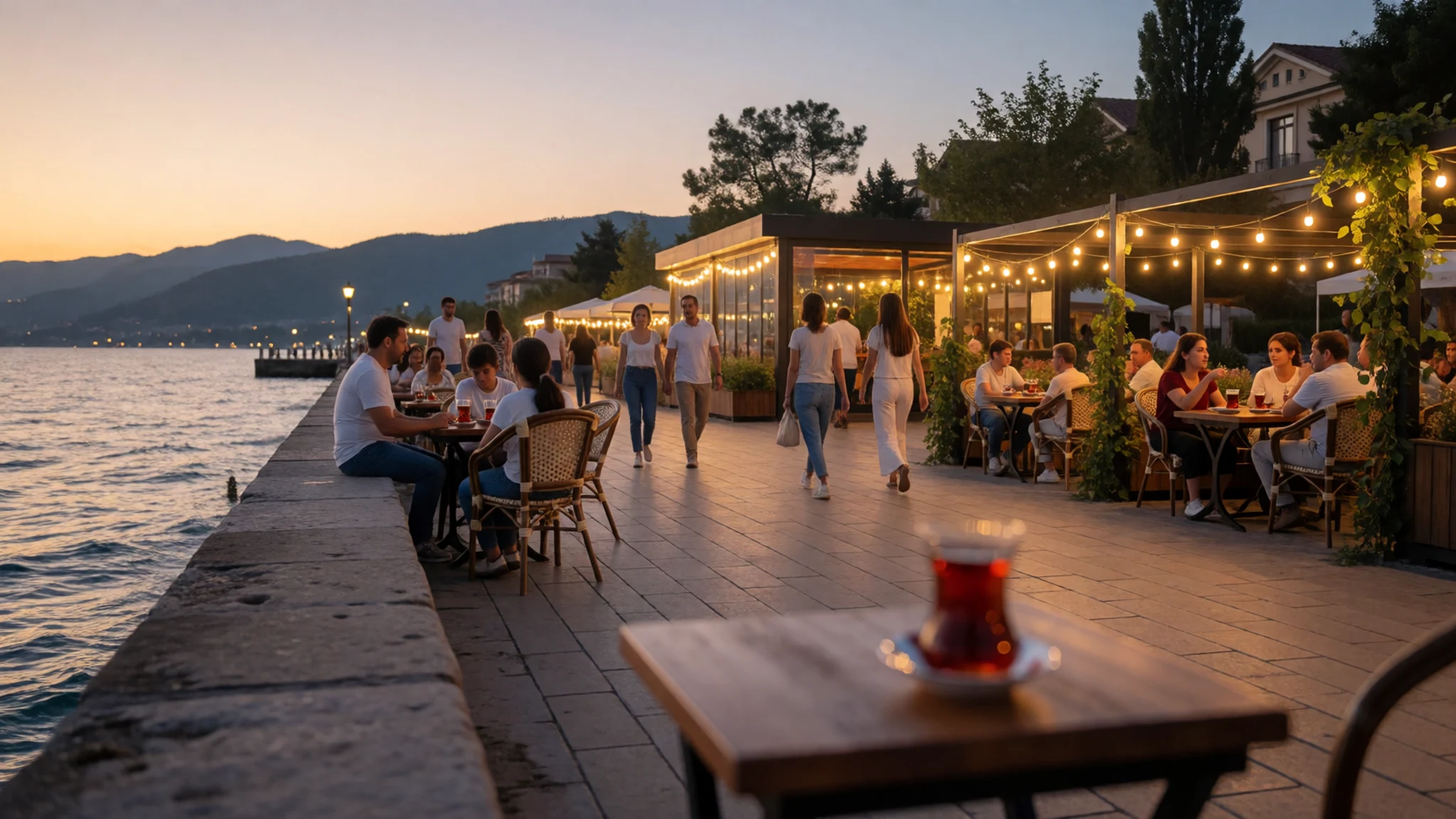
- Armenian gravestones on the shore — Lake shore sites around Van
Carved headstones at Ahlat, on the western side of the lake, were raised by the Ahlatshahs, a Seljuk-era dynasty, and are a quiet reminder of their rule there. Many of the stones are weathered and shaded by grass. Treat them as memorials: keep to paths, do not lean on or climb them, and photograph them without moving them.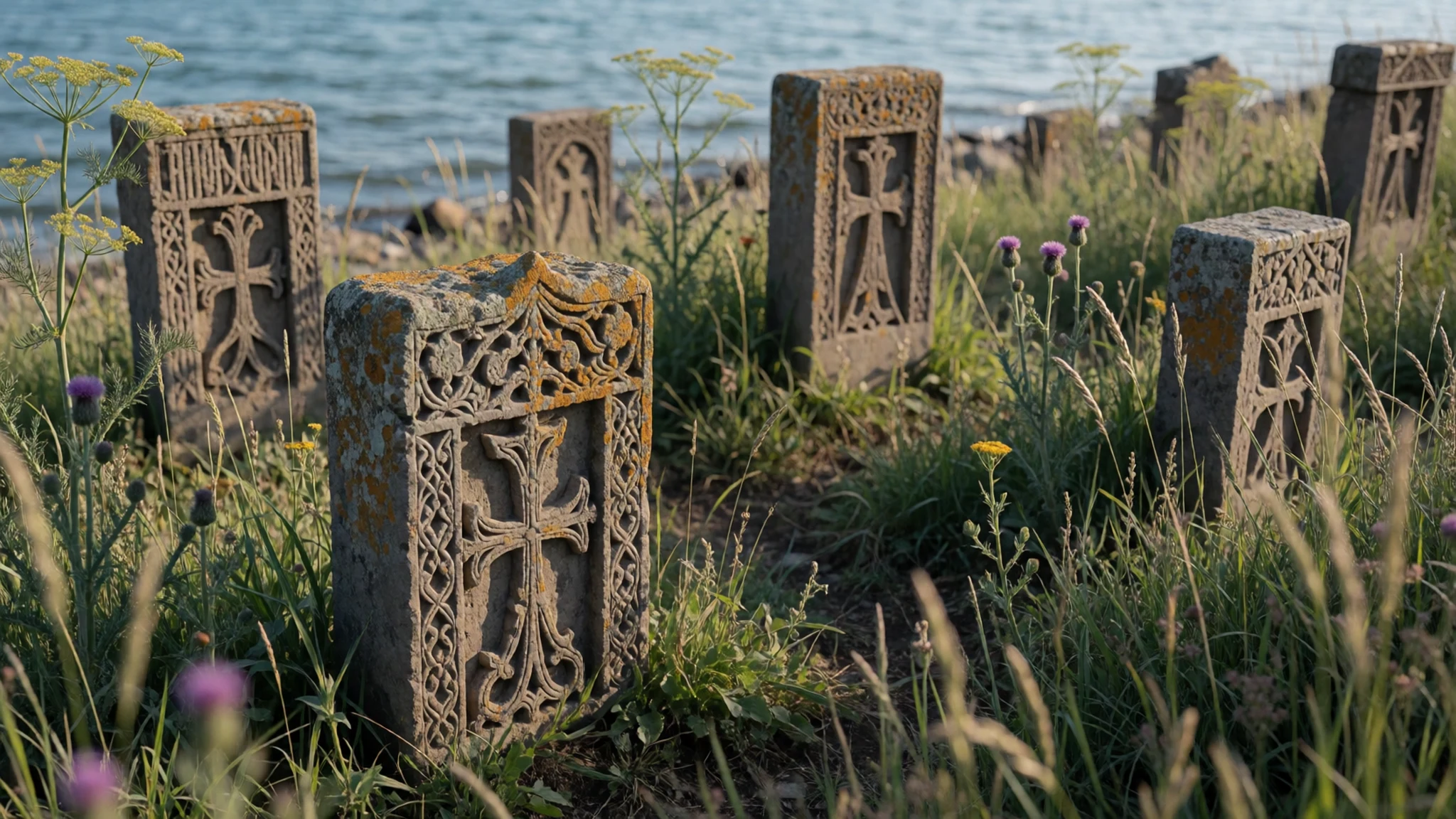
Culture
Lake Van sits in a region where Turks, Kurds and the remnants of an Armenian community have shared villages and towns for generations, and daily life follows a mix of local customs. Most people here are Muslim, and alcohol is far less visible in public than in western Turkish resorts, so ask before offering drinks at a home. Hospitality is serious. A guest invited for tea or a meal can expect the offer to be repeated, and refusing politely is part of the ritual. Tea is served in small tulip-shaped glasses and is a constant presence in shops, offices and homes. Conversation tends to be warm and direct, and questions about your family or work are a sign of interest rather than intrusion. Religious sites are used for prayer, so dress modestly in mosques and churches, cover shoulders and knees, and wait for a sign before stepping inside a sanctuary. When you are invited into a home, take off your shoes at the door unless your host says otherwise, and bring a small gift such as flowers or sweets rather than alcohol.
What to wear
Traditional dress around Lake Van belongs to the mountain villages of the Van region, where Kurdish and Turkish families long wore practical clothing suited to cold winters and dry summers. Women's dress traditionally included embroidered headscarves, layered skirts or trousers, and sleeveless waistcoats decorated with stitching. The region's strongest textile tradition is in flatwoven kilims and hand-knotted rugs, made from wool and often coloured with plant dyes, which are sold in bazaars and shops across the province. Most people now dress much as they would in Istanbul or Ankara, with jeans, jackets and trainers, while some older women in villages still wear headscarves and long dresses. In winter, knitwear and padded coats are everywhere.
A visitor should dress for the climate first: layers for cold evenings on the water, sun protection in July, and shoes with good grip for the rocky paths around Van Castle and the crater rims. For religious sites, cover shoulders and knees, and carry a light scarf to use in mosques. Sandals suit the promenade but not the rock.
What to eat
- Van breakfast — breakfast eateries in the old town and along the lakeside
A Van breakfast is a long, slow spread of local cheese, honey, butter, olives, tomatoes, cucumber and warm bread, often with eggs cooked in butter. It is eaten late and lingered over, and it is the easiest way to taste the region's dairy. Ask for the local cheese rather than a standard white one.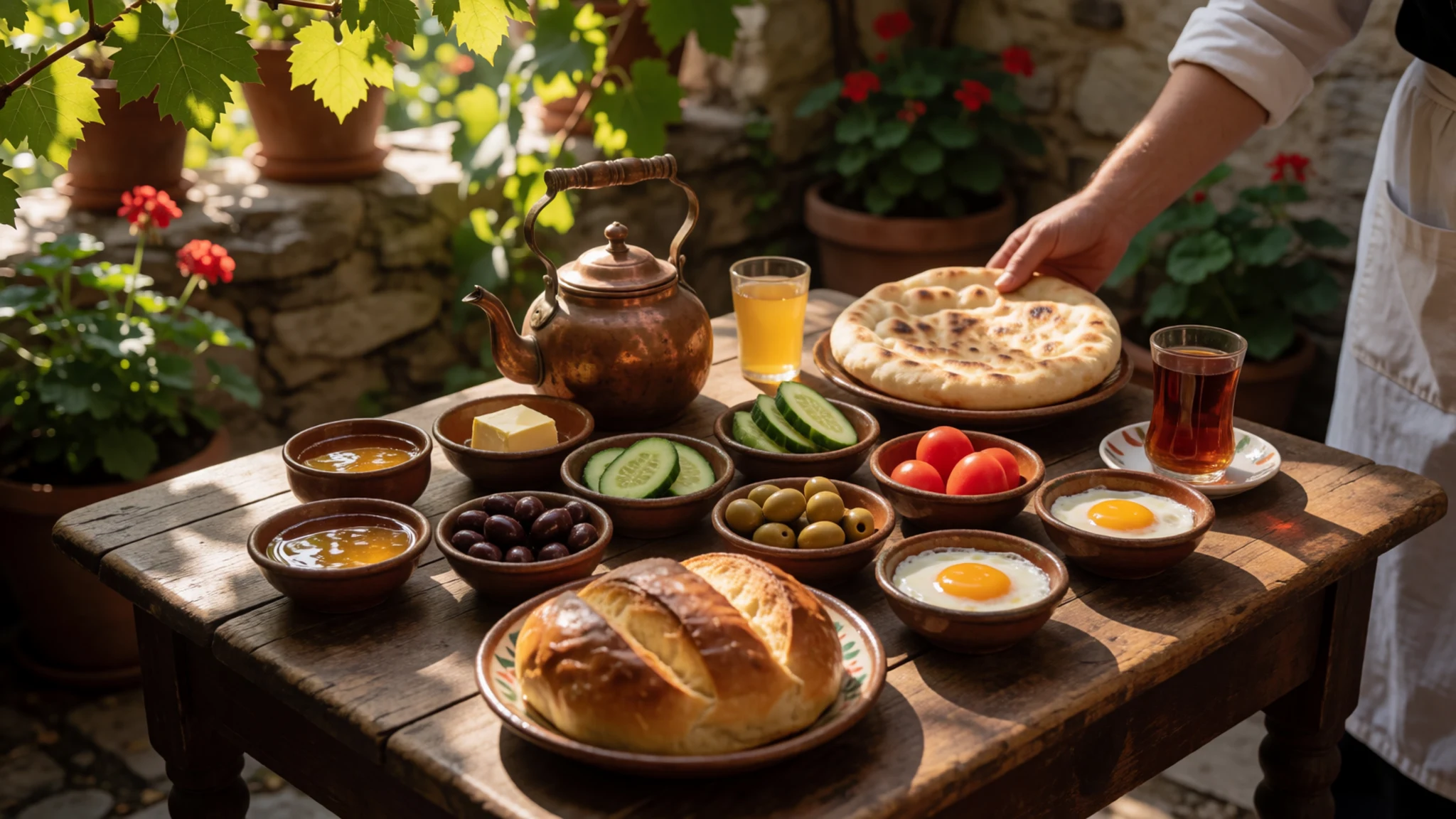
- Otlu peynir — the morning market and cheese stalls
Otlu peynir is a herb cheese made from fresh milk mixed with wild greens, and it is the regional cheese most associated with Van. The herbs give it a sharp, green flavour, and it is sold in rounds and cut to order. Try it spread on warm bread at breakfast.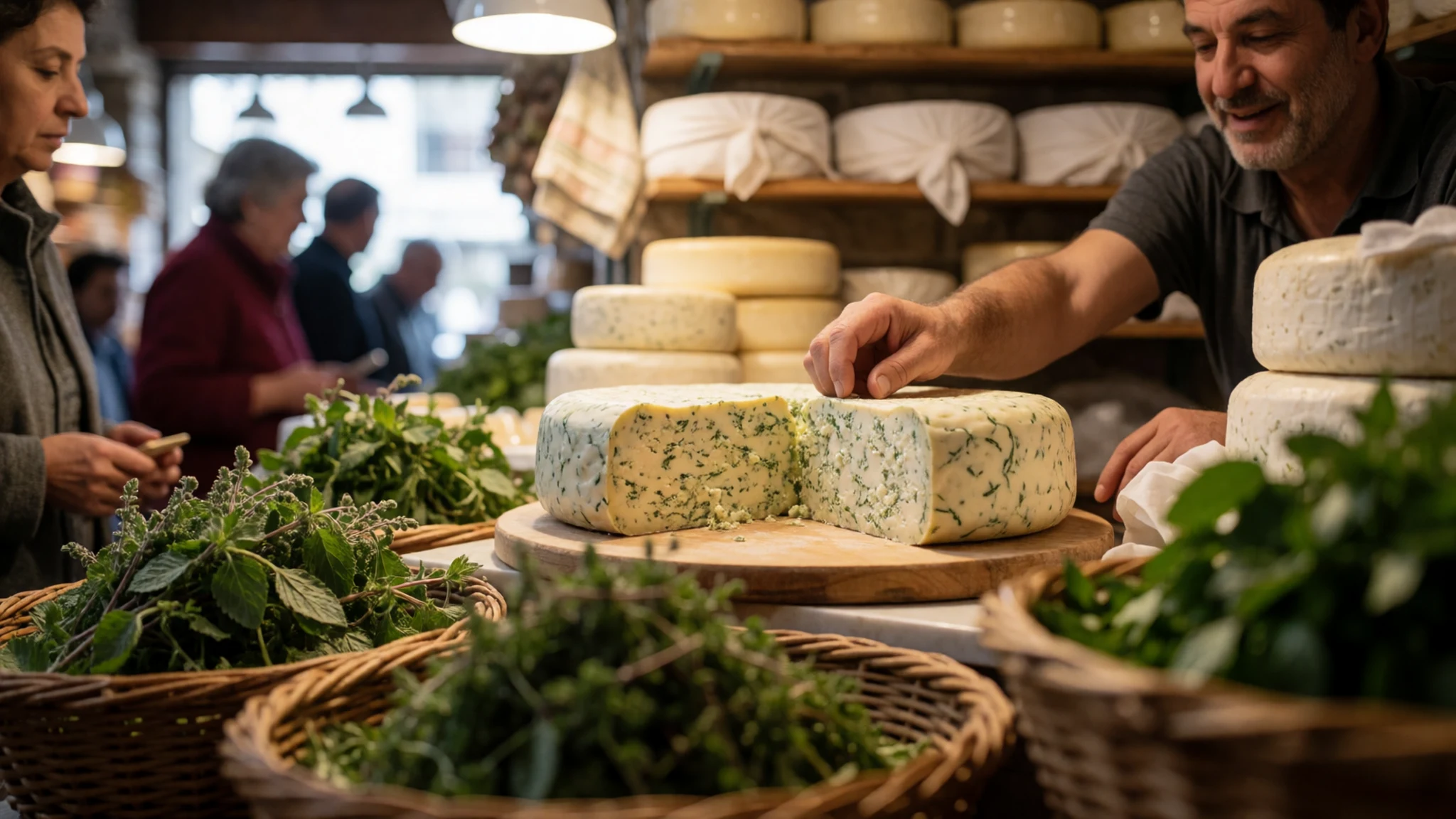
- Lavash bread — bakeries near the bazaar
Thin, soft lavash is baked in a tandır oven, slapped against the inside wall, and eaten hot with cheese, herbs and grilled meat. It keeps well, so bakers make it in large batches through the morning. Watch the bakers at work if the oven is open. - Van pearl fish — lakeside fish stalls and harbour restaurants
The Van pearl fish, known locally as inci, is a small lake fish, usually grilled or fried whole. Fishermen sell the morning catch on the shore, and it is best eaten on the day it comes out of the water. Expect plenty of small bones and eat slowly. - Lamb and goat kebab — grill houses and eateries around the bazaar
Lamb and goat fill the role beef plays further west, so the grills of eastern Anatolia rely on them. Grilled kebabs and slow-cooked tandır lamb turn up on eatery menus across the region. Order the day's grill and ask what came from the morning's butcher.
Plan it
Best time. May and September are the most comfortable months, while July is the hottest, with highs near 35 °C; winters bring lows of −17 to −25 °C and snow, and mountain roads around the lake can be slow.
How long. 3–4
Getting there. Fly into Van Ferit Melen Airport, served from Istanbul and Ankara; long-distance buses also reach Van from eastern cities, so check schedules locally.
Budget. mid
Tips
- Book flights early for summer weekends
- Bring cash for small eateries, bakeries and markets
- Carry sun protection, since summer sun on the water is strong
- Plan mountain drives in daylight and check road conditions in winter
Etiquette
- Remove shoes at homes and in some religious buildings
- Ask before photographing people, especially women
- Dress modestly for mosques and churches
Nearby
Sources
- Wikidata Q126307 (CC0)
- Wikipedia: Lake Van (rev 1380993106) (CC BY-SA 4.0)
- Wikivoyage: Turkey (rev 5393139) (CC BY-SA 4.0)
- Lakevanlandsat.jpeg (Public domain)
- STS079-781-53.jpg (Public domain)
- Akhtamar Island on Lake Van with the Armenian Cathedral of the Holy Cross (CC BY 3.0)
- Old beach lines shown on section of north rim of Sheikh Ora volcano (Public domain)
- Çadır Dağı seen from the island of Akdamar in lake Van (CC BY 2.5)
- Prehistoric Lake Levels Paleoclimates 90ka Lake Van Turkey (CC BY 4.0)
- Lake Van in Maunsell's map, Pre-World War I British Ethnographical Map (Public domain)
- Armenian gravestones. Lake Van. (CC BY-SA 2.0)


