Lake Tōya
Lake Tōya, Japan
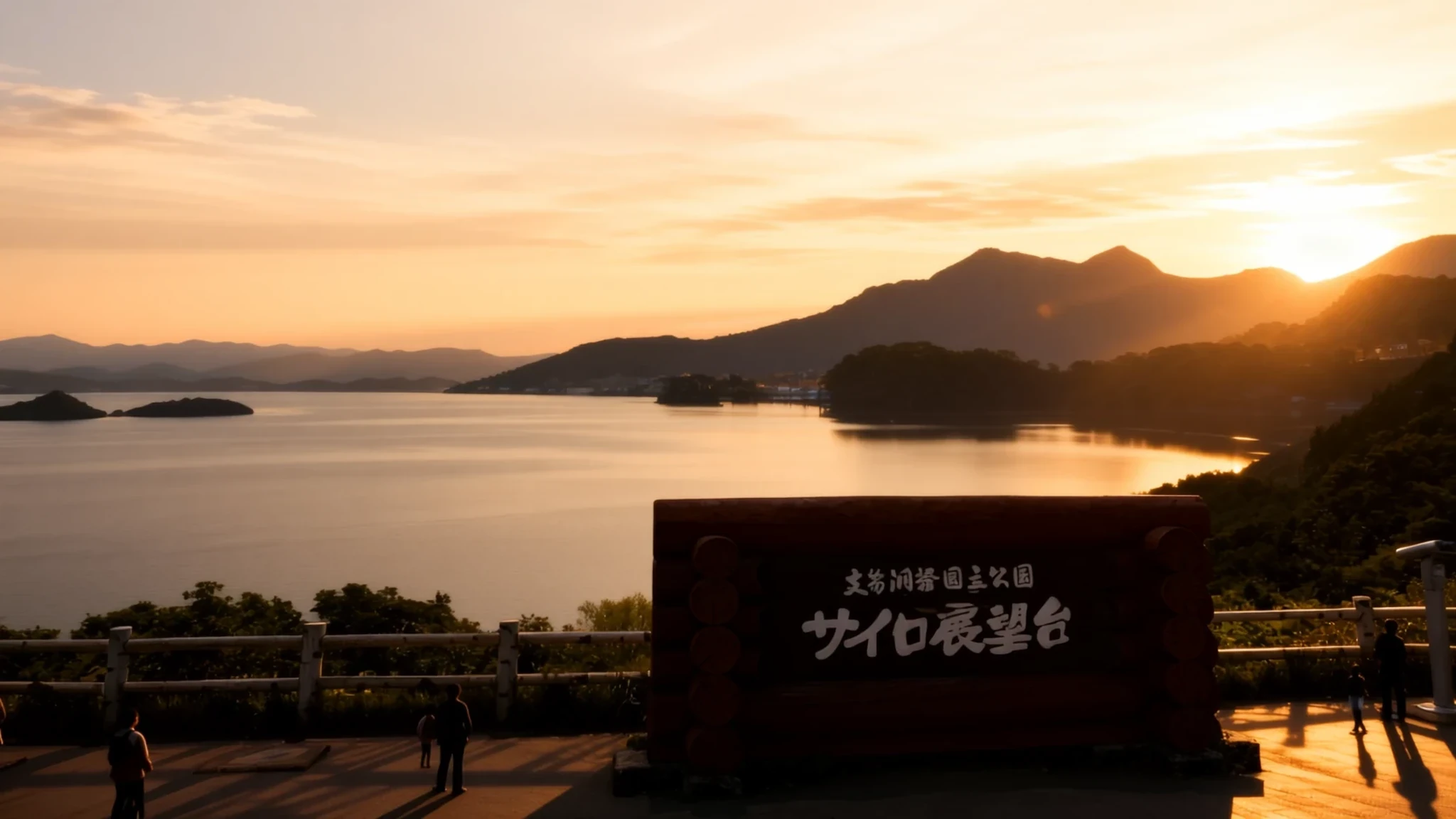
A caldera lake in northern Japan with clear water, forested islands, hot-spring towns and a volcano on its rim, best for slow days on the shore.
The place
Lake Tōya sits in a broad volcanic caldera on the southwest coast of Hokkaido, Japan's northernmost main island. Its outline is close to a circle, roughly 10 km (6.2 mi) from east to west and 9 km (5.6 mi) from north to south. Most of the shoreline belongs to Tōyako, a resort town whose hotels and onsen (hot spring baths) face the water, while the smaller town of Sōbetsu lies on the eastern side. The lake is part of Shikotsu-Toya National Park, and the wider area is recognised as the Toya Caldera and Usu Volcano Global Geopark, a designation that ties the lake to the active stratovolcano Mount Usu on its southern rim.
The water is clear, and the lake is said never to freeze, which makes it feel gentler than the snowy hills around it. Nakajima, a forested island near the middle, is reached by boat and holds the Toya Lake Forest Museum. Most people explore by road: a loop around the shore, a few lookouts and the steaming slopes near the hot springs show how recently the ground beneath the lake was shaped by fire.
Think of it as a lakeside resort in a volcanic setting rather than a wilderness. Accommodation clusters along the shore, the onsen streets fill up on weekends and holiday periods, and evening choices outside the big hotels are fewer than in a city. Come for water, walks and a long bath, and treat the volcano as part of the view.
Its story
The lake was known to the Ainu, Hokkaido's Indigenous people, as Kim'un-to, a name built from words meaning 'in the mountain' and 'lake'. When Japanese settlers arrived in the Meiji era, they took the name Tōya from an Ainu expression, to ya, which describes the land along a lakeshore. The name stuck, and the Japanese form is what appears on maps today.
The lake itself is a caldera, the hollow left when a large volcano collapsed or emptied and sank. Mount Usu, on the southern rim, is still active, and its eruptions have repeatedly reshaped the towns around the water. Traces of that history remain, including abandoned buildings from a past disaster that can be seen near the volcano's slopes. The later geopark designation recognises this record of volcanic change as something worth learning from rather than simply escaping.
In the modern era the lake became known beyond Hokkaido for its clear water and its reputation for staying unfrozen in winter. Wikipedia notes a competing claim from nearby Lake Shikotsu on the point about ice. The area also hosted the 2008 G8 Summit, held at the lake and at a resort hotel on its shore. Today the stories people tell about Lake Tōya are mostly about its water, its volcano and its hot springs.
What to see
- Nakajima Island — middle of Lake Tōya
The forested island in the middle of the lake is the place to go if you want a change of view. Boats serve the island, and the Toya Lake Forest Museum there gives context on the surrounding woods and volcanic landscape. Go on a calm morning, when the water is most still and the shoreline reflects clearly.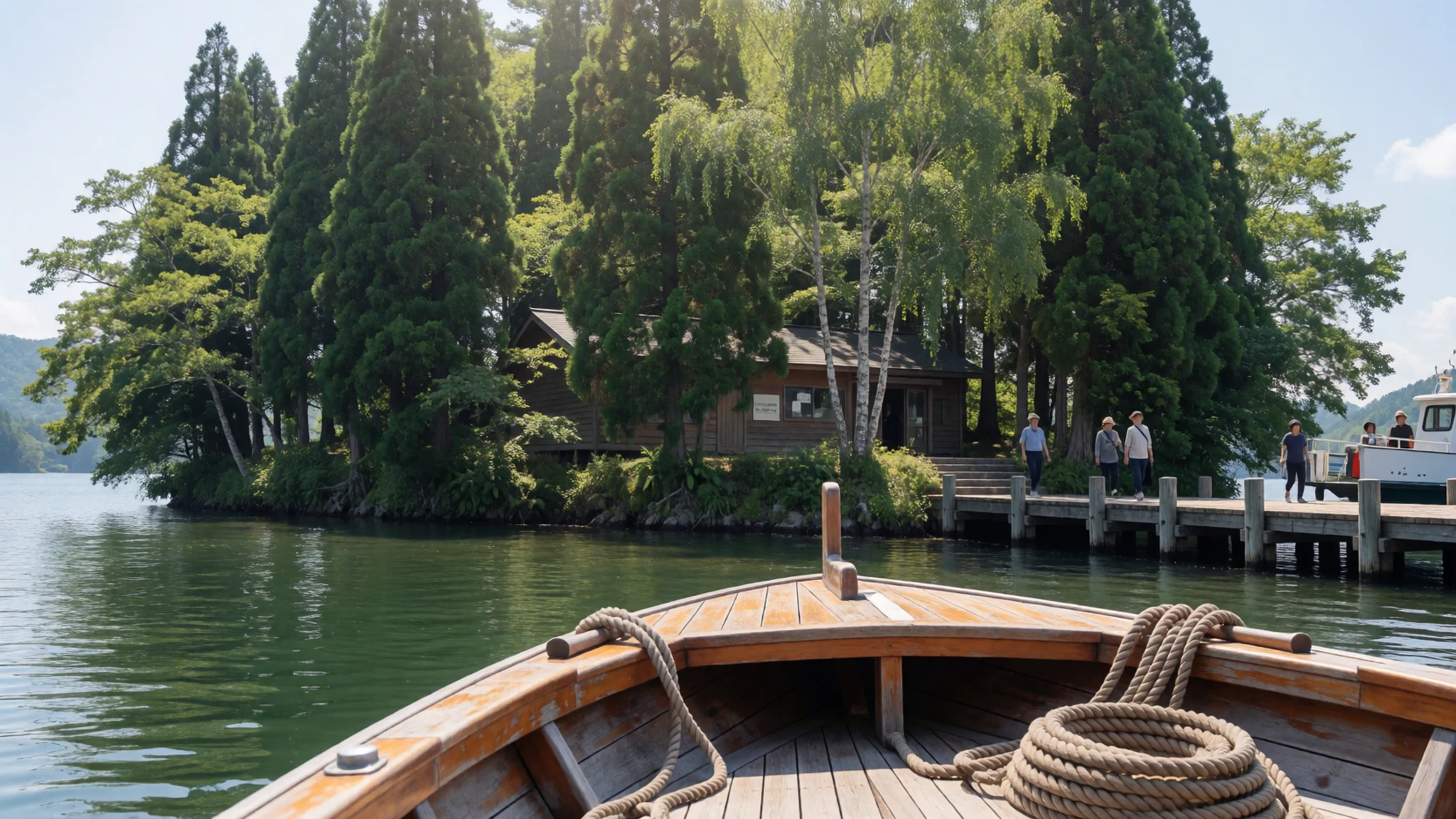
- Mount Usu and its crater — southern rim, above the lake
Mount Usu rises on the southern rim of the caldera and is the reason the area is a geopark. Viewpoints around its slopes look down on the crater and the scarred ground left by past eruptions. Read the signs carefully, follow the official route and keep to marked paths, since volcanic ground can change quickly.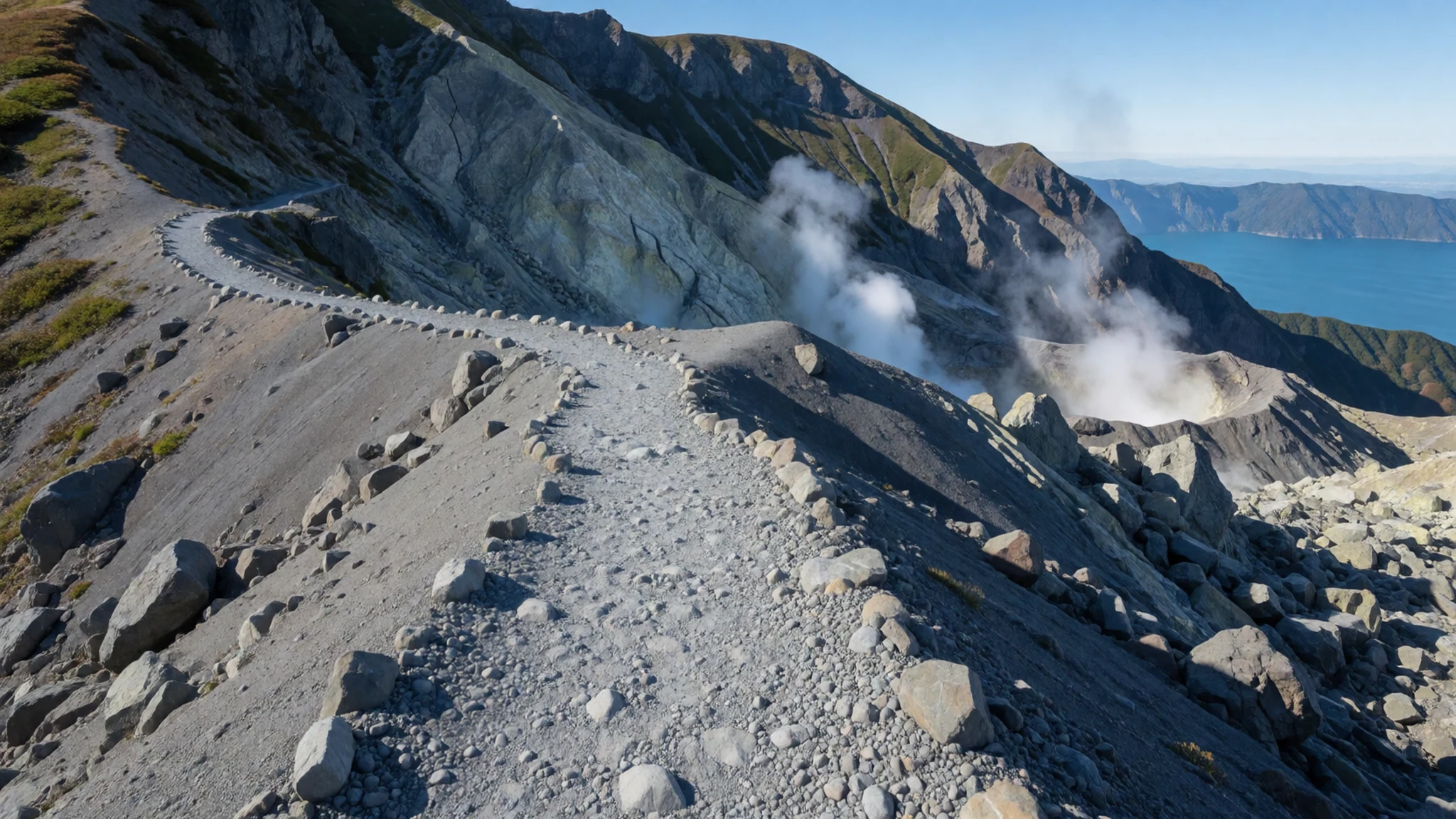
- Toyako Onsen lakeside — Tōyako onsen district
The hot spring town of Tōyako strings its hotels and bath houses along the shore. A stroll along the water in the evening is the simplest way to see the lake at close range, with steam rising from the ground and the lights of the resort reflected on the surface. It is busiest on weekends.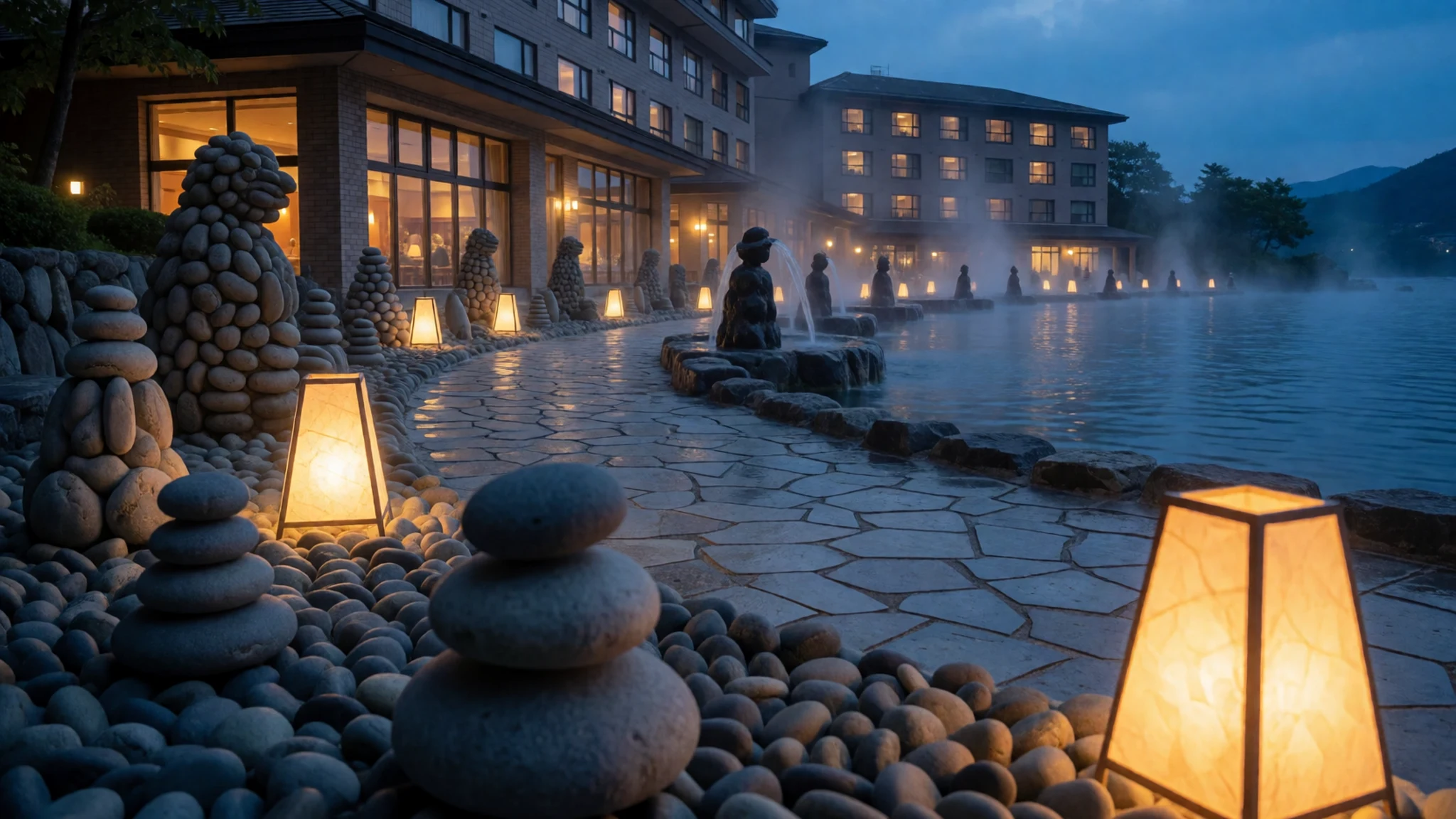
- Views from the resort shore — lakeshore, Tōyako
The large hotel on the lake's edge offers some of the most-photographed lake views, looking out across the water toward the island and the hills. You do not need to be a guest to walk the grounds, but check the hotel's own rules before entering. Mid-morning light usually shows the far shore best.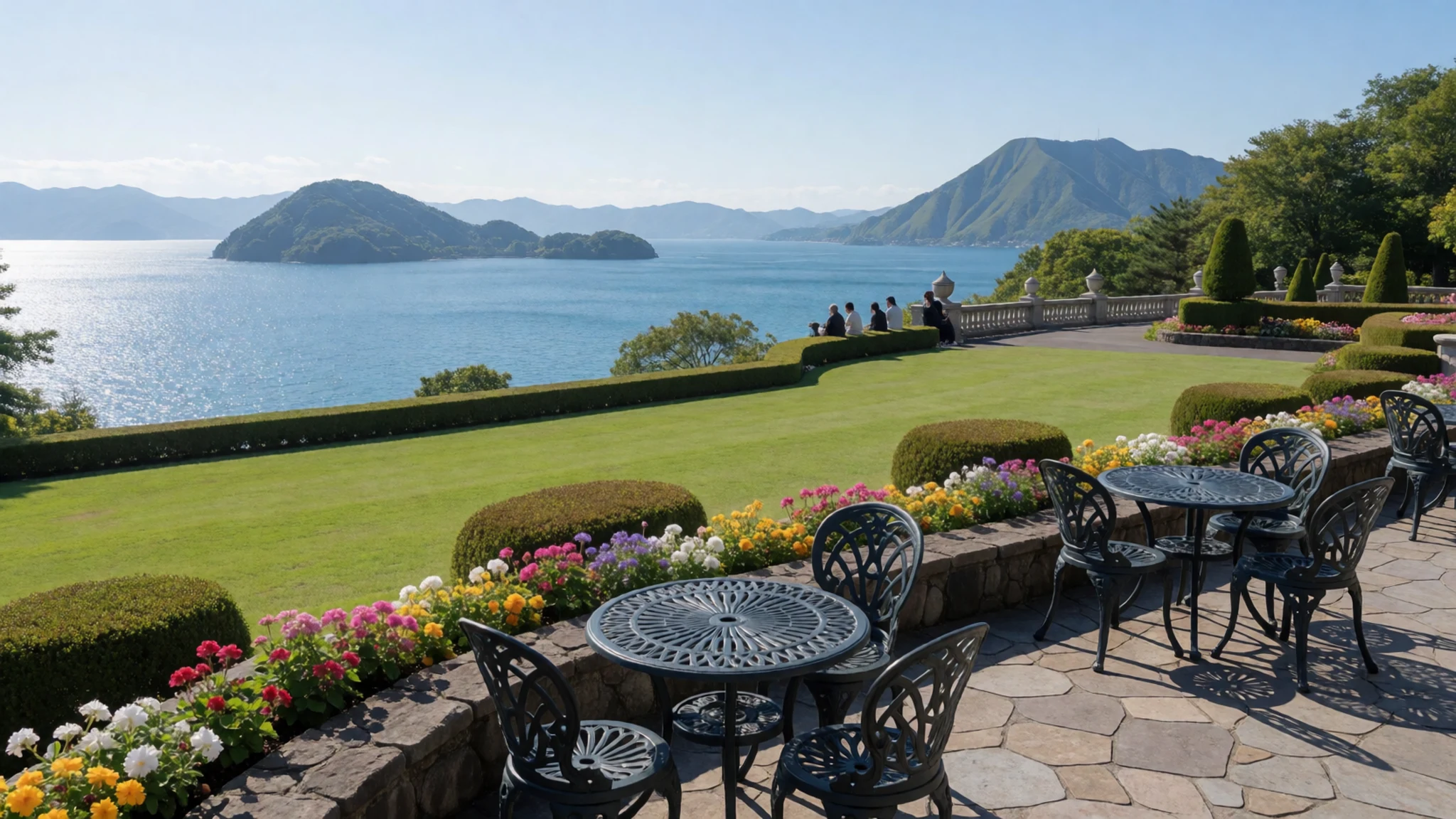
- The caldera from above — caldera rim
A three-dimensional elevation view of the lake shows how the caldera wall encloses the water on nearly every side. Seeing the shape from the air makes the scale of the collapse easier to grasp than standing on the shore. Several roads and lookouts around the rim offer similar angles without any special equipment.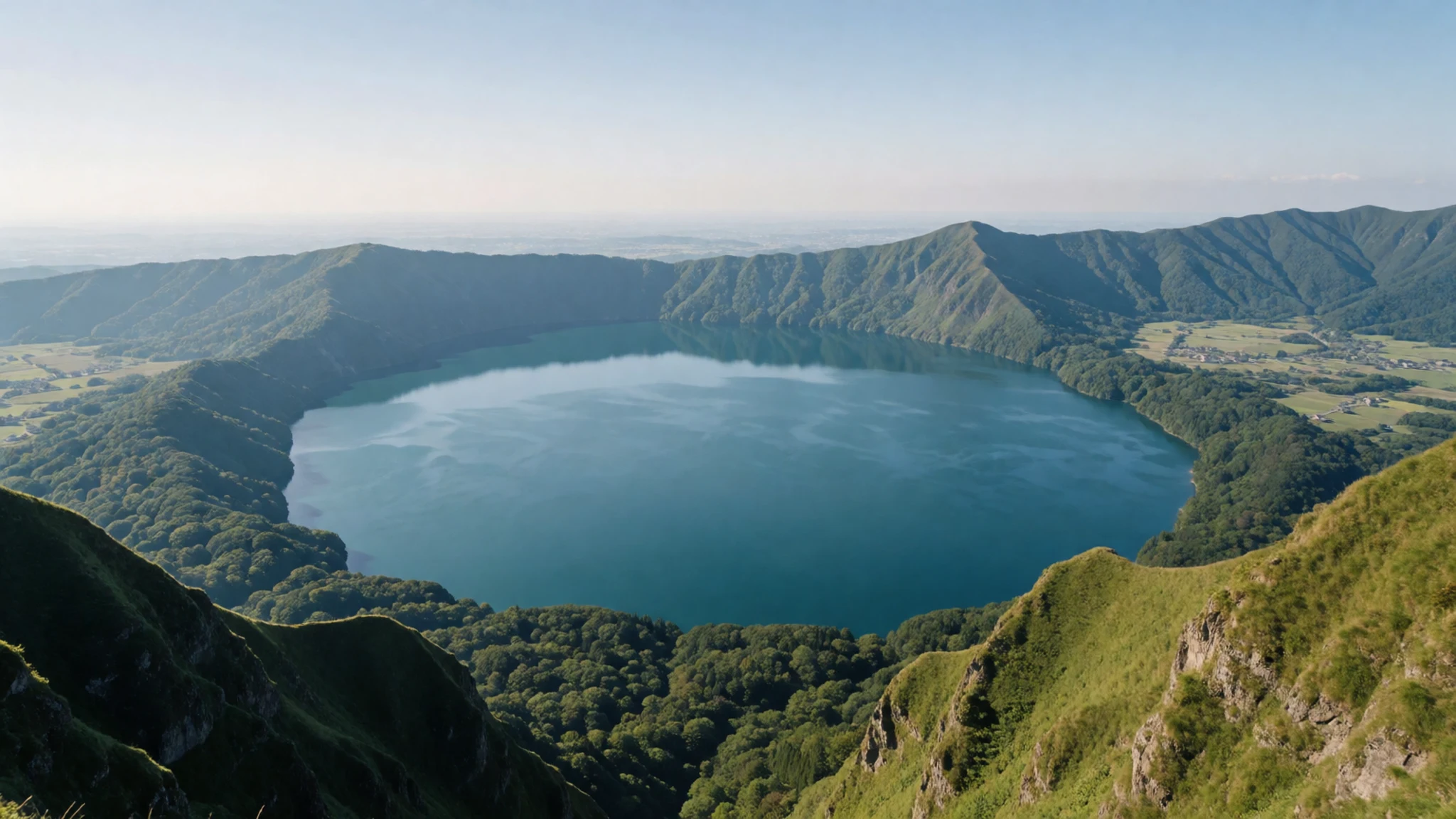
Culture
Lake Tōya's identity is shaped by its Ainu past and by the onsen culture of its resort towns. The Ainu called the lake Kim'un-to, and their language and crafts remain part of Hokkaido's heritage, even though most visitors meet them only through museums and exhibitions. Around the lake, daily life follows the calm rhythm of a small resort: people are polite, shops close in the evening, and conversation in bath houses is quiet. Onsen are a central part of local life, with separate bathing areas for men and women and firm customs about cleanliness. Shorts and light clothing are normal in summer, but outside the hotels people tend to dress modestly. When you visit a public bath, wash thoroughly at the shower stools before entering the water, and keep your small towel out of the bath itself.
What to wear
Traditional dress around Lake Tōya belongs largely to Ainu culture. Ainu women and men wore garments of cloth woven from elm bark fibre, and their embroidery, often in bold curved patterns on cuffs and hems, is still made today for ceremonies and for craft sales. The kimono, a silk garment with a sash, is the best-known Japanese dress, but the lighter cotton yukata is more often seen in the onsen towns, worn over bath clothes or for an evening stroll. People in the area now dress much as they would anywhere in Japan: practical trousers, jackets, sneakers and, in winter, heavy coats and boots. For a visit, pack layers, since the air can be cool even in summer, especially on the water. A waterproof jacket and sturdy shoes suit the lakeside and volcano paths. Bring a warm layer in winter. Modest clothing is wise when visiting shrines or Ainu cultural sites, and swimwear belongs only in the bath house or hotel pool.
What to eat
- Fresh seafood from the Pacific coast — seafood restaurants in Tōyako and along the coast
Hokkaido's cold coastal waters supply crab, scallops, sea urchin and salmon, and the lake's resort towns serve them at dinner. Seafood is best ordered at a restaurant that lists the day's catch. Ask what is in season, since the menu can change with the boats.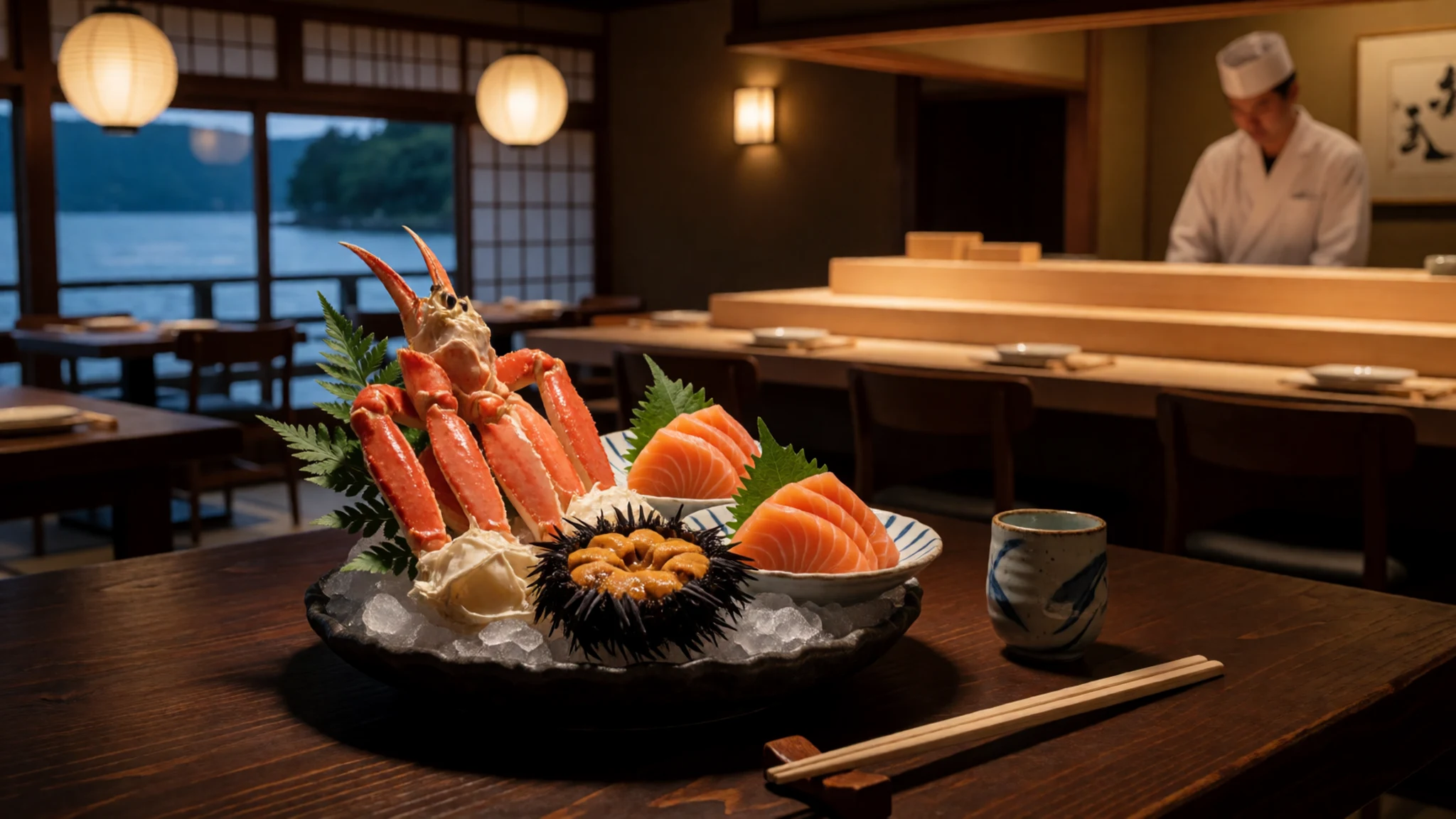
- Jingisukan grilled lamb — a jingisukan restaurant in a resort town or a city eatery
A regional favourite, jingisukan is thin lamb and vegetables cooked on a dome-shaped grill at the table. It is a sociable meal, usually eaten with a sweet-savoury sauce. Restaurants that specialise in it are common around the Hokkaido towns and suit groups.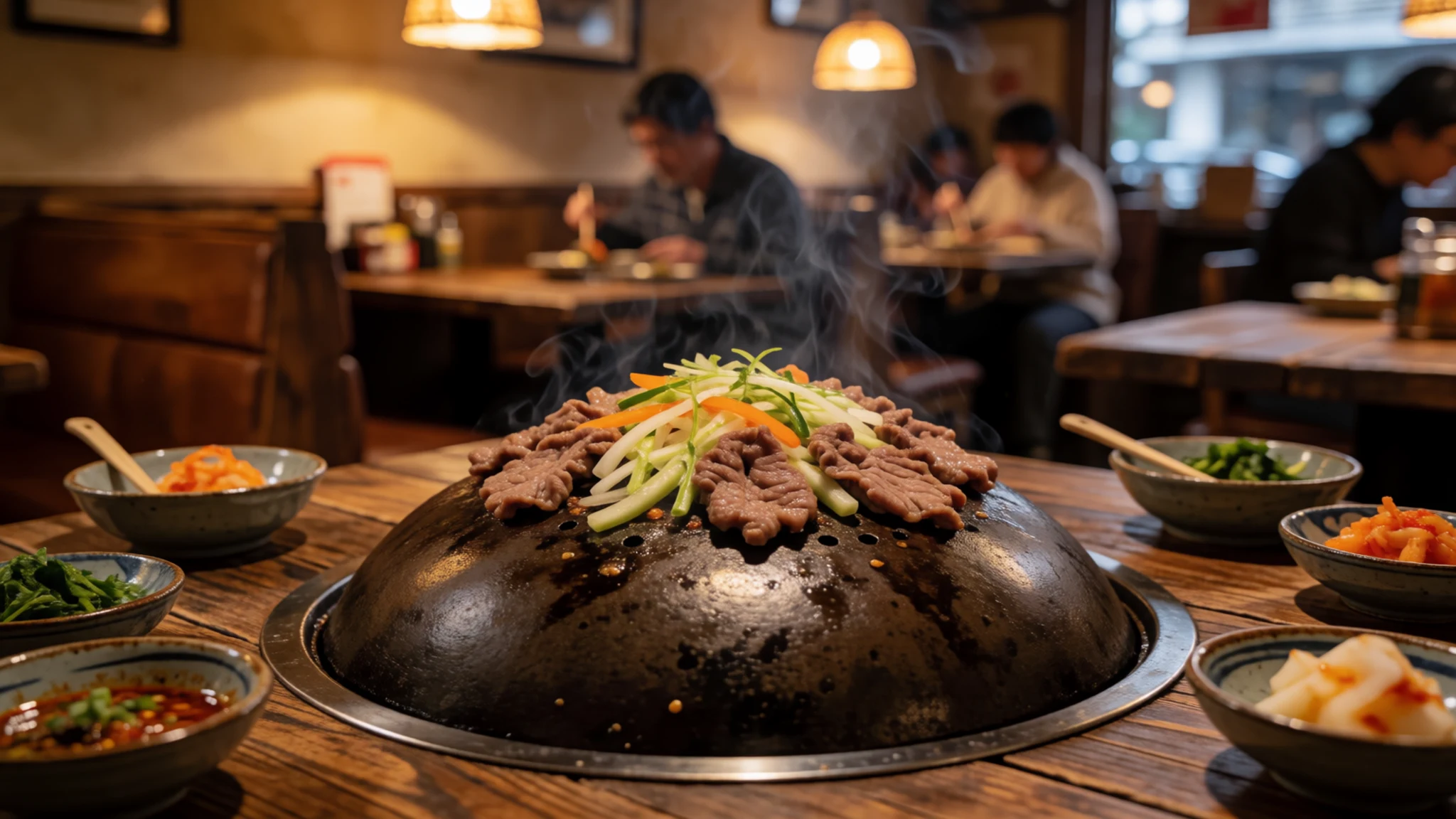
- Hokkaido miso ramen — a ramen counter in a town centre or near the station
Ramen with a rich miso broth is strongly associated with Hokkaido, and a bowl on a cold evening is a good reward after walking the shore. Counter-style ramen shops are the easiest to find and often quick to eat in. - Dairy desserts and soft-serve — dairy shops and the many convenience stores around the lake
Hokkaido is known for dairy, and soft-serve ice cream and milk-based sweets are sold widely. A cone from a dairy shop or a convenience store is a cheap, easy snack between lake walks. Several convenience stores in the area around the lake stock them.
Plan it
Best time. May and early October for mild weather and open lakeshore walks; late September and October for autumn colour around the caldera. Winter brings snow and cold, and the lake's clear water and hot springs are still appealing, but some services and transport run less often. Summer is hot, with July and August highs near 30 °C and 32 °C, and August is the wettest month.
How long. 2–3
Getting there. Fly into New Chitose Airport near Sapporo, then take a bus or limited express train toward the Tōya area; the last leg is by road, so allow most of a day from the airport. Check current timetables locally.
Budget. mid
Tips
- Book onsen hotels early for summer weekends and holiday periods
- A hire car makes the lake loop and the lookouts far easier than buses
- Walk the shore in the early morning, when the water is calmest
- Carry some cash for small shops, since not every place takes cards
- Bring layers and a waterproof, because the weather changes quickly
Etiquette
- Shower thoroughly at the stools before entering any communal bath
- Ask before photographing people, especially at festivals or in bath houses
- Keep voices low in ryokan and hotels after dark
Nearby
Sources
- Wikidata Q1323974 (CC0)
- Wikipedia: Lake Tōya (rev 1366281896) (CC BY-SA 4.0)
- Wikivoyage: Toyako (rev 5383501) (CC BY-SA 4.0)
- Photo: 130922 Lake Toya, Toyako (663highland) (CC BY 3.0)
- Photo: Lake Tōya and Toya Caldera 3D (Batholith) (Public domain)
- Photo: Lake touya and volcano Usu (メルビル) (CC BY 3.0)
- Photo: Toyako Onsen lakeside (663highland) (CC BY 3.0)
- Photo: Mt Tonoshikenupuri (Highten31) (CC BY 3.0)
- Photo: Touya-ko01 (Ririkuku) (Public domain)
- Photo: Hokkaido-Toya Lake winter (洞爺湖町) (CC BY 4.0)
- Photo: View from Toyako Onsen (Ippukucho) (CC BY 3.0)


