Lake Sebu
Lake Sebu, Philippines
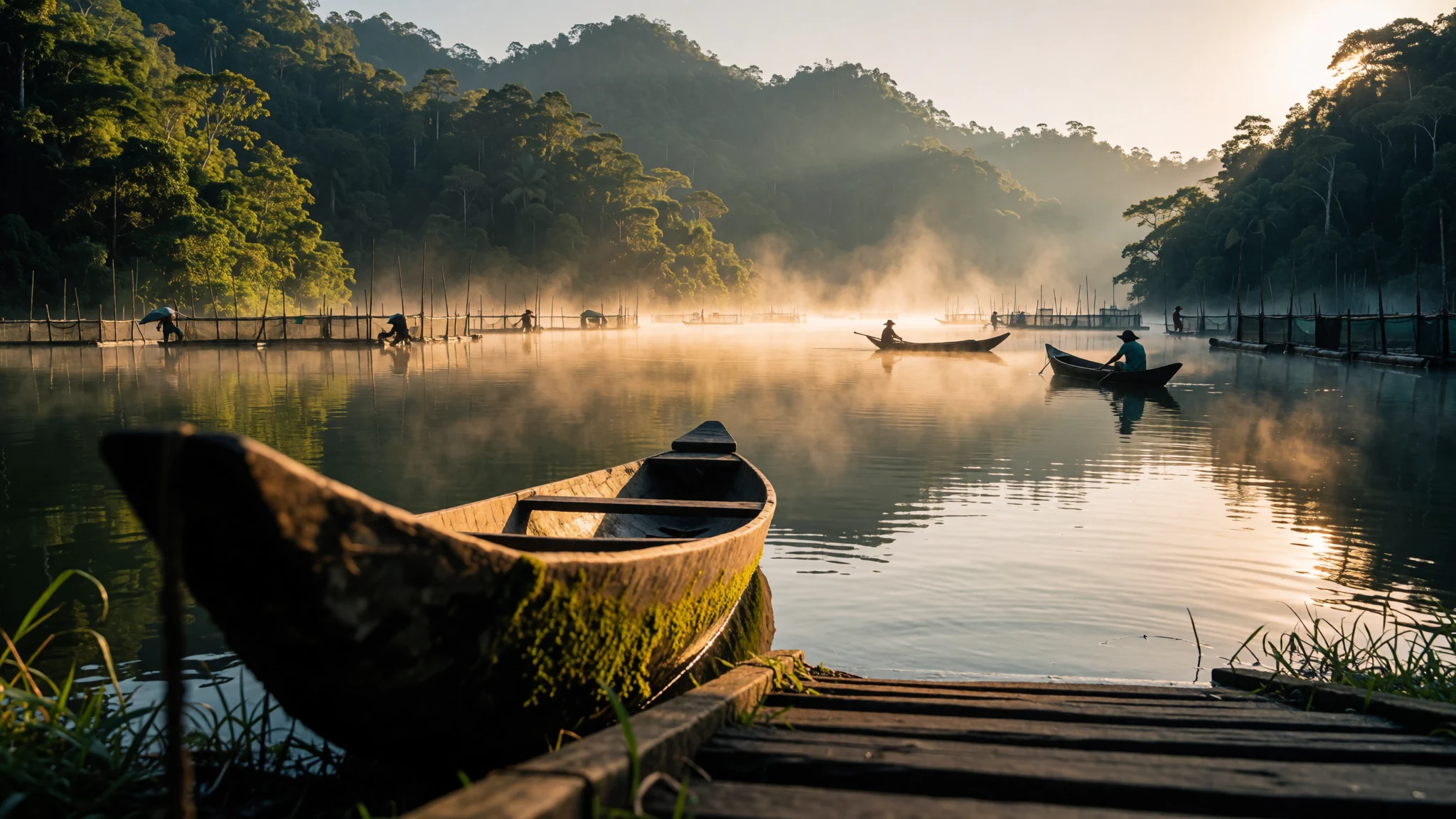
A highland lake in South Cotabato, ringed by rainforest hills and home to Lumad communities, reached by road from General Santos.
The place
Lake Sebu is a municipality in South Cotabato province, on Mindanao in the southern Philippines. The town takes its name from the lake at its centre, a calm stretch of water in Allah Valley, surrounded by rolling hills and mountains covered in thick rainforest. The lake covers roughly 360 hectares and sits 781 metres above sea level, so the air is cooler than on the coast, although the humidity is still high. The municipality has about 84,000 people, spread across nineteen barangays, the small village units that each divide into puroks. Many residents belong to Lumad communities, and the T'boli are the best known among them. Visayan and Ilocano settlers arrived in later waves, but the indigenous presence remains dominant. The wider landscape is recognised by UNESCO as a cultural landscape, and the forest around the lake is protected. Fish farming and tourism are the main sources of income. Tilapia is raised in large floating cages, and those cages are a regular sight from the shore. The area lies about 6 degrees north of the equator, which means heat and humidity year round, and rain can fall at any hour of the day. Services are basic and the pace is set by the water, so this is a place for slow days rather than a resort town.
Its story
The municipality is a fairly young creation. It was carved out as an independent town within South Cotabato under a national law passed in the early eighties, after the area had been administered as part of wider units. Long before that, the valley was home to Lumad peoples, whose presence reaches far further back than any official record. Migration from the Visayas and from the Ilocos region brought new farmers and traders in successive waves, yet the indigenous communities kept their language, rituals and land practices and still form the majority. That is why the valley's cultural identity looks so different from lowland Christian towns elsewhere in the country. The lake itself has fed families for generations. Fishing with nets and traps gave way over time to fish cages anchored on the open water, where tilapia is now grown in numbers that drive the local economy. Road access changed the story more recently. A concrete road cut the journey from the coastal cities to the valley to a fraction of its former length in time, letting produce and goods move more easily. That improved trade and gave the municipality a route for visitors interested in ecotourism, which the national government has encouraged. The result is a place that still feels remote, but is no longer cut off.
What to see
- T'boli Museum — Lake Sebu town, T'boli cultural displays
The T'boli Museum displays arts and cultural artefacts of the T'boli people, the Lumad community most closely linked with the lake. It is a useful starting point before visiting villages, because the displays explain weaving, textiles, metalwork and everyday tools in a way that makes later conversations easier. Allow an hour or so, and ask staff about any piece you do not understand.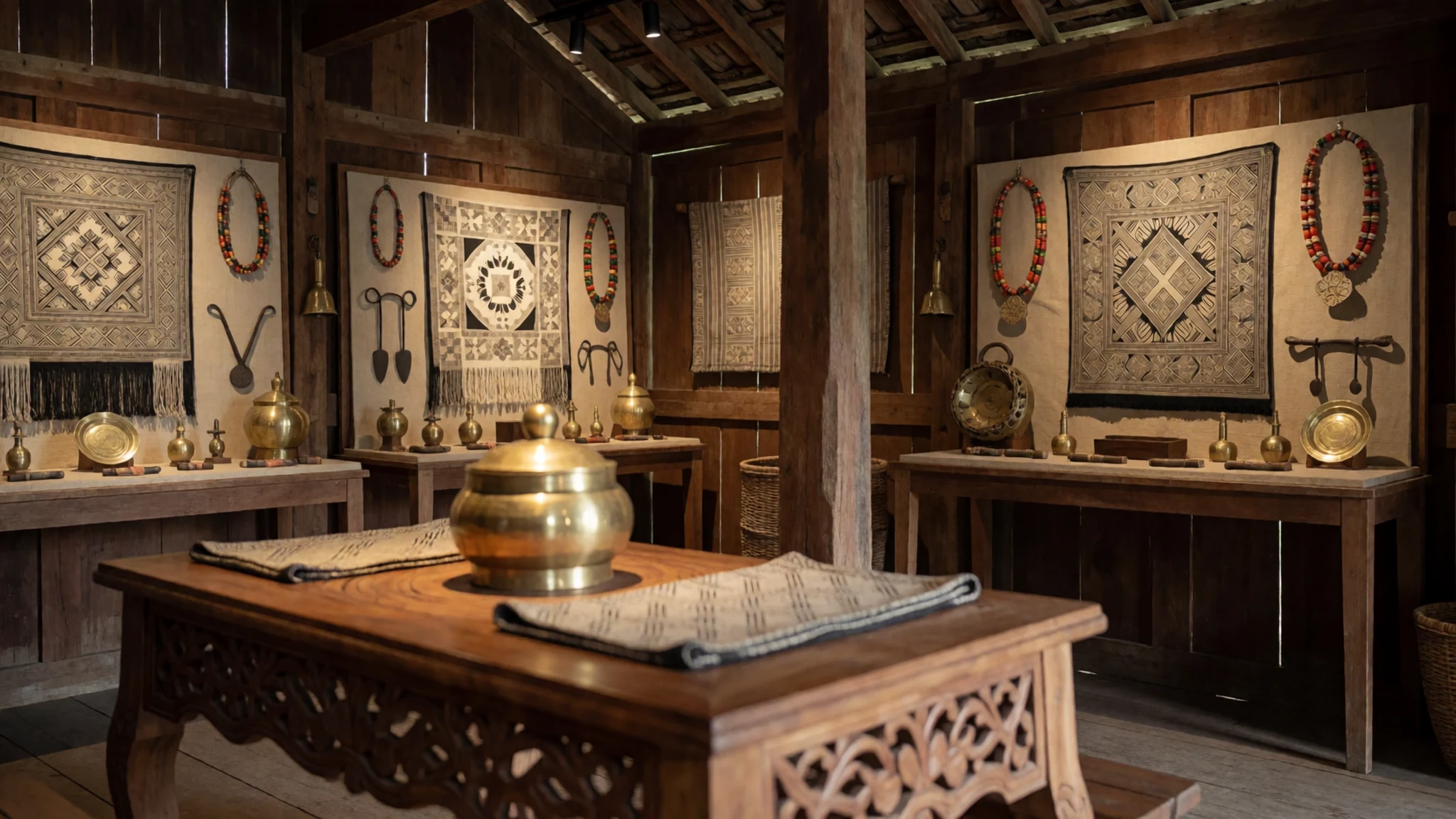
- The lake at Lake Sebu — Allah Valley, the lakeshore around the town
The lake sits in Allah Valley, a bowl of hills covered in dense rainforest. The water is calm and wide enough for an unhurried canoe trip across a morning. Early light is best, before the afternoon heat and the usual rain build up. Hire a canoe from the shore where local boatmen work, and agree the route before setting off.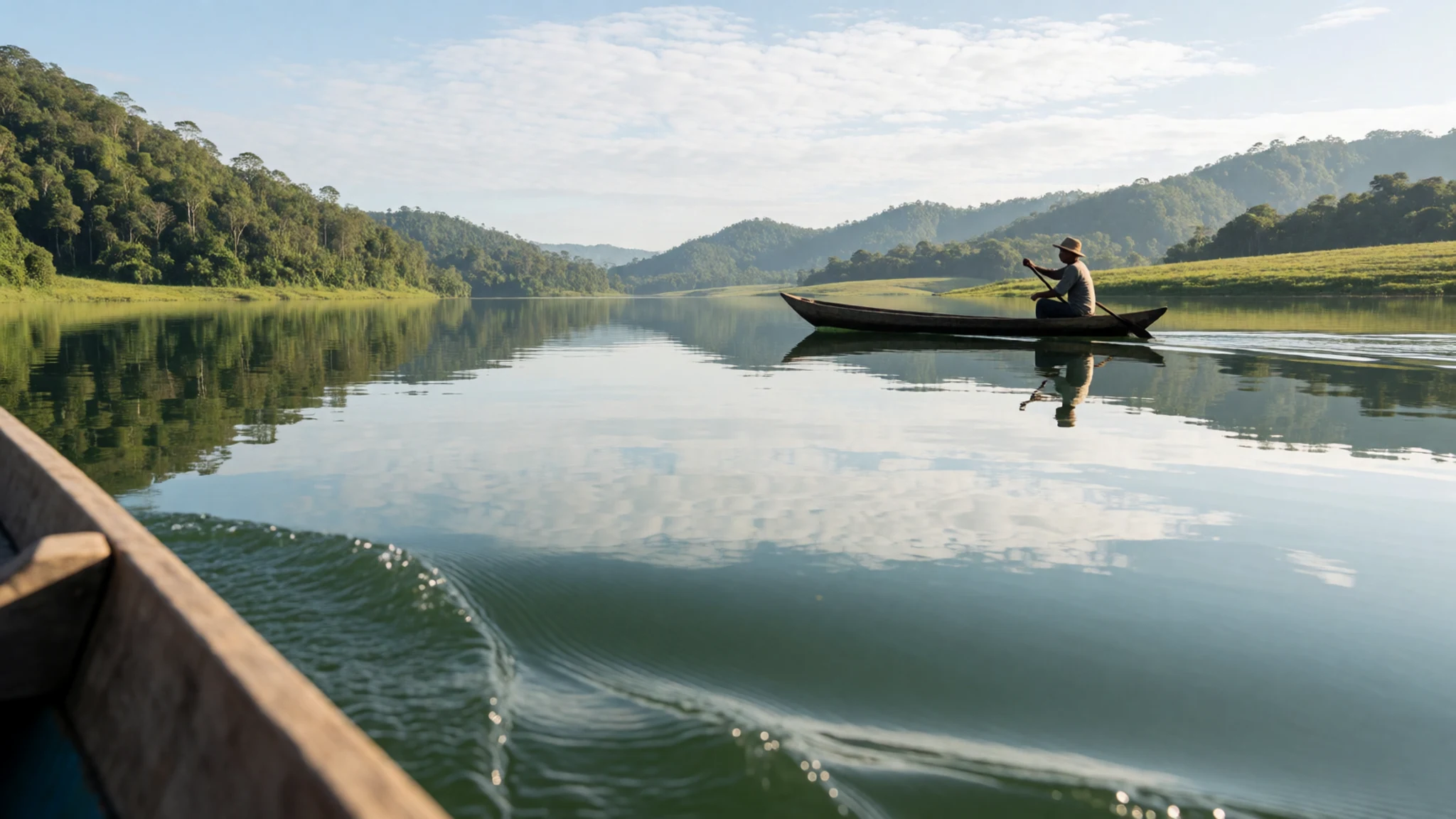
- Floating tilapia cages — The open water of the lake, seen from the shore
Rows of floating cages hold tilapia, and they are the reason the lake supports so many households. Watch them from the shore or from a canoe at a respectful distance rather than tying up to them. The cages belong to fishing families and are working property, so do not climb on them or feed the fish without asking first.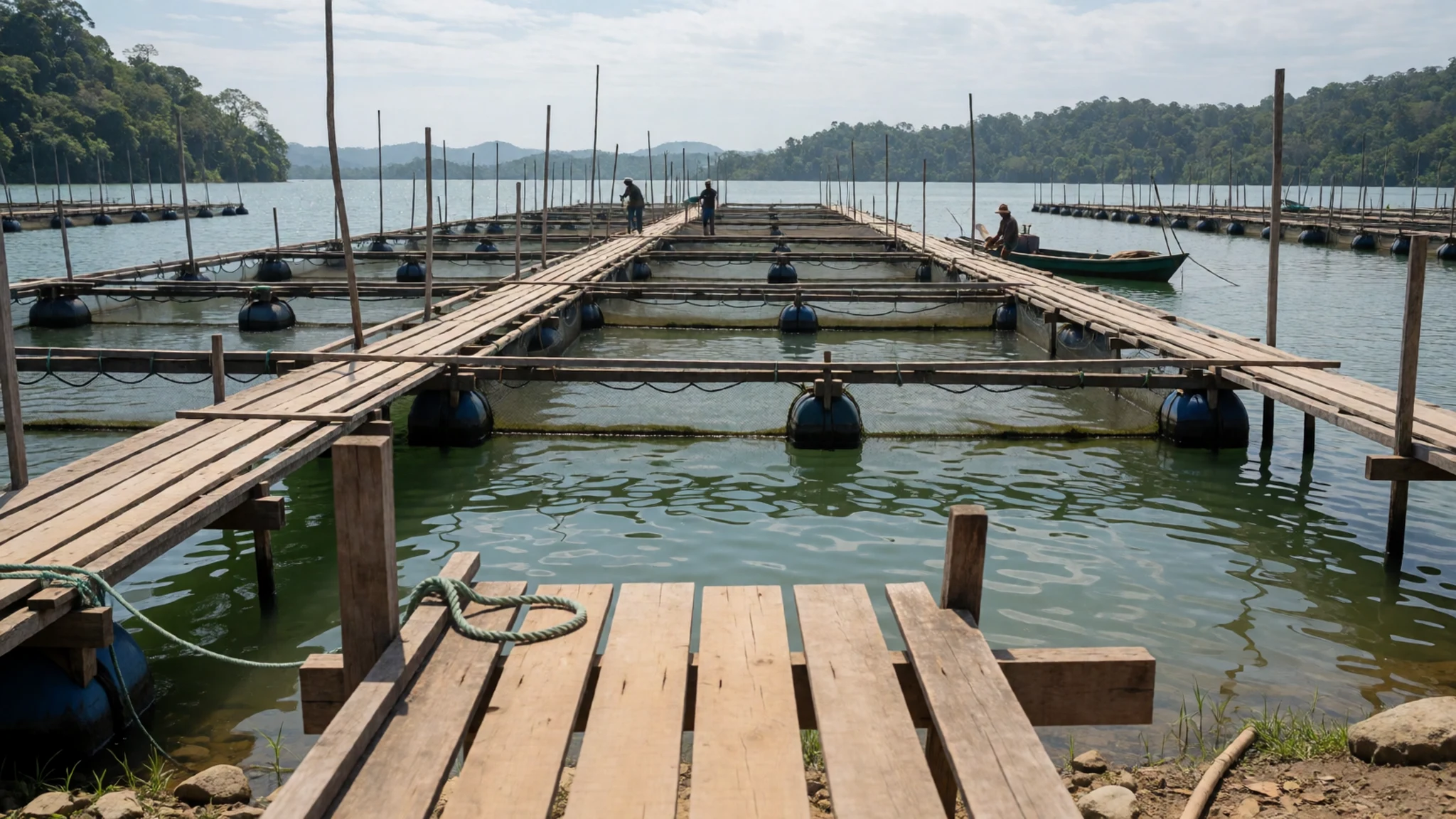
- Protected forest of Allah Valley — The hills and lower slopes around Allah Valley
The forest surrounding the lake is declared a protected landscape, and the hills are part of the wider Allah Valley cultural landscape recognised by UNESCO. Walks on the lower slopes give views back over the water and a sense of how thick the forest is. Trails can be wet and slippery, so bring grippy shoes, and ask a local guide to choose routes that avoid private fields.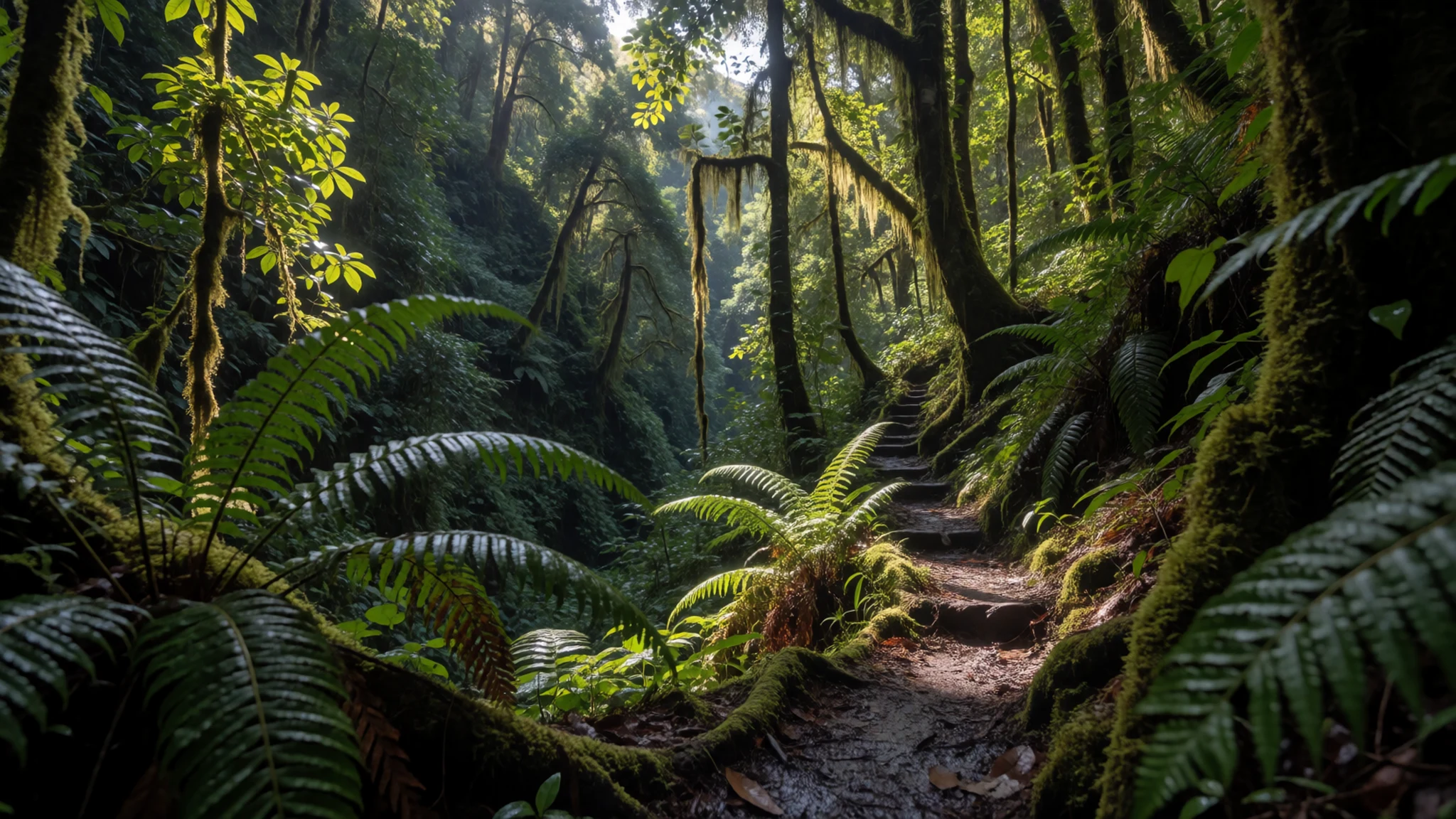
Culture
Life in Lake Sebu is shaped by the T'boli and other Lumad communities, and their customs set the tone for visitors. Much of the valley's identity rests on crafts, music and dress passed down through families, so the T'boli Museum is a good place to learn before asking questions in the villages. Greetings tend to be warm but unhurried, and many residents prefer a calm, respectful approach from strangers. Most people here work in farming and fishing, so the lake and its cages are workplaces rather than backdrops. Christian churches stand beside older traditions, so dress modestly at any place of worship and remove shoes where asked. Public displays of affection are best kept low-key. Visitors who keep to these habits usually find people glad to talk about their lives and their work. Always ask before you photograph a person, a ritual or a home, and do not take pictures of ceremonies unless the host has said yes.
What to wear
Traditional T'boli dress is closely tied to weaving and metalwork. Women are known for T'nalak, a cloth woven from abaca fibre and patterned in designs that often carry meaning for the weaver's family. Brass rings, coils and beadwork have long been worn as jewellery and as part of ceremonial dress, and the metal adornment signals status and occasion. Men's dress centres on woven garments and decorated items that come out for celebrations. In daily life, most people wear ordinary Filipino clothing: cotton shirts, blouses, jeans and simple dresses, with rubber slippers common in town and on the water. The fuller traditional dress appears at festivals, weddings and cultural performances. For a visitor, the climate calls for light, breathable clothes that dry quickly, because rain can arrive at any hour. Pack a light long-sleeved layer for sun on the lake and for entering villages or churches. Modest cuts are the norm, so keep shorts and sleeveless tops for the lakeside. Closed, grippy shoes suit muddy paths and forest trails, and slip-on shoes are easier at homes and some religious sites.
What to eat
- Sinigang na tilapia — Small eateries in the town centre, near the lake
A sour soup built on tamarind, with tilapia, vegetables and a broth that is sharp and warming. It is the sort of dish that suits the humid heat, and the local fish makes it especially fresh. Order it with steamed rice at a home-style eatery.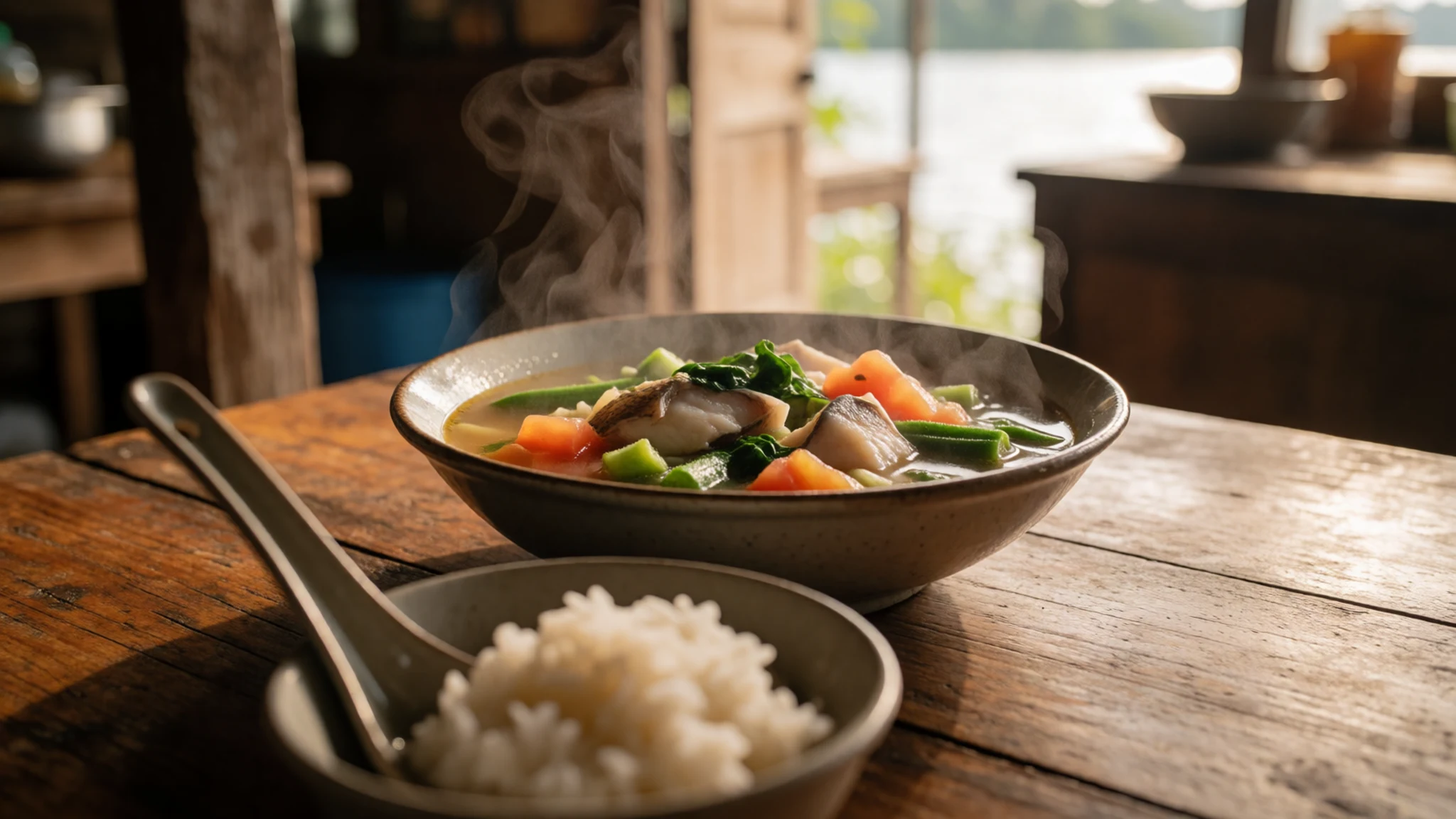
- Grilled tilapia — Roadside grills by the lakeside and the market by the water
Whole tilapia grilled over charcoal and served with a vinegar dip with chilli and garlic. Eat it with rice and your hands if the place allows. It is among the simplest and most local things to eat near the water.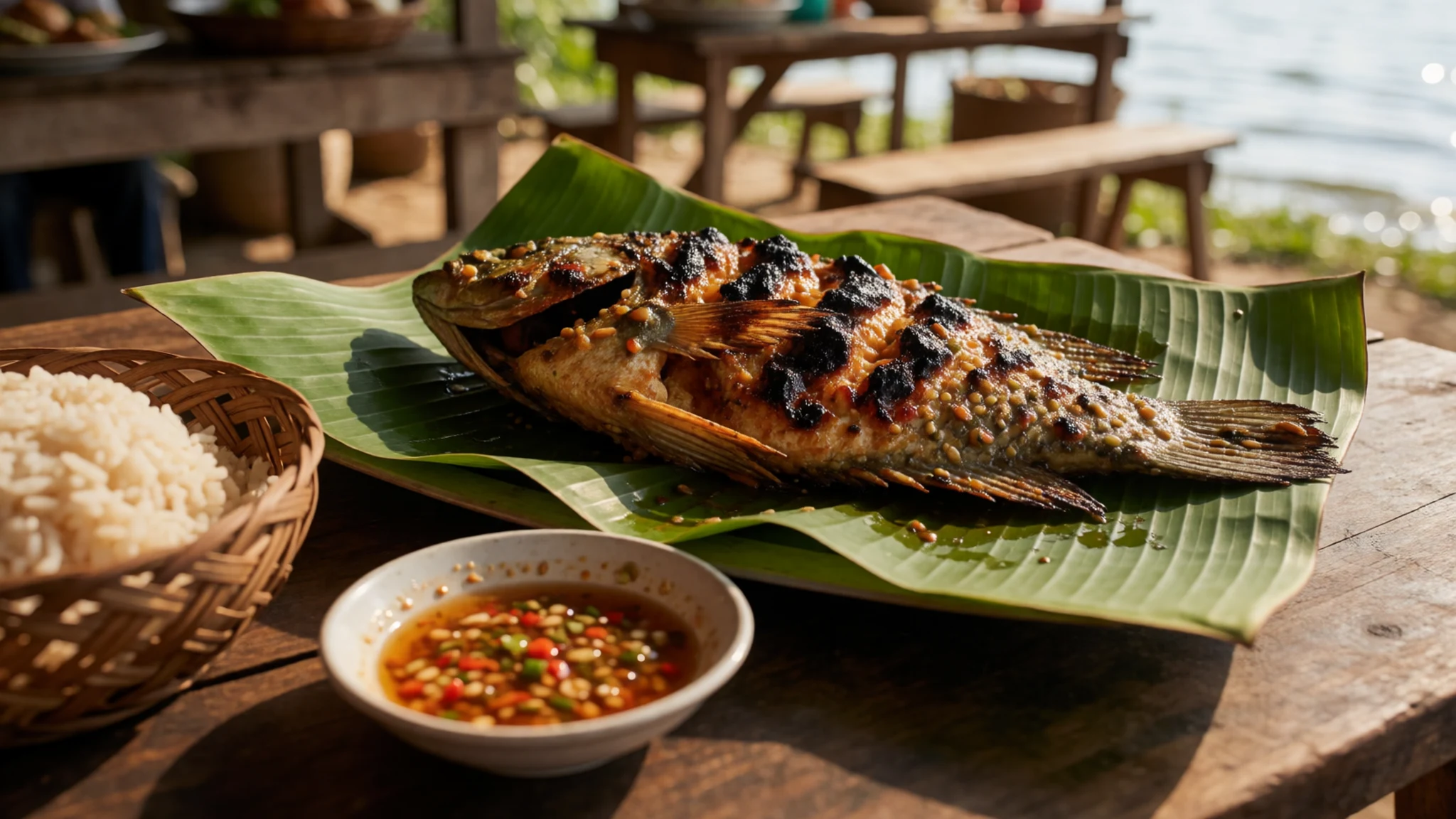
- Chicken adobo — Home-style eateries and carinderias in the town centre
Chicken braised in soy, vinegar, garlic and bay until the sauce thickens. It is a staple of Filipino home cooking and easy to find across the region. Ask for a plate with rice for an inexpensive, filling meal. - Suman — Morning markets, sold wrapped in banana leaves
Sticky rice cooked in banana leaves, often sweetened with coconut milk. It makes a good snack for a morning walk or a canoe trip. Sold by the piece and easy to carry. - Halo-halo — Small eateries and street stalls around town, especially in the afternoon
A cold dessert of shaved ice, sweet beans, fruit, milk and sometimes purple yam, eaten with a long spoon. It is a welcome break in the afternoon heat. Many small stalls make it fresh.
Plan it
Best time. The drier months, roughly February to April, bring the least rain for boating and walking, but they are also the hottest, so early starts matter most, and rain can still fall at any time of year. Heat and humidity are constant, and the rainy months bring heavier downpours that can make forest trails slippery.
How long. 2–3
Getting there. Fly to General Santos (GES) or Cotabato City (CBO), then travel by road to Surallah. No bus runs directly to Lake Sebu, so the last leg is a UV Express from the Surallah bus terminal, where Yellow Bus Lines serves the terminal.
Budget. low
Tips
- Check the municipal government website before you travel: http://lakesebuscot.gov.ph/
- Start on the lake early, before the afternoon heat and rain
- Carry cash, as small eateries and boatmen rarely take cards
- Bring rain gear and quick-dry clothes, since showers can come at any hour
- Plan a full day for the T'boli Museum and the lakeside together
Etiquette
- Ask before photographing people, ceremonies or homes
- Dress modestly at churches and village gatherings
- Do not climb on or feed the fish cages without permission
Nearby
Sources
- Wikidata Q173898 (CC0)
- Wikipedia, Lake Sebu (municipality), rev 1382819877 (CC BY-SA 4.0)
- Wikivoyage, Lake Sebu, rev 5361683 (CC BY-SA 4.0)
- Lake Sebu, South Cotabato, GinaD, via Wikimedia Commons (CC BY 3.0)
- Flag of Lake Sebu, South Cotabato (2017-present), via Wikimedia Commons (Public domain)
- Canoers on Lake Sebu, Peter V. Sanchez, via Wikimedia Commons (CC BY 3.0)
- Flag of Lake Sebu, South Cotabato, via Wikimedia Commons (Public domain)
- Flag of Lake Sebu, South Cotabato (variant), via Wikimedia Commons (Public domain)
- Life in a Bountiful Lake, Carlcorpuz, via Wikimedia Commons (CC BY-SA 4.0)
- Rosie Godwino Sula, P1898, via Wikimedia Commons (CC BY 4.0)
- TboliArts, Bastian Schumacher, via Wikimedia Commons (CC BY-SA 4.0)


