Lake Kussharo
Lake Kussharo, Japan
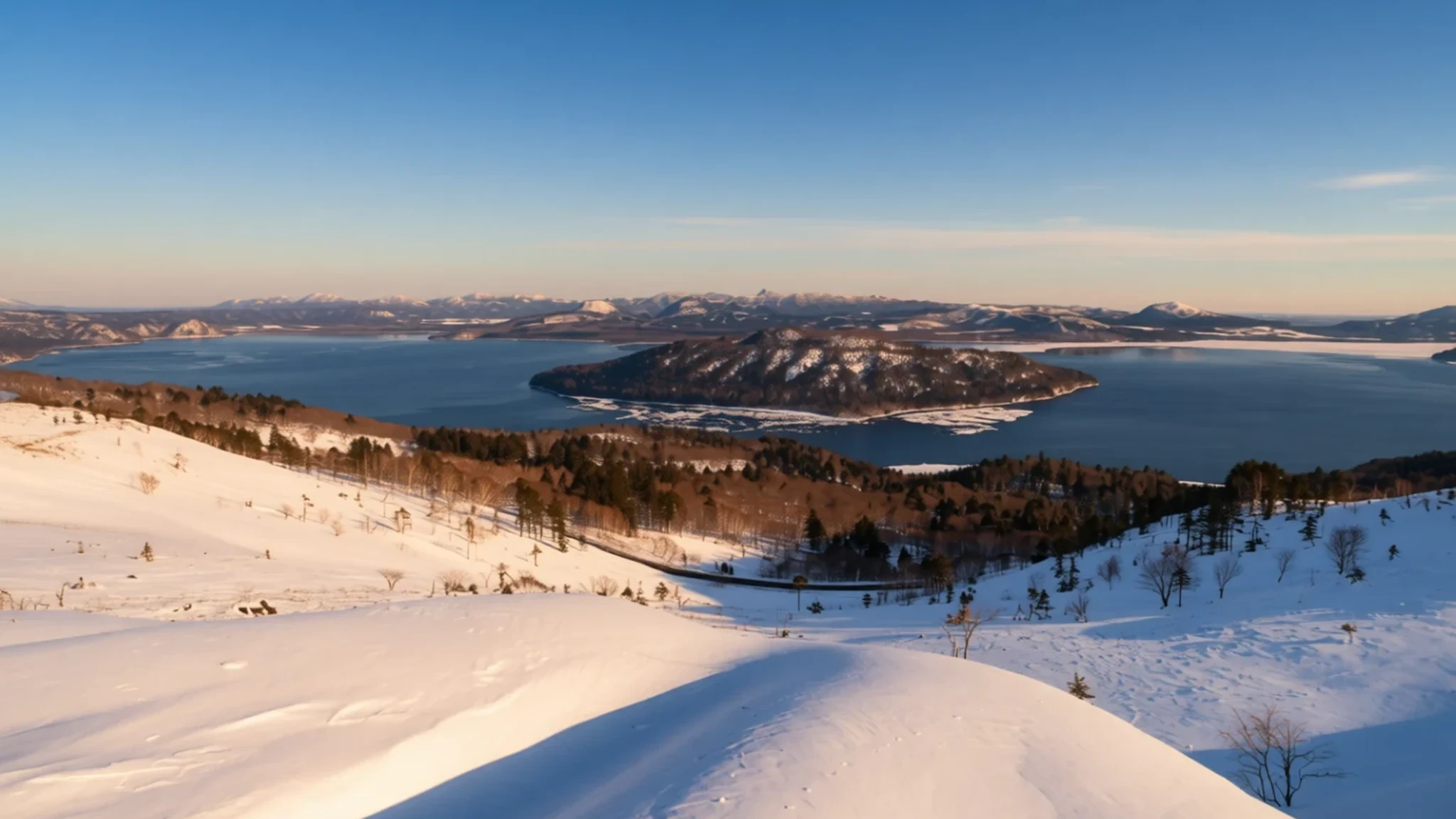
Lake Kussharo is a wide volcanic caldera lake in eastern Hokkaido, quiet and open, with hot sand on the shore and a frozen surface in deep winter.
The place
Lake Kussharo sits in the eastern part of Hokkaido, inside Akan National Park, filling a volcanic caldera at about 121 metres above sea level. It is the largest caldera lake in Japan by surface area and the sixth largest lake in the country overall. Like many place names in Hokkaido, its name comes from the Ainu language, and some maps and older writing use the variant Kutcharo.
The lake is broad and open. Its western shore is long and low, and much of the rest of the circuit is ringed by mountains. In the middle rises Nakajima, a stratovolcano that is also a large island in its own right. The water is acidic because of gases from the volcanic system, so few fish live in it, except where inflowing streams dilute the lake. Rainbow trout, which tolerate acid better, have been introduced.
What sets the shore apart is the warmth underfoot. Several outdoor hot springs sit along the edge, and the sand beach is naturally heated, with hot groundwater rising beneath it. In the coldest part of winter the surface freezes over. The lake is the largest in Japan to do so completely, and the ice cracks into ridges as it contracts and expands.
The surrounding region is the most sparsely populated in all Japan, a vast area of nearly 40,000 square kilometres. The eastern end is flat grazing land, with cattle pastures stretching toward the horizon, while the rest of the circuit is walled in by hills and peaks. Visitors come for quiet rather than nightlife, and the lake rewards a slow pace.
Its story
The lake's history is less about grand events than about the things people have found in it. The most famous of these is a monster. From 1973 the Japanese press reported sightings of a creature in the water, and the name Kusshii was coined for it. The stories earned the lake its nickname as Japan's Loch Ness, though no photograph or sample has settled the question.
The cicada tells a quieter tale. In 1951 a rare insect, Hyalessa maculaticollis, known as the minminzemi, was recorded in the area. It is now protected by the government, which gives the shoreline a scientific interest that the monster stories never had.
Birds keep their own timetable. Whooper swans pass over the lake on migration, and many stop on the water and the sand, especially in winter. Their arrival turns the shore into a meeting point for photographers and for anyone seeking a quiet morning.
The coldest winters bring a different kind of record. When the ice covering the lake contracts under extreme cold, water is exposed and freezes into fresh ice. Then, as daytime temperatures rise, the ice has nowhere to expand, and the pressure pushes the surface into raised ridges. This happens only in the deepest part of winter, so it depends on timing and luck. The open landscape holds these stories, whether or not the monster ever surfaces.
What to see
- Sunayu hot-spring beach — Sunayu, lakeside
The sand beach at Sunayu is the lake's best-known warm spot. Hot groundwater rises beneath the shore, so the sand stays warm enough to lie on, and a few outdoor pools sit close to the water. Whooper swans often rest on the shallows here, so it is a good place to watch birds while steam rises off the bath. Early mornings are quieter.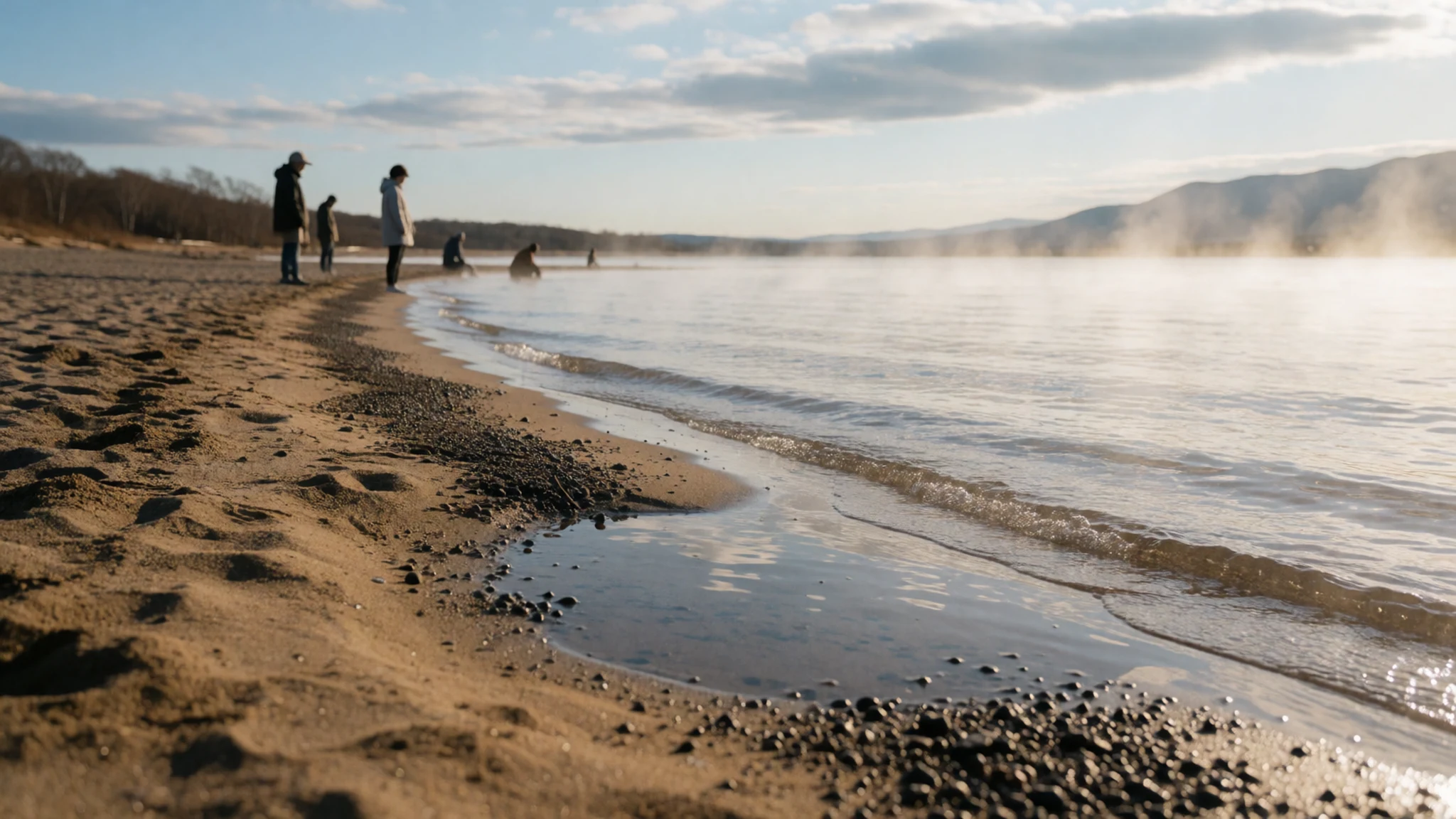
- Nakajima island — central lake
Nakajima, the lake's central island, is a stratovolcano and is described as Japan's largest recursive island, a term for an island standing in a lake that is itself on an island. It is not the same as the Nakajima in Lake Tōya, so check map names carefully. Ask at local tourist offices whether boat trips run before planning around them.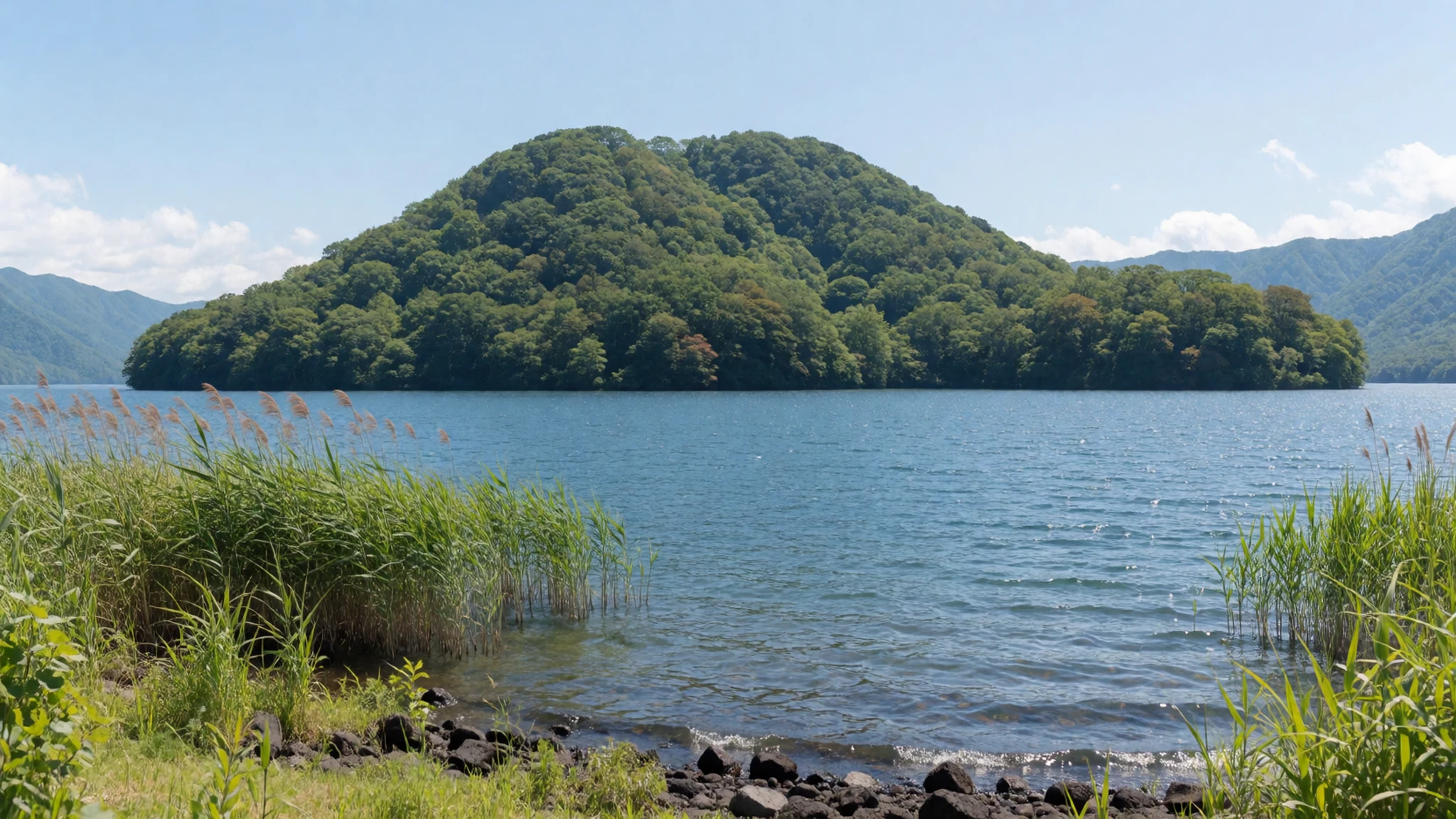
- Bihoro Pass — hills above the lake
Bihoro Pass sits on the hills that ring the lake and gives one of the broadest looks over the water. The signed lookout is the place to stop, with the lake laid out below and mountains running away on either side. Clear days give the widest view, so check the forecast before driving up. Stop only in marked lay-bys, as the road is narrow.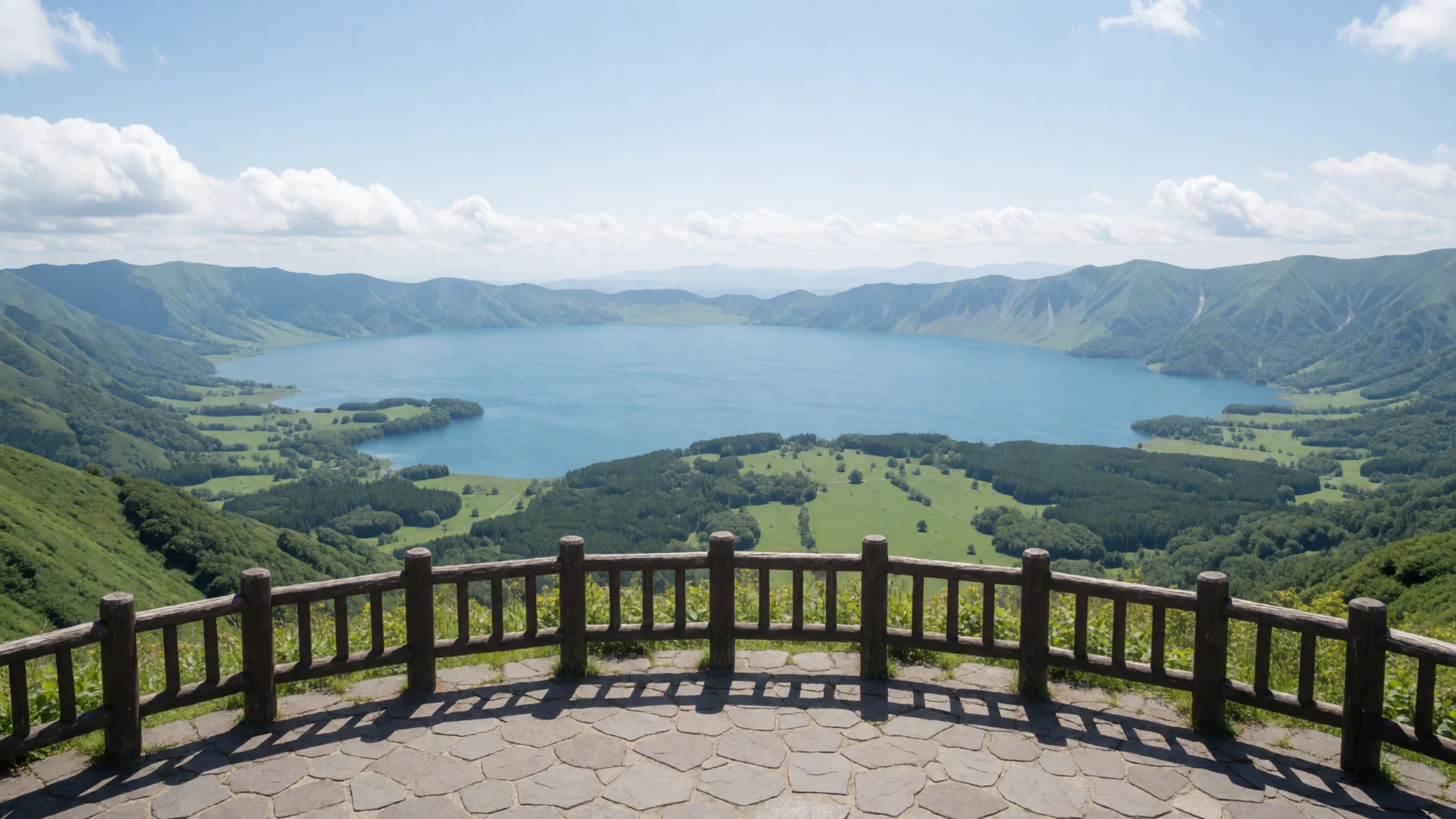
- Mount Mokoto observation park — roadside viewpoint, lake shore
Mount Mokoto Observation Park overlooks the lake from the prefectural road that follows the shore. The viewpoint gives a wide sweep of water, with the island and far shore in view. It is a short stop rather than a full day out, and it works well as a first look before heading down to the beach. Pack a jacket, as wind across open water can be sharp.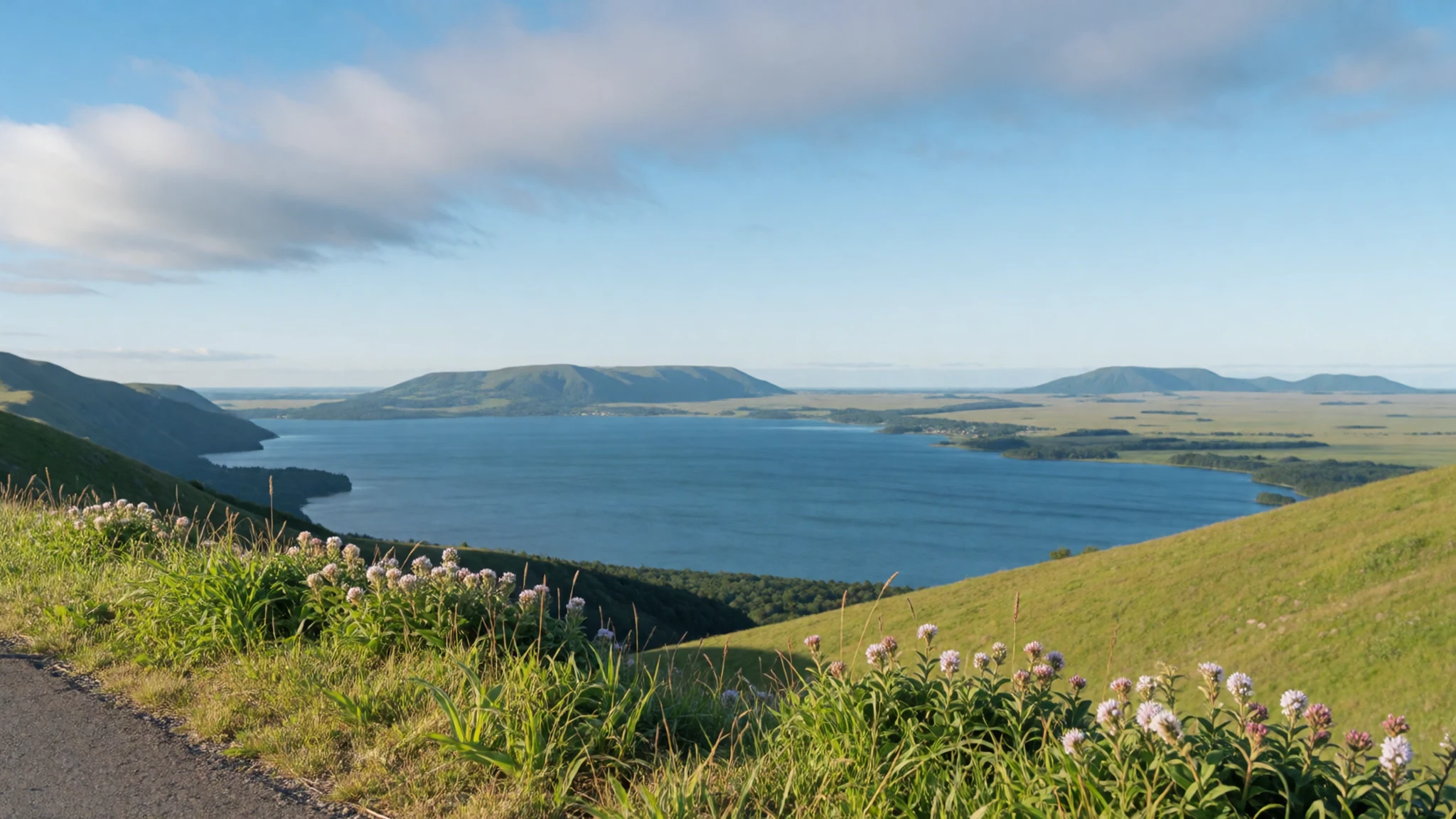
- Tsubetsu Pass observation deck — hills above the lake
The observation deck at Tsubetsu Pass looks across the lake from a different angle, with the water running out toward the flat eastern land. Photographs taken from here show the bowl of the caldera and the way the surrounding hills fall away. It is a useful stop for grasping the lake's shape before visiting its shore.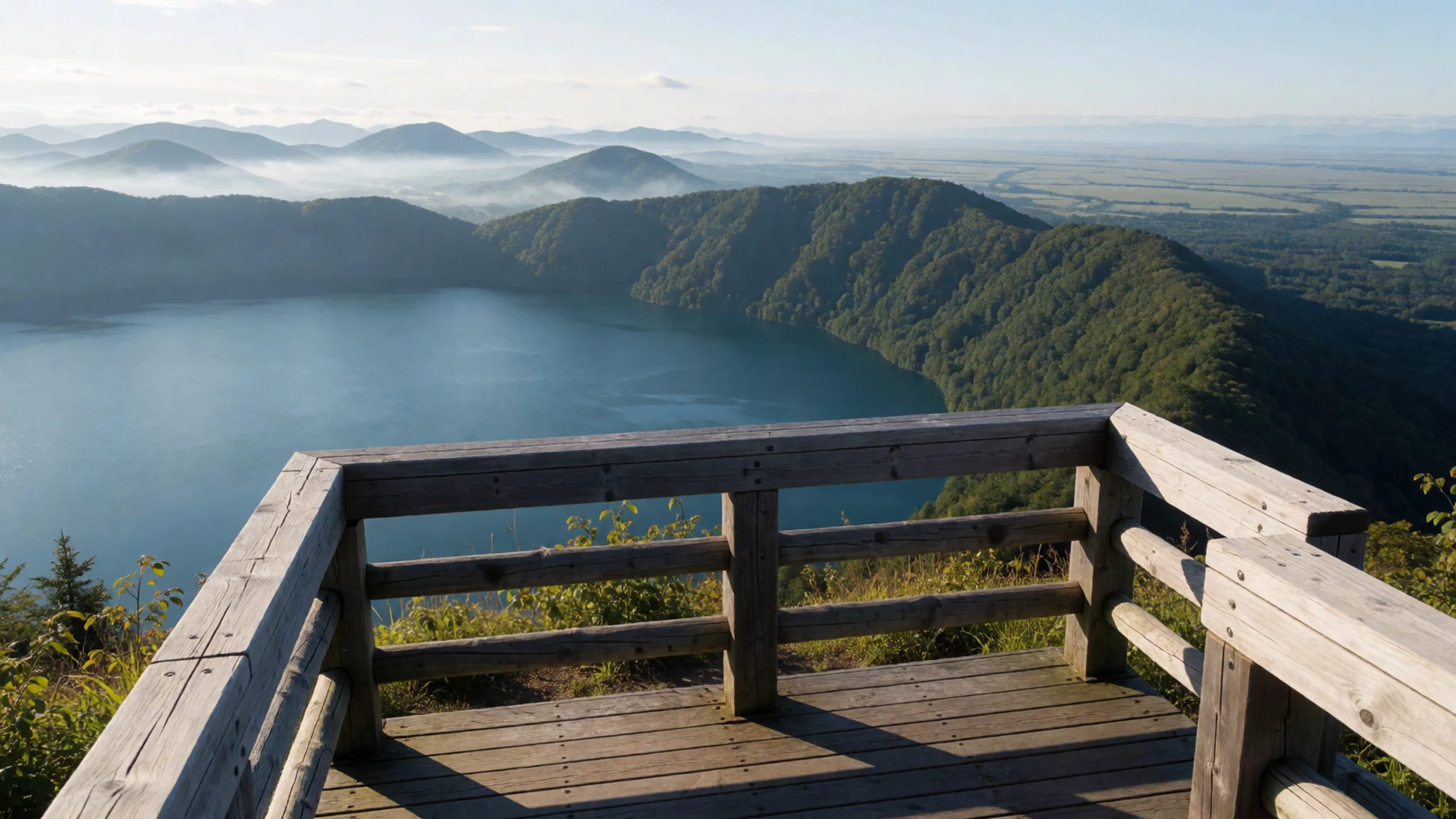
Culture
Lake Kussharo sits inside Akan National Park, on land that Ainu people have known for a long time, and the name itself comes from the Ainu language. Ainu communities in Hokkaido keep their own history, language and crafts, and visitors who learn a little about that history often find local people more willing to talk.
Hot springs are a daily habit here, as across Japan, so bathing follows set customs. Wash thoroughly at the washing stations before entering the water, keep towels out of the bath, and expect separate bathing for men and women in most public onsen. Many lakeside baths are open-air and busy in the afternoon, so keep voices low and phones away from the pools.
Winter brings whooper swans to the shore, and people arrive with cameras to watch them. Photographing the birds from a distance is fine, and so is asking before photographing people in the bathing areas. Do not feed the swans, do not approach them on the sand, and keep to marked paths so the protected birds and insects are left alone.
What to wear
Traditional dress around the lake belongs largely to Ainu culture. Ainu people traditionally wove a plain cloth called attush from the inner bark of the elm tree. Garments were decorated with appliqué and embroidery in curving, geometric patterns, often along cuffs, hems and collars. They were worn for ceremonies and special occasions, and today they appear mainly at cultural events, festivals and museums, where weavers and embroiderers keep the techniques alive.
Everyday dress around Lake Kussharo is practical and modern. Locals wear outdoor jackets, fleece, sturdy trousers and rubber boots in winter, and people heading to the lakeside baths arrive in towel wraps and sandals. Few people dress up for a day by the water.
A visitor should plan for a climate that swings from warm summer days to bitter winter cold. In summer, bring a light waterproof, a sun hat and shoes with grip for gravel and sand. In winter, wear insulated layers, thermal socks and boots with proper traction, because paths and car parks can freeze. Hot-spring bathing needs only a small towel and a change of clothes, and modest, covered clothing suits any shrine visit in the region.
What to eat
- Pork bowl — station counters and lunch eateries across the Tokachi area
Pork bowl, or butadon, is the local lunch dish, with thinly sliced pork cooked in a sweet soy sauce over rice. The pork is cut a little larger than elsewhere, and the dish is traced to Obihiro. Find it at station counters and lunch eateries across the Tokachi area.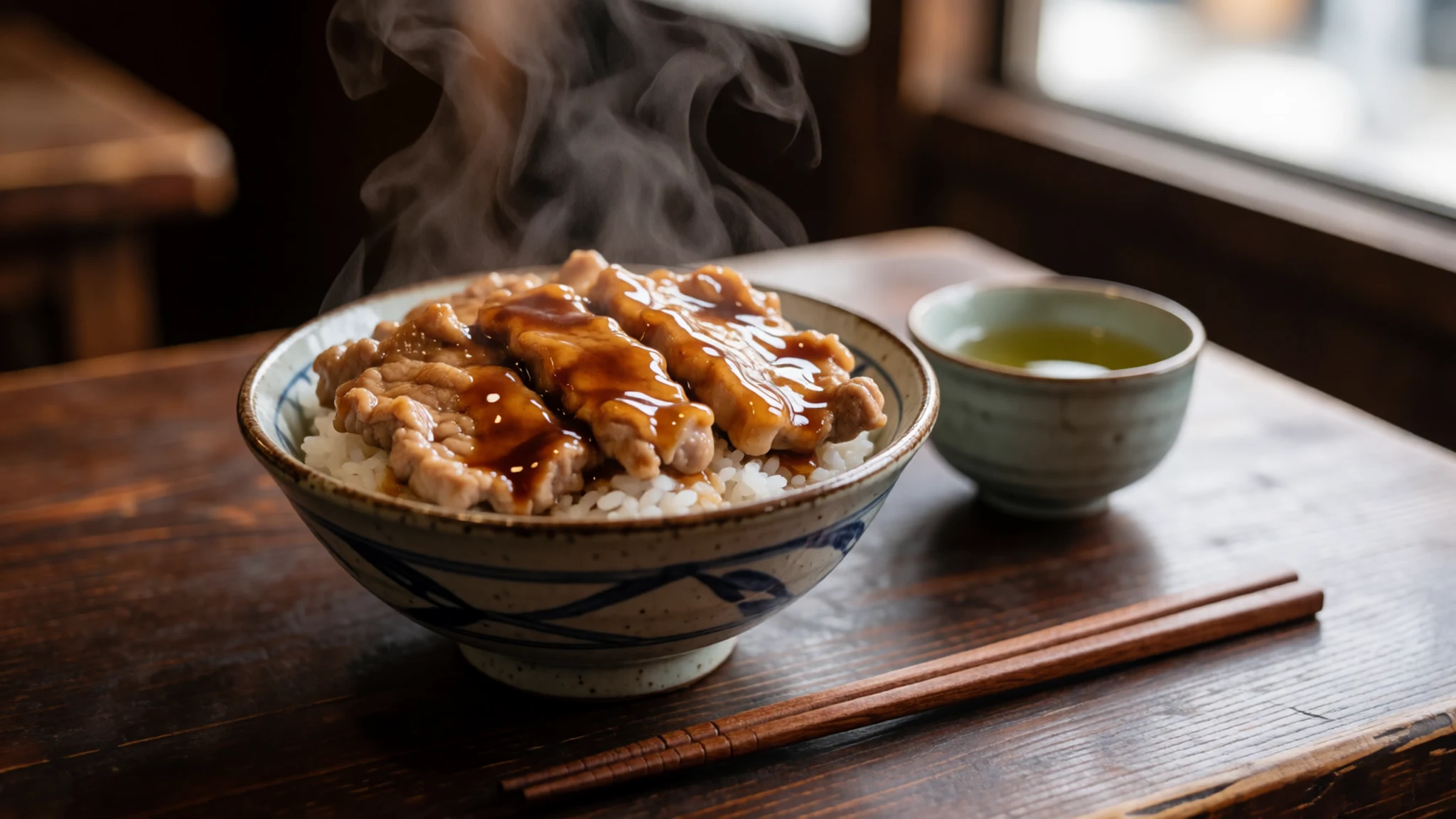
- Fresh seafood from the coast — harbour markets and small eateries in the Pacific coastal towns
Coastal towns on the Pacific side serve fresh seafood, including crab, scallops and sea urchin in season, grilled or served as sashimi. The catch is at its best close to the harbour, where the boats land. Ask at the counter what came in that morning.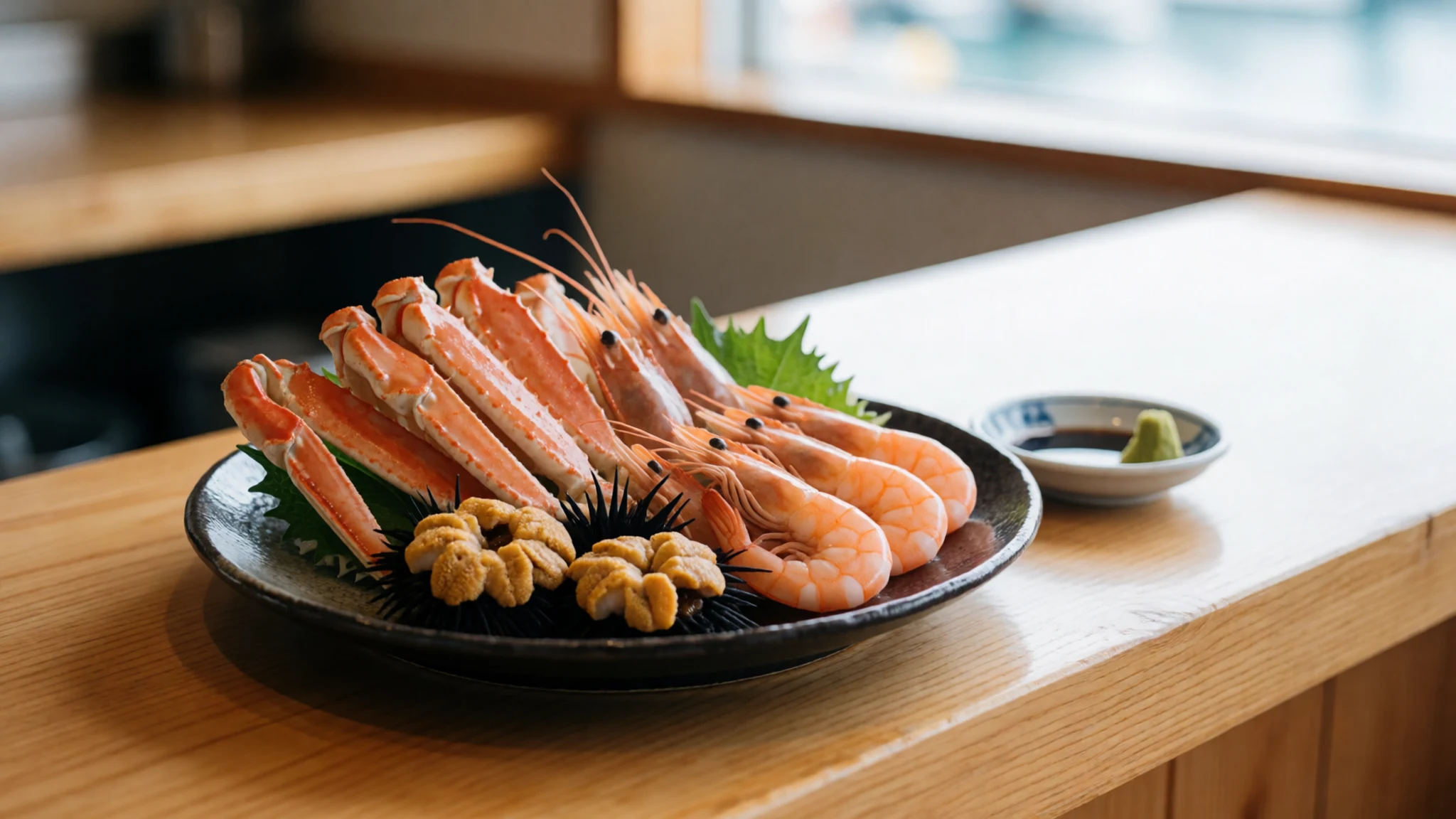
- Hokkaido dairy — dairy shops and roadside stands on the eastern plain near Teshikaga
Dairy is a strong part of the regional food, with milk, butter, cheese and soft ice cream from farms on the eastern plain. Dairy shops and roadside stands near the pastures sell produce made close to where the cattle graze. A cone on a warm afternoon is an easy choice. - Melons from central Hokkaido — roadside stands in central Hokkaido, around Asahikawa and Furano
Central Hokkaido is known for melon stands, especially around Asahikawa and Furano, where fruit is sold fresh at roadside booths in summer. Japanese melons are very expensive by foreign standards, so treat one as a considered treat rather than a snack. Buying one to share is a sensible option.
Plan it
Best time. Late July to August suits the warm shore and walking, though mornings at the lake can still be cool. January and February bring the frozen surface, the ice ridges and the swans, but the cold is severe and roads need care.
How long. 2–3
Getting there. Kushiro Airport is the nearest regional airport, with a rental car or bus for the last leg to the lake. Check the official site for current bus timetables, as services are infrequent.
Budget. mid
Tips
- Book accommodation early for the winter season, when lakeside rooms fill quickly
- Carry cash for small stands and bath entry, since card payment is not guaranteed
- Visit the shore early in the morning for calm water and quieter sand
- In summer, bring water and sun cover, as shore paths can be exposed
- Check road conditions and carry winter tyres before driving in cold months
Etiquette
- Keep a respectful distance from swans and never feed them
- Ask before photographing people in the hot-spring areas
- Wash thoroughly before entering any communal bath
Nearby
Sources
- Wikidata Q1329458 (CC0)
- Wikipedia: Lake Kussharo (rev 1366228383) (CC BY-SA 4.0)
- Wikivoyage: Kushiro (subprefecture) (rev 5311710) (CC BY-SA 4.0)
- Photo: Lake Kussharo seen from the west, Teshikaga (663highland) (CC BY 3.0)
- Photo: Kussharo Caldera & Mashu Caldera relief map (Batholith) (Public domain)
- Photo: Lake Kussharo from Tsubetsu Pass deck (Soica2001) (Public domain)
- Photo: Lake Kussharo from Route 102, Mt. Mokoto observation park (Public domain)
- Photo: Whooper swans at Sunayu onsen (K.F.) (CC BY 3.0)
- Photo: Bihoro Pass marker (切干大根) (CC BY-SA 4.0)
- Photo: Bihoro Pass (Jpatokal) (CC BY 3.0)
- Photo: Cygnes sur le lac Kussharo (Simon Desmarais) (CC BY-SA 2.0)


