Lake Geneva
Lake Geneva, Switzerland
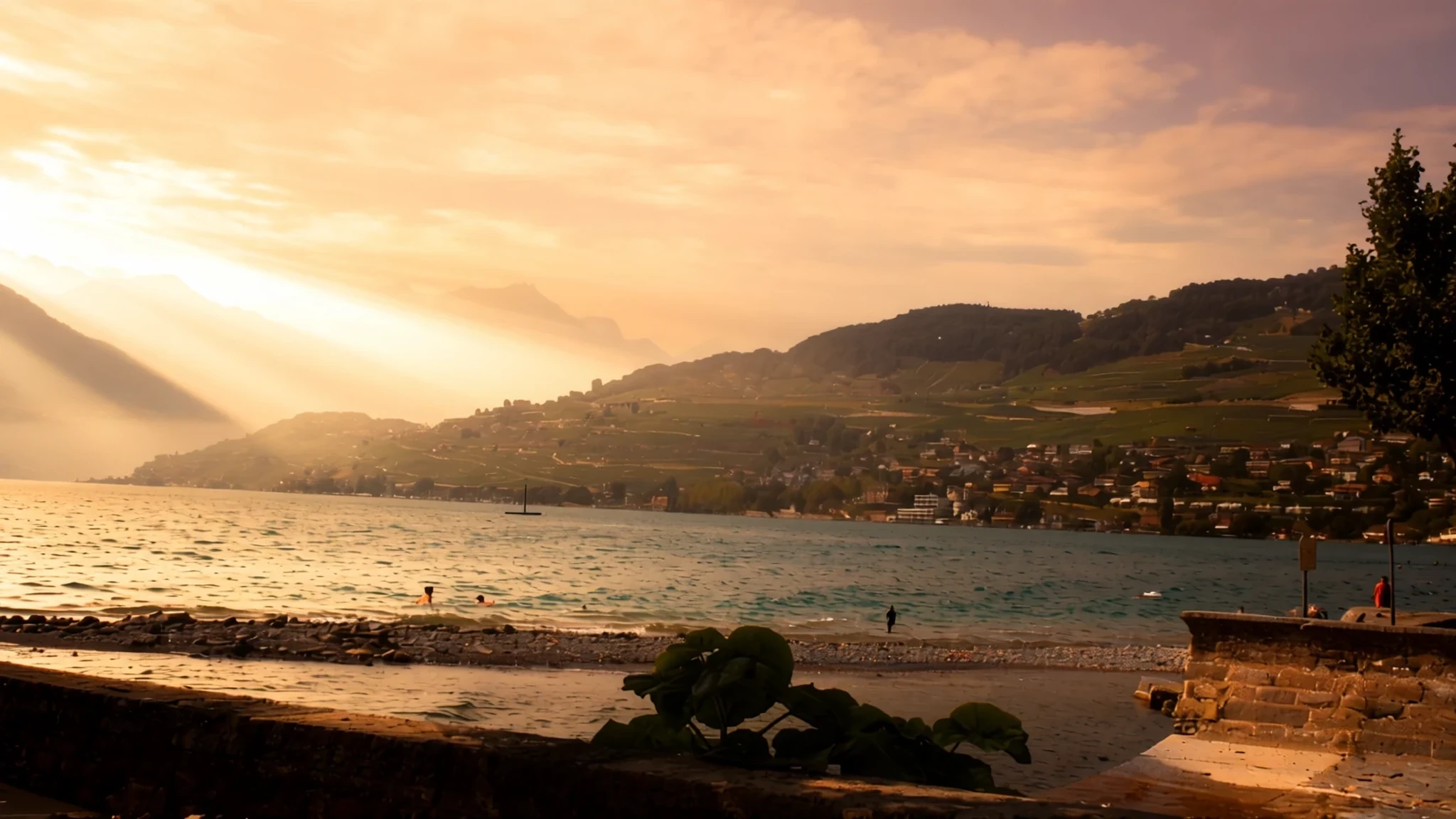
A deep Alpine lake shared by two countries, where vineyard terraces, lakeside towns and historic steamboats make a calm base in Western Europe.
The place
Lake Geneva lies at about 372 m above sea level on the northern side of the Alps, a long crescent of water that the Rhône passes through on its way towards France and beyond. Switzerland holds the larger share of the shoreline, through the cantons of Vaud, Geneva and Valais, while France takes the rest along the southern and western edge in the department of Haute-Savoie. Its shape makes more sense once you know how it was made. Glaciers carved out the basin, and geologists usually split the lake into three sections. The Haut Lac in the east is the broad upper reach where the river enters, near Villeneuve and Le Bouveret. The Grand Lac in the middle is the widest and deepest basin. The Petit Lac, narrower and shallower, runs south-west to Geneva, where the water leaves again as the Rhône.
Most visitors settle on the northern shore, where a string of towns such as Vevey, Montreux and Lausanne face the Savoy hills across the water. Vineyards climb the slopes above Lavaux, and the lake holds the warmth of the day well into autumn. Mountain views change with the weather. On a clear morning you can make out distant high peaks across the water, while cloud often sits on the lower slopes. The lake is busy with ferries, rowing clubs and swimmers in summer, and quieter in winter, when the lakeshore can feel very still. It is a place to take slowly, by boat, on foot along the promenade, or by train between villages.
Its story
Lake Geneva's history is closely tied to the water itself. The basin was shaped by ice and then slowly filled and reshaped by sediment, and the lake that exists today is a younger feature of the landscape than the mountains around it. Its towns grew up where fishermen, ferry crews and vine growers could reach the shore, and trade along the water linked the Alpine passes with the plains of France and Italy. Over time the lakeshore became a place of summer villas and grand hotels, and the old fishing harbours gradually gave way to marinas and promenades.
The lake also has a sharper side. The bise, a cold northeasterly wind, can sweep down the water in winter and make lakeside streets in Geneva icy and raw. Local people know its moods well, and ferry timetables and shoreline walks are often planned around it. More recently, scientists have tracked a clear rise in water temperature at both the surface and the depths. Warmer summers change how the lake mixes, and they affect the fish and plants that depend on cold, oxygen-rich water. For residents this shows up as longer swimming seasons and more concern about the health of the lake, which is treated as a shared responsibility across the border.
Its modern identity is international too. Geneva hosts many global organisations, and the lake sits at the heart of a region where Swiss, French and Italian influences blend. The water has carried people and ideas for centuries, and it still shapes how the towns along its edge live and move.
What to see
- Lavaux vineyard terraces — Lavaux, northern shore
The steep terraces of Lavaux, above the northern shore between Lausanne and Vevey, are the lake's most photographed landscape. Stone walls hold the vines in place, and paths thread between the rows past small wine cellars. Walk a section of the trail in late afternoon, when the water turns gold, and try a glass of local white wine before taking the train back down to the lake.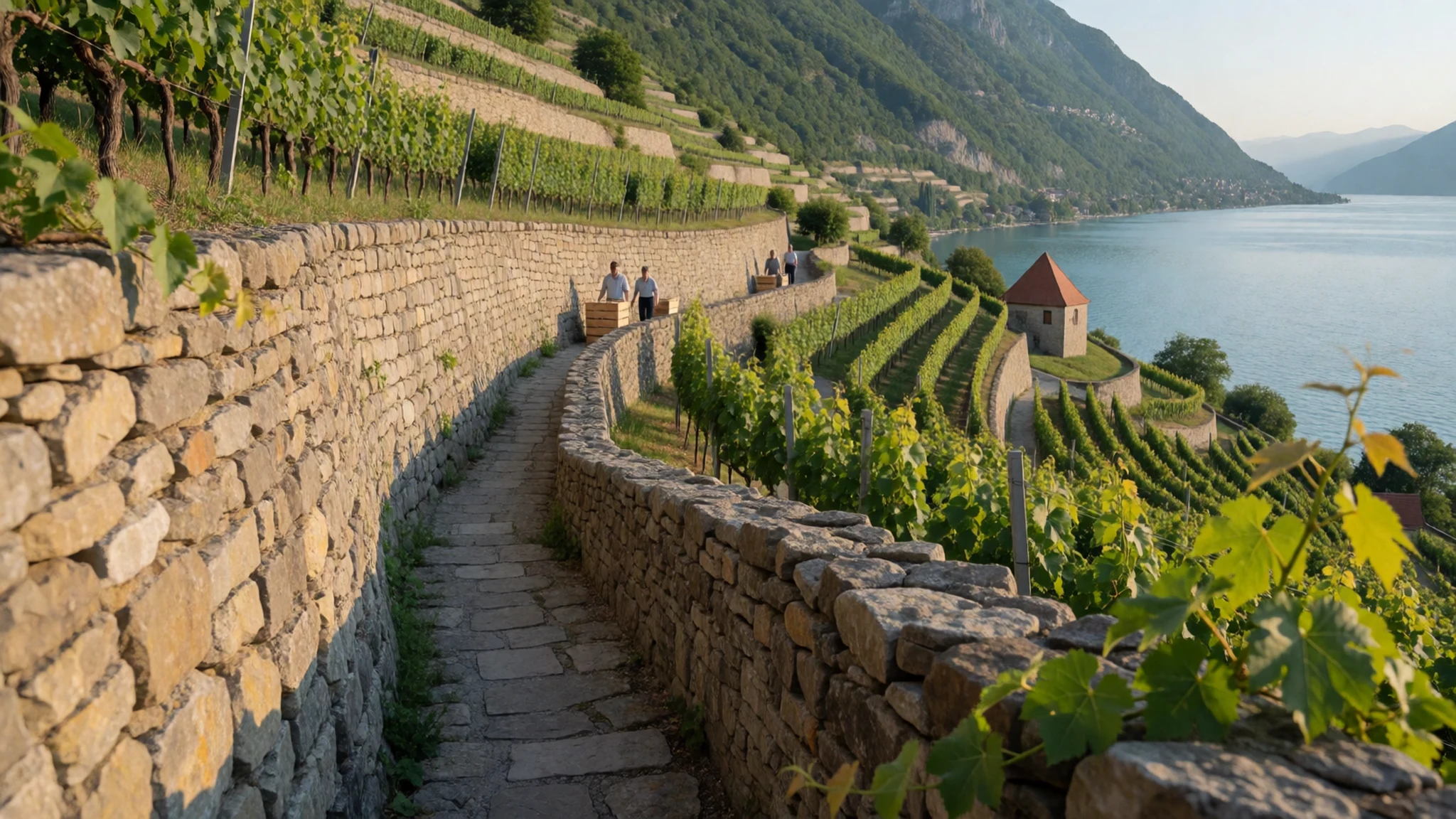
- Montreux lakefront — Montreux, Vaud
Montreux stretches along the eastern part of the northern shore, with a long promenade, gardens and views across to the Savoy mountains. The town is well served by trains and boats, which makes it an easy base for day trips. In summer the waterfront fills with strollers and swimmers, so arrive early for a quieter walk.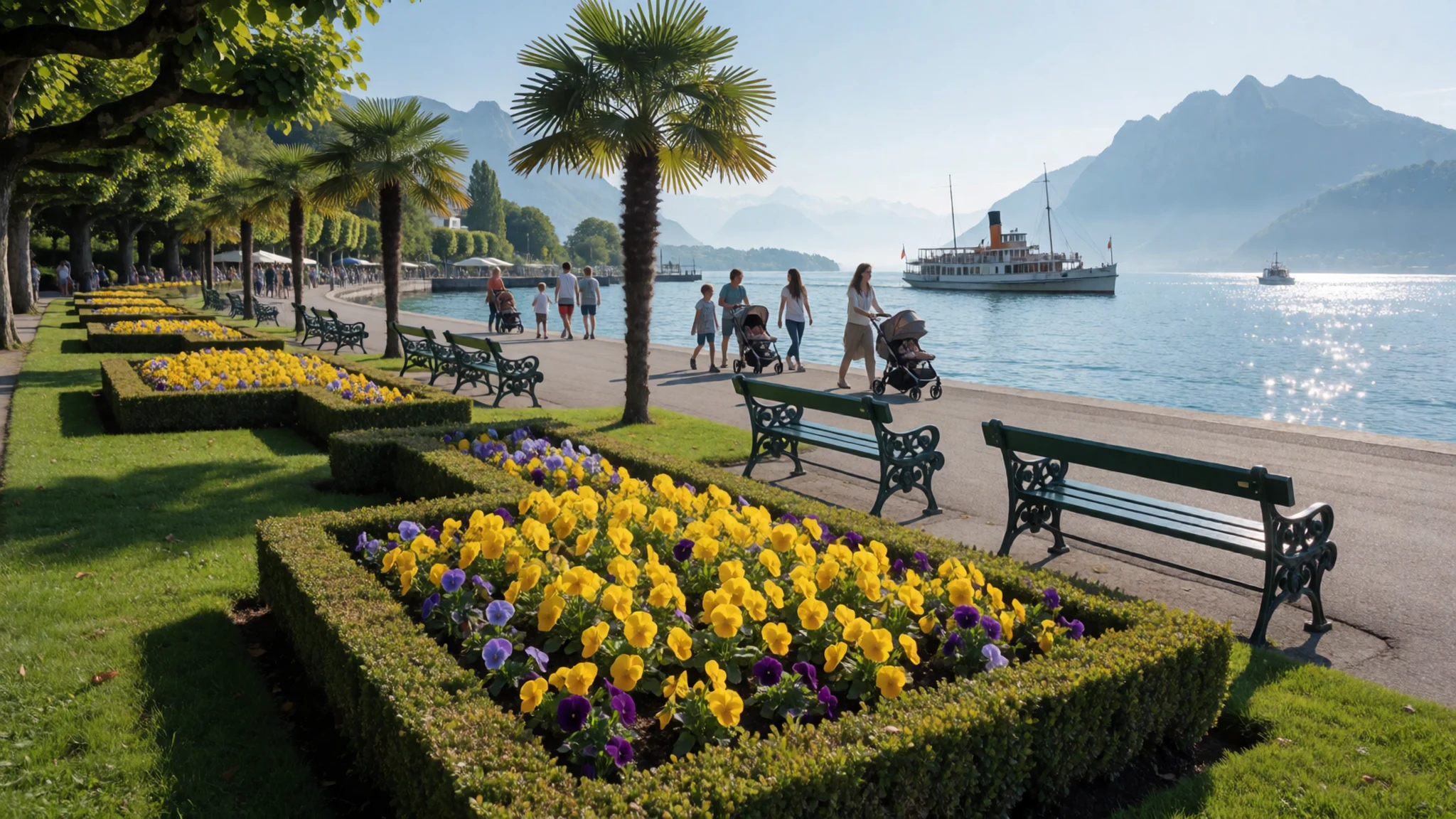
- Chillon Castle — Veytaux, near Montreux
Chillon sits on a rocky islet at the eastern end of the lake near Montreux, reached by a short causeway from the shore. Its walls and towers reflect the medieval power that once controlled routes along the water. Allow time to explore the rooms and courtyards, and check the official site for opening times before you go.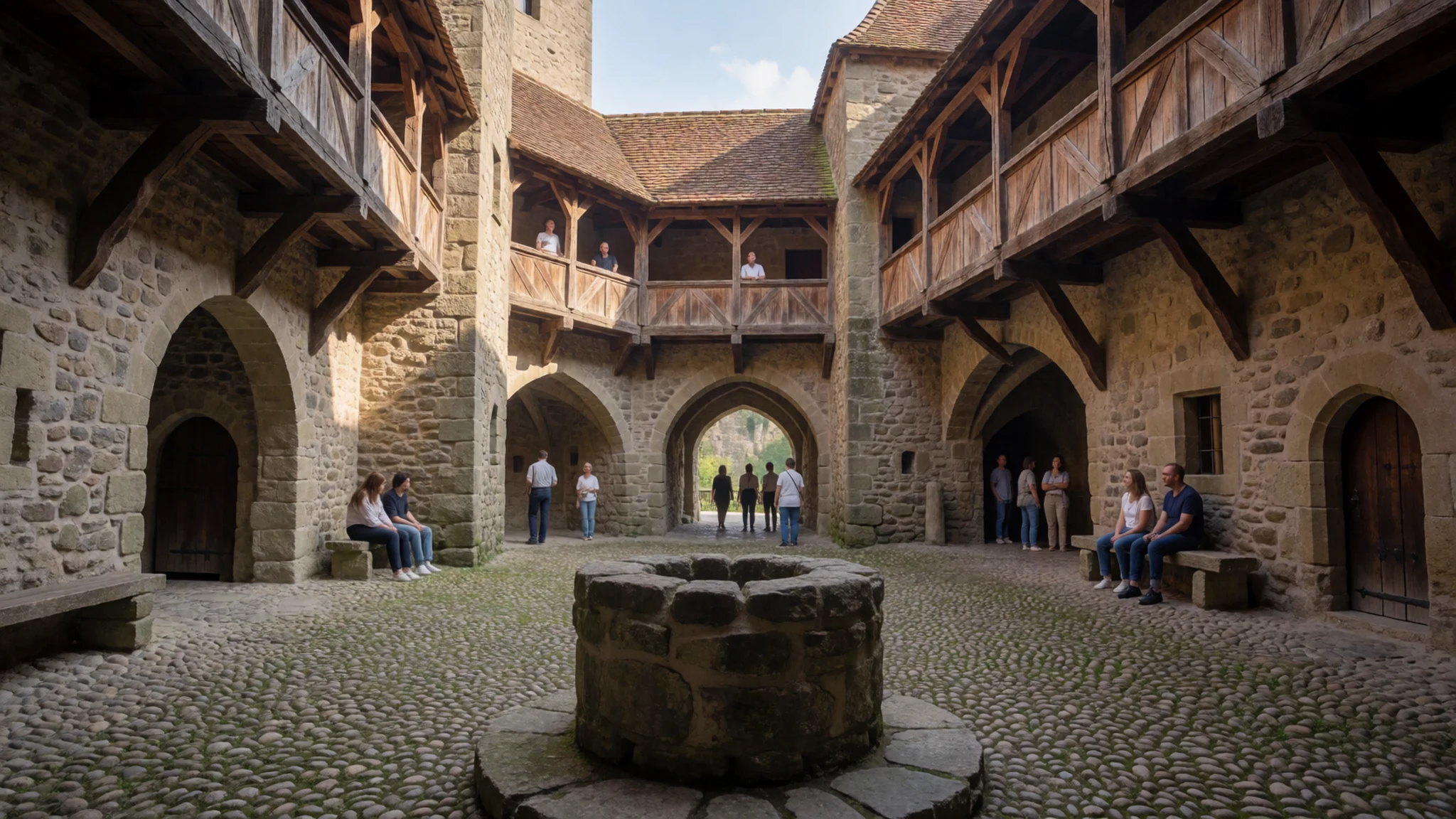
- Geneva lakefront and old town — Geneva city centre
Where the Rhône leaves the lake in Geneva, the quays and bridges make a natural city walk. Old lanes climb from the water towards the cathedral and the university quarter, and the lake is never far away. Walk the promenades in the morning, when the water is calm and the bise is less likely to bite.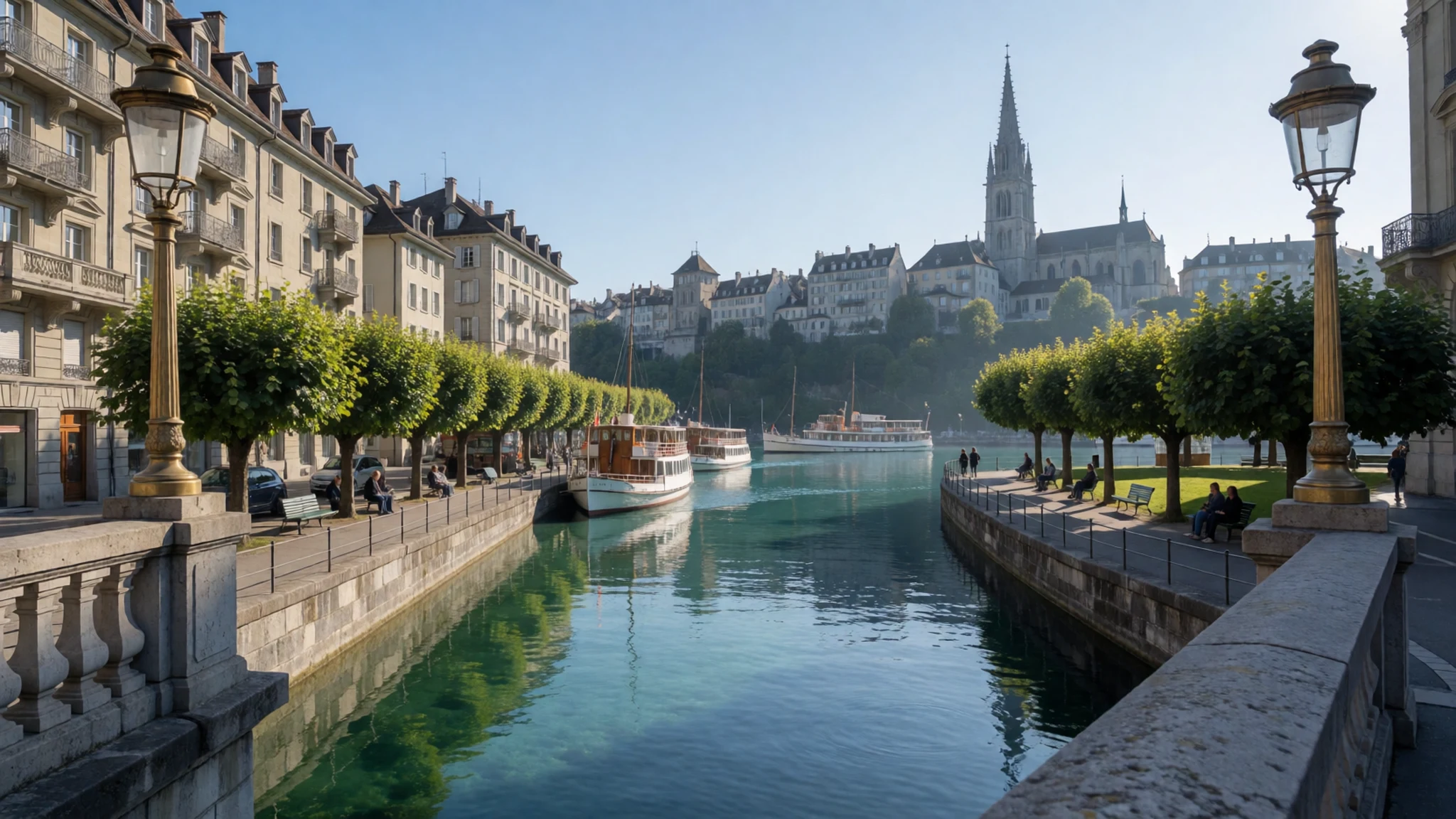
- Yvoire — Yvoire, Haute-Savoie
Yvoire is a small medieval village on the French side of the Petit Lac, with flower-lined lanes, stone houses and a harbour full of small boats. It is compact enough to see in an hour, though the narrow streets become crowded on sunny afternoons. Visit on a weekday if you can, and go early to enjoy the harbour before the day-trip groups arrive.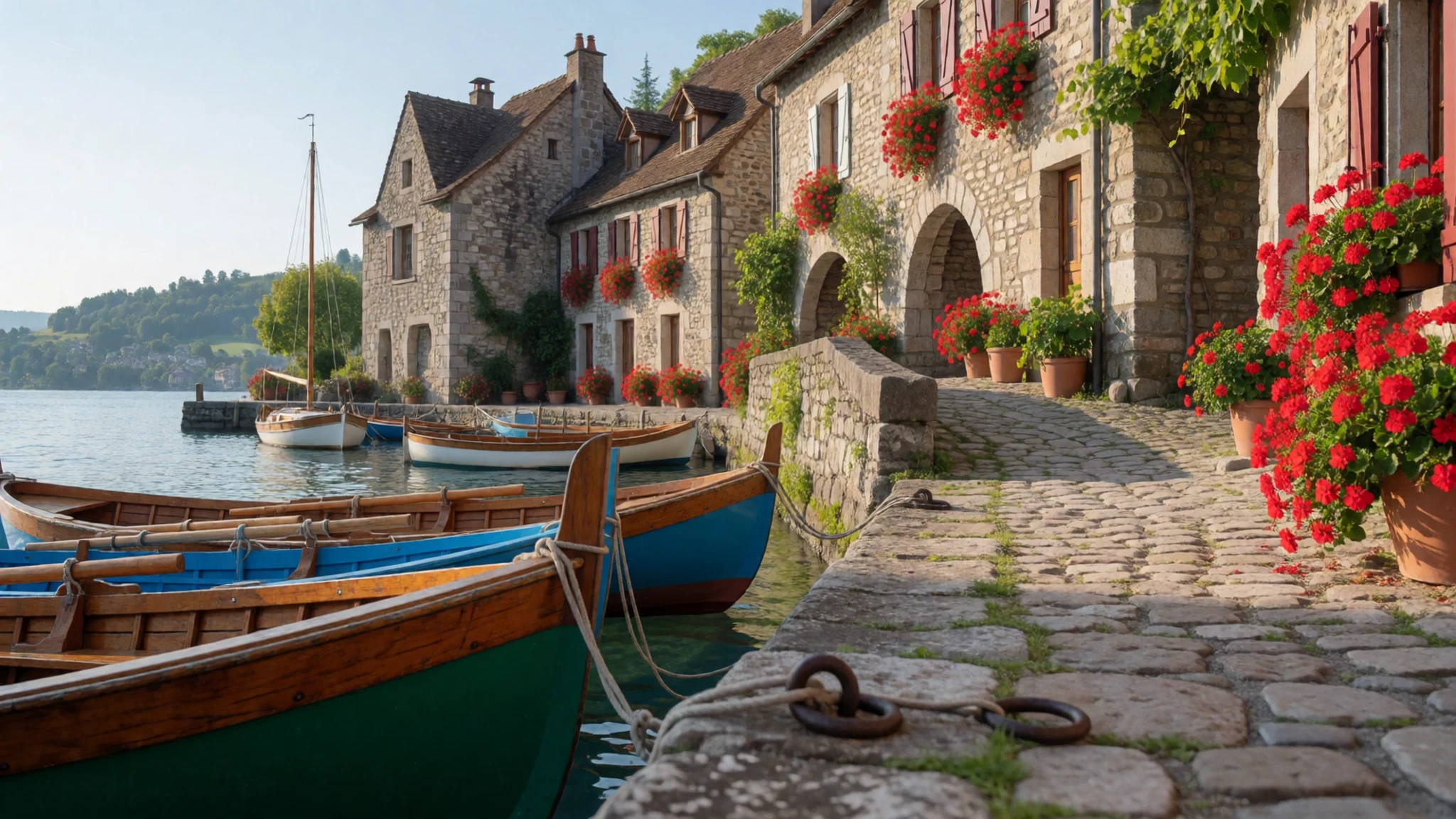
Culture
Life around Lake Geneva runs on the water, and the rhythms are shaped by both Swiss and French habits. Towns along the northern shore are orderly, and people value punctuality on the trains and boats that link them. Summer brings a strong outdoor culture: families spend long evenings on the shore, swimmers use public and private bathing spots, and rowing and sailing clubs are part of community life. Wine is part of everyday conversation, and the Lavaux vineyards are cared for with real pride. Sunday mornings are quiet in many places, with shops closed and the lakeside promenades given over to walkers and cyclists.
Some of the best swimming spots are on private land, where a house has its own steps, jetty or bathhouse running down to the lake. Respect those boundaries and ask before you climb onto a family's jetty or photograph people using their own bathing area.
What to wear
Traditional dress around Lake Geneva is mostly seen at festivals rather than in daily life. The Vaud wine-growers' costumes, worn at events such as the Fête des Vignerons in Vevey, use white linen and dark wool, with the wide-brimmed hats and aprons that marked rural working life. Heavier wool was made for the cold winters, and local weavers relied on flax and sheep's wool rather than silk. Today people on the lake dress for practicality and the weather. In Geneva and Lausanne you will see smart casual clothes, with dark coats and good shoes in winter, and light cotton or linen in summer.
For a visit, dress in layers. The bise can make a clear day feel bitter on the promenade, while summer afternoons can be warm and still. Comfortable walking shoes matter more than fashion, especially on steep vineyard paths and cobbled streets in the old towns. Bring a light jacket for boat trips, since the wind on open water is stronger than it looks from the shore. Modest dress is not required at the lakeside, though covered shoulders are a good idea when you visit churches or castles.
What to eat
- Fondue — traditional restaurants in Vaud and Geneva, especially in the cooler months
Melted cheese, usually a mix of Gruyère and other local cheeses, is served in a shared pot with bread for dipping. It is a winter staple, and it is best eaten slowly with a glass of white wine, which cuts through the richness. Look for it in traditional mountain-style restaurants and cheese-focused eateries across the region.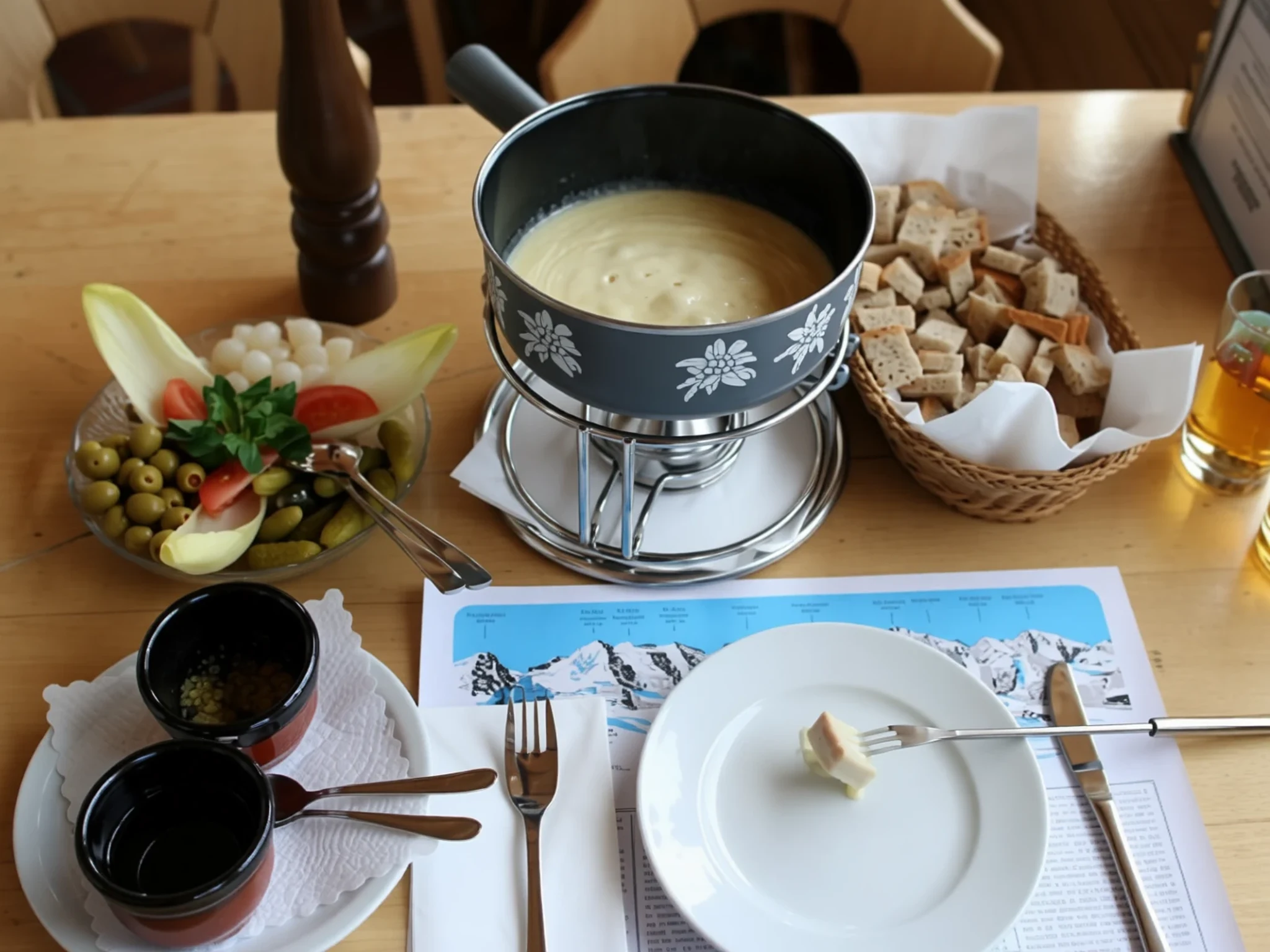
- Filets de perche — lakeside restaurants and quay-side terraces on the northern shore and in Geneva
Perch fillets from the lake are lightly fried or grilled and served with lemon, potatoes and a simple salad. The fish is delicate, and it is a classic lakeside order. Choose a restaurant with a terrace facing the water, and ask whether the fish is local when you order.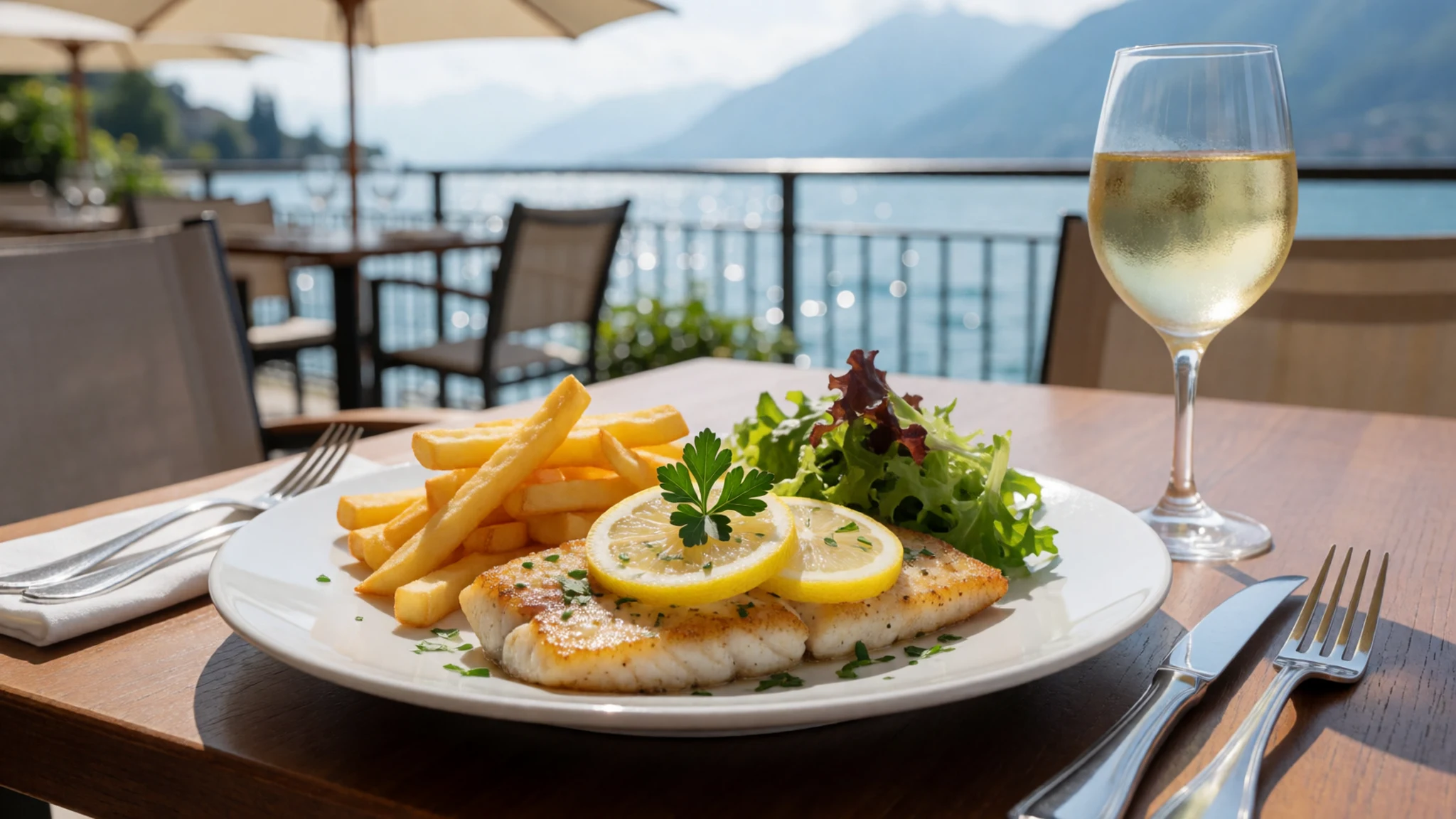
- Raclette — farmhouse-style restaurants and mountain eateries, particularly in Valais
Half a cheese is melted at the table and scraped over boiled potatoes, cured meats and pickled vegetables. It is a hearty, social meal that suits colder evenings. The dish comes from the mountain cantons, so it is most at home in farm-style eateries and mountain restaurants.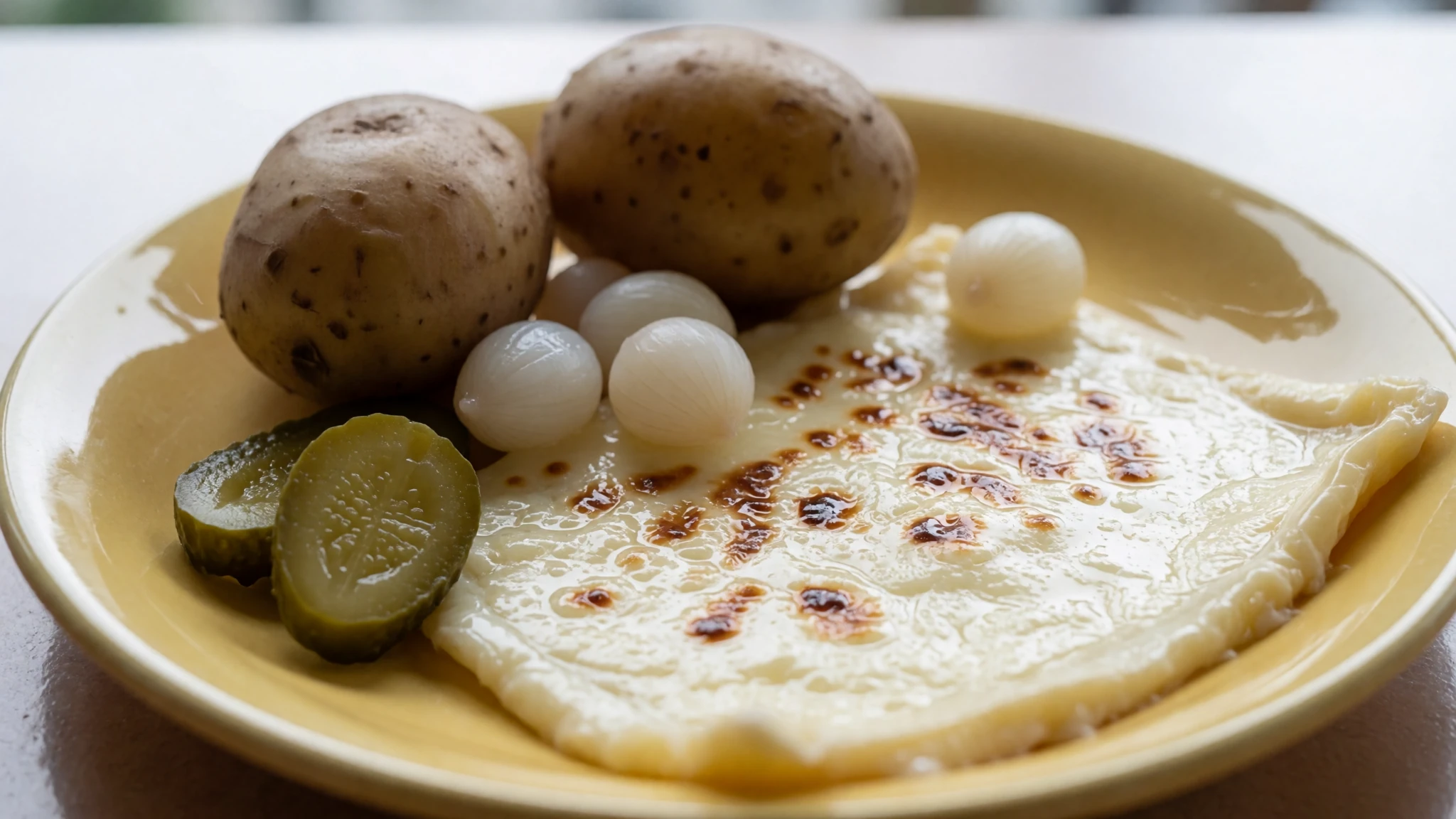
- Papet vaudois — village restaurants and farmhouse-style eateries in Vaud
This winter dish from Vaud combines leeks and potatoes, cooked slowly until soft and creamy, and served with a sausage. It is simple, filling and rooted in farm kitchens. Look for it in traditional eateries in the Vaud countryside during the colder months. - Chasselas wine — wine cellars and tasting rooms in the Lavaux vineyards
The white grape Chasselas is the everyday wine of the northern shore, and it pairs naturally with fish and cheese. It is light, fresh and often best drunk young. Tasting rooms and cellars among the Lavaux terraces are the easiest place to try a range of local bottles. - Artisan chocolate — small artisan chocolate shops in villages between Lausanne and Geneva
Small chocolate makers in the villages between Lausanne and Geneva offer handmade bars and pralines, which make a good souvenir or a treat for the train. Quality varies between shops, so ask about the recipe and the origin of the cocoa. Stop by a small village shop rather than a large tourist outlet.
Plan it
Best time. May and June bring warm water, green vineyards and long days, with the lake comfortable for swimming by late spring. September and October are often calm and clear, and the vineyards turn colour in autumn. Winter can be cold, and the bise can make lakeside walks icy, while high summer is busy and can be hot.
How long. 2–3
Getting there. Geneva Airport is the main gateway to the lake, and it is well connected to Europe. Trains from Geneva and Lausanne run along the northern shore, and the TGV from France stops in Geneva, Lausanne and Vevey. Zürich is also an option if you are flying long-haul, followed by an express train south.
Budget. mid
Tips
- Book accommodation early for summer weekends and the autumn wine season
- Use a regional rail or boat pass if you plan to move between towns
- Start vineyard walks in the morning or late afternoon to avoid the heat
- Carry a light jacket on the water, since the wind can be sharp
- Keep some cash for small village shops and markets, as not every place takes cards
Etiquette
- Ask before using a private jetty, bathhouse or beach belonging to a house
- Keep noise down in the evenings in lakeside villages and residential streets
- Respect vineyard paths and do not step onto cultivated rows
Nearby
Sources
- Wikidata Q6403 (CC0)
- Wikipedia: Lake Geneva (CC BY-SA 4.0)
- Wikivoyage: Lake Geneva (CC BY-SA 4.0)
- Aerial view of Lake Geneva, kallerna (CC BY-SA 4.0)
- Lake Geneva by Sentinel-2, Copernicus Sentinel-2 / ESA (CC BY-SA 3.0 igo)
- Schiffahrtsstrecken auf dem Genfer See, FBuHL09 (CC BY-SA 4.0)
- Private home backing up to Lake Geneva, GeorgeLouis (CC BY 3.0)
- People bathing in Lake Geneva, GeorgeLouis (CC BY 3.0)
- Lake Geneva with Vineyards in Lavaux, Severin.stalder (CC BY 3.0)
- -i---i- (33394274924), Thomas Woodtli (CC BY-SA 2.0)
- -i---i- (33851728310), Thomas Woodtli (CC BY-SA 2.0)


