Lake Biwa
Lake Biwa, Japan
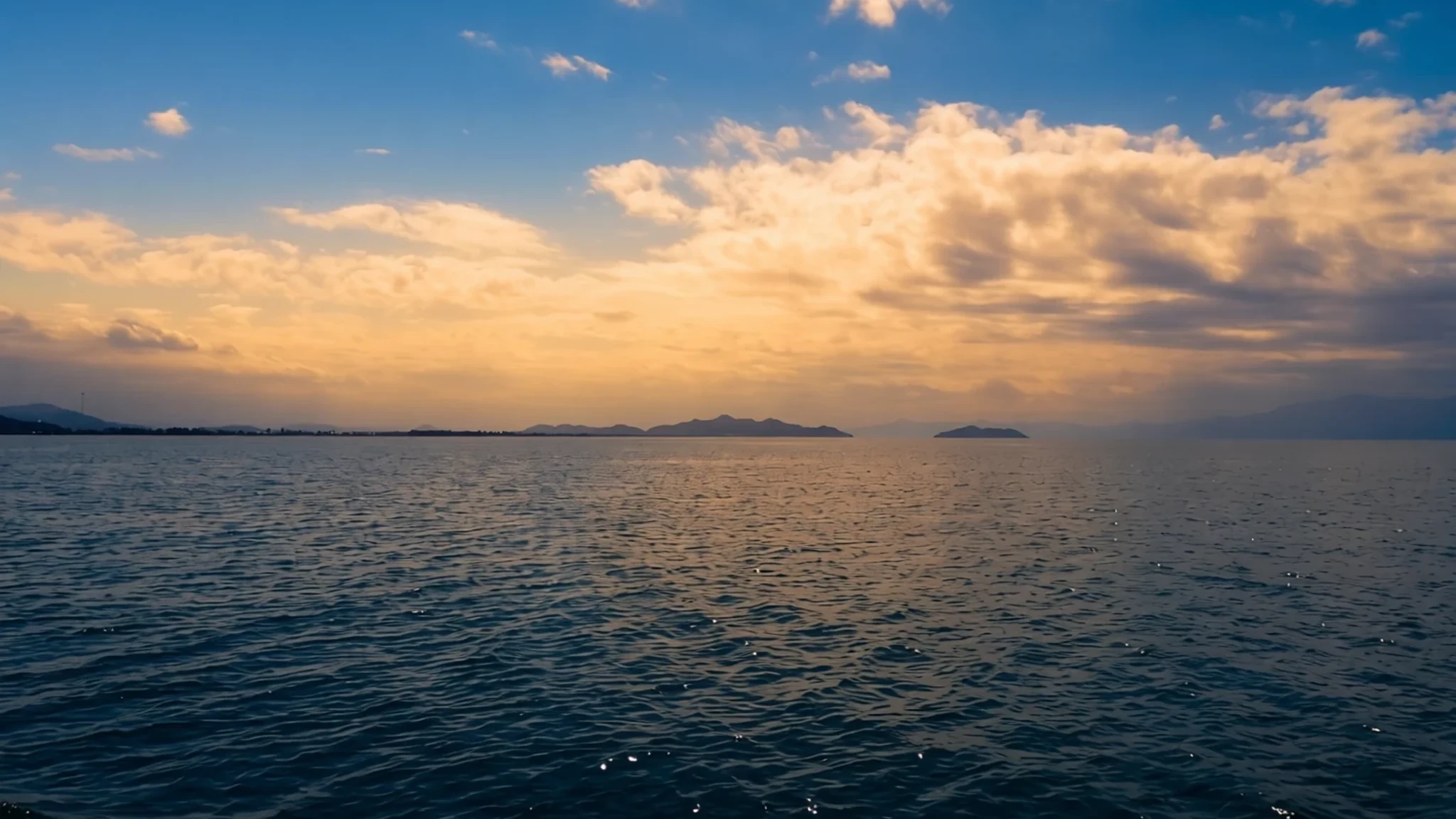
Japan's largest freshwater lake sits next to Kyoto, with old temples, castle towns and easy cycling along its shore.
The place
Lake Biwa, known in Japanese as Biwa-ko, covers about a sixth of Shiga Prefecture in west-central Honshu, a short train ride northeast of Kyoto. It is the largest freshwater lake in Japan, and it is estimated to be more than four million years old, which makes it one of the oldest lakes anywhere. The name most likely comes from the biwa, a pear-shaped stringed instrument whose outline the lake is said to resemble.
Because the old capital lay so close, the lake appears again and again in Japanese poetry and in chronicles of battles fought along its shores. Its water also matters far beyond Shiga. The river that leaves the southern end, the Seta, becomes the Yodo system that supplies the Osaka metropolitan area, and the two places share a long-running joke about it: Shiga people threaten to cut the supply, and Osaka people tell them to go ahead.
The shoreline is a mix of towns, farmland and hills. Otsu, at the southern end, is the usual entry point. Hikone on the east side has its castle, Omihachiman has a restored canal district, and Nagahama holds an old station building and a reconstructed castle. The whole lake is designated a Quasi-National Park, and the western mountains make sunsets from the eastern shore a reliable draw.
The lake is less a single destination than a circuit. Most time is spent on the water, on the sand or on the bike path, with the towns serving as bases for temples and hot springs in the hills around.
Its story
For centuries the lake lay on the road between Kyoto and the east, so its shores were both a view and a checkpoint. Travellers heading out of the capital had to skirt or cross its water, and that traffic left a trail in the poems that court writers and wandering monks set down. The lake turns up in verse as a mirror for autumn moons, a place of mist and boats, and a backdrop for partings. War chronicles return to its shores more than once, because whoever controlled the lake's southern exit held a strategic point on the route east.
The best-known literary link is at Ishiyama-dera, on the south-west shore, where Lady Murasaki is said to have written The Tale of Genji. Hillsides above the lake reward the climb to the temple, and its grounds still carry the quiet that suits a novel about court life. Further north, the temple of Mii-dera, also called Onjo-ji, sits among its own paths and water channels, a reminder of how closely temple life was tied to the lake.
The modern story is one of water and neighbourly rivalry. The lake feeds the rivers that run into Osaka, and people in Shiga have long joked that they could cut the supply at any time. The Osaka reply, that Shiga folk should flood themselves, is affectionate teasing rather than a real threat, and it shows how much the lake is treated as shared property.
Today the story is quieter. A sternwheeler still carries visitors across the water, fishing boats work the shallows, and the bicycle path along the shore carries families and commuters past the same hills that inspired the poets.
What to see
- Lake Biwa Museum — Southern shore
Founded in 1996, the Lake Biwa Museum sets out to present the lake's nature and its long relationship with the people who live beside it, under the theme 'Lakes and People'. Displays look at the water, its wildlife and the communities that have depended on it for generations. It makes a sensible first stop before a day on the shore, and the official website is the place to check current opening days and admission.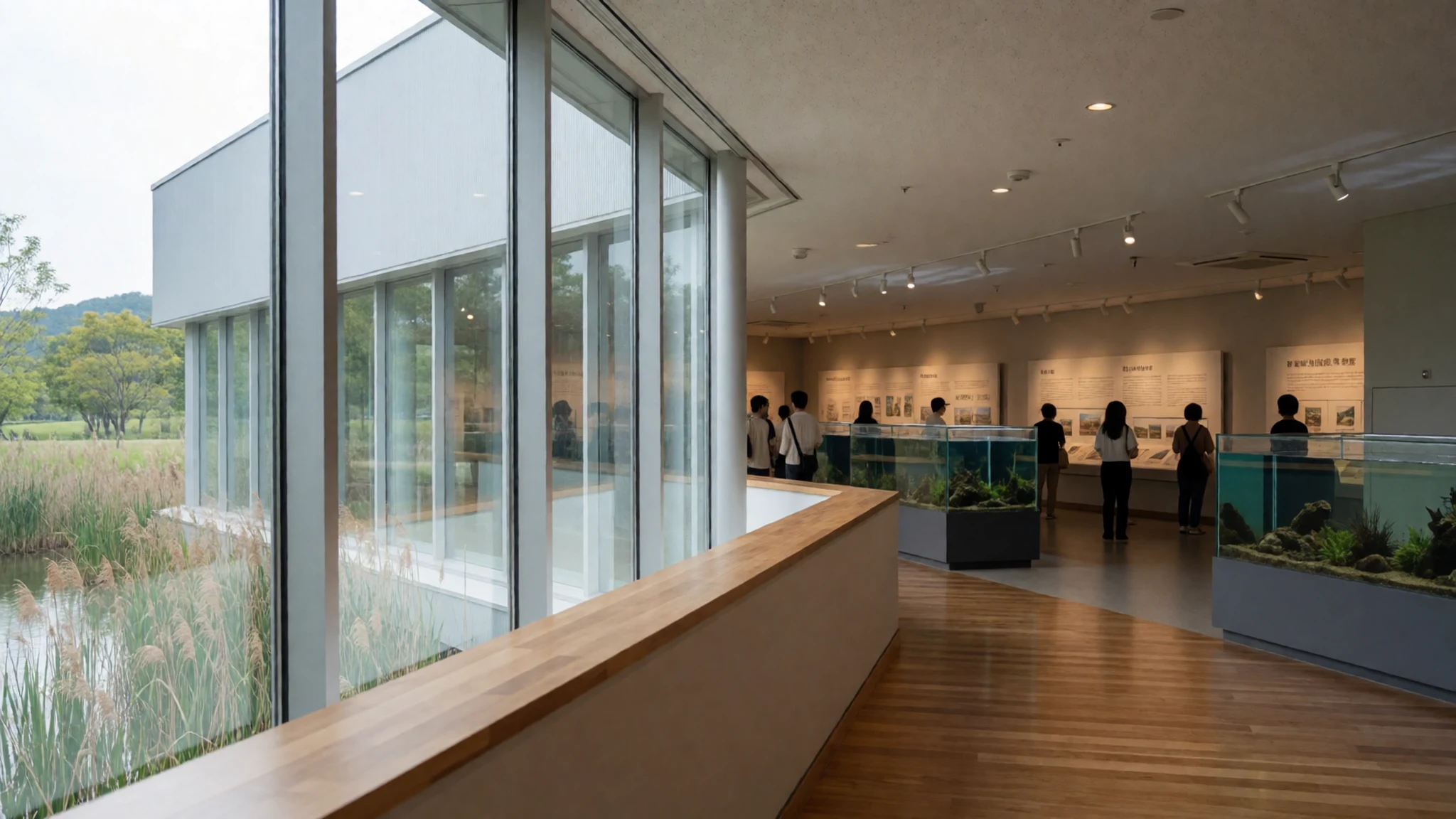
- Omimaiko Beach — Eastern shore
Omimaiko Beach is the lakeshore stretch most people from Kyoto and Osaka head for on a warm day. The water is clean and the atmosphere is relaxed, which compares well with many seaside beaches in the Kansai region. Crowds gather on weekends, while weekdays are quieter. Camping is allowed here, and the station is roughly thirty minutes from Kyoto by rail.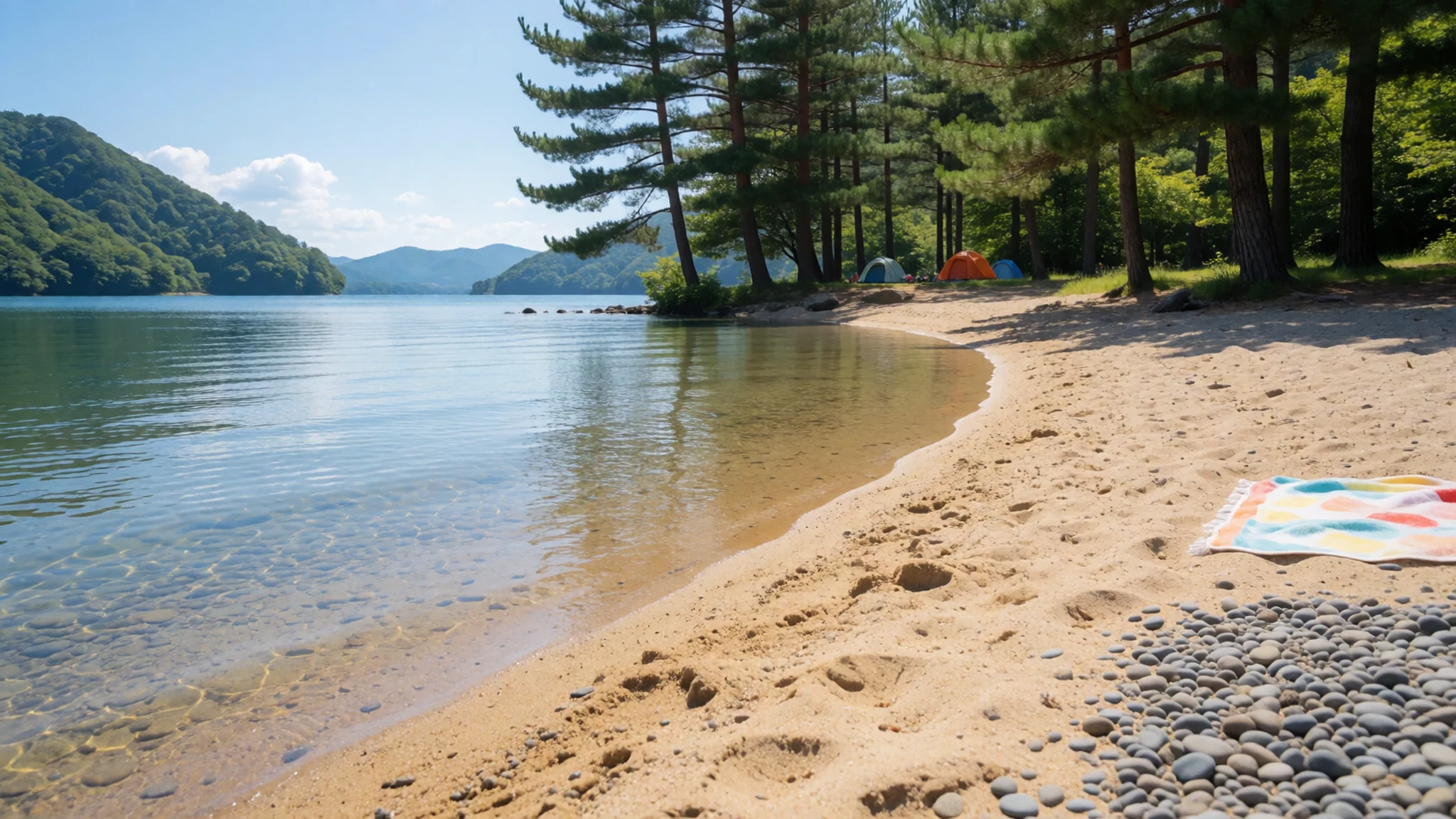
- Hikone Castle — Hikone, eastern shore
Hikone Castle is one of Japan's 12 remaining original castles, which means it is one of the few that survive from their original construction rather than a later rebuild. The castle stands in a town with a lakeside feel and a compact old centre, so it fits comfortably into a half day. The approach is steep in places, so take it slowly and allow time for views back over the water.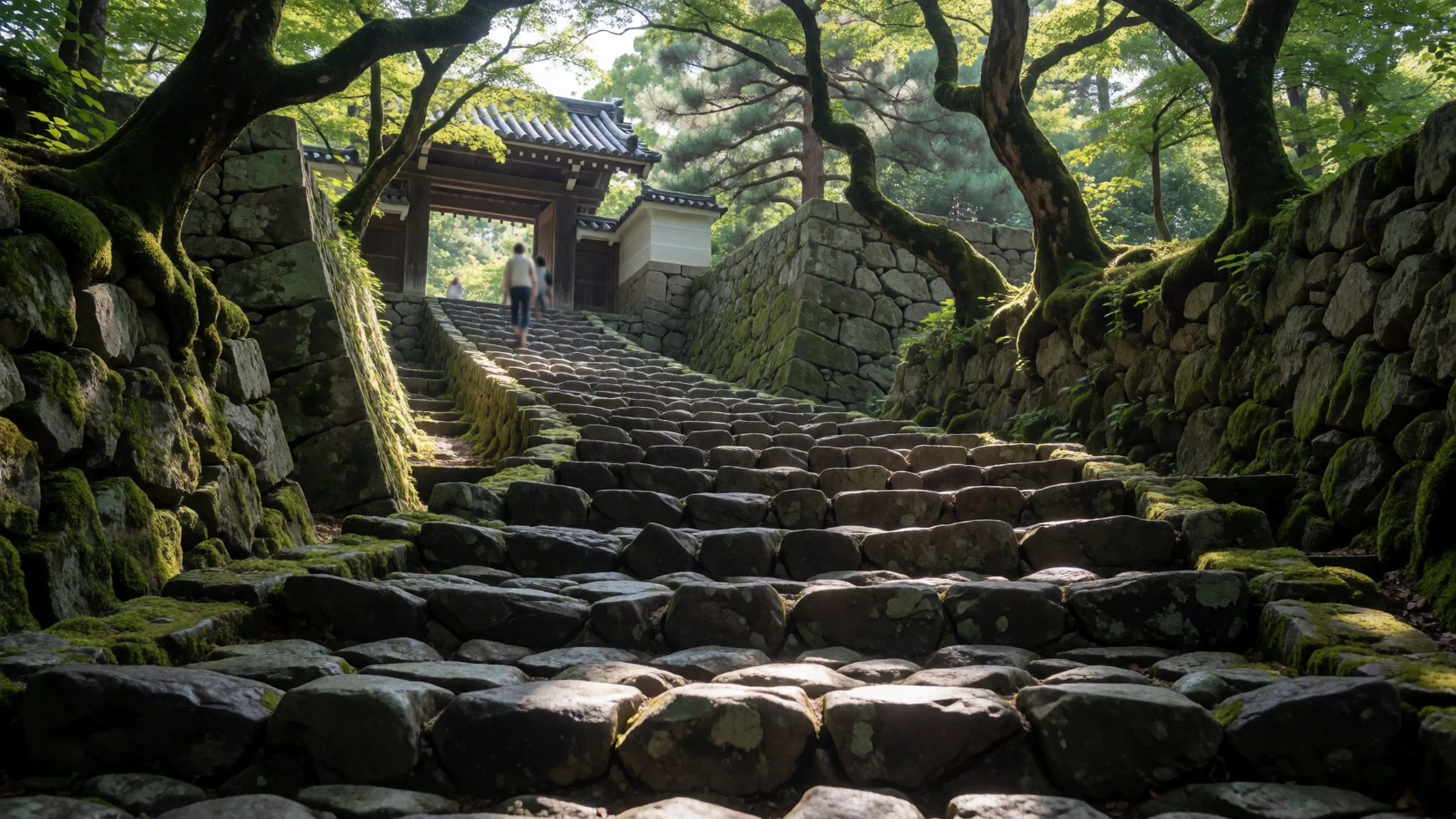
- Omihachiman canal district — Omihachiman, eastern shore
Omihachiman is known for its restored canal area, where waterways run past old streets and small museums. Walking the canal in the morning is the easiest way to see it before the day trippers arrive. The town also holds several museums, so a rainy afternoon can be spent indoors without losing the appeal of the place.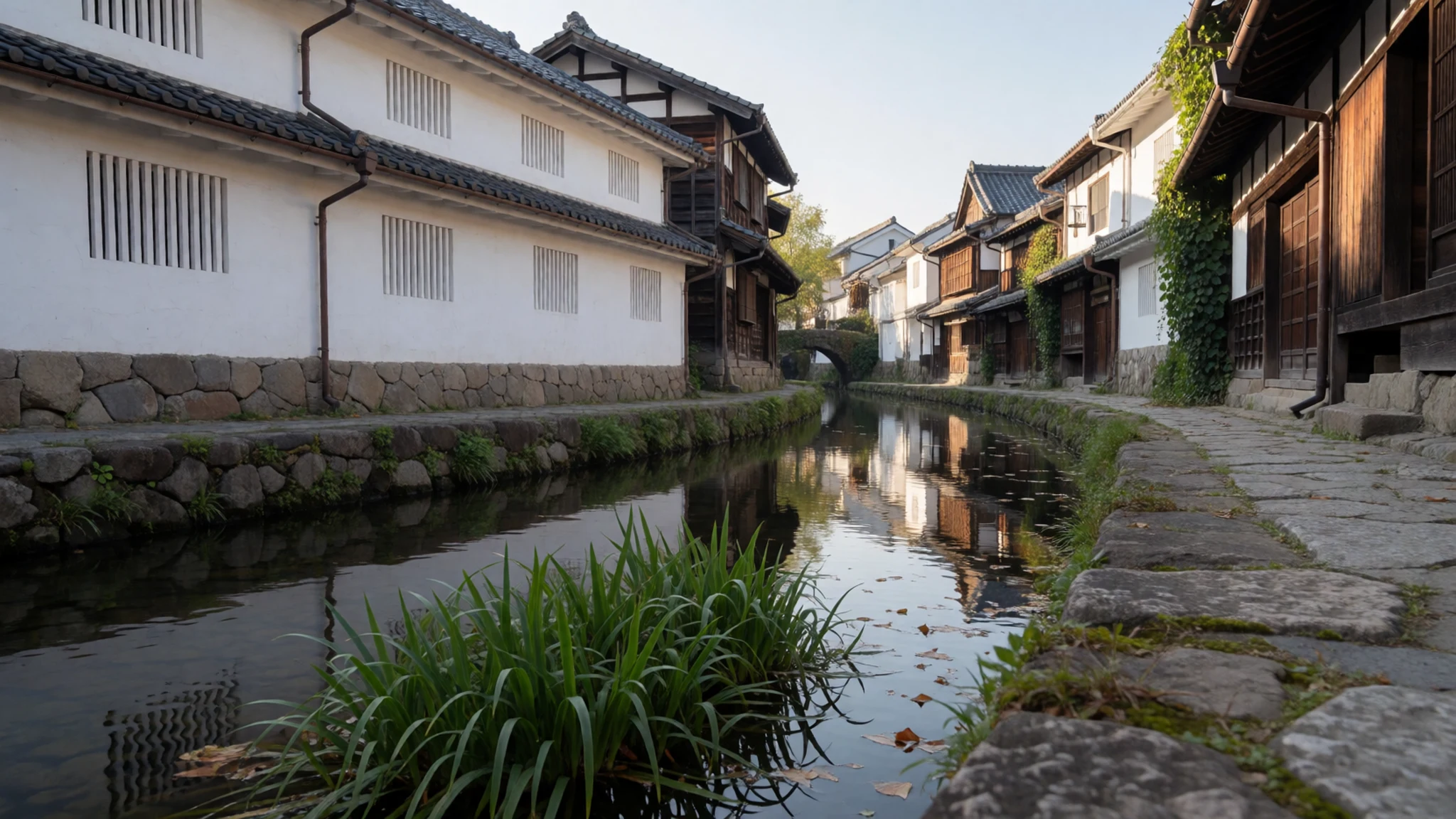
- The Michigan sternwheeler — Otsu
The Michigan is a working sternwheeler that runs tourist cruises on the lake from the Otsu area. Its paddle at the stern gives the boat a slow, distinctive character, and a short trip offers the best view of the shoreline and the hills behind it. Sailing times change with the season, so check the operator's website before planning a day around a cruise.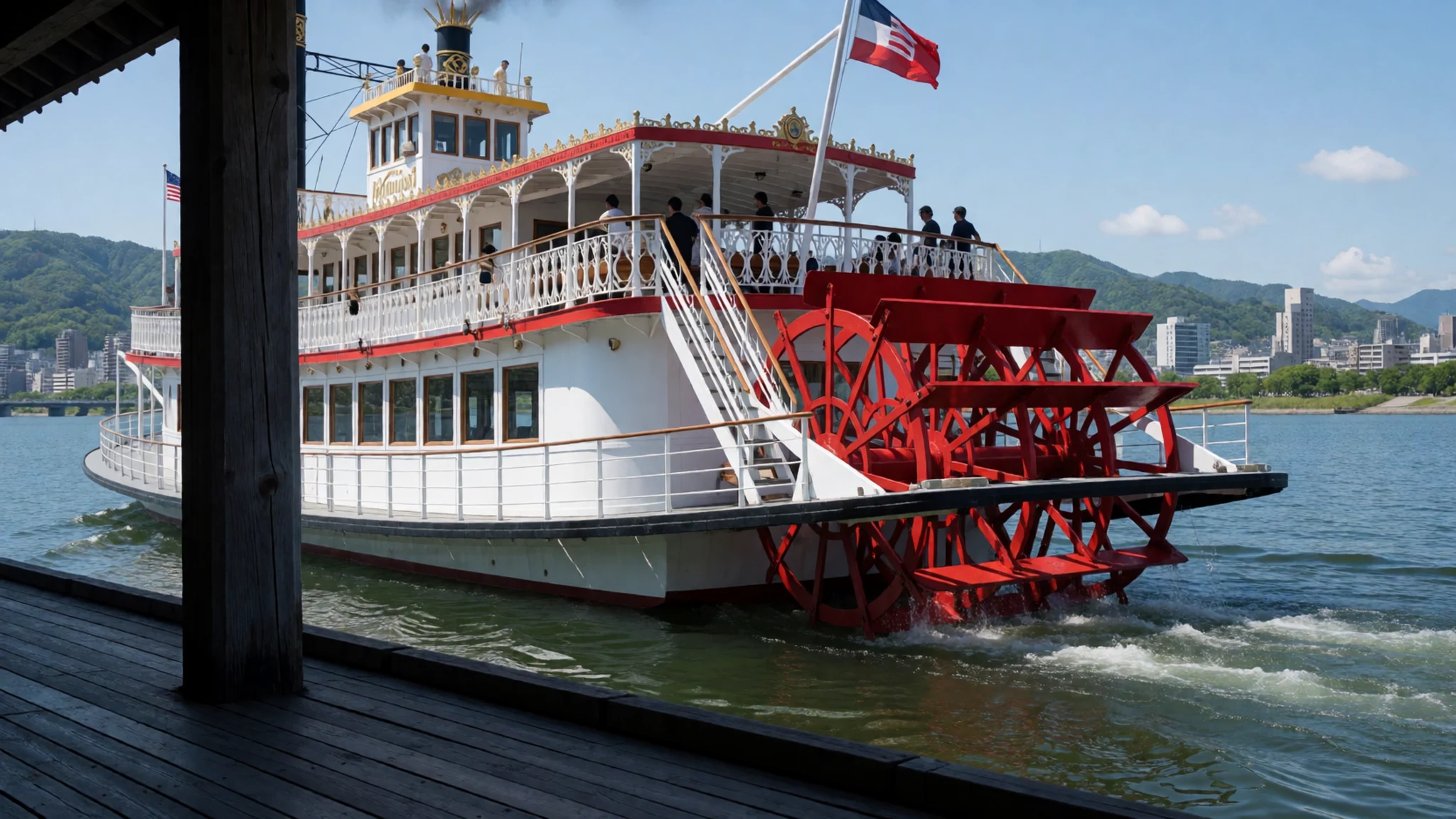
Culture
Lake Biwa has no single holy site. Its shores and the hills above hold temples and shrines, several of them working places of worship where monks and local families still come to pray. Compared with the big sights of Kyoto, the temples here are generally quieter, and the lakeside paths belong as much to fishing crews, rowing teams and cyclists as to anyone passing through.
Manners follow the general Japanese pattern. People speak quietly in shops, buses and trains, and bathing customs at the hot springs are strict, with a full wash at the basin before entering the shared bath. Photographs of worshippers or of families on the beach need a clear reason and, ideally, a polite request first. Landscapes, boats and the lake itself can be photographed freely.
Remove your shoes before stepping onto any raised wooden floor at a temple or inn, and keep your voice low inside the halls.
What to wear
Shiga's traditional textiles have long centred on fine cloth woven from ramie and silk. Ōmi-jōfu, a ramie cloth from the old province of Ōmi, which is now Shiga, is the best-known local weave and was traditionally used for summer garments. Kimono are most often seen at festivals and in the tourist streets of nearby Kyoto, where rental shops dress visitors for the day.
Locals dress for the weather and the task. On the lake, people wear light cotton shirts, quick-dry cycling tops and sun hats, and in town the look is practical and tidy. Younger and older residents both favour simple everyday clothes, and more formal dress is kept for weddings, funerals and temple occasions.
Dress for the lake's exposure. Sun and wind can be strong on open water, so pack a light layer, sunscreen and a hat. Temple visits call for covered shoulders and knees, and footwear should slip off easily at halls and inns. Walking the canal and hill paths needs closed shoes with grip, and in summer long sleeves help against mosquitoes in the evening.
What to eat
- Ayu, grilled whole — Small eateries and roadside grills on the southern shore
Ayu, a slender river and lake fish, is often sold grilled whole on a skewer and lightly salted. Look for it at small eateries and roadside grills near the southern shore, where fishing boats come in. It is a simple, typical lakeside dish, and the flesh is delicate with a clean, faintly cucumber-like scent.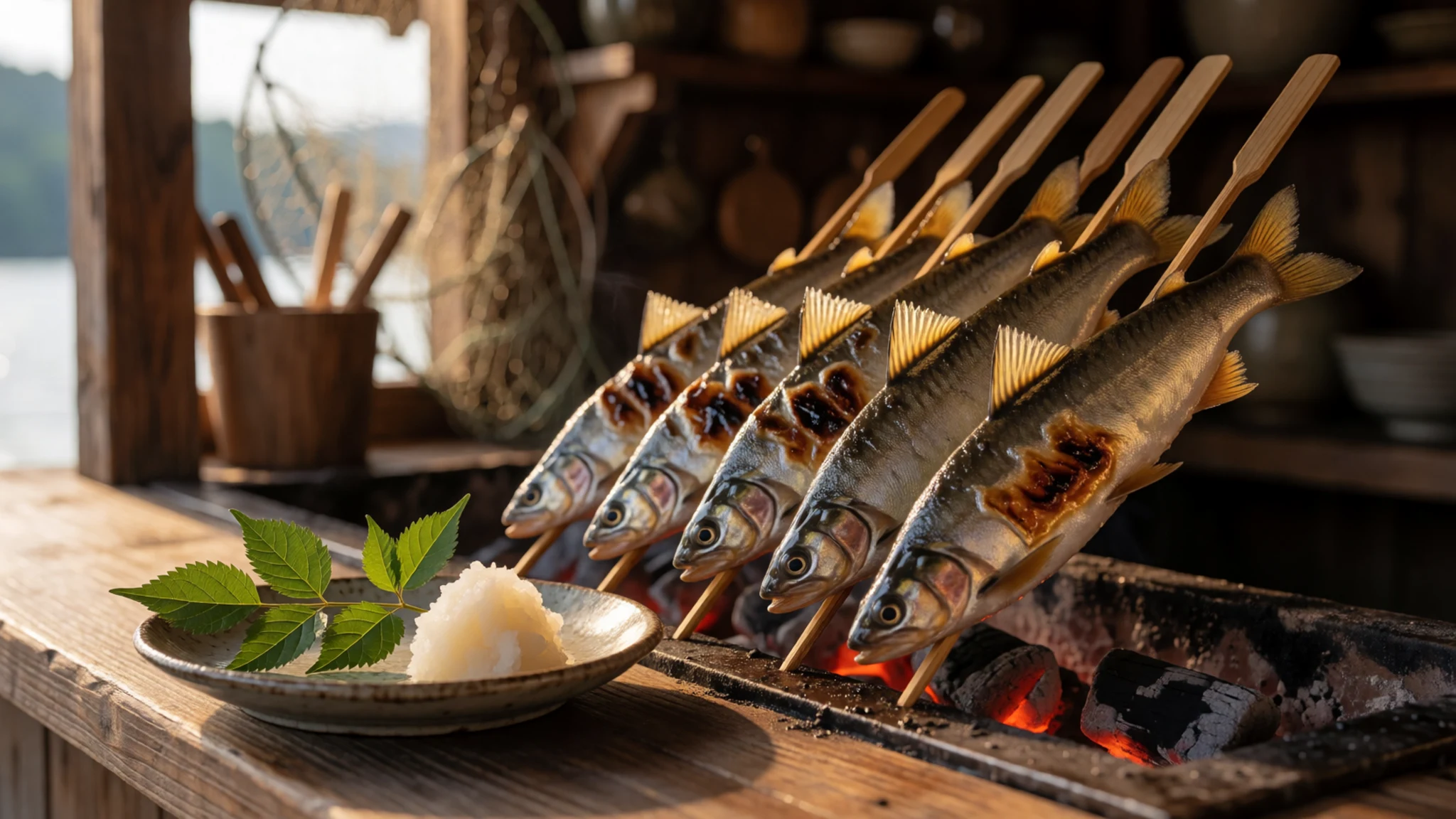
- Bring-your-own barbecue — Omimaiko and Shiga Beach
Visitors can bring a portable barbecue set to the shore at Omimaiko or Shiga Beach and cook on the sand with a cooler of food and drink. It is an easy, inexpensive way to spend an afternoon by the water. Check the local rules on fires before lighting anything.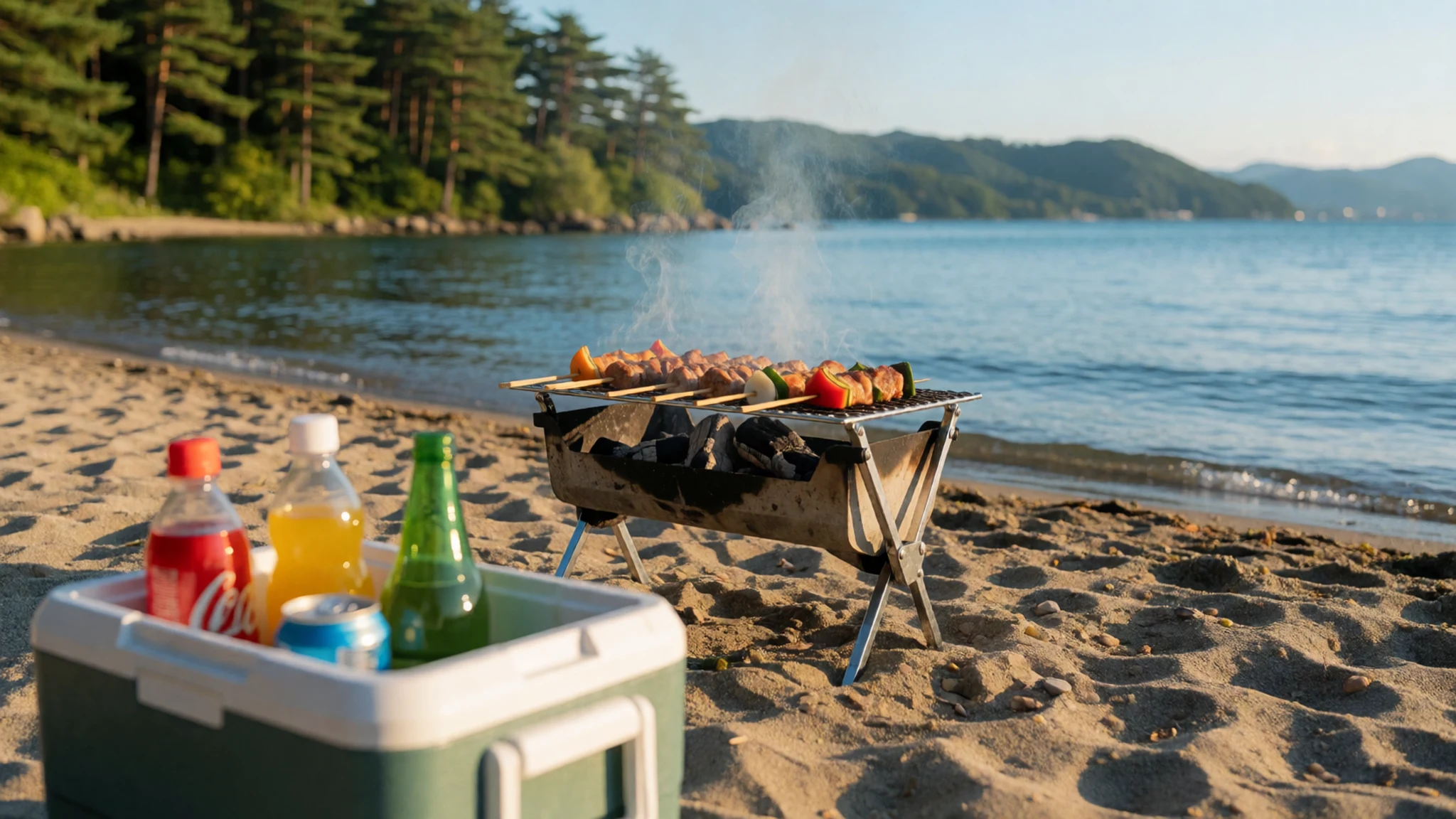
- Summer food stalls — Omimaiko Beach, summer only
In summer, food vendors set up at Omimaiko Beach, selling snacks and cold drinks for the crowds on the sand. The choice is simple and suits a quick lunch between swims. The stalls are a good way to try local snacks without planning a full meal. - Funa-zushi — Old restaurants in the historic districts of Omihachiman and Nagahama
Funa-zushi is a fermented crucian carp packed with rice, and it is the traditional dish most associated with Shiga. Its strong sour smell puts many people off, so it is usually served in small portions. Look for it in old restaurants in the historic merchant districts of Omihachiman and Nagahama. - Inn dinner in the hot spring towns — Ryokan and inns in the hot spring towns of the hills
Inns in the hot spring towns of the surrounding hills often serve set dinners built on local fish and seasonal vegetables. Eating in the inn after a bath is the usual pattern, and many places ask guests to book in advance.
Plan it
Best time. April for blossom and late October to November for autumn colour are the most comfortable seasons, with mild air and calm water. June brings the rainy season, and July and August are hot and humid, though the breeze near the shore helps.
How long. 2–3
Getting there. Fly into Kansai International Airport, then take the train to Kyoto or Osaka. JR Tokaido Main Line trains serve Otsu and Hikone along the southern and eastern shores, and the private Keihan Keishin Line is the cheapest way from Kyoto to Otsu, changing there for Sakamoto.
Budget. low
Tips
- Visit Omimaiko Beach on a weekday, since it fills up at weekends
- Cycle in sections, because the full loop of the lake is about 220 km
- Rent a basic bicycle near the station to explore the lakeshore paths
- Carry cash for small eateries, bike hire and summer stalls
- Bring water and a hat, since the shore paths have long open stretches
- Check the official site for museum hours and boat schedules before you go
Etiquette
- Wash thoroughly before getting into a hot spring bath
- Keep voices down on trains and on the shore paths
- Ask before photographing people, especially at temples and on boats
- Take all rubbish home after a barbecue or beach day
Nearby
Sources
- Wikidata Q200239 (CC0)
- Wikipedia: Lake Biwa (CC BY-SA 4.0)
- Wikivoyage: Lake Biwa (CC BY-SA 4.0)
- Top view of Lake Biwa, Lonely Planet Japan (CC BY-SA 4.0)
- Lake biwa, Global Land Cover Facility (CC BY 3.0)
- 20091015琵琶湖, BehBeh (CC BY-SA 1.0)
- Silurus biwaensis, KENPEI (CC BY-SA 2.0)
- Biwako Quasi-National Park Omihachiman, 663highland (CC BY 3.0)
- 三井寺疎水 - panoramio, 田附宏秀 (CC BY 3.0)
- Mangetsuji Otsu Shiga, 663highland (CC BY 3.0)
- Michigan - Lake Biwa, Japan, Daderot (CC0 1.0)


