Kyaiktiyo Pagoda
Kyaiktiyo Pagoda, Myanmar
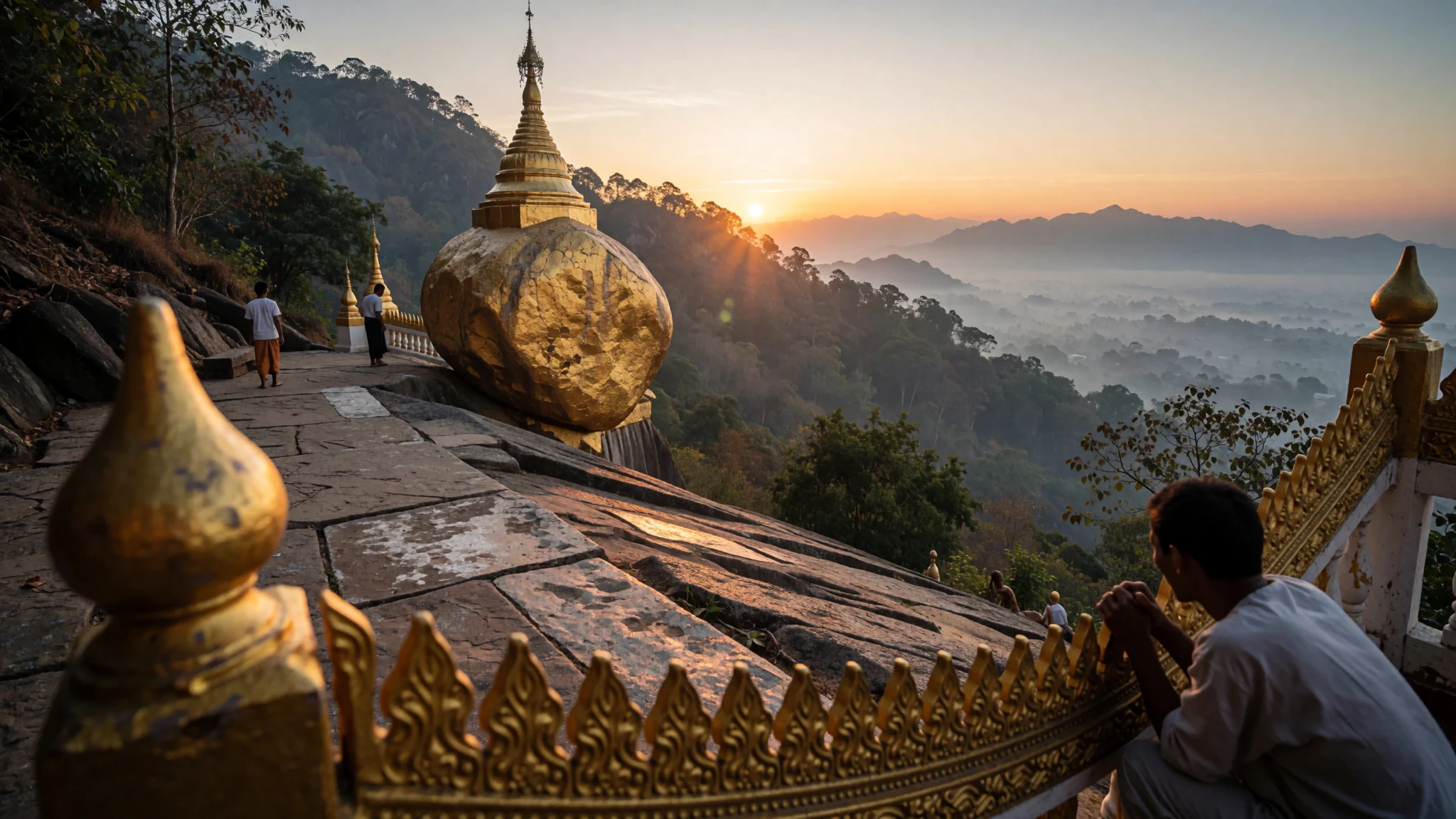
A gold-leafed boulder that seems to defy gravity, perched on a steep hill in Mon State and one of Myanmar's great pilgrimage sites.
The place
Kyaiktiyo Pagoda sits on top of a granite boulder in the hills of Mon State, southern Myanmar, and is usually known in English as the Golden Rock. The pagoda itself is small, about 7.3 metres tall, but the setting is what draws people. The boulder is covered in gold leaf, pressed onto its surface by male worshippers as an act of merit. Its position is the main talking point: the rock rests on a narrow base and looks as though a gentle push would send it tumbling down the slope, yet it has stayed there for generations.
The site stands on Kyaiktiyo hill, part of the Eastern Yoma range, at a height of roughly 1,100 metres. Kinpun, a village at the foot of the mountain, serves as the base for most visitors. The road climbs through a landscape of granite boulders that look almost as unsettled as the famous one. Yatetaung, near the top, is where vehicles stop and the final approach begins on foot.
Pilgrims come from across Burma, and the site ranks among the country's major Buddhist centres. It is quieter than Yangon but busy at weekends, on public holidays and during festivals, when the approach fills with families, monks and groups of visitors. The atmosphere is devotional rather than touristy, and the stone itself is the focus of nearly every visit.
Its story
The explanation most pilgrims give begins with the Buddha. According to legend, the boulder rests on a single strand of Gautama Buddha's hair, which holds it in place and stops it rolling down the mountain. Whether anyone can see that hair is beside the point. The belief gives the rock its purpose, and it explains why the balance seems so improbable.
A second tale puts a monk at the centre. He lived a life of severe asceticism, and his discipline impressed the celestial king, who used supernatural power to lift the rock and set it on this hillside. The king is said to have chosen this particular stone because it resembled the monk's head. Both stories treat the rock as more than geology; it is a sign that the sacred has claimed this place.
Over time the site grew into a major pilgrimage centre, and the gold leaf is the visible record of that history. Male devotees press thin sheets onto the granite as an offering, so the boulder has accumulated layer upon layer of gilding, giving it the glow that names it. A paved track, built in 1999, made the climb easier for the faithful, though the steep final stretch still tests even fit walkers. Today the story is kept alive by the pilgrims who continue to climb, pray and add their own leaf.
What to see
- The Golden Rock — Summit of Kyaiktiyo hill, Mon State
The rock and its small pagoda sit at the summit of Kyaiktiyo hill, at about 1,100 metres. Early morning is the best time to see it: the light is soft, the crowds are thinner, and the gold catches the first sun. The pagoda is only 7.3 metres tall, so its scale is modest, but the boulder's balance on the slope is the sight that holds people's attention.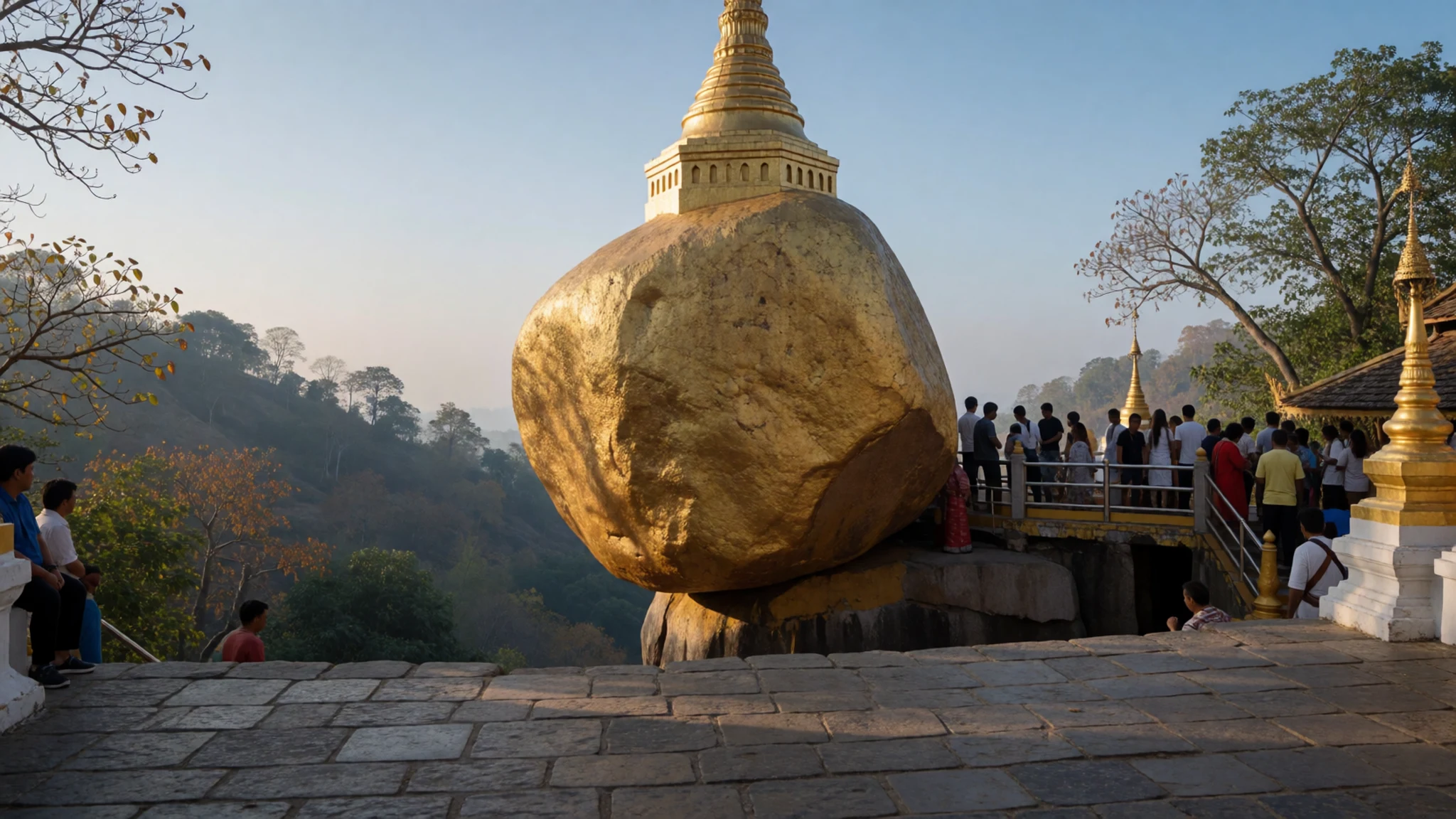
- Gold leaf on the granite — Around the rock, upper terrace
Thin sheets of gold leaf are sold near the site and pressed onto the boulder by men as a meritorious act. Watching the process is one of the most absorbing parts of a visit, and the thick, uneven layers show how many years of offerings have built up. Visitors should keep a respectful distance from those working and ask before taking close pictures.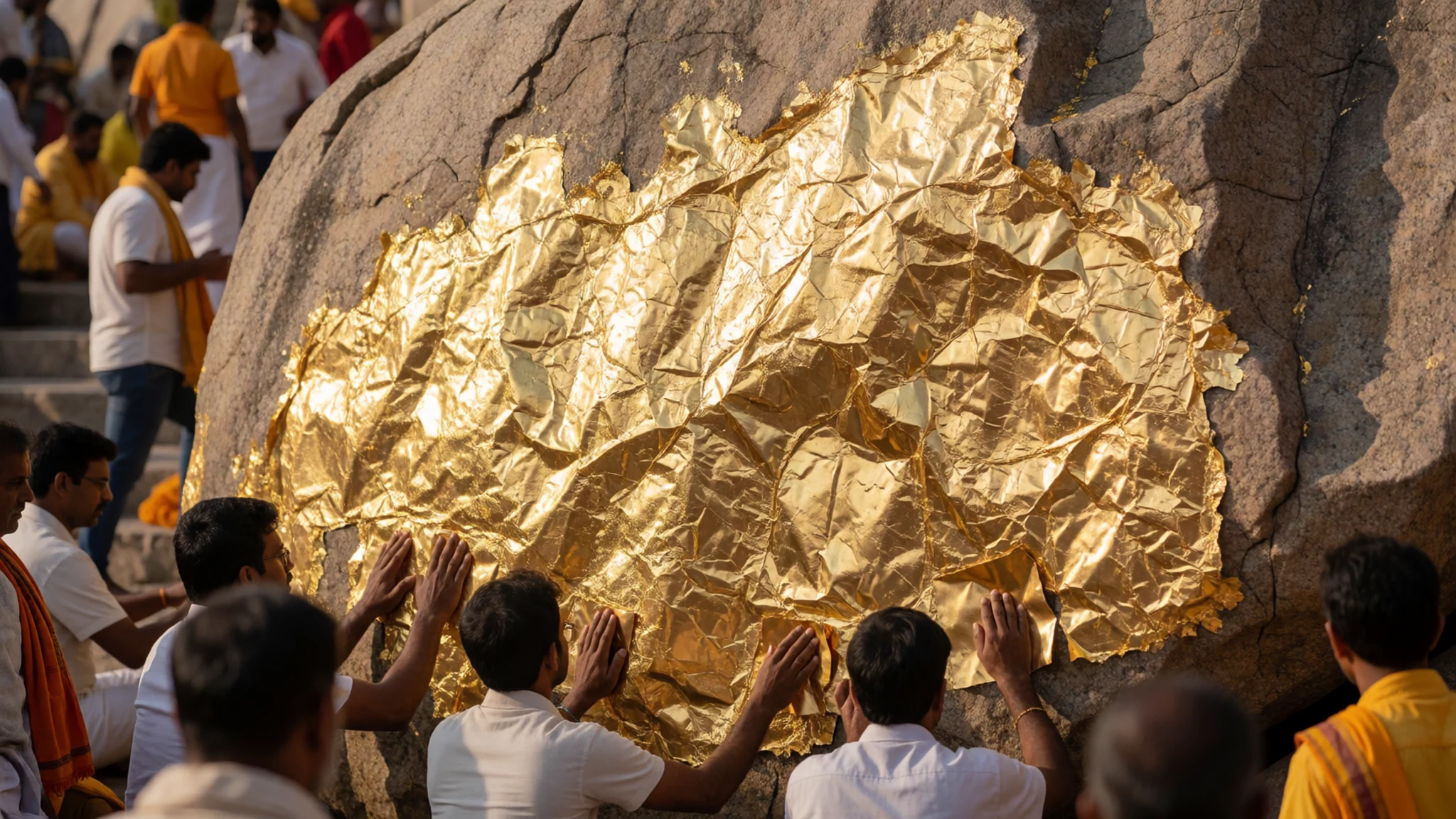
- The climb from Yatetaung — Yatetaung, last point for vehicles
Yatetaung is where vehicles stop, and the path to the rock begins. The paved track runs about 1.2 kilometres uphill, past kiosks selling snacks, flowers and gold leaf. Expect it to take roughly an hour, with plenty of pauses in the heat. Pilgrims walk the last stretch barefoot, as local custom requires, so carry water.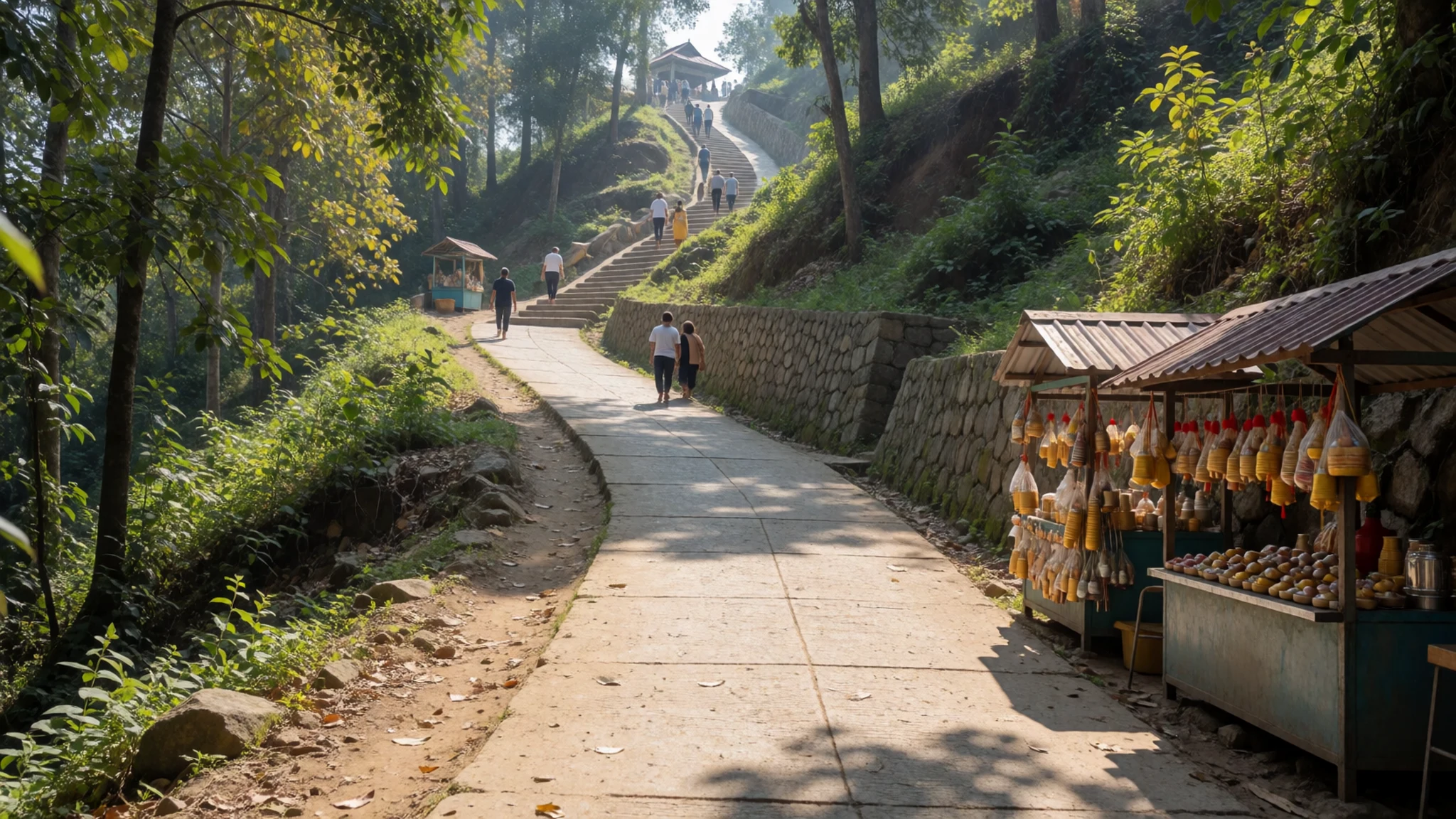
- Kinpun, the base village — Foot of Mt. Kyaiktiyo, Kinpun village
Kinpun, about 16 kilometres from the summit, is the closest settlement to the pagoda and the usual place to break the journey. Pilgrims on foot start the trek here. The route is roughly 11 kilometres, and many make the walk as part of their devotion. Transport to Yatetaung leaves from the base, so plan the onward leg before you set out.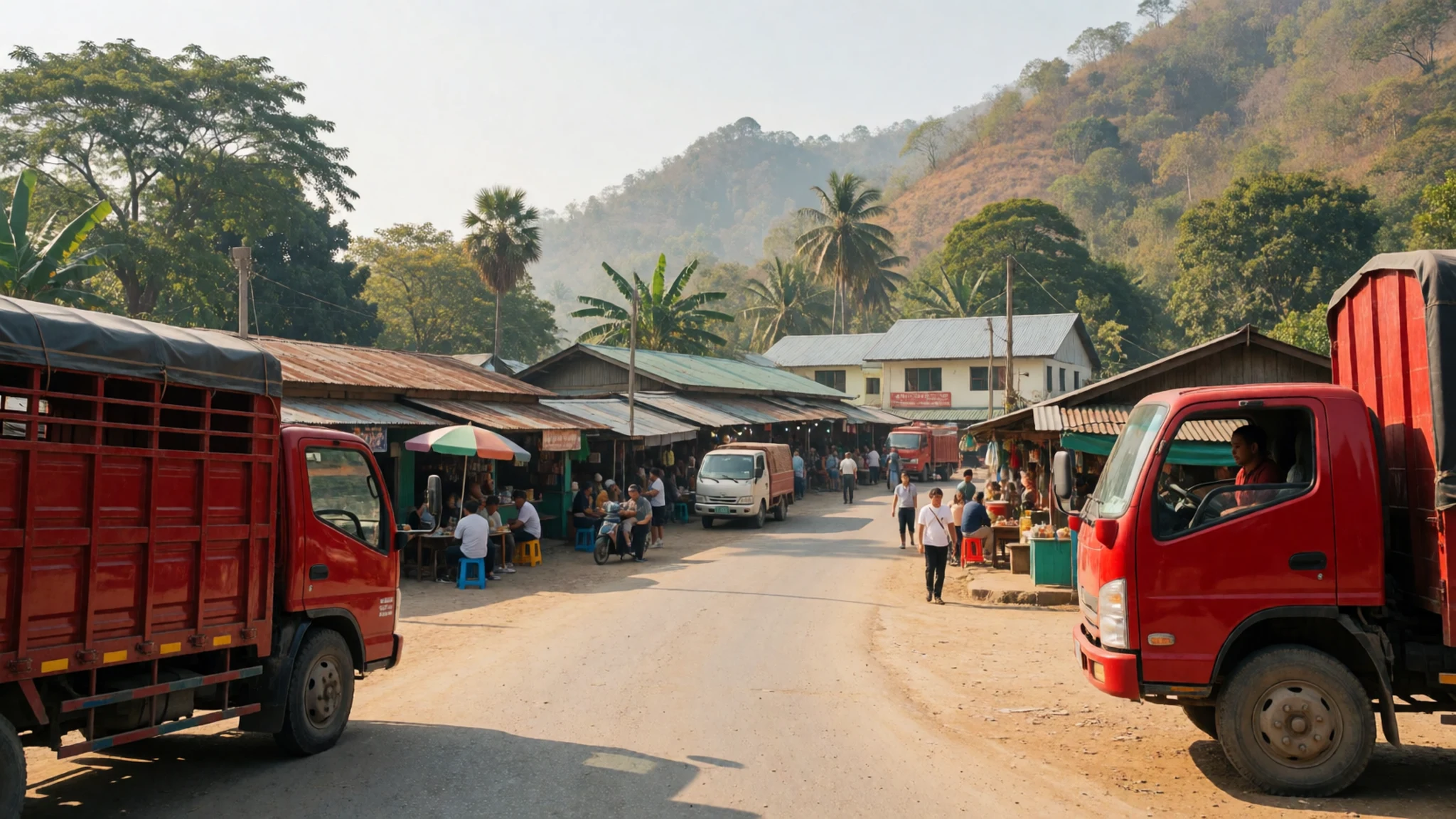
- The pagoda after dark — Summit area, after dark
After dark the rock is lit and the pagoda glows against the dark hills, a view that draws many visitors who stay nearby overnight. The mood is calmer once day trippers have left, with quiet conversation replacing the bustle of the afternoon. Bring a torch, because the paths are uneven and not always well lit.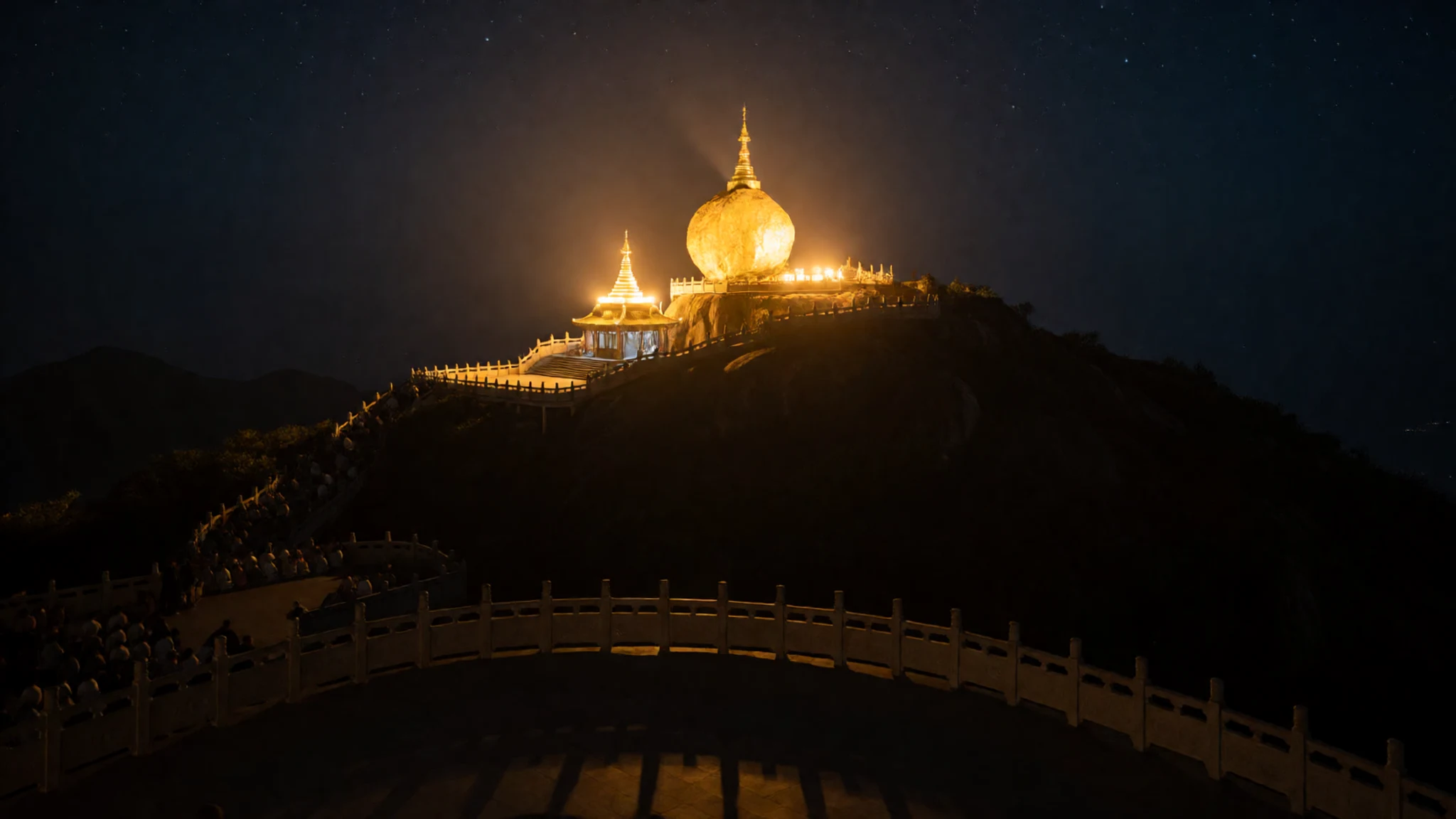
Culture
Kyaiktiyo Pagoda is a working place of worship, and the pilgrimage around the Golden Rock follows Burmese custom. The most visible rule concerns footwear: shoes and sandals are left behind before the climb, and the final approach is made barefoot. Small stalls near the base can look after bags, but nothing valuable should be left with them.
Dress modestly. Covering shoulders and knees is expected at pagodas across Myanmar, and it matters here, where devotees are on foot and close to the shrine. Signs near the site set out restrictions for women, so read them carefully and check locally on arrival, as arrangements can change.
Photography is welcome from a reasonable distance, but ask before photographing monks or families up close. Gold leaf is an act of merit, so buy it from a stall, handle it with care and do not treat the boulder as a surface for anything else. Keep voices low near the shrine, step aside for people carrying offerings, and never point your feet towards the Buddha images. Take your shoes off at Yatetaung and walk the final stretch barefoot, as every pilgrim does.
What to wear
Traditional dress in Mon State follows the wider Burmese pattern. Men wear the longyi, a tube of cotton or silk tied at the waist and often checked, with a shirt or jacket for formal occasions. Women wear a longyi too, usually with a fitted blouse, and thanaka, a paste ground from bark and dabbed on the cheeks, is common. Handwoven cotton and silk, in stripes and checks, are the typical textiles.
Most people now wear a mix of longyi and Western clothing. In towns, younger men often pair trousers with a T-shirt, while women may combine a longyi with a plain top. Many pilgrims climbing the hill choose a longyi or loose trousers, which are practical on the steps, along with a headscarf or hat against the sun.
For a visit, dress for heat and for a sacred site. Light cotton that covers shoulders and knees suits both the climb and the shrine. Loose trousers or a longyi work well. Footwear matters less because the final stretch is barefoot, but bring slip-on shoes that are easy to remove, and avoid short hems or tight fits.
What to eat
- Mohinga — Morning markets and eateries in Kyaikto
Noodle soup of rice vermicelli in a fish broth thickened with chickpea flour, lemongrass and fish sauce, served with fritters and boiled egg. Find it at a morning market near the base or at any eatery in Kyaikto, where the stock is already simmering by dawn.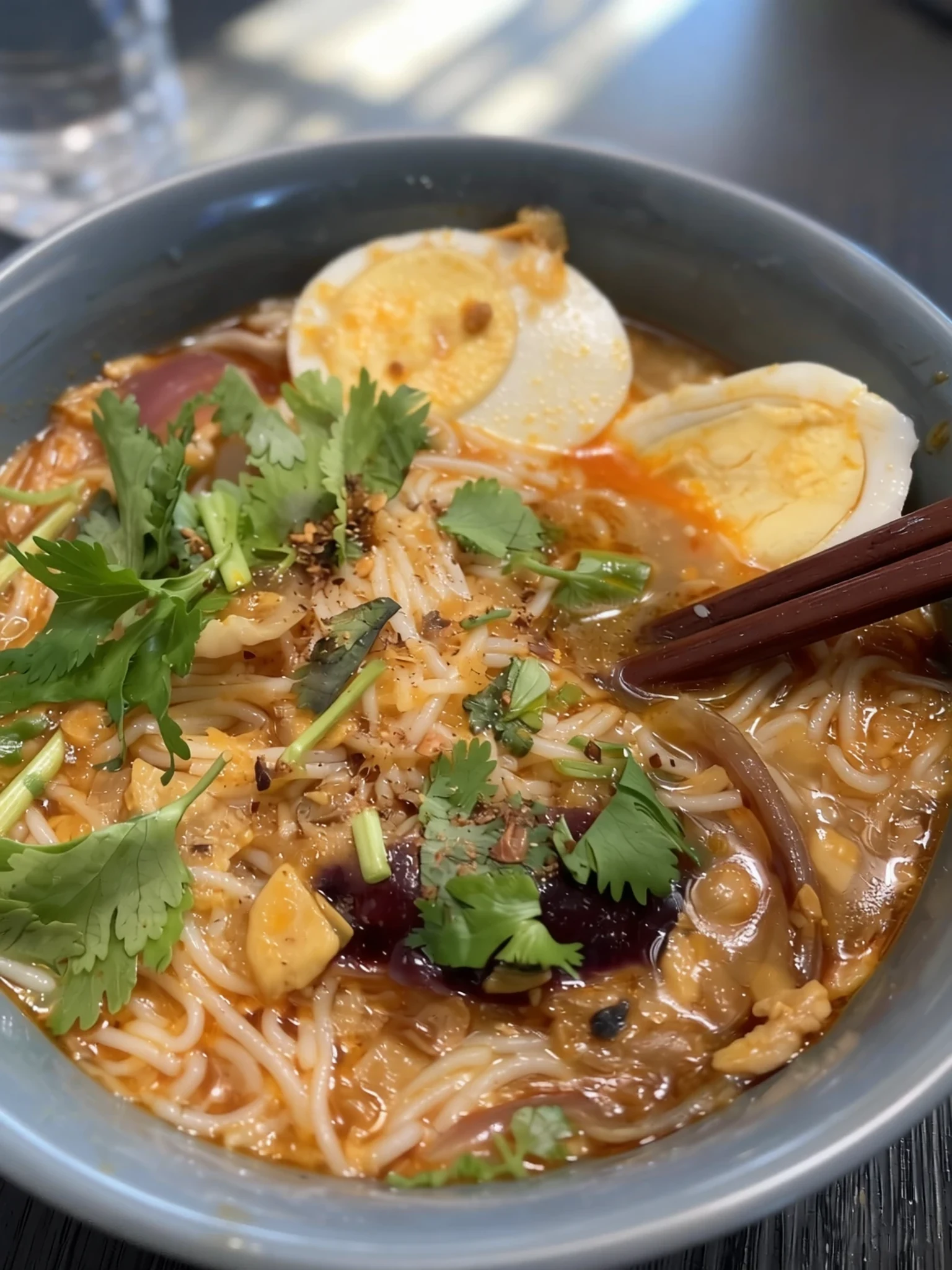
- Khao swe — Lower town eateries and main-road street stalls
Wheat noodles served in a rich, slightly sweet coconut and chilli curry broth, often with chicken or beef, fried garlic, crispy shallots and a squeeze of lime. Look for it at eateries in the lower town or at street stalls along the main road.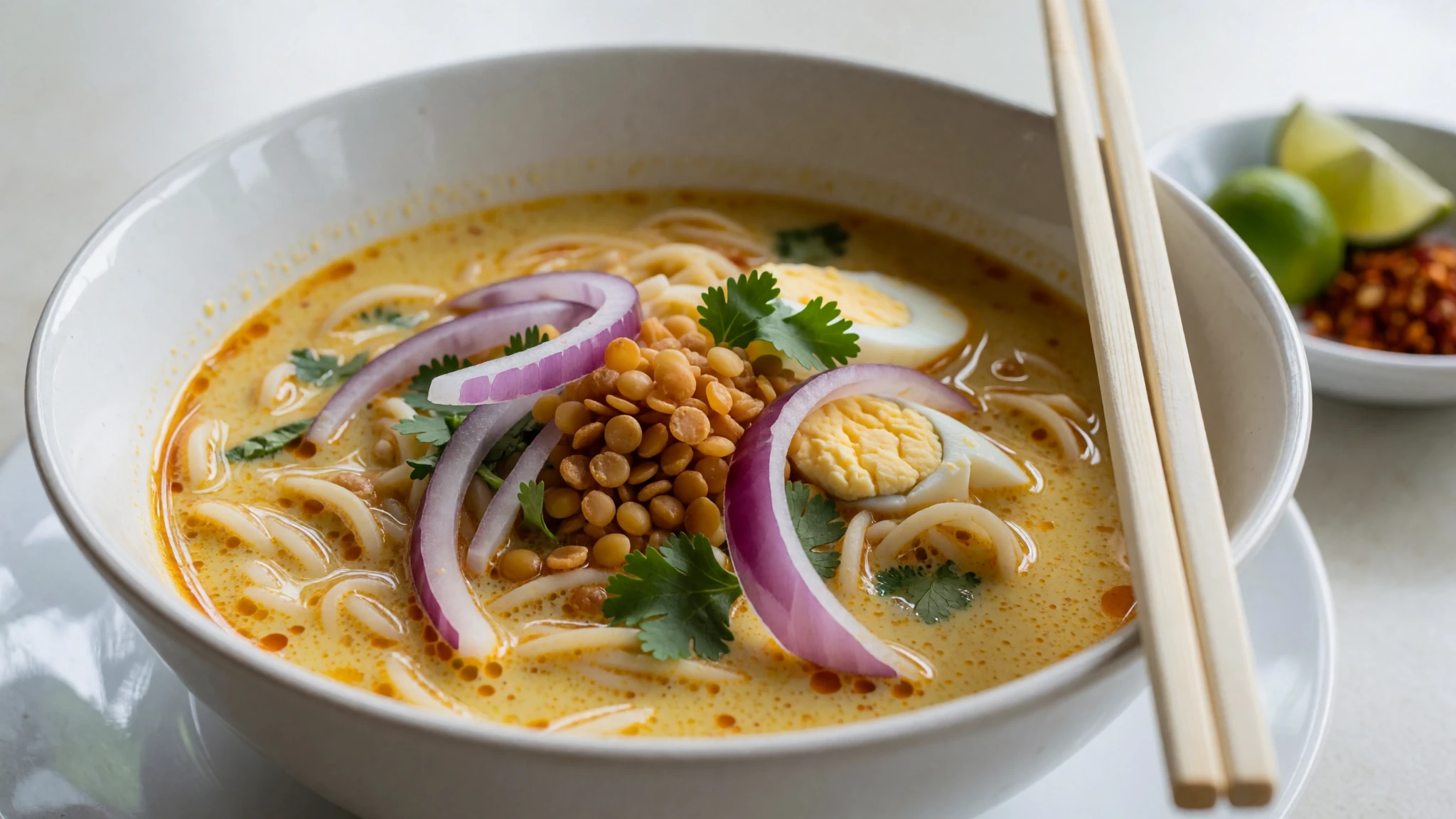
- Lahpet thoke — Home-style restaurants and tea shops
Fermented tea leaves tossed with fried beans, garlic, sesame, tomato and a little oil, sour and crunchy at once. It is a common accompaniment to rice and often appears at the end of a family meal. Ask for it at a home-style restaurant or a tea shop. - Mont lone yay baw — Street vendors in the late afternoon
Small sweet dumplings of rice flour filled with palm sugar, rolled in grated coconut and steamed in banana leaf, so they arrive warm and sticky. Vendors sell them from baskets, most often in the late afternoon, when pilgrims head back down the hill. - Tea shop snacks — Tea shops in Kyaikto and along the road
Sweet milk tea served with fried savouries such as split-pea fritters, samosas and sugared doughnuts, eaten at low tables on plastic stools. Tea shops open early and are the easiest place for a slow breakfast. Choose snacks from the glass case and pay per piece.
Plan it
Best time. December to February is the most comfortable time, with the least rain, though days stay hot; April and May are the hottest months, and the rainy season from June to October brings heavy downpours, with July and August the wettest.
How long. 2
Getting there. Fly into Yangon, then travel by road about 210 km to Kyaikto; from there, transport runs up to Kinpun and on to Yatetaung for the final climb.
Budget. low
Tips
- Book onward transport from Yangon or Mawlamyine ahead of time, especially at weekends and during festivals
- Start the climb early to avoid the heat and the midday crowds
- Carry small notes for gold leaf, snacks and stalls, as card payment is unlikely at the site
- Bring water, a hat and sun protection for the walk up
- Check the official site or local operators for current travel advice before you go
Etiquette
- Leave shoes at Yatetaung and walk the final stretch barefoot
- Dress with covered shoulders and knees, and follow posted signs about access
- Ask before photographing people up close
Nearby
Sources
- Wikidata Q1192804 (CC0)
- Wikipedia: Kyaiktiyo Pagoda (rev 1371808718) (CC BY-SA 4.0)
- Kyaikhtiyo at night (photo 01) (Public domain)
- No women allowed sign (photo 02) (CC BY-SA 4.0)
- Kyaikhtiyo bus (photo 03) (CC BY 3.0)
- Road to Kyaikhtiyo (photo 04) (CC BY 3.0)
- Way to Golden Rock (photo 05) (CC BY-SA 4.0)
- Men affixing gold leaf (photo 06) (CC BY-SA 4.0)
- Kyaikhtiyo Pagoda in the morning (photo 07) (Public domain)
- Kyaikhtiyo Pagoda at sunset (photo 08) (Public domain)
- Wikivoyage (CC BY-SA 4.0)


