Kuopio
Kuopio, Finland
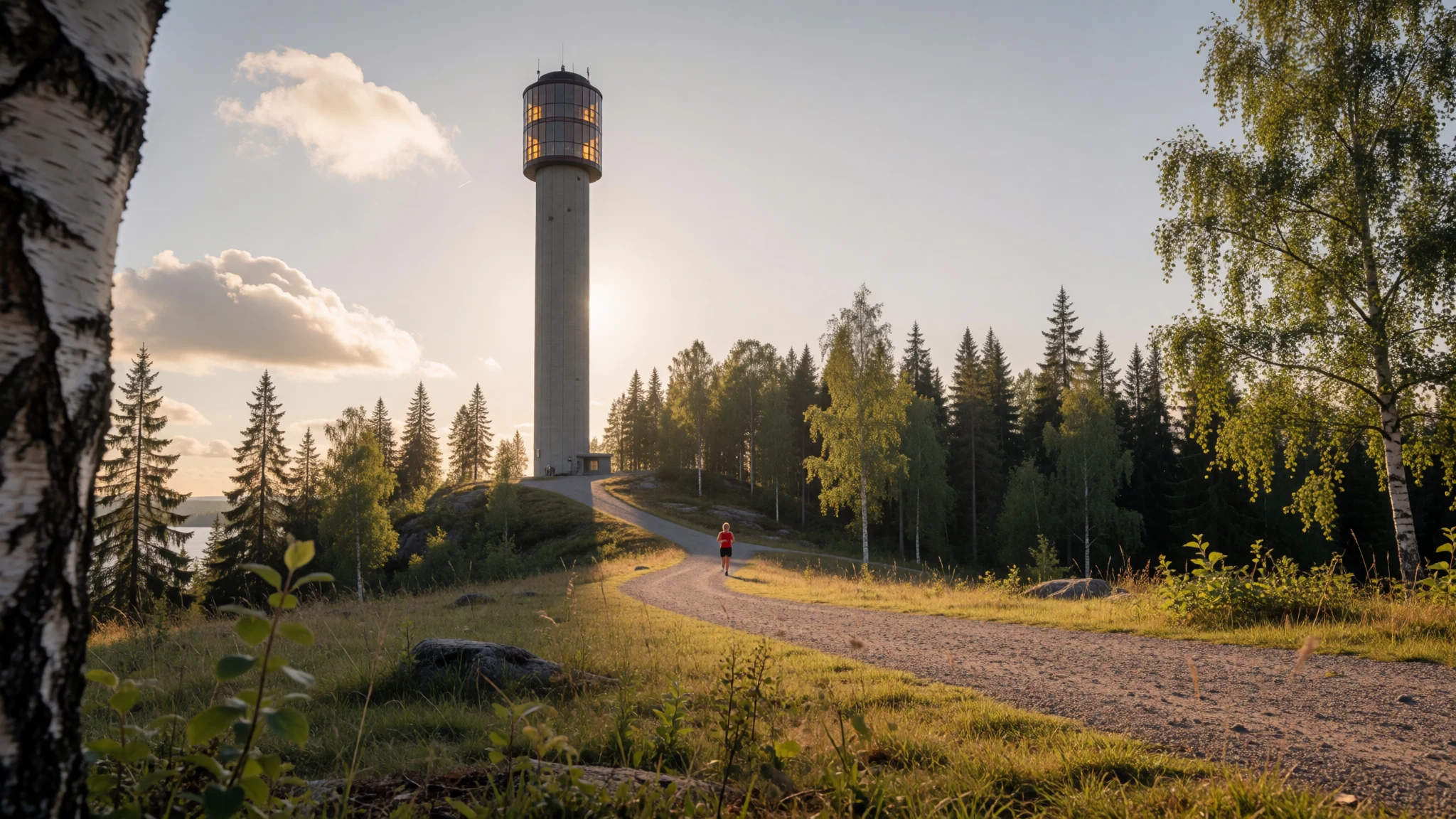
Kuopio is a lakeside Finnish city where a hilltop tower, a fish pie and the long northern light make for an easy, unhurried trip.
The place
Kuopio sits in the Finnish Lakeland, the regional capital of North Savo, at about 82 m above sea level. Roughly 127,000 people live within the municipality, which makes it a city of real size by Finnish standards, though the feel at street level is closer to a big town. The compact centre faces Kallavesi, a broad lake that shapes everything from the skyline to the weekend plans of locals.
The municipal boundary is generous. Successive mergers with surrounding rural municipalities have pulled a great deal of forest, farmland and water inside it, so the built-up core is only a fraction of the whole. Within that core, the street grid is easy to walk, with the market square at its heart and the old wooden quarter a few minutes to the south-east.
Behind it all rises Puijo, a forested hill with a tower on top. Locals use its slopes for running in summer and skiing in winter, and the tower is the landmark that orients everyone in the city. Kuopio also works as the main urban, university and cultural hub of eastern Finland, alongside Joensuu, which gives it a younger, busier feel than its size suggests, especially during term time.
The seasons are strongly marked. Summer days are long and bright, with the lake busy with boats and lakeside terraces full. Winter brings snow, early darkness and frozen water, and the city leans into it with ice events and saunas. Spring and autumn are quieter, greyer and cheaper, and they suit visitors who prefer empty paths to warm weather.
Its story
Kuopio begins, in the written record, as a church parish. In the sixteenth century the Finnish Church, then shaped by the reformer Mikael Agricola, set up a parish church at Kuopionniemi, a headland on the lake. A proper settlement followed when Governor Per Brahe the Younger founded Kuopio in 1653, during the period when Finland was part of the Swedish realm.
Full town status came later. In the eighteenth century the Swedish king Gustav III ordered the town formally established as the seat of the province of Savo and Karelia, and the city still treats that royal decision as its official founding. The lake, which carried timber, fish and goods long before roads were good, explains why a town grew on this spot.
The early nineteenth century changed the map. After the Finnish War, part of the wider Napoleonic conflict, Finland passed to the Russian Empire as an autonomous Grand Duchy. Over the following decades the eastern interior, previously cut off from the Baltic coast, received considerable investment in transport. The Saimaa Canal opened a summer water route between the great lake system and the Baltic Sea. Later, the Savo railway ran through Kuopio on its way to Mikkeli, Kouvola, Vyborg and St Petersburg, tying the lake town to commercial centres far beyond it.
Since the late twentieth century the story has been one of growth by absorption. Merger after merger, Nilsiä among them, has widened the city's borders into the surrounding countryside, while the town centre has become a student and cultural base for the region.
What to see
- Puijo Panorama Tower — Puijo hill, north of the centre
The tower stands on the highest hill for a long way around, and the view across the lakes and forest explains the whole geography of the region in one look. Clear days in spring or autumn give the sharpest outlines. Check the official city site for opening arrangements before heading up.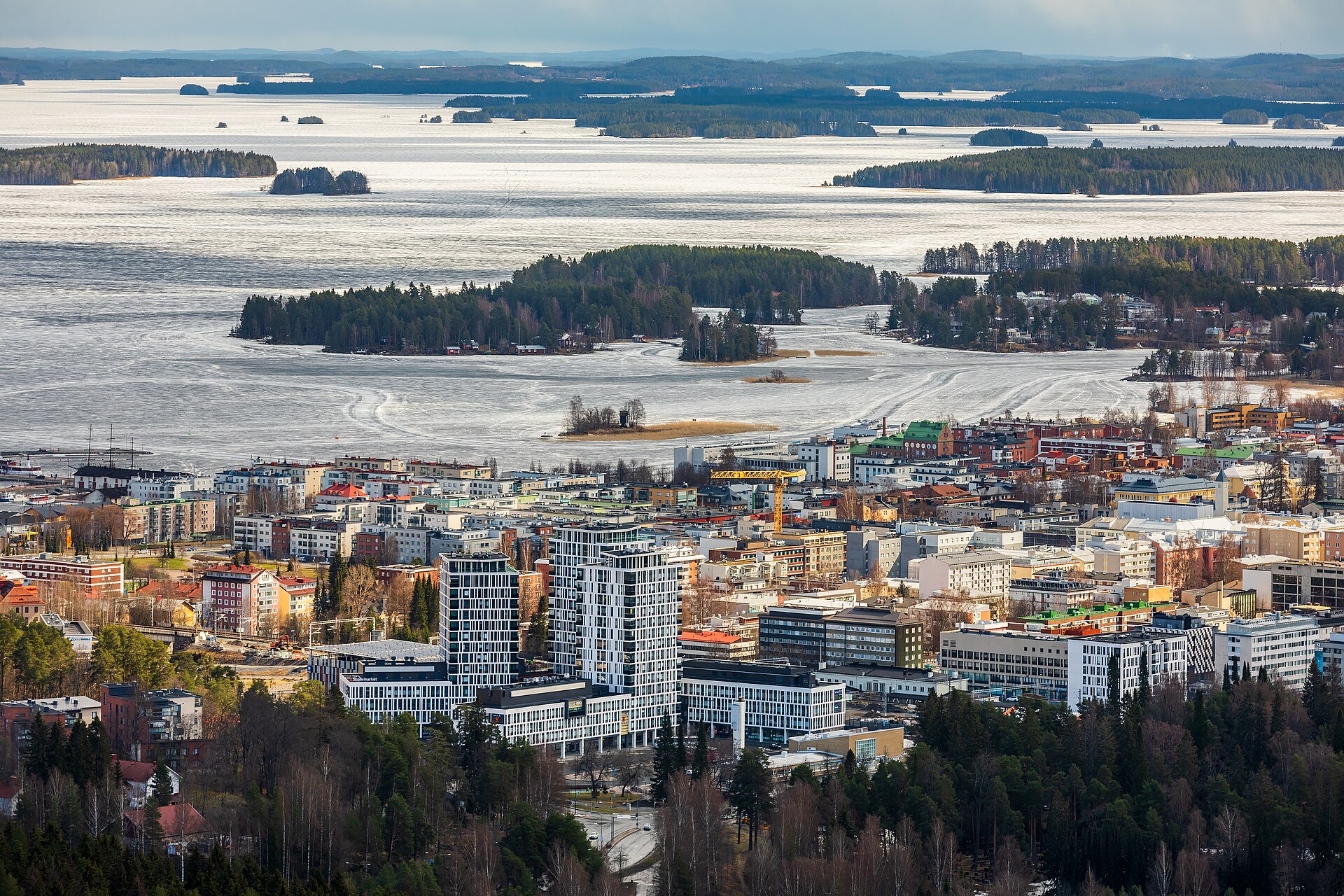
- Old Town and Quarter-Block Museum — Old town, south-east of the market square
South-east of the main square, the old wooden quarter rewards aimless walking. The Quarter-Block Museum preserves houses restored to their appearance of well over a century ago, with a pharmacy museum and an unusual display on folk healers of eastern Finland. It suits a slow, wet afternoon. - Minna Canth House — Old town
Minna Canth was a pioneering Finnish woman writer, and this is the house where she lived after her husband died. It holds a reconstruction of the room in which she is said to have written part of her work. A short, human-scale stop that sits comfortably beside the old town. - Orthodox Church Museum — Central Kuopio, north of the square
Kuopio holds a museum devoted to Orthodox church life, which surprises many visitors expecting only Lutheran Finland. Icons, textiles and ritual objects explain a tradition that runs deep in the east of the country. Allow an hour, and check the museum's own website for opening days. - Kuopio Market Hall — Beside the main market square
The covered market hall is a good place to see local produce, baked goods and fish in one building, with a couple of dozen independent stallholders. It works as an early lunch stop and as a way to buy picnic food for the lakeshore. The outdoor market square beside it is lively in summer. - Kuopio Cathedral — Central Kuopio
The cathedral rises near the central square and gives a calm architectural counterpoint to the lake views. Its simple, light interior reflects the Lutheran tradition that dominates the region. Visits depend on services and events, so look at the parish website before planning a time.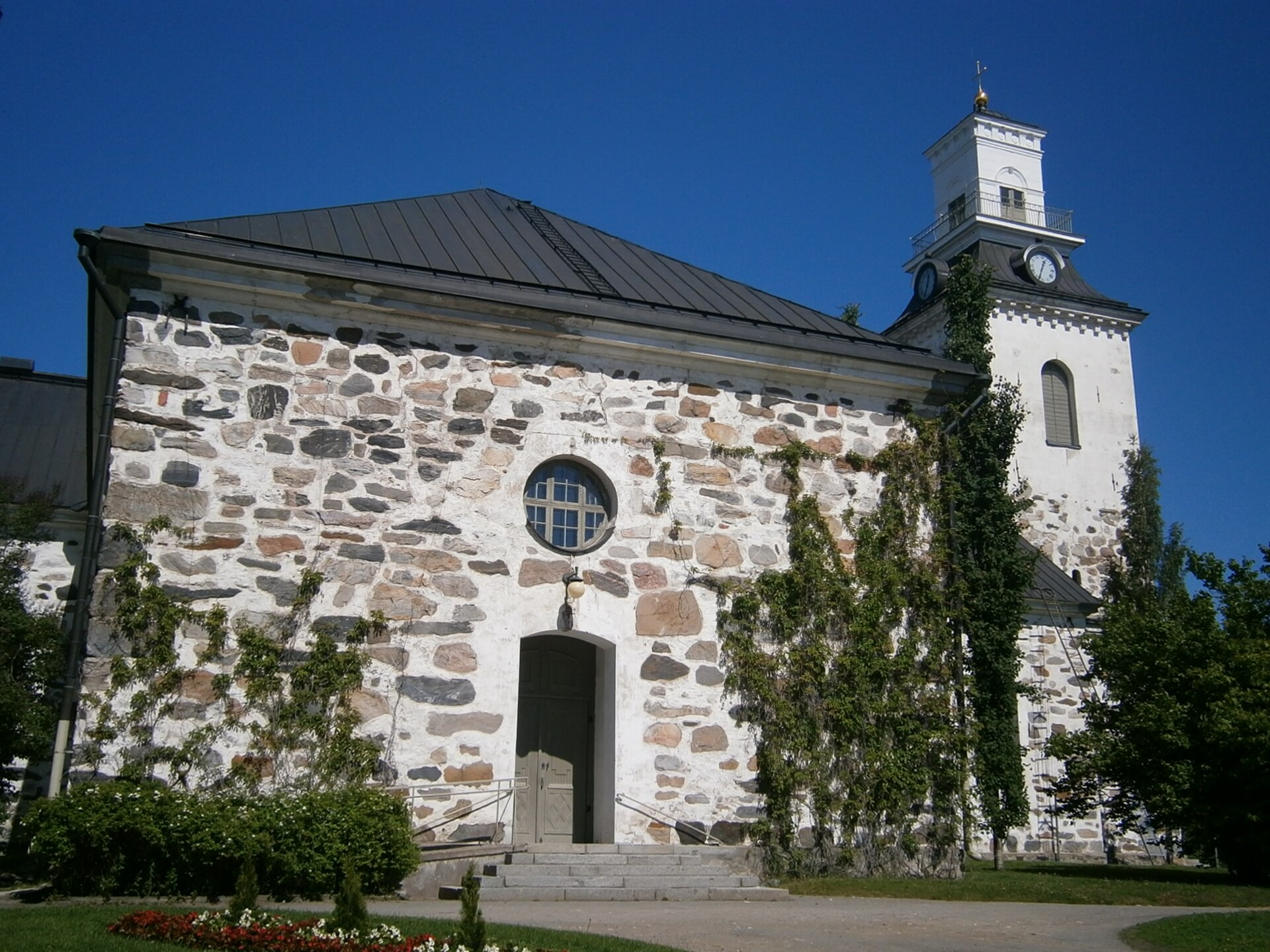
Culture
Kuopio calls itself the cultural centre of eastern Finland, and the claim is backed by a solid set of institutions: the Kuopio Museum, the Kuopio Art Museum and the City Theatre all sit in the centre. Music and dance education runs from early childhood up to university level, which is why the evening calendar feels fuller than the population would suggest.
The year is stitched together with festivals. ANTI, a contemporary art festival, the Kuopio Dance Festival, a wine festival and a rock festival fill the warmer months, while the marathon is joined in winter by an ice marathon on the frozen lake. Even if no festival is on, the student population keeps cafés and bars busy.
Local identity leans on two things: food and speech. The Savo dialect is well known across Finland for its rhythm and its slow, teasing humour, and Finns often imitate it affectionately. The kalakukko, a fish pie baked in rye crust, is the dish most strongly linked with the city and its region.
Social manners are quiet and direct. Finns value personal space, small talk is brief, and silence in company is comfortable rather than awkward. Punctuality matters, and invitations to a home or a sauna are a real sign of trust. The lake and the forest are treated as shared, respected spaces, and people carry rubbish out with them.
In a sauna or at a lakeside bathing spot, keep your voice low, sit on a towel or the seat cover provided, and follow the local custom of washing before you go in.
What to wear
Kuopio's traditional dress belongs to the wider Finnish tradition of regional folk costume, known as kansallispuku. Women's versions are typically built from wool and linen, with embroidered bodices, aprons and linen blouses, while men's pieces use wool coats and waistcoats. These outfits are mostly seen today at festivals, weddings, folk-dance events and national holidays rather than in daily life.
Everyday clothes in the city are practical and understated. Dark colours, good outerwear and sturdy footwear dominate, with brands chosen for function over show. Students add a casual, outdoorsy edge, and in summer the dress code relaxes quickly into shorts, light shirts and sandals. Nobody expects formal clothing at a restaurant, though people dress up a little for the theatre or a wine evening.
For visitors, layers are the answer. Summers are mild to warm but can turn cool and wet, so a light waterproof is useful, along with insect repellent for forest and lakeside walks. Winter calls for a proper insulated coat, a hat, gloves and boots with real grip, as pavements and paths ice over for months. Thermal underlayers matter more than fashionable outerwear. Churches and museums have no strict dress rules, but covered shoulders and a quiet manner suit a service or a memorial. Comfortable walking shoes are enough for Puijo's forest trails in summer, while snow boots are needed once the ground freezes.
What to eat
- Kalakukko — Bakeries and the market hall in the centre
A loaf-shaped pie of rye crust packed with fish and pork, baked slowly until the filling softens. It is the dish most tied to Kuopio. Look for it at the market hall and in the city's traditional bakeries, usually sold whole or in slices. - Fried muikku — Pub-style fish restaurants near the market square
Muikku is a small lake whitefish, typically fried crisp and served whole with potatoes or mashed potato and a sour-cream-style sauce. It is a Kuopio classic and a cheerful pub-style meal, best eaten in a simple, busy eatery near the market square. - Kalakeitto — Lunch cafés and the market hall
Finnish fish soup is a creamy or clear broth with potatoes, onion, dill and chunks of fresh fish. It is warming after a cold walk and shows how central the lake is to local cooking. Many lunch places in the centre offer it as a daily dish. - Korvapuusti — Cafés and bakeries around the market square
A soft cinnamon-and-cardamom bun, loosely spiral-shaped, eaten with coffee at almost any hour. Finns drink a great deal of coffee, and a bun is the usual companion. Bakeries and cafés around the square sell them fresh. - Lakeside terrace fish plates — Lakeside restaurants on the shore south of the centre
In summer, wooden lakeside restaurants and terraces serve grilled or smoked lake fish with new potatoes and seasonal vegetables. The setting matters as much as the food: long light, water at the edge of the table, and unhurried service. Booking ahead is wise on warm weekends.
Plan it
Best time. June to August for long light, warm days and lakeside terraces; February for snow, ice events and saunas if cold appeals. Spring and autumn are quieter but grey and damp, and winter days are very short.
How long. 2–3
Getting there. Kuopio has its own airport with domestic flights, and the city is reached by train from Helsinki in the better part of a day's morning journey. Long-distance coaches link it with Helsinki, Tampere, Turku, Oulu, Jyväskylä and Joensuu. By road, it is a long drive from the capital. Once in the centre, nearly everything is walkable. For tickets and times, use the national rail and coach operators.
Budget. mid
Tips
- Book summer lakeside tables and winter events ahead, as weekends fill quickly
- Go up Puijo early or on a clear evening for the best light and fewer people
- Cards are accepted almost everywhere, so little cash is needed
- Carry insect repellent in summer and proper grip footwear in winter
- Check the official city website, https://www.kuopio.fi/, for current opening arrangements
Etiquette
- Keep voices low in saunas, churches and on quiet trails
- Wash before entering a sauna or swimming spot and sit on a towel
- Take rubbish with you from forests and the lakeshore
Nearby
Sources
- Wikidata Q162279 (CC0)
- Wikipedia: Kuopio (rev 1371501418) (CC BY-SA 4.0)
- Wikivoyage: Kuopio (rev 5426217) (CC BY-SA 4.0)
- Photo: Downtown Kuopio and Kallavesi from Puijo tower, Ximonic (Simo Räsänen) (CC BY-SA 4.0)
- Photo: Kuopio montage (CC BY 3.0)
- Photo: Kuopio vaakuna 1823, Karl Hårdh (Public domain)
- Photo: Kuopion asema (Public domain)
- Photo: Kuopio aerial 6, kallerna (CC BY-SA 4.0)
- Photo: Rönön asutusalue Kuopiossa, Tumi-1983 (CC BY-SA 2.0)
- Photo: Kuopio Cathedral, Image tube (CC BY-SA 4.0)
- Photo: Kauppakeskus Matkus, Paju~commonswiki (CC BY 3.0)


