Kunming
Kunming, People's Republic of China
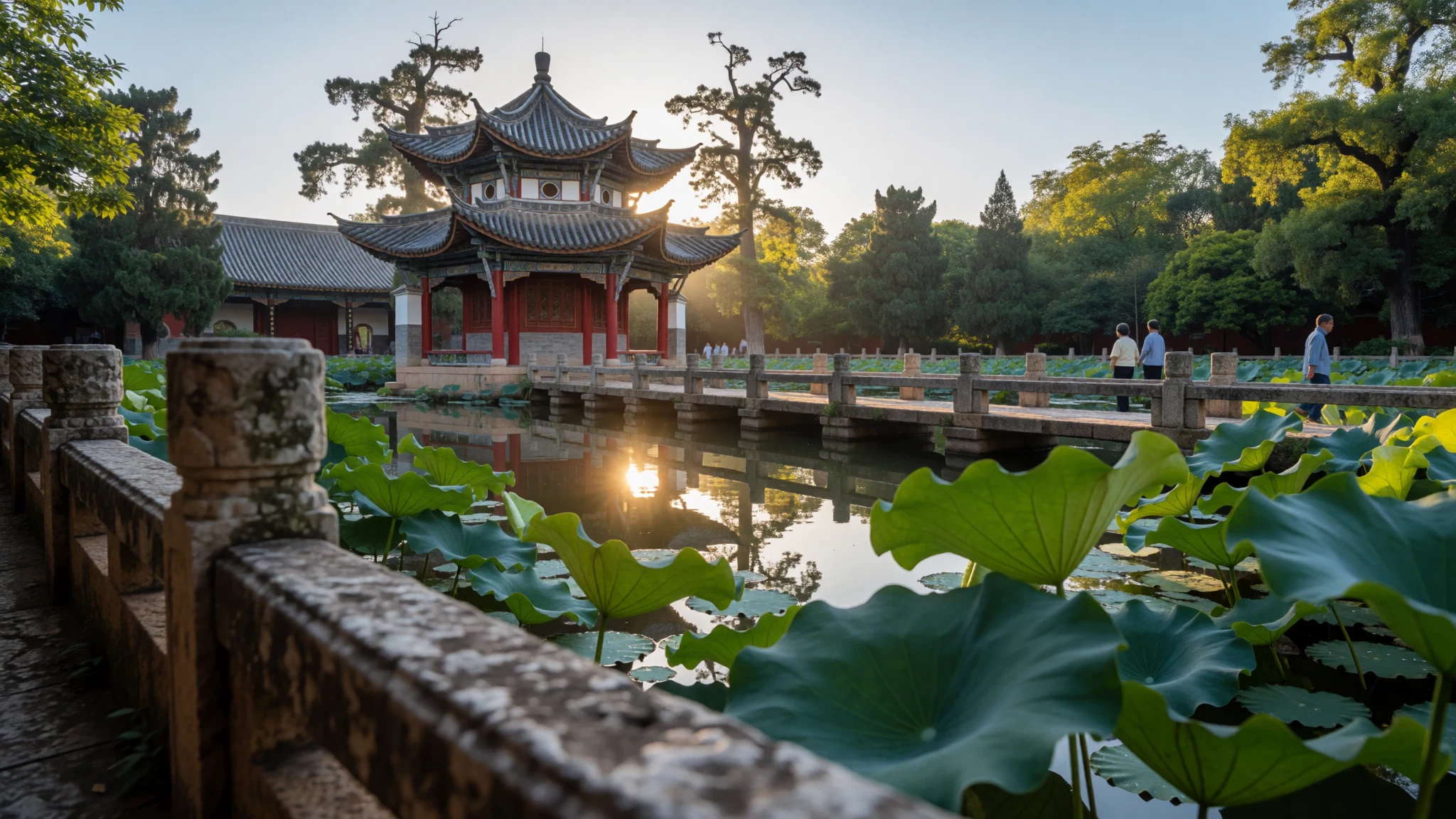
Kunming offers mild weather at altitude, wartime history, quiet temples, Yunnan food and an easy base for everything else in the province.
The place
Kunming is the capital of Yunnan province in south-west China, a city of about 8.5 million people at roughly 1,892 metres on the Yunnan–Guizhou plateau. That height, together with a position just north of the Tropic of Cancer, earns it the nickname City of Eternal Spring: days are mild for most of the year, nights can be cool, and the sun is stronger than the temperature suggests. The city is the political, commercial and transport centre of the province, and for most travellers it is the front door to Yunnan, with onward routes to the old towns, mountains and gorges of the west and north and across the border into Southeast Asia. It is not a postcard old town. Much of central Kunming is modern, with wide avenues, shopping towers, university districts and heavy traffic, and its best moments turn up in the gaps: parks where residents sing, dance and play cards in the morning, temples tucked behind busy streets, and noodle and tea shops that fill by mid-morning. Lake Dian lies to the south-west, and its shores are where the area's early history began. Kunming rewards a slow two or three days, and it works well as a place to adjust to the altitude before heading higher into the province.
Its story
Kunming's story begins on the shores of Lake Dian, where farming settlements go back to Neolithic times and the Dian Kingdom took shape. Townships on the southern edge of the lake can be dated to 279 BC, although they have long since dropped out of the record. The Han dynasty absorbed the territory in 109 BC, letting Dian's ruler keep his title while placing the land under a Chinese commandery. The motive was trade. The Han wanted influence over the Southern Silk Road, the caravan route running towards Burma and India, and Kunming sat squarely on it. For centuries afterwards the region stayed a remote borderland that central dynasties could influence but not truly govern, with real control tightening only in the 13th century. In 765 the settlement was known as Tuodong, a city of the Nanzhao kingdom, which was later succeeded by the Kingdom of Dali. War then brought a very different kind of traffic. During the Second World War Kunming became a military hub and the terminus of the Burma Road, the supply route that carried goods into China. The American Volunteer Group, known as the Flying Tigers, flew from the city's airfield, and memorials to both episodes survive today. Kunming makes most sense as a crossing point, first for caravans, then for convoys, and now for flights and railways.
What to see
- Yuantong Temple — Central Kunming
Yuantong Temple is a Buddhist temple in the city centre, known for an octagonal pavilion set in the middle of a pond and reached by a short causeway. It is a calm place for an hour, with incense, water and local worshippers, and an easy first stop. Check locally or the official city site for opening arrangements.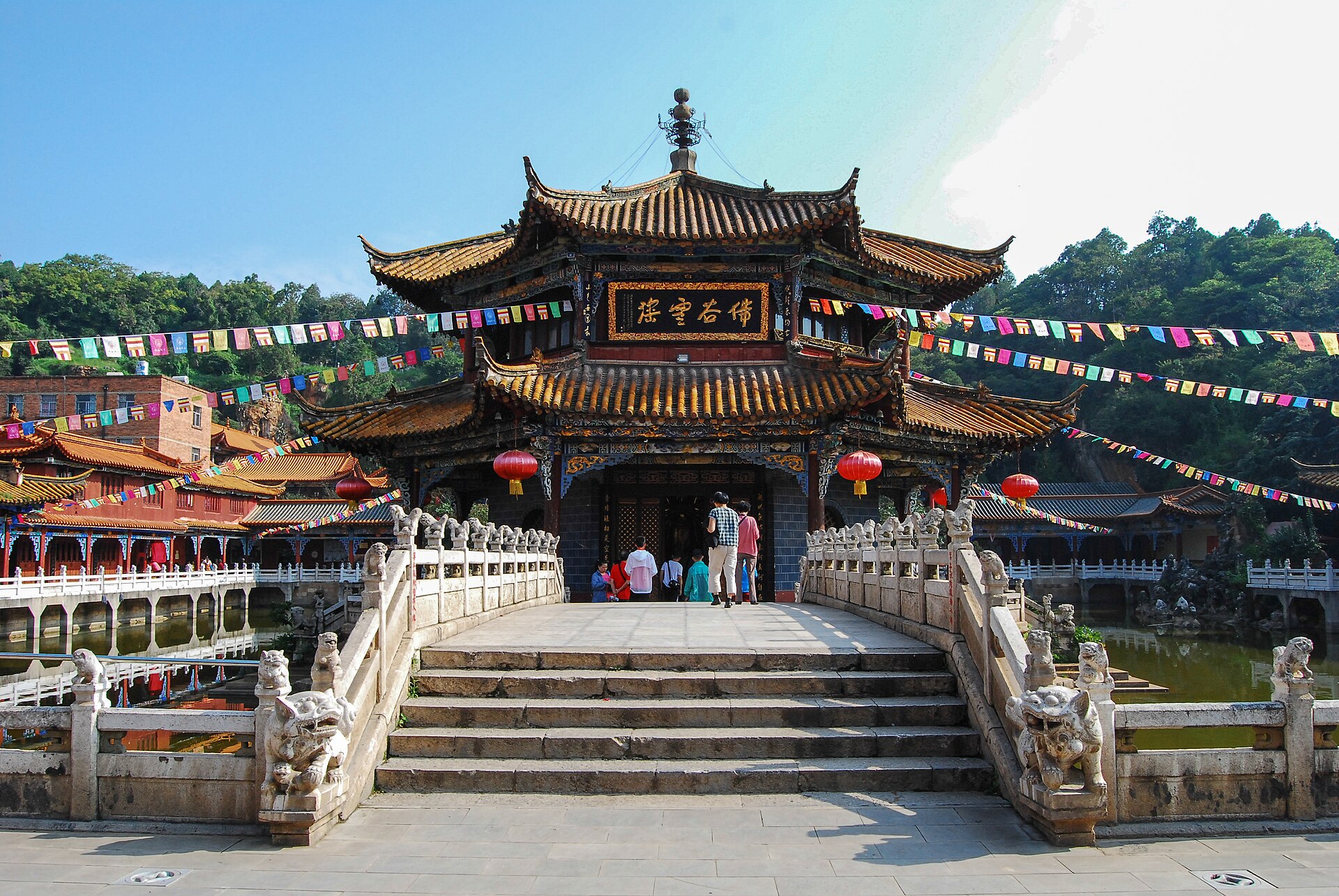
- Eastern Pagoda — Old city, south of the centre
The Eastern Pagoda is a slender, tiered tower that stands as one of a pair with a western twin, in the older part of the city south of the centre. Pagodas like this shaped the skyline long before modern towers arrived, and the surrounding streets give a taste of older Kunming. Morning light is softest.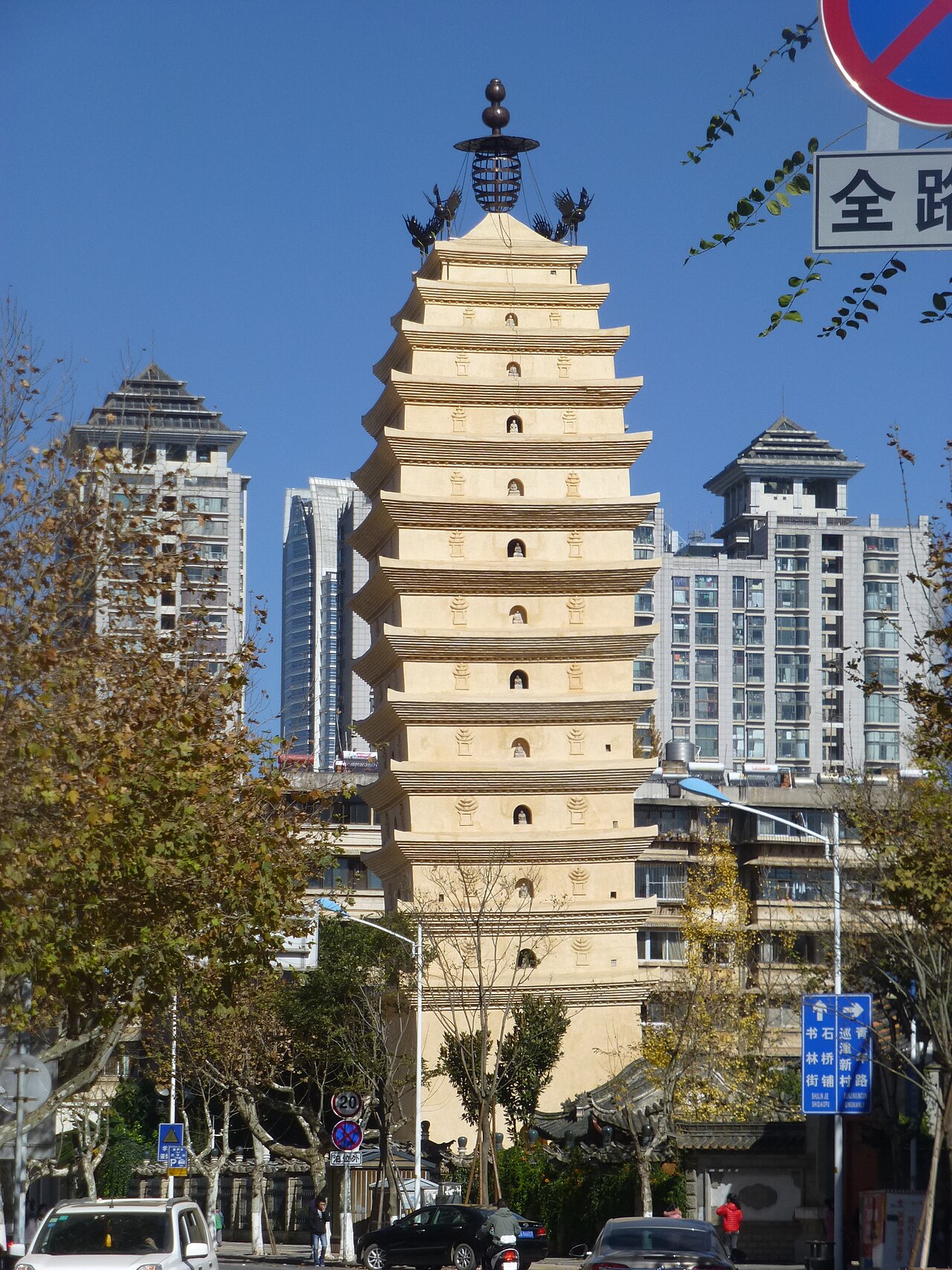
- Kunming Flying Tigers Memorial — Central Kunming
The Kunming Flying Tigers Memorial honours the American Volunteer Group, fighter pilots who flew against Japanese forces in China before and after the United States entered the Second World War. The city was their base, which explains why the story is told here with such care. It suits a short, reflective visit alongside other wartime sites. - Victory over Japan Memorial Hall — Central Kunming
The Victory over Japan Memorial Hall was completed in 1947, making it one of the first war memorials commissioned in China after the Second World War. It stands close to the heart of the city, so it fits easily between other stops. Go for the history it records and for how it places Kunming in the wartime story. - Burma Road History Museum — Western Kunming
The Burma Road History Museum was founded by Chen Daya, author of a book about the overseas Chinese drivers and mechanics who came to China to work on the wartime route. It lies on the western side of the city, so allow travel time. It suits anyone curious about how supplies reached China and the ordinary people who made that possible.
Culture
Kunming is a city where everyday life spills into public space. Parks such as Cuihu fill with people singing, dancing, playing cards and practising instruments, and informal weekend performances gather outside the Workers' Cultural Hall and in Cuihu Park. The city has several operatic troupes and local entertainments, including huadeng, a lantern dance, although formal indoor performances are thinner on the ground than many visitors expect. The nightlife district centres on Kundu Square, with cinemas, bars, clubs and restaurants, and student bars are easy to find. Yunnan is home to many ethnic groups, and that mix shows in festivals, markets, music and cooking across the province. The local dialect sits close to those of Sichuan and Guizhou, and it uses the third tone far less than standard Mandarin. In less formal Yunnanese eateries, a shared bamboo water pipe is sometimes set out for customers. Tea, long lunches and unhurried mornings in the sun are part of the city's character, and the pace is gentler than in many larger Chinese cities. In temples such as Yuantong, keep your voice low, and ask before photographing worshippers or anyone relaxing in the parks.
What to wear
Kunming's traditional clothing is really the clothing of Yunnan's many ethnic groups, each with its own cut, colour and craft. Embroidery is central: Yi, Miao and other communities decorate jackets, sashes, aprons and headwear with dense stitched patterns, while Bai communities around Dali are known for tie-dyed cotton, and batik is used by others. Fabrics are typically cotton, hemp and silk, and silver jewellery often completes the outfit. This dress is worn mainly at festivals, weddings and performances rather than every day, and in the city it appears most often at celebrations, in craft shops and on stage.
Day to day, people in Kunming dress casually and practically: jeans, trainers, light jackets and fleeces, with padded coats in cooler months. Younger crowds follow current fashion in busy areas such as Wenlin Street, and smart-casual is fine for restaurants and bars.
A visitor needs layers above all. At this altitude mornings and evenings are cool even in a mild season, while the midday sun is strong, so bring a hat, sunglasses and sunscreen, plus a light waterproof for the rainy months. Comfortable walking shoes suit pavements and park paths, and sturdier footwear helps on hills. Temples have no strict dress code for visitors, but covered shoulders and knees are respectful, and shoes that slip off easily are handy.
What to eat
- Crossing-the-bridge noodles (guoqiao mixian) — Noodle shops and Yunnanese restaurants citywide
A bowl of hot broth arrives with raw ingredients and rice noodles to add at the table, so everything cooks in front of you. It is a classic Yunnan noodle dish. Look for it in noodle shops and Yunnanese restaurants across the city, especially at lunchtime. - Steamed chicken soup (qiguo ji) — Yunnan-style restaurants
Chicken is steamed in an earthenware pot with a central chimney, producing a clear, rich soup without added water. It is a dish for sharing. Find it in Yunnan-style restaurants, where it is usually ordered for the whole table. - Chou doufu (fermented tofu) — Small eateries on Yuanxi Lu and similar streets
Tofu fermented until pungent, then fried or grilled and served with chilli and dipping sauces. The smell is strong but the taste is mellow and savoury. Try it at small restaurants and stalls on streets such as Yuanxi Lu. - Rubing (fried goat's cheese) — Street stalls and morning markets
Rubing is a firm, mild goat's cheese from Yunnan, usually fried or grilled until golden and served with salt or sugar. It is a simple snack that works well between meals. Look for it at street stalls and markets. - Spicy wonton soup — Small dumpling shops near the student districts
Wontons in a chilli-heavy broth, usually with milder options on the menu for anyone who cannot take the heat. It is warming on a cool evening. Small dumpling and soup shops around the student and café districts serve it.
Plan it
Best time. March to May and September to November, when days are mild and the sun is pleasant at altitude. Summer brings rain, though temperatures stay moderate, and winter nights can be cool. The city's nickname, City of Eternal Spring, is a fair guide to its year-round climate.
How long. 2–3
Getting there. Changshui Airport lies north-east of the city, and the old Wujiaba airport has been demolished. A metro line links the airport to the East Bus Station, where you change for lines into the centre; get off at Airport Centre, not Airport Front. Taxis and Airport Express shuttle buses also run, but traffic is heavy, so allow extra time at busy hours. Kunming is well connected by rail and road to the rest of China; check the official site (https://www.km.gov.cn/) for current services.
Budget. low
Tips
- Drink plenty of water and wear sunscreen: at this altitude the sun is strong even on mild days.
- Use the metro to cross town and allow extra time for taxis, because road traffic is heavy.
- Carry some cash and a phone payment option, as foreign cards are not accepted everywhere.
- Pack layers, since mornings and evenings are cooler than midday.
- Use Kunming to adjust to the altitude before heading higher into Yunnan.
Etiquette
- Keep your voice low and ask before photographing worshippers in temples.
- Cover shoulders and knees at religious sites, and be ready to remove your shoes if asked.
- Ask before photographing people in parks or at informal performances.
Nearby
Sources
- Wikidata Q182852 (CC0)
- Wikipedia: Kunming (rev 1384516037) (CC BY-SA 4.0)
- Wikivoyage: Kunming (rev 5426210) (CC BY-SA 4.0)
- Photo 01: 五华区与盘龙区天际线航拍 (瑞丽江的河水) (CC BY-SA 4.0)
- Photo 02: 五华区天际线航拍 (瑞丽江的河水) (CC BY-SA 4.0)
- Photo 03: Eastern Pagoda (Kunming), User:Vmenkov (CC BY-SA 1.0)
- Photo 04: 昆明碧鸡坊 (瑞丽江的河水) (CC BY-SA 4.0)
- Photo 05: 昆明滇池国际会展中心, Zhangmoon618 (CC BY-SA 4.0)
- Photo 06: 昆明恒隆广场航拍 (瑞丽江的河水) (CC BY-SA 4.0)
- Photo 07: 圆通禅寺八角亭, Shizhao (CC BY 3.0)
- Photo 08: Sutra Stone Pillar in the Dizang Temple, Cangminzho (CC BY-SA 4.0)


