Kufstein Fortress
Kufstein Fortress, Austria
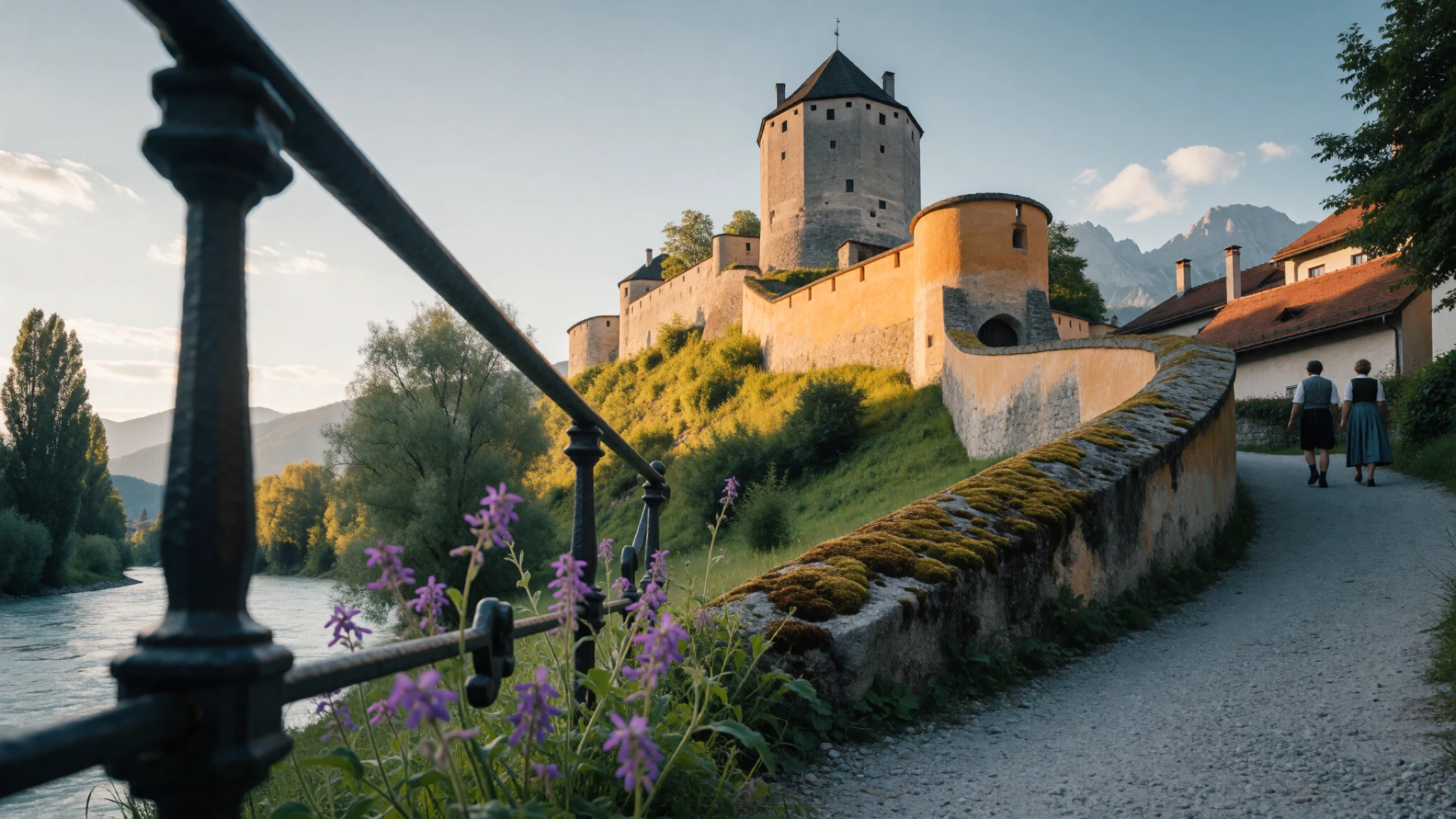
A hill fortress where Bavaria and Tyrol fought over the Inn valley, now a museum with a round tower, prison cells and wide views.
The place
Kufstein Fortress rises from a hill above the town of Kufstein in Tyrol, close to the German border, and its walls and round tower define the town's skyline. The site stands 528 m above sea level, a modest climb above the river Inn, yet it commands the approach from every side. Here the Inn runs out of the limestone Alps onto open lowland, so the hill sits at a true threshold between mountain and plain. That position explains most of the building's history: Bavaria and Tyrol both wanted the river crossing and the road beside it, and whoever held the hill held the valley. Today the complex is recorded as a fortress, a castle and a museum at once, and visitors move between courtyards, ramparts, a tower with prison cells and galleries of arms and armour. Down in the town, pedestrian streets and cafés cluster near the station and the river, and a short funicular, the Festungsbahn, links town and fortress for anyone who prefers not to walk up. Beyond the centre lie small lakes, the quiet Kaisertal valley and ridges used by hikers, climbers, cyclists and, in winter, skiers. The Inn cycle path passes through town, which makes Kufstein an easy stop on a longer ride. Weather shapes a visit more than crowds do: the ramparts are exposed, views vanish in low cloud, and wet stone can be slippery. As a half-day outing it works well, and as part of a longer stay in the Inn valley it gives the area a clear historical anchor.
Its story
The earliest written trace of Kufstein Fortress is a record of 1205, which names it in Latin as Castrum Caofstein. It then belonged to a Bavarian duke and the bishop of Regensburg, and for a long time afterwards the hill changed hands as Bavaria and Tyrol pulled against each other. Its worth was plain in the fourteenth century, when a pursuing force had to turn back because the fortress blocked the route. A marriage later moved it briefly into Tyrolean hands: Margarete "Maultasch", Duchess of Tyrol, received it as a wedding gift, and when she handed Tyrol to the Habsburgs, Bavaria demanded the gift back and invaded. Emperor Maximilian I conquered town and fortress in the early sixteenth century and then built the massive round tower that still crowns the hilltop. Bavaria held the place for much of the eighteenth century and into the early nineteenth, and it then came back to Austria. Under the Habsburgs it also served as a prison for political dissidents, and its name stays closely tied to Hungarian history, because several prominent Hungarians were held here. Those cells are part of what a visit shows today, alongside the defences that made the hill worth fighting over.
What to see
- The round tower — Fortress hill
Emperor Maximilian I had this thick-walled round tower raised after he took the fortress, to make the hill harder to attack. It remains the shape most people picture when they think of Kufstein, and the surrounding ramparts give wide views over the roofs, the Inn and the foothills. Look at it from the courtyard first, then follow the signs inside.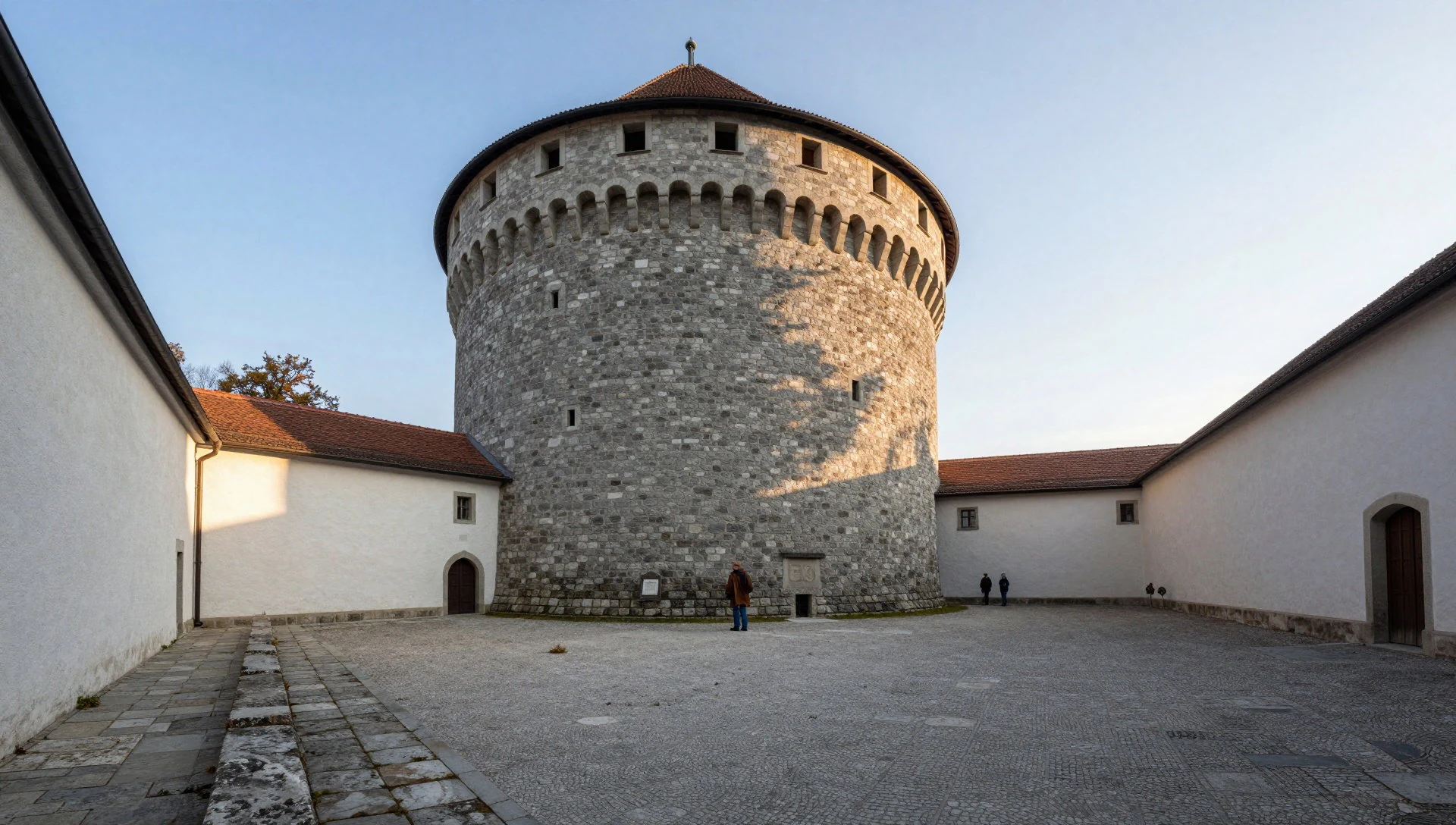
- The prison cells — Fortress hill, in the tower
Under the Habsburgs the fortress held political prisoners, and the cells in the tower show how bare that confinement was. Several prominent Hungarians were imprisoned here, which gives the place weight in Hungarian history. Stone rooms stay cool, so a light layer helps even in summer.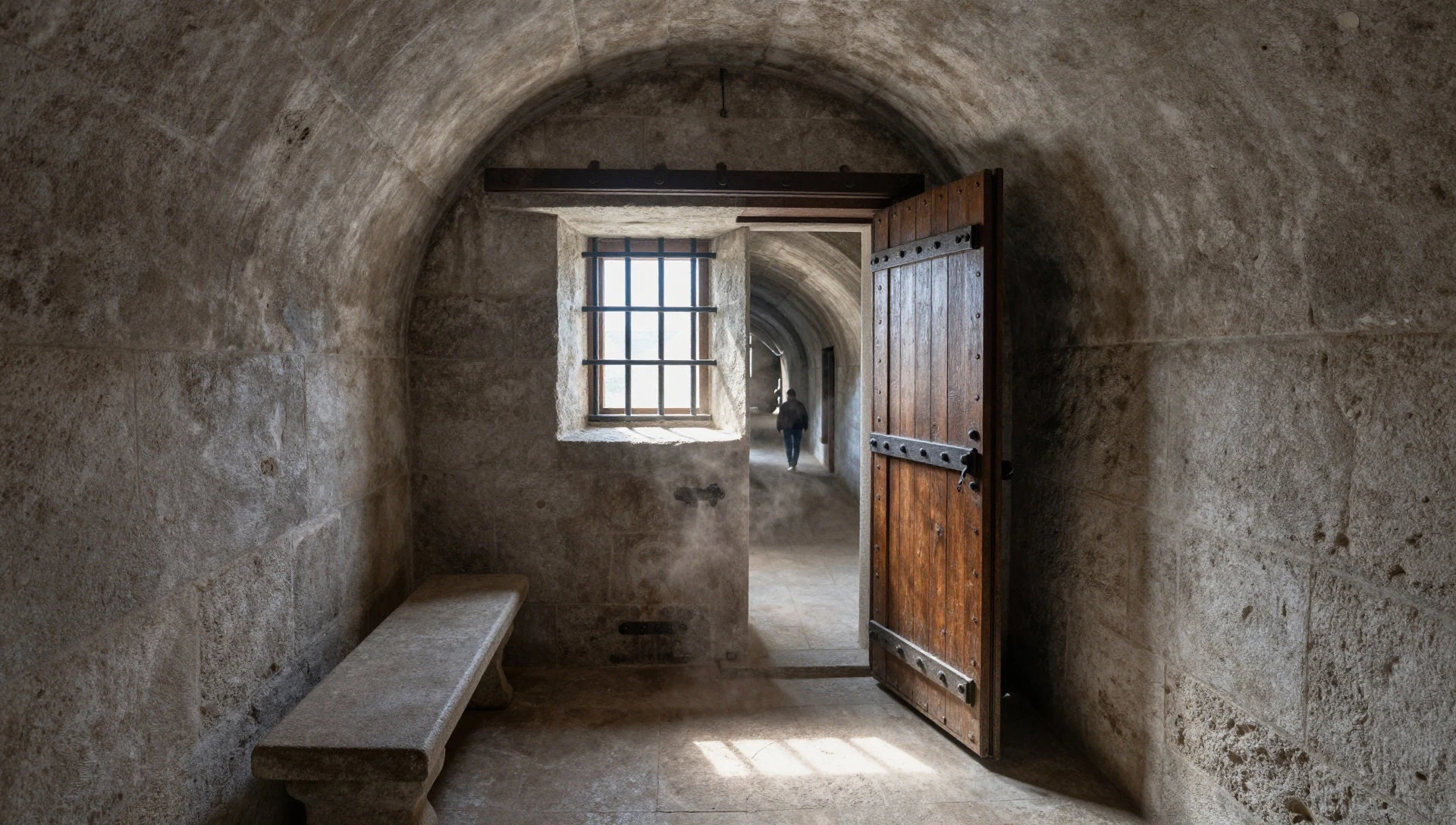
- Armour and artillery in the museum — Fortress hill
Galleries in the museum display period armour, cannon and other weapons, which make sense of the fortress's job as a military post. Alongside them are exhibits on local and natural history, including animal skeletons. Read the labels for the Bavarian and Tyrolean contest over the hill, then step outside to see the ground it was fought over.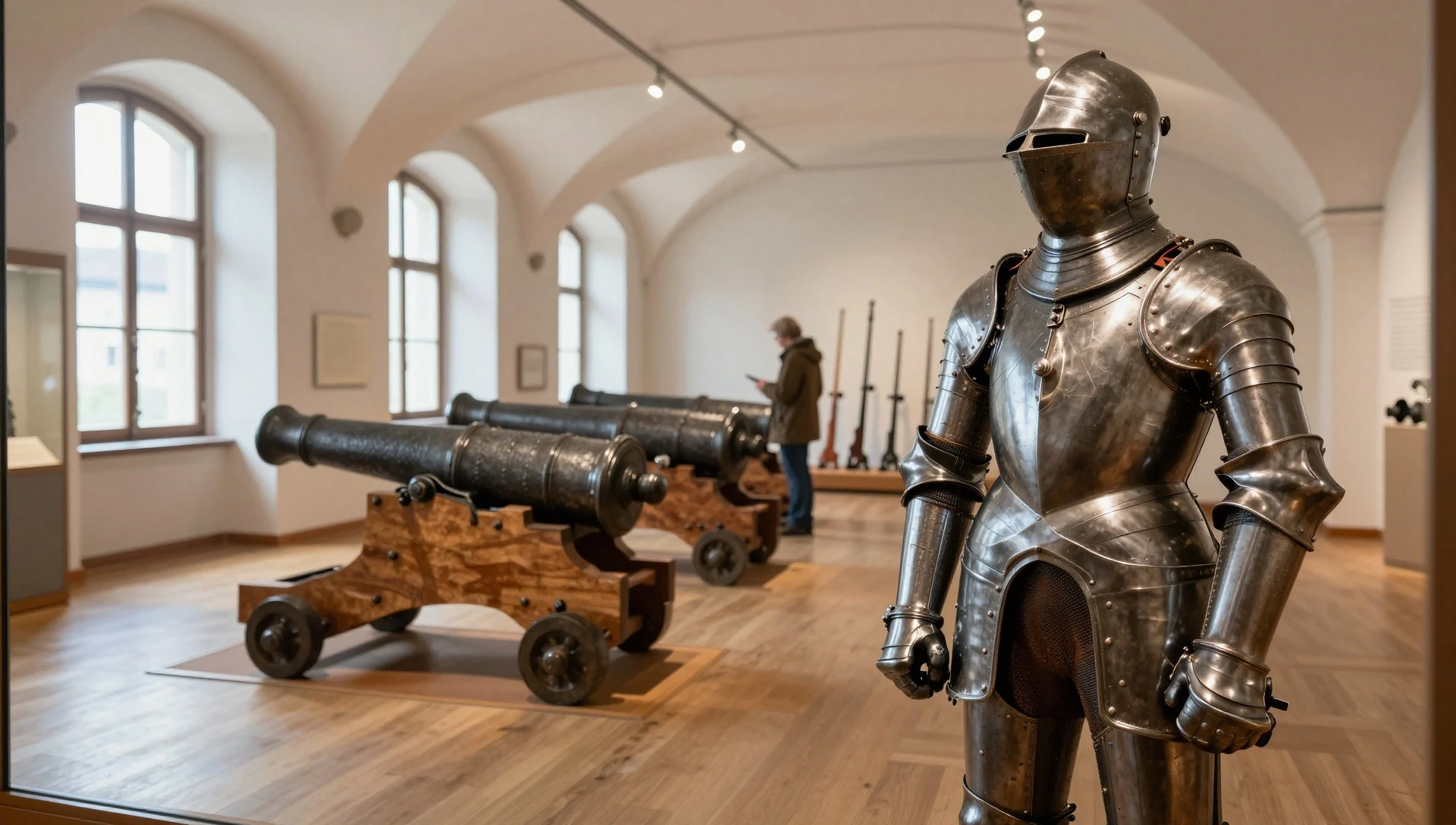
- The Festungsbahn funicular — Between the town centre and the fortress
The Festungsbahn is a funicular that links the town to the fortress, a short ride rather than a mountain railway. It saves a climb in hot or wet weather and is handy for anyone with small children or limited mobility. Check the official site for running times and fares, or walk down if energy allows.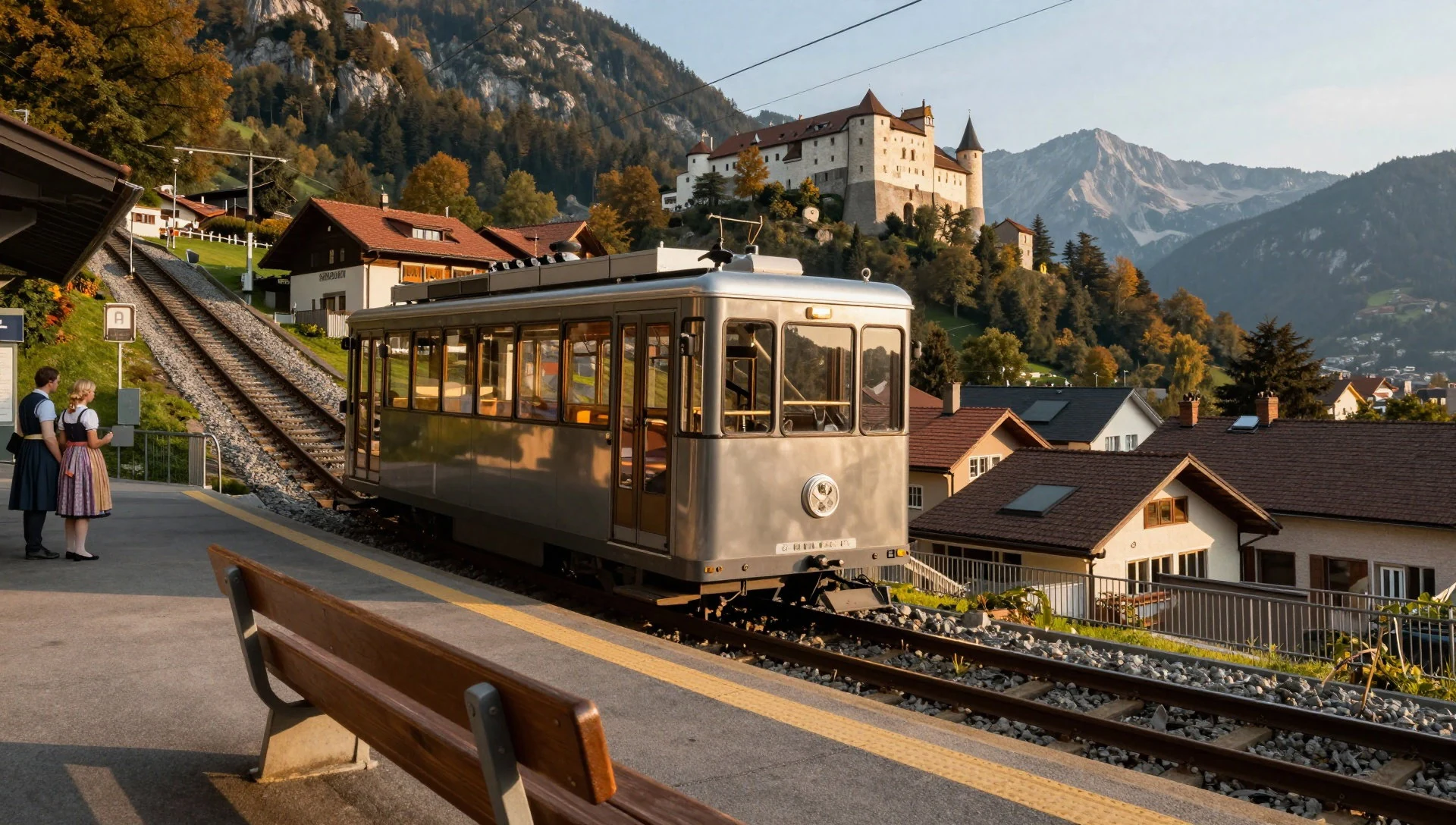
- St. Vitus' church — Kufstein town centre
St. Vitus' church, in the town below, offers a quieter counterpoint to the fortress. The choir is late medieval and the three-aisled hall came a little later, while a church is recorded on the site far earlier still. Step in briefly, keep voices low, and remember that services come first.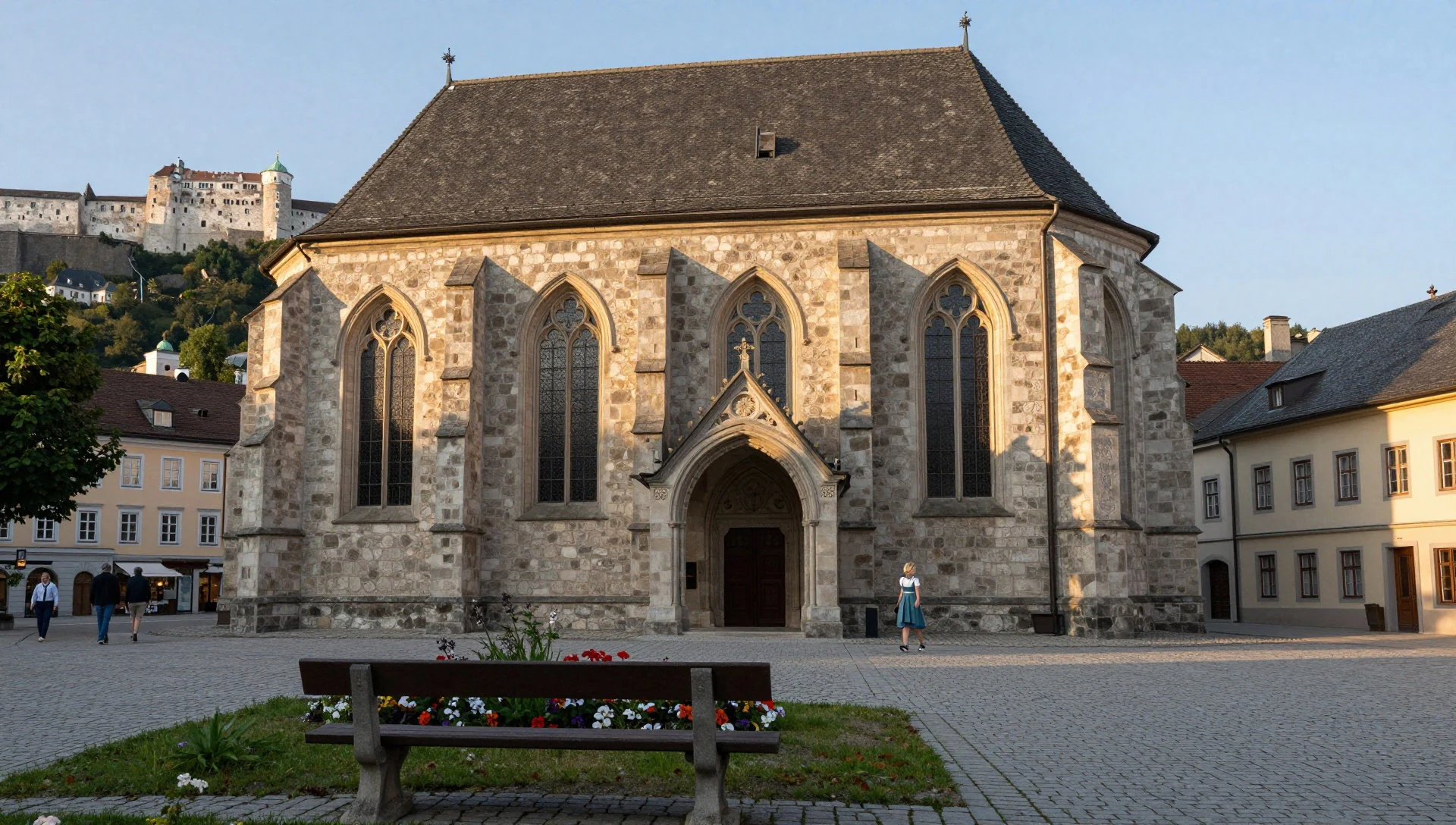
Culture
Kufstein Fortress sits in a borderland, and the culture around it reflects both sides of the Inn. The language is German with a strong Tyrolean accent, and the usual greeting is Grüß Gott, though Servus is common among younger people. Catholic tradition shapes the calendar, with feast days, processions and village brass bands appearing in towns like this one through the year, and shooting companies (Schützen) in Tyrolean dress still turn out for parades. The fortress carries a different kind of memory. As a prison for political dissidents, it holds a place in Hungarian history, and the cells deserve a more serious mood than the courtyards and ramparts. The outdoors is also part of local culture: hiking, climbing, cycling and winter sports are everyday leisure, and mountain huts are social places where walkers often share long tables. Meals tend to be unhurried, and lingering over coffee and cake is entirely normal. The historical rivalry between Bavaria and Tyrol is now a matter of friendly teasing rather than hostility, and the border is crossed without a thought by locals who shop, work and hike on both sides. Greet people with Grüß Gott when entering a hut or small shop, keep your voice low in the cells and in St. Vitus' church, and stay on the marked paths around the fortress hill.
What to wear
Traditional dress around Kufstein Fortress is Tyrolean Tracht. Women wear the dirndl, a fitted bodice dress with a full skirt and apron, made in cotton, linen or wool and worn over a white blouse. Men wear leather breeches (Lederhosen) or knee-length trousers, checked or plain shirts, waistcoats and jackets of loden, a dense boiled wool that sheds rain. Felt hats may carry a feather or a small tuft as decoration. Tracht appears at weddings, church feast days, Schützen parades and village festivals; it is dress for occasions rather than for every day. Day to day, local people dress casually and practically: jeans, fleeces, walking shoes and light technical jackets, with outdoor gear everywhere because hiking and cycling are normal weekend pursuits. Visitors should plan for the fortress hill: shoes with good grip for cobbles, steps and wet stone, layers because the wind on the ramparts is cooler than in the town, a rain jacket in any season, and sun protection in summer. Churches such as St. Vitus' do not demand formal dress, but covered shoulders and no beachwear are respectful. In winter, add a warm hat, gloves and boots with a proper tread, as paths on the hill may be icy.
What to eat
- Tiroler Gröstl — Traditional inns and mountain huts around Kufstein
A pan of fried potatoes with bacon or ham and onion, usually topped with a fried egg. It began as a way to use leftovers and now counts as hearty mountain food after a hike. Look for it in traditional inns and mountain huts around Kufstein.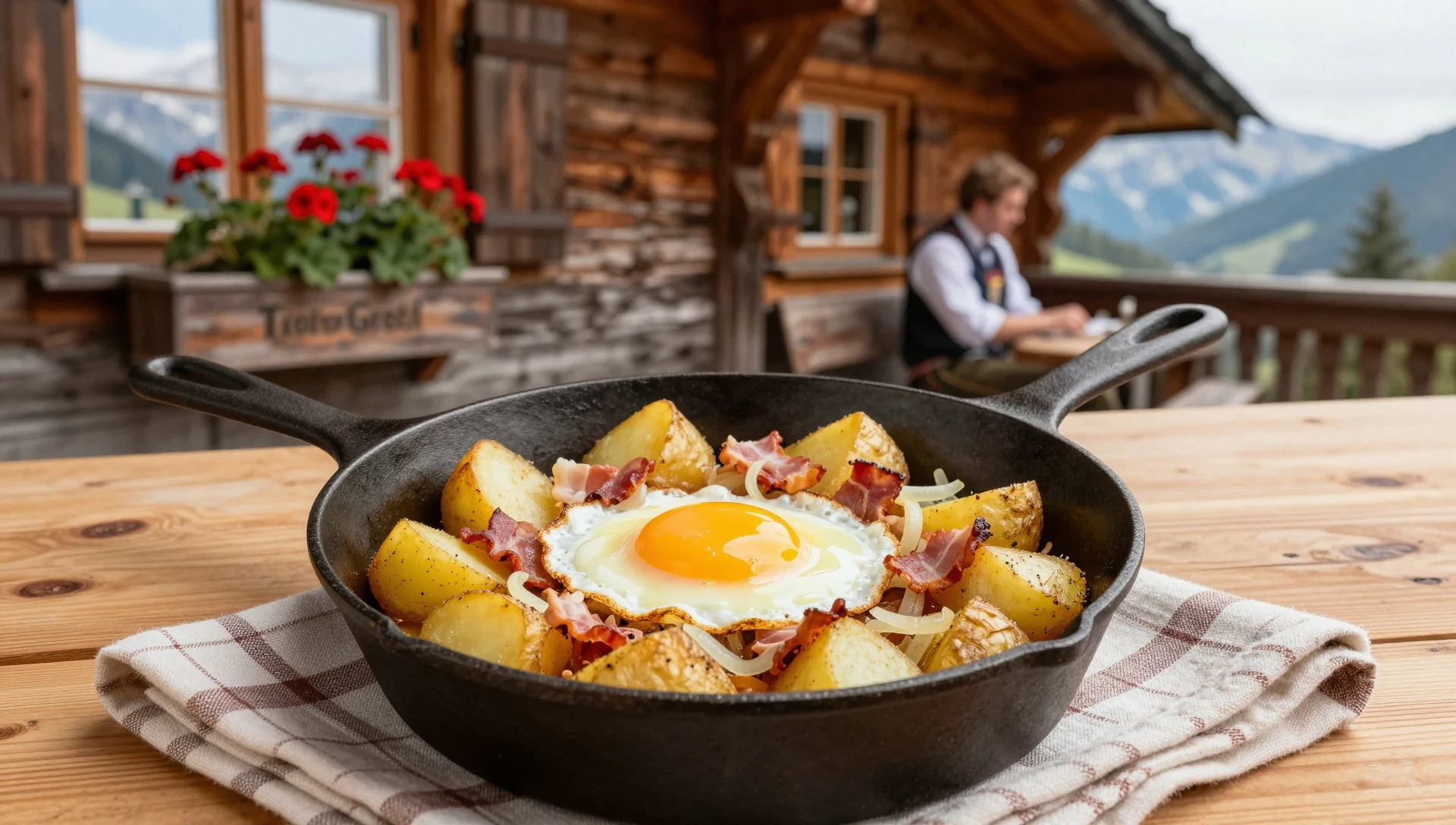
- Käsespätzle — Inns in the old town and huts reached by the Kaiserlift
Soft egg noodles layered with melted mountain cheese and finished with crisp fried onions, often served with a green salad. It is filling, simple and easy to find on the menus of inns in the old town and of huts reached by the Kaiserlift.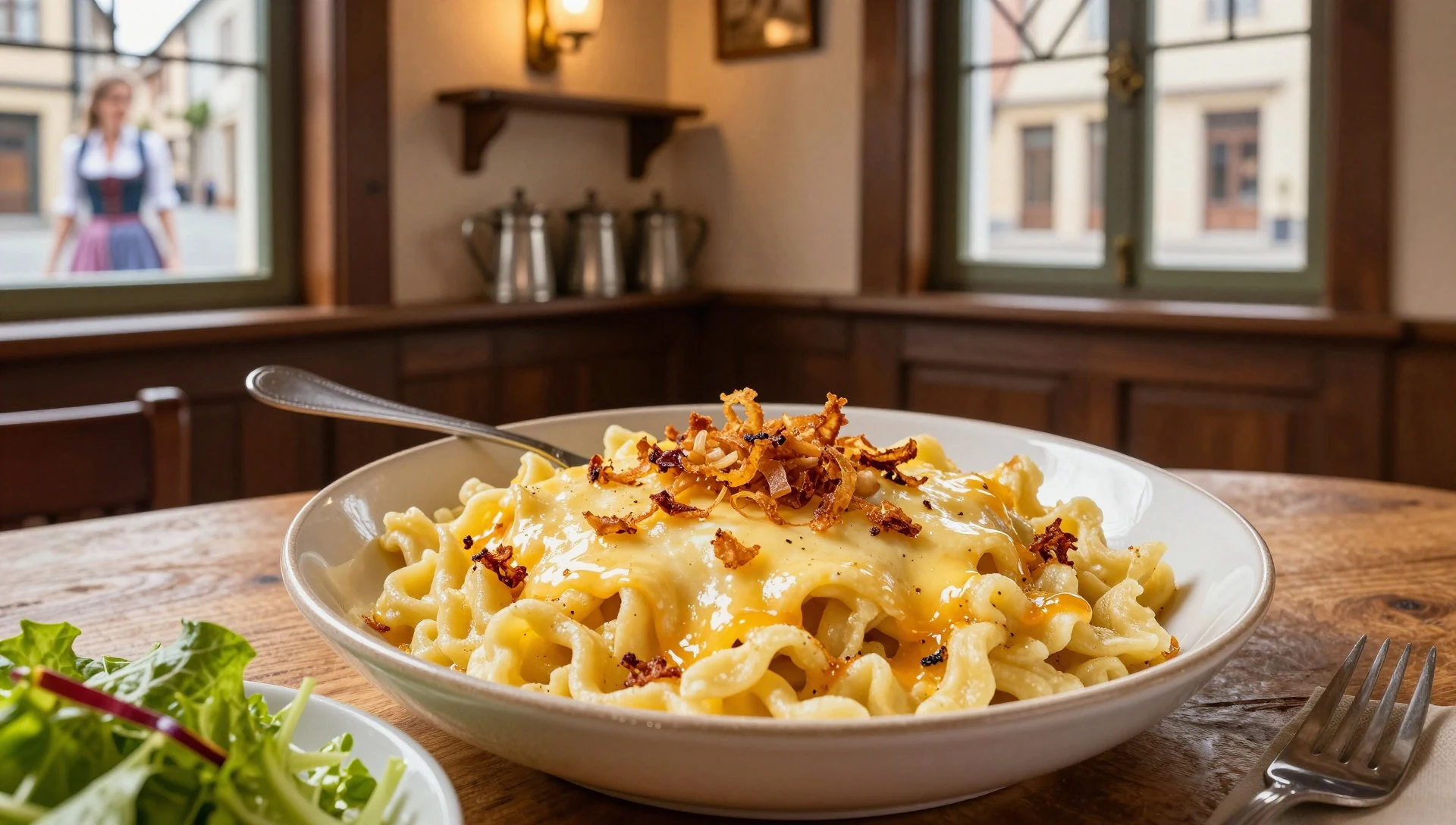
- Apfelstrudel — Cafés in the town centre
Thin pastry rolled around spiced apples, raisins and breadcrumbs, baked until golden and often eaten warm with vanilla sauce. It suits an afternoon stop in a café in the town centre, particularly after the climb back down from the fortress. - Kaiserschmarrn — Cafés and mountain huts
A thick, fluffy pancake torn into pieces, dusted with icing sugar and served with plum compote or apple sauce. Sweet and large, it works as a dessert to share or as a lunch after a long walk. Cafés and mountain huts both serve it. - Brettljause — Mountain huts and traditional inns
A wooden board of cured Speck, smoked sausage, cheese, pickles and dark bread, eaten as a light meal with a beer or an apple juice spritzer. It is the usual order at a hut or a traditional inn when a full dinner feels too much.
Plan it
Best time. May–June and September–October for walking, clear light and comfortable temperatures on the exposed ramparts; July–August is warmer and suits the nearby alpine lakes; December–February brings snow and skiing in the area, but paths on the fortress hill can be icy and low cloud hides the views.
How long. 1–2
Getting there. Kufstein has a railway station on a busy line with local, regional, night and long-distance trains. The nearest large airport is Munich (121 km), with Innsbruck (86 km) and Salzburg (104 km) also connected by public transport. From the station it is a short walk through town to the fortress hill, or take the Festungsbahn funicular. Driving into the centre is unattractive because of one-way streets, pedestrian zones and parking fees.
Budget. mid
Tips
- Check the official site (http://www.festung.kufstein.at/) for opening hours, ticket prices and funicular times before you go, as they change by season
- Go early or late in the day for quieter ramparts and softer light on the tower
- Wear shoes with grip, as cobbles, steps and wet stone are slippery
- Bring a rain jacket and an extra layer; wind and low cloud can change the mood quickly
- Combine the fortress with a walk along the Inn cycle path or a ride on the Kaiserlift chair lift to a mountain hut
Etiquette
- Greet people with Grüß Gott in huts, shops and on paths
- Keep voices low in the prison cells and in churches
- Stay on marked paths on the fortress hill and in the nearby nature reserves
Nearby
Sources
- Wikidata Q700709 (CC0)
- Wikipedia: Kufstein Fortress (rev 1381277850) (CC BY-SA 4.0)
- Wikivoyage: Kufstein (rev 5407682) (CC BY-SA 4.0)
- Photo: Festung Kufstein with Brünnstein, Rufus46 (CC BY 3.0)
- Photo: Kufstein Fortress cells, Jack1956 (CC0 1.0)
- Photo: Kufstein Fortress museum, Jack1956 (CC0 1.0)
- Photo: Kufstein Fortress armour, Jack1956 (CC0 1.0)
- Photo: Kufstein Fortress cannon, Jack1956 (CC0 1.0)
- Photo: Kufstein Fortress keep, Jack1956 (CC0 1.0)
- Photo: Kufstein Fortress funicular, Jack1956 (CC0 1.0)
- Photo: 04.07.2010 Kufstein, Sandor Bordas (CC BY 3.0)


