Krasnodar
Krasnodar, Russia
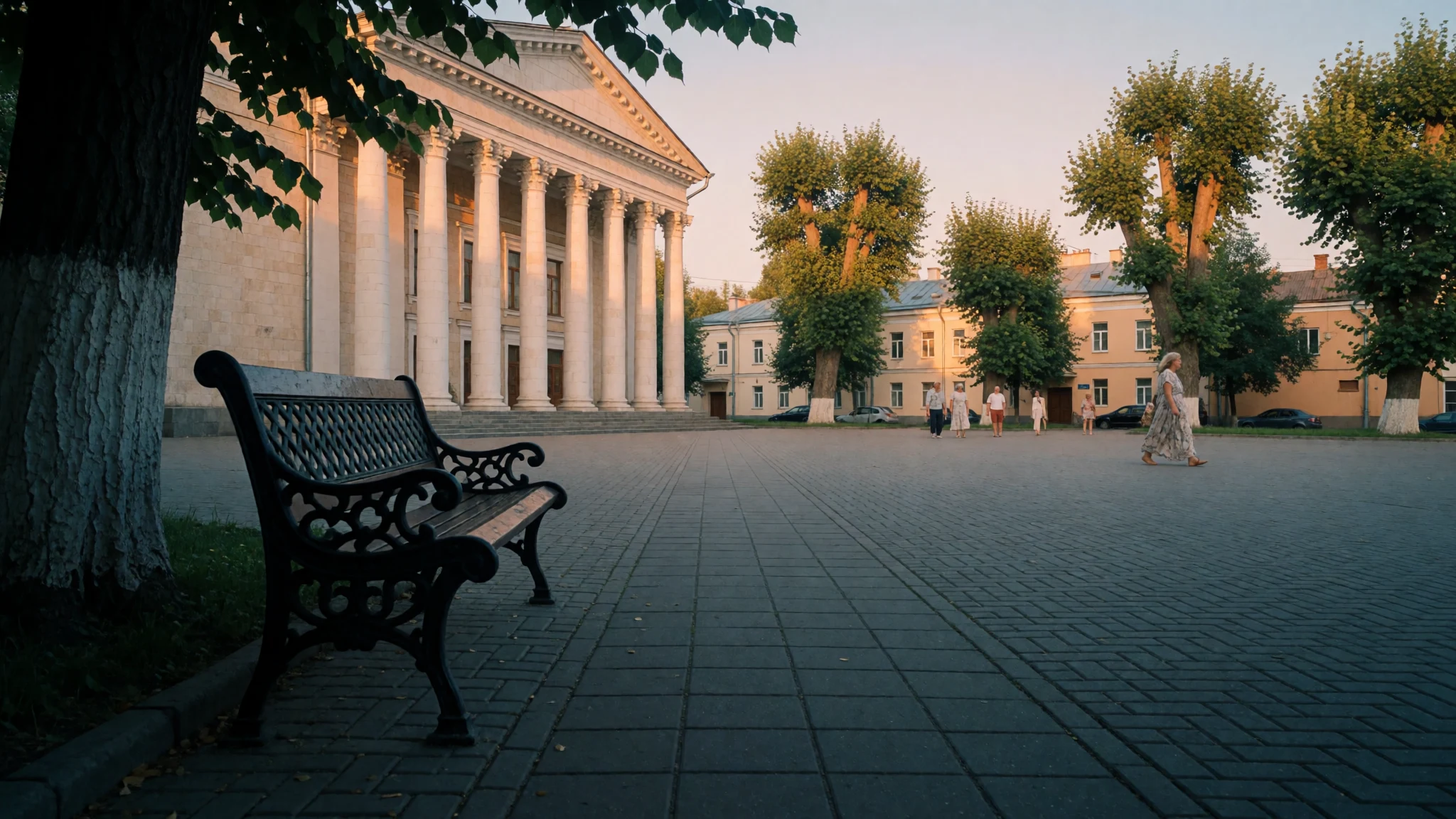
Krasnodar is a lively southern Russian city of theatres, Cossack history and park walks, and a sensible base before the Black Sea coast.
The place
Krasnodar sits beside the Kuban River in southern Russia, about 25 metres above sea level, and is the capital of Krasnodar Krai. Around 1.15 million people live in the city, which makes it a working regional capital rather than a preserved old town. The land is flat and fertile, so the streets run long and straight, shaded by tall trees that matter a great deal once summer arrives. Krasnaya Street, the main thoroughfare, is where city life gathers: cafés, benches, street musicians in good weather and families out in numbers at weekends. Much of the centre was rebuilt after the Second World War, so nineteenth-century façades stand among Soviet blocks and glassy new towers. The mix feels lived in rather than curated. Trade and farming built the city, and the money still shows in new parks, a football stadium that has become a local landmark, and a steady flow of students and office workers. Krasnodar is also a practical base. The Black Sea resorts, including Anapa and Sochi, are a long bus ride away, and the port of Novorossiysk can be reached by train or road. Most visitors treat the city as a stopover on the way to the coast, which undersells it. A couple of days suit anyone who likes walking, galleries, theatre and long café afternoons. Expect few world-famous monuments and plenty of everyday southern Russian life. Summers are hot, winters are damp and grey, and the pleasant weather comes in between.
Its story
Krasnodar began in 1793 as a military camp and then a fortress, planted on the Kuban by the Black Sea Cossacks to guard the empire's frontier and press Russian claims over lands that the Ottomans also wanted. For more than a century it was called Yekaterinodar, after Catherine the Great, and it took its present name only in 1920. Through the early nineteenth century it grew into the main town of the Kuban Cossacks, and it received official town status in 1867, by which time grain and trade were making it prosperous. In 1897 the Kuban Cossacks marked two hundred years of their history with a tall obelisk in the city. The Soviet authorities removed it in 1920 and it was rebuilt in 1999, so the monument now carries two stories: the Cossack past, and the argument over how to remember it. The Civil War hit the city hard. Between 1917 and 1922 it passed between Reds and Whites more than once. In April 1918 the White general Lavr Kornilov besieged Yekaterinodar and did not live to see the outcome: a Bolshevik shell hit the farmhouse serving as his headquarters and killed him within the week. The Second World War brought heavy damage, and the postwar rebuilding gave the centre much of its Soviet character. Since then Krasnodar has grown fast, helped by its position as a commercial hub for southern Russia and a 2012 Forbes ranking as the best city for business in the country.
What to see
- Theatre Square and the Gorky Drama Theatre — City centre
Theatre Square is the civic living room of central Krasnodar, anchored by the Gorky Drama Theatre. Locals cross it on the way to lunch, friends meet on the benches in the evening, and the surrounding trees give welcome shade in summer. Performances are mostly in Russian, so the building and the square are the easier draw for visitors.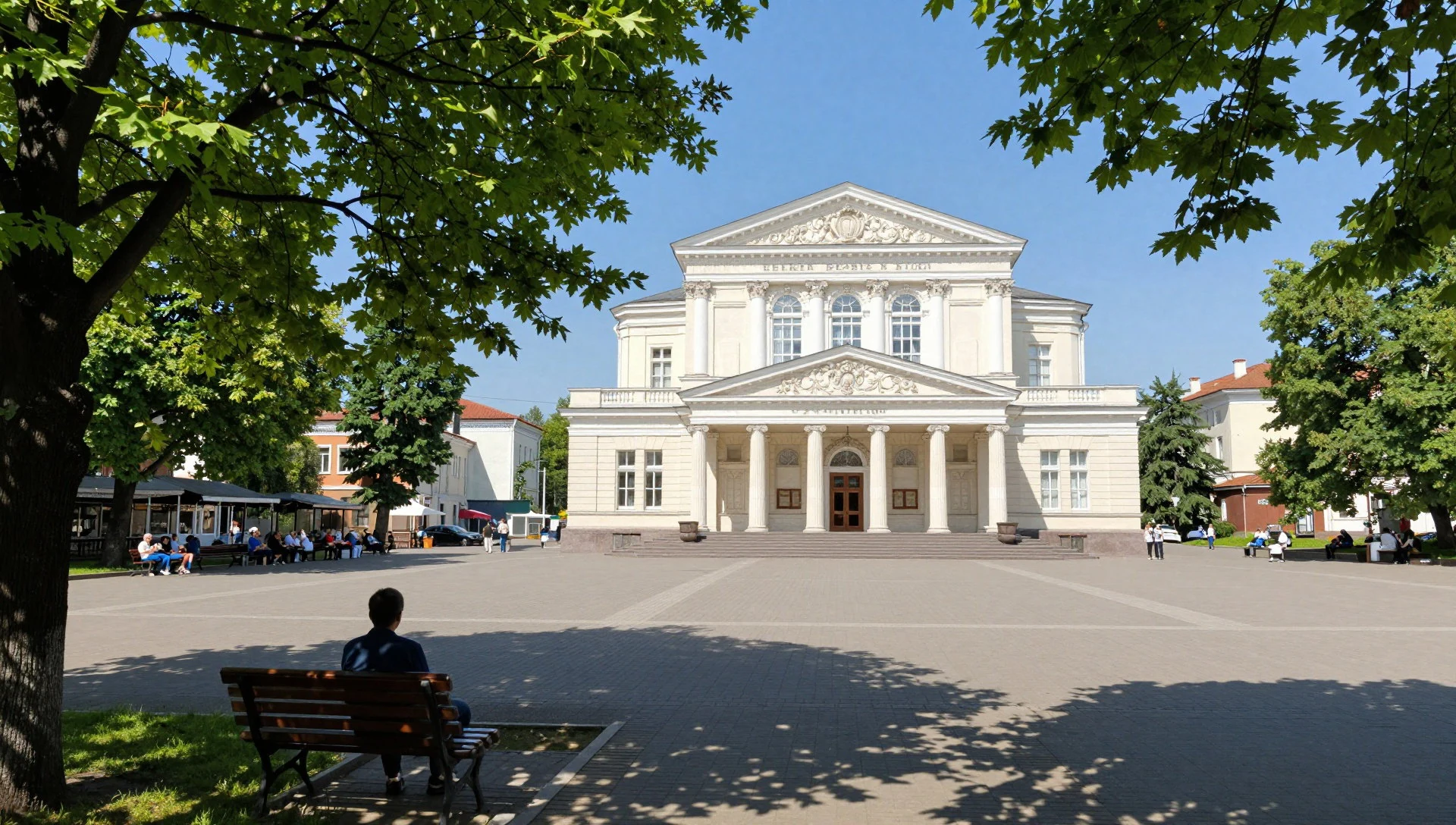
- Kuban Cossack obelisk — City centre
The obelisk honouring the two hundred years of Kuban Cossack history was raised in 1897, taken down in 1920 and rebuilt in 1999. It is a short stop rather than an afternoon, but it explains the city's Cossack identity better than most plaques, and the story of its removal and return says a lot about Soviet and post-Soviet Russia.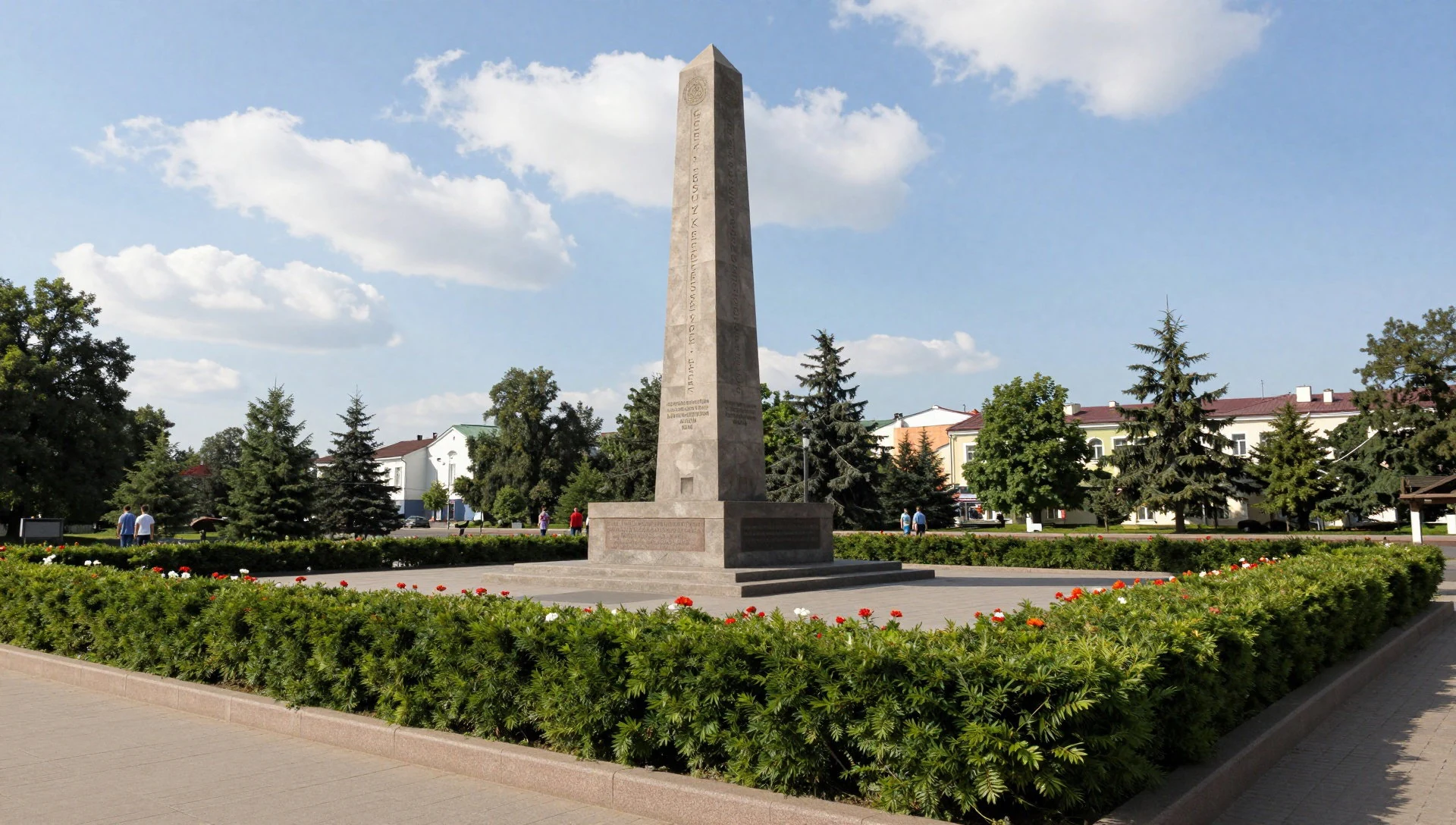
- Krasnodar Regional Art Museum (Kovalenko) — Central Krasnodar
The Kovalenko art museum holds Kuban, Russian and European paintings, with some works reaching back to the sixteenth century. It is a sensible refuge on a rainy day or a scorching July afternoon, and suits visitors who want the region's artistic side after the Cossack history. Check the museum's own website for opening days and ticket details.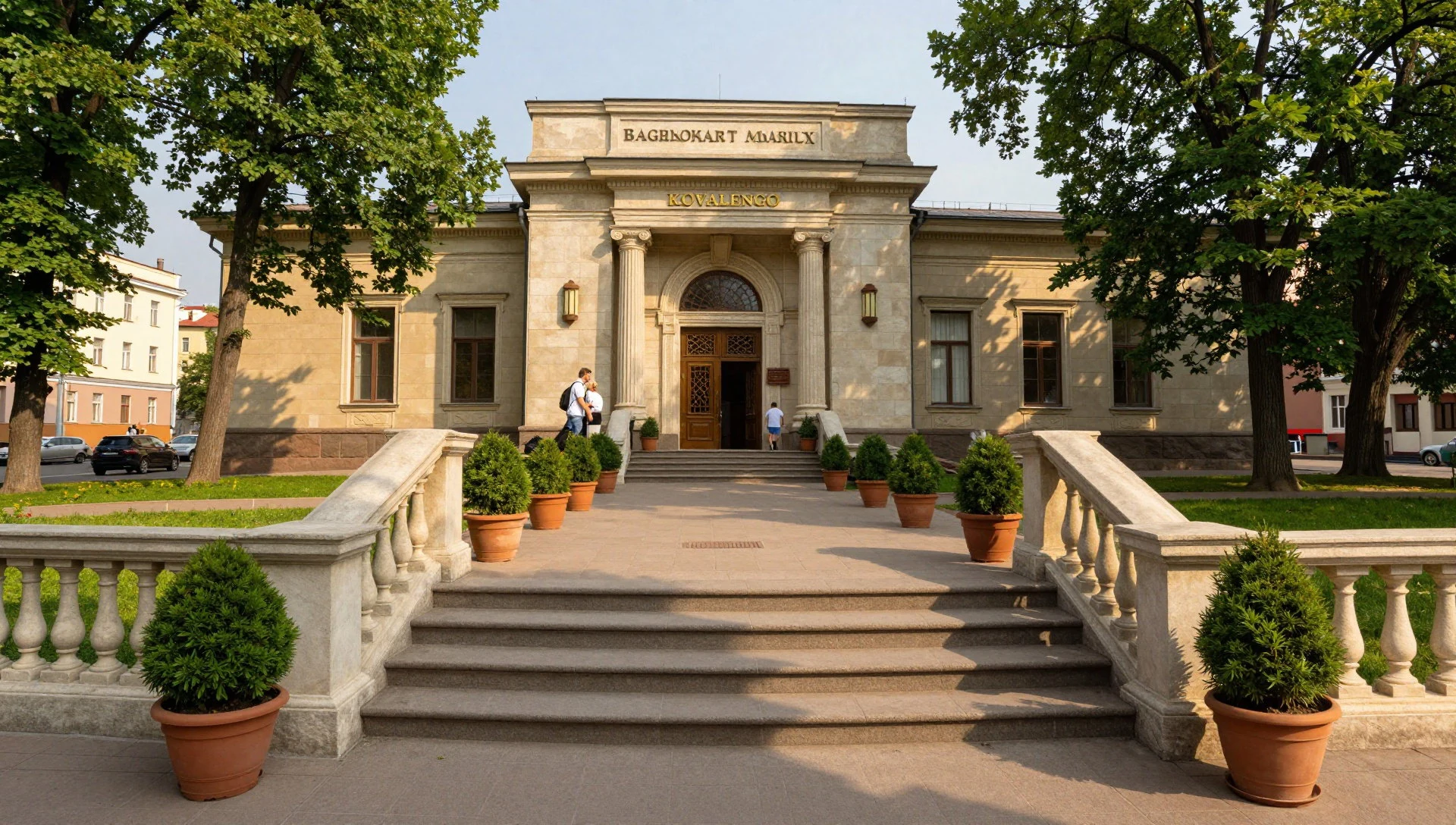
- Museum of Military Technologies, Oruzhie Pobedy — Eastern side of the centre
This open-air museum of military vehicles is popular with children, who are allowed to clamber over the tanks. Adults with an interest in twentieth-century history will find it more of a hands-on display than a scholarly one. Outdoors means little shade, so go early in summer and wear a hat. Confirm opening arrangements before setting out.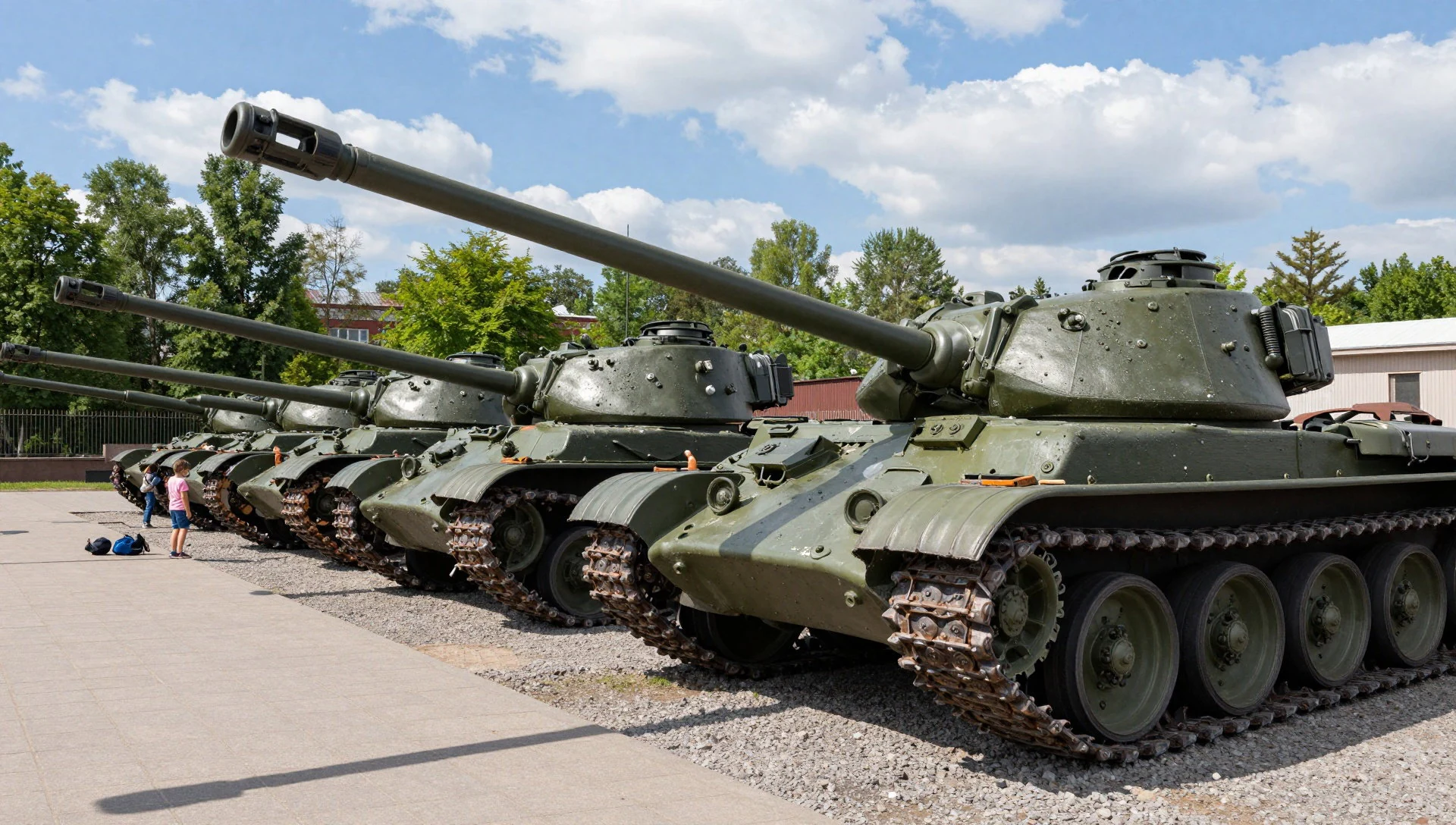
- Park Krasnodar and the stadium — Northern edge of the city
Park Krasnodar is a newer landscaped park laid out next to the football stadium of the same name. Walkers, cyclists and families fill the paths at weekends, and the architecture is modern rather than historic. Match days bring crowds and traffic, so check fixtures if the aim is a quiet stroll rather than an atmosphere.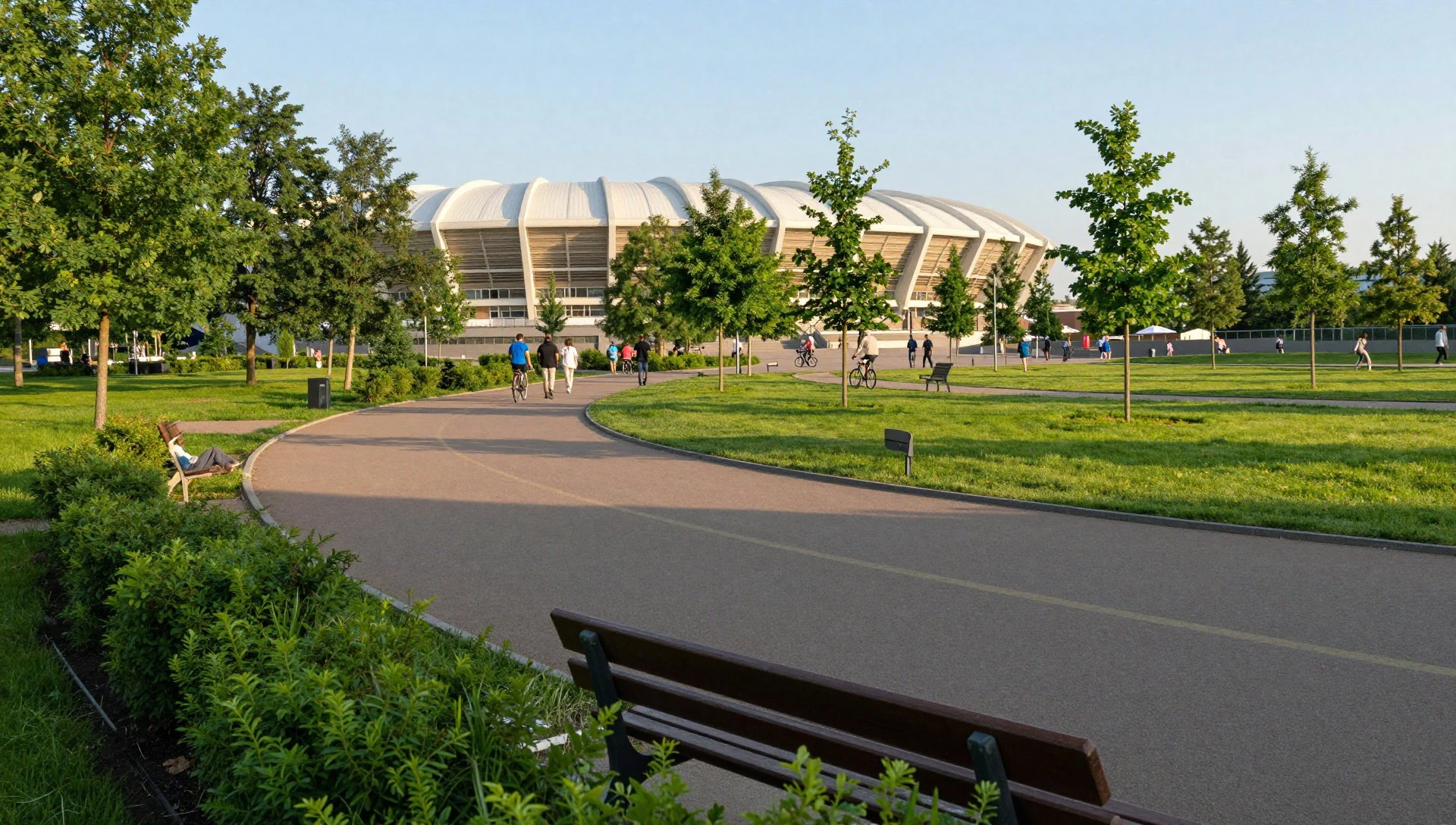
- Krasnaya Street and the historic centre — Central Krasnodar
Krasnaya Street is the city's main street, and the streets around it hold the restored historic centre, where several buildings date from the nineteenth century. Some have been preserved, others restored or reconstructed. The best plan is an unhurried walk with café stops, especially in the evening when the heat eases and the pavements fill.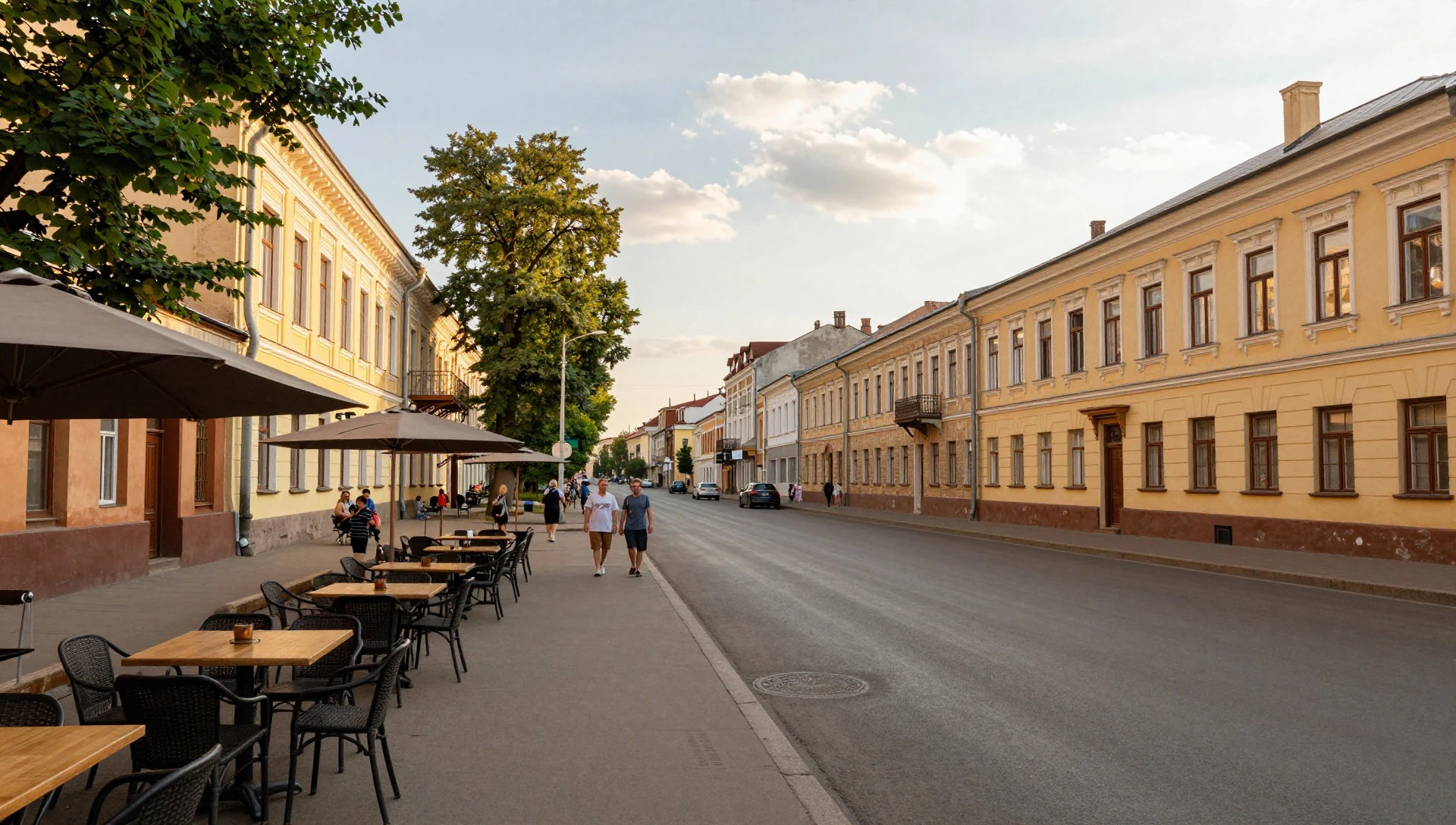
Culture
Krasnodar is a theatre-going city. The centre holds the Gorky Drama Theatre, a ballet theatre, a musical theatre, a puppet theatre, a youth theatre, a circus and the Ponomarenko Philharmonic, a wide range for a city of its size. Performances are generally in Russian, but ballet, circus and the Kuban Cossack Choir need little translation. The choir carries the region's Cossack song tradition, with strong harmonies and sometimes dance and costume. Cossack identity runs through the city, from the obelisk to folk festivals, and it is worn with real pride rather than as a tourist theme. The historic centre has been restored over recent decades, so a walk past nineteenth-century buildings, small museums and cafés gives a feel for the older town. Religion matters too: the Orthodox churches, some of them rebuilt, are active places of worship rather than museums. Social life is warm and centred on food, with long sittings at cafés and a habit of looking after guests. Football has a devoted following, and match days pull the whole city towards the stadium. Politics is a topic best left to a local who raises it first. Inside an Orthodox church, cover shoulders and knees, let women put on a headscarf, men take off hats, and ask before photographing worshippers or services.
What to wear
Traditional Kuban Cossack dress is military in origin. Men wore the cherkeska, a long wool coat with rows of cartridge holders sewn across the chest, over a fitted tunic called a beshmet, with a tall papakha hat of sheepskin or fur, a felt burka cloak against rain and cold, a belt with a dagger, and leather boots. Women's festive dress used long skirts, fitted jackets and embroidered blouses, with ribbons and headscarves. These outfits now appear on stage with the Kuban Cossack Choir, at folk festivals and at Cossack gatherings rather than on the street. Everyday dress in Krasnodar is smart-casual and fairly fashion-aware: neat jeans, trainers, light dresses in summer, dark coats and boots in winter, with people dressing up for theatre and restaurants. Visitors should pack for the climate: light cotton, a hat and sunglasses for the hot summer, and a warm waterproof coat and shoes with grip for damp winters. Comfortable shoes matter for long walks on flat, paved streets. For churches, carry a scarf to cover hair and wear clothes that cover shoulders and knees. Beachwear belongs on the coast, not in the city centre.
What to eat
- Borscht — Home-style café chains and borscht-focused eateries in the centre
Borscht is the beetroot soup of the wider Slavic table, served here hot with sour cream and dark bread. Versions differ from kitchen to kitchen, some with smoked meat, some lighter. It is an easy first order and pairs well with a local beer.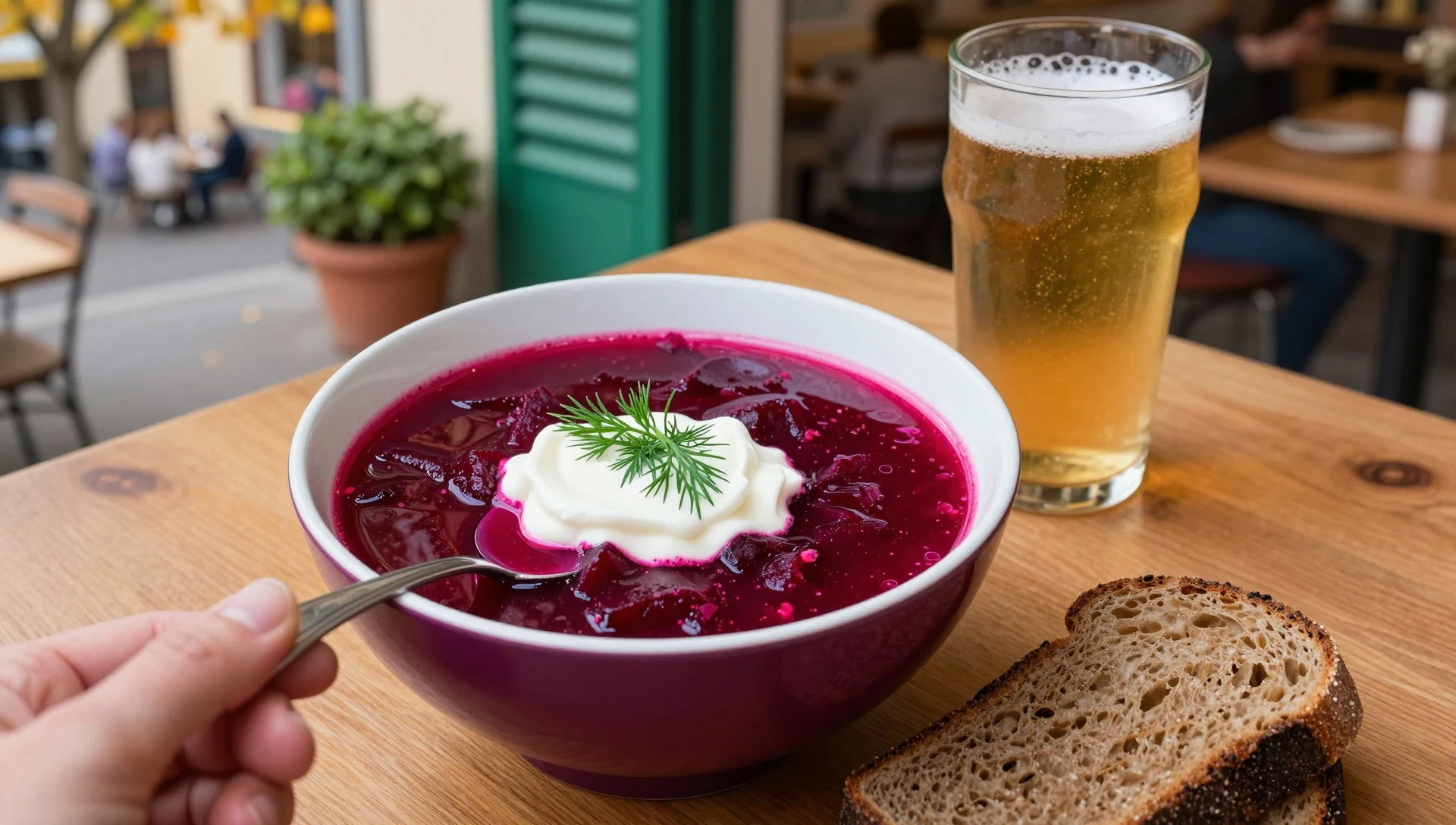
- Shashlik — Grill restaurants, steakhouses and summer terraces
Shashlik is meat threaded on skewers and grilled over open fire, usually pork, lamb or chicken, eaten with onions, bread and sauce. Restaurants with traditional or Cossack themes often cook over live flame, which gives a smokier result than a standard kitchen.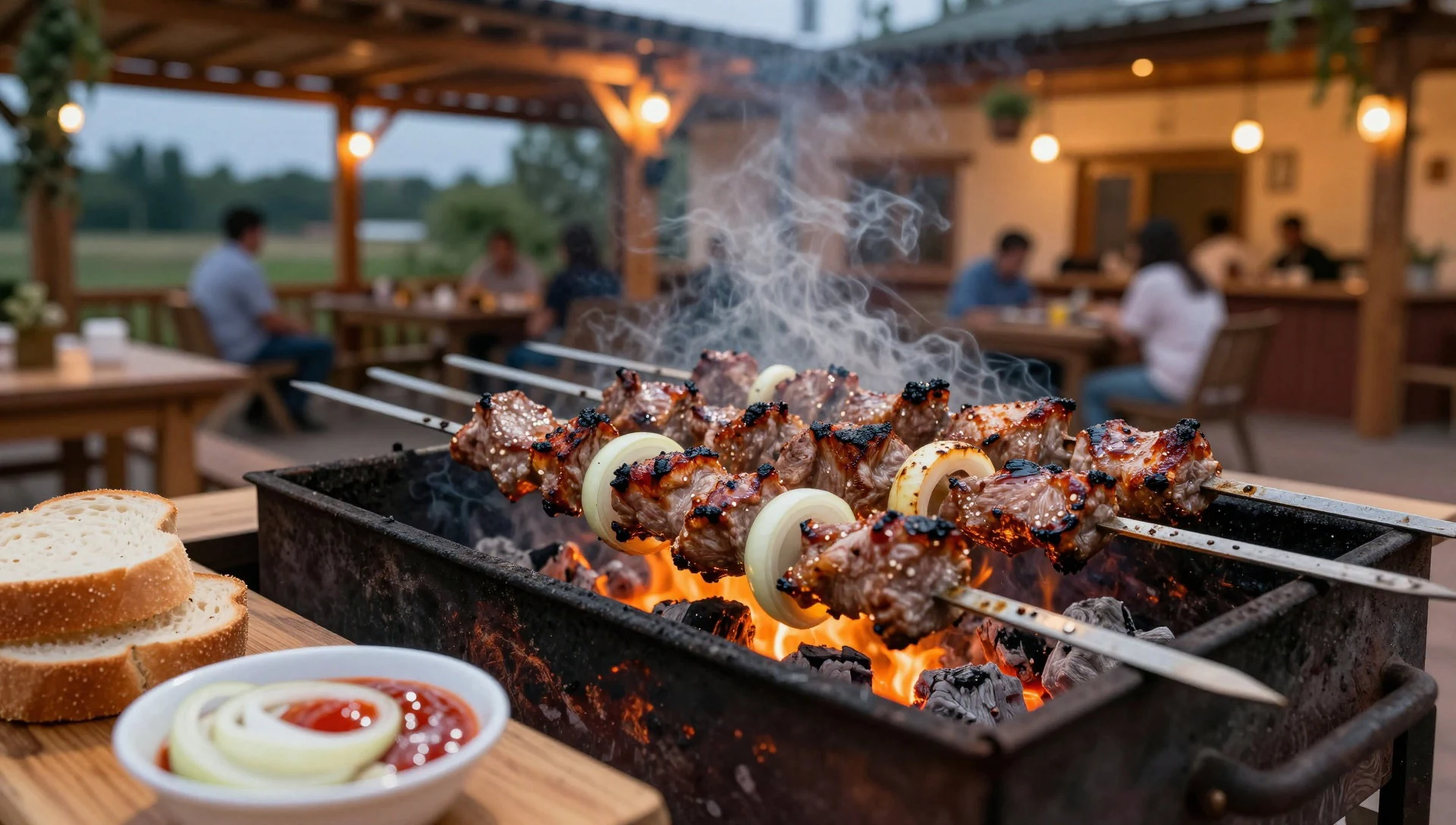
- Pelmeni — Canteen-style cafés and family restaurants
Pelmeni are small meat dumplings boiled and served with sour cream, butter or vinegar. They are a staple of Russian home cooking and a cheap, filling choice after a day of walking. Some places offer them with mushroom or fish fillings. - Vareniki — Home-cooking cafés and bakeries
Vareniki are dumplings with a sweet or savoury filling, often potato, cheese or cherries. The Ukrainian and southern Russian kitchens share them, and the Kuban region leans on both traditions. The cherry version is served with sour cream and a sprinkle of sugar. - Blini — Cafés and breakfast spots across the centre
Blini are thin pancakes, rolled or folded around fillings such as jam, curd cheese or meat, or simply served with sour cream. They suit a slow morning at a café and are easy for vegetarians to order, though ask about fillings.
Plan it
Best time. Late May–June and September–October, when it is warm without the full heat of July and August. Winters are damp and grey, and spring and autumn rain can arrive in spells.
How long. 2–3
Getting there. Fly to Krasnodar International Airport, then take a trolleybus or minibus to the main railway station, a city bus to the centre, or a taxi; confirm routes locally. Trains link the city with Rostov-on-Don, Novorossiysk and Volgograd, and buses run to Novorossiysk, Anapa, Rostov-on-Don and Sochi.
Budget. low
Tips
- Check your government's current travel advice, visa rules and payment options before booking, as they change often for Russia.
- Sort out payment methods in advance, because foreign-issued cards may not work and cash may be needed.
- Book theatre and philharmonic seats through official sites, and see https://krd.ru/ for city information.
- In summer, walk early or in the evening and carry water, because shade is limited away from the main streets.
- Check football fixtures if staying near the stadium, since match days bring crowds and traffic.
Etiquette
- Cover shoulders and knees in churches, and men should remove hats.
- Ask before photographing people, especially worshippers.
- Leave politics alone unless a local raises it.
Nearby
Sources
- Wikidata Q3646 (CC0)
- Wikipedia: Krasnodar (rev 1382820903) (CC BY-SA 4.0)
- Wikivoyage: Krasnodar (rev 5407605) (CC BY-SA 4.0)
- Photo 01-krasnodar-teatr.jpg (Maska999) (CC BY-SA 4.0)
- Photo 02-tsentralnyy-okrug-krasnodar-krasnodarskiy-kray-russia-panora.jpg (Дмитрий Cкляренко) (CC BY 3.0)
- Photo 03-obelisk-krasnodar-01.jpg (Yuriy75) (CC BY 3.0)
- Photo 04-1.jpg (Дементьева Роман) (CC BY-SA 4.0)
- Photo 05-russia.jpg (Kemal KOZBAEV) (CC BY 3.0)
- Photo 06-.jpg (Olegator1984) (CC0 1.0)
- Photo 07-coat-of-arms-of-krasnodar.png (Public domain)
- Photo 08-krasnodar-obelisk.jpg (Public domain)


