Kovalam
Kovalam, India
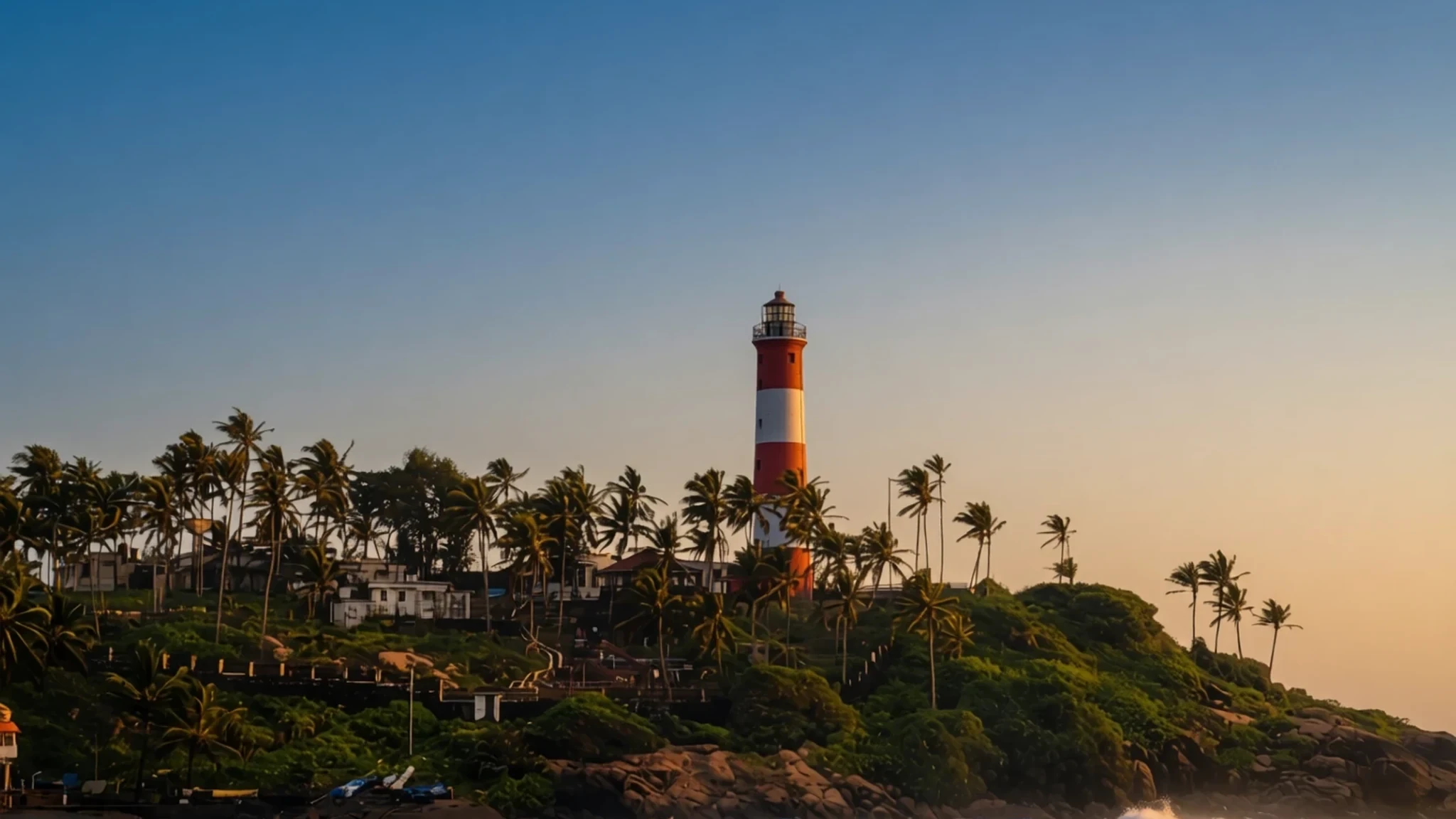
A crescent of sand and rocky coves on the Kerala coast, a short drive from Thiruvananthapuram, with a long history as a traveller's beach.
The place
12.6 km (7.8 mi) south-east of the city centre. Its coastline runs for 17 km, but the stretch most people mean is a crescent of three beaches divided by rocky outcrops. Lighthouse Beach, at the southern end, is the largest. It takes its name from a lighthouse, 36 m tall, that stands on the Kurumkal hillock above the sand. Hawah Beach lies a short walk north. It is a bay under a high rock promontory and still serves local fishing boats. Samudra Beach, further north, is the most local of the three: busy at weekends with families, day-trippers and tour buses, and quiet on weekdays. The sand is partly black, coloured by ilmenite and monazite, and it heats up quickly at midday, so footwear helps. The land stands 81 m above sea level. Most of the beachfront is lined with restaurants, guesthouses and resorts, with Ayurvedic salons and treatment centres set back behind them. The mood shifts between the lively south and the calmer north, and the mix of holidaymakers and fishing families is much of its character.
Its story
Kovalam first drew outside attention when the regent of Travancore, Maharani Sethu Lakshmi Bayi, built a beach resort here, Halcyon Castle, between the wars. Her nephew, the Maharaja of Travancore, later brought the place further into public view. European guests visiting his kingdom began to see the beach as a destination in its own right. Before that, the coast was a casual fishing village, with boats drawn up on the sand and families who had worked these waters for generations.
The real change came in the early seventies. Travellers on the hippie trail, heading on to Ceylon, found their way down the Kerala coast, and the beach filled with budget guests, cafés and music. Kovalam became one of the best-known stops on that route. It kept its appeal with visitors from Europe and Israel long after the trail itself had faded.
Later the emphasis shifted. Ayurvedic salons and recuperation resorts opened along the cliffs and sand, offering treatments to people who came for weeks rather than nights. One of the first hotels, the Kovalam Beach Resort, was designed by the architect Charles Correa in the same decades. More recently, local fishing families added motor boats to their catamarans, and some visitors feel this has disturbed the quiet of the coves.
What to see
- Lighthouse Beach — Southern end of the crescent
The largest and southernmost of Kovalam's beaches, and the one most foreign visitors choose. Its name comes from the lighthouse above it on the Kurumkal hillock. The lifeguard service works from here, and the flags mark where the current is dangerous. In the evening the day's catch is laid out in front of the beachfront restaurants, which makes this a good time for a slow walk along the sand. Arrive early in the day for the calmest water.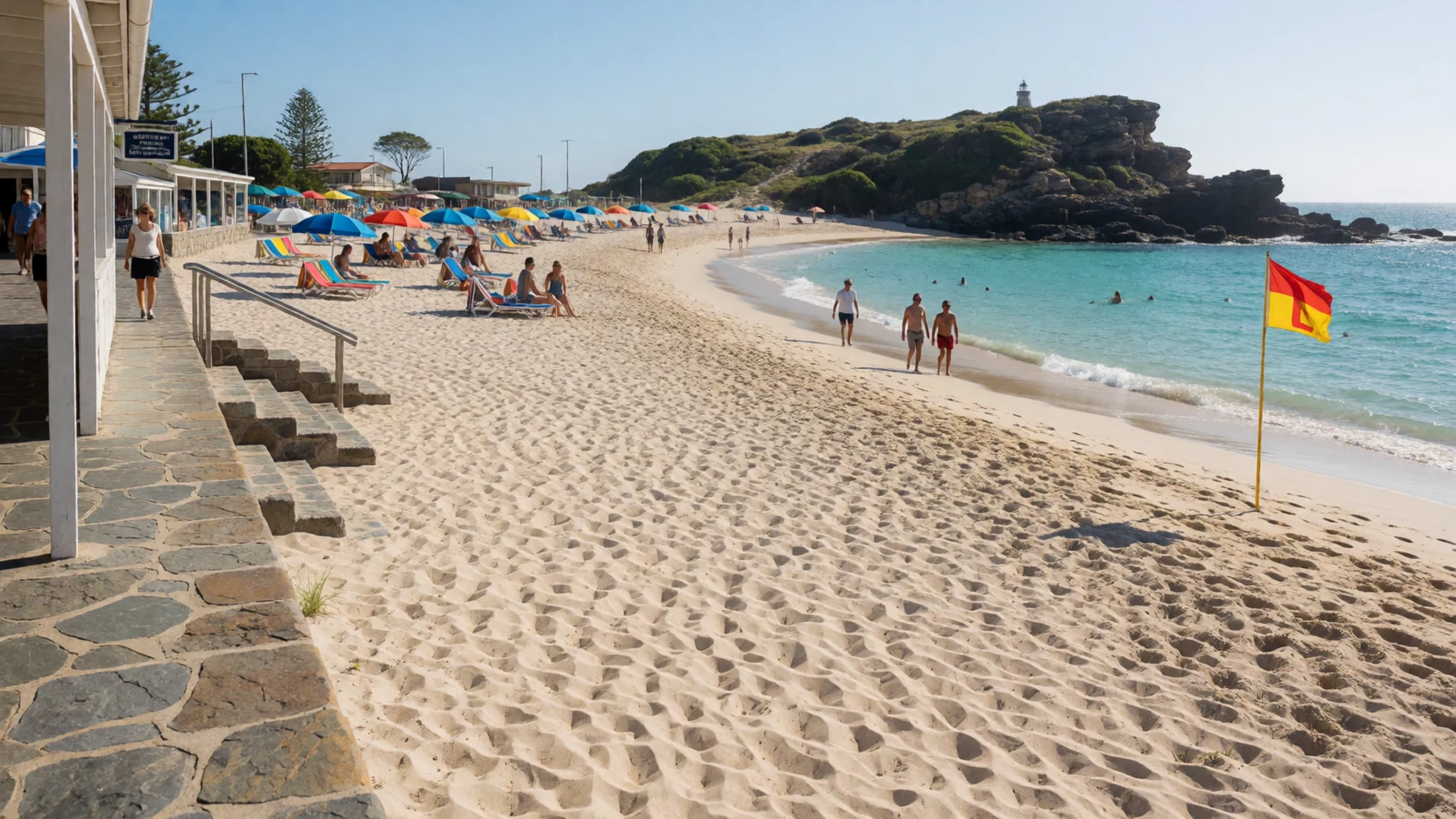
- Vizhinjam Lighthouse — Kurumkal hillock, above Lighthouse Beach
The old lighthouse is one of the oldest in Kerala and a local landmark, guiding ships into the nearby Vizhinjam port. The tower stands 36 m high on the hillock. The surroundings are quieter than the beach below, and the climb gives a view along the whole crescent. Check locally whether the tower is open to visitors on the day you plan to go, because access should not be assumed.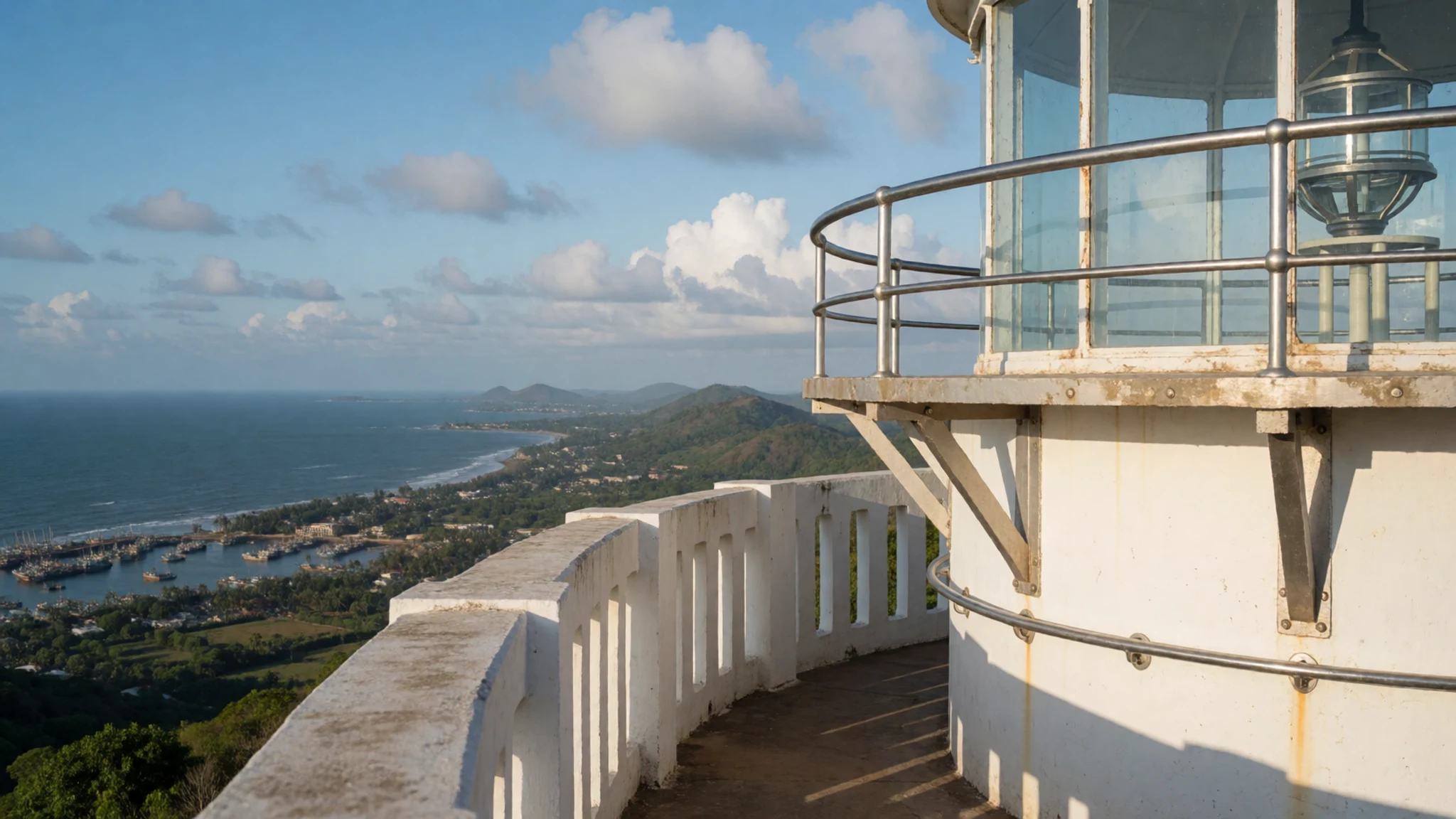
- Hawa Beach — Between Lighthouse Beach and Samudra Beach
The second-largest beach is a bay below a high rock promontory, a few minutes' walk from Lighthouse Beach. Local fishermen use it, so boats and nets are part of the scene. Its alternative name, Eve's Beach, is the one many guidebooks use. Lifeguards watch over this stretch too, so keep to the flagged areas and avoid swimming beyond the rocks.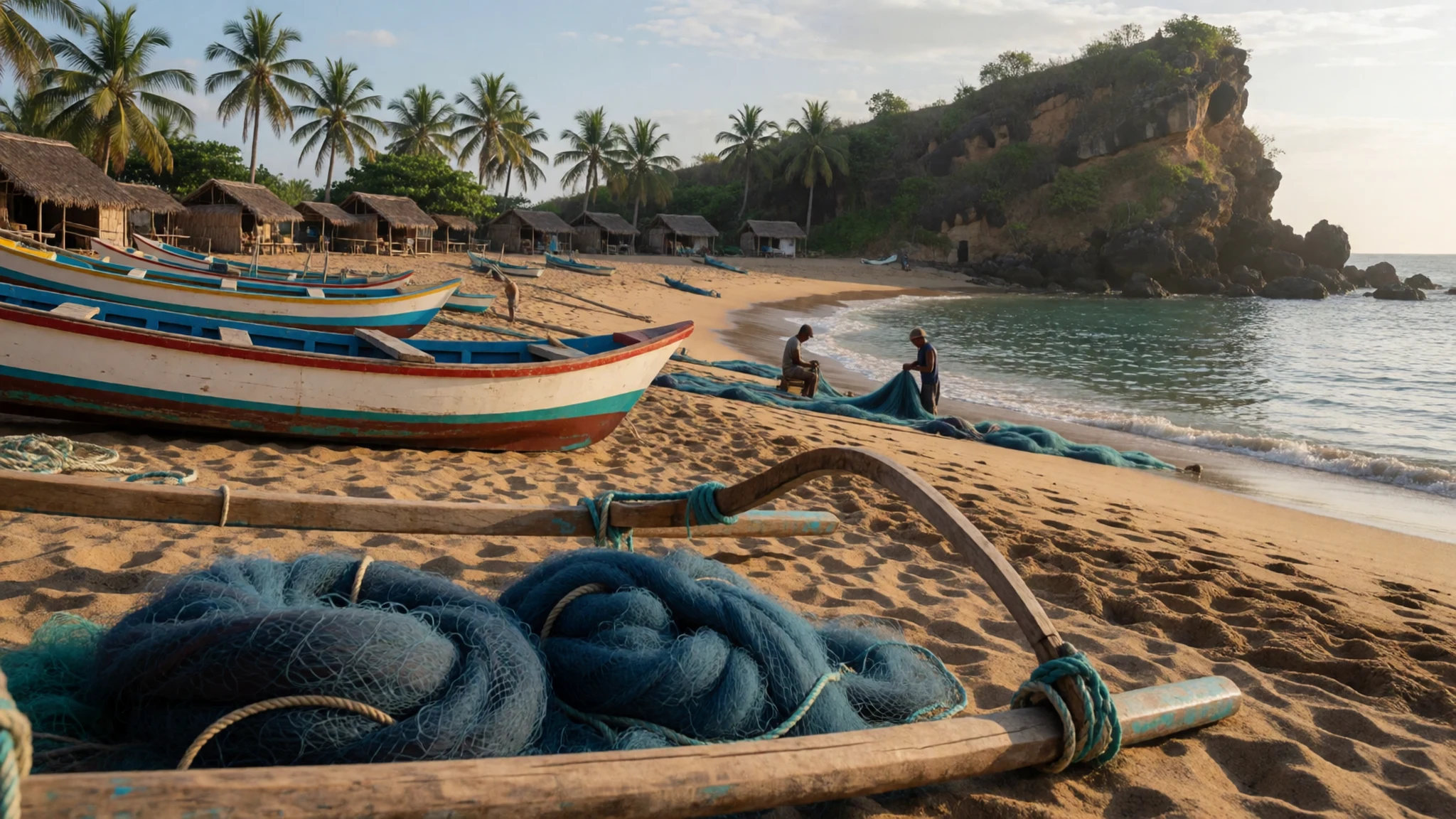
- Samudra Beach — Northern end of the crescent
The northernmost part of the crescent fills at weekends with local families, day-trippers and tour buses, then empties on weekdays. Fishermen work the sand here as well, so the mood is more working beach than resort. Come on a weekday morning for space. Stalls near the path sell cold drinks, which is a better bet than expecting a quiet café by the water.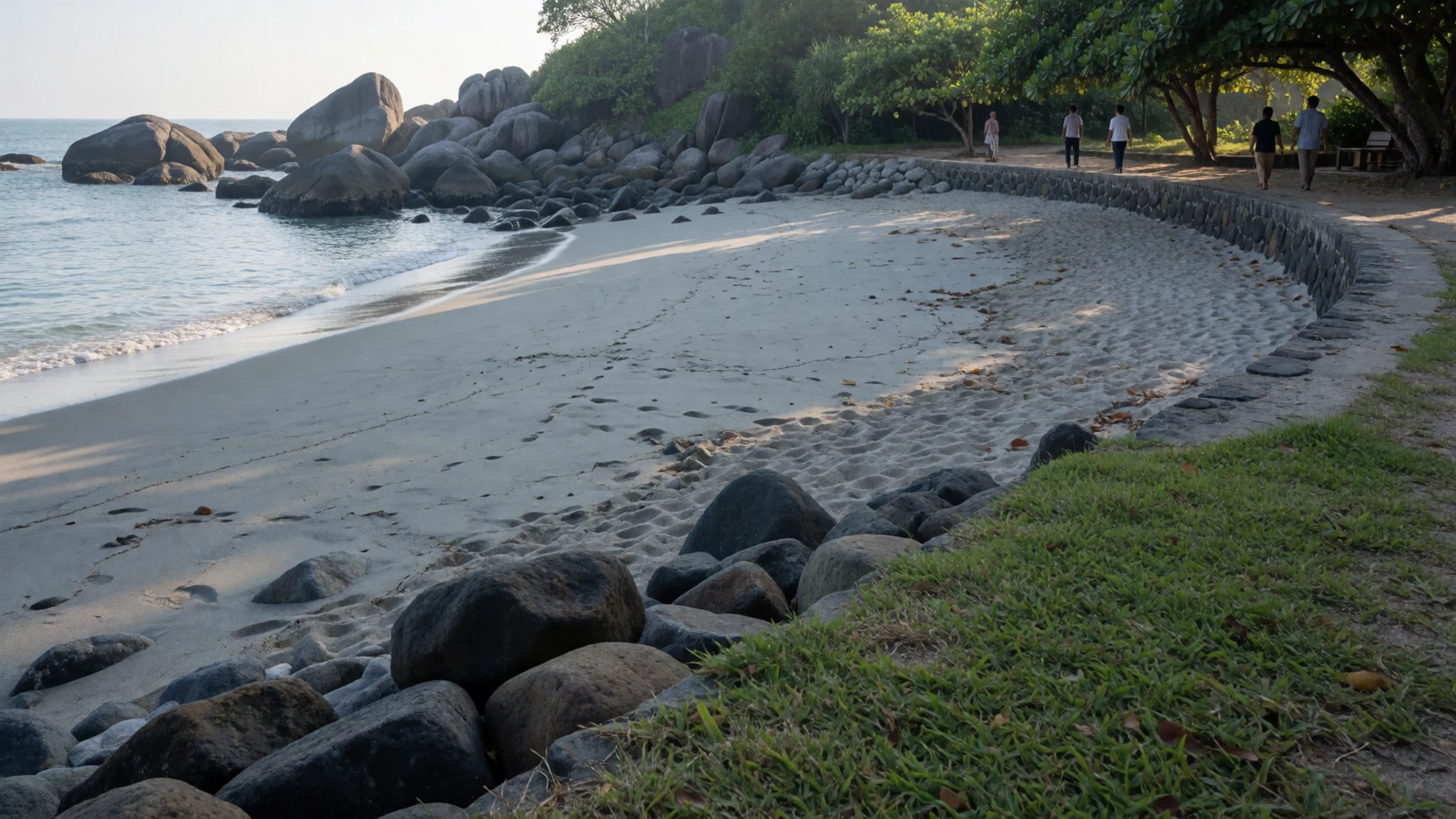
- Azhimala Shiva Temple — Azhimala, a short drive inland from Kovalam
A Tamil-style shrine known for a tall Gangadhareshwara sculpture, described in the listings as the tallest Shiva sculpture in Kerala. Visitors should dress modestly and remove shoes at the entrance, as at any active temple. Opening times are kept locally, so check them before setting out, and allow time for the drive back to the coast.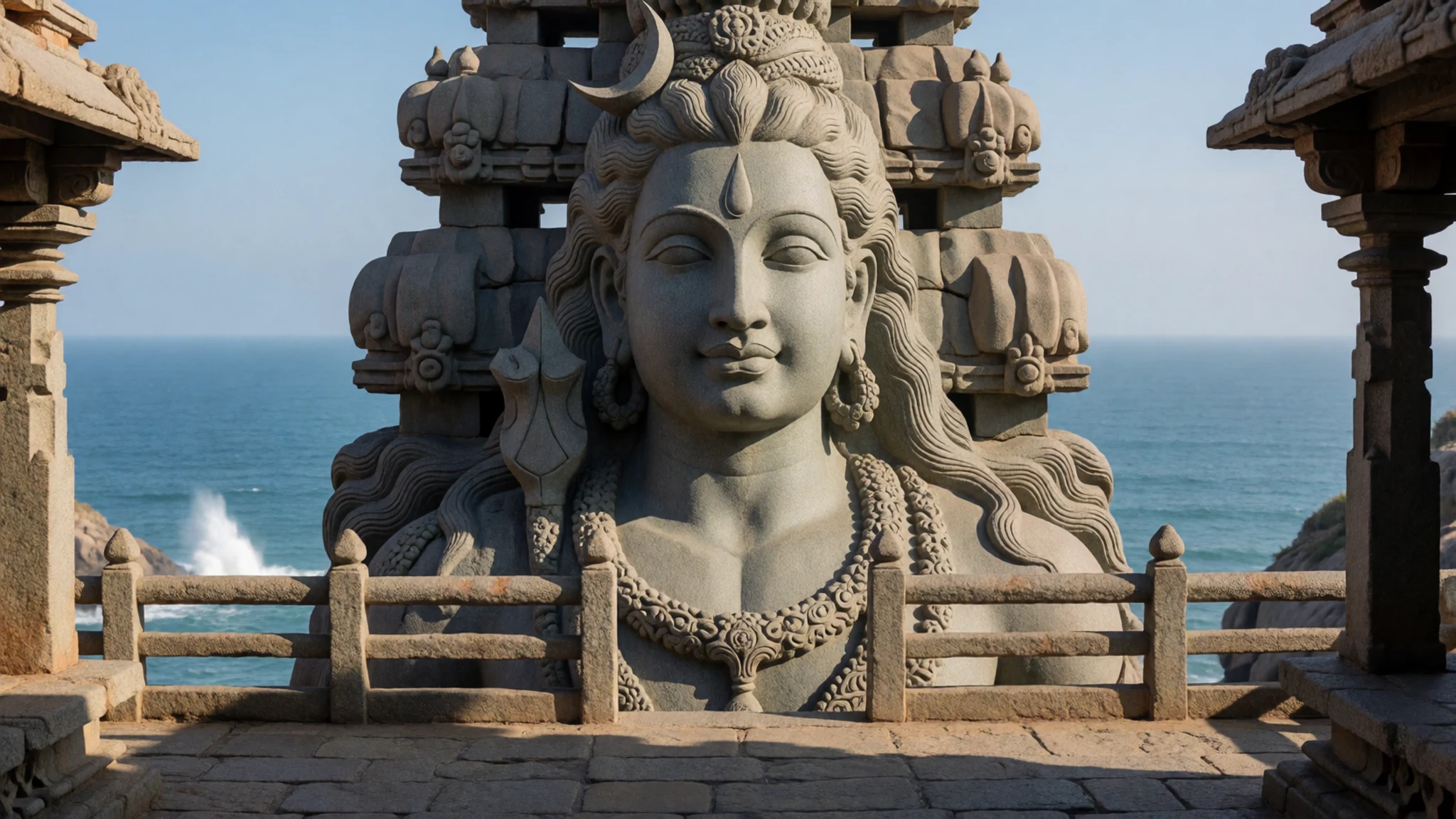
Culture
Kovalam is a beach resort, but it sits inside a working fishing community. Families launch boats from the sand each morning and haul in nets in the afternoon, and their homes and temples lie a few streets back from the beachfront restaurants. Village customs are conservative in dress and manners, and visitors notice this most in the lanes and near shrines. Swimwear belongs on the beach and in the sea, and it looks out of place on the road to the shops or at a temple door. Photographs of people, especially women and fishing families at work, should be taken only after asking. Many visitors come to see the fishing life as the real setting of the coast rather than a backdrop, and that attitude makes for better encounters. Cover your shoulders and knees when you leave the beach, and ask before photographing anyone working on the boats.
What to wear
Kovalam's traditional dress is the Kerala dress worn across Thiruvananthapuram, built around the mundu, a white or cream cotton cloth wrapped at the waist by men and worn by women with a blouse. Many mundus carry a woven border in gold or dark red, known as kasavu, which marks festivals and temple occasions. The sari, in cotton or silk, is the other common garment for women, and the kasavu border again signals a special day.
Most people on the beach now wear Western clothes: shorts, T-shirts and sandals for men and young women, and jeans or cotton trousers for others. Fishing families often wear lungis or mundus at work, and older women keep to saris or mundus at home and at temple. Modern dress is ordinary in the village and along the main road.
For a visitor, loose cotton or linen is the sensible choice through the heat. Swimwear is for the beach only, and a light shirt or sarong over it helps on the walk into the village. Carry a light scarf to cover the shoulders at temples and for quieter lanes. Wear sandals with straps for the hot sand, and closed shoes for the rocky paths between the beaches.
What to eat
- Grilled fish of the day — The beachfront restaurants at Lighthouse Beach, in the evening
The day's catch is laid out on ice in front of the Lighthouse Beach restaurants each evening. Diners choose a fish, and it is grilled with local spices. Service is leisurely, and an hour between ordering and eating is normal, so order early and settle in.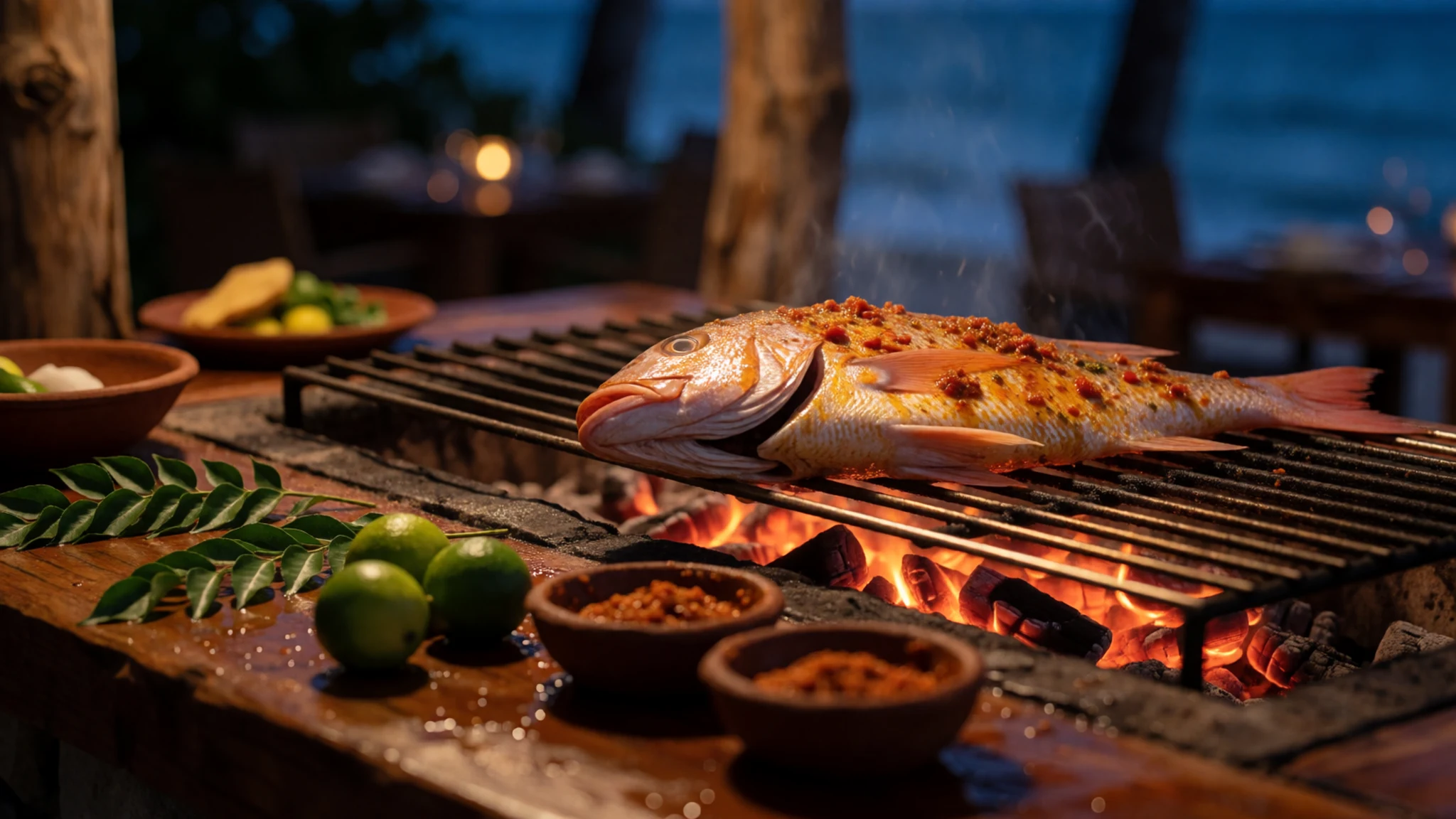
- Kerala fish curry — A simple Kerala eatery in the lanes behind the beach
A coconut-based fish curry, often soured with kudampuli, a dried sour fruit, and served with red rice or appam. Ask whether the fish was bought that morning. It is a dish of the local fishing community and a good test of a plain eatery.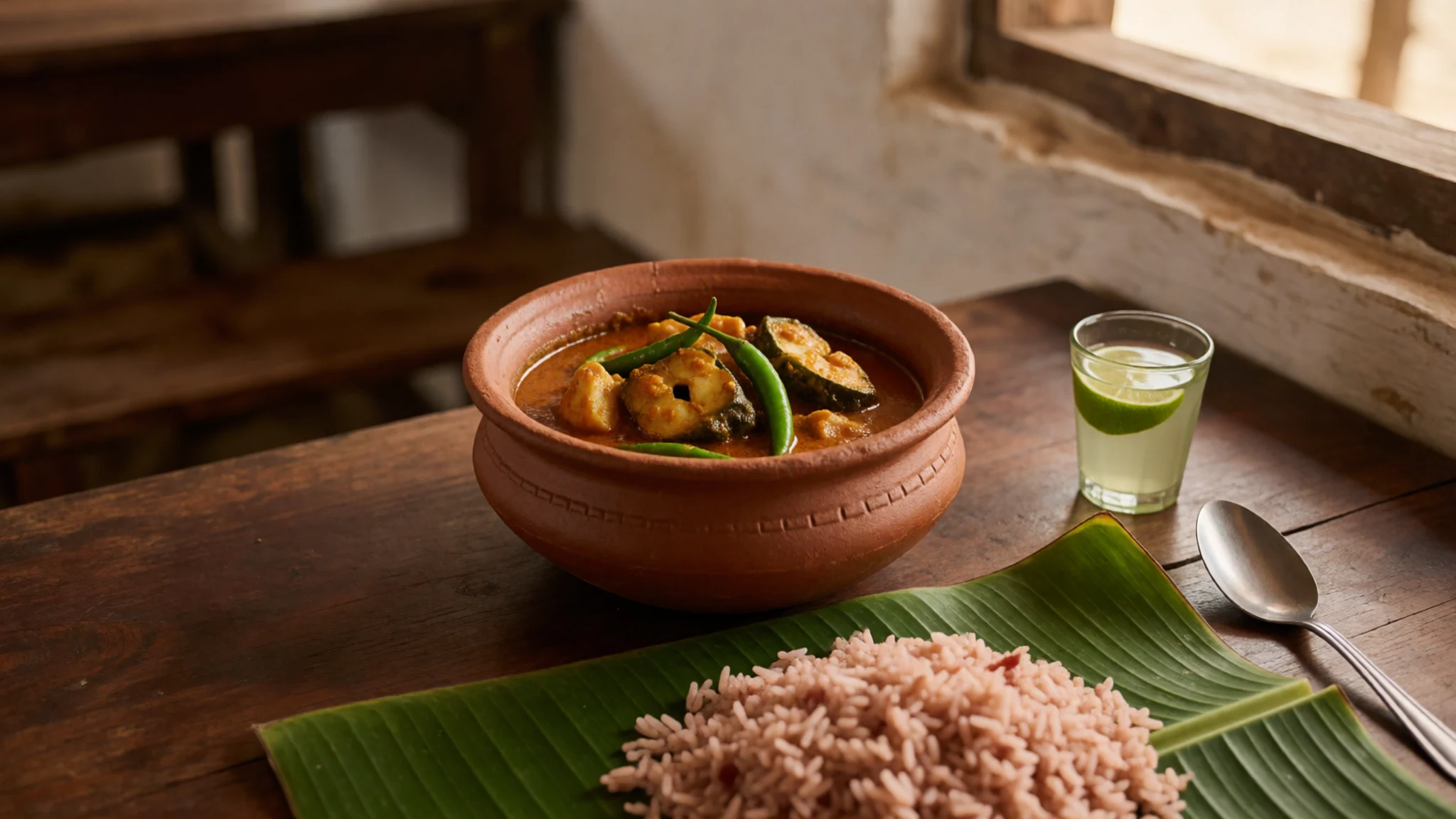
- Vegetarian thali — The vegetarian restaurants along the village roads
A set meal on a steel plate with rice, dal, several vegetable dishes, pickle, yoghurt and a small sweet. Kovalam has several good vegetarian restaurants, which suits anyone wanting a light meal between sea swims. Refills are common, so ask for more. - Banana pancakes and date shake — The German Bakery on the beach road
Banana pancakes and a date shake are the regular order at this long-running bakery, which also sells a full range of baked goods. It suits a slow breakfast before the sun gets strong, and it is one of the spots visitors return to year after year. - Tender coconut and fresh juice — Juice stalls along the beach path and near Samudra Beach
Tender coconut served in the shell, along with fresh lime, pineapple and papaya juice, makes a cooling break on hot afternoons. The stalls are simple, so choose freshly cut coconuts or juice made to order, and carry small change.
Plan it
Best time. December to February, when the weather is drier and the sea usually calmer. March and April are hot before the monsoon, and May to October brings the heaviest rain and rough surf, when swimming is least safe.
How long. 2–3
Getting there. Thiruvananthapuram International Airport is about 10 km away, and the last leg is by taxi or auto-rickshaw. Thiruvananthapuram Central is the nearest railway station, and buses from the city run to Kovalam Junction for the beach.
Budget. mid
Tips
- Agree the fare before you get in, and name the specific beach you want, whether Hawa, Lighthouse or Samudra.
- Swim only between the lifeguard flags, since the current can pull swimmers out quickly.
- Wear water shoes, as jellyfish are common and the sand heats up at midday.
- Carry cash for auto-rickshaws, small restaurants and juice stalls, and check whether cards are accepted before ordering.
- Go out early for cooler light, and plan the middle of the day around shade and a long lunch.
Etiquette
- Keep swimwear to the beach and sea, and cover up in the village and at temples.
- Ask before photographing fishing families or their boats.
- Give fishing boats and nets room on the sand, and keep to the marked paths.
Nearby
Sources
- Wikidata Q1785641 (CC0)
- Wikipedia: Kovalam (rev 1376782650) (CC BY-SA 4.0)
- Wikivoyage: Kovalam (rev 5407576) (CC BY-SA 4.0)
- 01KovalamBeach&Kerala.jpg (Mehul Antani) (CC BY 2.5)
- Kovalam beach trivandrum kerala (Georgeumartin) (CC BY-SA 4.0)
- Kovalam 01 by Tanweer (Tanweer Morshed) (CC BY-SA 4.0)
- Lighthouse Kovalam (Shishirdasika) (CC BY-SA 4.0)
- Kovalam Beach (TUI) 2016 (The U Imager) (CC BY-SA 4.0)
- Kovalam Lighthouse Beach (P.K.Niyogi) (Public domain)
- Kovalam Hawah Beach (P.K.Niyogi) (Public domain)
- Kovalam Samudra Beach (P.K.Niyogi) (Public domain)


