Koh Samui
Koh Samui, Thailand
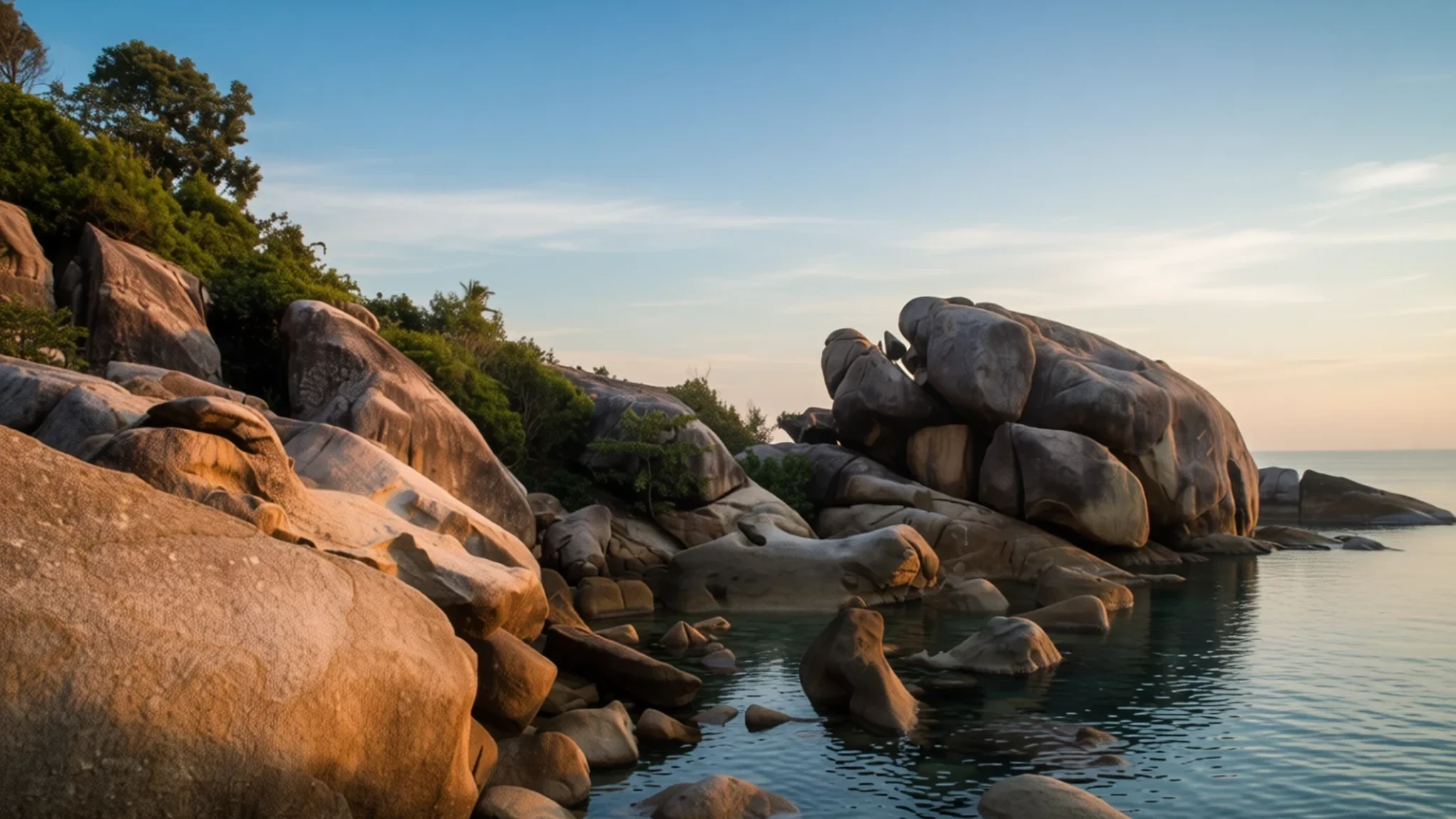
Come for long beaches, clear water and a green interior, but choose your stretch of coast carefully, because the east side gets busy.
The place
Koh Samui sits in the Gulf of Thailand, a short hop off the east coast of the mainland, and is the largest island in the Chumphon Archipelago. It is Thailand's second-largest island after Phuket, and its population of about 62,500 lives mostly along the coast, where the roads and most businesses are. Since gaining municipal status it has governed itself locally, though it still belongs administratively to Surat Thani Province.
The coast is the reason most people come. The east side around Chaweng is the busiest and most developed, with hotels, pubs and pizza places in quantity. The north and northeast are calmer, with Bophut and Big Buddha Beach offering a mix of swimming, restaurants and dive operators. The south and west feel quieter again. Ko Pha-ngan and Ko Tao lie to the north, and day boat trips reach the Ang Thong marine park to the west.
Inland the island is mostly forest, with tree cover and wildlife in the centre. Its highest point, Khao Pom, reaches 635 metres. A ring road of about 51 km links the lowlands and coastal villages, and it is how most visitors get around, usually by scooter or hired car. The interior feels very different from the beaches: shaded, green and quiet, with waterfalls a short drive from the main resorts.
Its story
Koh Samui's story begins with oral tradition, which holds that the first settlers were fishermen crossing from the Malay Peninsula, while traders from southern China passed by on their routes. Some local historians add that the island served as a refuge when storm seasons made the sea dangerous. Archaeology suggests people lived here considerably earlier than those accounts imply. Bronze ritual drums, decorated with birds, boats and spirits, have been found in the southern hills.
Under the Siamese feudal system, Samui became a link in the trade between China and India. Its position drew immigrants from many ethnic and religious backgrounds, and it was administered through Nakorn Si Thammarat on the mainland. Thai people became the majority, and the economy turned toward farming. Settlement moved inland from the coast, away from the earlier inhabitants' shoreline villages.
An early Chinese map names the island Pulo Cornam, a reminder of how long it had been on the sea routes. In the modern period, Chinese migrants settled across Thailand, Samui included, and Chinese families became part of the island's commercial life.
Tourism changed the island within living memory. Chaweng was once lined with a handful of timber huts, and it is now a crowded strip of hotels, bars and restaurants.
What to see
- Chaweng Beach — East coast
The island's main beach and its liveliest stretch. Chaweng has grown fast since the early years of mass tourism, so expect hotels, pizza places and bars lining the sand behind you. Go early for a calmer swim, or walk toward the quieter far end. It is the easiest base for nightlife, and the busiest choice.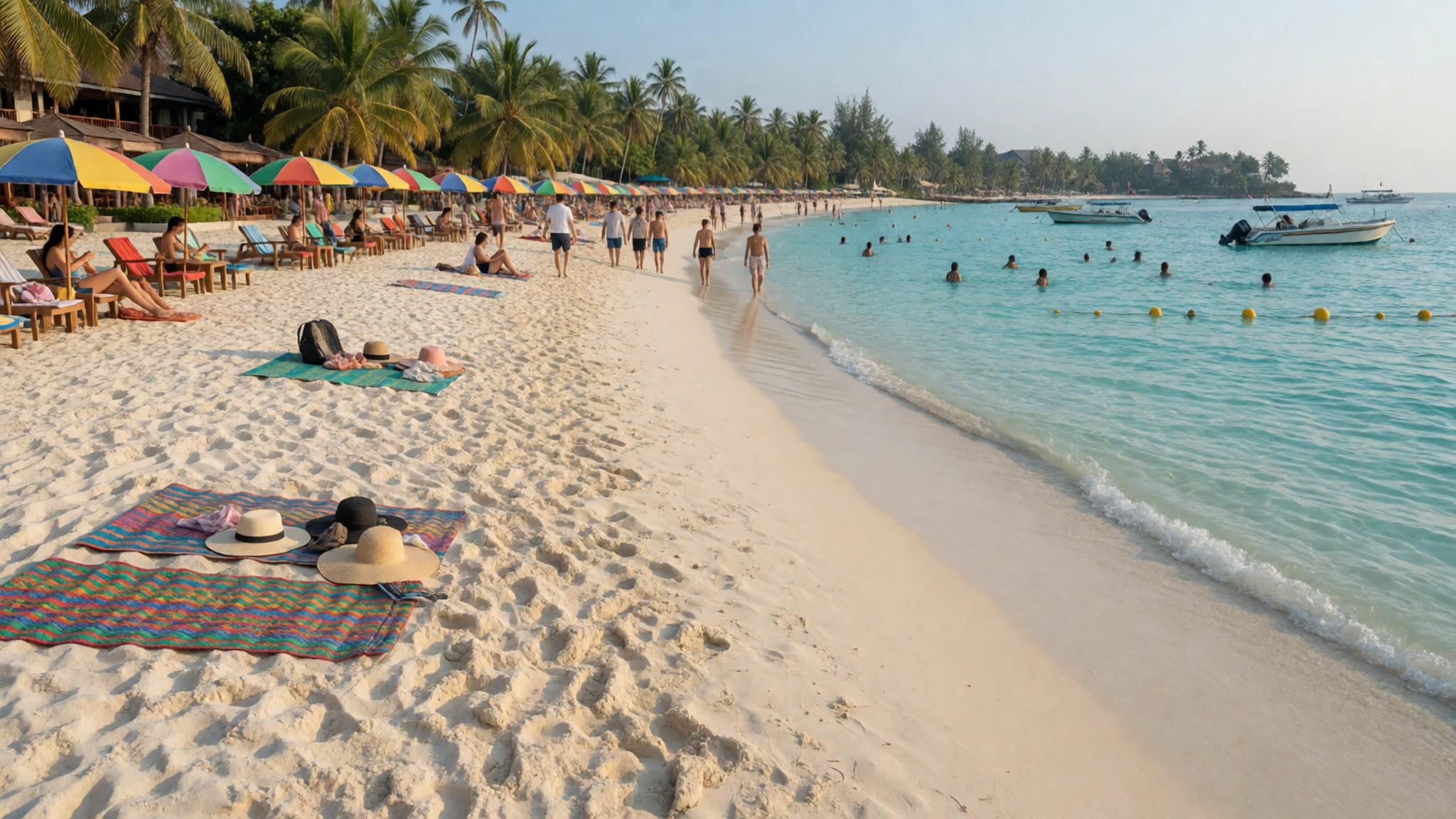
- Bophut Beach — North coast
Bophut is less developed than Chaweng but still has plenty of restaurants, shops and bars. It is a common starting point for diving trips, so you will see boats and operators along the seafront. The village suits an evening stroll and a meal, with a relaxed mix of Thai and international eateries.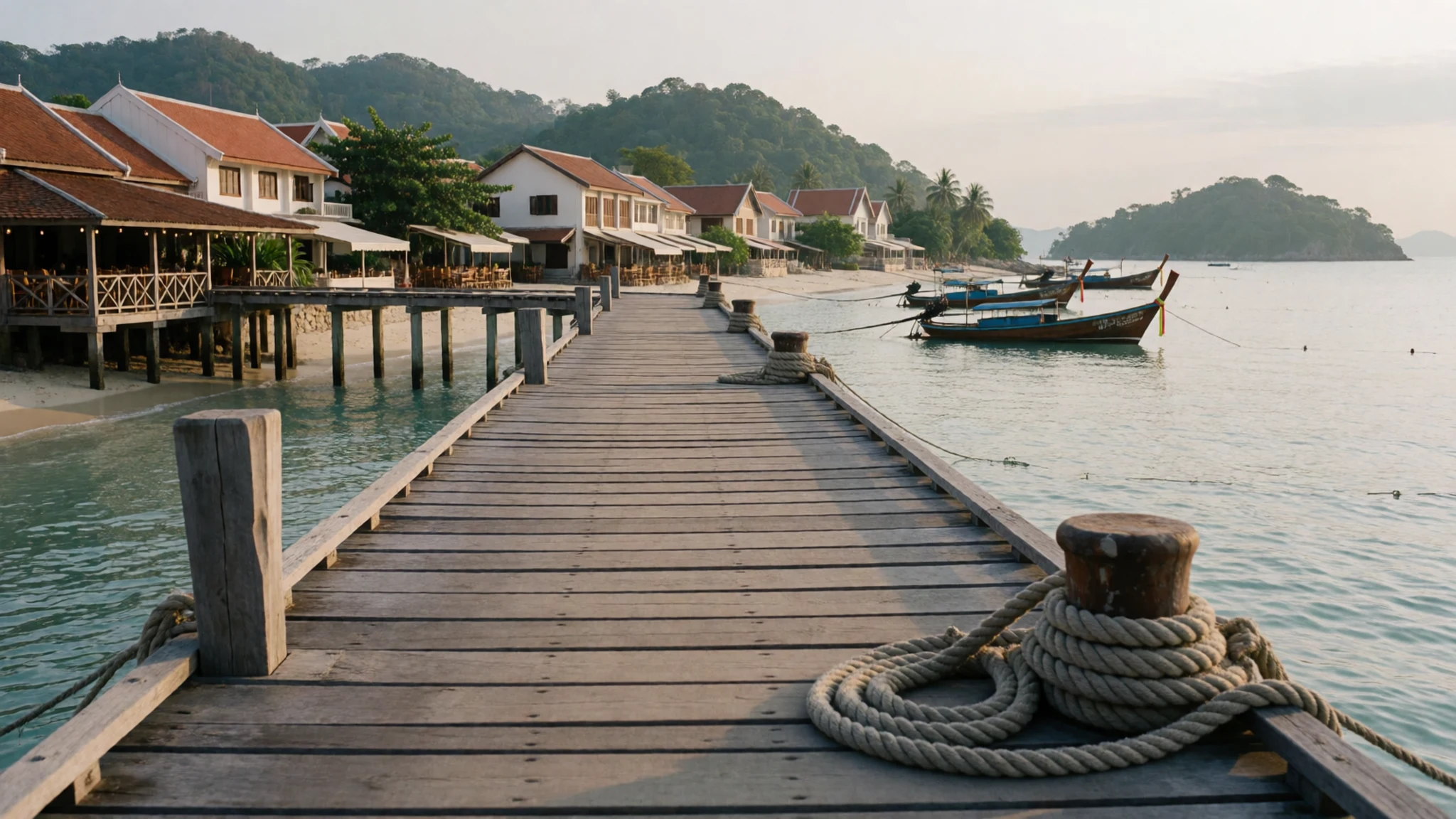
- Big Buddha Beach (Bang Rak) — Northeast coast
Also called Big Buddha Beach, this northeast shore offers good swimming and wide views across the water. The area has developed a lot, so you will find restaurants and shops, but it still works for a slow afternoon. Visit the large Buddha figure in the late afternoon, when the light is softer and the crowds thin out.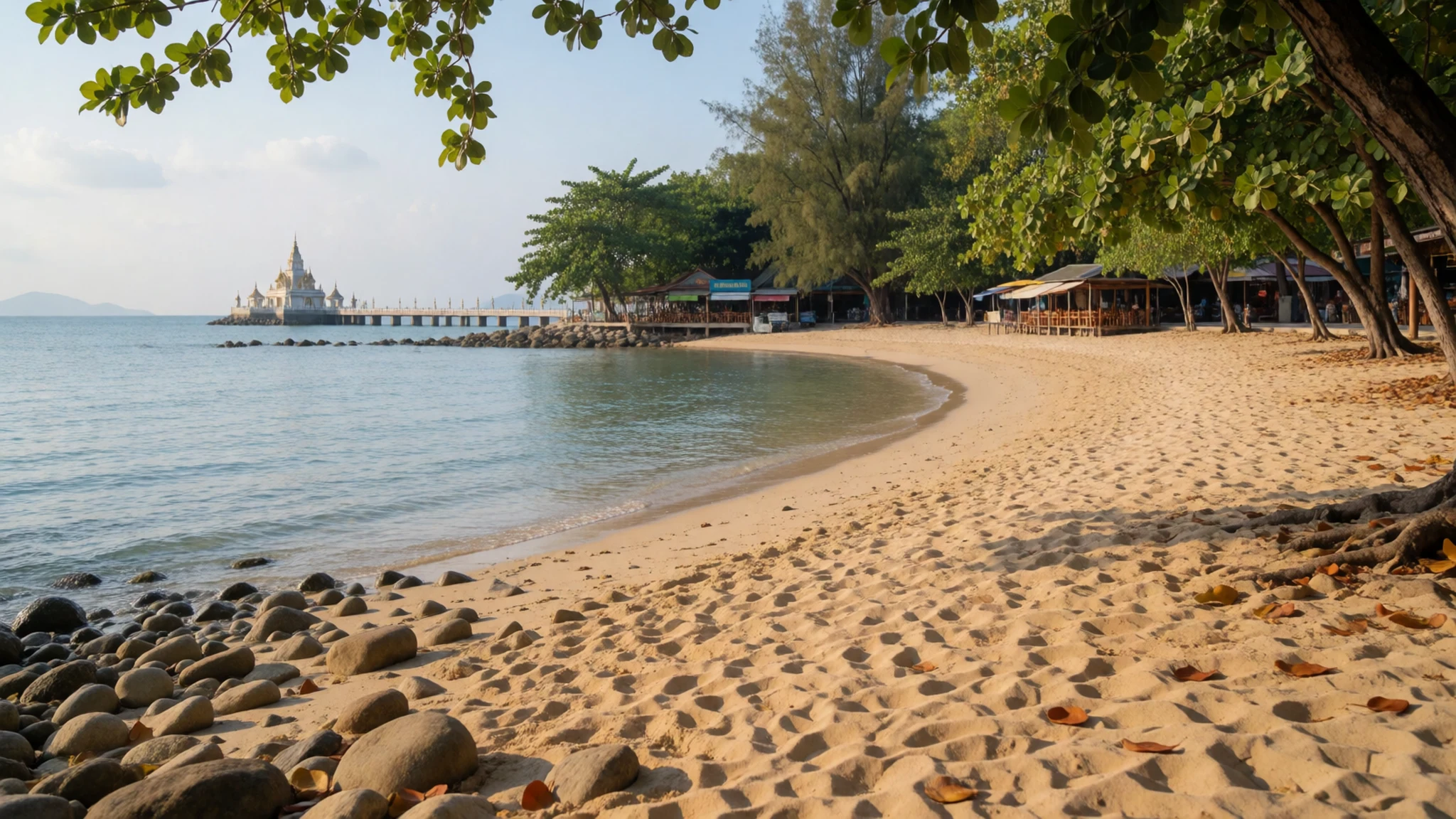
- Hin Lat Waterfall — Near Ban Lipa Yai, inland west
One of the easiest waterfalls to reach, since you can drive most of the way. It is a good way to see the island's green interior without a long walk. Wear closed shoes, because the rocks around the pool can be slippery, and go early to enjoy the shade before the day heats up.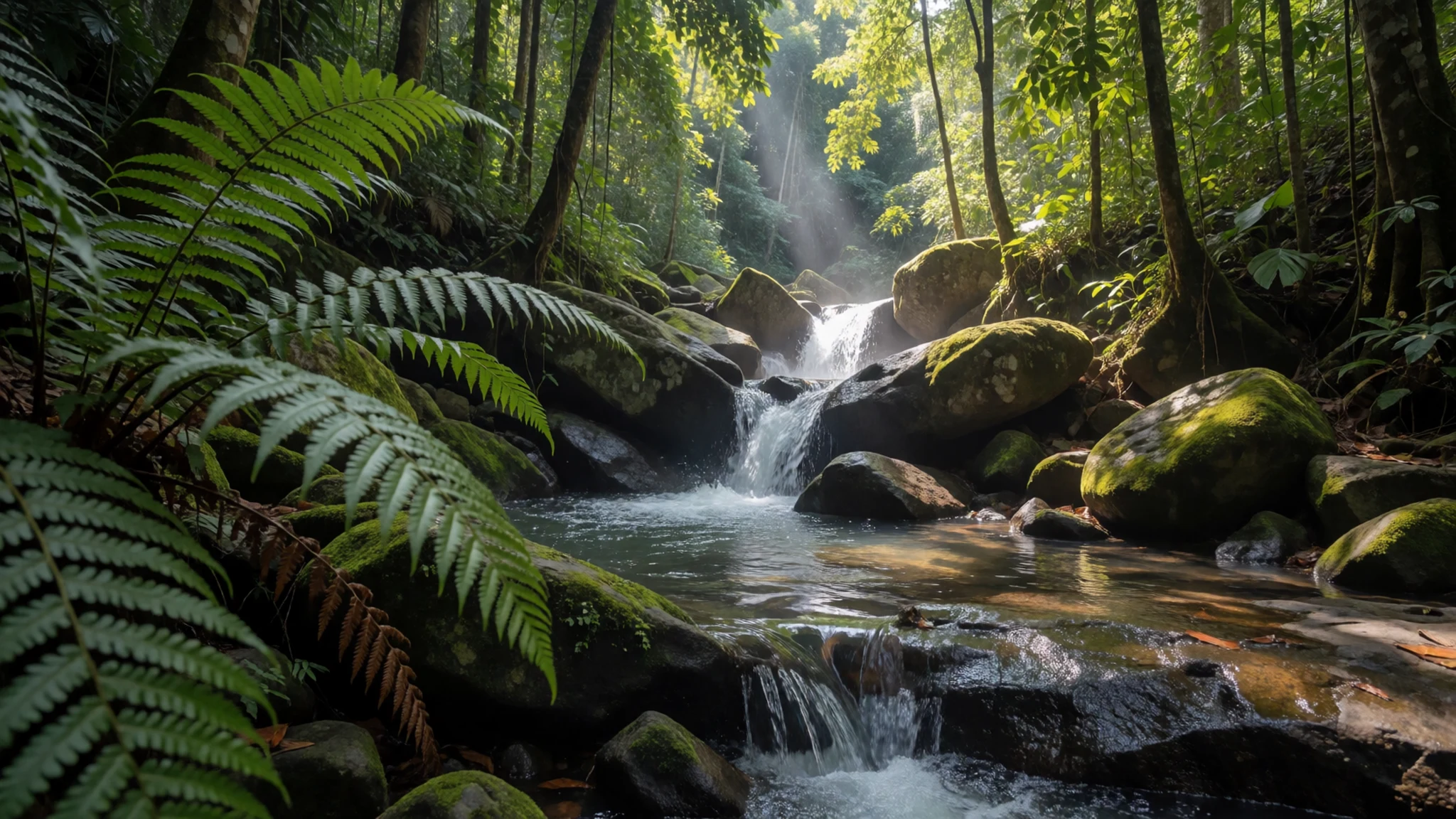
- Grandmother and Grandfather Rocks — South end of Lamai Beach
Two large rock formations at the south end of Lamai Beach, whose odd, suggestive outlines have made them one of the island's best-known sights. Visitors come in numbers, especially at the end of the day, so the viewpoint can be busy. Keep to the paths and treat the rocks as a natural feature rather than a backdrop for rough behaviour.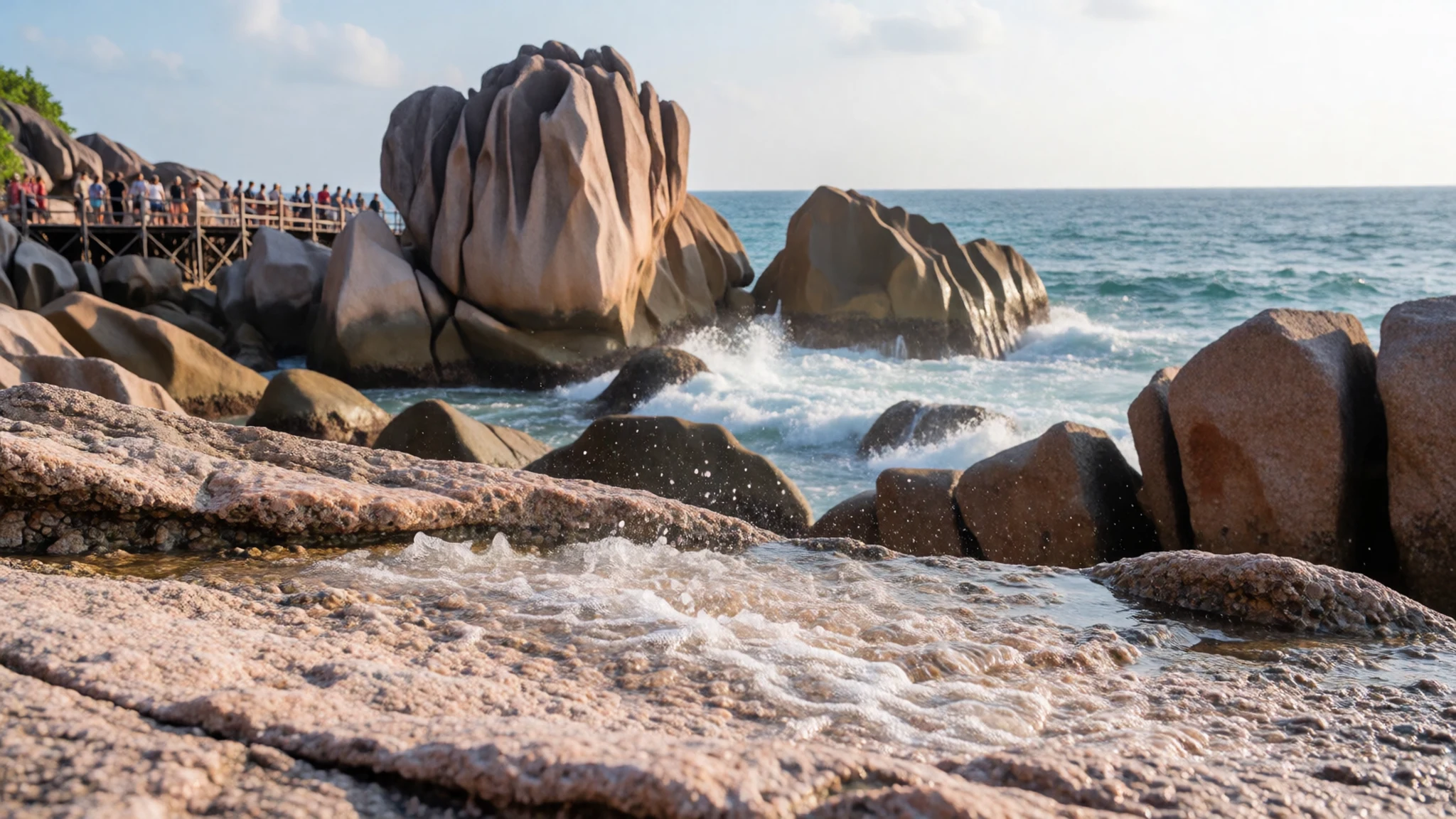
Culture
Samui speaks a dialect of its own and keeps customs, a cooking style and ceremonies that differ from elsewhere in Thailand. The island's calendar follows village life. Loy Khro is one of the most visible rituals: small craft are launched into the sea carrying hair, nail clippings and other offerings meant to carry away misfortune. In June, villages hold Lah Pho Ta before their shrines, offering savoury and sweet food to guardian spirits, followed by the Manora. Southern habits of sharing home-cooked food still shape temple fairs and beach gatherings. Newer events have arrived too, including a Latin music festival and a regatta, which sit alongside the older observances. If you are invited to a temple fair or village ceremony, watch what others do first, sit where you are directed, and ask before photographing people or their offerings, and remove your shoes before entering any shrine or temple hall.
What to wear
Traditional dress on Samui follows the wider southern Thai style. For ceremonies and formal occasions, people wear a wrapped, sarong-style skirt with a fitted blouse, usually in silk or cotton, and the woven patterns and colours change with the occasion. Silk, cotton and hand-woven cloth are the textiles most often seen in these outfits. Muslim communities in the south may dress more modestly, and women often cover their hair.
Day to day, most people dress for the heat. In the resort areas that means shorts, T-shirts, sundresses and flip-flops. For offices and government buildings, trousers or a long skirt with a collared shirt are more usual.
For a visitor, pack light, breathable cotton or linen. Cover shoulders and knees when you enter a temple, and keep beachwear to the sand and the resort areas. Closed sandals or trainers suit jungle paths and wet waterfall rocks, and a light layer helps in air-conditioned restaurants.
What to eat
- Khanom jeen — Morning markets and small local eateries away from the beach strips
Fresh rice noodles served with a fish curry sauce, eaten by many locals for breakfast or lunch. You add bean sprouts, herbs and crunchy vegetables from the bowl in front of you. It is one of the most typical southern dishes, and it is cheap and filling.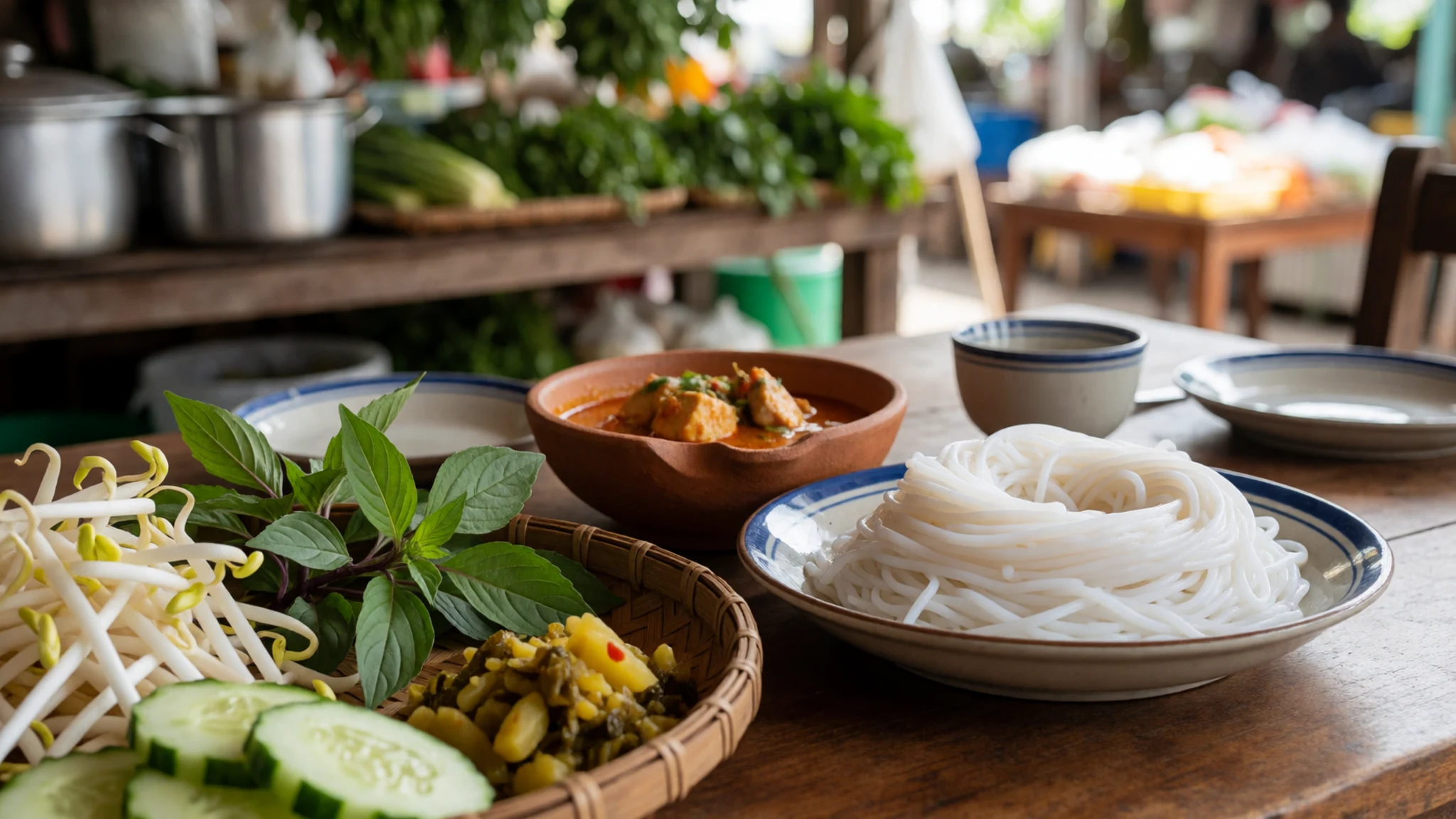
- Massaman curry — Muslim-run curry shops and restaurants in the towns
Massaman is an Indian-style Muslim curry, rich with coconut milk, tamarind and peanuts, often served with potato and beef or chicken. It is gentler than many southern dishes, so it makes a good first curry. Look for it at Muslim-run curry shops and restaurants in the towns.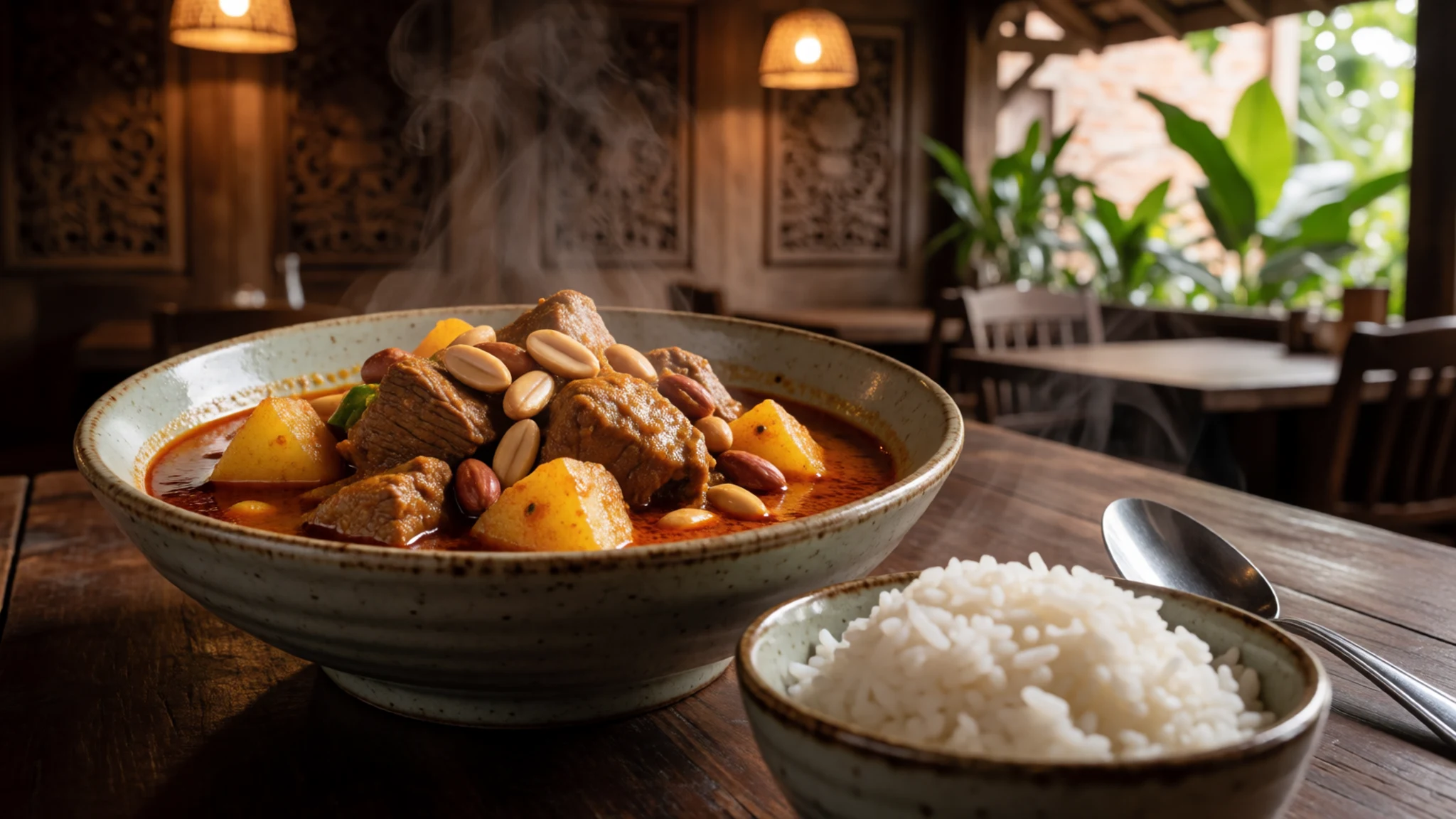
- Chicken biryani — Muslim-run eateries near the main towns
Chicken biryani shows the Indian influence on southern cooking, with fragrant rice, spices and tender chicken. It is a filling lunch and easy to find near the main towns. Ask for a mild version if you want to avoid heat. - Salted eggs — Night markets and roadside stalls
A local favourite sold at markets and roadside stalls. The rich, savoury yolks are usually eaten with rice or simply as a snack. Buy a few from a morning market or a roadside stall, and eat them with plain rice. - Grilled seafood — Seafront restaurants on the north coast, Bophut especially
Seafood is the natural choice on an island, grilled whole or cooked in curries at beach restaurants. Supply can fall short in the busiest months, so popular dishes may run out. Bophut has a good reputation for its restaurants, and some places keep separate menus for Thai diners, so ask if you are unsure.
Plan it
Best time. The drier stretch on the gulf side runs from about January to April, with calmer seas for diving and boat trips, while May to August brings noticeably more rain. The wetter weather usually arrives later in the year. Check a current forecast before you book, since rainfall and sea conditions can vary from year to year.
How long. 3–4
Getting there. Samui Airport takes direct flights. For the last leg, a shared minibus to the beaches is the cheapest pre-booked option, while taxis and ride-hailing apps cover the rest. Agree a fixed fare before you set off, because many drivers will not run the counter.
Budget. mid
Tips
- Book airport transfers in advance if your hotel offers them, since the arrival hall is busy
- Chaweng and Lamai fill up around sunset, so go early for the best beach spots
- Book a day boat trip to Ang Thong marine park ahead of time
- Carry cash for small stalls and markets, and use cards mainly at larger hotels
- Drink bottled or filtered water, because tap water is not potable
Etiquette
- Dress modestly in towns and temples, and keep swimwear to the beach
- Remove your shoes before entering a temple hall or shrine
- Ask before photographing people at ceremonies or their offerings
Nearby
Sources
- Wikidata Q270375 (CC0)
- Wikipedia: Ko Samui (rev 1378858009) (CC BY-SA 4.0)
- Wikivoyage: Ko Samui (rev 5390868) (CC BY-SA 4.0)
- Photo: Lipa Noi Beach, Manfred Werner (CC BY 3.0)
- Photo: Bo Phut Beach, Per Meistrup (CC BY 3.0)
- Photo: Sunrise in Ko Samui, Lisa Tancsics (CC BY 3.0)
- Photo: Namuang Waterfall, Maksim Sundukov (CC BY 3.0)
- Photo: Ape collecting coconut, Thajsko (CC BY 3.0)
- Photo: Thailand, Samui, Frog, Yuriy Surov (CC BY 3.0)
- Photo: Chaweng-Noi, Roma Neus (CC BY 3.0)
- Photo: Guan Yu statue, Superraptor123 (CC BY-SA 4.0)


