Koh Rong
Koh Rong, Cambodia
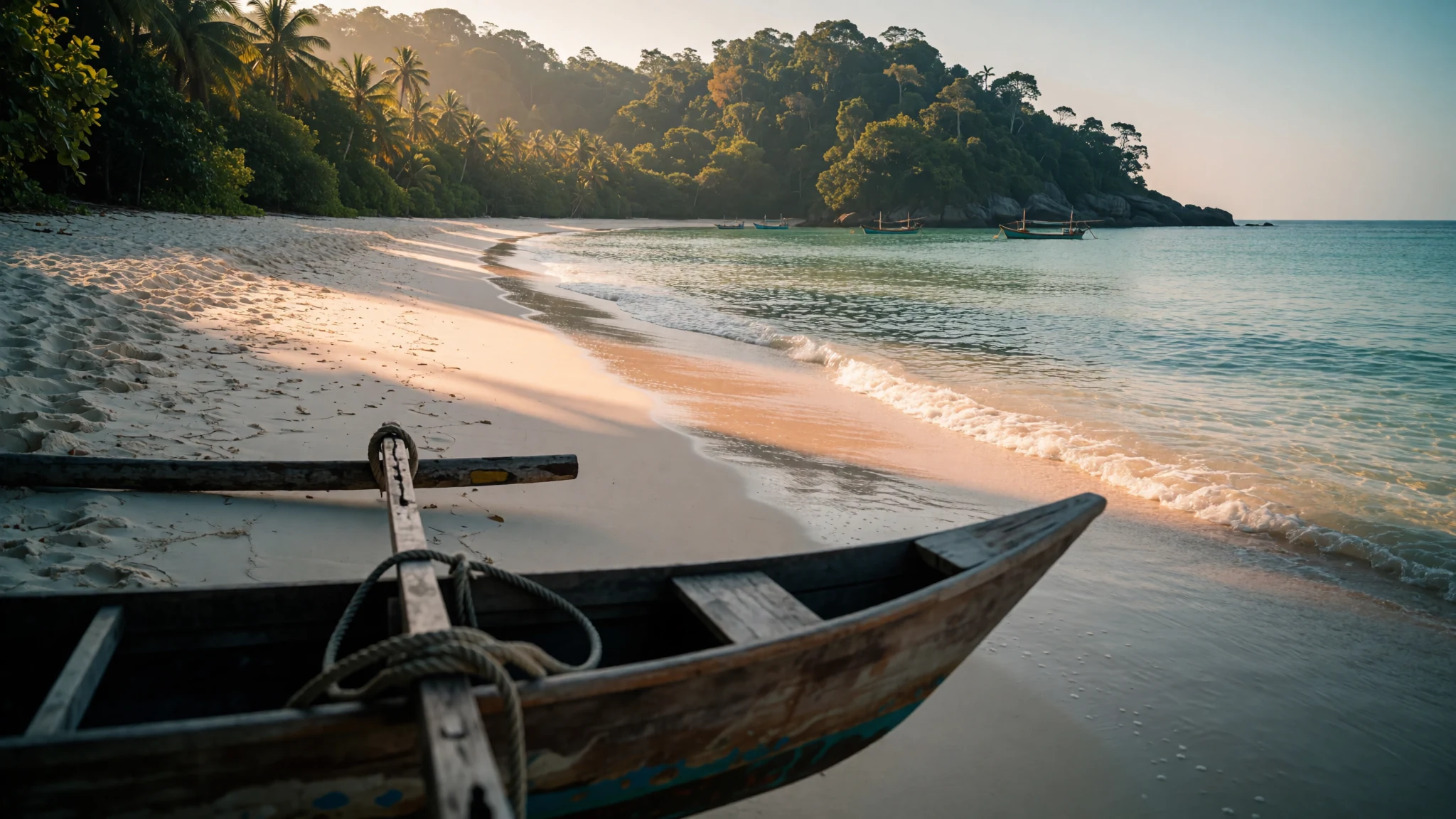
Koh Rong is Cambodia's second largest island, with long white and rose-tinted beaches, forested hills and water that glows at night.
The place
Koh Rong (កោះរ៉ុង) lies in the Gulf of Thailand, about 25 km from the port city of Sihanoukville in Preah Sihanouk province. It is the second largest island in Cambodia and the biggest of the islands off that stretch of coast. Its area is about 78 square kilometres, and it runs diagonally from south-east to north-west. Most of the interior is forest. A mountain of about 316 m rises at the north-western end, and the hills there feed the creeks and estuaries that reach the sea.
The coastline is the island's main draw. Roughly 43 km of it is beach, spread across at least 23 separate stretches, with sand that runs from white through beige to a pinkish rose. Rocky headlands and sandstone outcrops divide the bays, and the views from the water are often the most striking part of a visit.
Four village communities live on the island: Koh Touch, Doeum D'keuw, Prek Svay and Sok San. Koh Touch is where most arrivals land and has the cheapest eating and sleeping. Development has gathered in bungalow resorts, guesthouses and beach bars, mostly along the main beaches. Electricity comes largely from generators, so power is strongest in the evening. Koh Rong suits beach holidays and divers, but peak weeks feel busy, and the party scene can be loud compared with the quieter bays.
Its story
Koh Rong's modern history is short. For many years the waters around the island were under Navy authority, which kept it largely undeveloped. Since 2000, the Department of Fisheries has been the main government body responsible for managing living aquatic resources, working with local authorities, villagers, fishers and NGOs. That was also the year Koh Rong was set up as a commune.
Development followed. The Cambodian government issued a land concession, and a consortium called the Royal Group took a 99-year lease. The group announced plans for a resort it presented as a model of environmental planning. Those ambitions have sat uneasily with conservation concerns. In 2010, Cambodian authorities warned developers about the environmental impact of tourism and infrastructure projects, which were speeding up across the island.
Two later milestones shape how the island is governed. In February 2018, the Koh Rong Marine National Park was declared around the island, the first marine national park in Cambodia. In January 2019, a government sub-decree created a new city from Koh Rong and the neighbouring Koh Rong Sanloem. Television has also left its mark, since several seasons of the reality series Survivor were filmed here, bringing attention well before the bars and resorts did.
The island appears in older travel writing too. The French naturalist Henri Mouhot sailed past this island group on his way from Bangkok towards Kampot in 1864, and he recorded how much the scenery impressed him. Those same waters now sit inside a national park and a busy holiday coast.
What to see
- Long Set Beach — Long Set, west coast
Long Set Beach is the best-known stretch of sand on the island, with powdery white sand and a line of bungalows and restaurants behind it. It is where many visitors start, so expect company at weekends and through the busy season. Walk to the quieter end of the bay in the early morning, when the light is good and the sand is still cool underfoot. Check which side of the bay is calm that day, because conditions can change quickly.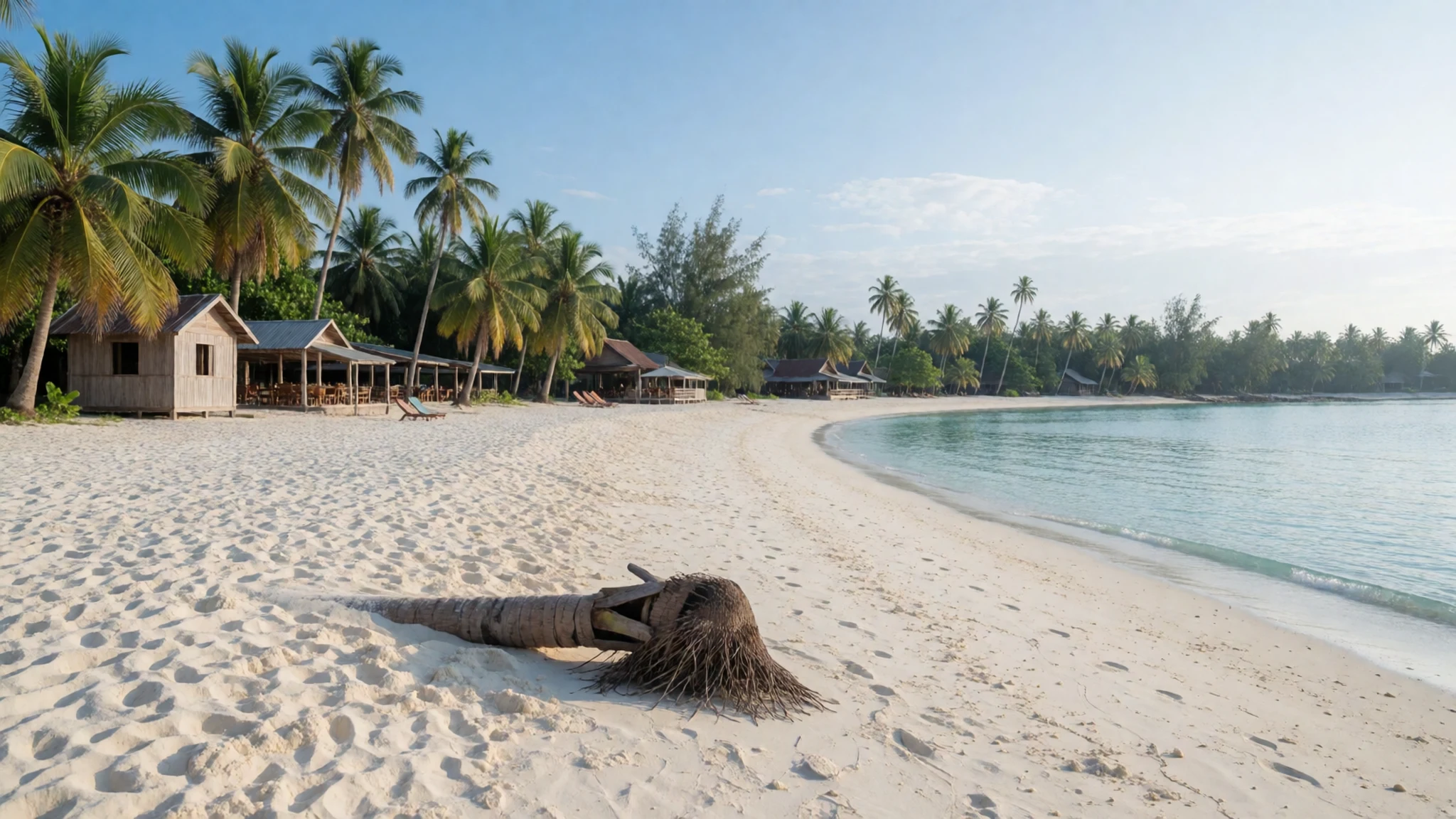
- Phosphorescent water — Quieter beaches away from the main bars
The island's most talked-about attraction is the glowing sea. Disturbed plankton light up in the shallows, and the water sparkles like scattered stars when you wade through it. The effect is best in knee-to-waist-deep water on a dark stretch of beach, away from the bar lights. Because the island has little light pollution, it can be seen on most nights, which makes an after-dark walk along the sand well worth the effort.
- Interior trails and the central plains — Interior, from the beaches near Paradise Bungalows
Most of the island is forest, and marked trails link the beach near Monkey Island and Paradise Bungalows with other bays. The paths are rough, so good shoes and water are essential. Ask locally before setting out, since trails are not all signed, and carry a map or offline route. The central plains open up between the hills, offering a quieter contrast to the coast and a sense of how much of the island is still undeveloped.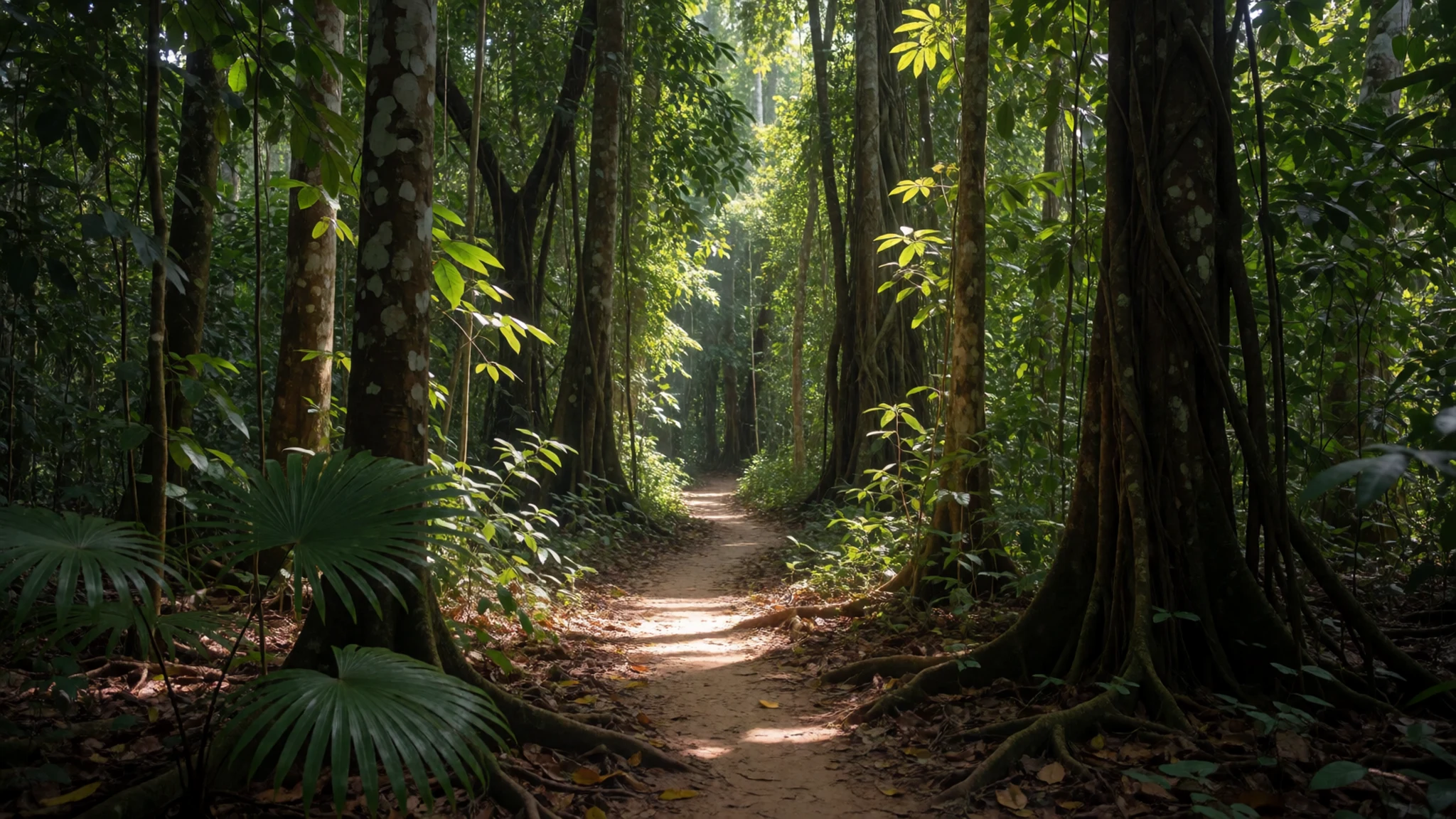
- Waterfalls near Sok San — Near Sok San village, north-west
Koh Rong's largest waterfall lies near Sok San village, on the hillside above the island's forest. The falls are seasonal, so they run strongest after rain and may be reduced to a trickle in the dry months. Visit in the morning, when the path is cooler and quieter. Wear shoes that can handle wet rock, and treat the stream with care, since the villages downstream depend on it.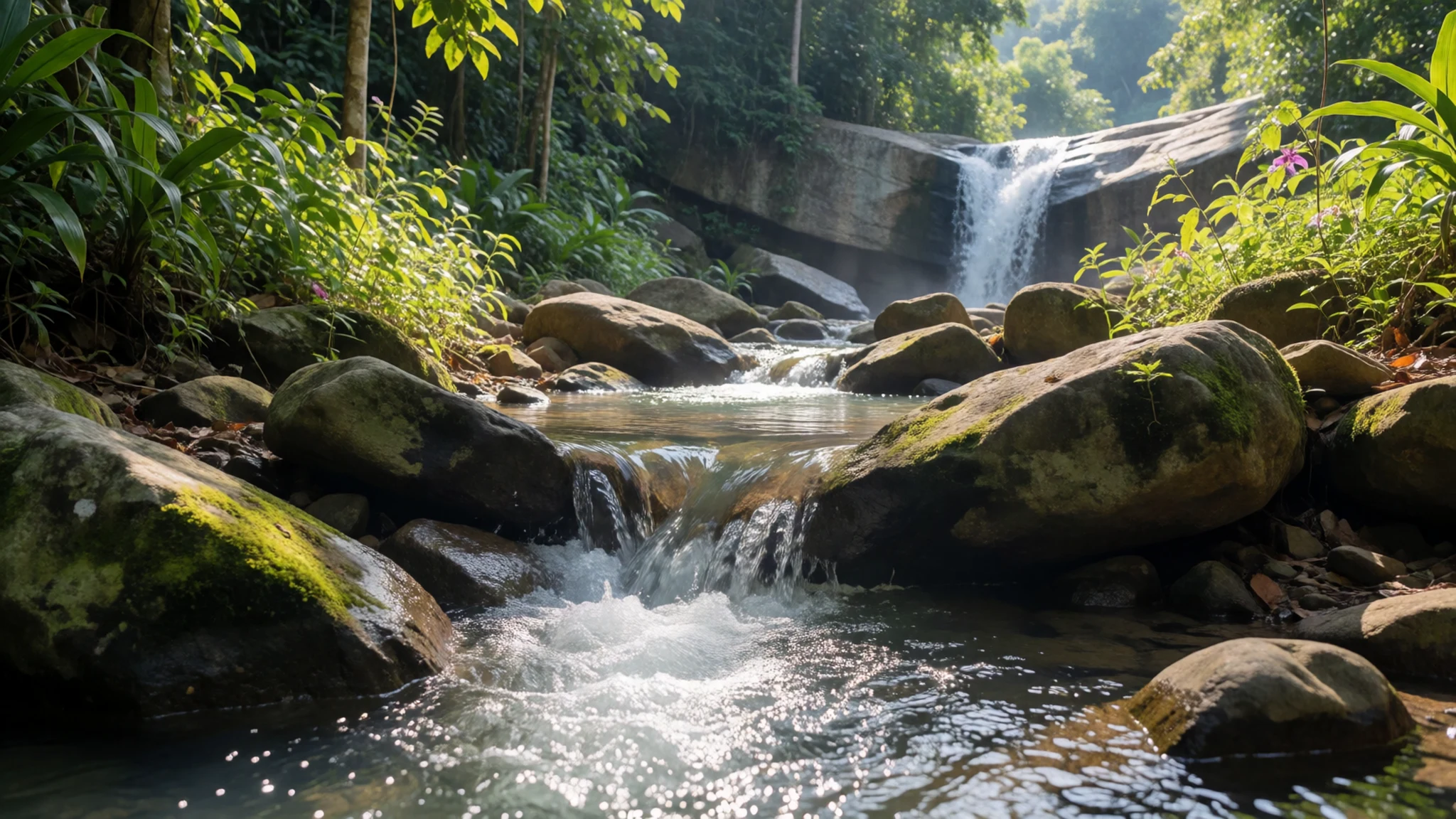
- Diving, snorkelling and island views — Reefs off the main beaches and headlands
The reefs and rocky sites around the island are good for diving and snorkelling, both straight off the beaches and at nearby sites. The sandstone formations and headlands make rewarding viewpoints, and from higher ground you can see across to Koh Koun and Koh Rong Sanloem. Book dive trips through reputable operators who follow the marine park rules, and check conditions before you go out.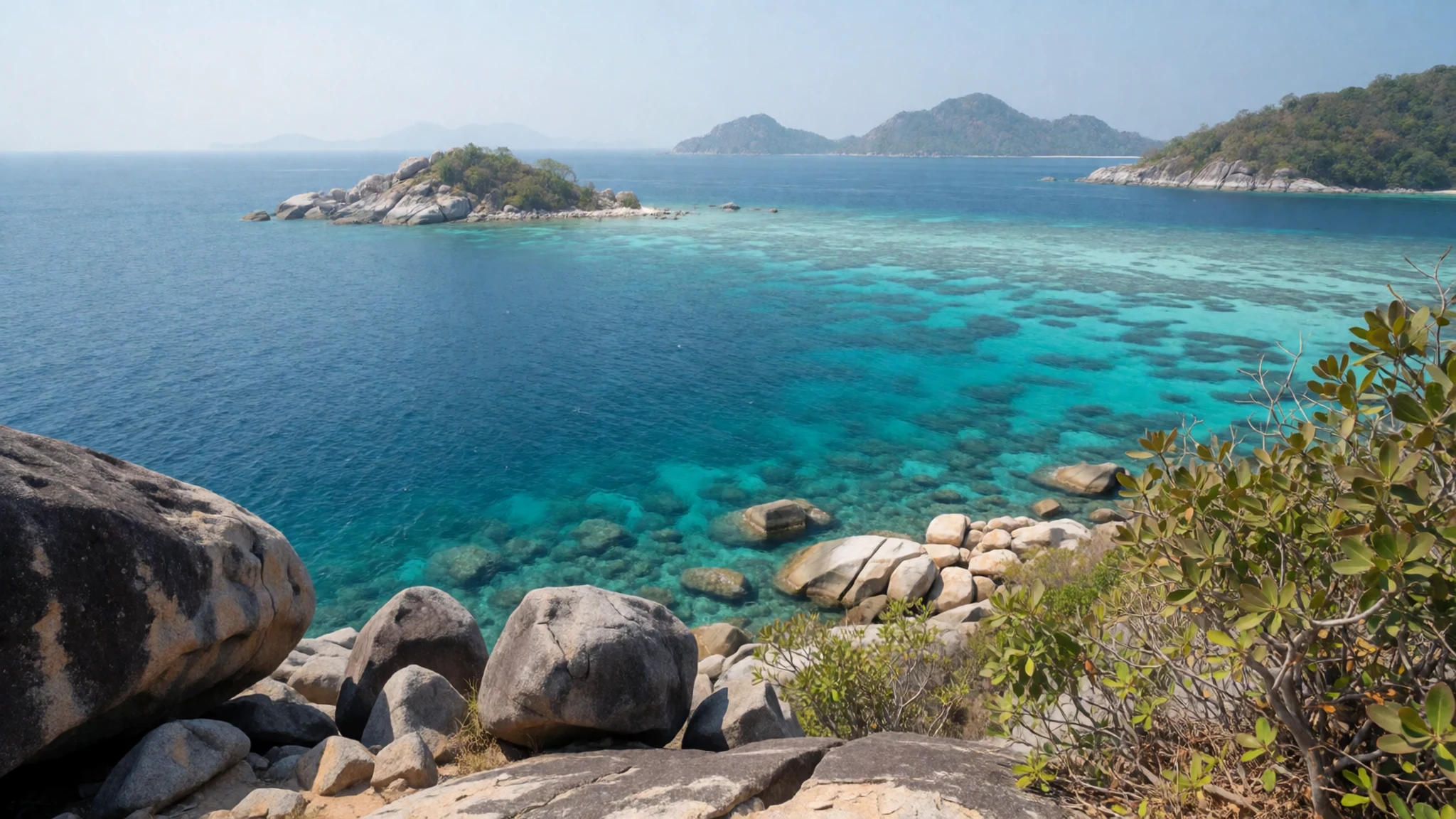
Culture
Koh Rong is a working island, not just a holiday resort. Four village communities live here, with fishing families, schools and small shops that have nothing to do with the beach trade. Khmer is the everyday language, and a few words of greeting go a long way in the villages around Koh Touch. Visitors are generally welcome to walk through, but pointing a camera at a house, a school gate or a child can feel intrusive, so ask first and show any photograph you take. Modesty matters once you leave the sand. Cover shoulders and knees when you walk through a village or visit a pagoda, even though swimwear is normal on the beach. Party nights run late at a few bars, and sound carries across the water, so keep your noise down after the last bars close and avoid taking the party into the village lanes. Ask before photographing any villager, and never share an image of a child from the village without permission.
What to wear
On Koh Rong, traditional dress belongs to the Khmer wider culture rather than to any island-specific style. The sampot is the long woven cloth wrapped around the waist, worn by both men and women, and it is still seen in villages and at festivals. The krama is a checked cotton scarf worn around the neck, head or shoulders, and it is practical as well as traditional. Silk and cotton weaving are the old textile crafts, and silk is kept for ceremonies, weddings and religious occasions. Most people on the island now wear everyday clothes: T-shirts, shorts, sarongs, sportswear and flip-flops. Visitors should pack light, quick-drying clothes for the heat, with long shorts or skirts for villages and temples and a sarong to cover your legs. Bring a hat, sunglasses and sun cream, and sturdy sandals or shoes for rocky paths and wet forest tracks. Swimwear is fine on the beach but change back into covered clothes before walking into a village.
What to eat
- Khmer village meals — The Khmer restaurants in Koh Touch village
On Koh Rong, the cheapest and most local meals are served in the Khmer restaurants in Koh Touch village. These simple places serve rice with stir-fried vegetables, curries and grilled fish, often better than the menus suggest. Eat where villagers eat at lunchtime, when the food is freshest, and expect plain settings with plastic chairs.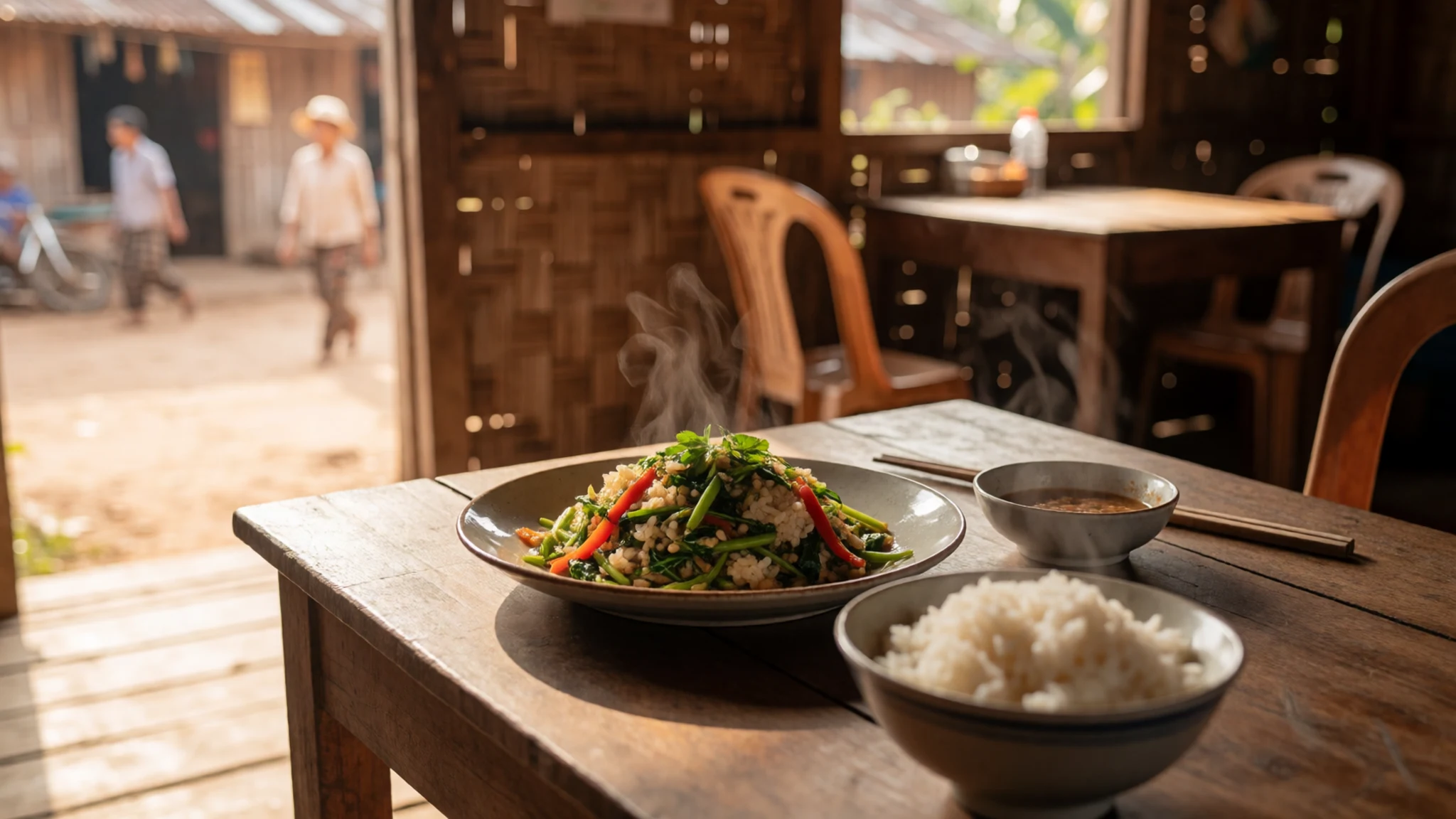
- Beach barbecue — Restaurants along the main beaches after dark
Most beach restaurants run a grilled-food menu after dark, with fish, prawns, chicken and pork skewers served with rice and dipping sauces. It is an easy dinner after a day in the sea. Prices are higher than in the village, and the atmosphere is livelier, so book a table if you want a quieter corner on a busy night.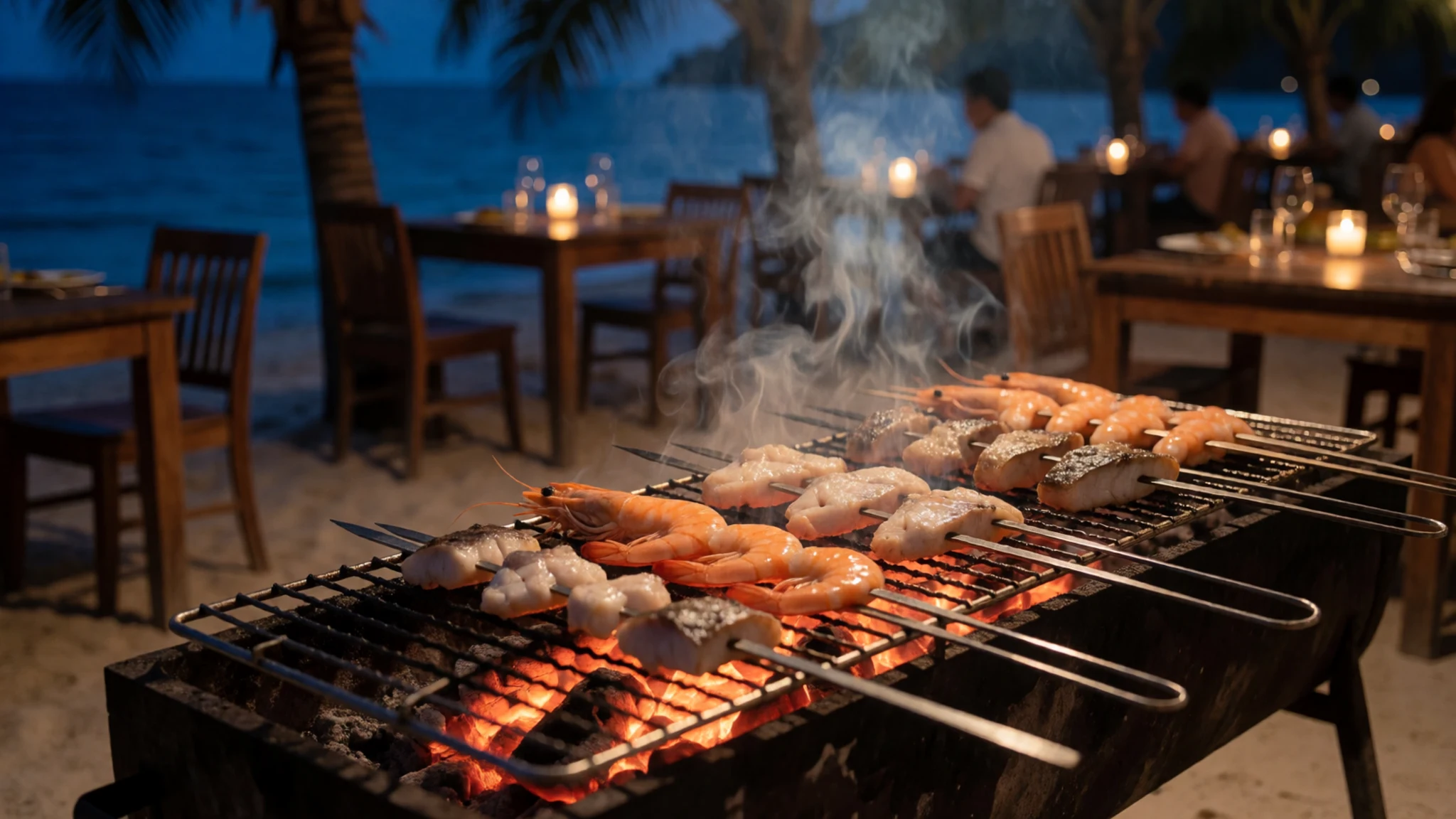
- Amok — Any Khmer restaurant, especially in the village
Amok is a Khmer dish of fish in a coconut-milk custard, flavoured with kroeung paste and steamed in banana leaf. It is mild, fragrant and rich, and it is a good first Cambodian dish to try. Most Khmer restaurants on the island serve a version, so ask for it at the village eateries. - Kuy teav — Morning noodle stalls near the village road
Kuy teav is a light noodle soup with pork or chicken, herbs and a clear broth, and it is the usual breakfast in many parts of Cambodia. It suits a morning after a late night. Look for the noodle stalls near the village road or on the way to the ferry area. - Lok lak — Village Khmer restaurants and resort menus
Lok lak is seared beef, served with onions, tomato and a sauce of lime and black pepper, usually with rice and a fried egg. It appears on many menus, from village restaurants to resort kitchens, and it is filling after a long walk. Check that the beef is cooked fresh to order. - Cold beer and cocktails — Bars on the main beach, especially the one running fire shows
Klang is the local beer most often found in bars and restaurants, and most places also serve cocktails and buckets. The bars on the main beach often run fire shows at night, so this is where the evening usually starts. Most close by midnight, though one or two stay open later with electricity.
Plan it
Best time. Check the forecast before you travel. Generally, the drier months from December to April suit beach days and snorkelling best, while the wet season runs from May to October and peaks in July. The wetter months bring heavier rain, rougher seas and more ferry disruption, and the seasonal waterfalls run strongest after rain.
How long. 3–4
Getting there. Take a ferry from Sihanoukville, about 25 km away. Daily high-speed ferries leave the mainland port for Koh Touch and take about 30 to 45 minutes, while slower boats also run. The slower boats are basic, with wooden benches, a small toilet and a plank to step across, so travel light and check the timetable locally.
Budget. low
Tips
- Check return ferry times on arrival, since the service is limited, and plan the day around them
- Bring cash, because many village and beach places take little else
- Carry water and snacks on the boat, as not every ferry sells them
- Expect power mainly in the evening from generators, so bring a torch and a power bank
- Choose a bungalow with its own restaurant for quieter nights, since the parties are on the main beach
- Use sun cream and a hat in the middle of the day, and walk the trails early
Etiquette
- Ask before photographing villagers or children
- Dress modestly when walking through a village or visiting a pagoda
- Keep party noise away from the village lanes after the bars close
Nearby
Sources
- Wikidata Q1639699 (CC0)
- Wikipedia (rev 1364355035) (CC BY-SA 4.0)
- Wikivoyage (rev 5407482) (CC BY-SA 4.0)
- Photo 01-koh-rong-cambodia.jpg, MoonsMoon (CC BY 4.0)
- Photo 02-koh-rong-cambodia.jpg, MoonsMoon (CC BY 4.0)
- Photo 03-waterfall-on-koh-rong-island-cambodia-near-sok-san-village-a.jpg, Wikirictor (CC BY 3.0)
- Photo 04-elementary-school-koh-rong.jpg, Wikirictor (CC BY 3.0)
- Photo 05-koh-rong-central-plains.jpg, Wikirictor (CC BY 3.0)
- Photo 06-koh-rong-viewing-koh-koun-and-koh-rong-sanloem.jpg, Wikirictor (CC BY 3.0)
- Photo 07-prek-svay-village-koh-rong.jpg, Wikirictor (CC BY 3.0)
- Photo 08-road-clearing-koh-rong-island.jpg, Wikirictor (CC BY 3.0)


