Kochi
Kochi, India
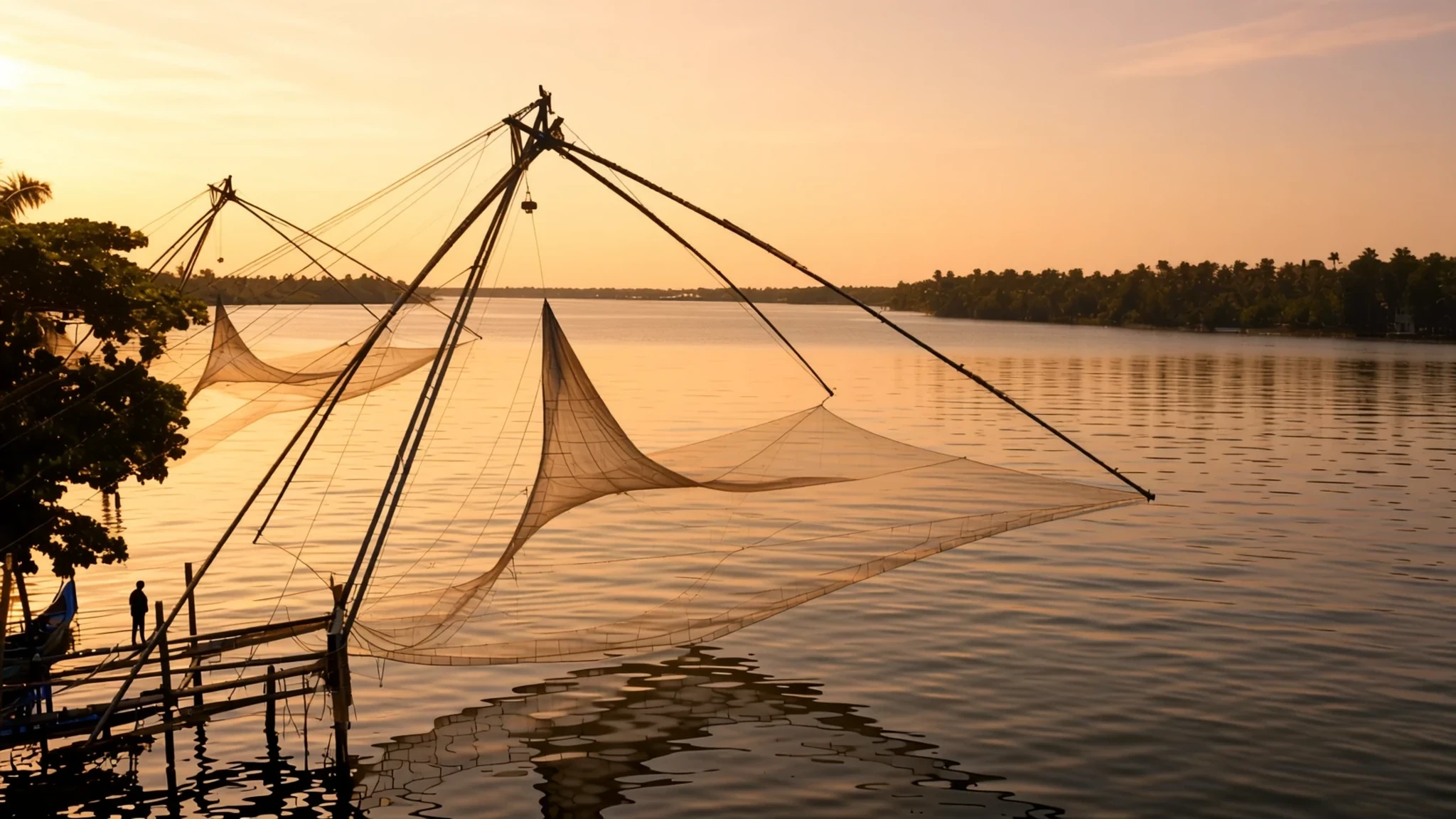
Go to Kochi for a harbour city where Portuguese, Dutch and British traces sit beside Kerala's fishing boats, backwaters and seafood kitchens.
The place
Kochi, known in older English as Cochin, is a port city on the Malabar Coast of south-western India, facing the Laccadive Sea. It lies in Ernakulam district in the state of Kerala and acts as the state's financial, industrial and commercial capital. The central business district is often called Ernakulam, and many people use that name for the mainland side of town.
Water shapes almost everything here. The city sits on a network of islands, peninsulas and reclaimed land joined by bridges and ferries, and harbour channels bring fishing boats and cargo ships into the same stretch of view. Fort Kochi, at the western tip, keeps the feel of an old trading quarter with narrow lanes and colonial-era houses. The eastern districts are busier, more modern and home to offices and new housing.
The population draws on people from across Kerala and most of India, and that mix shows in the languages, temples, churches and old synagogues found within a short walk of one another. The wider urban area reaches well beyond the city limits, so roads can be slow at rush hour and around the ferry terminals.
The climate is hot and humid for most of the year. The driest months, from December to February, bring the least rain and the mildest nights, so they are the most comfortable time to walk the old quarter, while the monsoon brings heavy rain that can flood low streets. Days go best when paced with breaks, and water is worth carrying at all times.
Its story
Well before Kochi grew into a city, Muziris, a harbour to the north that is generally placed at Kodungallur, which lies within Thrissur district, served as the main hub of India's spice commerce. Arab, Greek and Roman, Jewish, Syrian and Chinese merchants all knew it. A flood of the Periyar river in 1341 destroyed Muziris, and trade gradually shifted south to the Kochi area, which rose as a trading centre in its place.
Chinese records give some of the earliest firm detail. Ma Huan, a writer who travelled with Admiral Zheng He's treasure fleet, described the town in the early 15th century, and the Italian traveller Niccolò da Conti came through in 1440. Rivalry between Calicut and Kochi on the Malabar coast was intense at the time, so the Ming court chose to grant Kochi's ruler special status, a move that gave the local kingdom useful backing.
The Kingdom of Cochin grew out of a line of rulers who had fled from the Ponnani region after the Zamorin of Calicut annexed it. They settled first at Kodungallur and later moved to Kochi. When Vasco da Gama reached Kozhikode, the Zamorin fought the Portuguese, while the ruler of Cochin chose to ally with them. The Portuguese established Fort Emmanuel from 1503 and held it until 1663, when the Dutch took over. The Dutch later ceded the area to the United Kingdom, and the port passed into British hands.
What to see
- Fort Kochi and the Chinese fishing nets — Fort Kochi, western tip of the city
Fort Kochi is the place most visitors head for first, with its lanes of old merchant houses and its waterfront. The large cantilevered fishing nets on the shore are the image most people carry home. Crews lower and lift them by hand, usually in the early morning and again around sunset, when the light over the water is at its best. Walk the promenade slowly, and stop at the small fish market where the day's catch is sold.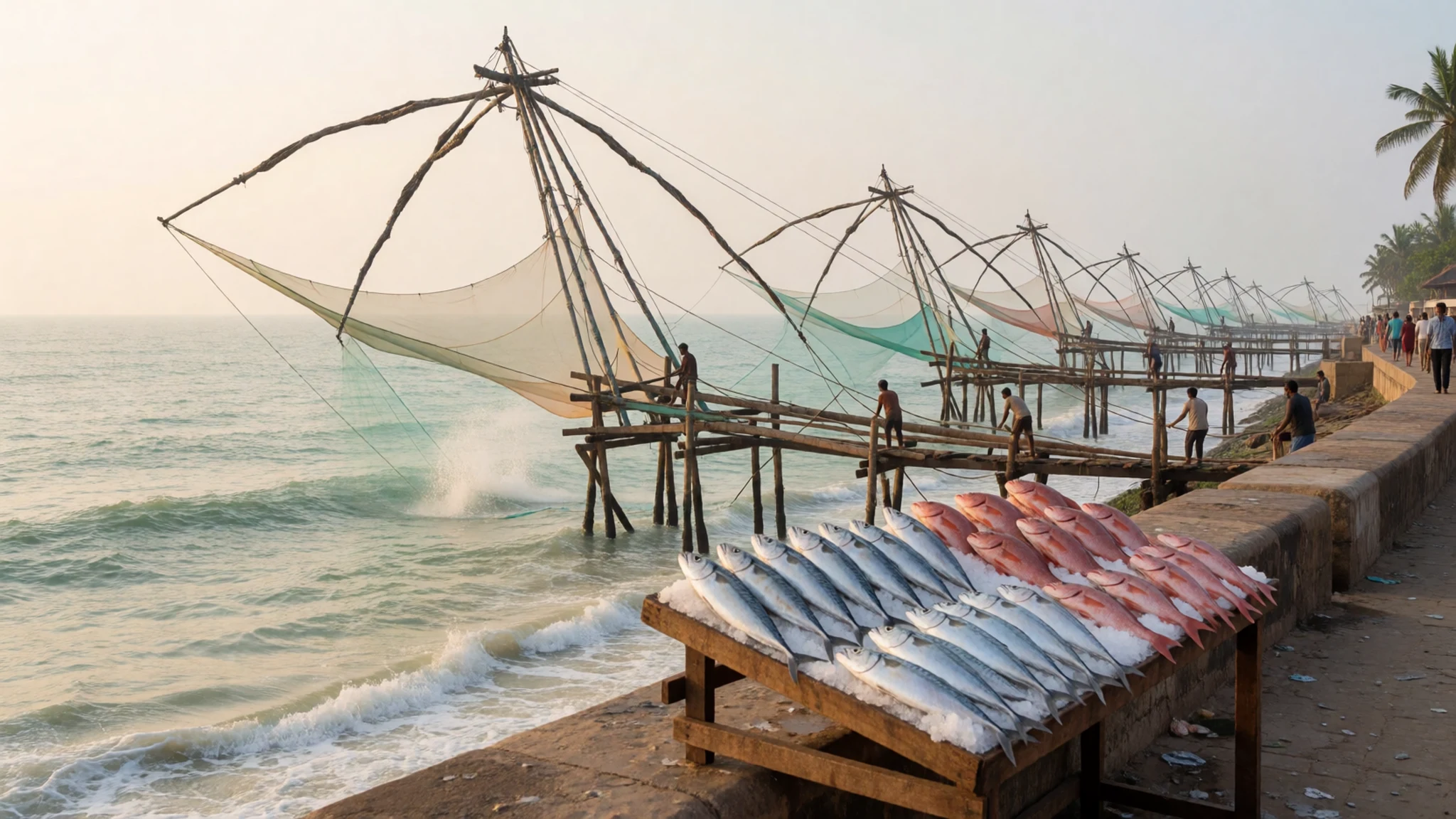
- Santa Cruz Cathedral Basilica — Fort Kochi
Santa Cruz Cathedral Basilica stands in the middle of Fort Kochi, a Catholic church with a pale, plain exterior and a calm interior. It has a long Portuguese-era history and has been rebuilt more than once. Sit quietly for a few minutes during a service or outside prayer hours, and keep to the side aisles if a congregation is gathered. The square outside is a good place to rest in the shade.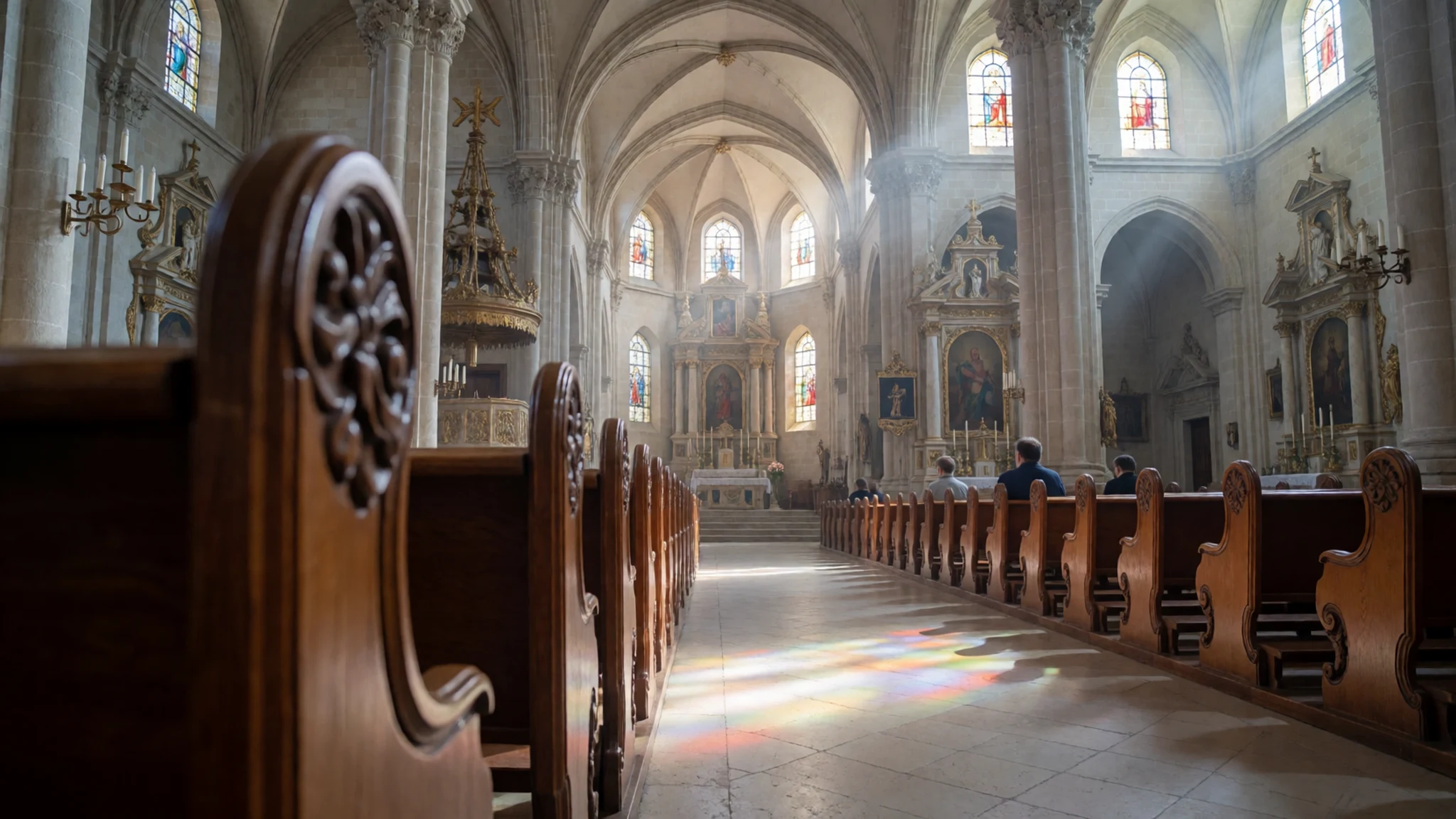
- Hill Palace, Tripunithura — Tripunithura, south of the centre
Hill Palace in Tripunithura was the residence of the Kochi royal family and is now a museum. Its long, low buildings hold royal regalia, paintings and furniture, and the grounds give a sense of how the old court lived. Local buses and auto-rickshaws run from the city, and the journey takes a while in traffic. Check the official site for opening times before you set out, as they vary.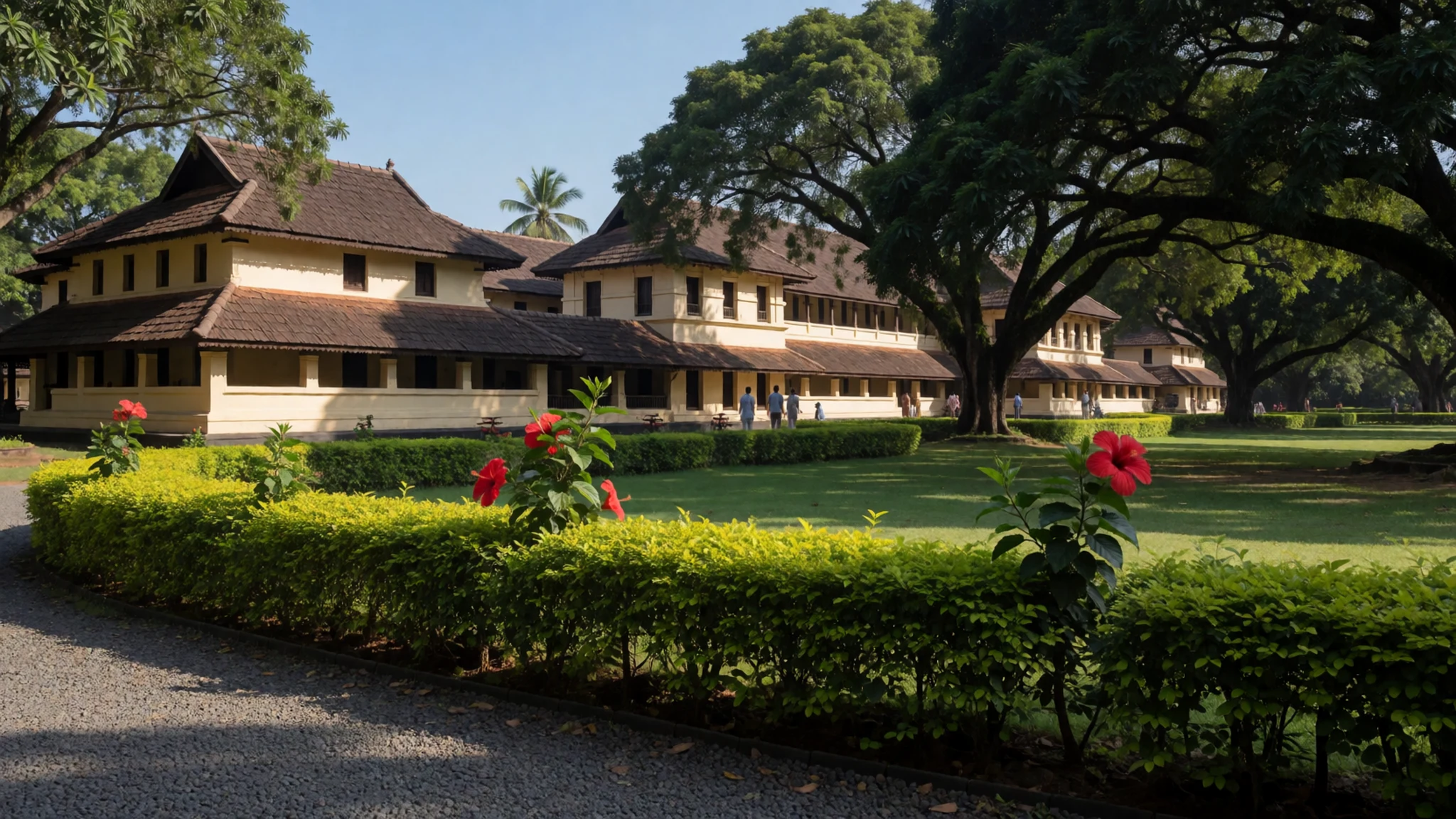
- Bolgatty Palace — Bolgatty Island, backwaters
Bolgatty Palace sits on an island in the backwaters, built in the colonial era and now run as a heritage hotel. The approach by water gives one of the best views of the palace and its gardens. Visitors who are not staying can usually walk the grounds, though it is worth checking the current arrangements first. Boats and ferries are the most pleasant way to reach it.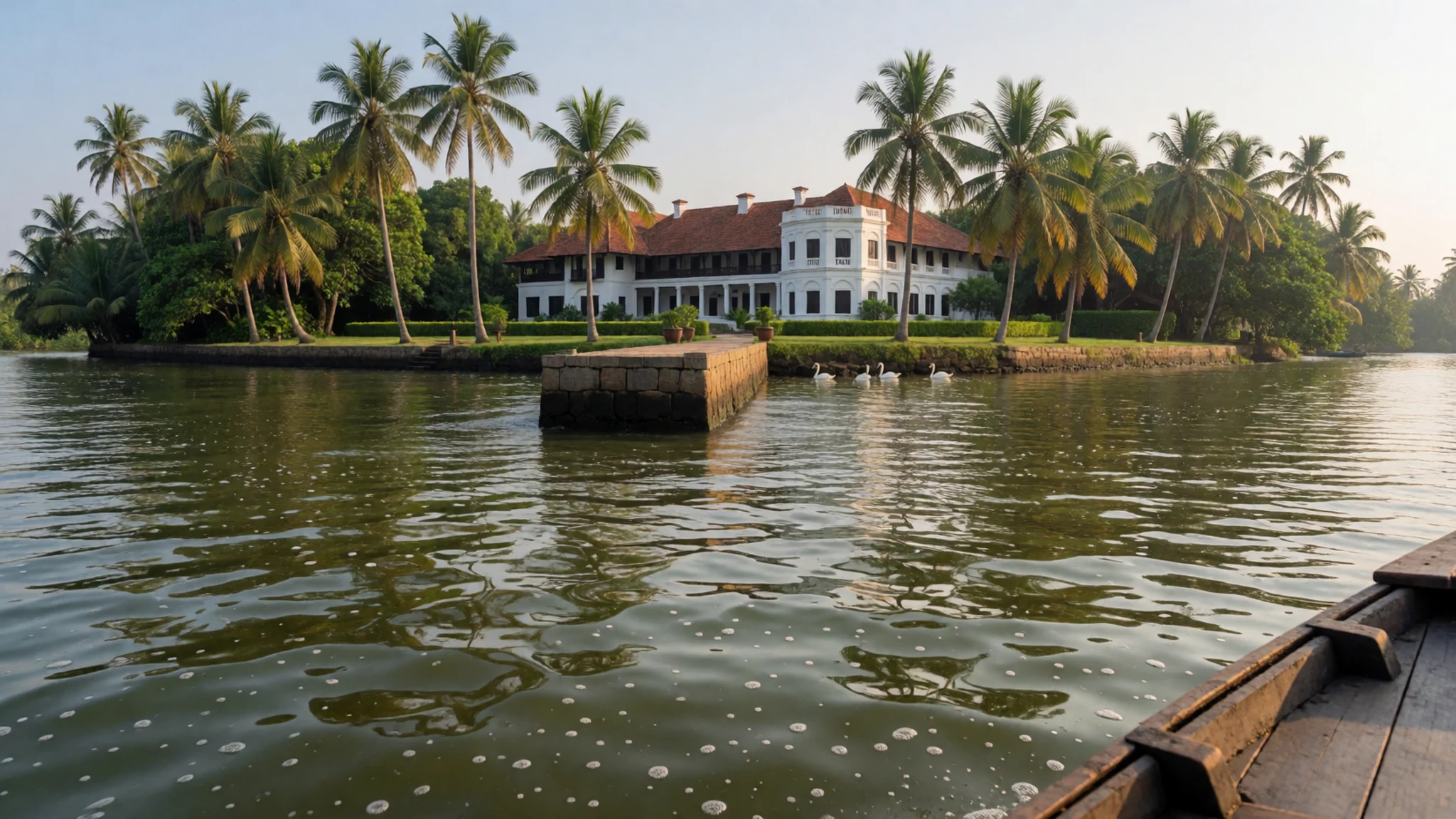
- Infopark Kochi — Kakkanad, eastern Kochi
Infopark Kochi is a technology park on the eastern side of the city, home to software firms and office towers. It shows the modern face of Kochi, the financial and industrial centre of Kerala. There is little here for a sightseer in the traditional sense, but it is a useful window into how the city is changing. Taxis and app rides are the easiest way to reach it from the centre.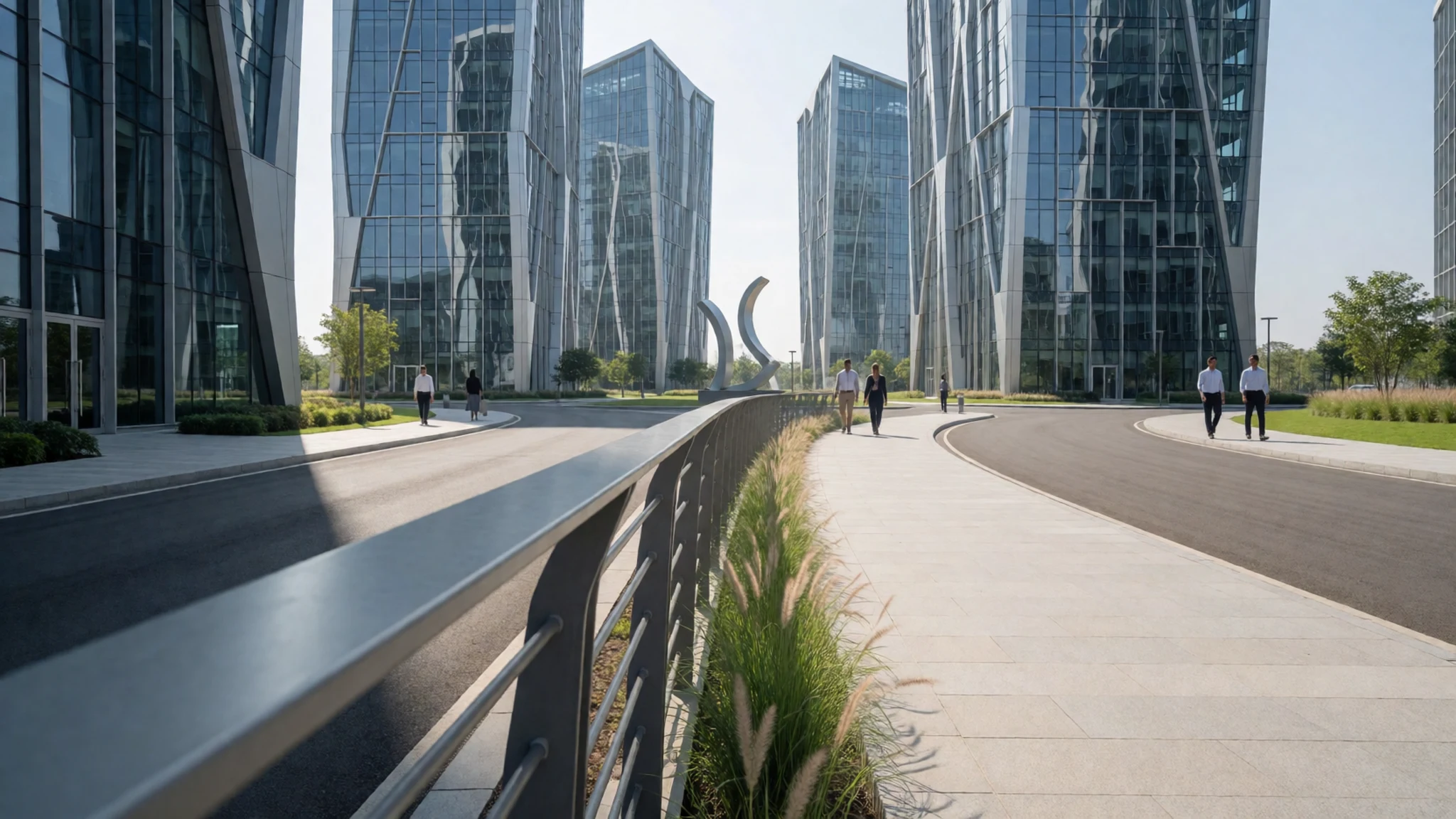
Culture
Kochi's population is a mix of people from across Kerala and most of India, shaped by several centuries of migration. Malayalis form the core, but Konkanis, Gujaratis, Bengalis, Marathis, Punjabis, Tamils, Kannadigas and Anglo-Indians are part of everyday life too. Kochi was once home to a sizeable Jewish population, called the Malabar Yehuden and now more often known as the Cochin Jews. They ran businesses throughout the port and owned several synagogues in Kochi and nearby towns. Christian life is strong as well. The Syrian Orthodox church has long been established here, with the bishop's seat at St George Cathedral in Karingachira. Many religious sites are used daily by worshippers, so the atmosphere in some corners is more devotional than touristic. The city's secular tone lets these communities sit side by side, and their festivals are part of the public calendar. Always ask before photographing anyone at prayer, and remove your shoes before stepping inside temple and church interiors.
What to wear
Traditional dress in Kerala is built around cotton and silk woven in simple, graceful forms. Men often wear the mundu, an unstitched white or cream cloth wrapped at the waist and sometimes finished with a coloured or gold border. Women wear the sari or a mundu-and-blouse combination. During festivals such as Onam, the kasavu, a cream cotton weave with gold thread along the border, is the classic choice. Handloom weaving still matters in the state, and the gold-bordered pieces are kept for ceremonies, weddings and the festival season.
Day to day, Kochi dresses much as any modern Indian city does. Office workers wear shirts, trousers and salwar kameez, while younger people favour jeans and cotton tops. Many men still wear the mundu at home or for religious occasions, and women in saris are a familiar sight in the older districts.
Visitors should dress for heat and humidity first. Loose cotton or linen in light colours keeps you cooler than synthetic fabric. A shirt or scarf that covers the shoulders is useful at churches and temples, and knees should be covered at religious sites, so shorts are better saved for the beach. Choose sandals or shoes that slip on and off easily, since you will remove them often, and pack something with grip for wet pavements in the rains. A light umbrella is handy for both sun and showers.
What to eat
- Meen molagitta curry — Any family-run seafood eatery near the harbour
Smoked freshwater fish cooked with chilli and coconut milk, usually called Meen Molagitta Curry. It is the best-known of Kochi's speciality dishes, a tangy, fiery curry built on the backwater fish the city relies on. It is best eaten with plain rice.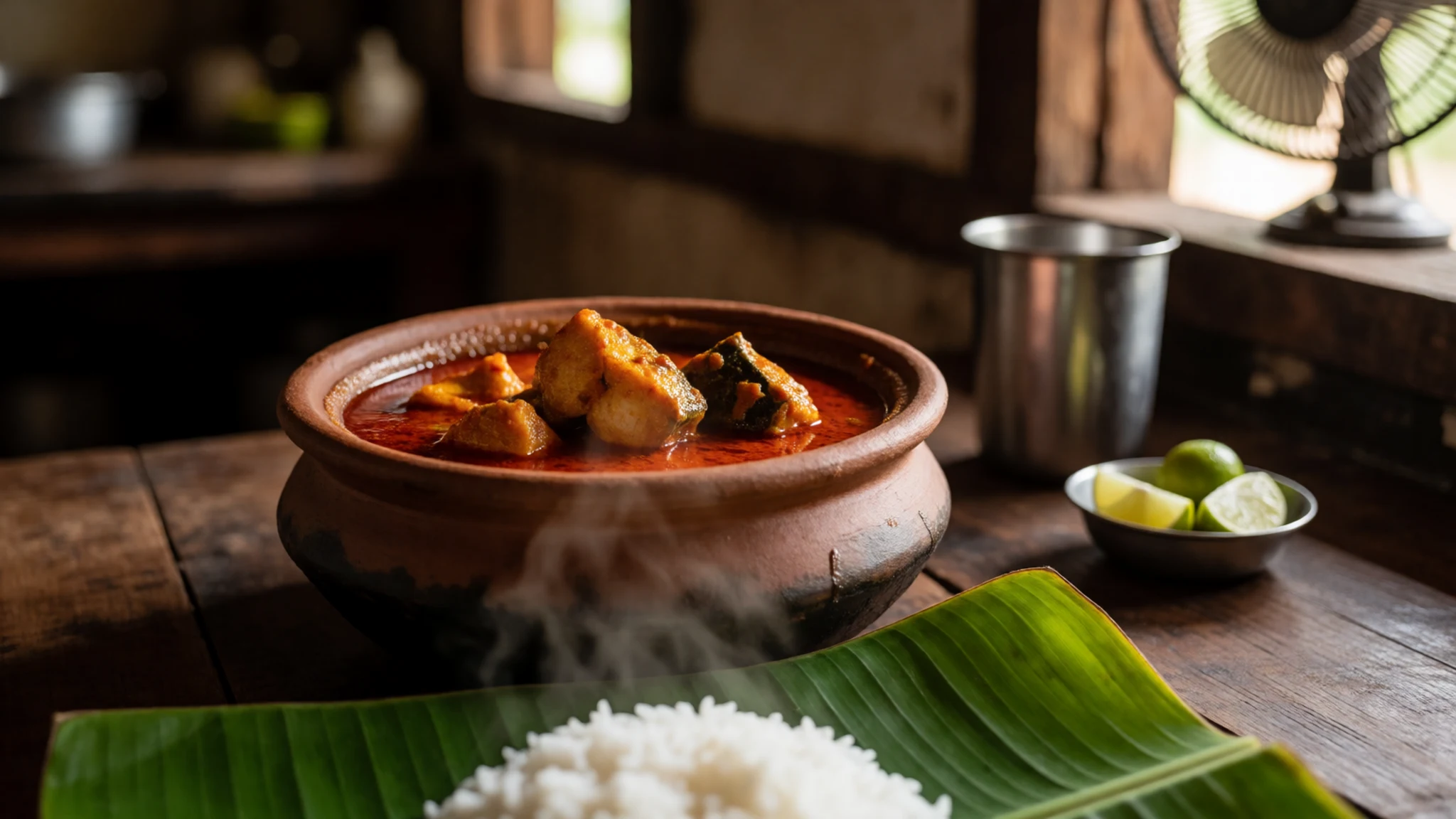
- Prawns, squid and shrimp — Waterfront stalls in Fort Kochi, especially after dusk
Prawns, squid and shrimp turn up fried, roasted or simmered in coconut-based gravies. The seafood is landed locally, so it tastes fresh. Order by weight at the stalls along the waterfront, where grilled fish and fried prawns are cooked to order as the evening cools.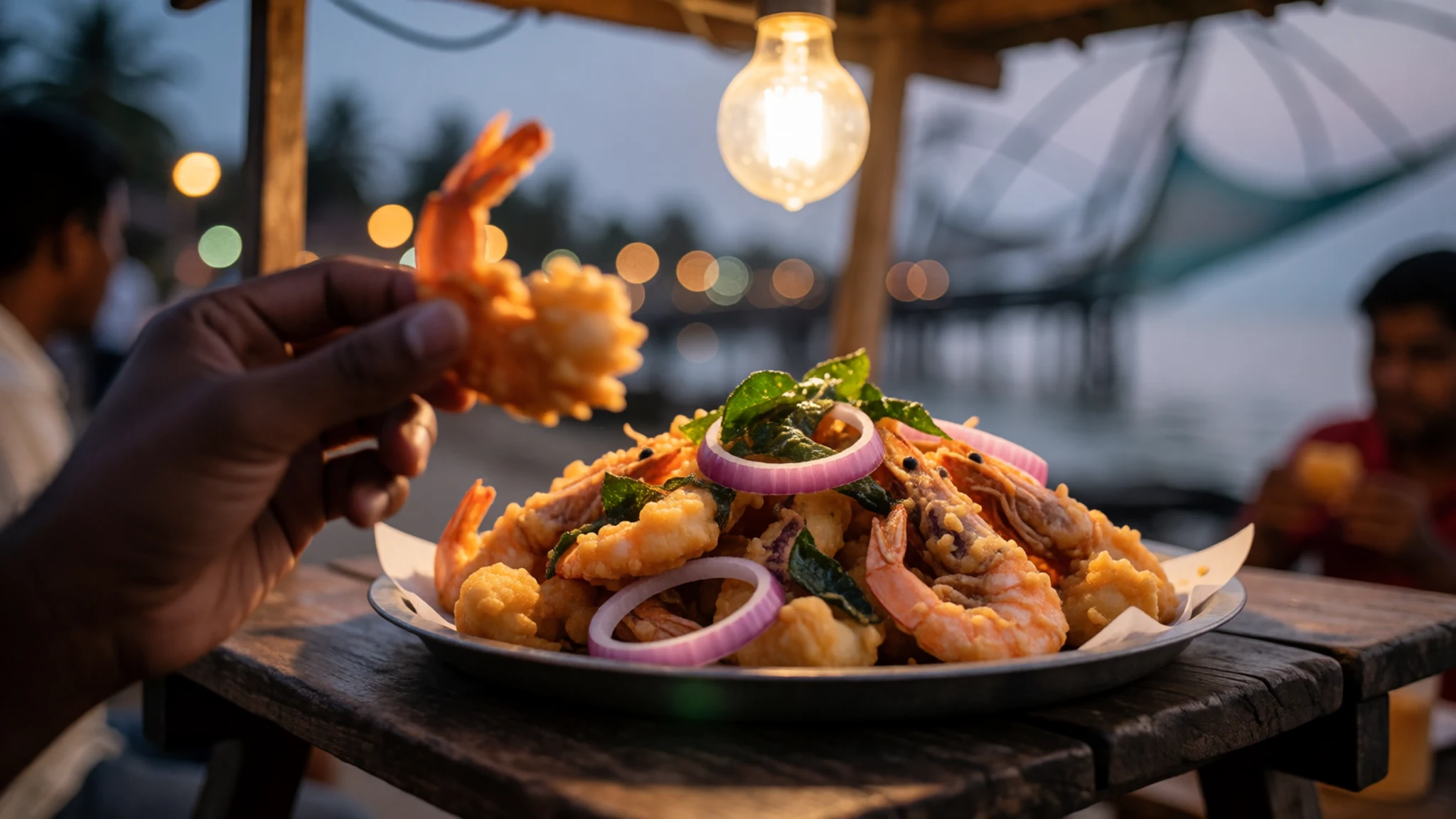
- Smoked fish with bread and mash — Old-style cafés in Fort Kochi
A dish with British roots: smoked fish served with steamed bread and mashed potato. English tastes were absorbed into local kitchens over the centuries, and the dish still appears on menus in older cafés. It is mild and comforting, a good change of pace after a day of spice.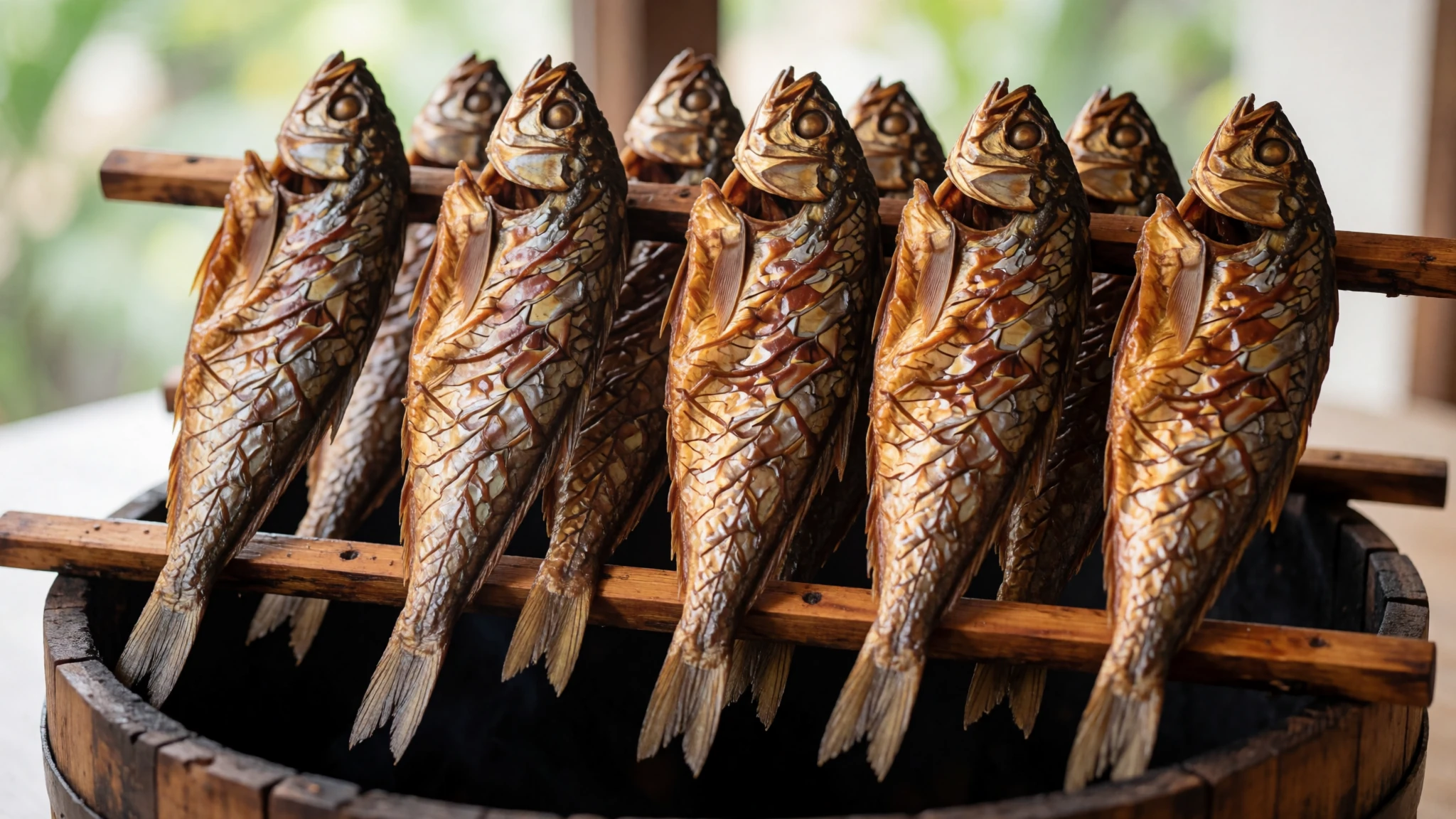
- Kurukku kalan — Traditional vegetarian lunch restaurants in central Ernakulam
A thick yogurt curry made with toasted banana and served with hot rice. It is one of the city's traditional vegetarian specialities and a good lunch choice on a hot day. The texture is creamy and the flavour sour and mellow.
Plan it
Best time. December to February are the driest months, with the least rain and the coolest nights, and the most comfortable for walking the old quarter. March to May get very hot and humid, and June to September bring the heavy monsoon rains, which can flood low streets.
How long. 2–3
Getting there. Cochin International Airport lies a short drive north of the city, and taxis and app rides run into the centre. Trains reach Ernakulam Junction and Ernakulam Town from across India, and the ferry network crosses the harbour to the islands and Fort Kochi.
Budget. mid
Tips
- Book trains and flights early for winter and festival weeks, especially around the carnival in late December
- Plan sightseeing for early morning or late afternoon, when temperatures and crowds are lower
- Carry cash for small eateries, auto-rickshaws and market stalls, though larger restaurants take cards
- Take the ferry across the harbour for an inexpensive view of the skyline and the boats
- Drink plenty of water and use sun protection, since midday heat is intense
Etiquette
- Remove shoes before entering temples and some churches, and cover shoulders and knees inside religious buildings
- Ask before photographing people, especially at ceremonies or during prayers
- Use the right hand for passing money, food or small gifts
Nearby
Sources
- Wikidata Q1800 (CC0)
- Wikipedia: Kochi (rev 1381283716) (CC BY-SA 4.0)
- Wikivoyage: Kochi (rev 5383648) (CC BY-SA 4.0)
- Kochi India skyline photo, Boby George (CC BY 3.0)
- Kochi Skyline at Night, Fsquares (The Ibrahims) (CC BY-SA 4.0)
- Infopark Kochi in 2023, Ranjithsiji (CC BY-SA 4.0)
- Sunset at Kochi fishernets, Kno-Biesdorf (CC BY-SA 4.0)
- Hill Palace Cochin, Ashwin Kumar (CC BY-SA 2.0)
- Santa Cruz Cathedral Basilica, Kochi, Rabe! (CC BY-SA 4.0)
- Bolgatty Palace Hotel, Augustus Binu (CC BY 3.0)
- Miniature of Pedro Álvares Cabral, Livro das Armadas (Public domain)


