Klaipėda
Klaipėda, Lithuania
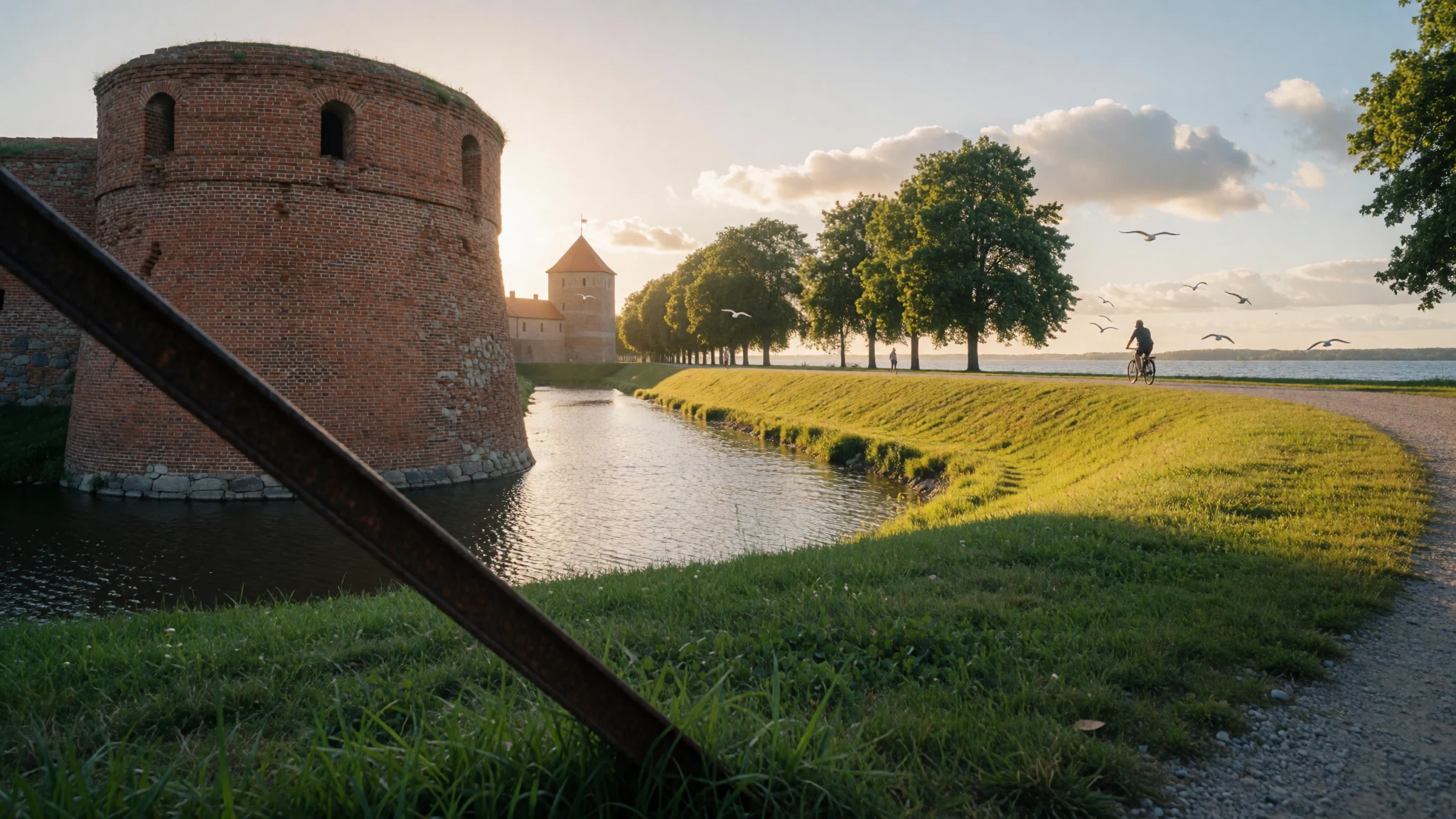
Klaipėda is Lithuania's relaxed Baltic port, a former Prussian town of cobbled squares, a lone castle bastion and sea air.
The place
Klaipėda (pronounced roughly KLAY-ped-uh; Memel in German) is Lithuania's door to the Baltic Sea. About 158,420 people live here, at an elevation of 21 metres, around the point where the Akmena-Danė river reaches the coast. It is the country's only major seaport, and that single fact explains most of what the city is: cranes and container yards on one side, a small cobbled old town on the other, and a long sandy coastline close by. Because the harbour tends to stay free of ice, ships have had reason to come here for centuries. The old town is compact and laid out on a grid, with low brick and half-timbered buildings, quiet courtyards and small sculptures tucked into corners. Many streets feel more North German than Lithuanian, a reminder that for much of its past the town belonged to Prussian and German rulers. Today the mood is easy and a little salty. Locals cycle beside the river, ferries cross towards the long spit of land opposite, and cafés spill onto the squares on any warm evening. The weather is the catch: the Baltic wind can be sharp even in summer, and winter is grey and cold. Beyond the centre, suburbs and Soviet-era housing blocks wrap around the city from several directions, and many of their residents commute into it for work. Visitors usually treat Klaipėda as a short stop, often combined with the nearby seaside resorts and dunes. It is calmer and less crowded than the bigger Baltic capitals, though ferries and cruise days can briefly fill the waterfront.
Its story
Klaipėda's recorded story begins with a fort. In 1252 the Teutonic Knights, joined by crusaders from Lübeck, raised a castle at the river mouth and named it Memelburg, simply Memel Castle. The timing was deliberate. The Lithuanian ruler Mindaugas had recently accepted Christianity, and the knights wanted a base from which to push inland along the Neman and into Samogitia. Baltic peoples had already used this coast for trade and seasonal fairs, so the knights were building on a place that mattered before they arrived. The garrison weathered early sieges, and a town grew up in the shelter of its walls. Over the following centuries the settlement changed hands between several powers: the Teutonic state, the Duchy of Prussia, the Kingdom of Prussia and finally a unified Germany, which treated Memel as a distant port on its Baltic edge. A great fire in the middle of the nineteenth century forced the old centre to be rebuilt on a regular grid, and that plan still shapes the streets. After the First World War the region was separated from Germany and placed under French administration, and soon afterwards Lithuania took control and the town became Klaipėda. The Second World War brought annexation by Nazi Germany, heavy upheaval and, afterwards, a long period inside the Soviet Union as part of the Lithuanian republic. Today the city sits in an independent Lithuania, and its Prussian, Lithuanian and Soviet layers can all be read in the buildings, from half-timbered courtyards to concrete housing.
What to see
- Klaipėda Castle — Castle site, by the river
Klaipėda Castle is where the city began, though little is left: a single bastion, the line of the moat and a restored Great Tower on the site. The fort was founded by the Teutonic Knights in 1252. Go for the feel of the river-mouth setting rather than for big ruins, and allow an hour or so.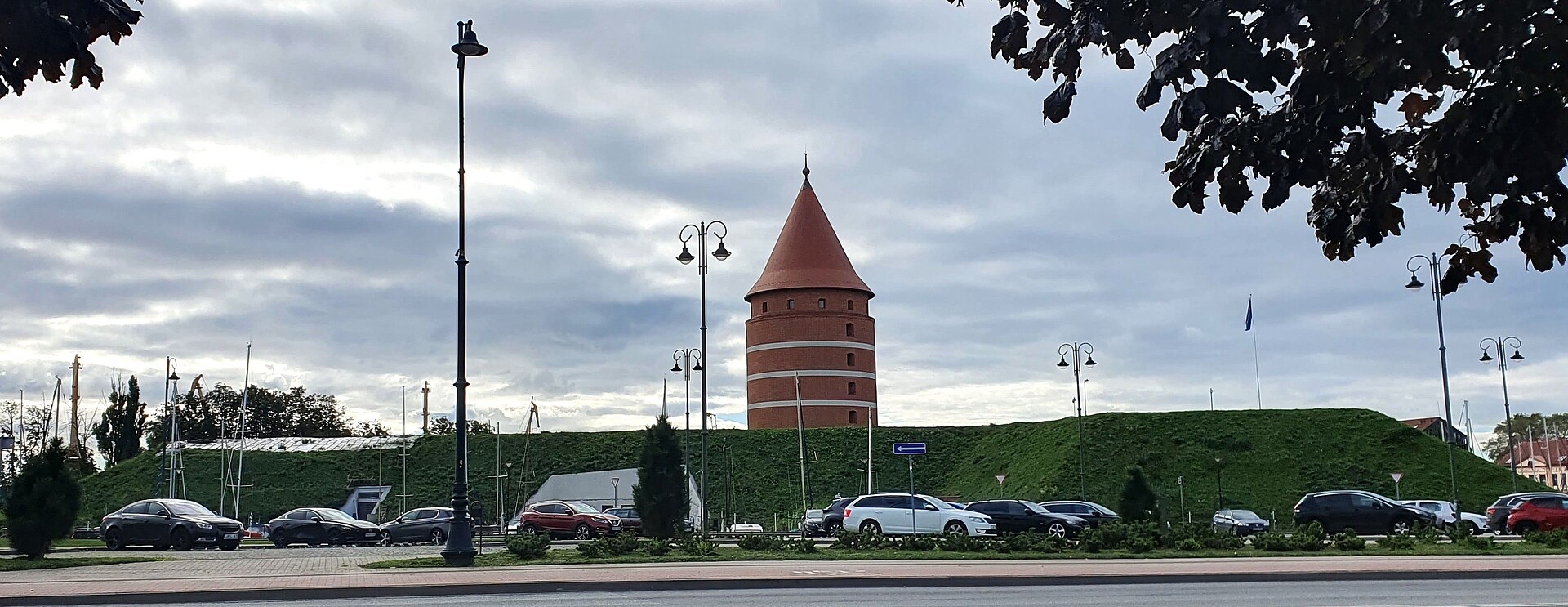
- Black Ghost — Beside the castle moat footbridge
The Black Ghost is a bronze statue near the footbridge over the castle moat's outlet: a hooded, empty-bodied figure that seems to be climbing out of the water. Under grey skies or at dusk it is properly eerie, and small children may find it unsettling. It costs nothing, takes a few minutes, and fits neatly into a walk to the castle site. - Theatre Square — Old Town
Theatre Square is the main cobbled space of the old town, fronted by the Drama Theatre. The streets around it follow a grid because the district was rebuilt after a great fire, and small statues sit in corners, so wandering with eyes up pays off. Cafés and restaurants ring the square, and it is lively on summer evenings.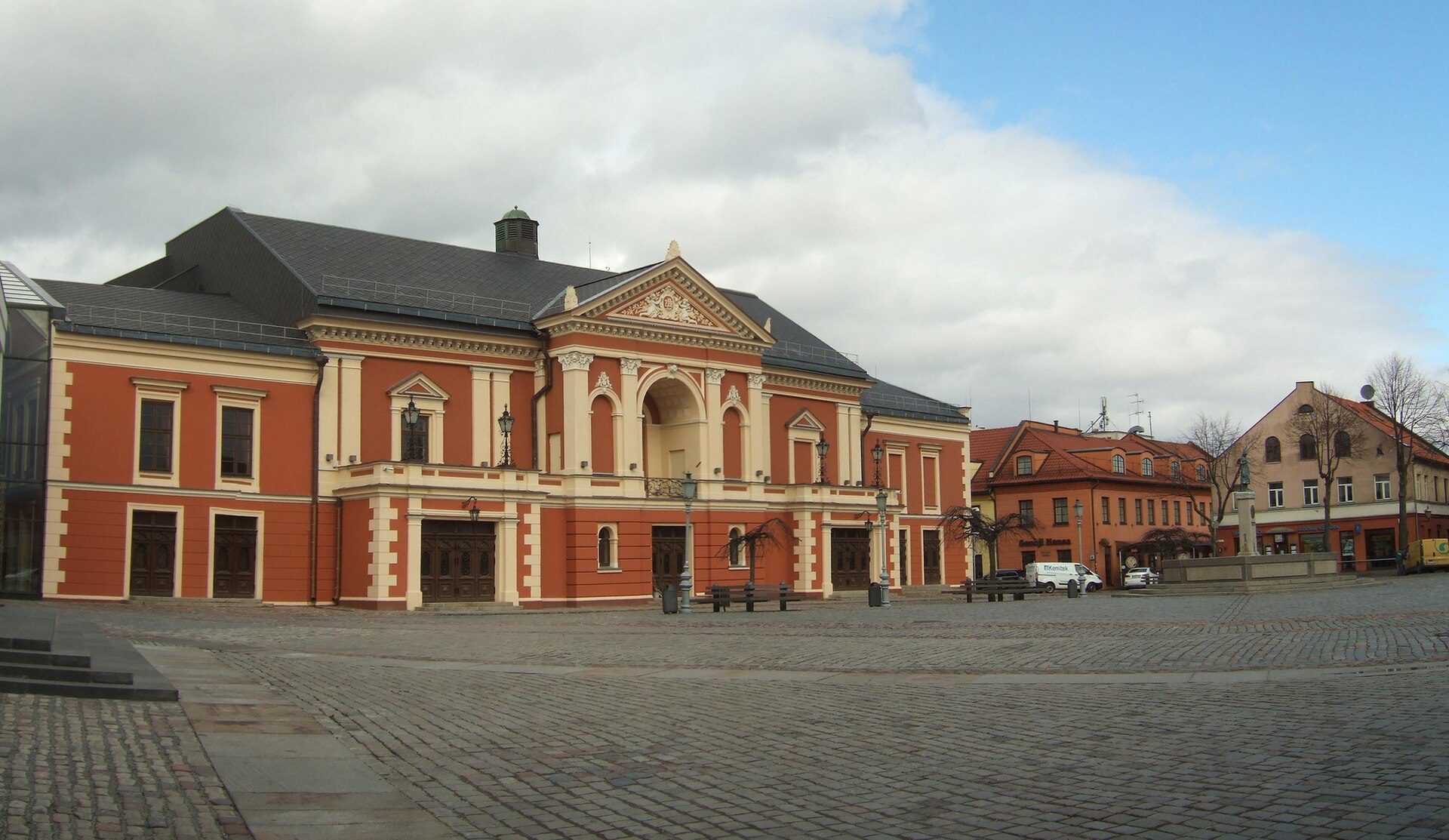
- History Museum of Lithuania Minor — Old Town
This museum covers Lithuania Minor, the coastal region long ruled from Prussia and known locally as Memel. It is the place to make sense of the city's German past, its Lutheran roots and its mixed cultures. English labelling is thin, so a translation app or a guidebook helps. Check the official site for opening times. - Blacksmith's Museum — Old Town
The Blacksmith's Museum occupies the former workshop of the smith Gustav Katzke and shows his tools beside ironwork such as ornate cemetery crosses and park railings. It is small and tactile, and shows a craft that once shaped the town's streets. A short visit is enough; check the city website for opening times. - Ship Museum Sūduvis — Riverfront, near the old port
Sūduvis is a former West German minesweeper, now kept as a museum ship near the river. Its narrow decks and cramped compartments give a good feel for naval life, and the harbour views from the top are pleasant. It suits a rainy hour, and families tend to enjoy it.
Culture
Klaipėda's culture is shaped by its position between Lithuanian, German and Baltic worlds. The region's long Prussian rule left a strong Lutheran tradition, while most of Lithuania is Catholic, and both are part of the city's religious map. Churches here have a long, tangled history: early plans to make the town a cathedral seat came to little, and its main churches were built for different communities, German settlers on one side and local Baltic people on the other. The Lithuanian language is everywhere on signs and menus, and some older residents also speak Russian. Samogitian, the western regional dialect, is part of local identity. Daily life revolves around the sea: the port, shipbuilding and fishing give the city a practical, outdoorsy character, and an annual sea festival in summer fills the riverside with music, boats and crowds. Craft traditions, from ironwork to amber jewellery, are still visible in small shops and museums. Locals are generally reserved at first and warm once a conversation starts; a few words of Lithuanian, such as 'ačiū' for thank you, are appreciated. Cafés are a social centre, and the pace is unhurried. Humour tends to be dry, and people are proud of their independence, so casual jokes about Russia or the Soviet past are best avoided. When entering a church, dress modestly, keep your voice low and do not photograph worshippers during a service.
What to wear
Traditional Lithuanian dress in the Klaipėda area belongs to the wider coastal and western Baltic costume world, made mostly of linen and wool. Women's outfits typically combine a white linen blouse, a skirt or apron in striped or checked wool, and a bodice, finished with woven sashes and amber beads. Men wore linen shirts, woollen waistcoats and long coats in cooler months. Amber, gathered from the Baltic shore, is the signature material, set in necklaces and brooches. These costumes now appear mainly at folk festivals, song and dance events, school ceremonies and the summer sea festival. Everyday dress in the city is casual and practical: jeans, trainers, wind-resistant jackets and layers, with a little more polish for evenings out. People dress smartly for the theatre and for church, but there is no strict code. Colours lean towards dark and neutral shades in winter and lighter tones in summer. A visitor should dress for the weather first. Summer needs light layers plus a windproof jacket for the waterfront, and a sunhat and sunscreen help on bright days. Winter calls for a warm coat, hat, gloves and shoes with grip, since cobbles and pavements can be icy. Comfortable walking shoes matter for the old town's uneven stones. For churches, cover bare shoulders and avoid very short shorts. A light waterproof is useful in any season.
What to eat
- Cheese fingers — Bars and casual eateries in the Old Town
Fried or baked cheese sticks served hot with a dipping sauce are the local snack and starter. They are salty, filling and easy to share, and pair well with a cold local beer. Almost every bar and casual eatery in the centre has them. - Baltic seafood — Old Town restaurants and a ship-restaurant on the river
Fresh fish from the Baltic, often grilled or pan-fried and served with potatoes and seasonal vegetables. Old Town restaurants known for seafood do it best, and some serve it aboard a moored sailing ship. Ask what was landed that day. - Cepelinai — Traditional Lithuanian restaurants in the Old Town
Large potato dumplings stuffed with minced meat or curd cheese, boiled and served with sour cream and bacon sauce. They are heavy and warming, a good choice on a cold or wet day, and one dish is a full meal. - Šaltibarščiai — Traditional restaurants and summer cafés
A cold, bright pink beetroot soup made with kefir, cucumber and dill, usually served with hot boiled potatoes on the side. It is a summer favourite, refreshing and light, and a fixture on traditional menus from late spring. - Menu of the day — Restaurants and bars across the centre, at lunchtime
Many restaurants and bars offer a good-value two-course lunch menu on weekdays around midday, typically a soup and a main dish. It is the easiest way to eat well on a modest budget and to try local cooking without ordering from the full menu.
Plan it
Best time. June to August is warmest and best for beaches, boat trips and the long evenings; May and September are quieter and cooler, with fewer visitors. Winters are cold, grey and windy, and the Baltic breeze can be sharp even in summer.
How long. 2–3
Getting there. The closest airport is Palanga (PLQ), just north of the city, with buses on to Klaipėda. Many visitors fly into Vilnius, Kaunas or Riga and take a coach, which runs frequently from Vilnius and Kaunas. Trains from Vilnius are slower than the coach and run every few hours. By road, a fast dual carriageway links Klaipėda with Vilnius and Kaunas.
Budget. mid
Tips
- Book accommodation early for July and the sea festival weekend, when the city fills up
- Carry a windproof layer even in summer, as the waterfront can feel cold
- Cards are widely accepted, but carry a little cash for small cafés and markets
- Look for the weekday menu-of-the-day at lunchtime for good-value meals
- Check the official city site, klaipeda.lt, for museum hours and event dates
Etiquette
- Greet staff in shops and cafés before ordering
- Keep voices low and shoulders covered in churches
- Do not photograph people at close range without asking
Nearby
Sources
- Wikidata Q776965 (CC0)
- Wikipedia: Klaipėda (rev 1383799698) (CC BY-SA 4.0)
- Wikivoyage: Klaipėda (rev 5407405) (CC BY-SA 4.0)
- Quiet summer evening in the port city Klaipėda — Mantas Volungevicius (CC BY 2.5)
- Klaipėda University, faculty of health sciences — Vilensija (CC BY 3.0)
- Der Kunsthof (Daržų gatvė 10) — Hajotthu (CC BY 3.0)
- Klaipėda Drama Theater — Anaiptol (CC0 1.0)
- Klaipėda Castle site in 2025 — Kusurija (Public domain)
- Klaipeda, the house at 18 Sukilėlių g. — Andrzej Otrębski (CC BY-SA 4.0)
- Panorama of Klaipėda, 1674 — Juozas Narūnavičius (Public domain)
- Lietuvos jūrų muziejus — Algirdas (CC BY 3.0)


