Kawasan Falls
Kawasan Falls, Philippines
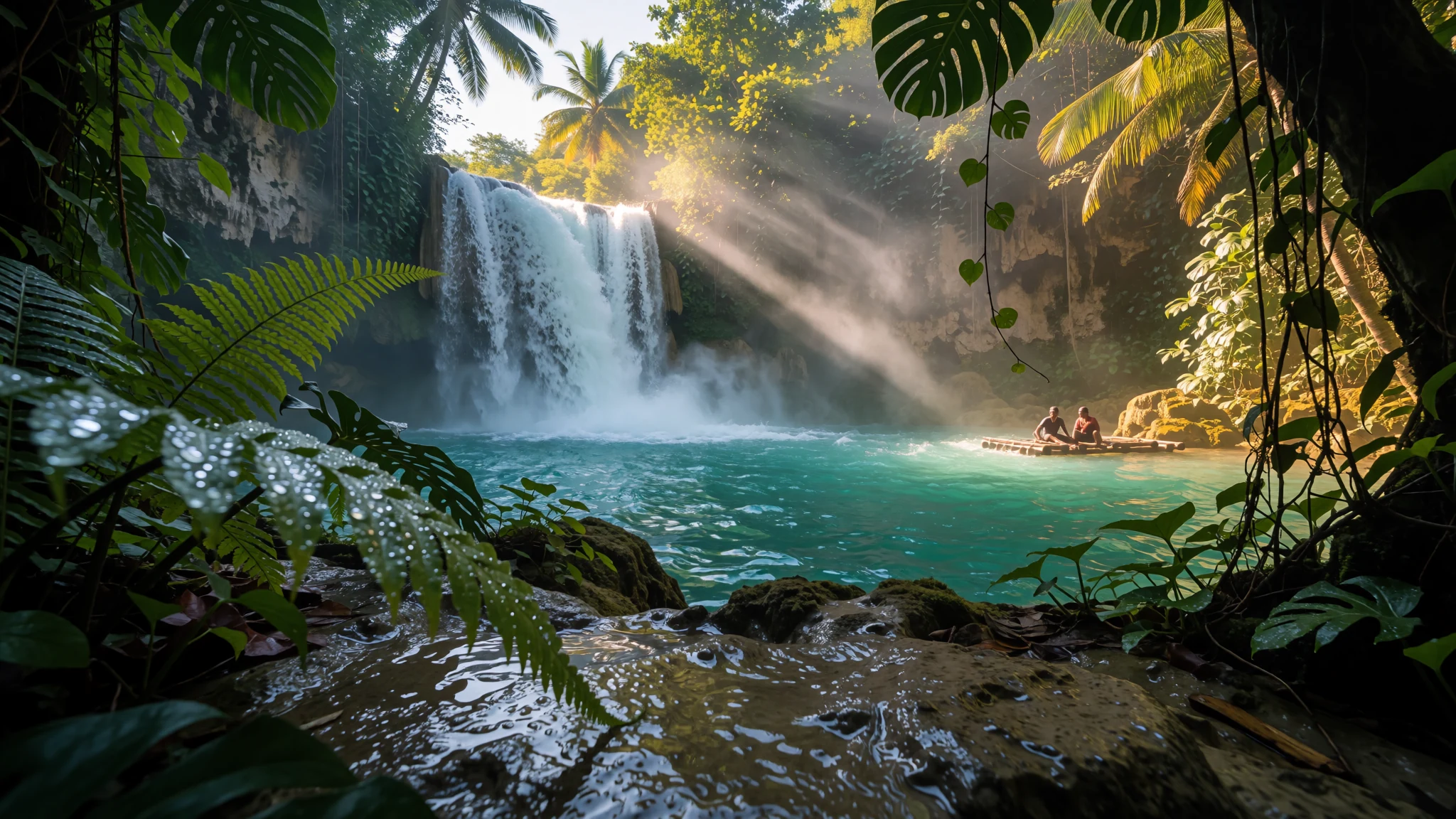
Kawasan Falls is a three-tier cascade of turquoise pools in the Cebu jungle, best reached early before the day-trip crowds arrive.
The place
Kawasan Falls sits in the hills of Badian, a municipality on Cebu island in the central Philippines. It is a three-stage cascade, and its largest drop is about 40 metres high. The water is clear and turquoise because it starts as spring water: the Kabukalan Spring feeds the Kawasan gorge, which carries the flow down to the Matutinao River and on to the Tanon Strait. Dense jungle closes in on both sides of the gorge, so the walk down to the falls feels shaded and enclosed rather than open.
Below the main cascade, smaller falls spill into pools deep enough to swim in, and the colour of the water shifts with the light. The area has a calm, slightly theatrical atmosphere, which is a large part of why it has become a day-trip favourite for visitors from Cebu City and nearby towns. Local families also rely on the river, and the tourist trade supports a small economy of guides, boatmen and food stalls.
Activities go beyond swimming. Raft rides run along the river, and the more adventurous can jump from cliffs or follow the gorge on guided canyoneering routes. Canoeing trips on the Matutinao River offer a quieter way to see the landscape. The surrounding municipality had around 38,000 residents at the 2015 census, a figure that gives a sense of how small the settlement is compared with the crowds that arrive on busy days.
Its story
The story of Kawasan Falls over recent years is largely a story of tourism outrunning its management. As the falls grew in popularity, unlicensed canyoneering operators were working on the gorge, and the Cebu Provincial Government responded in 2023 by halting access to the falls and revoking the permits of those operators. The pause lasted about three months. During that time the site was rehabilitated, and the authorities focused on professionalising the tour guides who lead groups through the canyon and pools.
Tour operations reopened in October 2023. The reopening marked a shift towards licensed guides, clearer responsibilities for operators and a site that could be managed more safely. For a place whose appeal rests on fast water, cliff jumps and slippery rock, the guides matter as much as the scenery.
Earlier history of the falls is less well documented in the sources, and most accounts describe the site through its appeal as a tranquil escape rather than through formal records. What remains clear is the link between the river and the people who depend on it. The watershed around Kawasan is valued by local communities, and protecting the upland forest feeds directly into the water that visitors swim in.
For anyone planning a trip now, the 2023 episode is a useful reminder that access can change quickly. Checking the current status with local authorities and booking a licensed guide are the two most practical steps before setting out.
What to see
- Lower pools (Level 1) — Badian, Cebu
The lower pools are where most visitors begin, and the water here is the clearest, turquoise over pale stone. The path down is steep and can be muddy after rain. The shallow edges suit children and non-swimmers, while the deeper water offers a cool dip in the heat. Arriving early gives you a calmer swim before the tour groups fill the banks.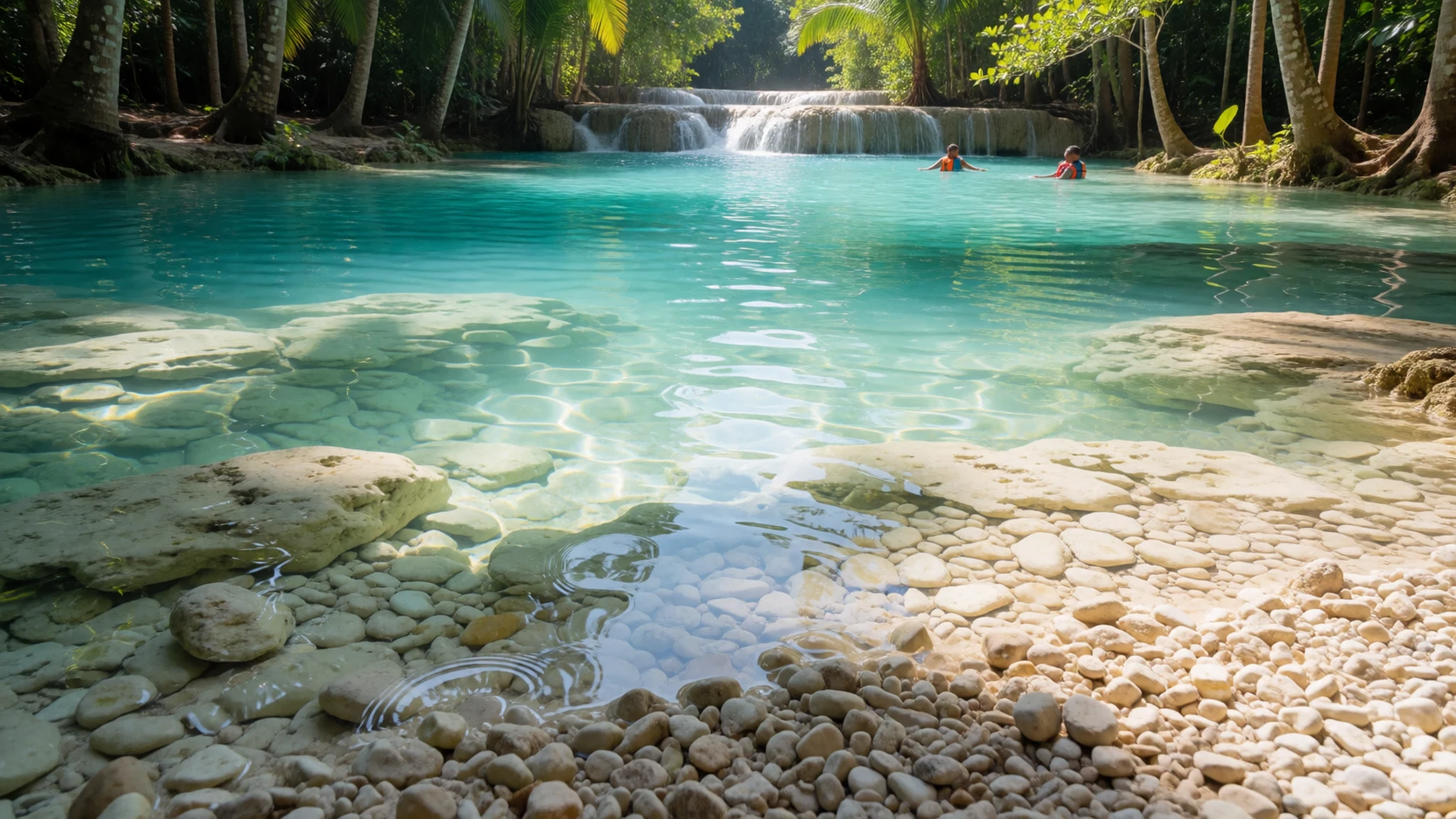
- The main cascade (Level 2) — Badian, Cebu
The largest of the three stages is about 40 metres high, and reaching its base means a climb through shaded jungle. The climb is the hardest part of the day in humid heat, so carry water and wear shoes with good grip. The pool below tends to feel quieter once the day groups have moved on, and it is a good place to pause and take in the drop.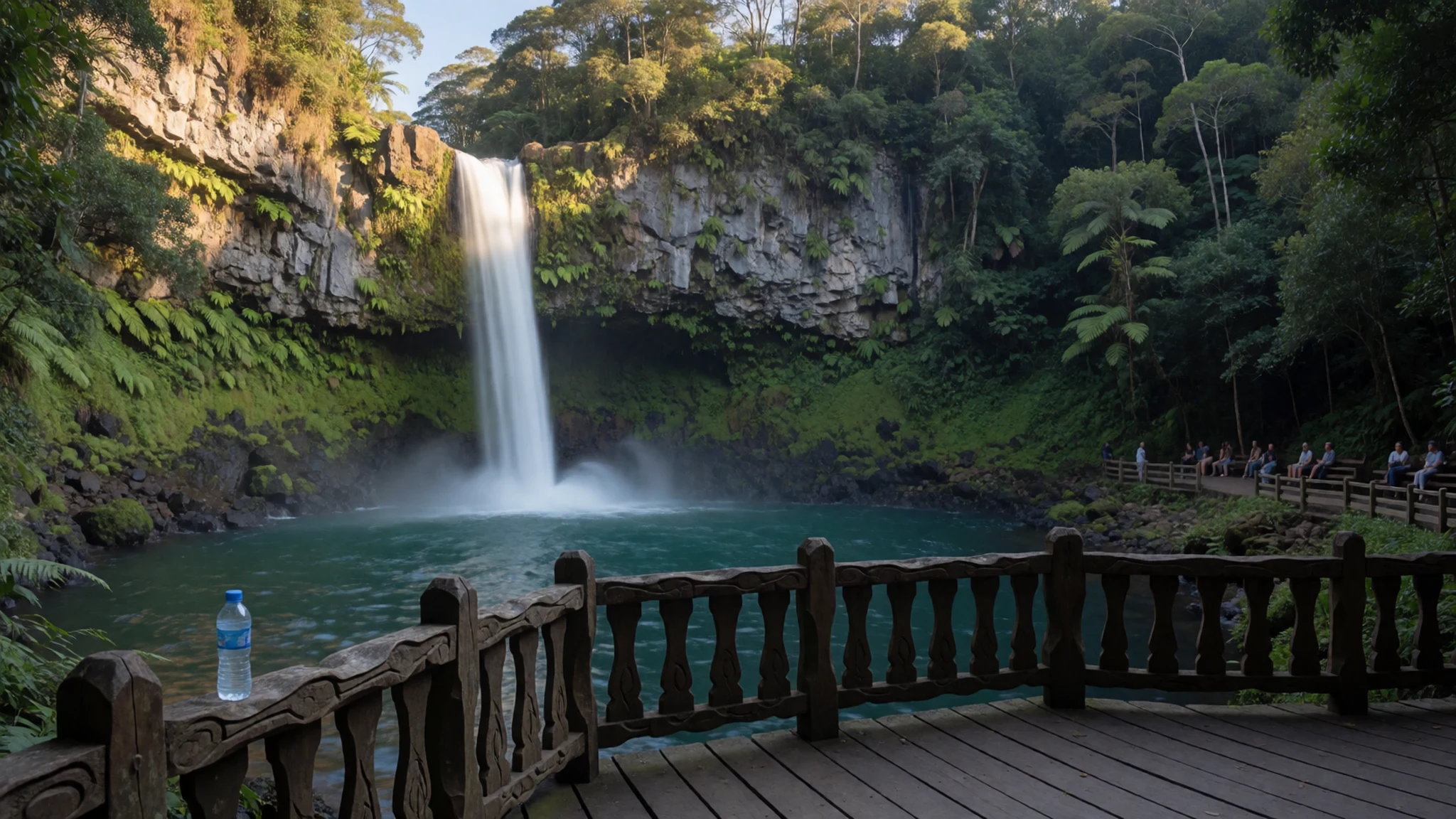
- Kawasan River canyon — Kawasan gorge, Badian
The canyon is the adventure side of the site: a narrow gorge where the river runs between high walls. Canyoneering here means wading, swimming, scrambling and jumping into pools, and it is only safe with a guide who knows the current conditions. Since the 2023 reorganisation, book only with a licensed operator and ask to see their credentials.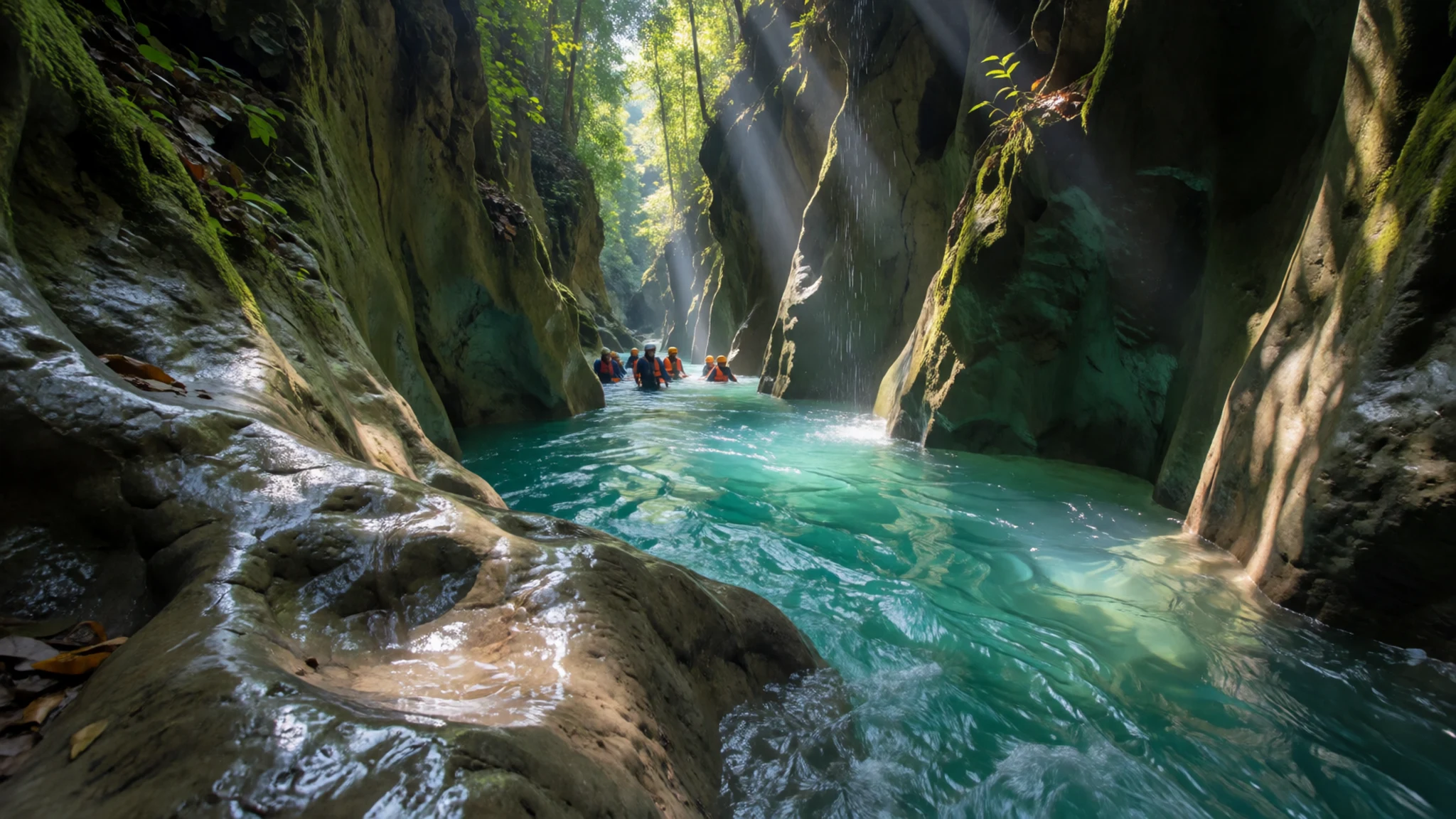
- Matutinao River canoe trips — Matutinao River, Badian
Canoeing on the Matutinao River gives a slower view of the landscape, with the banks and bends of the river system opening up around each turn. Trips suit people who want a gentler day that avoids steep climbs. Ask the operator about the route length and what the boat provides before setting out.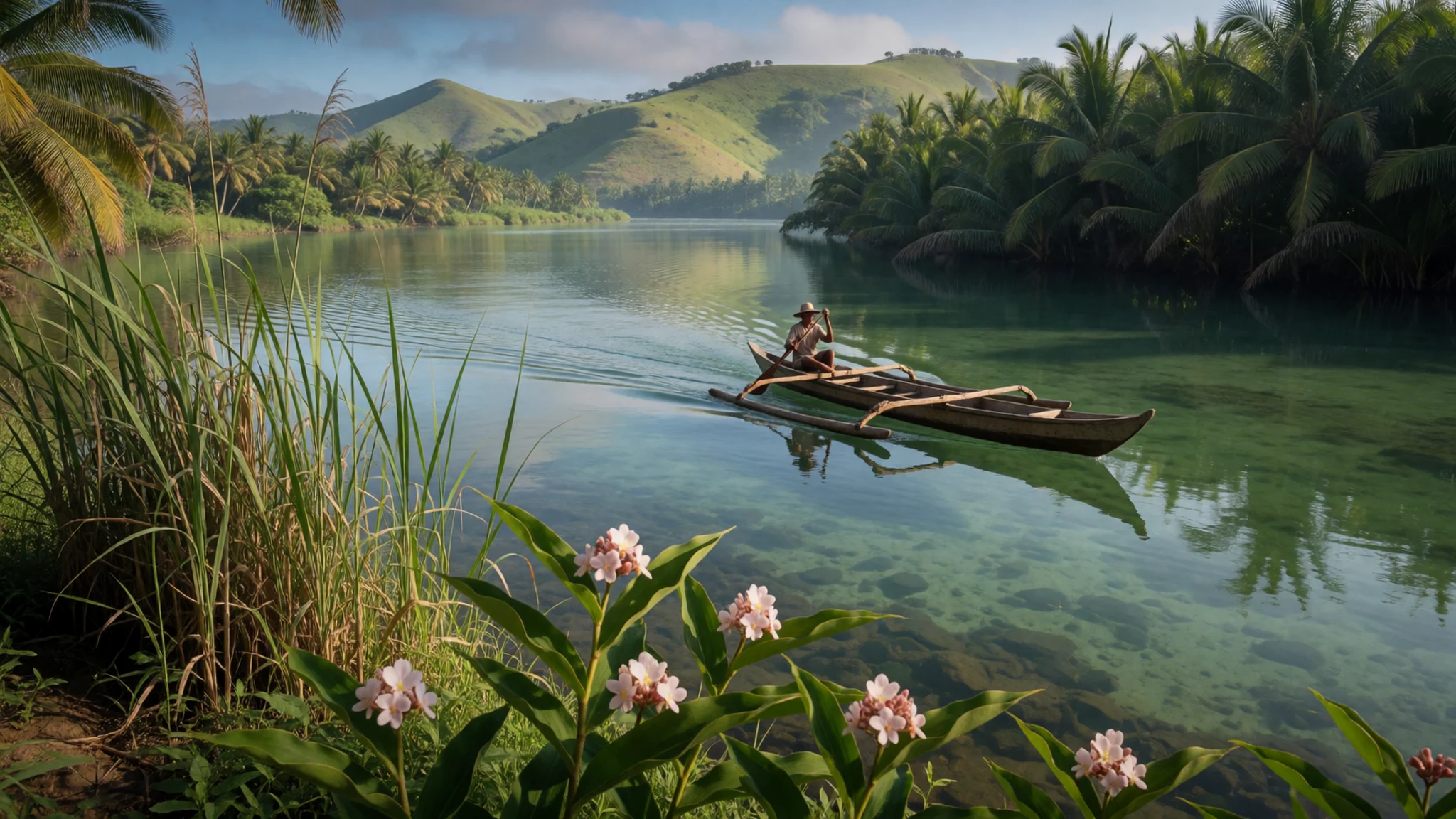
Culture
Kawasan Falls sits within a Cebuano landscape where the river and the local community are closely tied. Cebu is largely Roman Catholic, and church and family life shape much of the routine in towns around Badian, so modest dress and a polite manner matter more here than at a purely beach resort. Visitors are usually welcomed warmly, and a friendly greeting goes a long way with stall holders and boatmen.
The water is part of community life too. Watershed areas are valued because local families depend on the river, and the tourist areas share that space with people who fetch water, wash clothes and fish. Litter left in the pools or on the paths is noticed by guides and residents alike, and carrying your own rubbish out is one of the simplest ways to show respect.
Licensed guides now lead most group visits, and their instructions on routes, jumps and safety are part of the local rules. Asking before photographing people at close range, especially children and those working on the river, is the courteous approach. Please keep your rubbish in your bag and follow your licensed guide's instructions at every jump and rapid.
What to wear
Kawasan Falls lies in Cebu, where traditional dress draws on the wider Filipino tradition. The terno, a formal gown with a fitted bodice and sleeves, is the best-known women's dress and has roots in Spanish-era fashion. The barong Tagalog is an embroidered shirt worn by men on formal occasions. Both are often made from piña, a fine cloth woven from pineapple leaf fibre, or from jusi, a sheer fabric blended with silk. These garments are worn for weddings, graduations and formal church events rather than in everyday life.
What people wear now is practical and relaxed. T-shirts, shorts, sleeveless tops and sandals or flip-flops are common in town and on the road to the falls, while many people dress more carefully for Sunday Mass. A visitor heading into the gorge should wear quick-drying shorts or leggings, a rash guard or a light long-sleeved top against the sun and scratches, and water shoes with grip, since the rock is slippery. Bring a dry change of clothes for the journey back, and leave cotton at home, because it stays wet and cold after swimming.
What to eat
- Cebu lechon — Roast-pig stalls in town markets and eateries around Cebu City
Cebu lechon is a whole pig roasted over charcoal until the skin is crackling-crisp, the island's most famous dish. Look for roast-pig stalls in town markets and eateries around Cebu City, where it is sold by weight or served on rice. Ask for the crisp skin pieces.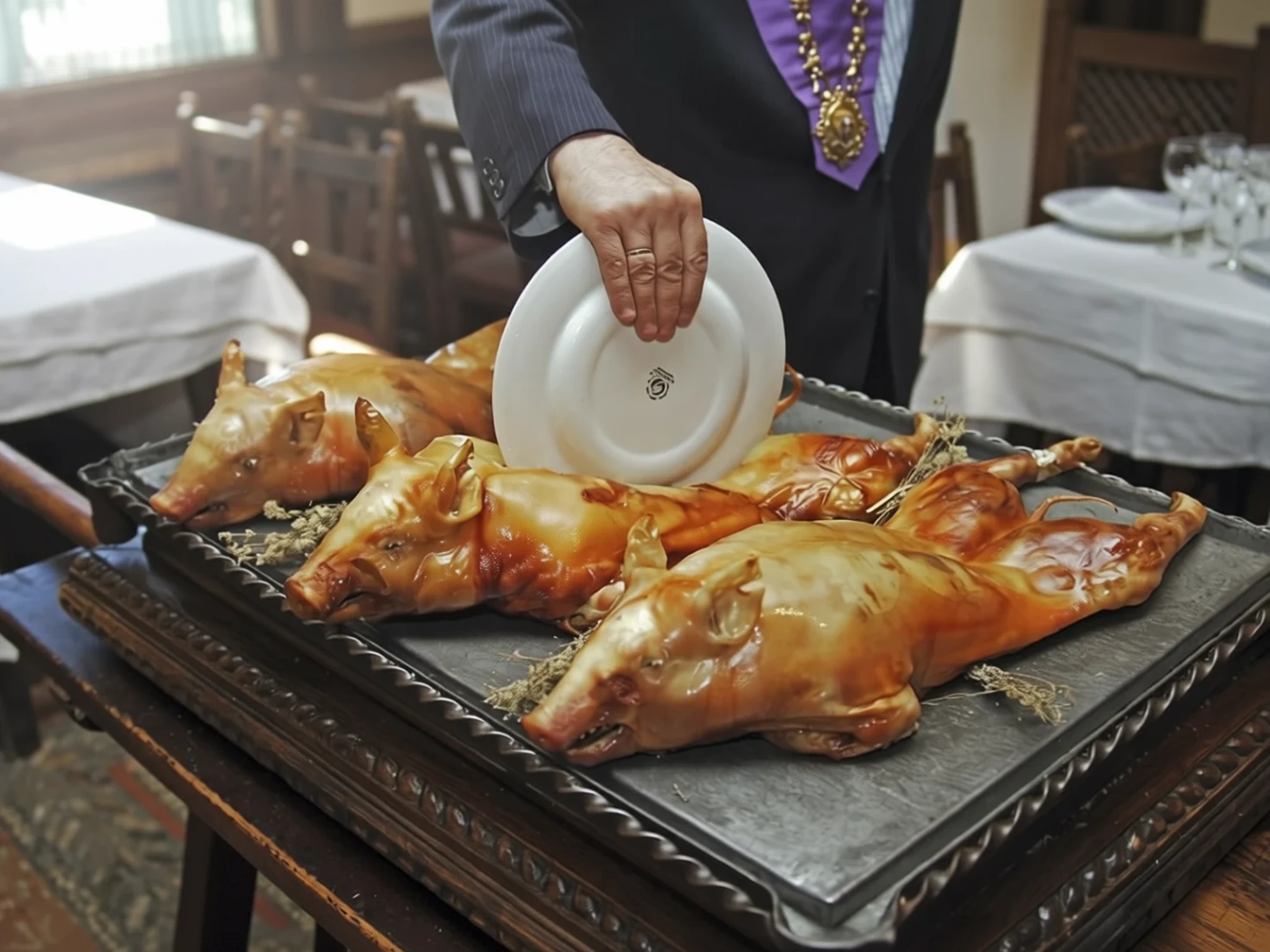
- Sugba — Beachside grills and seafood stalls along the coast road towards Moalboal
Sugba is the Cebuano word for grilling, and the dish is fresh fish, prawns or squid cooked over coals and dipped in vinegar with chilli. Look for it at beachside grills and seafood stalls along the coast road towards Moalboal, where the catch is sold the same morning.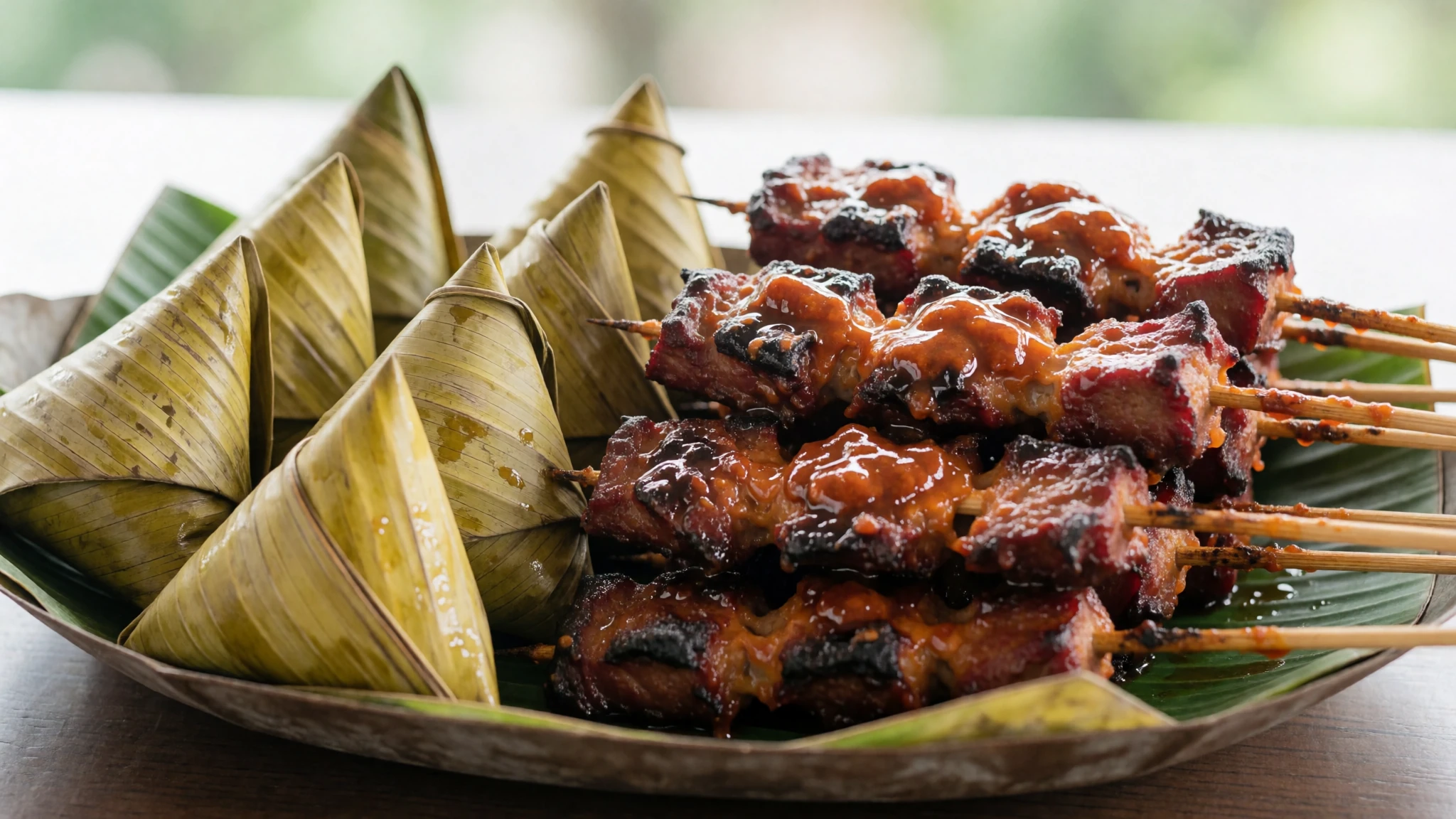
- Puso — Morning markets and roadside stalls in Badian and along the road to the falls
Puso is rice cooked in woven palm pouches, hung and boiled until firm. Vendors sell it at morning markets and roadside stalls, often alongside grilled meat or fish. It makes a light, practical breakfast before a day in the gorge.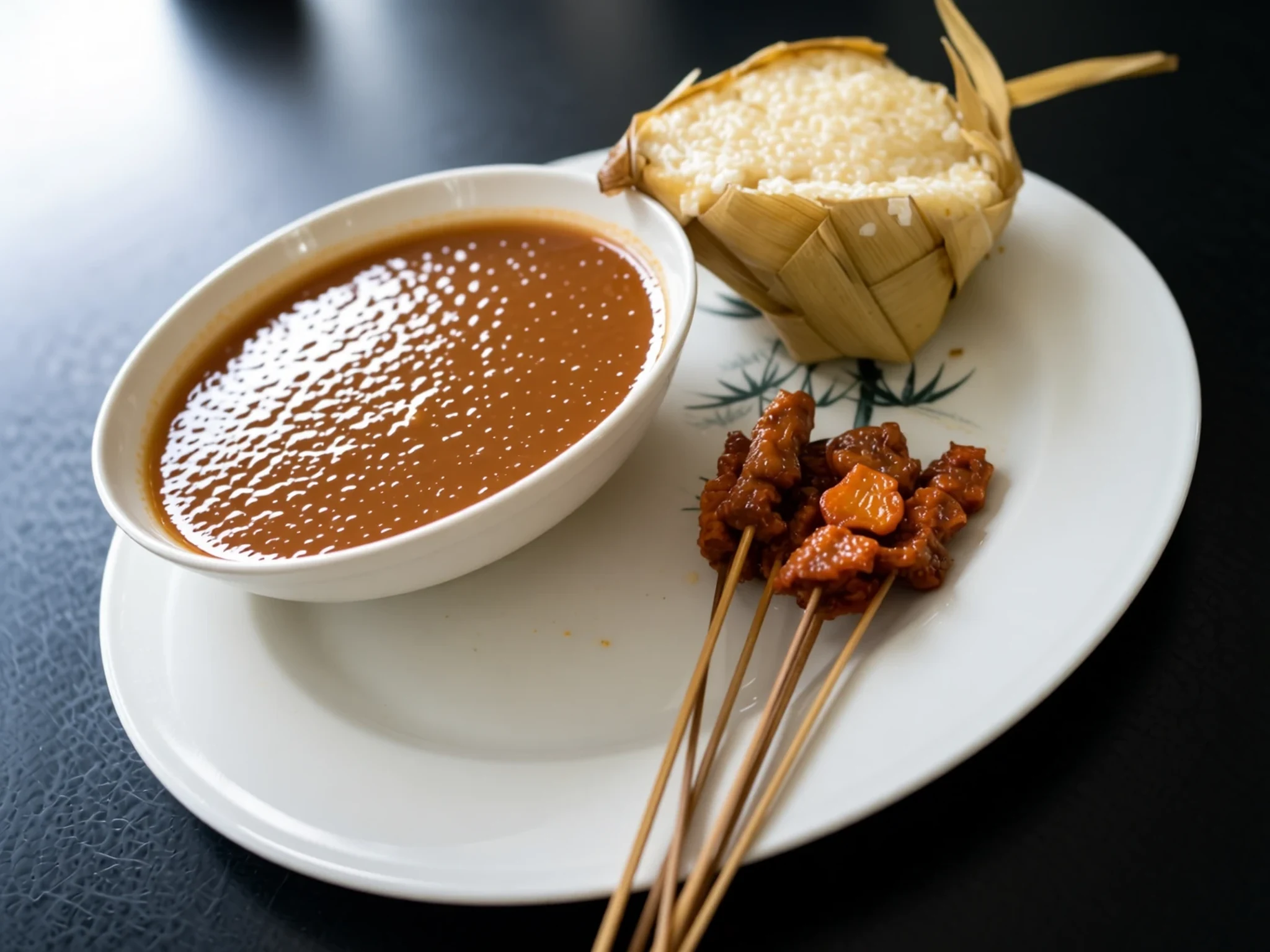
- Cebu dried mango — Roadside stalls and public markets across the island
Cebu dried mangoes are thinly sliced and sun-dried, then sold in bags at roadside stalls and public markets across the island. Pick up a bag on the way back to Cebu City as a taste of the island's fruit.
Plan it
Best time. Check local forecasts before travelling, as conditions can shift quickly from one week to the next. In general the drier months from about February to April suit swimming and walking best, while the wetter months from June to October bring heavy rain, peaking in July, that can make the gorge unsafe and the paths slippery.
How long. 1–2
Getting there. Fly into Mactan-Cebu International Airport, then take a bus or private transfer to Badian. Public buses also operate from Cebu City, as well as from neighbouring towns like Moalboal.
Budget. low
Tips
- Start early, before the day-tour groups reach the pools
- Book a licensed guide and check current access with the local authorities before setting out
- Carry small notes for guides, food stalls and any small fees, as cards are rarely accepted
- Bring water, a dry bag for phones and cameras, and a towel
Etiquette
- Follow your guide's instructions at every jump and rapid
- Take your rubbish back out with you
- Ask before photographing people, especially at close range
Nearby
Sources
- Wikidata Q113639810 (CC0)
- Wikipedia: Kawasan Falls (rev 1380250883) (CC BY-SA 4.0)
- Wikivoyage: Badian (rev 5369906) (CC BY-SA 4.0)
- Kawasan Falls, Cebu, Philippines1 — Andrewhaimerl (CC BY 4.0)
- Kawasan Falls Level 1, Badian, Cebu in 2026 — A.C.T. Alejandre (CC BY-SA 4.0)
- Badian Kawasan Falls Cebu — Shemlongakit (CC BY-SA 4.0)
- Kawasan Canyoneering — Ryan Mago (CC BY-SA 4.0)
- Kawasan Falls information sign — A.C.T. Alejandre (CC BY-SA 4.0)
- Kawasan Falls Level 2, Badian, Cebu, in 2026 — A.C.T. Alejandre (CC BY-SA 4.0)
- Kawasan River Canyon — A.C.T. Alejandre (CC BY-SA 4.0)
- Kawasan Bend — Herbert Kikoy (CC BY-SA 4.0)


