Kashan
Kashan, Iran
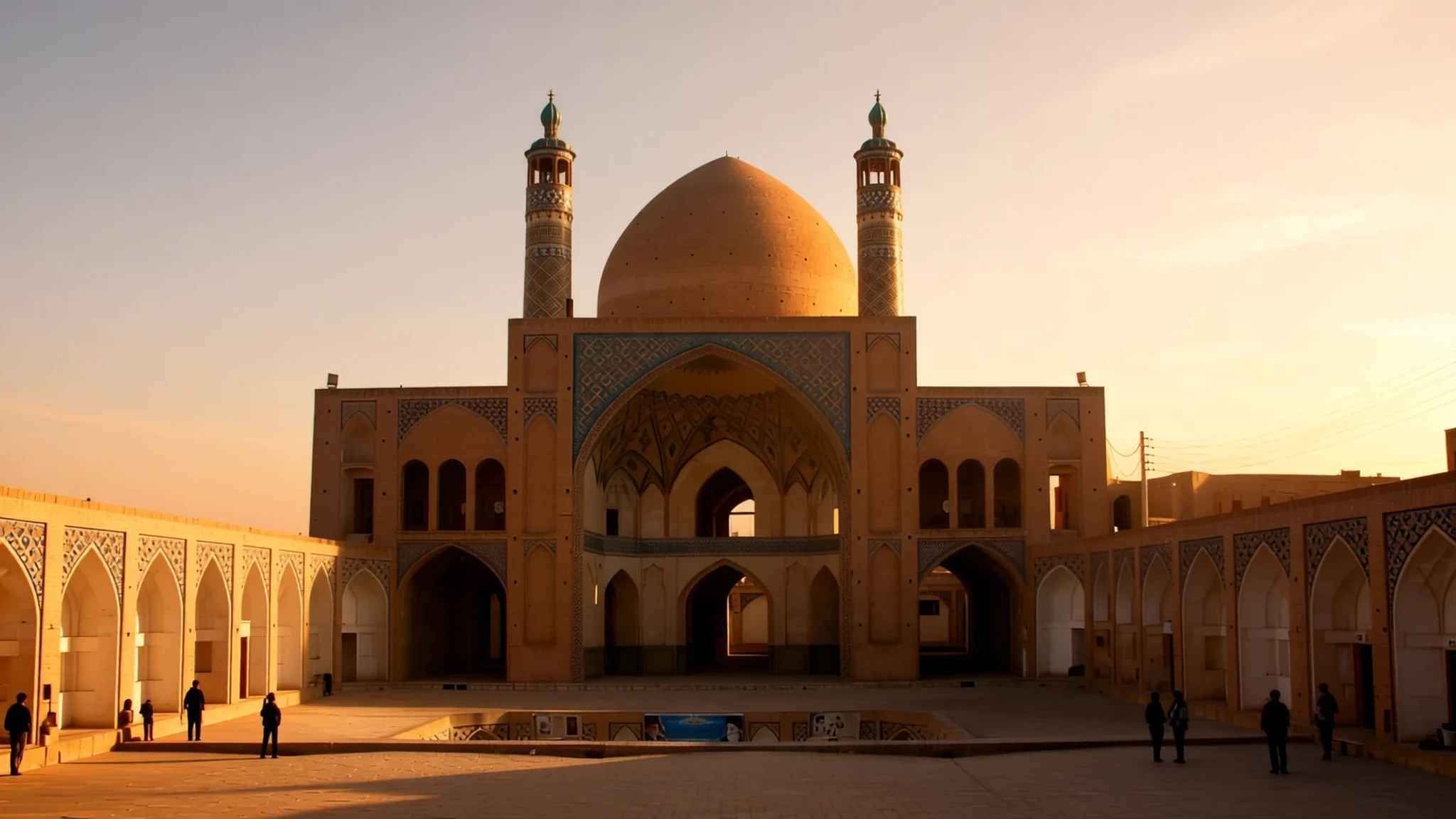
Kashan is a quiet desert-edge city with old merchant houses, a restored bazaar and bathhouses, and a historic garden, all easy to reach from Tehran or Isfahan.
The place
Kashan sits in the north of Isfahan province, in central Iran, with the Karkas Mountains lying to its south. To the east the land runs out into the Dasht-e Kavir, a vast salt desert where vegetation thins to scattered bushes and shrubs. The city stands at 942 m above sea level, about 250 km south of Tehran, and serves as the administrative centre of its county and district.
Locals and visitors tend to think of the place as two landscapes. On the mountain side are gardens, orchards and the older quarters, while the desert edge offers little more than wind and open ground. The historic core is compact and walkable, but the mountains and the desert are a drive away rather than a stroll, so decide early whether you want a half-day out.
Most of your time will go on the old centre: lanes, courtyards, a mudbrick bazaar and a handful of restored bathhouses now given over to tea and coffee. Many of the traditional houses take guests, and those rooms fill quickly in the busy seasons, so booking ahead matters. Prices at the grandest houses sit above those in ordinary guesthouses, and most visitors settle for the mid-range. A couple of days covers the main sights at an unhurried pace, leaving room for a slow afternoon in a courtyard.
Its story
Kashan, one of Iran's most ancient towns, is also often included in lists of the world's longest continuously inhabited places. Its earliest traces run much deeper than the town itself. Paleolithic stone tools have been found around the travertine springs of Niasar, Kaftar Khoun and Sefid-Ab. Close by, the mound of Tepe Sialk, associated with the Zayandeh River culture, goes back to roughly the sixth millennium BC. Exactly when the settlement that became Kashan was founded is unknown.
Local tradition has its own stories. Some accounts, though not all, connect the town with the three wise men who followed the star to Bethlehem, a claim the medieval traveller Friar Odoric of Pordenone repeated after visiting in 1330. A legend from the Safavid era says that Abu Lu'lu'a, the enslaved craftsman who killed the caliph Umar in 644, fled here after the assassination. A shrine built over his supposed tomb is still one of the town's landmarks, and historians treat such stories as lore rather than record.
Under the Timurids, Ulugh Beg, grandson of Timur, took an interest in the town. It then passed between the Qara Qoyunlu and the Aq Qoyunlu, and the Safavid shahs used it as a place for leisure. The earthquake of 1778 levelled much of the city, including buildings associated with Shah Abbas the Great, and caused about 8000 deaths. The town was rebuilt afterwards, and its surviving courtyards, bathhouses and bazaar are the layers visitors walk through today.
What to see
- Agha Bozorg Mosque — south of the central bazaar
A mosque built in the late eighteenth century by the master builder Ustad Haj Sa'ban-ali. The main prayer hall is no longer in use, but the theological school in its basement is still active, so you may see students moving about. Visit outside prayer times, cover your shoulders and knees, and keep your voice low in the courtyard.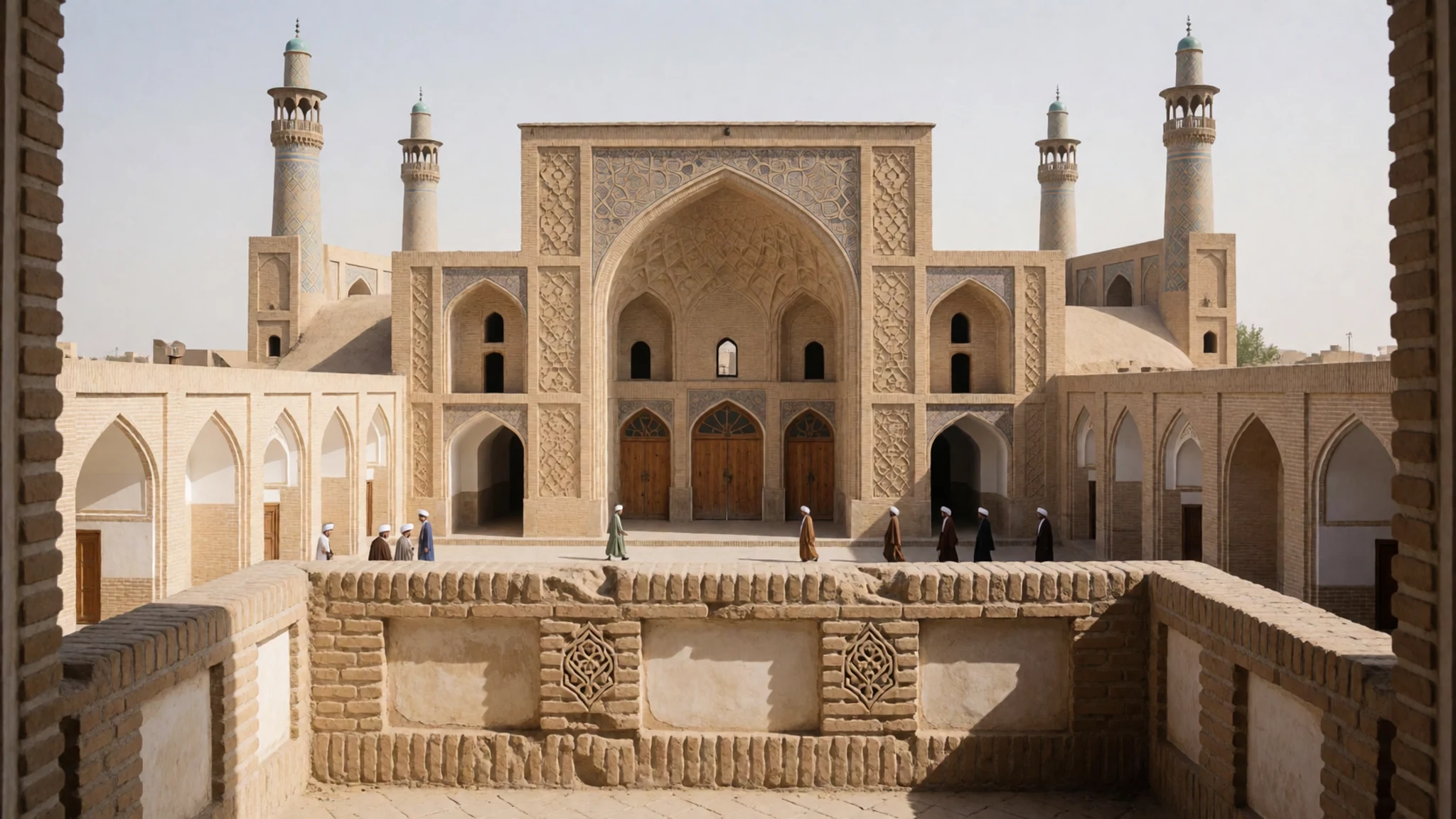
- Fin Garden — on the road south of the city, through the orchards
A historic garden with pools, tall trees and water channels laid out in formal rows. Its bathhouse is where the Qajar vizier Amir-Kabir was murdered on the orders of Nasereddin Shah, a history that gives the place a sombre air. Set aside a couple of hours and go in the morning or late afternoon, when the heat eases and the shade is more welcome.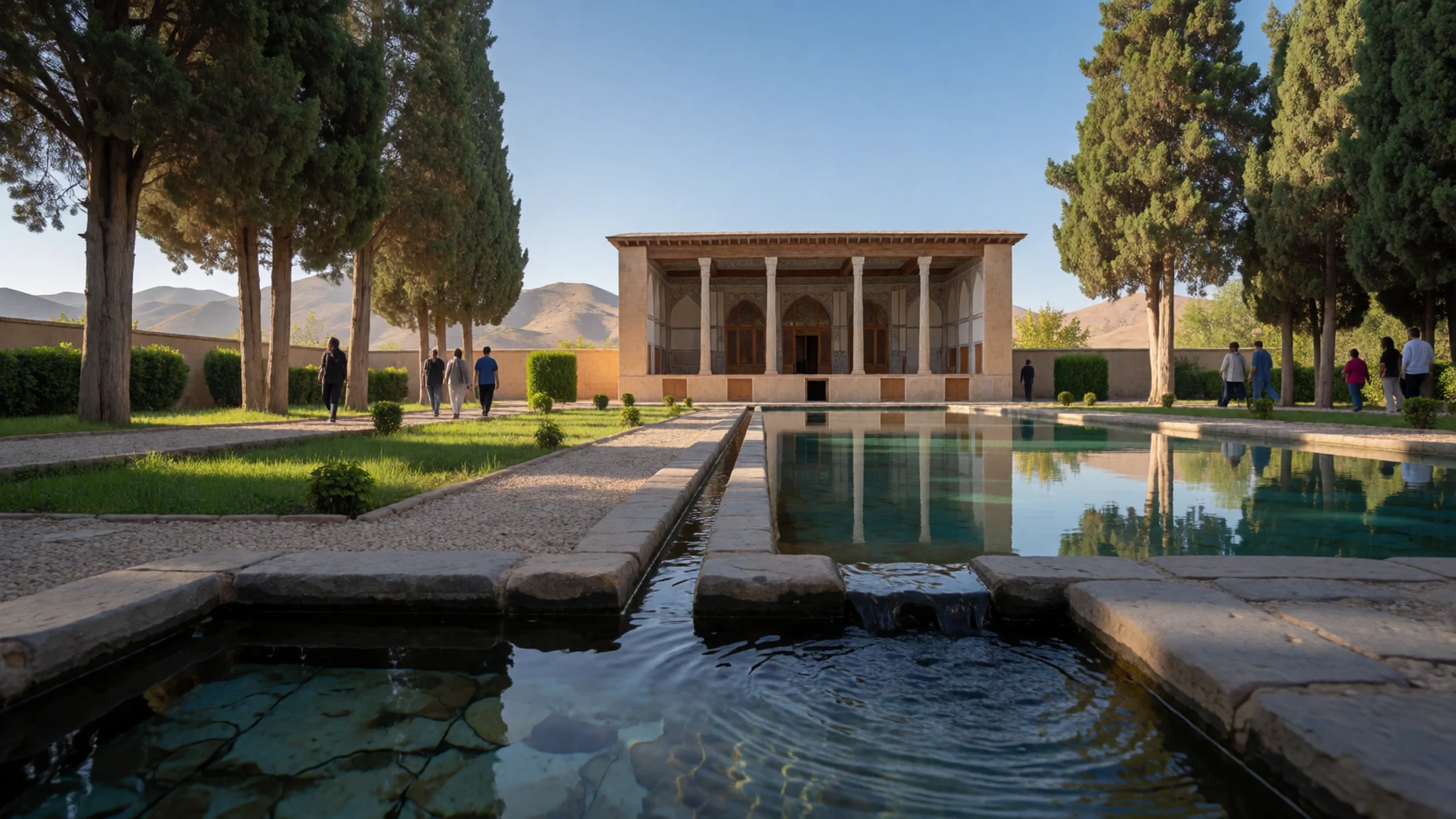
- Kashan Bazaar — the covered market through the middle of town
A covered bazaar of mudbrick vaults that runs through the heart of town and is a highlight of any visit. Bargaining is expected in the carpet and textile shops, while food stalls and tea shops are simpler to deal with. Local touts will offer to lead you up to the roof for a small payment, which is a good way to see the vaulting, but agree the fee before you climb.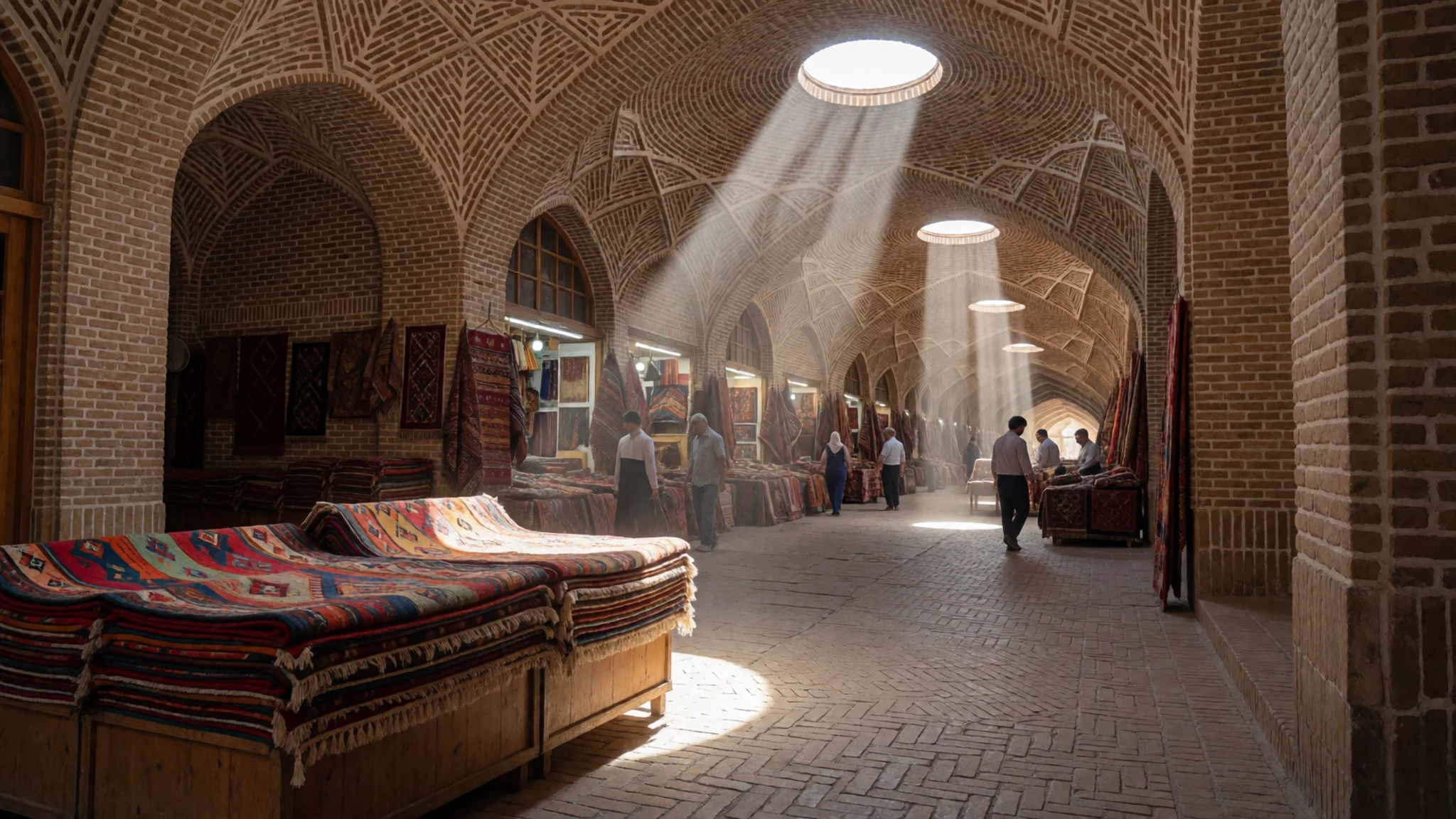
- Timcheh Amin-o-dowleh — part of the bazaar complex
A large building that once served as a caravanserai, where merchants and their animals rested, and it has since been renovated. Stop at the tea stand, sit for a while and watch traders go about their business. It is one of the easiest places to see how commerce was carried on here, and a slow tea break in the middle of the day is well worth the time.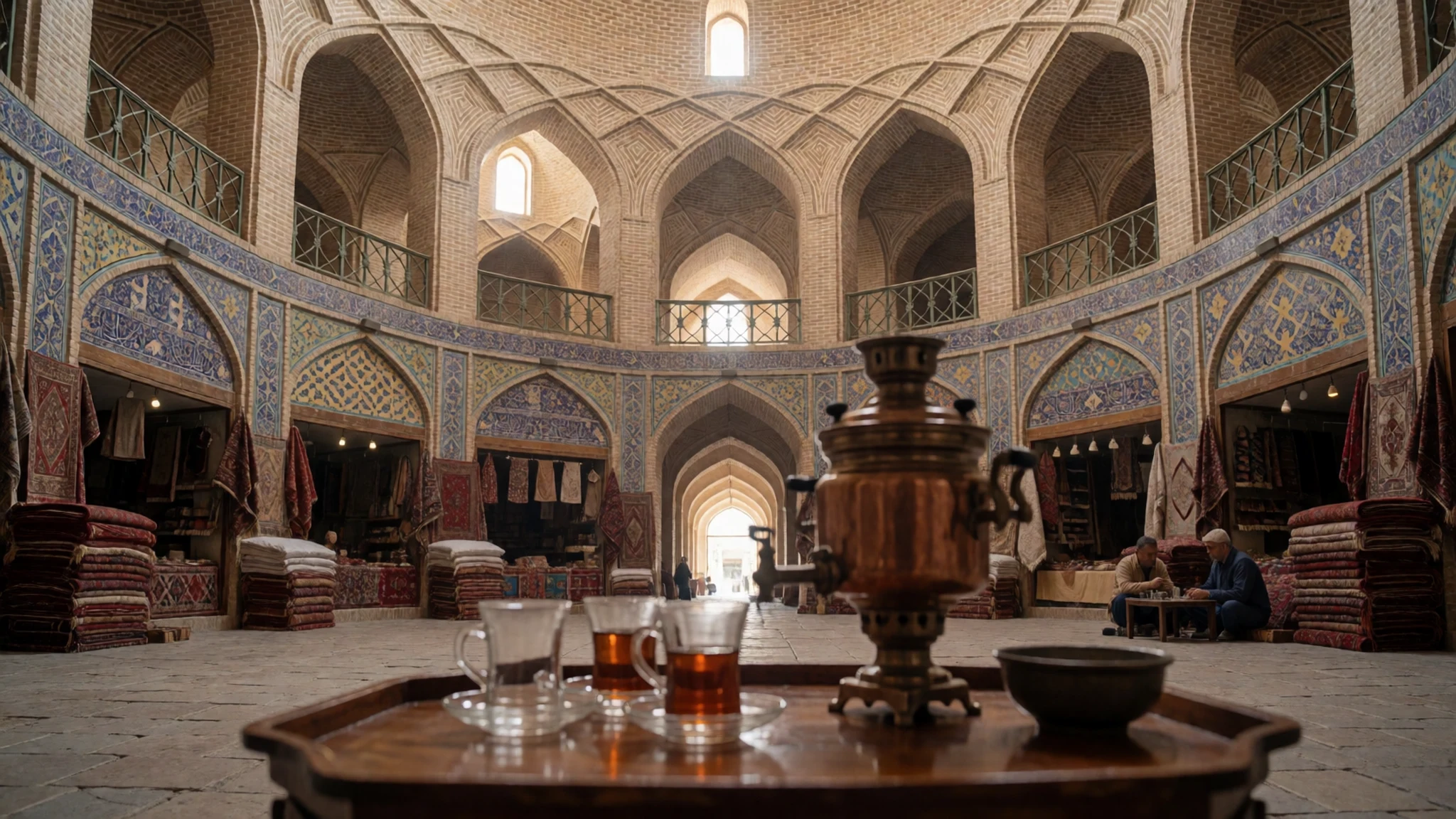
- Sultan Amir Bath — the old quarter
A bathhouse that has been carefully restored, with lighting arranged to show its brickwork and vaults to good effect in the evening. Like many old hammams in the city, it shows how bathing once organised social life in a neighbourhood. Go after dark if you want the lighting at its best, and check opening times on the official site before you travel.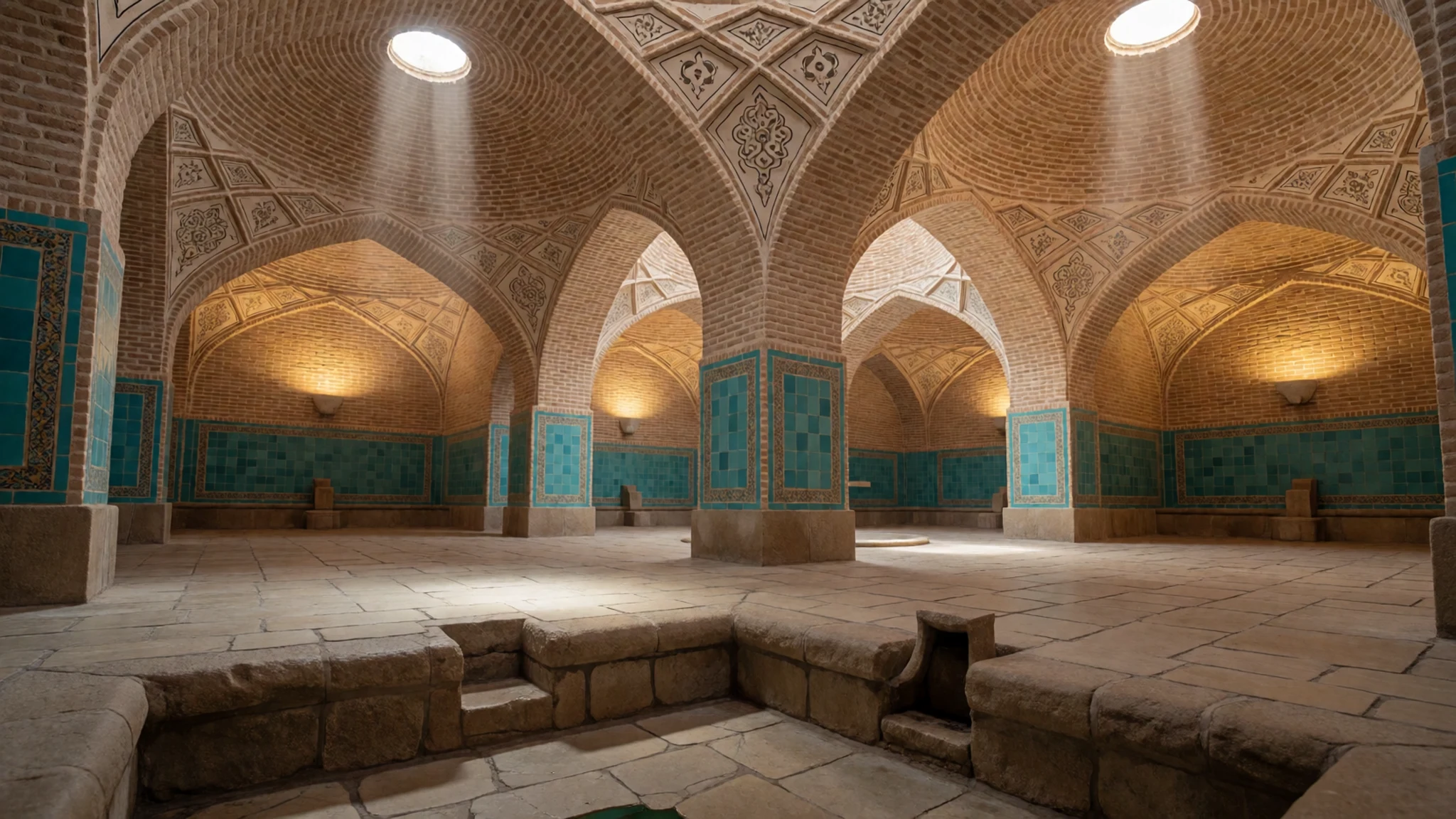
Culture
Kashan is a working city, not a museum piece, and most of the people you pass in the old quarter are simply going about their day. Islam shapes the rhythm of life here: many shops slow down around the midday and afternoon prayers, and the mosques are places of worship first and sights second. Friday is the weekly holiday, so if you can, plan your visits to the bazaar and the mosques for other days.
Hospitality is central to daily life. Shopkeepers and tea-house owners often invite visitors to sit down and drink tea, and accepting a glass is a warm gesture. Conversations can drift towards your family, your work and your impressions of Iran. Answer as much as you like, then take your leave politely when you are ready. Public displays of affection are frowned upon, and alcohol is not available.
Women are expected to wear a headscarf in the streets and in religious buildings, and modest clothing is the norm for everyone. Photographing people, especially women and families, needs consent, and some locals will refuse. Before you raise a camera in the bazaar or a courtyard, ask first and accept a refusal without argument.
What to wear
Kashan's traditional dress is quieter than its architecture. Older women in the town may still wear the chador, a long cloak that covers the head and body, or a plain loose coat with a headscarf. Weaving in central Iran has long produced cotton and silk cloth, and termeh, a woven cloth traditionally used for ceremonies, is made in several cities of the region. The city is also known for its ceramic tiles, which decorate many of its old houses and courtyards.
In the streets today people dress much as they do in Tehran. Women wear a loose long tunic or coat over trousers, with a headscarf that is often worn further back than in more conservative places. Men wear trousers and shirts, and both sexes favour muted colours. The loose cut and covered shoulders remain the norm in public, even as styles have changed.
For your own wardrobe, pack loose, long-sleeved tops and trousers or long skirts that reach below the knee. A light scarf for your hair is essential at religious sites and useful in the bazaar. Summer heat on the desert edge is fierce, so cotton and linen help. Bring closed shoes with good grip for the uneven lanes and steps, and a pair of easy slip-on sandals for courtyards and houses where you will remove your footwear.
What to eat
- Chelow kabab — traditional restaurants near the sights and in the restored houses of the old centre
Steamed long-grain rice, often with a crust of golden rice at the base, served with grilled lamb or chicken kebab. A raw onion or grilled tomato usually comes alongside, and a pat of butter melts into the rice. It is the classic Iranian lunch and an easy first order.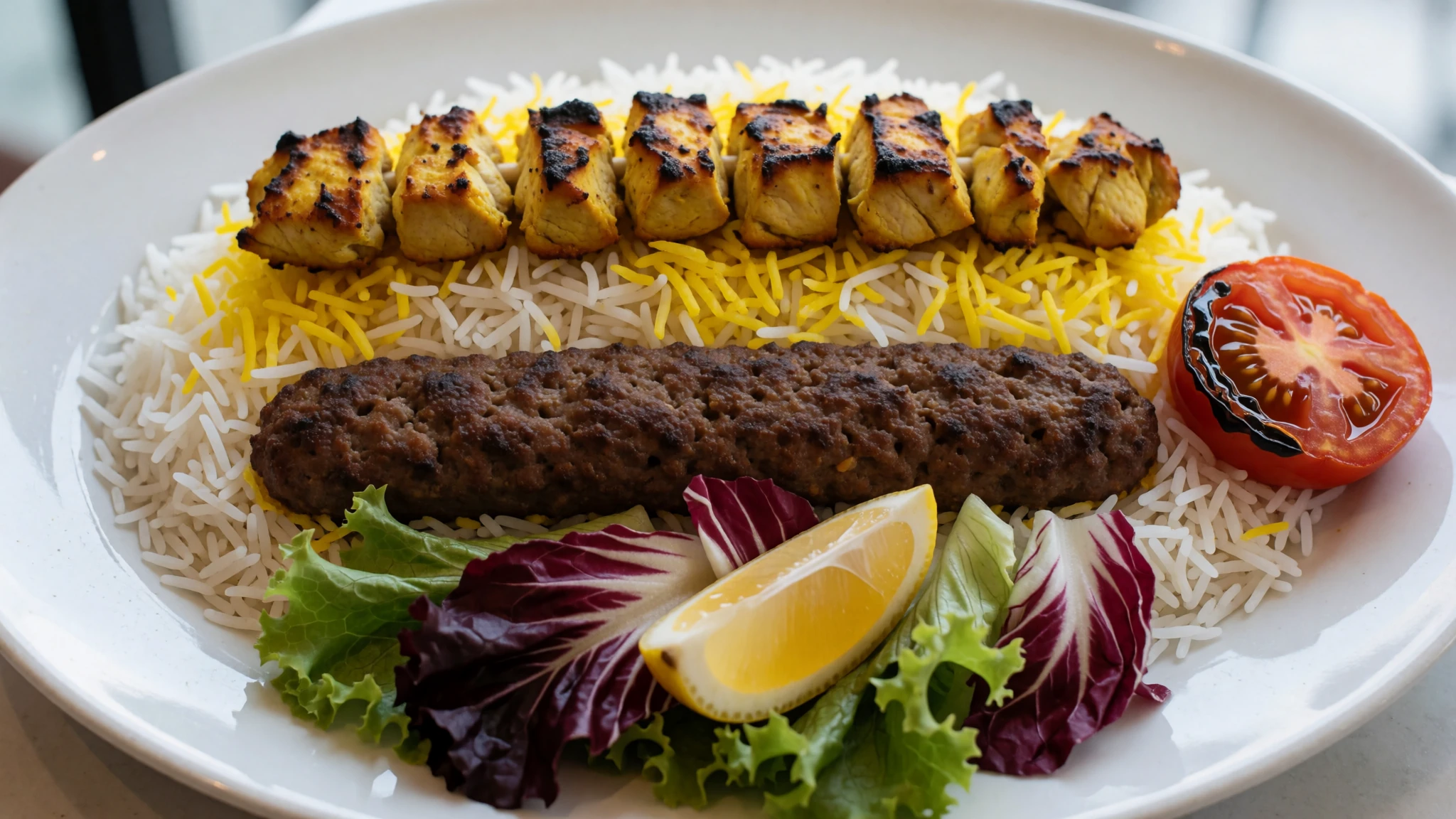
- Fesenjan — the garden restaurants along the road beside Fin Garden
A rich stew of ground walnut and pomegranate molasses, usually made with chicken or duck. The flavour is sweet and sour, and the sauce is thick and dark. It suits a long lunch in a traditional restaurant, and it is a dish worth ordering at least once.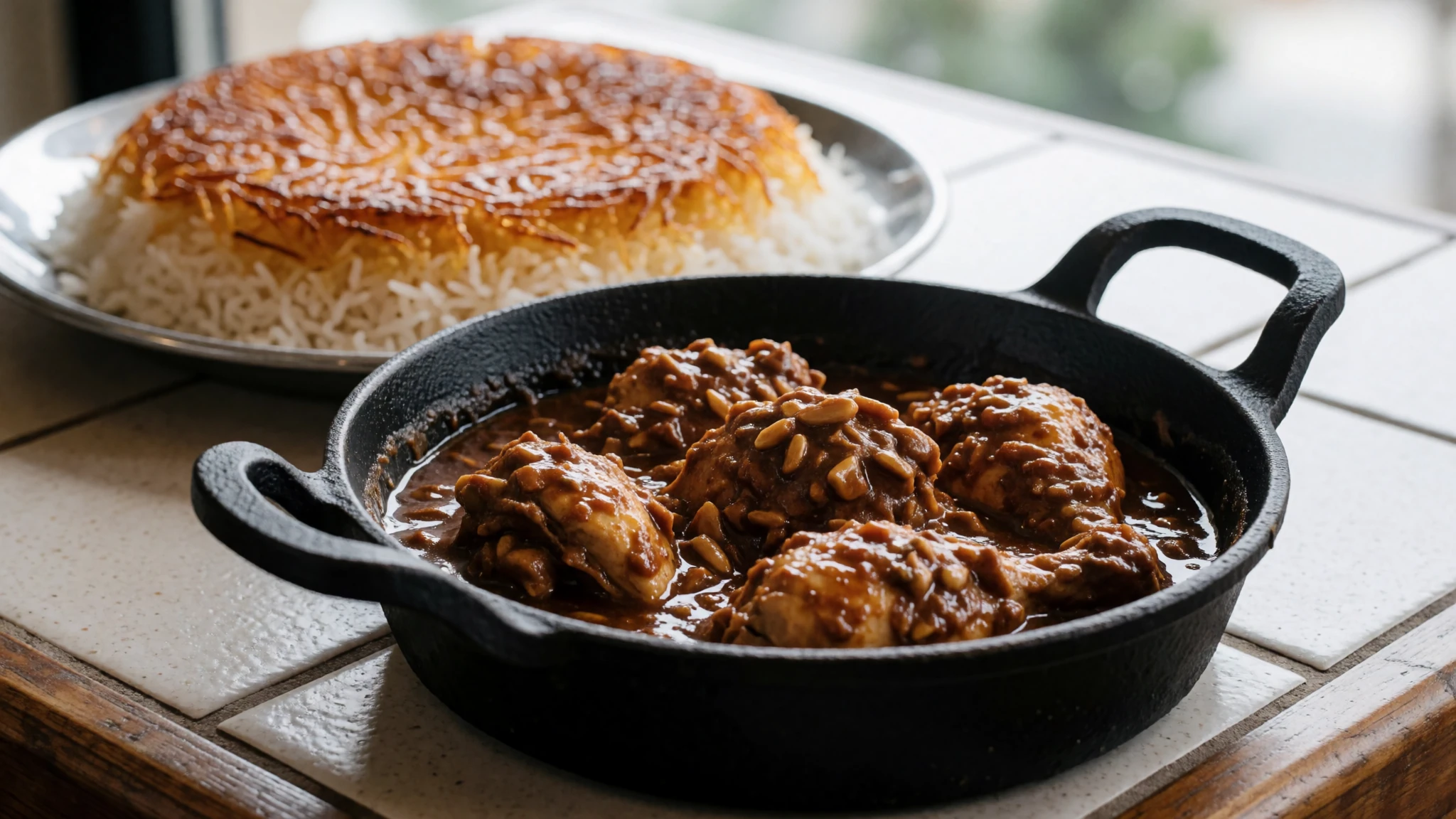
- Ash reshteh — a neighbourhood eatery near the bazaar, especially on cold days
A thick soup of herbs, beans and noodles, topped with fried onion, dried mint and a spoonful of yoghurt or kashk. It is hearty and filling, and it is often on the menu on cooler days. Ask for a bowl at a small local eatery rather than a formal restaurant. - Sholeh zard — sweet shops and tea houses in the old quarter, and the end of a meal in any traditional restaurant
A saffron-scented rice pudding flavoured with rosewater and topped with cinnamon and pistachio. It is sweet, fragrant and usually served chilled or at room temperature. Many traditional restaurants finish a meal with a small bowl of it. - Dogh and tea — the converted bathhouse coffee shop near the bazaar, or any tea house
Dogh is a chilled, salted yoghurt drink, often served with kebabs and rice. Tea is poured constantly at tea houses and stalls across town, usually in small glasses. Order a glass of tea at the converted bathhouse coffee shop near the bazaar and sit as long as you like.
Plan it
Best time. Spring and autumn are the most comfortable seasons for walking the old lanes and courtyards. Midsummer is hot and dry on the desert edge, and winter nights can be cold.
How long. 2–3
Getting there. Kashan lies on the main Tehran to Isfahan railway line, with up to 10 departures a day in each direction. Buses from Tehran's South Terminal take at least three hours, and from Isfahan's Kaveh terminal about two and a half hours. Kashan has its own airport, which reopened in 2016 after two decades closed and has handled flights from Mashhad, though services are limited, so check schedules before you book.
Budget. mid
Tips
- Book accommodation in the traditional houses well ahead for spring and autumn, when rooms fill, and ask whether a private room in a local home is available.
- Start at the bazaar and the old quarter in the morning, before the heat builds in the lanes.
- Carry enough cash in rials for taxis, small shops and tea houses, since card payment is not reliable here.
- Expect plenty of taxis near the bus drop-off squares, but agree the fare before you get in.
- Carry bottled water on day trips to the mountain foothills or the desert edge.
Etiquette
- Dress modestly in the old town and at the mosque, with a headscarf for women and covered knees and shoulders for everyone.
- Ask before photographing people, especially women and families, and accept a refusal gracefully.
- Take off your shoes at the threshold of a house, a tea house with raised platforms, or a shrine where footwear is left at the door.
Nearby
Sources
- Wikidata Q240475 (CC0)
- Wikipedia: Kashan (rev 1378257246) (CC BY-SA 4.0)
- Wikivoyage: Kashan (rev 5406342) (CC BY-SA 4.0)
- Photo: View of the Karkas Mountains from the Amir Kabir Hotel (reibai) (CC BY 2.5)
- Photo: I took this photo with a Fuji 200 film camera (Zereshk) (CC BY 3.0)
- Photo: Fin Garden, Kashan, Iran (Diego Delso) (CC BY-SA 4.0)
- Photo: monument in Iran (Ali Nasr Esfahani) (CC BY-SA 4.0)
- Photo: Mezquita de Agha Bozorg (Diego Delso) (CC BY-SA 4.0)
- Photo: Kashan Tabatabaeiha house (Farid Atar) (CC BY 3.0)
- Photo: 17 Chardin Kashan (Jean Chardin) (Public domain)
- Photo: Old entrance of Kashan (amminamin1) (CC BY-SA 4.0)


