Karachi
Karachi, Pakistan
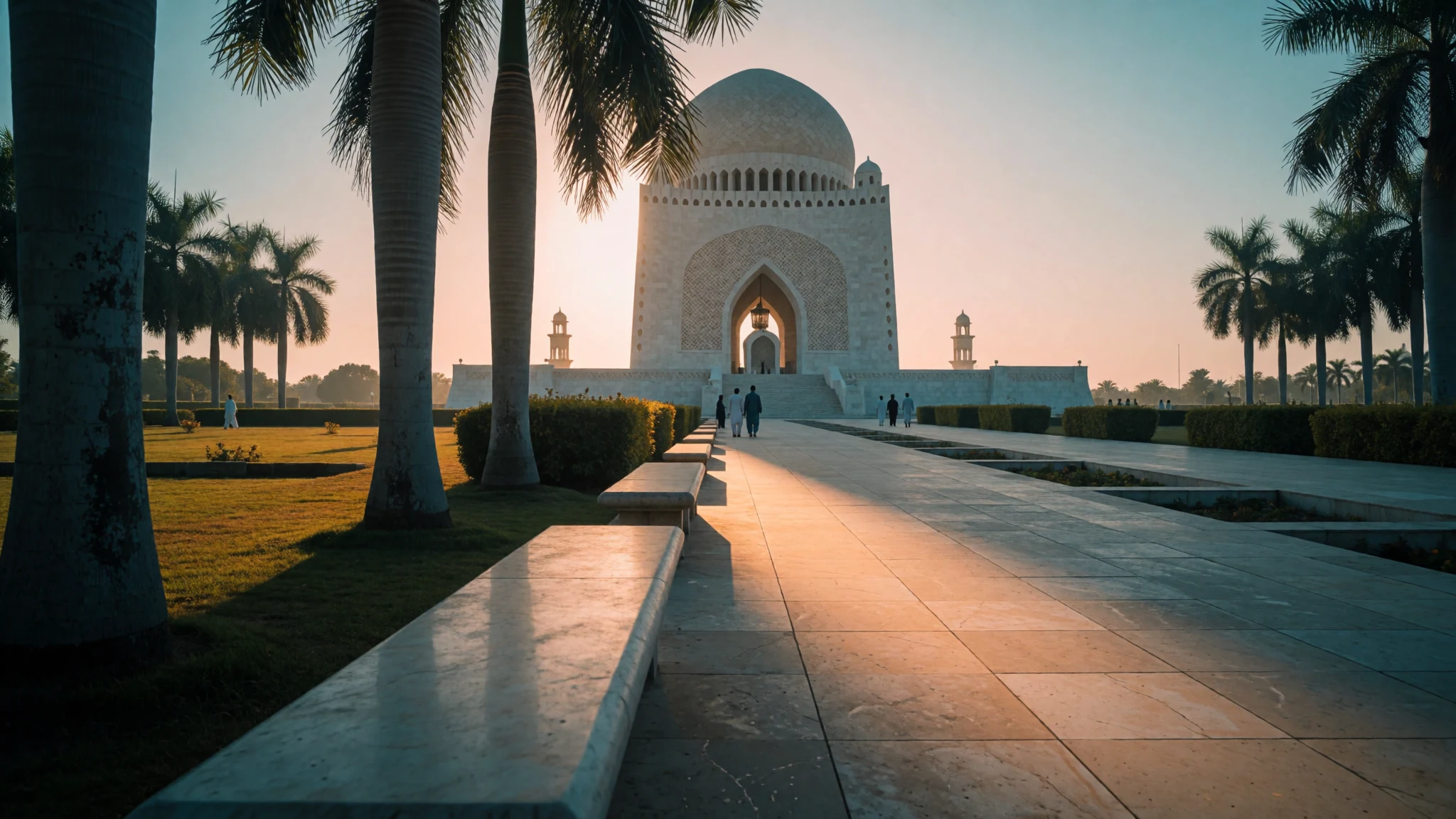
Karachi is Pakistan's Arabian Sea port, a crowded, many-tongued city of colonial landmarks, Sufi shrines, busy markets and serious street food.
The place
Karachi is the capital of Sindh province and Pakistan's main seaport, laid out along a low, dry stretch of the Arabian Sea coast at about 8 metres above sea level. Around 14.9 million people live in the city, and it has no single centre. It works instead as a cluster of districts, each with its own character. Saddar holds the colonial-era downtown, with Gothic and Mughal-revival buildings and crowded bazaars. Clifton faces the sea, with wide avenues, apartment towers and a beach that fills up at weekends. Kiamari and the old port carry the working harbour, while Manora, once an island, sits just offshore. For a few years after independence in 1947 the city served as the national capital, until the role moved elsewhere in 1959. Partition reshaped it: hundreds of thousands of Muslim families arrived from India while most of the Hindu population left, and later waves of migrants came from across Pakistan and beyond. The result is a city of many languages, faiths and food traditions, often described as socially liberal by national standards. It helps to be realistic about what kind of place it is. Karachi is not a tidy sightseeing city. Distances are long, traffic is heavy, and the heat and humidity are real for much of the year. Its rewards lie in markets, seafronts, old buildings and meals, best taken one district at a time rather than all in a single day. Official city information is on the municipal corporation website, http://www.kmc.gos.pk/.
Its story
Karachi's story starts long before the city. Stone-age hunter-gatherers lived in the Mulri Hills on the northern edge of today's urban area, and archaeologists have recovered flint tools there. Later, this coast appears to feature in Greek accounts of Alexander the Great's campaign. Historians have linked a harbour called Krokola, where his fleet put in, to the mouth of the Malir River, though others place it near Gizri. The admiral Nearchus also described two islands that colonial scholars matched with Manora and Kiamari; silt eventually joined both to the mainland. In 711 CE the commander Muhammad bin Qasim conquered Sindh and the port of Debal, drawing the region into a wider Islamic world. The city itself dates from 1729, when a fortified village called Kolachi was established beside the sea. It stayed modest until the East India Company annexed Sindh in the mid-19th century. The British then rebuilt Karachi as a port, improving the harbour and tying it to the South Asian railway network, and many of the stone churches, halls and offices of Saddar come from that period. At independence in 1947 the city held about 400,000 people and a slight Hindu majority. Within a few years migration from India had transformed its population, and economic growth drew people from every part of Pakistan. Much of what a visitor sees today, from the markets to the mix of languages, grows out of those two upheavals.
What to see
- Jinnah Mausoleum — Central Karachi
Known locally as Mazar-e-Quaid, this is the final resting place of Muhammad Ali Jinnah, the founder of Pakistan. It stands in a formal, fairly quiet complex that draws visitors from across the country. Go in the morning before the heat builds, dress modestly, and check the official site for current opening arrangements.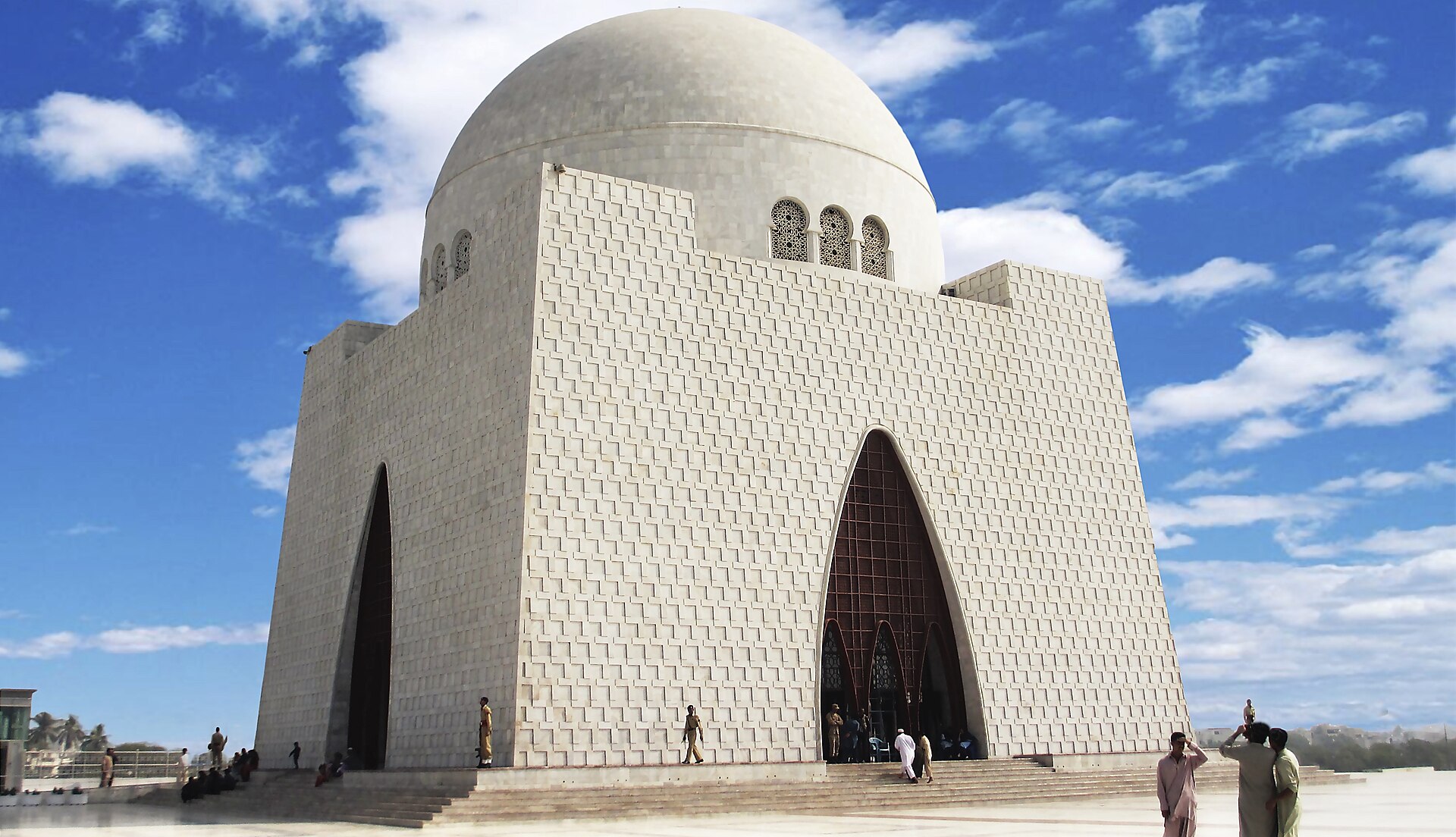
- Frere Hall — Saddar
Frere Hall is a colonial public building from 1865, designed in Venetian Gothic style and faced in yellowish Karachi limestone with red and grey sandstone. It sits in a garden setting that is a calm break from Saddar's traffic. It is better admired for its architecture and grounds than for any single exhibit.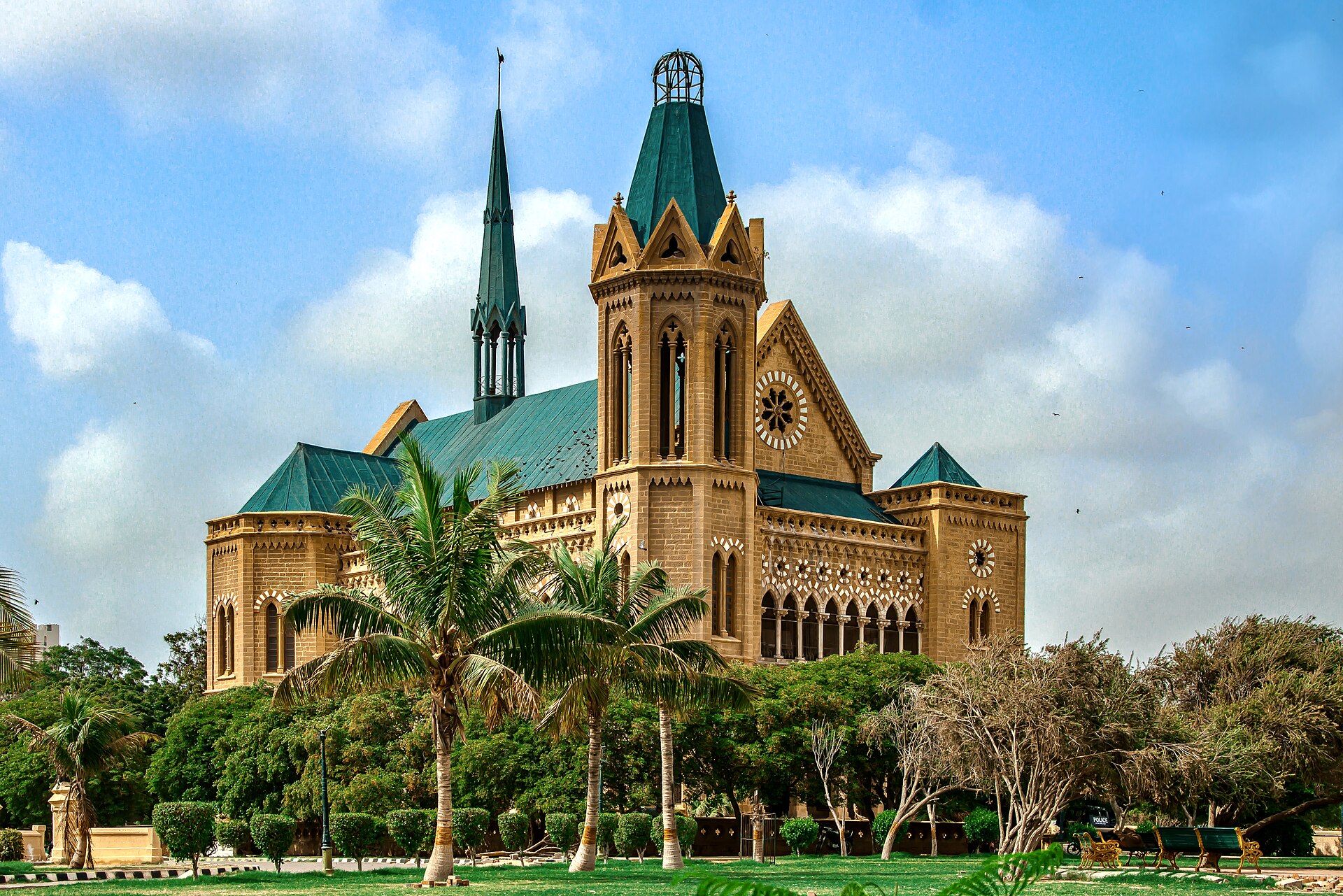
- Empress Market — Saddar
A colonial-era market dominated by a clock tower in a Gothic-Mughal mix, Empress Market stands in Saddar, among the busiest and most congested parts of the city. Come early, keep bags close, and treat it as a place to watch daily trade and to buy spices and produce. - Abdullah Shah Ghazi Mausoleum — Clifton
A green-domed shrine to a Sufi saint of the 9th century, set in a sprawling hilltop complex above Clifton Beach. It is an active place of devotion rather than a monument, so expect worshippers, offerings and music. Cover your head and shoulders, leave shoes at the entrance, and observe quietly. - Holy Trinity Cathedral — Saddar area
Built in 1855 to a design by Captain John Hill of the Bombay Engineers, this is one of Karachi's first major churches and the seat of the Church of Pakistan's Karachi diocese. It records the city's Christian community and its Victorian-era building style. Check with the church before visiting, as access can change. - Chaukhandi Tombs — Eastern outskirts
Chaukhandi is an early Islamic cemetery on the city's eastern outskirts, dating from the Mughal centuries. Its tombs are scattered across a wide area, in a heavily populated district. It rewards those with a particular interest in funerary architecture. Arrange transport in advance and ideally go with someone who knows the way.
Culture
Karachi is a city assembled from migration, and its culture is a conversation between communities rather than one tradition. Sindhi, Urdu-speaking, Punjabi, Pashtun, Baloch, Gujarati and other groups each keep their own food, music and festival habits, and the older Hindu, Parsi and Christian presence survives in buildings such as the Hindu Gymkhana and Holy Trinity Cathedral. Most residents are Muslim, and daily life follows the prayer rhythm: the call to prayer carries across districts, shops may pause briefly, and Ramadan changes the city's timetable, with eating and drinking in public discouraged in daylight and the streets lively after sunset. Sufi shrines, including Abdullah Shah Ghazi above Clifton, are living centres of devotion where families come to pray, tie threads and listen to devotional singing. Eid and Muharram are the major seasonal occasions, and the mood and the traffic change with them. Hospitality is a point of pride; an invitation to tea or a meal is common and worth accepting when it feels genuine. The city's seafront culture matters too, with families picnicking at the beach and eating late into the night. At mosques and shrines, cover your head and shoulders, take your shoes off at the door, and ask permission before photographing people, especially women.
What to wear
Karachi's traditional dress is the shalwar kameez, a long tunic over loose trousers, usually in cotton, with a dupatta scarf for women. Men wear it daily and add a sherwani, a long fitted coat, for weddings and Eid. Sindhi heritage appears in ajrak, a block-printed cotton shawl in deep red and indigo, and in embroidery with mirror work, while Sindhi caps are a mark of regional pride. Baloch and Pashtun communities bring their own embroidered styles. Day to day, most people wear light shalwar kameez or kurtas, which suit the humid coast. Jeans, shirts and western office clothes are common among younger people and in business districts, and many women wear a headscarf or abaya, though practice varies widely by family and neighbourhood. A visitor should dress for heat and respect together. Choose loose, breathable cotton with long sleeves and full-length trousers or skirts, and carry a light scarf or dupatta to cover the head at shrines and mosques. Men should avoid shorts away from the beach. Wear sandals or shoes that slip off easily, since you will remove them often, and add a sun hat, as pavements are uneven and shade is scarce.
What to eat
- Nihari — Burns Road and Boat Basin eateries
A slow-cooked meat stew in a rich, spiced gravy, traditionally eaten with naan and often as a late-morning or weekend meal. It suits a cooler day. Ask locals which eatery they trust, as every neighbourhood has a favourite. - Paratha roll — Roll counters at street stalls across the city, including around Clifton
A flaky fried flatbread wrapped around grilled chicken, beef or kebab with chutney and onions. It is a quick, hand-held meal eaten late in the evening, and it is cheap enough to try several versions. - Biryani — Neighbourhood restaurants and eateries, especially around Saddar
Spiced rice layered with meat and often potato, served with raita. The Karachi style is hot and tangy, so ask for less spice if you are unsure. Many families have strong views on the best version, and it is worth sampling a few. - Grilled seafood — Do Darya, the sea-front food street
Fresh fish, prawns and other catch, marinated in spices and grilled to order. Seafood is a natural choice in a port city. Go in the evening, when the sea breeze takes the edge off the heat. - Bun kabab — Street stalls in Saddar and around Burns Road
A spiced lentil or meat patty fried with egg and tucked into a soft bun with chutney. It is a classic street snack, filling and inexpensive, usually eaten standing at the stall.
Plan it
Best time. November to February, when days are warm rather than punishing. April to June is very hot, and the humid monsoon months from July make walking tiring.
How long. 2–3
Getting there. Fly into Karachi's main international airport, which has taxis at the arrivals level, then use a taxi or app-based ride into the city. Allow extra time for traffic, and check current road and security advice before travelling.
Budget. mid
Tips
- Group sights by district, such as Saddar, Clifton and the seafront, as cross-city travel is slow
- Carry some cash and confirm your card works, since not every ATM accepts foreign cards
- Visit markets and old buildings in the morning, before heat and crowds build
- Drink bottled or filtered water and carry a hat and sun protection
- Check your government's current travel advice and local conditions before you go
Etiquette
- Cover your head and shoulders and remove shoes at mosques and shrines
- Ask before photographing people, especially women
- Avoid eating or drinking in public during daylight in Ramadan
Nearby
Sources
- Wikidata Q8660 (CC0)
- Wikipedia: Karachi (rev 1384478152) (CC BY-SA 4.0)
- Wikivoyage: Karachi (rev 5422402) (CC BY-SA 4.0)
- Photo: Karachi from above (Bilalhassan88) (CC BY 3.0)
- Photo: Clifton Karachi View (Ktownboy103) (CC0 1.0)
- Photo: Jinnah Mausoleum (M.irfan44) (CC BY-SA 4.0)
- Photo: Karachi Municipal Corporation Head Office (Aliraza Khatri) (CC BY-SA 4.0)
- Photo: Port Qasim (Sana Sneha) (CC BY-SA 4.0)
- Photo: Frere Hall (Asim Iftikhar Nagi) (CC BY-SA 4.0)
- Photo: Karachi Port Trust Head Office (Furqanlw) (CC BY-SA 4.0)
- Photo: Karachi City Flag (Aml-401) (CC BY-SA 1.0)


