Kanpur
Kanpur, India
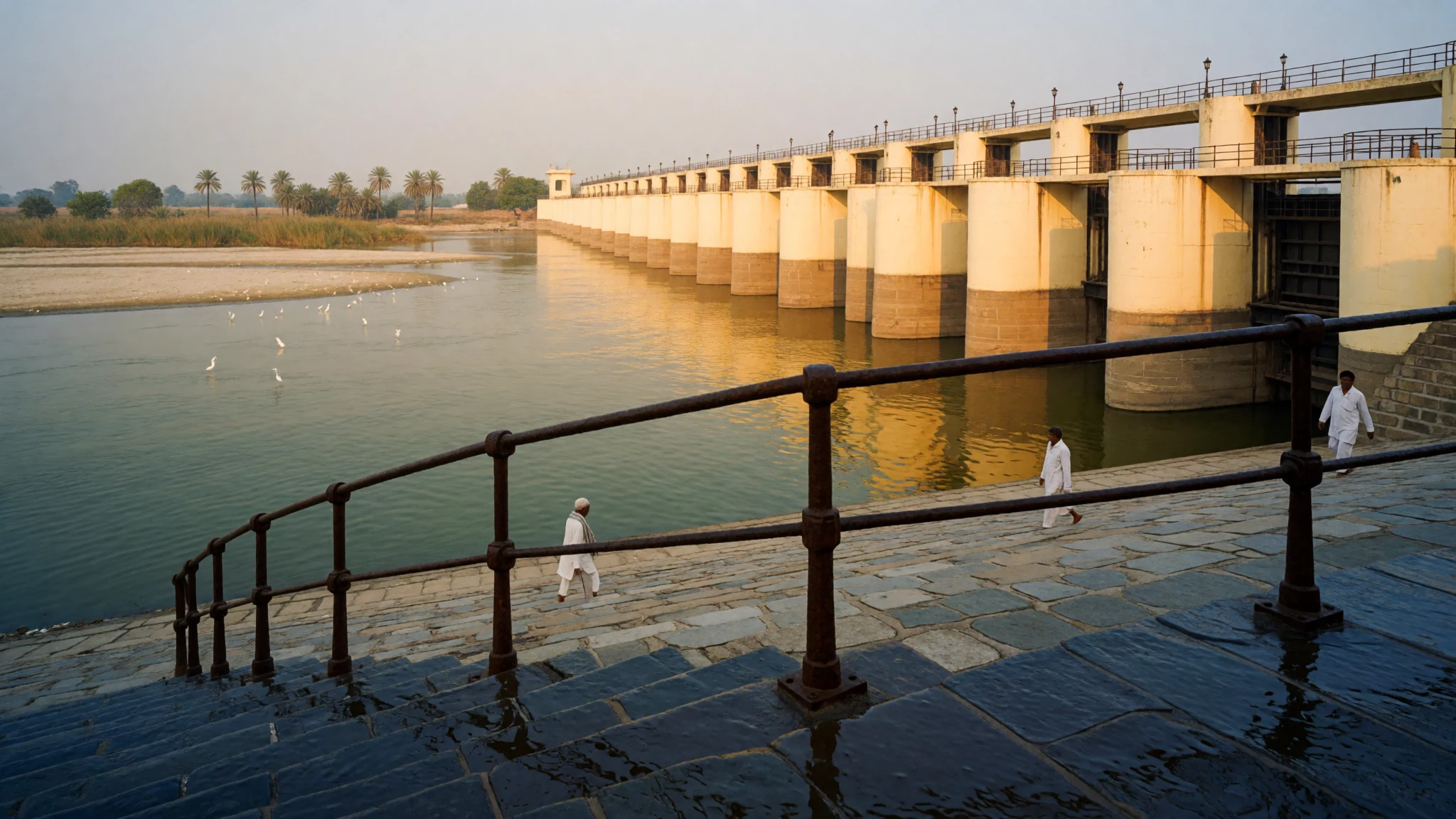
Kanpur is a working Gangetic city where British garrison history, riverside ghats and street chaat share one crowded, unpretentious sprawl.
The place
Kanpur sits on the south bank of the Ganga in central-western Uttar Pradesh, on the flat Indo-Gangetic Plain at an elevation of 126 metres. Lucknow, the state capital, is about 80 km to the north-east, and Delhi lies roughly 484 km to the north-west, which puts the city on the main rail and road corridor between the capital and eastern India. About 4.6 million people live here, and it shows: traffic, markets and small workshops run into one another along most of the main roads.
The city grew around trade and industry rather than palaces or grand temples. Leather, textiles and chemicals shaped its neighbourhoods, and the old mill districts still give parts of town a hard-working, utilitarian look. Civil Lines and the Mall keep a more spacious, colonial-era layout of wide roads and old bungalows, while the older quarters nearer the river are tighter, louder and more tangled.
The Ganga is the city's edge and its oldest thread. Ghats such as Sarsaiya and Sati Chaura line the bank, and the Ganga Barrage upstream offers a calmer, wider view of the water. Jajmau, on the eastern side, has its own ghat and a long history of settlement.
Kanpur is not a city of polished sightseeing. People stop here for the 1857 sites, the river, the food, or because work or study brings them to one of its institutions, including IIT Kanpur, whose green campus is a quiet contrast to the centre. Kanpur Central station is the practical doorway for most arrivals. Heat, dust and noise are part of the deal, and so is a local habit of being direct, helpful and curious about why anyone would choose to stop.
Its story
Kanpur's origins are told in more than one way. A common account credits Raja Hindu Singh Chandel of the Sachendi state with founding it as Kanhpur, either after a festival he thought auspicious or after a place called Kanhiyapur. Another reading links the name to Karna of the Mahabharata. In its early days it was a cluster of villages, among them Patkapura, Juhi and Seesamau.
The British took an interest after defeating the Nawab of Awadh near Jajmau in 1765. A military camp was set up in 1778, although the town stayed within the kingdom of Oudh until a treaty with Nawab Saadat Ali Khan handed it to the East India Company in 1801. As Cawnpore it became a garrison and trading base, with an indigo trade along the river. The Grand Trunk Road (1832) and the later road links to Lucknow and Kalpi (1864) fixed its place on the map.
The episode that still defines the city's memory came in 1857. Cawnpore held a large garrison, and when the uprising spread the town became one of its most painful flashpoints, remembered today at Massacre Ghat and Nana Rao Park, the latter linked to the rebel leader Nana Sahib. The British retook the city afterwards. The same events are called a mutiny, a rebellion or the first war of independence depending on who is speaking. Cawnpore stayed a garrison and industrial town until 1947, when India became independent.
What to see
- Ganga Barrage — Near old Kanpur, on the Ganga
The barrage across the Ganga near old Kanpur gives the city its widest open view of the river. A boating club operates here, and the walkway is a pleasant place to watch the light change over the water in the evening. Go outside the hot months, and treat the river as something to look at rather than touch.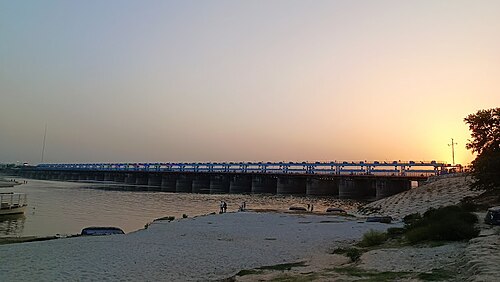
- Kanpur Memorial Church — Cantonment area
Kanpur Memorial Church, also known as All Souls' Church, is a British-built church tied to the 1857 events and the city's garrison past. The grounds, with old fountains and memorials, are calm compared with the roads outside. It suits a short, reflective stop; ask before entering during a service.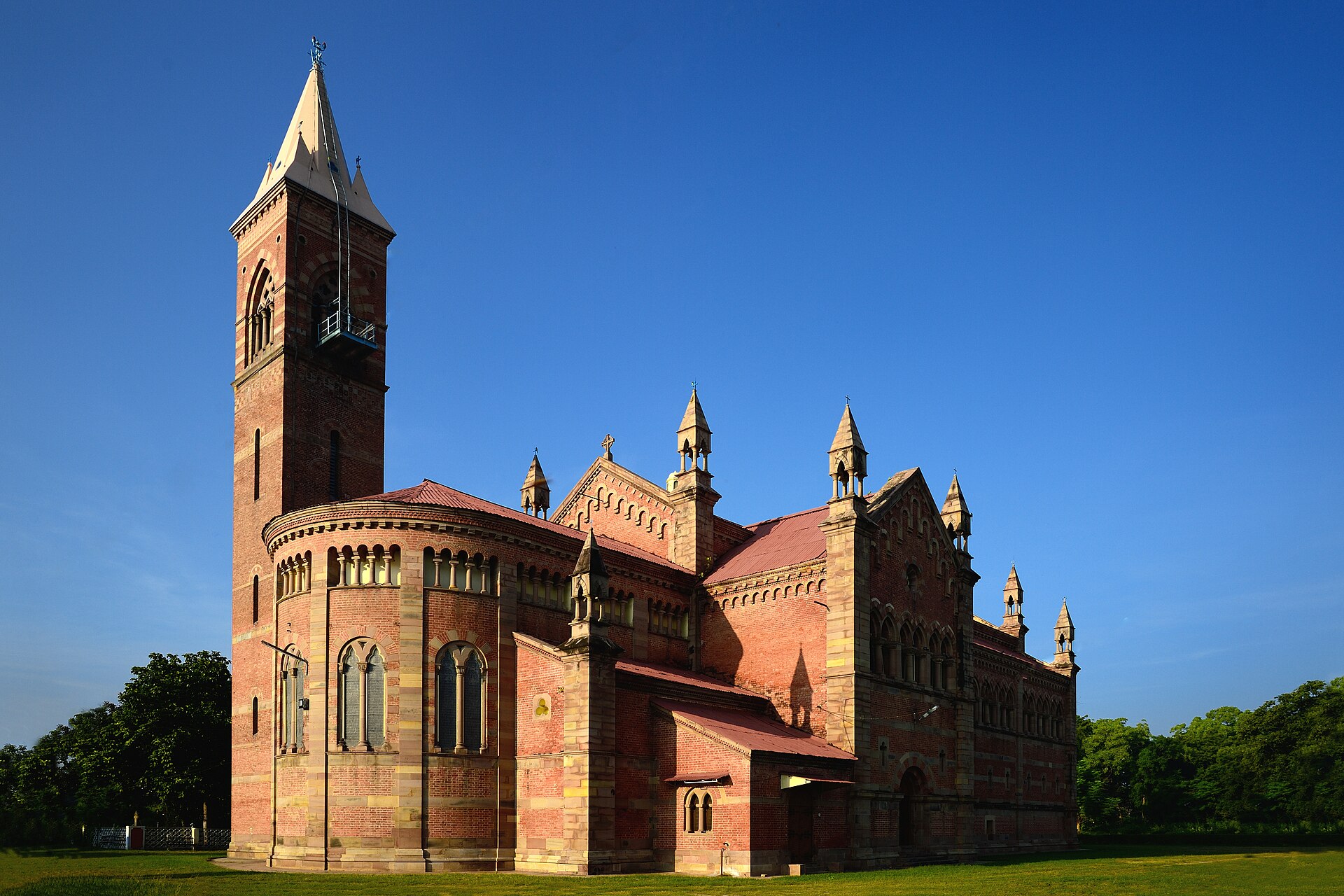
- Nana Rao Park — Central Kanpur, near the river
Nana Rao Park is a public green space on ground linked to the 1857 killings at Cawnpore. Today it is used by walkers and families, while the historical weight stays in the background. Reading about the events beforehand helps, since they are described in very different ways depending on the teller. - Kanpur Sangrahalaya — Eastern Kanpur
Kanpur Sangrahalaya is a museum begun in the British period, holding old photographs, books and objects from the city's past. It is a useful way to gather context on Cawnpore before visiting the historical sites. Opening days change, so check the official district site, kanpurnagar.nic.in, before going. - JK Temple — Kanpur, north-east side
JK Temple was built by a trust set up by the Singhania family, owners of the JK Organisation, and is often described as a blend of ancient and modern architecture. It is a calmer, more open space than the old ghats. Shoes are left at the entrance, as at any temple, and quiet voices are expected.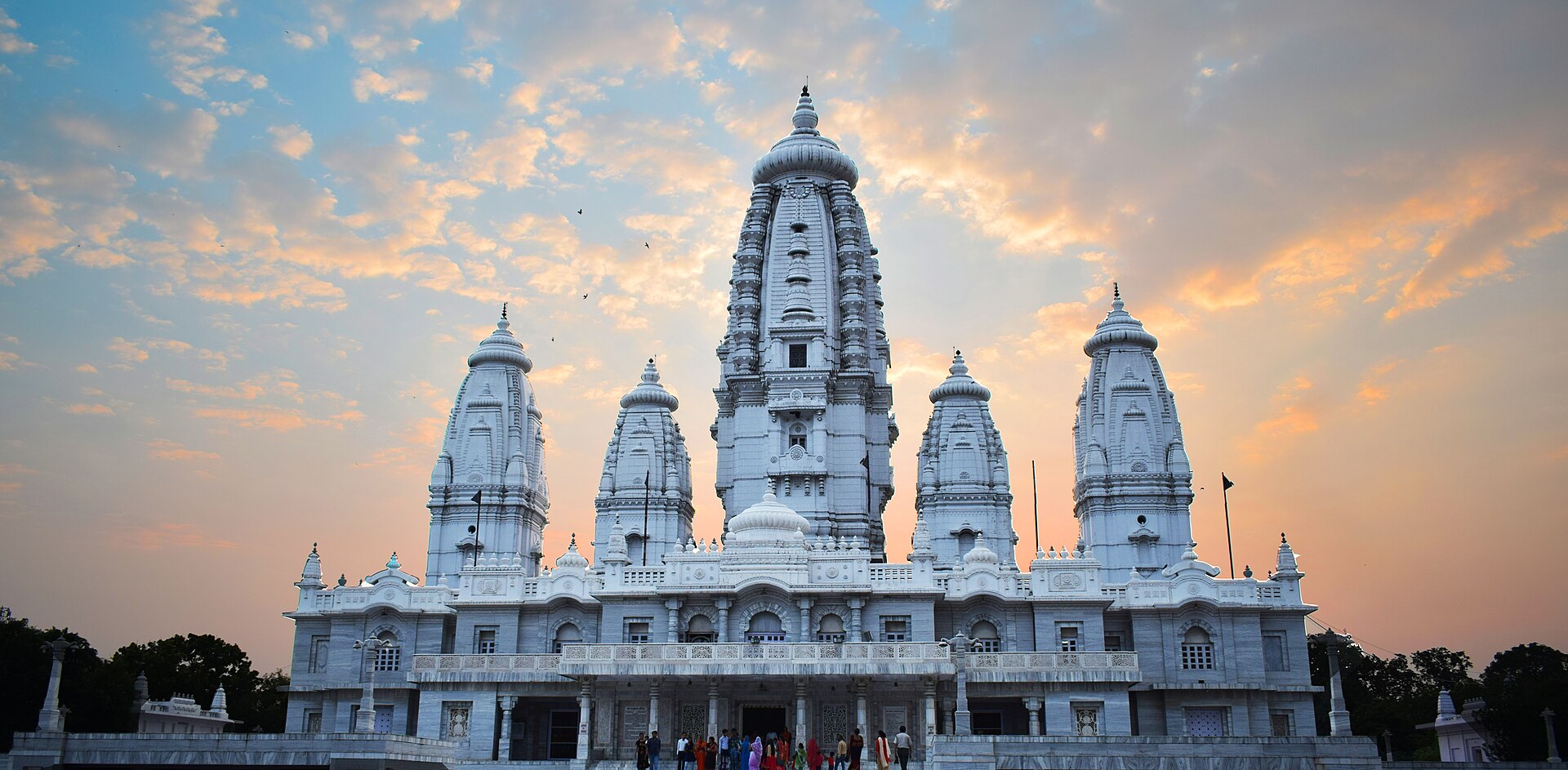
- Allen Forest Zoo — North-west Kanpur
Allen Forest Zoo is a large, wooded park in the north-west of the city, used by Kanpur families as much as by visitors. The tree cover makes it a shaded place to walk in the daytime. Choose the cooler months and go early, before the afternoon heat and the weekend crowds build.
Culture
Kanpur's culture is Awadhi at its roots, shaped by Hindi and Urdu speech, a long industrial working life and a strong river tradition. The local manner is quick, joking and plain-spoken, and conversation with strangers often starts within a minute. Pride in the city shows in its cricket, its universities and its sweet and chaat shops.
The Ganga is the centre of ritual life. Families come to the ghats for bathing, prayers and cremation rites, and festival days bring crowds to the water. Holi here stretches over several days and ends with a fair by the river, a local tradition that surprises visitors who expect a single day of colour. Diwali, Dussehra and Eid are all marked in their own neighbourhoods, and the city's Hindu, Muslim and Christian communities share streets, markets and, in places, food.
The British period is present too, in the cemeteries, churches and cantonment layout. How the 1857 events are remembered is still sensitive: the same sites carry grief, anger and pride for different people, and local guides may offer very different readings. Listening matters more than offering an opinion.
In practice the city is informal, but religious spaces keep their rules. Take off your shoes before any temple or mosque, keep your voice low at the ghats, and ask permission before photographing anyone bathing, praying or taking part in a funeral rite.
What to wear
In Kanpur, traditional dress follows the wider north Indian pattern. Women wear saris, cotton for daily use and silk for weddings and festivals, and salwar kameez or lehengas for celebrations. Men wear kurta-pyjama, often in white or pastel cotton, with a sherwani or a dhoti for ceremonies. Chikankari embroidery on fine cotton from nearby Lucknow and Banarasi silk from Varanasi are the regional prestige textiles, and both turn up in the city's wedding shops.
Day to day, most people wear practical clothes. Shirts and trousers, jeans, kurtas and kurtis are common in offices and markets, while students at the universities lean towards T-shirts and sneakers. In winter, shawls, sweaters and woollen caps appear quickly once the mornings turn cold and foggy. As a leather-working city, Kanpur is also a place where jackets, belts and shoes are well worth looking at.
For visitors, light cotton or linen that covers shoulders and knees works best, for the heat and for temples, mosques and ghats. A scarf or dupatta is useful for covering the head at religious sites. Wear slip-on shoes, since they come off often, and choose a pair that can handle dusty, uneven lanes. A hat and sunglasses help between April and June, and a warm layer is needed for December and January mornings.
What to eat
- Chaat — Street stalls in busy markets and crossings across the city
Kanpur is a good city for chaat: pani puri, aloo tikki and dahi chaat are made fresh at stalls throughout the day. Choose busy stalls with quick turnover, and carry bottled water for the chilli. - Biryani — Eateries around the Mall, Civil Lines and Swaroop Nagar
Biryani is a regular order in Kanpur, cooked in the Awadhi style of fragrant rice layered with meat and spice. Portions are generous and it works as a main meal, especially in the evening. - Boondi ladoo — Sweet shops, many with several branches across the city
Small fried gram-flour pearls are soaked in syrup and pressed into round ladoos. They are sold for festivals and offerings, and are easy to carry as a gift or a snack for a train journey. - Rasgulla — Long-established sweet shops in the older markets
Soft cheese balls in light syrup are a staple of the city's older sweet shops. They are best eaten fresh and cool, and sold by weight or by the box. - Egg roll — The eating lane at Arya Nagar, among many other quick-food counters
A fried flatbread wrapped around egg, onions and sauce makes a cheap and filling stop between sights. It is a popular late snack with students and office workers.
Plan it
Best time. Late October to November and February to March are the most comfortable, with dry, mild days. April to June is very hot, July to September is humid with monsoon rain, and December to January brings cold mornings and dense fog that can delay trains and flights.
How long. 1–2
Getting there. Kanpur Central is the main railhead, on the Delhi–Kolkata line, with Shatabdi and several Rajdhani services. The nearest major airport is Chaudhary Charan Singh Airport at Lucknow, about 70 km away, followed by a road or rail transfer. National highways also reach the city, and long-distance buses use the main bus stations.
Budget. low
Tips
- Book trains early, as popular services fill up, and allow extra time in December and January because of fog
- Start sightseeing in the morning, since the afternoons can be very hot from April to June
- Carry some cash for markets and food stalls, and keep small notes for autos and rickshaws
- Drink bottled or filtered water, and eat at busy stalls with fresh cooking
- Check the official district site, kanpurnagar.nic.in, for museum and event details before you go
Etiquette
- Remove your shoes at temples and mosques, and cover shoulders and knees
- Ask permission before photographing people at the ghats or during rituals
- Approach the 1857 sites respectfully, as they are still painful for many people
Nearby
Sources
- Wikidata Q66568 (CC0)
- Wikipedia: Kanpur (rev 1382657179) (CC BY-SA 4.0)
- Wikivoyage: Kanpur (rev 5406259) (CC BY-SA 4.0)
- Photo: JK Temple (Udayraj18) (CC BY-SA 4.0)
- Photo: Kanpur Central Railway Station (KpinfomediaIndia) (CC BY-SA 4.0)
- Photo: IIT Kanpur at night (NiteshSingh6789) (CC0 1.0)
- Photo: Kanpur Memorial Church (Shivam Maini) (CC BY-SA 4.0)
- Photo: Green Park International Stadium (Ovalhighlander) (CC BY-SA 4.0)
- Photo: Kanpur from the river (Charles Mottram, after Samuel Prout) (Public domain)
- Photo: Ganga Barrage Kanpur (NiteshSingh6789) (CC0 1.0)
- Photo: IIT Kanpur campus (NiteshSingh6789) (CC0 1.0)


