Kanha National Park
Kanha National Park, India
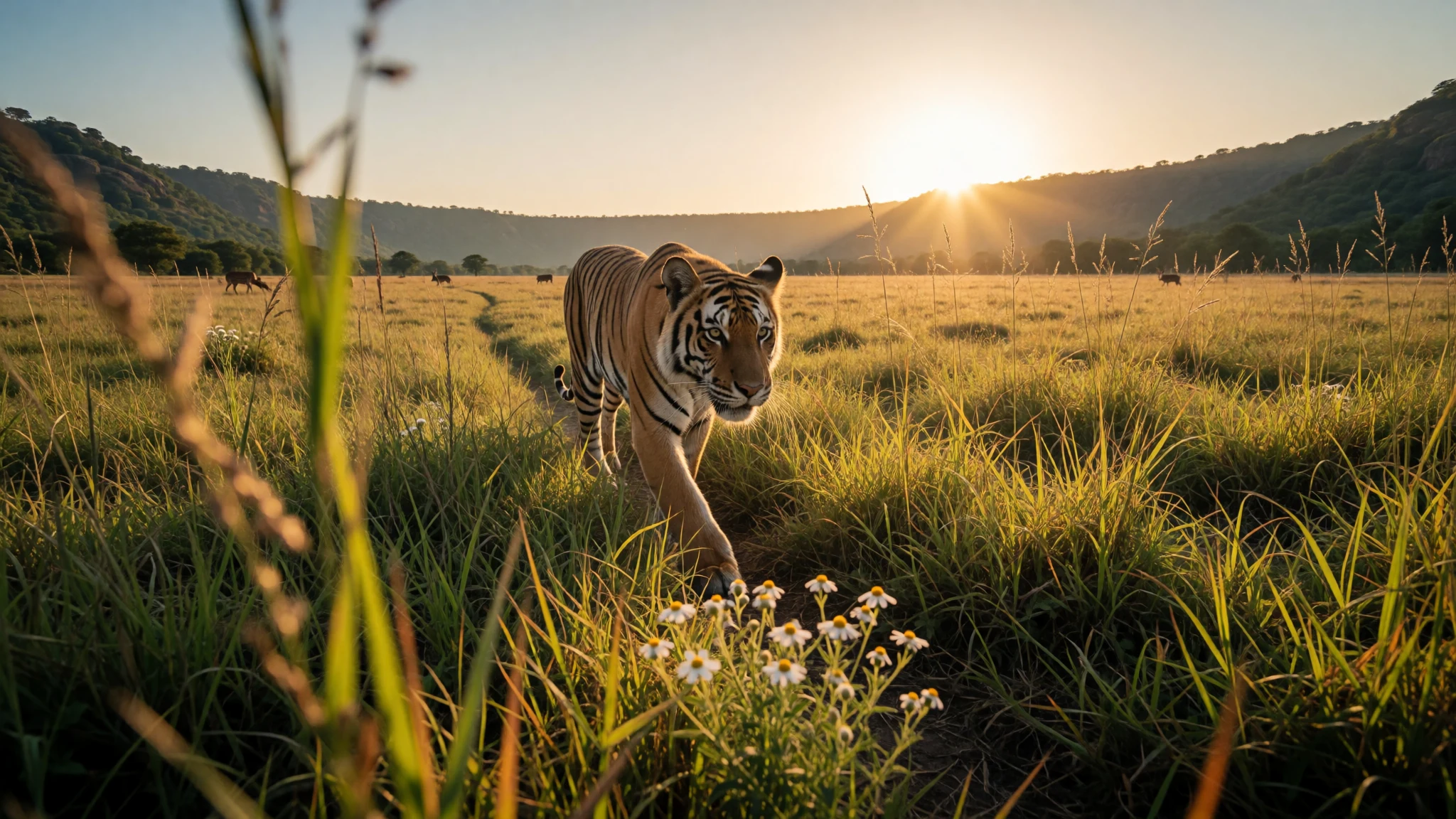
Kanha National Park is central India's tiger country, where jeep safaris cross forest and open meadows to find tigers, barasingha, gaur and deer.
The place
Kanha National Park sits in the Mandla and Balaghat districts of Madhya Pradesh, in the central Indian highlands, and forms the heart of Kanha Tiger Reserve. The core area covers 940 km², wrapped in a buffer zone, with the neighbouring Phen Sanctuary alongside. The park was created in 1955, became a tiger reserve in 1973, and was brought under Project Tiger in 1974. The land is a horseshoe-shaped valley ringed by spurs of the Mekal range. Its floor is a patchwork of sal forest, bamboo and open grassland meadows known as maidans, with the Surpan River meandering through the middle. That mix suits the wildlife. Tigers and leopards hunt in the tree cover, while spotted deer, sambar and gaur graze the open ground, where a jeep can watch them from a respectful distance. Kanha is also the only home in India of the hard-ground barasingha, a swamp deer with many-tined antlers, and the reserve has made it a mascot named Bhoorsingh. Sloth bears and dhole, the wild dogs of the peninsula, live here too, though they are seen far less often than deer. Entry is organised by zones: Kanha, Kisli, Sarhi and Mukki, each with its own gate and routes. The Kanha zone is the most sought after and the busiest, so the others are worth considering. Tigers are present but never guaranteed, and a good safari is judged by the forest, the birds and the deer as much as by one striped sighting.
Its story
Kanha National Park owes its present shape to a change of attitude in the mid-twentieth century. The area was formally made a national park in 1955, at a time when hunting tigers was still ordinary sport in central India. Eighteen years later it was designated a tiger reserve, and in 1974 it was folded into Project Tiger, the national programme that treated the big cat as an animal to be rebuilt rather than collected. Villages that once stood inside the protected core were gradually relocated, which is part of the story even if it is told less often than the wildlife triumphs. The barasingha gives the park a second chapter. This deer once lived across wider stretches of the subcontinent, and Kanha now holds the only population of the hard-ground kind. Protecting it meant protecting the maidans, the grassland it depends on, so a meadow and a deer became a conservation argument. Kanha is also bound up with Rudyard Kipling's Jungle Book in popular memory. Tourism leans on the association heavily, and the horseshoe valley, the sal forest and the open clearings do look like the stage for such a tale. The link is more romance than record, but it has helped bring visitors and goodwill to the reserve. Today the story is one of careful management: seasonal closure, limited vehicles, trained naturalists and a buffer zone where local people still live and work beside the wildlife.
What to see
- The Kanha maidans and barasingha — Kanha zone
Kanha National Park's open grasslands are the best place to see barasingha, the swamp deer found nowhere else in India in its hard-ground form. Stags carry crowded antlers and move in harems across the meadows, especially in the cooler hours. Spotted deer and gaur often share the same open ground.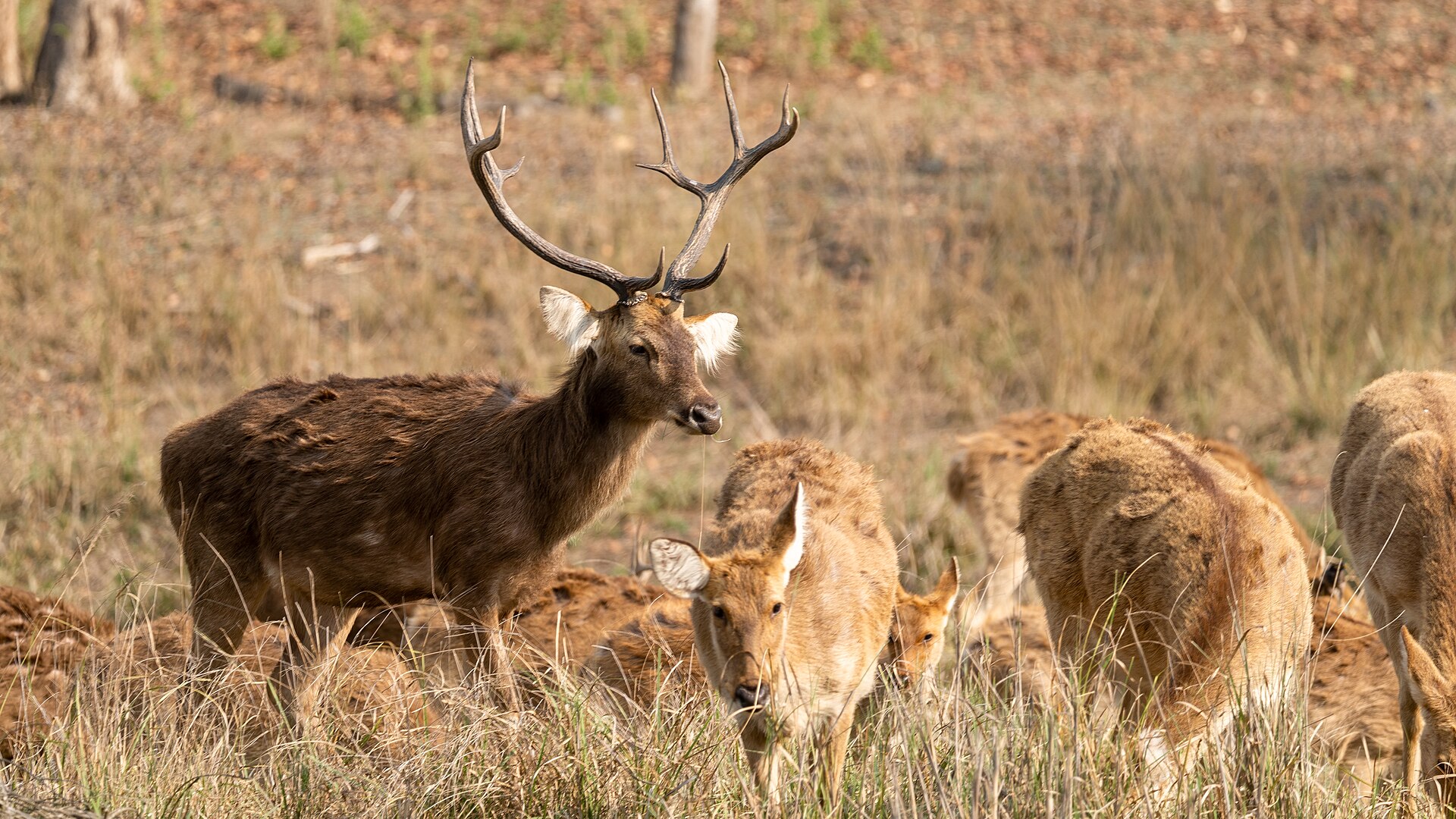
- Tiger safaris — All four zones
Safaris at Kanha National Park run in the early morning and again in the afternoon, in open jeeps with a driver and a forest-department guide. Tigers are most often found near waterholes, tracks and meadow edges. Sightings depend on luck, patience and the zone, so plan for several drives.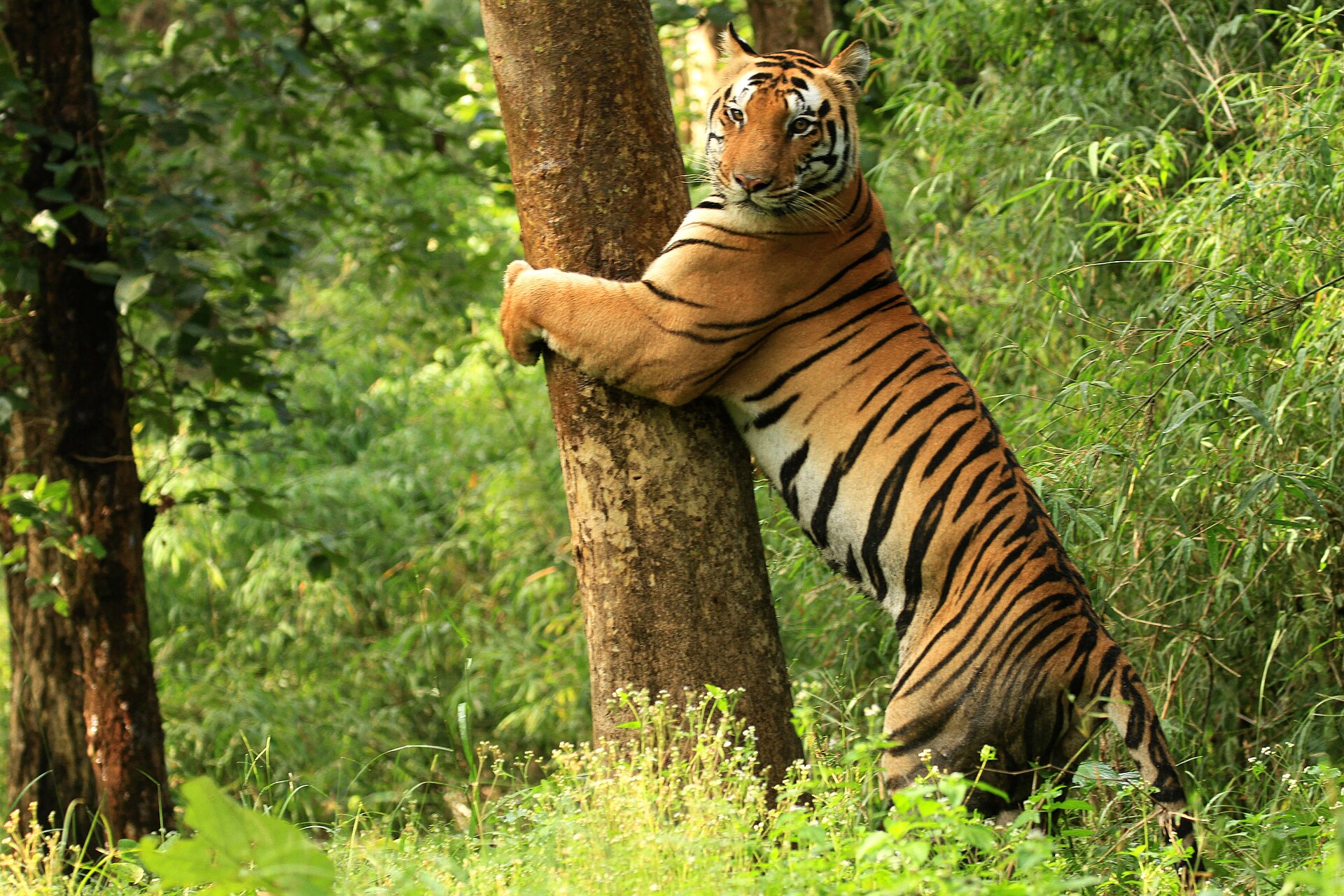
- Bamni Dadar sunset point — Kanha zone
Bamni Dadar is the park's well-known sunset viewpoint, looking over the forest and the plains below. Sambar, barking deer, gaur and four-horned antelope are regularly seen on the approach. It is popular, so expect other jeeps around dusk, and check the official rules on when the point is open.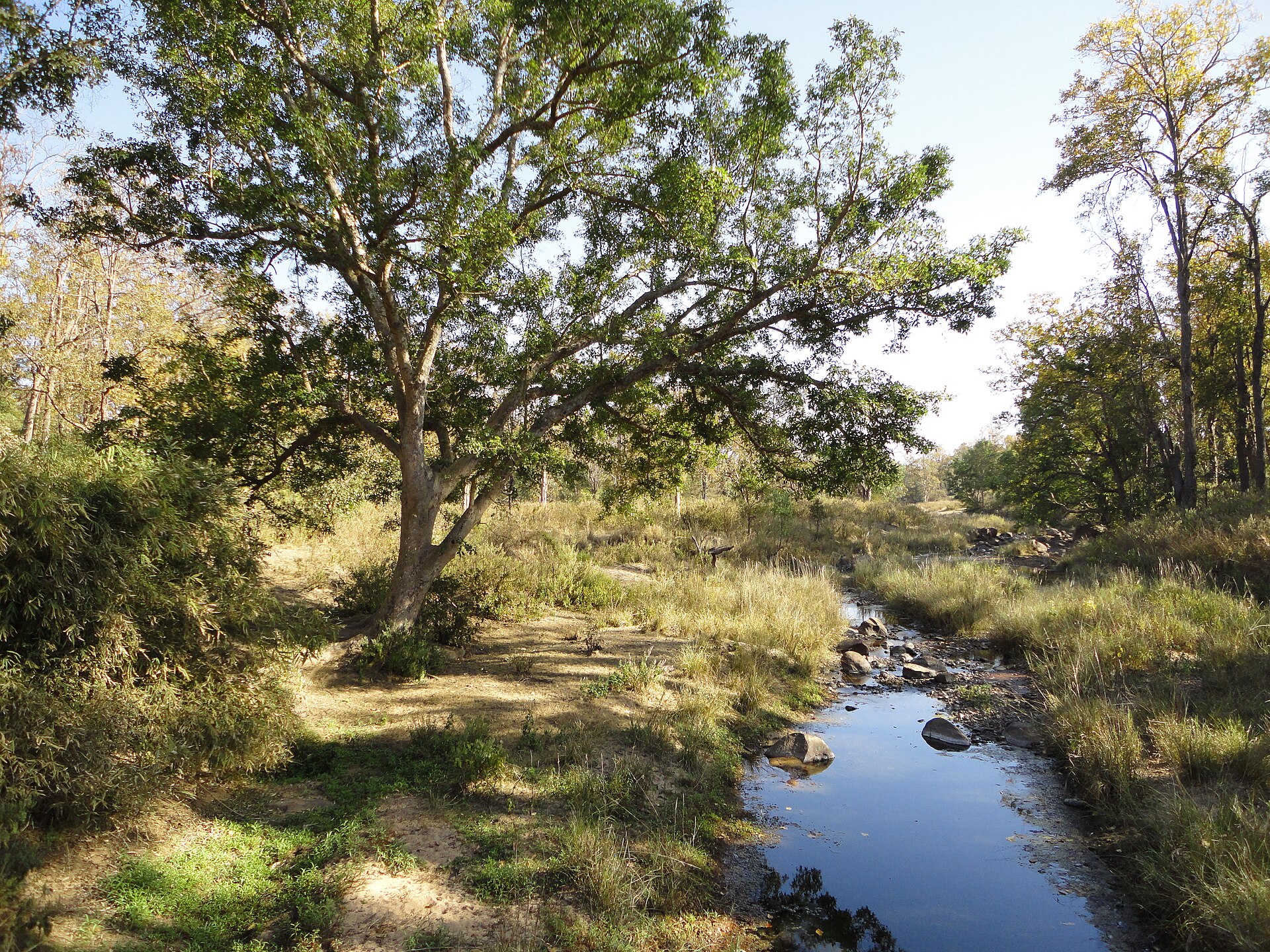
- Kanha Museum — Near Kisli and Khatia
The small museum inside Kanha National Park is worth half an hour before or after a drive. It explains the landscape, the park's wildlife and its conservation history, and gives useful context for what the jeep later reveals. It is a calm stop in the middle of a busy safari day.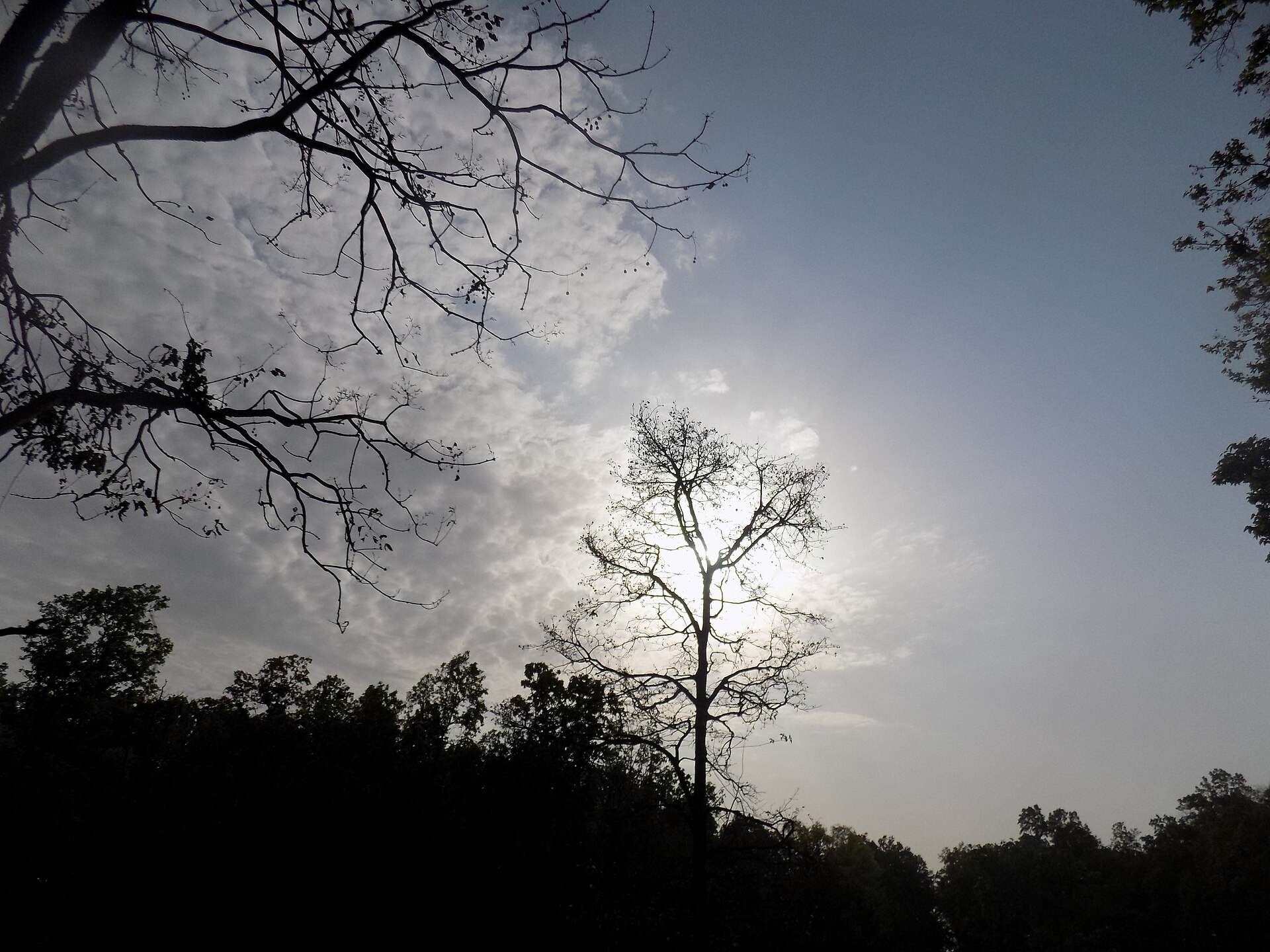
- Nature trails near Chhapri — Khatia and Chhapri, buffer zone
Walking trails run near the Khatia gate and the village of Chhapri, a change from the jeep. The Chhapri trail is especially recommended for birdwatchers. Ask your lodge or the gate staff about booking, and go with a guide; tracks, birds and plants are better read on foot.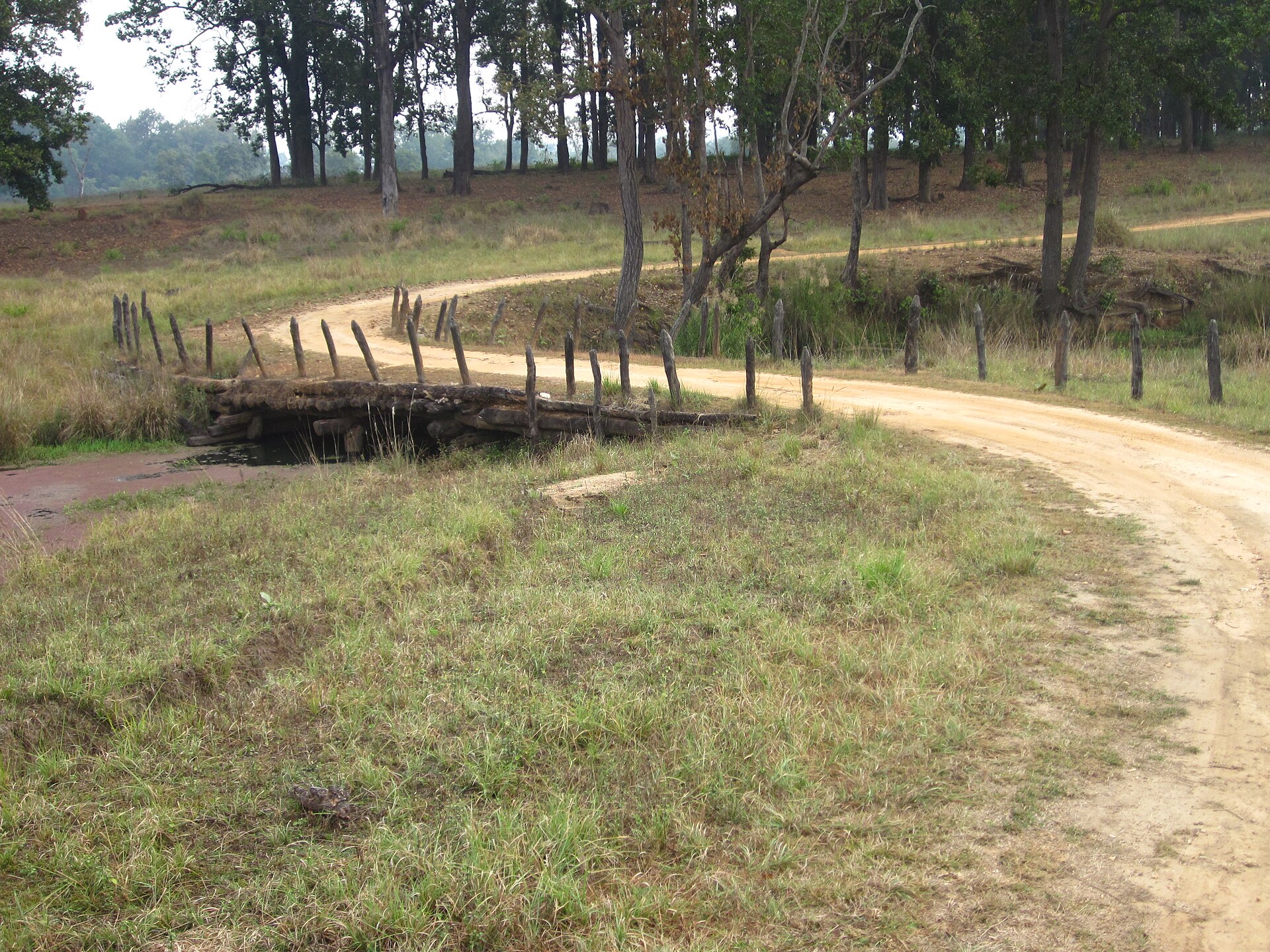
Culture
Kanha National Park lies in a region long home to Gond and Baiga communities, forest people whose lives, stories and crafts are tied to the sal, bamboo and mahua trees around the reserve. Villages such as Khatia, Mocha and Chhapri sit near the gates, and many drivers, guides, cooks and lodge staff come from them. Gond art, with its dense dotted patterns of animals and trees, is a well-known Madhya Pradesh tradition, and small craft stalls and lodge shops may sell paintings and woven or carved pieces. Wildlife is a daily presence in the culture, not just a tourist attraction: families know the risks of leopards and sloth bears, and stories of tigers run through local memory. The relationship between the reserve and its neighbours is not always easy, since access to forest produce is restricted, and tourism provides income and tension in equal measure. Visitors who ask politely, hire local guides and buy crafts directly tend to leave a better mark than those who only pass through on safari. Festival dates and village events vary, so ask at your lodge rather than assuming something will be on. Etiquette line: ask before photographing villagers, keep voices low and stay seated in the jeep when animals are near, following your guide's instructions every time.
What to wear
Kanha National Park's surrounding villages are home to Gond and Baiga people, and traditional dress there is practical cotton clothing: saris draped in the local way for women, and dhotis, shirts and waistcoats for men, often with a cloth wound around the head. Baiga women are also known for traditional tattooing, a body-art practice with deep roots, though it is seen less widely now. Silver jewellery and bead necklaces appear at festivals. Everyday dress today is more mixed: shirts and trousers for men, salwar suits or saris for women, and plain shoes or sandals, with festival clothes brought out for weddings and fairs. For visitors, safari clothing matters more than style. Choose muted greens, browns and khaki, not white or bright colours, which stand out in the forest. Winter mornings in an open jeep are cold, so bring layers, a scarf and a light jacket, plus a hat and sunglasses for the hotter months and the dust. Wear closed shoes with grip for walks and uneven ground. In villages, keep shoulders and knees covered as a courtesy. A light waterproof is useful if rain is forecast, and insect repellent saves discomfort at dusk.
What to eat
- Poha with jalebi — Roadside eateries in Mandla and nearby towns
Poha, flattened rice cooked with onion, mustard seed and turmeric, is a typical Madhya Pradesh breakfast, often paired with sweet jalebi. Look for it at roadside stalls and small eateries in Mandla and the towns on the way to Kanha. - Dal, rice and roti thali — Lodge dining rooms near Khatia and Mukki
Most lodges around Kanha National Park serve a simple vegetarian thali built around dal, seasonal vegetables, rice and fresh rotis. It is a reliable, filling meal after a long safari, and kitchens usually adjust spice on request. - Kodo-kutki millet dishes — Village homes or lodges that cook local food
Kodo and kutki are small millets traditionally grown by forest communities in this part of central India. Cooked as porridge or rice-like dishes, they taste nutty and earthy. Ask your lodge whether the kitchen can serve them. - Chana and bhutta snacks — Stalls near park gates and village junctions
Roasted chickpeas, spiced puffed snacks and, in the season, roasted corn on the cob are typical for road stops and gate-side stalls. They are cheap, easy to carry in a jeep and good for a long day outdoors. - Masala chai — Tea stalls near park gates and village crossroads
Strong, sweet milk tea with ginger or cardamom is the usual drink before an early safari and the cheerful break after one. It is made fresh at tea stalls and at most lodges, usually in the cold dark before the gate opens.
Plan it
Best time. November to May, outside the monsoon closure. Winter mornings are cold in an open jeep, February to April are warmer and drier, and May is hot but waterholes draw animals. Check the official park site for opening dates.
How long. 2–3
Getting there. Jabalpur has the nearest airport and railway station, about three hours from the park, with flights from Delhi and Mumbai. Mandla is the nearest city. The main entry points are Khatia, near Kisli, and Mukki, each reached by road.
Budget. mid
Tips
- Book safaris and permits through the official park booking system well ahead, especially for the Kanha zone
- Take one morning drive in the Kanha zone and an afternoon drive in Kisli or Sarhi for variety
- Carry water, a layer for cold dawns, and cash for small stalls and tips
- Ask your lodge about guided nature trails near Khatia and Chhapri
- Allow several drives; tiger sightings are never guaranteed
Etiquette
- Stay seated in the jeep and follow your guide's instructions near animals
- Keep noise low, and do not litter or feed wildlife
- Ask before photographing villagers
Nearby
Sources
- Wikidata Q1480481 (CC0)
- Wikipedia — Kanha Tiger Reserve (rev 1376513746) (CC BY-SA 4.0)
- Wikivoyage — Kanha National Park (rev 5406249) (CC BY-SA 4.0)
- Photo 01 — Altaipanther, Spotted deer at Kanha (Public domain)
- Photo 02 — Davidvraju, Tiger in Kanha Tiger Reserve (CC BY-SA 4.0)
- Photo 03 — Sangeetha Balaji, One afternoon at the Kanha National Park (CC BY-SA 4.0)
- Photo 04 — Kandukuru Nagarjun, Barasingha at Kanha (CC BY 2.5)
- Photo 05 — Nikhilkobe, Indian Gaur at Kanha (CC BY-SA 4.0)
- Photo 06 — Davidvraju, Tigers of India (CC BY-SA 4.0)
- Photo 07 — Sankalpce, A day at Kanha Kisli (CC BY-SA 4.0)
- Photo 08 — Indrani911basu, Kanha mud road (CC BY-SA 4.0)


