Kanazawa
Kanazawa, Japan
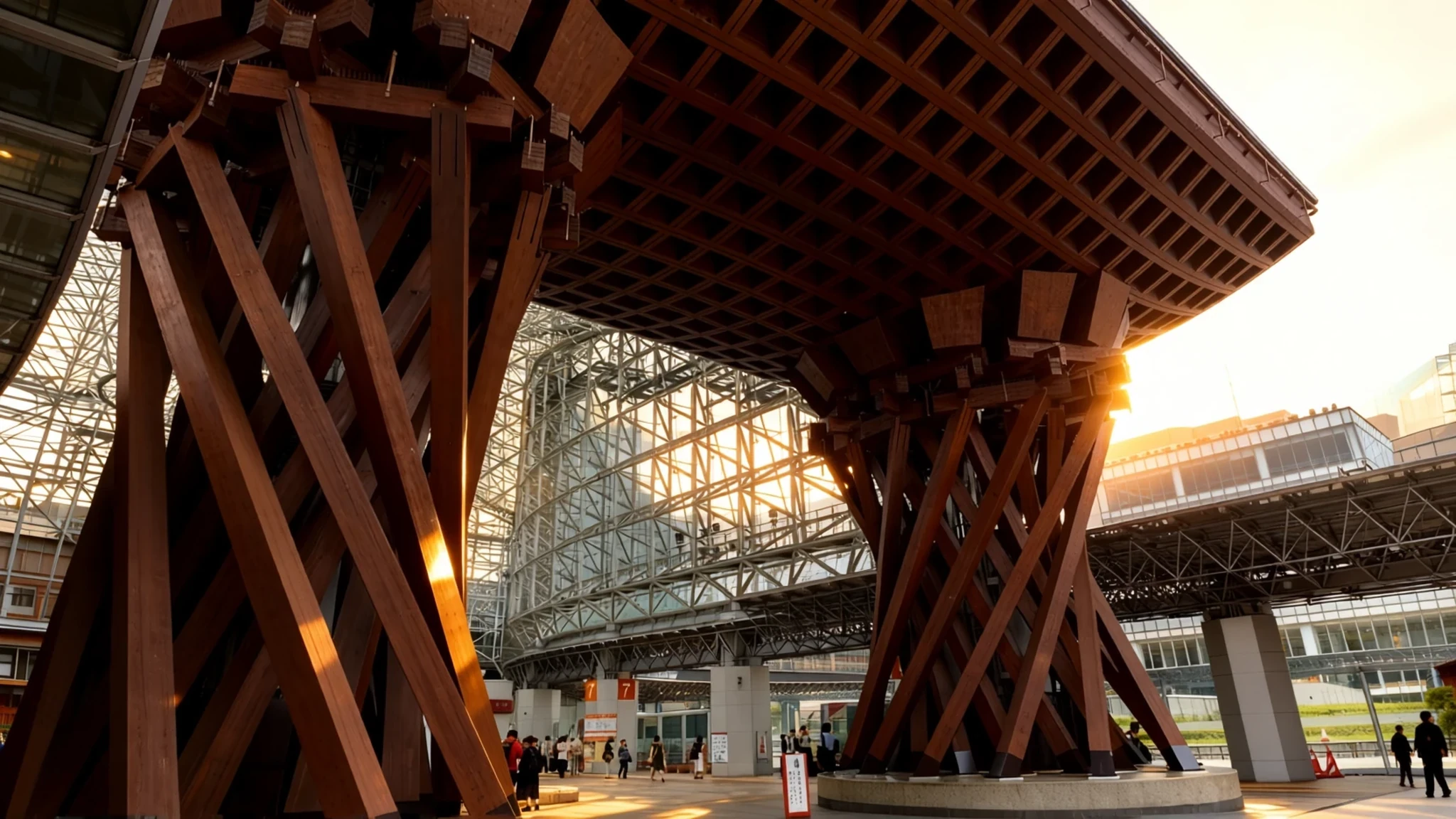
Kanazawa rewards a slow walk through samurai and geisha districts, a celebrated garden and a city that feels far less crowded than Kyoto.
The place
Kanazawa is the capital of Ishikawa Prefecture, on the Sea of Japan coast of central Japan, in the Hokuriku region. The city sits between two rivers, the Sai and the Asano, with the mountains of the Japanese Alps rising to the east and parts of its outskirts reaching into Hakusan National Park. Its population is roughly 460,000, so it is a working city with a university, a busy railway hub and a major contemporary art museum, yet its historic core keeps a quiet, lived-in feel. Wooden lattice facades, clear water channels and old teahouses give the centre much of its character. The climate shapes the experience. Winters are cold, with heavy snowfall and grey skies, summers are hot and sticky, and rain is heaviest in July. Spring and autumn are the easiest seasons for walking. Most visitors arrive by the Hokuriku Shinkansen and spend two or three days on foot, since the main districts and gardens sit close enough to reach without a taxi. Buses cover the outer areas, and bicycles suit the flatter streets along the rivers. Kanazawa works best as a place for unhurried days: a garden in the morning, a museum in the afternoon, and a long dinner in a district where the lanes still smell of charcoal and wood.
Its story
Kanazawa grew out of a fortified temple stronghold that rose during a period when the central shōguns in Kyoto had lost their grip on the provinces. Followers of a Jōdo Shinshū priest took control of Kaga Province, pushed out its official governors, and ran it for a time as a peasant-led theocracy that later became known as the Peasants' Kingdom. Their main base stood on a ridge at the tip of a spur of hills, with high ground behind and rivers on two sides. That position made it hard to attack and gave the early town its shape. A castle town grew up around the fortress, and the street pattern laid down then still shapes the centre. Oda Nobunaga's forces later overturned that rule by force, and the province passed through several hands before Maeda Toshiie settled in and founded the Kaga Domain. Maeda sided with Tokugawa Ieyasu at a decisive battle, which allowed his holdings to grow to be the largest feudal domain under the shogunate. The Maeda family ruled from Kanazawa Castle until the end of the Edo period. They enlarged the castle and planned the surrounding samurai and merchant quarters with defence in mind. A great fire later destroyed much of the town, the castle included, but the rebuilt city kept many of its old lanes. That layering explains why samurai houses, geisha quarters and a famous garden still sit so close together today.
What to see
- Kenroku-en Garden — Kenroku-en, central Kanazawa
Kenroku-en is the best-known sight in Kanazawa and is often ranked among Japan's top three gardens. It began as the outer pleasure grounds of the Maeda lords and gradually grew to fill the whole block. Come early in the morning or late in the afternoon, when the paths are quieter and the ponds and stone lanterns are easier to appreciate. The garden is also striking at night when it is lit.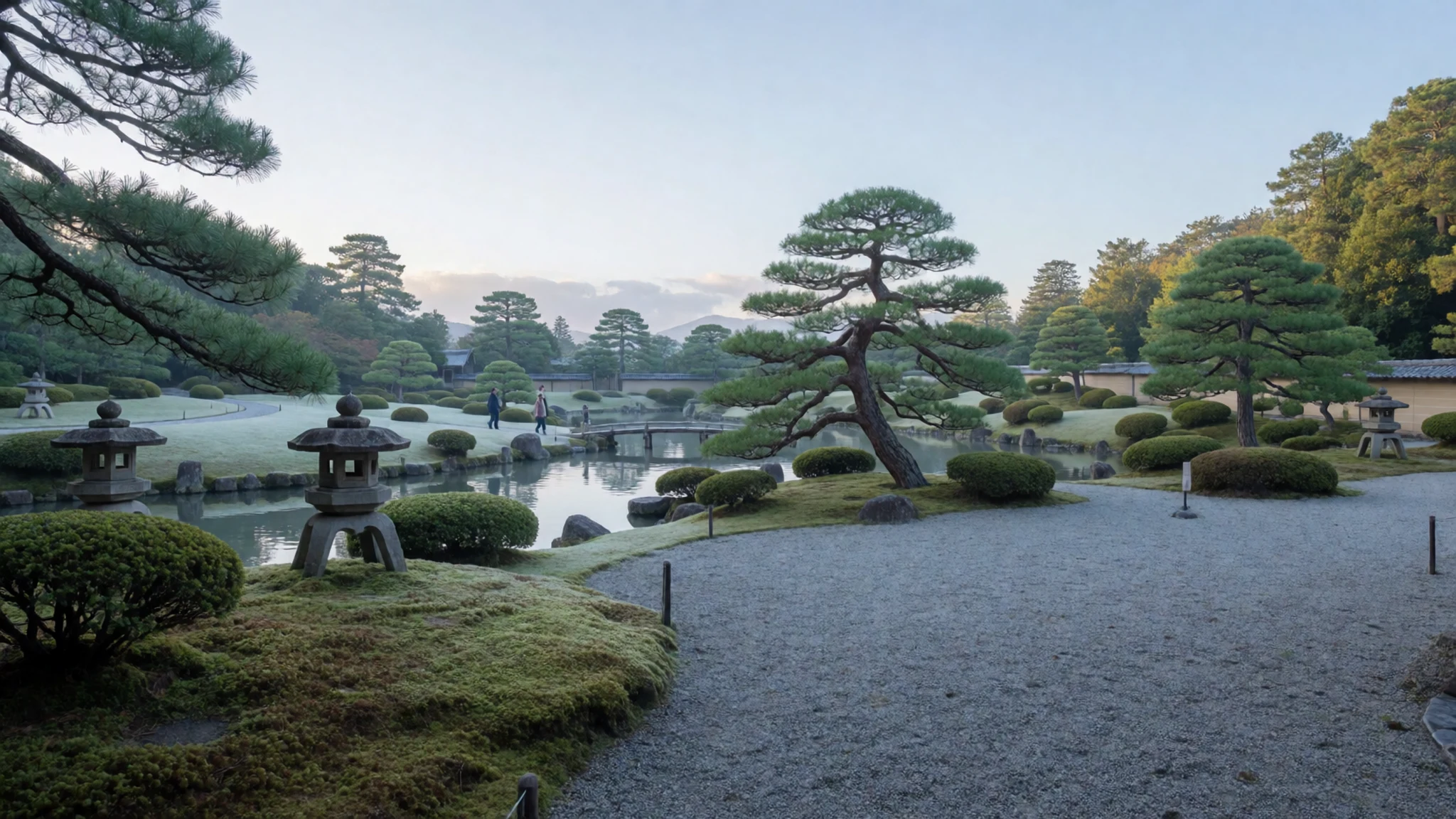
- Kanazawa Castle grounds — Kanazawa Castle Park, city centre
The former seat of the Maeda lords sits at the heart of the city and is now public space, shared with a national university. Walk the grounds to see the Hishi-yagura turret and the long Gojikken-nagaya storehouse, its white walls running along the edge of the site. It makes a calm stop between the garden and the historic districts rather than a heavily visited attraction.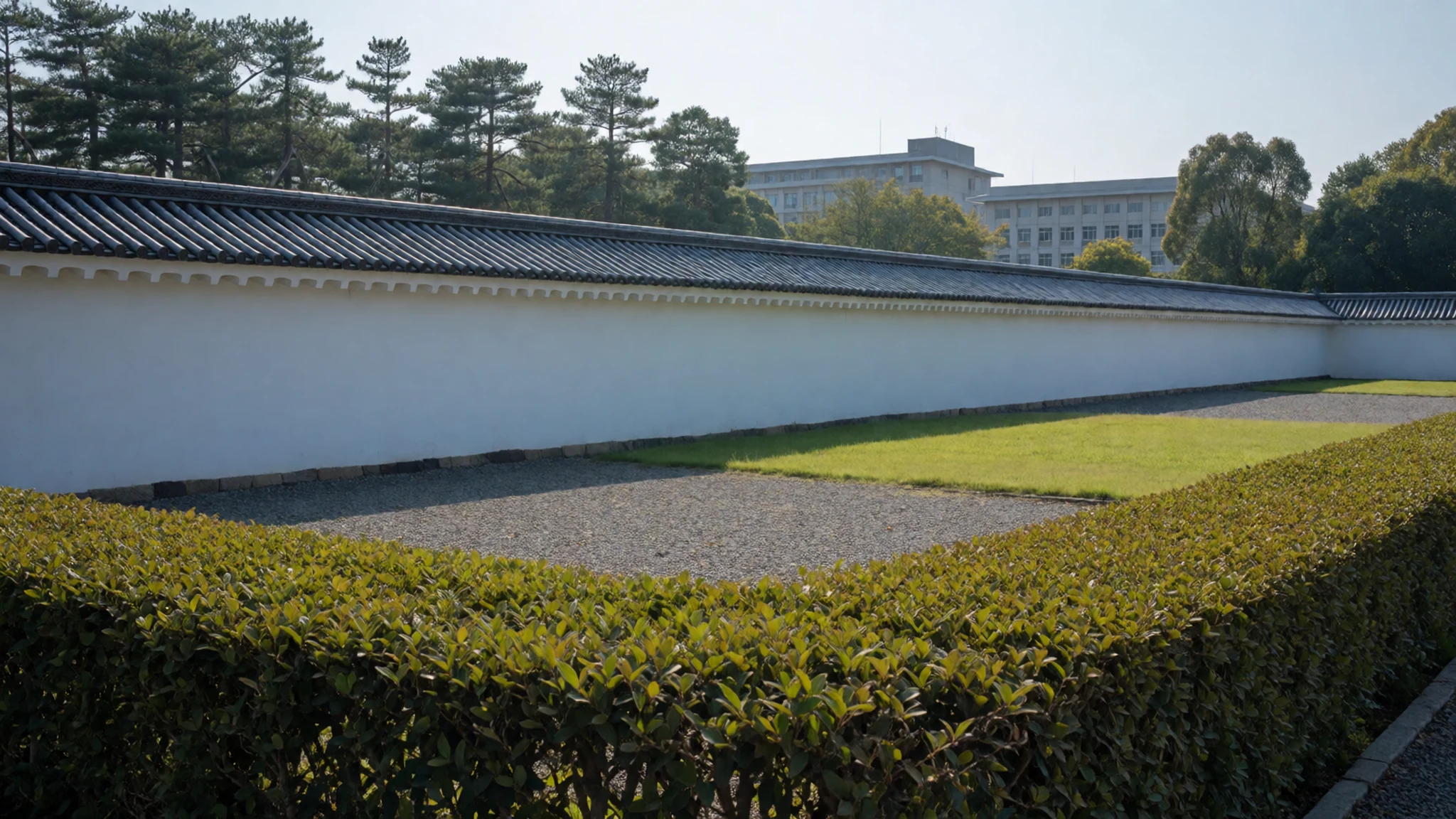
- Nagamachi Samurai District — Nagamachi, south-east of the castle
A few streets towards the coast from Oyama Shrine, Nagamachi is promoted as the samurai area, though most of its houses are modern post-war homes with very few genuine samurai houses left. The lanes are narrow and quiet, and the houses sit behind walls and gates. Compared with the geisha districts, the atmosphere is hushed, so it suits a slow walk. Stay on the public lanes and look at the frontages rather than peering into private gardens.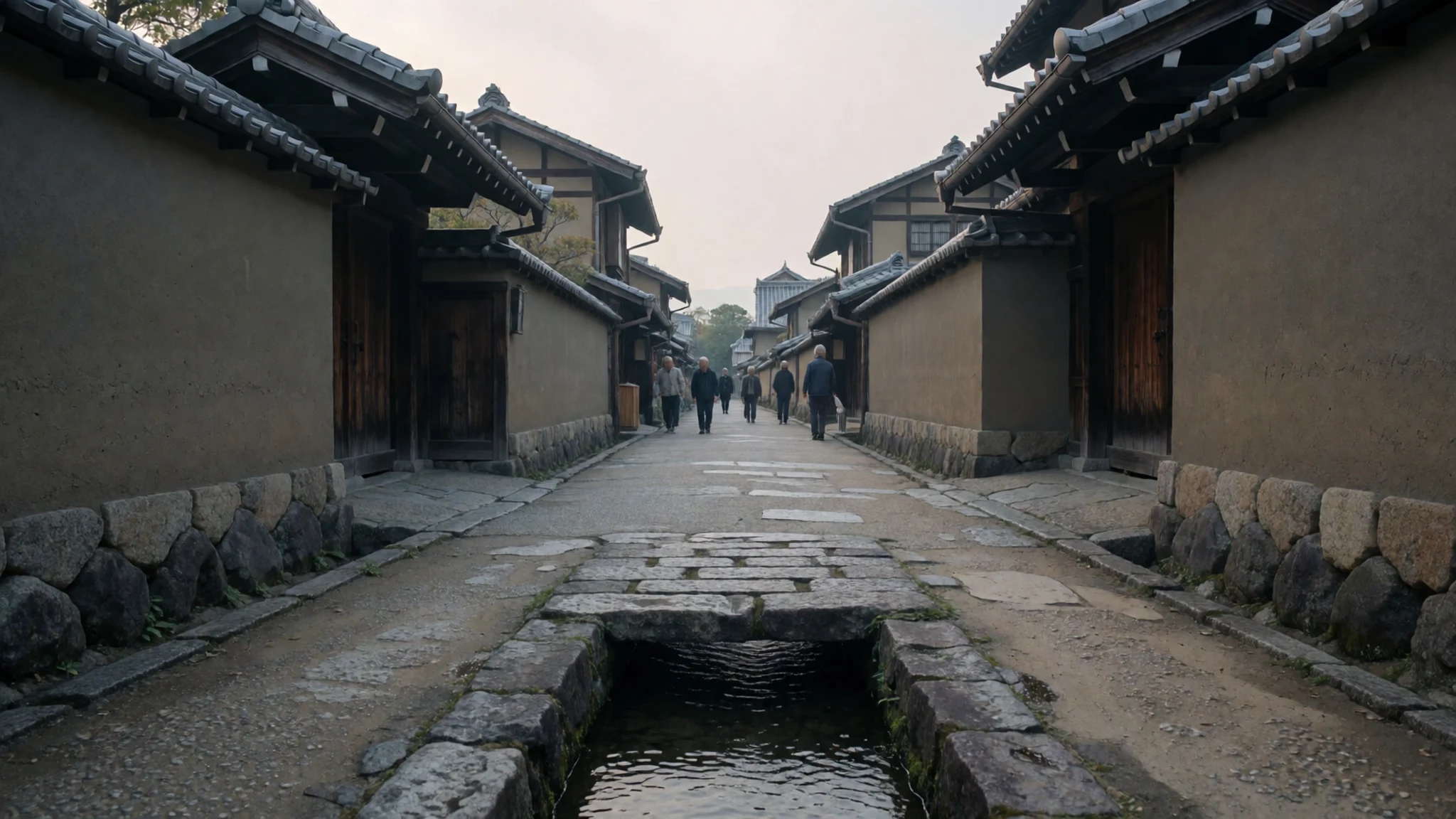
- Higashi Chayagai — Higashi Chayagai, east bank of the Asano
Across the Asano River lies Higashi Chayagai, the best-known of the city's geisha districts. Tall, narrow wooden houses line the lanes, and many still serve as high-class entertainment venues. The Shima House is open to visitors for a small entry fee and shows how a teahouse interior was arranged. Mornings are the calmest time to walk the lanes.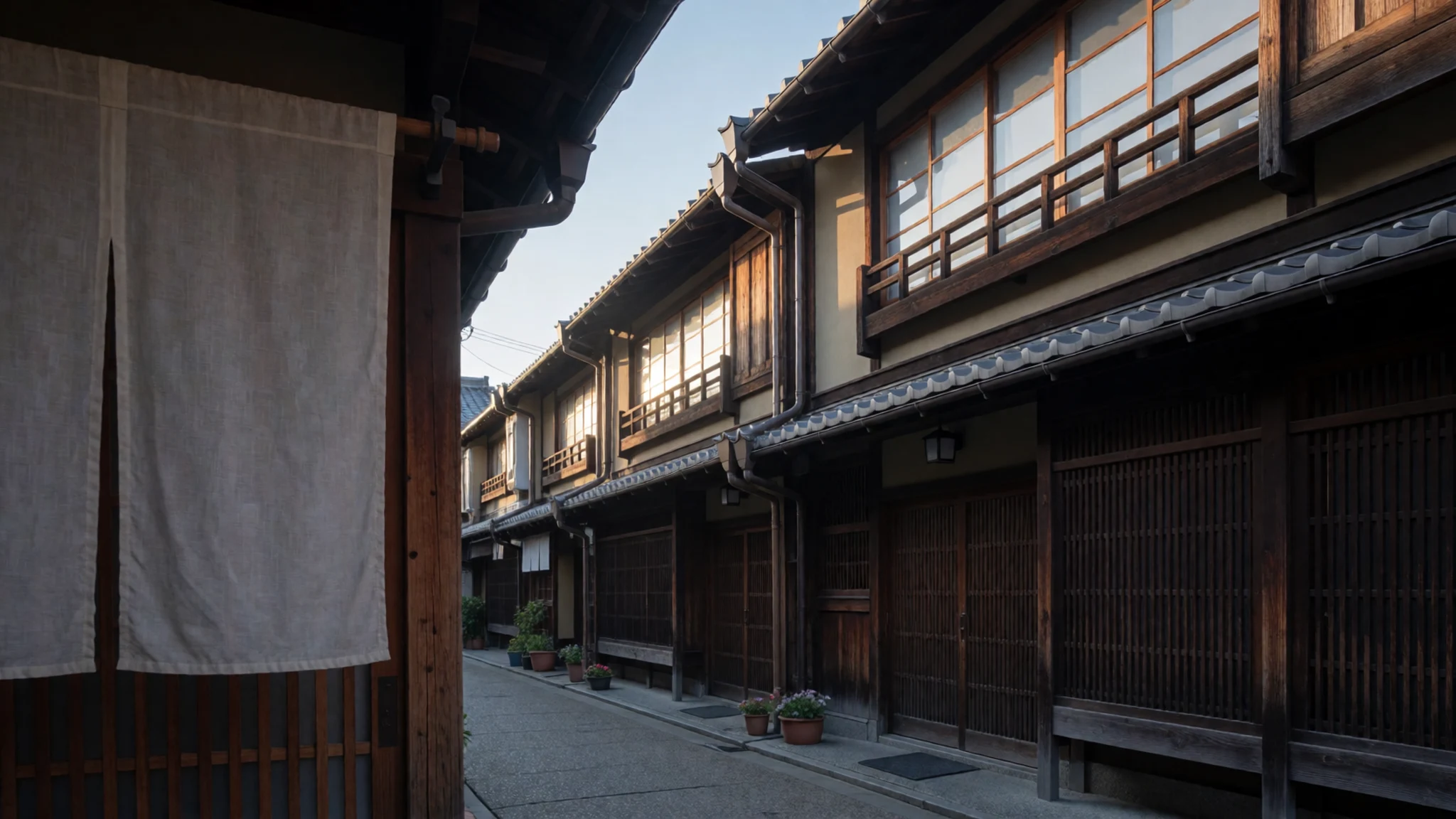
- Nishi Chayagai — Nishi Chayagai, west of the centre
The western counterpart to Higashi, Nishi Chayagai is another district of restored geisha houses. Its frontages and wooden lattice windows suit an unhurried walk, and it is usually calmer than its eastern neighbour. Because it is smaller, it works well as a short detour after a longer morning in the other districts.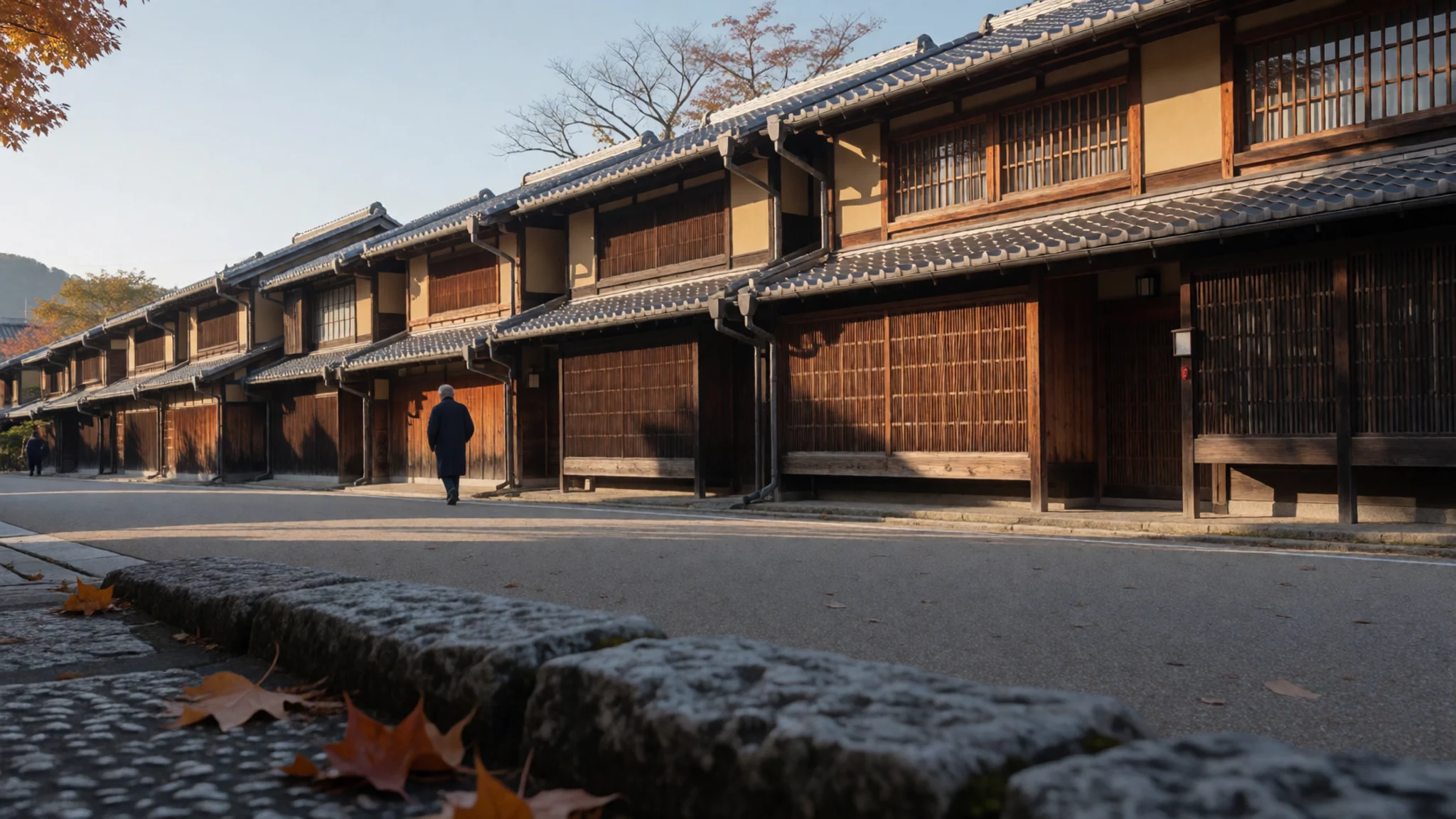
Culture
Kanazawa has a strong tradition of craft, teahouses and quiet restraint, and visitors who respect those habits get far more from the city. Its geisha districts are working places rather than stage sets. Many of the tall houses in Higashi Chayagai host private entertainment, so the people you see in the lanes are often on their way to an engagement and should be left alone. Public manners count too. Locals keep their voices low on trains and in narrow streets, and phone calls are best made away from the pavement. Shrines and temples expect a calm, respectful manner, with quiet at prayer and no climbing over fences or roped areas. Tipping is not customary, and paying at the counter is the normal way to settle a bill. A slight bow and a simple thank you are appreciated, and rarely need more. When you enter a teahouse or a private house, remove your shoes at the step up and wear the slippers provided. Do not photograph geiko or maiko without asking first.
What to wear
Traditional dress in Kanazawa is essentially the kimono worn across Japan, but the city has its own textile heritage. Kaga yuzen, a hand-painted silk dyeing style, is closely associated with the city's workshops, and gold leaf work is another local craft used in decorative objects and clothing accents. Kimono are usually made of silk, with a lined robe, a sash and a padded obi, and they are worn for weddings, tea ceremonies and festivals rather than everyday life. Geiko and maiko in Higashi Chayagai wear elaborate kimono and hairstyles when they work, and their presence is treated as special. What people wear now is mostly modern and practical: jeans, jackets and trainers, with plenty of dark coats in winter. Visitors often hire a kimono for a stroll through the old districts, which is popular, but it is best treated as a costume rather than formal dress. For a visit, dress for the season. Summer days are hot and humid, so breathable cotton and a hat help. Winter brings snow, so waterproof boots with good grip matter more than style. Modest clothing suits temples and shrines, with shoulders and knees covered. Comfortable shoes are essential, because the old lanes are uneven and walking is the main way to get around.
What to eat
- Gyoza — gyoza counters in the streets around Katamachi
Pan-fried dumplings, served at counter-style restaurants across the centre. Some places have counter seats only, while others keep small private rooms upstairs for groups. Order a plate to share, dip the dumplings in soy with a little vinegar, and focus on the crisp base. It makes a filling, inexpensive lunch.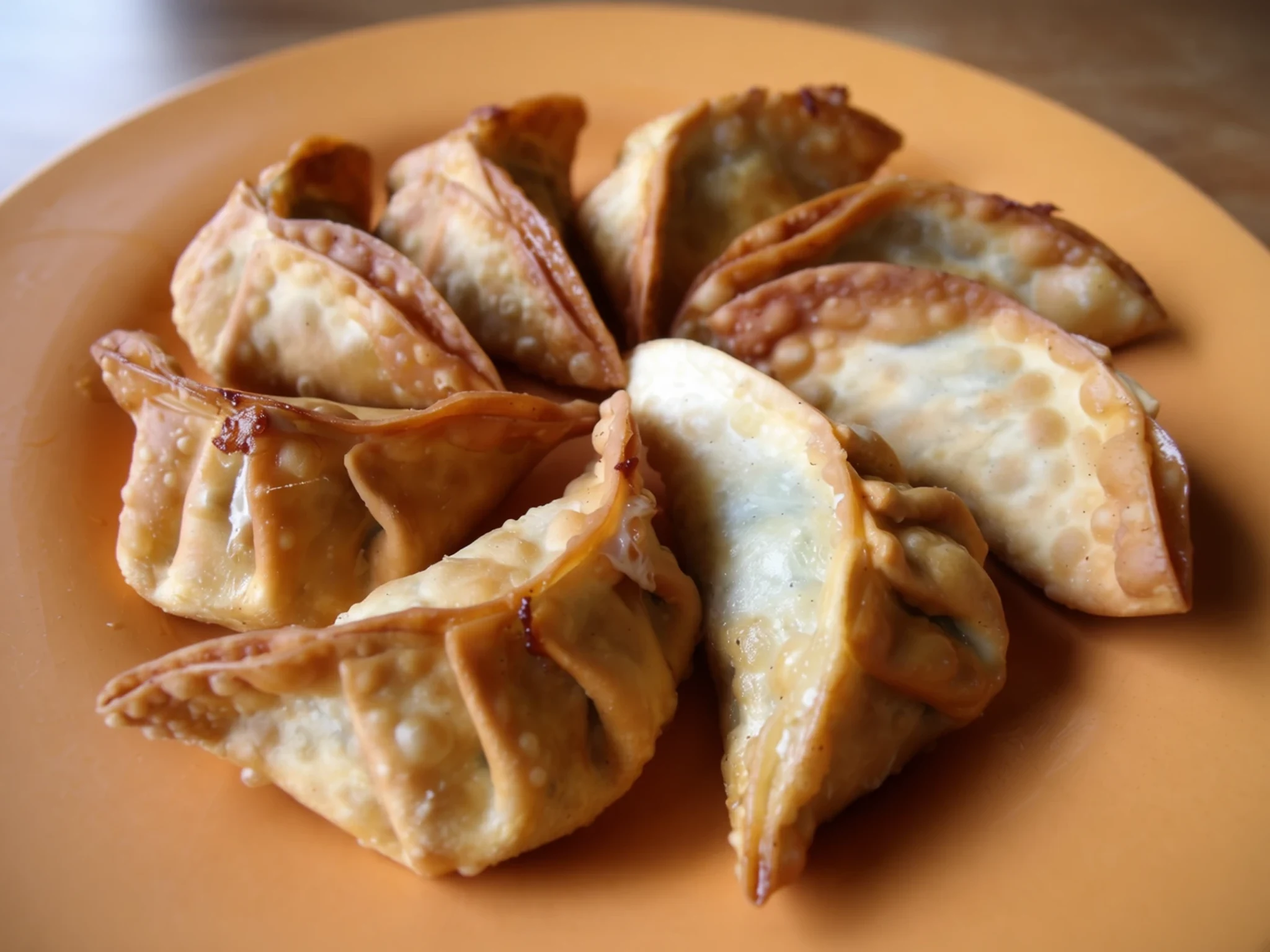
- Tebasaki — izakaya in the Katamachi and Higashi Chayagai area
Crispy fried chicken wings, found at izakaya in the older streets near the castle. Order several per person, since they are the dish most often shared with drinks. Pair them with a cold beer or sake and a simple salad to balance the richness.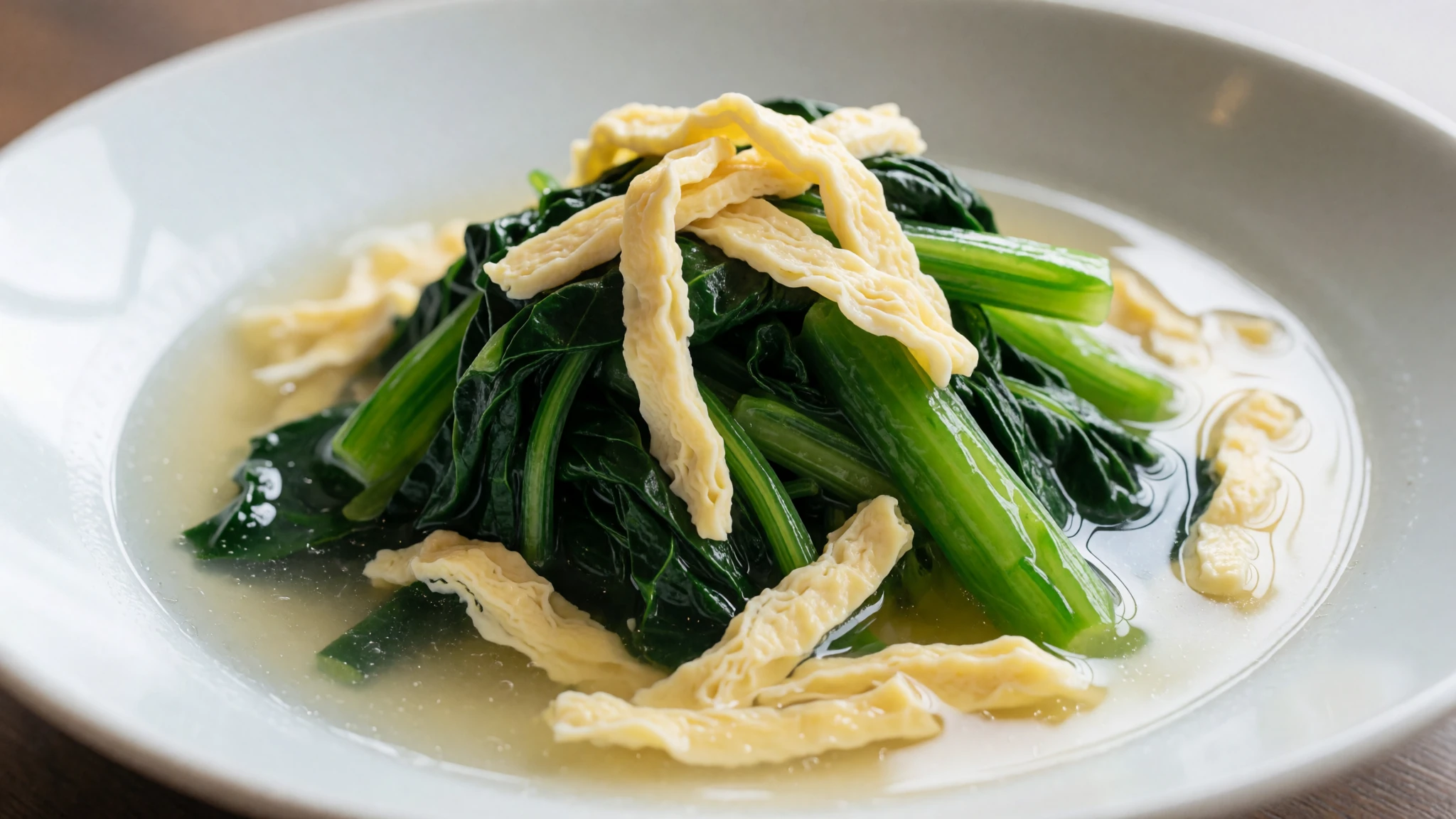
- Seafood at the covered market — Ōmichō covered market, near the river
Fresh fish, shellfish and sushi-grade cuts sold at Ōmichō, a lively covered market of fish, vegetable, fruit and meat stalls. Go in the morning when the stalls are busiest and the displays are at their freshest. Several counters will prepare a bowl or a grilled plate on the spot, and small stalls may prefer cash. - Counter seafood — small counter eateries in the centre
Simple, cheap seafood served at small counter-only eateries where locals stop for a quick plate. The space is tight and conversation is limited, so point to what looks freshest and keep the order short. The portions suit a snack before a second round at an izakaya. - Izakaya dinner — neighbourhood izakaya across the centre
A relaxed Japanese evening of small plates, grilled skewers, seasonal fish and pickles. Many family-run izakaya have only a few tables, so booking ahead on busy nights is sensible. Let the staff suggest what is good that day, and order in rounds rather than all at once.
Plan it
Best time. Spring, from March to April, brings blossom and mild walking weather. Autumn, October and November, offers the most comfortable temperatures and autumn colour in the gardens. July is the wettest month, and July and August are the hottest, so expect heat, humidity and heavy rain. Winters are cold and snowy, which is beautiful but makes walking harder.
How long. 2–3
Getting there. Komatsu Airport is the nearest airport, and buses run from there to Kanazawa; a bus to Komatsu Station followed by a JR train is somewhat cheaper. From Tokyo, the Hokuriku Shinkansen reaches Kanazawa Station in about two and a half hours on the fastest services, and the fastest trains require a reserved seat.
Budget. mid
Tips
- Book Shinkansen seats in advance on the fastest services, since reservations are mandatory for those trains
- Start at Kenroku-en early, before the day-trip crowds arrive
- Carry some cash for small restaurants, market stalls and shrines
- Use the local bus network to reach the outer districts rather than relying on taxis
- Keep water handy in summer, when humidity is high
- Pack waterproof boots if you visit in winter, for snow and slush
Etiquette
- Keep voices low in Nagamachi and the geisha districts
- Ask before photographing geiko or maiko, and do not follow them down the lanes
- Remove shoes where a step up marks the entrance to a house or restaurant
- Take litter home, since public bins are scarce
Nearby
Sources
- Wikidata Q191130 (CC0)
- Wikipedia: Kanazawa (rev 1383028670) (CC BY-SA 4.0)
- Wikivoyage: Kanazawa (rev 5406228) (CC BY-SA 4.0)
- Photo: 望湖台 (01-.jpg) (CC BY 2.1 jp)
- Photo: Kanazawa Castle (02-kanazawa-castle-20200820-04.jpg) (CC0 1.0)
- Photo: Kenroku-en at Night (03-kenroku-en-8485879202.jpg) (CC BY-SA 2.0)
- Photo: Higashi Chaya District (04-higashi-chaya-district-50154603457.jpg) (CC BY 2.5)
- Photo: Nishichayagai (05-nishichayagai003.jpg) (CC BY 2.1 jp)
- Photo: Kōrinbō Crossing (06-k-rinb-crossing.jpg) (CC BY-SA 4.0)
- Photo: 21st Century Museum of Contemporary Art, Kanazawa (07-21st-century-museum-of-contemporary-art-kanazawa011.jpg) (CC BY 2.1 jp)
- Photo: Chikamori ruins (08-panoramio.jpg) (CC BY 3.0)


