Kamikōchi
Kamikōchi, Japan
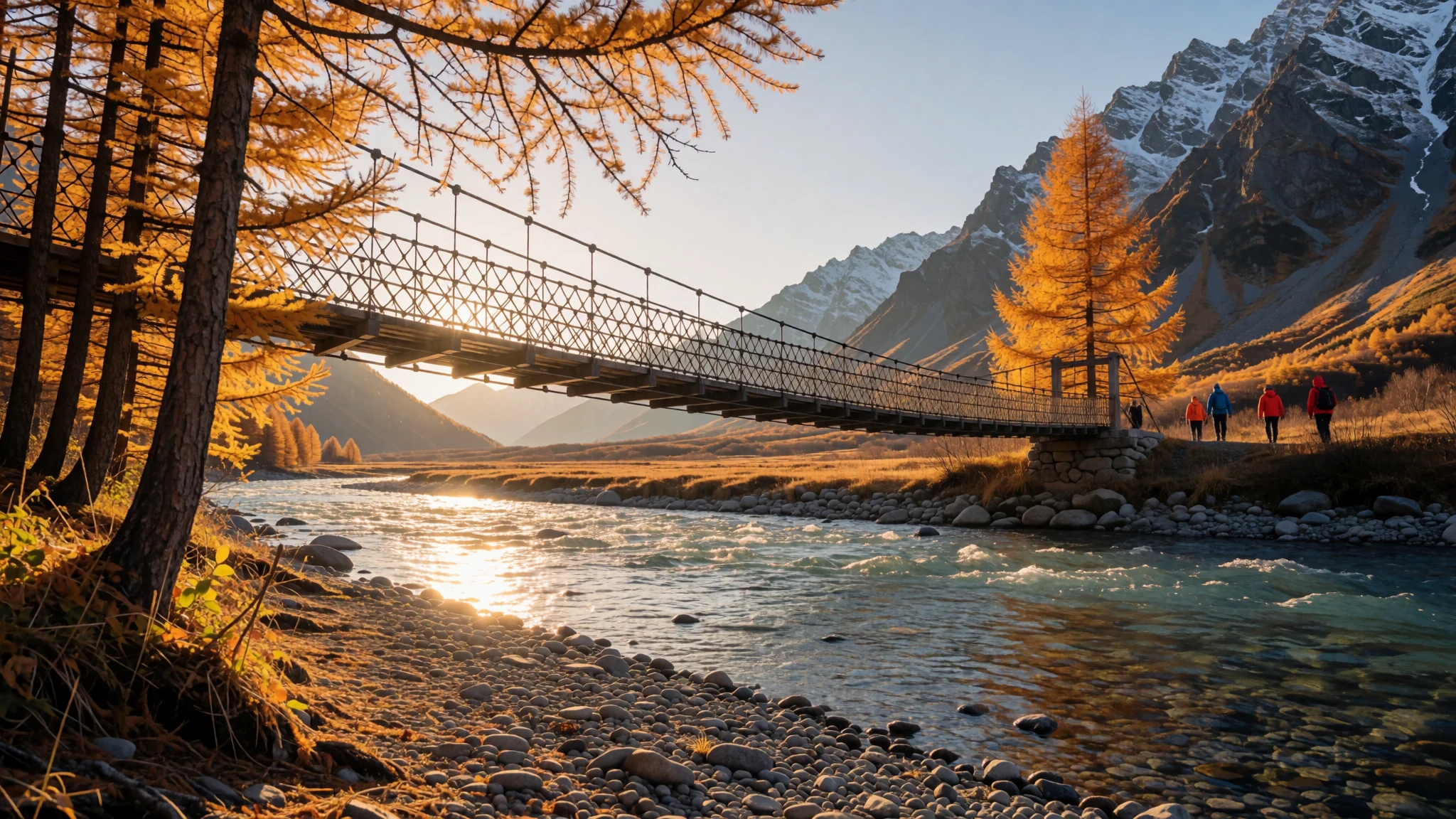
Kamikōchi is a high Alpine valley where cars are kept out, leaving walking, river views and mountain air as the main reason to come.
The place
Kamikōchi sits in a narrow valley in the Hida Mountains, the northern part of the Japanese Alps, in the western part of Nagano Prefecture. The name, written 上高地, is usually translated as upper highlands, and the valley runs about 18 km from end to end. Its floor climbs from roughly 1,400 m at the southern end to roughly 1,600 m at the northern tip, with surrounding peaks reaching 3,190 m. Mount Hotaka closes the valley to the north, and Mount Yake, an active volcano, to the south.
The Azusa River runs the full length of the valley. Its water comes from melted snow and underground sources, so it stays cold even in midsummer. The flat ground beside it has produced marshes and ponds, including Takezawa Marsh, Tashiro Pond and Myōjin Pond. Lake Taishō, at the foot of Mount Yake, was formed when the volcano erupted in 1915, and its dead trees standing in still water have become a familiar image of the valley.
Protection shapes the place as much as geography does. The valley lies within Chūbu-Sangaku National Park and is designated as a National Cultural Asset, with listings for special natural monuments and places of scenic beauty. It is sometimes called Japan's Yosemite, though it is considerably smaller than the Californian valley. Motor vehicles are kept out: only buses and taxis reach the valley floor, so most visitors walk, and the activity clusters around the bus terminal and the bridge at Kappa-bashi.
Its story
Kamikōchi's modern history begins with timber. The valley was logged extensively until the middle of the 19th century, and the mountains around it were worked for wood long before anyone thought of them as a place to visit. The turn came through a British visitor. The Rev. Walter Weston, an Anglican missionary, wrote about the Northern Japan Alps in ways that sparked interest in recreational mountaineering across Japan, and he lobbied for the Kamikōchi area to be preserved. The Weston Festival is still held there each June in his honour, a reminder that conservation here was championed by an outsider with a pen and a deep enthusiasm for the peaks.
A second push came from literature. In 1927 the novelist Ryūnosuke Akutagawa published Kappa, and its interest in the valley helped fuel a boom in domestic tourism. Kappa-bashi, a slim footpath span slung on cables across the Azusa, is featured in the novel, though the name was already being used for it before the book was written. Its origin is uncertain. The name is most commonly connected to kappa, mythical water spirits believed to dwell in the mountain brooks and waterways of Japan.
The valley has also been known by other written forms. Kanji such as 神垣内 were once used for the name, but 上高地 has become the common way to write it. Today the valley is reached on foot and by bus, and the lodges along the river are where many people spend the night.
What to see
- Kappa-bashi — Central valley, near the bus terminal
The suspension bridge over the Azusa River is the symbol of Kamikōchi and the easiest place to start a walk. Photographs usually show it with the Hotaka range rising behind the larches in autumn. In the early morning, before the day visitors arrive, the local monkeys sometimes cross from one bank to the other, which makes the early start worthwhile.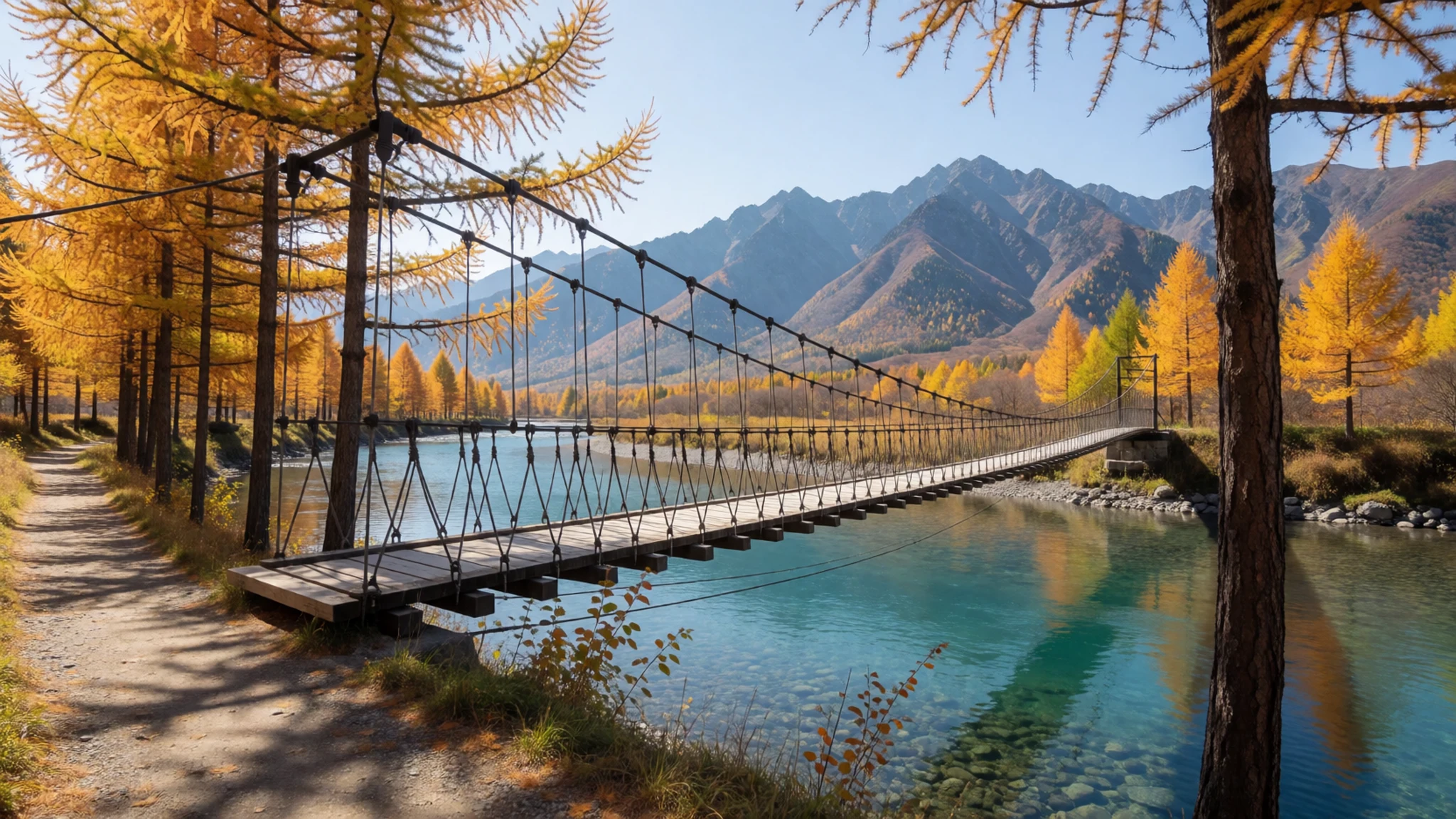
- Taishō Pond — Southern valley, below Mount Yake
Lake Taishō formed when Mount Yake erupted in 1915, and dead trees still stand in its water. The view across to the mountains is the reason many walkers make the trip south. The path is mostly flat and suits a relaxed morning. Carry water and sun protection, as July and August highs reach about 30 °C.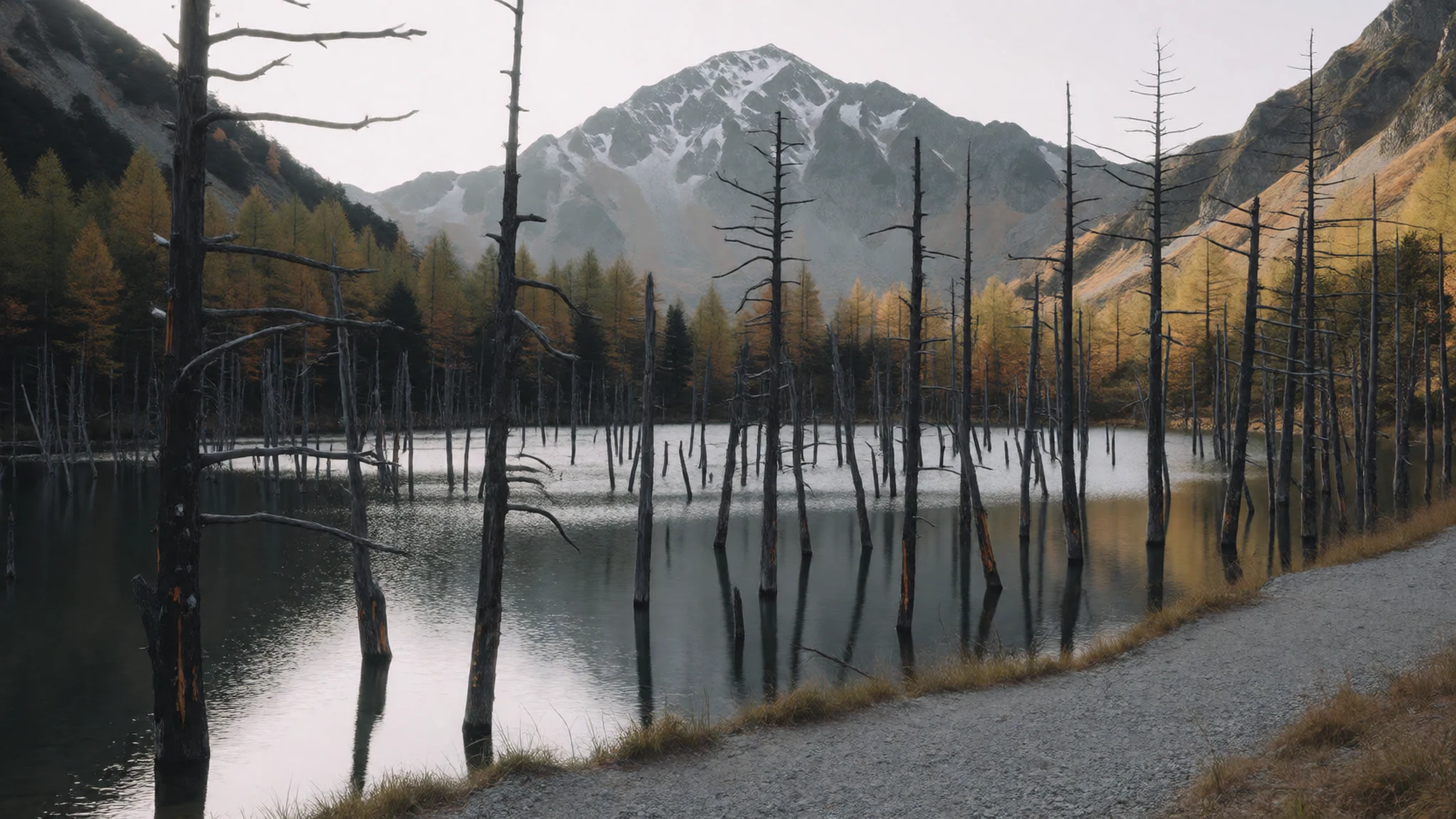
- Takezawa Marsh — Valley floor, along the walking routes
The valley floor is so level that marshes and ponds form naturally, and Takezawa Marsh is one of the wetland areas on it. Its water comes mainly from melted snow and underground flow, so it stays cold through the summer. On still mornings the surrounding peaks often reflect in the water, which is the best time to take a photograph here.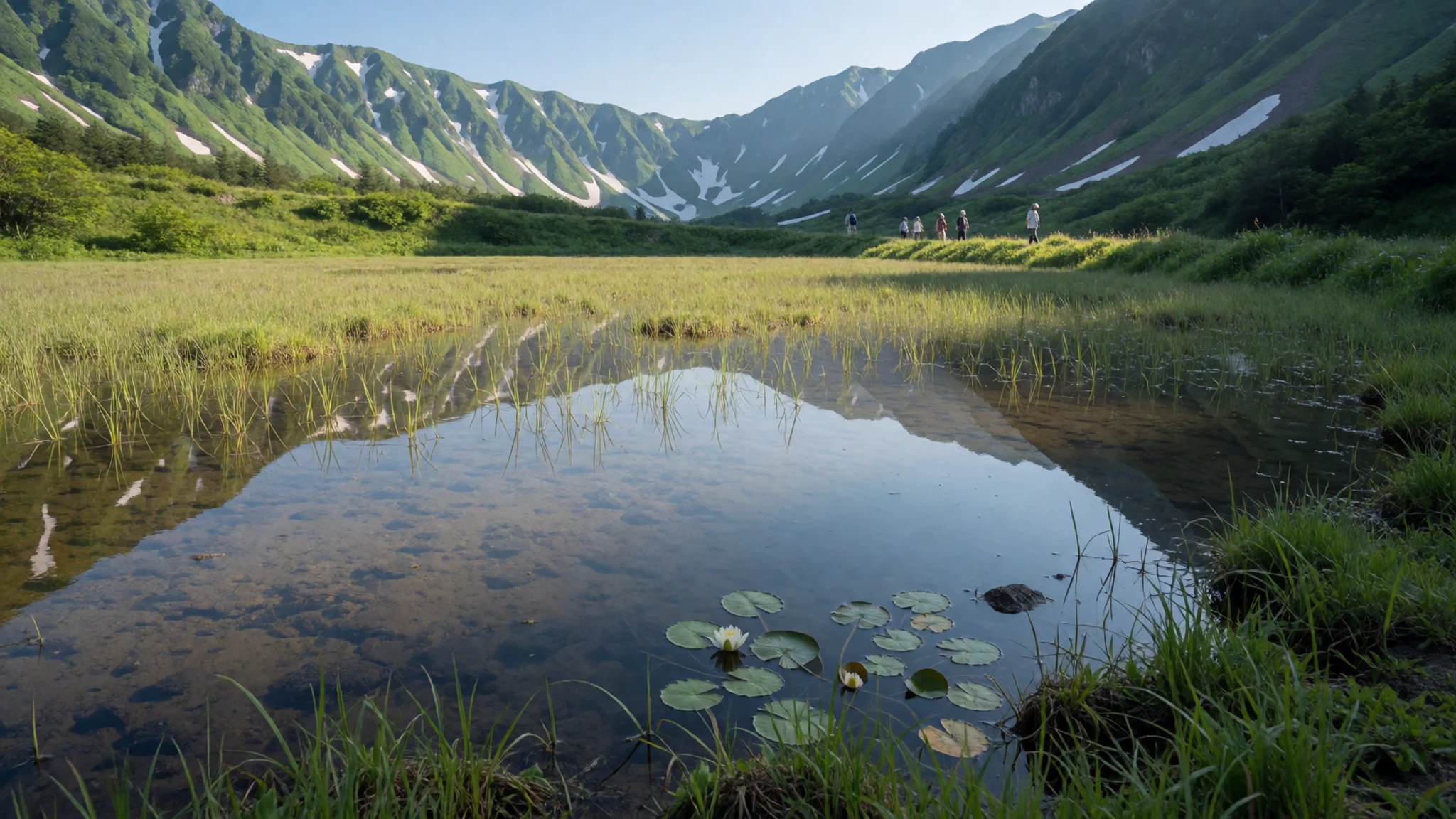
- Myōjin Pond — Northern valley, near Myōjin Bridge
Myōjin Pond is one of the ponds that collect where the valley's meltwater settles on the flat ground. It is a good place for a short stop on the way to the Myōjin Bridge area, where the views up the valley are wide. The water is cold even in summer, so a stop here is refreshing after a climb.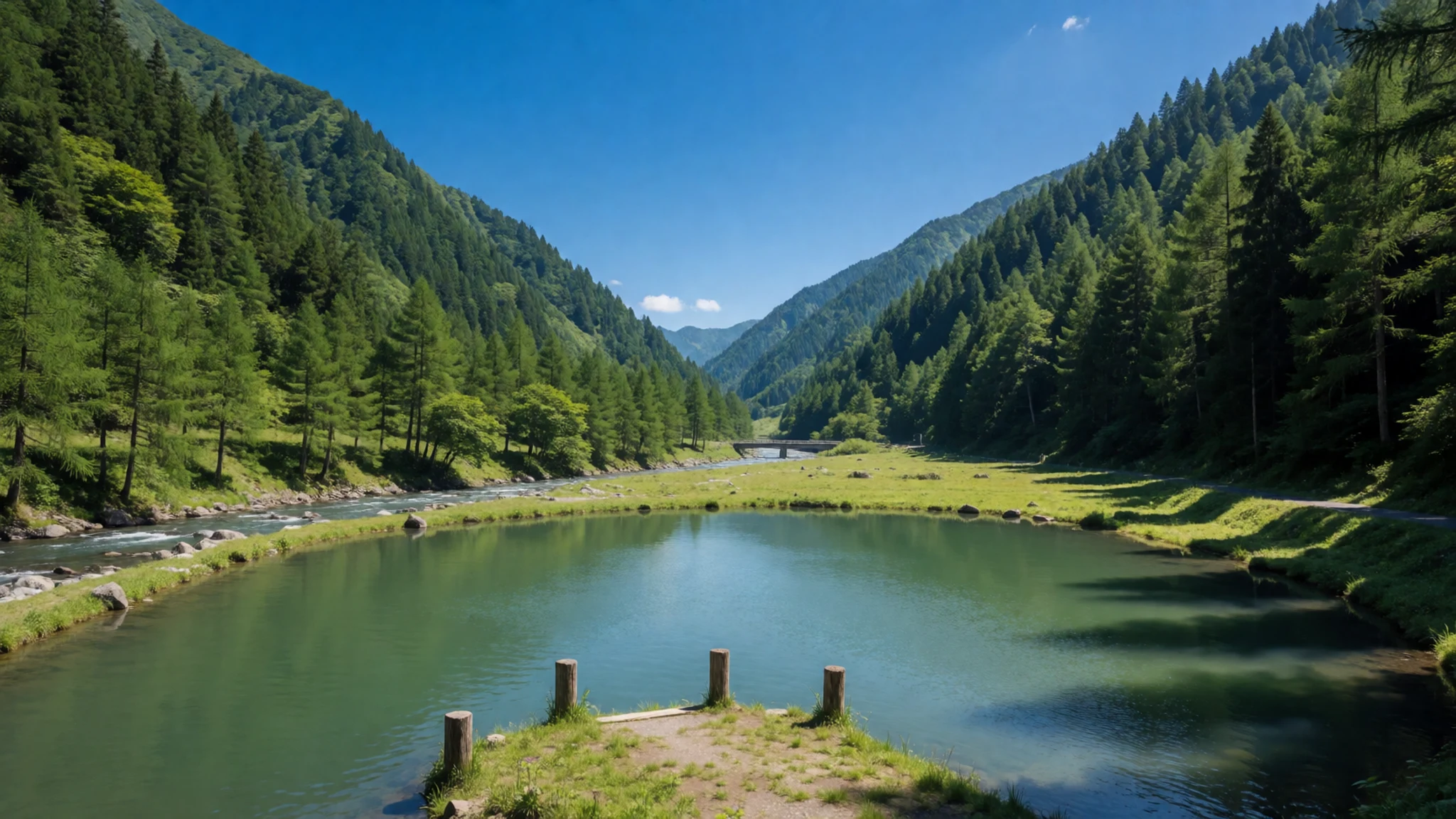
- The Azusa River and Mount Yake — Southern valley, along the river
The Azusa River flows the full length of the valley and is the headwater of the Shinano River, which is Japan's longest. Near the southern end, Mount Yake rises above the water, an active volcano whose 1915 eruption formed Lake Taishō. The river is clear and fast here, and the volcano frames the walk back towards the bus terminal.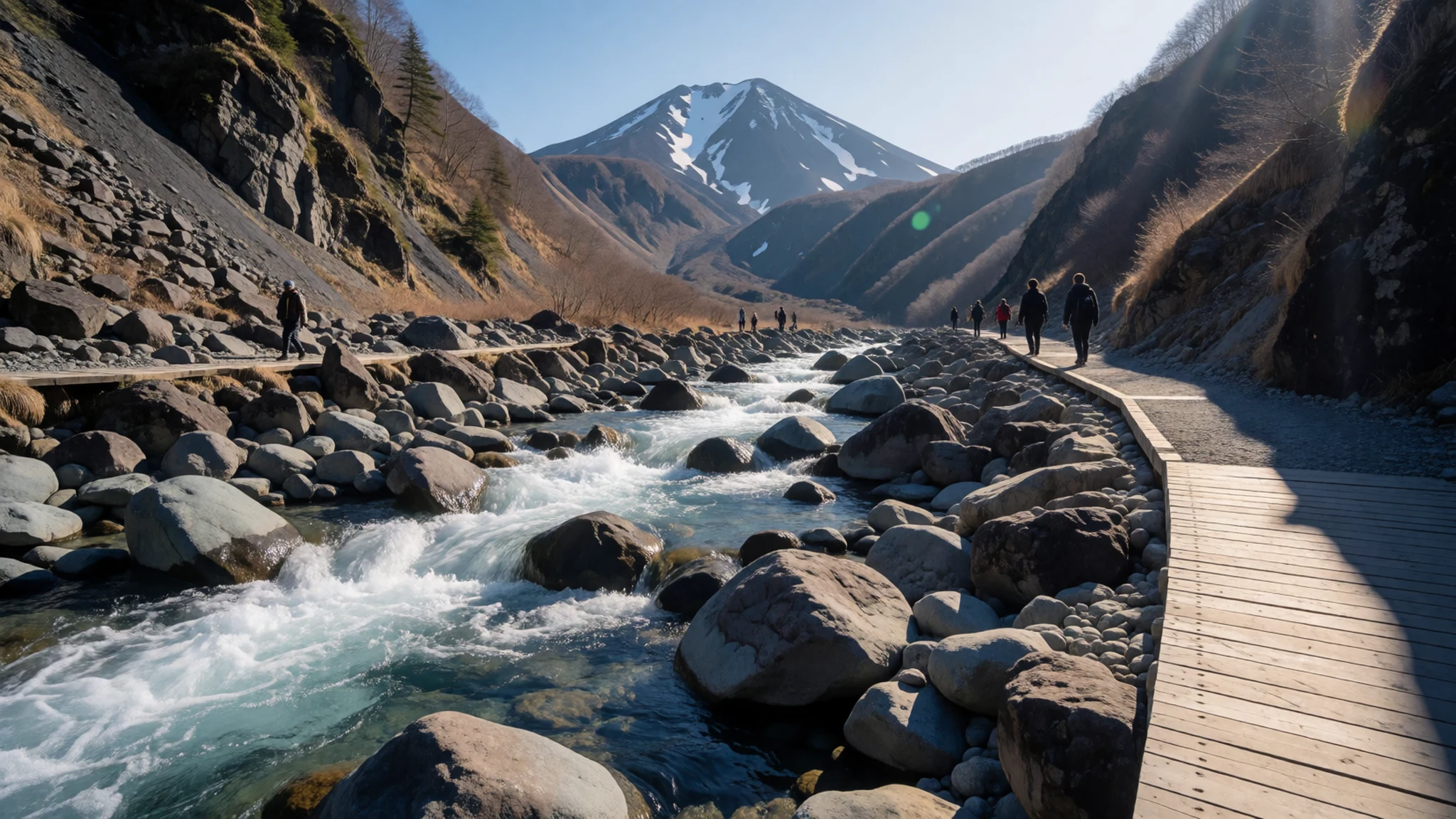
Culture
Kamikōchi is a protected natural area rather than a temple town, so its culture is about how visitors behave in the landscape. The valley lies within a national park and is designated as a place of scenic beauty, and daily life centres on the lodges, the post office and the bus terminal. Many people come on foot for the day and leave on the afternoon buses, so the valley quietens once the crowds have gone. The Weston Festival each June honours a missionary who argued for conservation, and the local monkeys are part of the valley's ordinary life. Visitors are expected to keep to marked paths, to leave wildlife alone and to carry their rubbish away. Do not feed the monkeys that cross Kappa-bashi, and keep food packed away when you walk near the bridge.
What to wear
Kamikōchi has no dress of its own, so the traditional clothing that comes to mind belongs to Japan as a whole. The kimono is a T-shaped robe wrapped across the body and tied with a broad obi sash. Silk kimono are worn for formal occasions, while cotton and linen suit summer. The yukata is a lighter cotton version worn in summer and at hot-spring baths, which are common in the mountains around the valley. Indigo-dyed cotton and woven silk remain part of regional textile craft.
In the valley, people dress for the mountains. Hikers, lodge staff and day visitors wear quick-drying layers, waterproof jackets and sturdy walking shoes, much as they would in any Alpine valley. Clothing across Japan tends to be practical and understated, with bright outdoor jackets the most common splash of colour on the trails.
For a visit, pack for changeable mountain weather: a light waterproof, a warm layer even in summer because nights and the water stay cool, a sun hat and walking shoes with good grip for stony paths. No formal dress is required at the bridge or on the trails. At lodges and bathhouses you will often change into a yukata or slippers, so pack light, comfortable clothes that are easy to put on and take off.
What to eat
- Kamikōchi ice cream — Shops on either side of Kappa-bashi
Kamikōchi is best known for its sweets, and its ice cream is the easiest to find. Buy a cone from one of the shops near Kappa-bashi, where most of the valley's food outlets are concentrated. Eat it slowly on a bench by the river, since the valley is quiet enough to enjoy it without rushing.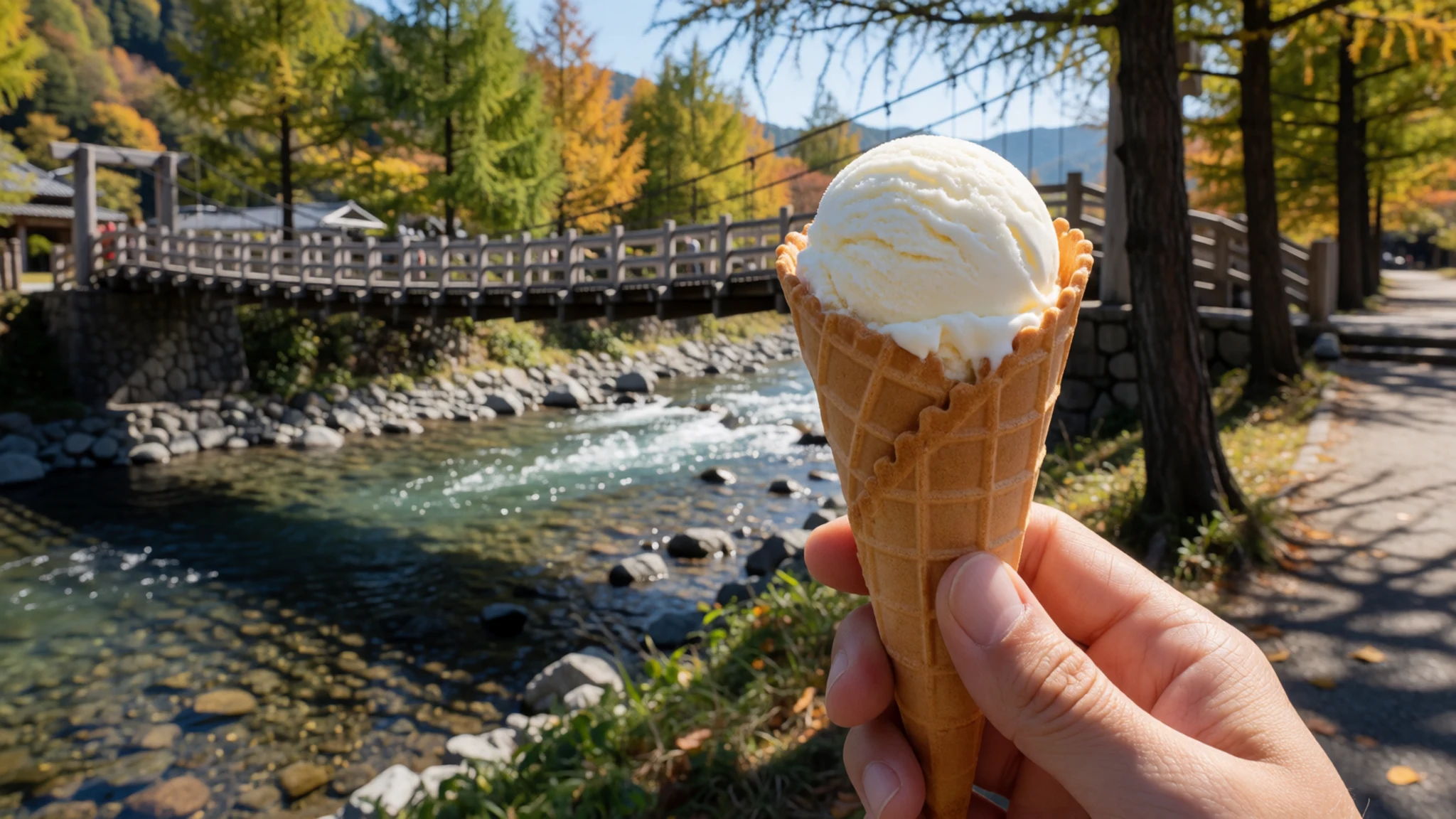
- Kamikōchi cheesecake — Shops near the bridge and the bus terminal
Cheesecake is the other sweet the valley is known for, and it makes a good light snack between walks. Look for it in the same cluster of shops as the ice cream. Buy a slice to eat by the water rather than carrying it far along the trail.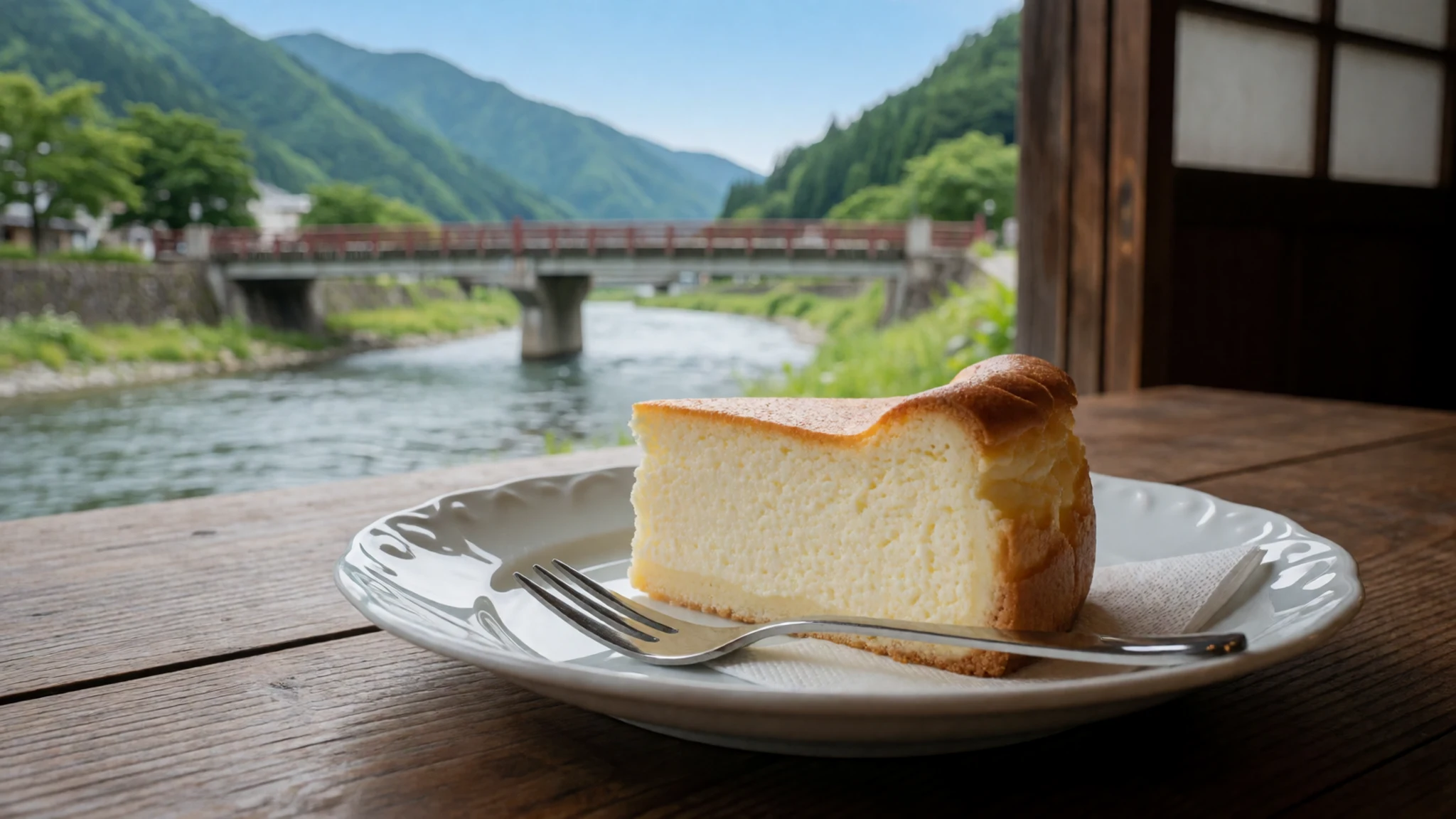
- A lodge dinner — The dining rooms of the riverside hiking lodges
Several hiking lodges line the river, most with dining rooms, so an evening meal is usually served where you sleep. Expect a simple set meal rather than a menu of choices. Book it when you book your bed, because the valley's eateries are limited and fill up. - A picnic from Matsumoto — Shops and food stalls in Matsumoto before the bus
Because restaurant choice inside the valley is limited, many people bring food up from Matsumoto or the towns along the bus route. Buy it before you board, then eat it on a riverbank or beside the marsh. Keep all rubbish with you for the return journey.
Plan it
Best time. Late October and November, when the larches turn colour, are the strongest season for the valley. Midsummer is hot, with highs near 30 °C in July and August, but the water stays cold, so the streams and ponds still feel refreshing. Check the official site for opening dates before you go, because bus services and lodges run on a seasonal timetable.
How long. 2–3
Getting there. Matsumoto is the usual gateway. Take a train to Matsumoto station, then a combined train and bus route, which runs more often than the direct bus from the Matsumoto bus terminal. Allow an hour and a half for the journey. Direct buses also run from Shinjuku and Tokyo, Osaka, Kyoto and Nagano, though some travel overnight or take half a day. Private cars cannot enter the valley, so the bus is the final leg.
Budget. mid
Tips
- Book your lodge or ryokan well ahead, since the pre-booked options are the most comfortable places to stay.
- Plan your return bus early in the afternoon, because connections run only until the late afternoon.
- Go to Kappa-bashi in the early morning for the monkeys, before the day visitors arrive.
- Carry water and food, because the valley has only a few shops and limited restaurants.
- If you want a spa after walking, consider staying in one of the Oku-Hida onsen villages, which are reached by a last bus that leaves the valley in the late afternoon.
Etiquette
- Keep to marked trails and leave plants and rocks where you find them.
- Do not feed the monkeys, and keep food out of sight near the bridge.
- Carry your rubbish out with you, including on the return bus.
Nearby
Sources
- Wikidata Q1048234 (CC0)
- Wikipedia (rev 1373178786) (CC BY-SA 4.0)
- Wikivoyage (rev 5406201) (CC BY-SA 4.0)
- Photo: At Gakusawa wetlands in Kamikochi, 663highland (CC BY 3.0)
- Photo: Kappa Bridge over the Azusa River, lumoplank (CC0 1.0)
- Photo: Kamikōchi location map, Batholith (Public domain)
- Photo: Matsumoto Electric Railway 3000 series, Mamo (Public domain)
- Photo: Kamikouchi valley panorama, Nilx (CC BY 3.0)
- Photo: Kamikouchi valley Myojin Bridge panorama, Nilx (CC BY 3.0)
- Photo: Azusa River through Kamikochi in autumn, lumoplank (CC0 1.0)
- Photo: Azusa River and Mount Yake, 663highland (CC BY 3.0)


