Jyväskylä
Jyväskylä, Finland
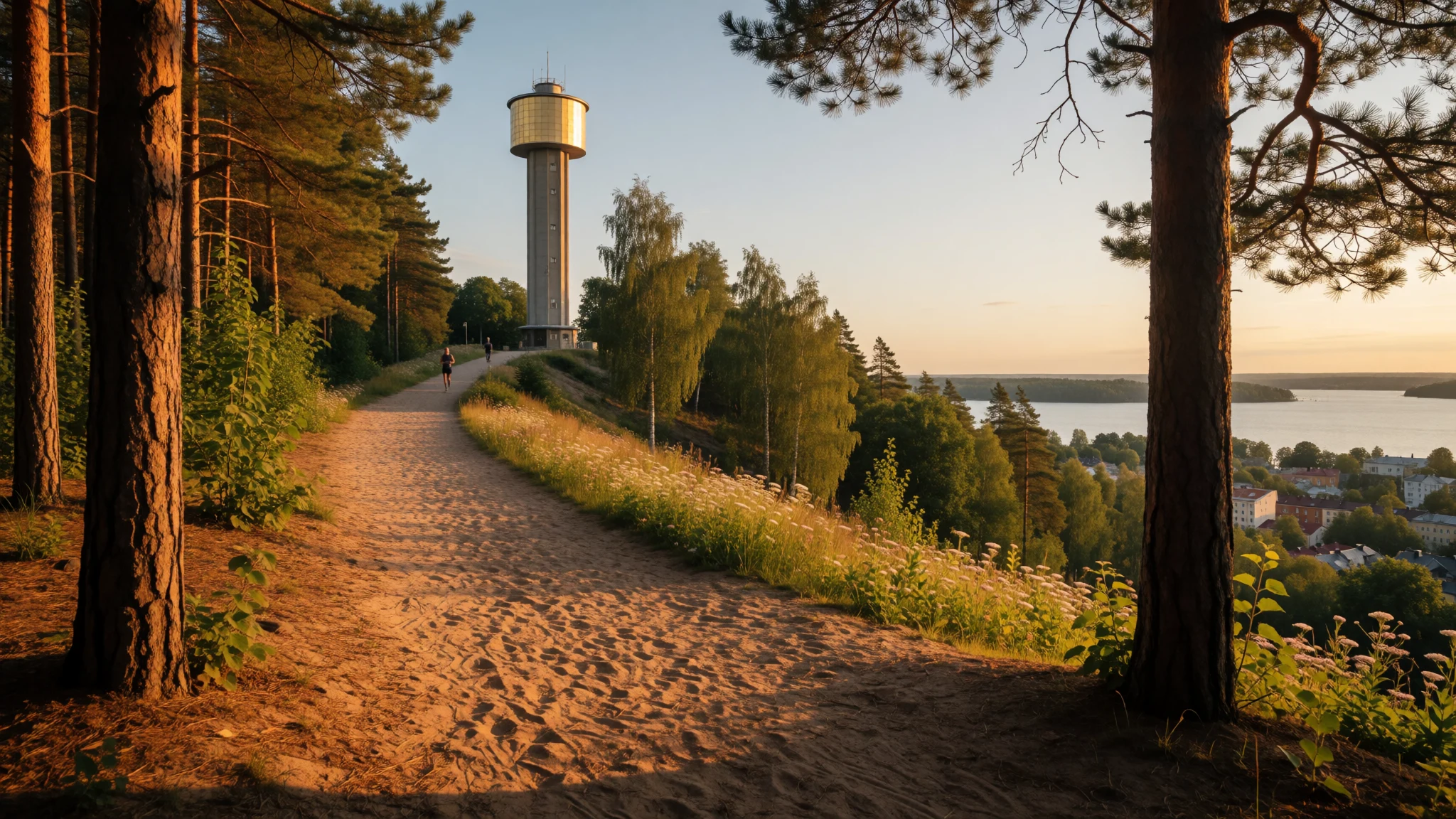
Jyväskylä is a lake-and-forest university city where Alvar Aalto's buildings sit among pine ridges, with calm, outdoorsy days in any season.
The place
Jyväskylä is the regional capital of Central Finland, set in the Finnish Lakeland with about 150,000 residents and a university that gives the place a young, bookish rhythm. The town curls around the northern end of Lake Jyväsjärvi, with pine-covered ridges behind the centre and water at the end of most streets. It stands at an elevation of 90 metres, and the landscape is gently rolling rather than dramatic: forest, lakes and short channels linking one body of water to the next. Helsinki lies roughly 270 km to the south and Tampere about 150 km to the south-west, so Jyväskylä works as a stop on a longer journey through the interior as well as a destination in its own right. Education has shaped the town. Elias Lönnrot, who compiled the Kalevala, nicknamed it the Athens of Finland, and the label still suits a place of lecture halls, student canteens and cultural institutions. The other thread is Alvar Aalto, whose buildings are scattered across the city and its islands, so architecture becomes part of ordinary walks rather than a separate pilgrimage. Motorsport fans know the area for Rally Finland, part of the World Rally Championship. Otherwise the mood is quiet, practical and outdoorsy: people jog the ridges, swim from lake shores in summer, and ski or skate on frozen water in winter. It is a small city with few grand monuments, and it rewards an unhurried stay.
Its story
Jyväskylä is a young town on land that people have used for a very long time. Archaeologists have found Stone Age remains in the district, and the oldest surviving tax records list seven estates here in 1539. One of them, Mattila, held a broad swathe of territory; when it was divided between two brothers in 1600 it produced the Lahti estate, which has stayed with one family ever since and left a mark on how the area developed. The name first appears in writing in 1575, and it comes from the lake, Jyväsjärvi. For centuries the settlement was only a village within the rural parish of Laukaa, though already the main village of that parish. Everything changed on 22 March 1837, when Tsar Nicholas I, ruling Finland as its Grand Duke, signed the charter that made it a city. Streets and services were then laid out almost from nothing. Over time education became its calling, which is how Lönnrot came to compare it with Athens. Growth was slow and then very fast: in 1940 only about 8,000 people lived here, against nearly 150,000 today, which explains why so much of the centre feels planned and modern rather than medieval. Older traces survive in wooden courtyards such as Toivola, and the old estate lands around Lahdenrinne on the lake's south-west corner still hint at the farming landscape that came before the city.
What to see
- Harju Ridge — City centre
Harju Ridge is a sandy, pine-covered ridge running through the middle of Jyväskylä, and it is the quickest escape into woodland the city offers. Paths wind beneath the trees, and locals use them for strolls, picnics and jogging. It sits close enough to the centre to fit between museum visits, and it costs nothing. - Vesilinna Water Tower — Harju Ridge
Vesilinna water tower stands on top of Harju Ridge and doubles as a viewing platform over rooftops, lake and forest. Entry is free, but the tower is open only when the restaurant inside is open, so check the city website, https://www.jyvaskyla.fi/, before climbing. Clear days give the farthest views. - Jyväskylä harbour — Lakeside, city centre
Jyväskylä harbour is the city's waterfront, lively on a sunny summer day, with an old harbour café, restaurant boats and the departure point for lake and canal cruises. It suits a coffee and some watching of the boats on Jyväsjärvi. Outside summer it is much quieter, so check which cruises are running.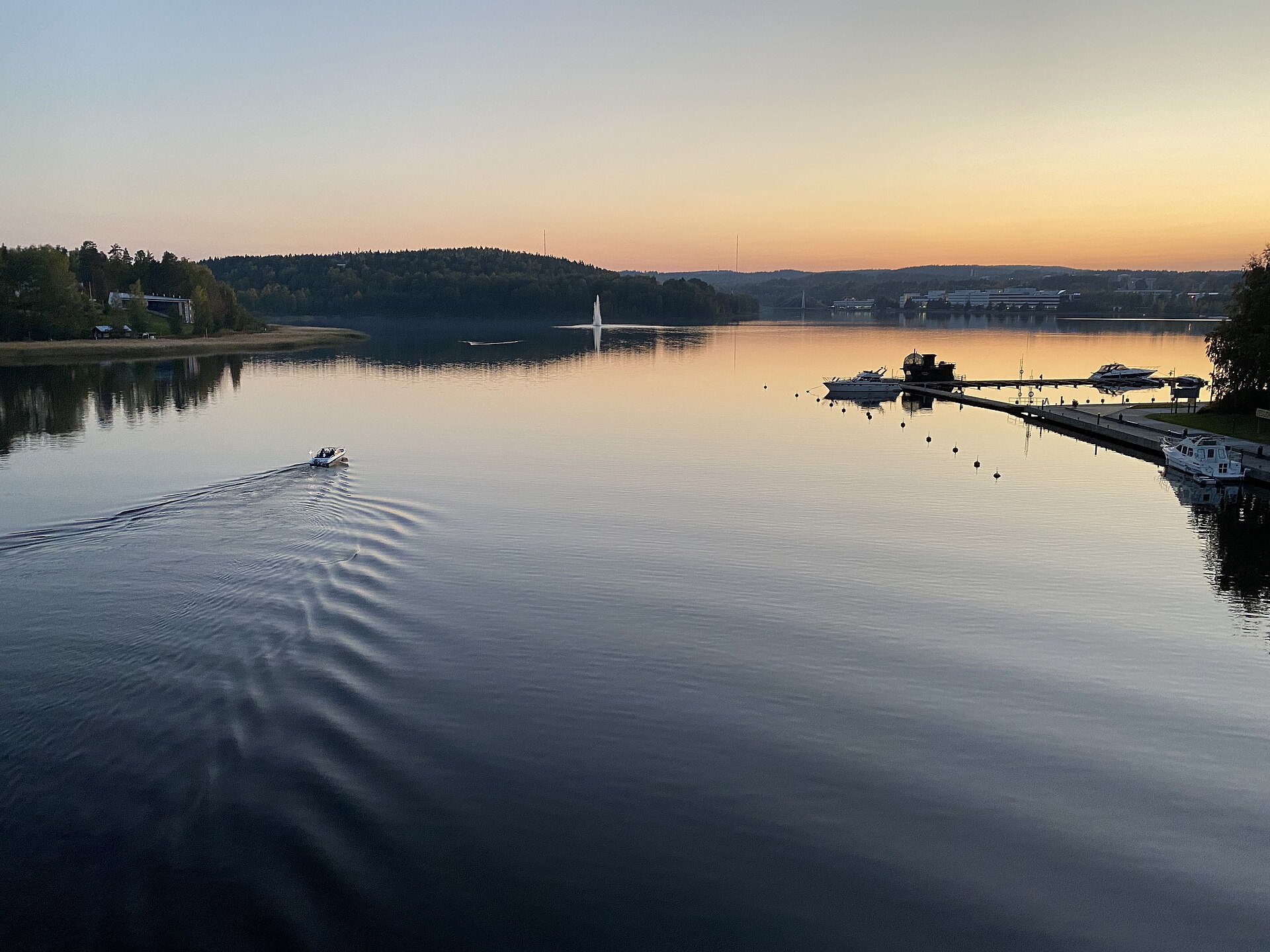
- Toivola Old Courtyard — Near the city centre
Toivola Old Courtyard keeps a corner of early Jyväskylä alive: a yard ringed by traditional wooden craftsmen's houses. Among the modern streets it gives a sense of the scale and materials of the town as it began after 1837. It is small, so it suits a short stop rather than a long visit. - Alvar Aalto Museum and Museum of Central Finland — Historic university campus
The Alvar Aalto Museum and the Museum of Central Finland stand together near the university's historic campus, and Aalto designed both. One displays his architecture and design work; the other covers regional cultural history and serves as the town museum. Together they make a natural half-day indoors, useful on wet or frozen days. - Säynätsalo Town Hall — Säynätsalo island
Säynätsalo Town Hall is among Aalto's most significant works and stands on Säynätsalo island, now part of Jyväskylä. The island looks out over the lake system, so the trip combines architecture with a lakeside walk. Opening arrangements and any guided visits change, so check the official site before travelling.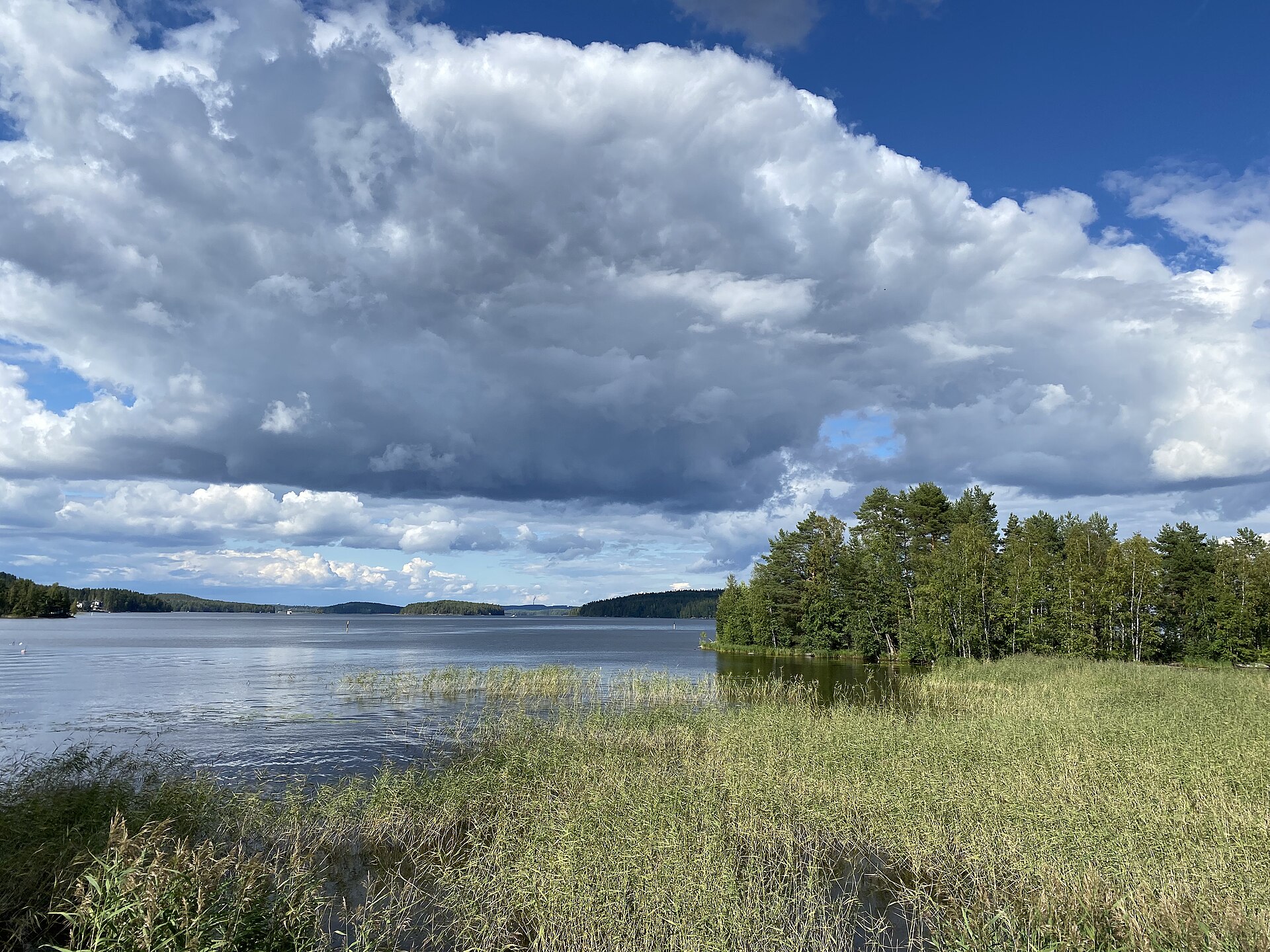
Culture
Culture in Jyväskylä runs through architecture, craft and learning. The Alvar Aalto Museum and the Museum of Central Finland sit side by side near the university's historic campus, both designed by Aalto, and together they explain his design work and the history of the region. Säynätsalo Town Hall adds a major civic building by the same architect. The Craft Museum of Finland presents handicraft techniques from across the country and is linked to a conservation centre that cares for textiles on behalf of museums, organisations and private customers. Beyond the museums, student life sets the tone: the university brings a youthful crowd, cheap canteen lunches and a steady calendar of events, while Rally Finland draws motorsport fans to the surrounding roads. Finnish social habits are reserved rather than cold. Conversation is unhurried, silence is comfortable, and personal space matters, so strangers seldom chat in queues or on buses. Sauna is an ordinary part of life, not a luxury, and nature is treated as shared ground: lakes, forests and ridges belong to everyone and are used all year. Plain speaking is a courtesy here, and arriving on time is expected. Visitors should keep their voices low on buses and in public spaces, queue at a polite distance, and take outdoor shoes off when entering a Finnish home.
What to wear
Fashion in Jyväskylä is practical first, shaped by long winters and a strong outdoor habit. Traditional Finnish dress, the kansallispuku, is made mainly from wool and linen in regional styles, and it appears at weddings, folk events, Midsummer and national celebrations rather than in daily life. Textile craft is still respected, and the Craft Museum of Finland in the city shows how handmade techniques are practised and preserved. Day to day, locals dress in understated dark or neutral colours: jeans, wool jumpers, a dependable jacket and sturdy shoes. Students favour layers, backpacks and bicycles in the warm months. In winter, down coats, thermal underlayers, hats, gloves and grippy boots are universal, and reflective tags are common on dark afternoons. Visitors should pack for the season. In summer, bring light layers, a rain shell, comfortable shoes for forest paths such as those on Harju Ridge, and insect repellent for evenings by the water. In winter, bring thermal layers, insulated waterproof boots with good grip, a warm hat and gloves, because pavements and lake paths can be icy. Churches and museums have no special dress code beyond ordinary tidiness. Swimwear and towel rules vary between public saunas, so follow the posted signs.
What to eat
- Student canteen lunch — Student restaurants around the university campus
Jyväskylä's university area is full of student restaurants serving a hot lunch at a modest cost, usually a main dish with salad, bread and a drink. It is the most economical filling meal in town, and visitors are generally welcome to eat there. - Taxari, chips and sausages — Grill kiosks near the university
Taxari is a local grill-kiosk plate of deep-fried chips and sausages, with sauces and extras of your choice. It is plain, salty street food with a loyal student following, best eaten late in the day after a long walk or a night out. - Lohikeitto — Lunch restaurants in the centre and lakeside cafés
Lohikeitto is a creamy salmon soup with potatoes, leeks and dill, a staple of Finnish lunch menus. It is warming in winter and light in summer, and it usually arrives with rye bread and butter. - Muikku — Harbour-side eateries and restaurant boats in summer
Muikku are small lake fish, usually fried whole in a crisp coating and served with potatoes and a sauce. They are a classic of the Finnish Lakeland and a good way to taste the region's freshwater catch. - Karjalanpiirakka — Bakeries, cafés and supermarkets across the city
A karjalanpiirakka is a thin rye pastry shell filled with rice porridge, traditionally topped with egg butter. It is eaten as a snack or breakfast and travels well, so it suits a day by the lake or a train journey. - Vegetarian and vegan lunch — Vegetarian restaurants in the city centre
Jyväskylä has restaurants that cook vegetarian food, and at least one serves vegan dishes every day. Menus lean on root vegetables, beans, grains and seasonal berries, a gentle alternative to the fish-and-sausage mainstream.
Plan it
Best time. June to August for long light evenings, warm lake weather and cruises from the harbour; September for quieter streets and autumn colour. Winters are cold and snowy with short days, but frozen lakes and snow suit anyone who wants a proper Finnish winter.
How long. 2
Getting there. Jyväskylä has a small airport at Tikkakoski, but most visitors fly into Helsinki, about 270 km to the south, and continue by train or coach to the combined bus and train station in the centre. Trains also run via Tampere and Pieksämäki, and coaches link Helsinki, Tampere, Turku, Oulu, Kuopio and other cities. Check timetables and tickets on the operators' official sites.
Budget. mid
Tips
- Buy train tickets early online, as advance fares are often much lower than same-day fares
- Climb Vesilinna tower or walk Harju Ridge on a clear morning for the best light and the fewest people
- Pack insect repellent in summer and proper insulated boots in winter
- Cards are accepted almost everywhere, so little cash is needed
- Check the city website, https://www.jyvaskyla.fi/, for museum, tower and cruise opening times, which change by season
Etiquette
- Take off outdoor shoes when entering a Finnish home
- Queue patiently and keep a polite distance from strangers
- Keep voices low on buses and in public spaces
Nearby
Sources
- Wikidata Q134620 (CC0)
- Wikipedia: Jyväskylä (rev 1381253589) (CC BY-SA 4.0)
- Wikivoyage: Jyväskylä (rev 5419753) (CC BY-SA 4.0)
- Lutakko panorama, Tiia Monto (CC BY 3.0)
- Jyväskylä collage, Tiia Monto (CC BY 3.0)
- Jyväskylä Kirkkopuisto February 2022, Alexignat (CC BY-SA 4.0)
- Jyväsjärvi view from Kuokkala bridge, Alexignat (CC BY-SA 4.0)
- Frozen lake Jyväsjärvi in winter, Alexignat (CC BY-SA 4.0)
- Lake Päijänne view from Säynätsalo, Alexignat (CC BY-SA 4.0)
- Channel between lakes Jyväsjärvi and Päijänne, Alexignat (CC BY-SA 4.0)
- Vaajavirta Naissaari, Alexignat (CC BY-SA 4.0)


