Jökulsárlón
Jökulsárlón, Iceland
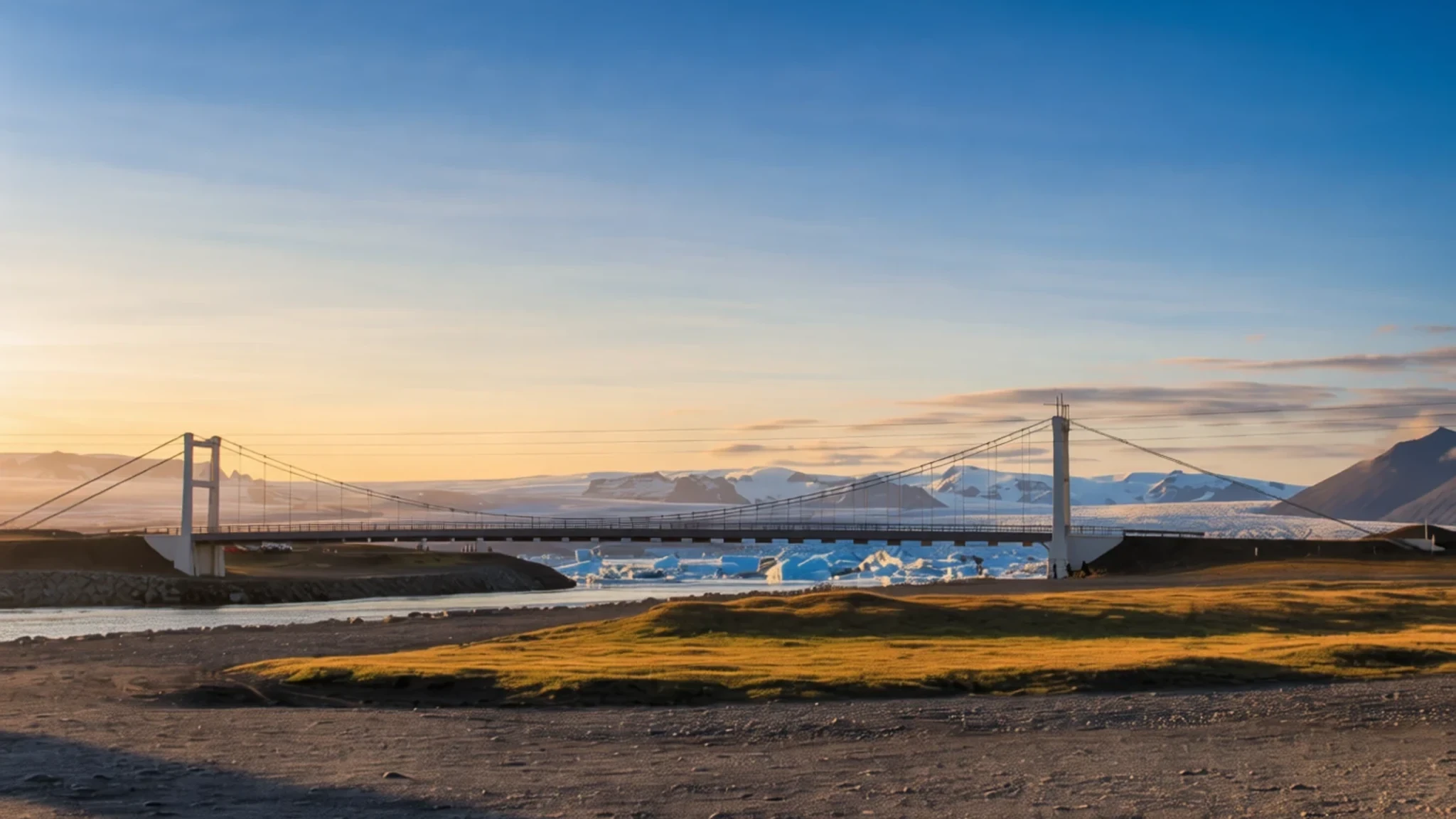
Visit Jökulsárlón to witness a constantly shifting wilderness of luminous blue icebergs calving from Europe's largest ice cap directly into a deep coastal lagoon.
The place
Jökulsárlón lies in the southeastern corner of Iceland, positioned at the foot of the massive Breiðamerkurjökull glacier within the wider expanse of Vatnajökull National Park. This immense proglacial lake is defined by its striking visual contrast: towering blocks of ancient ice, streaked with dark volcanic ash and glowing an intense electric blue, break away from the receding glacier tongue and drift slowly toward the open sea. Sited directly beside the main coastal thoroughfare, the lagoon offers immediate access to travellers traversing the southern shore, drawing crowds who pause along its gravel banks to watch the floating sculptures collide and melt. The geography here is entirely dynamic, altered daily by tides, winds, and the relentless calving of the ice face.
Water flows outward from the lagoon through a short, powerful channel into the Atlantic Ocean, carrying smaller fragments of ice out to sea. Many of these chunks are subsequently tossed back onto the black volcanic sands of the adjacent coastline by heavy surf, creating an extraordinary shore where glittering crystal formations rest against dark volcanic gravel. Visitors exploring Jökulsárlón encounter an Arctic environment shaped by extreme geological forces, where the sheer scale of the surrounding ice cap dominates the horizon. The atmosphere shifts continuously with the North Atlantic weather, moving from bright, sharp sunlight that makes the ice glisten to heavy sea mists that shroud the floatingbergs in absolute silence.
Its story
The existence of Jökulsárlón is a remarkably recent phenomenon in the geological history of the island. When early settlers first arrived centuries ago, the edge of the Breiðamerkurjökull outlet glacier sat miles further inland, and the coastal lowlands were free of standing water. A prolonged period of cooling climate, often referred to as the Little Ice Age, caused the glacier to advance significantly until the late 19th century, when its terminal moraine stood very close to the ocean. As global and regional temperatures began to rise again after this peak, the ice front retreated rapidly, leaving behind a deep depression carved out by the advancing ice.
As the glacier melted back, seawater filled the newly formed basin, creating a tidal lagoon that began expanding at an extraordinary rate during the twentieth century. The body of water grew multiple times over subsequent decades, deepening dramatically as the ice continued its inland migration. This liquid expanse soon caught the attention of international filmmakers seeking striking, otherworldly backdrops for cinema and television productions. Its dramatic vistas of floating ice have served as the setting for numerous high-profile Hollywood action sequences and global adventure series, cementing its status in popular culture while transforming from a remote natural curiosity into one of the nation's most celebrated landmarks.
What to see
- Amphibious vehicle tour — Main lagoon eastern shore
Board a specialized wheeled craft right from the shore for a thirty-five minute journey directly onto the lagoon, navigating between floating icebergs while a guide explains the fascinating geology of the receding glacier.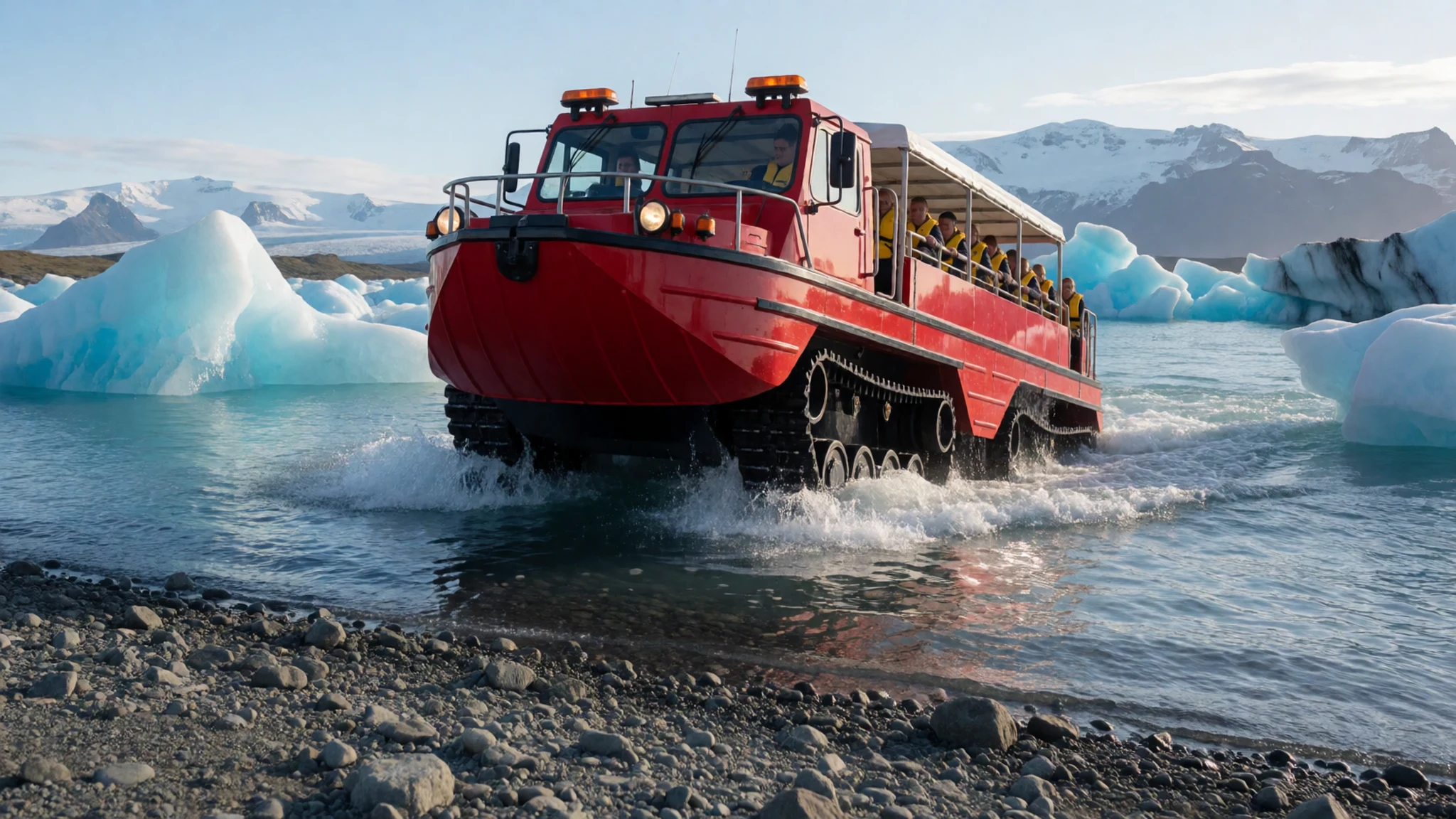
- Zodiac boat tour — Lagoon departure point
Strap into a high-powered rigid inflatable boat for a one-hour excursion that takes you much closer to the towering ice walls and massive floatingbergs than the larger vehicles can manage, offering a thrilling perspective on the shifting ice.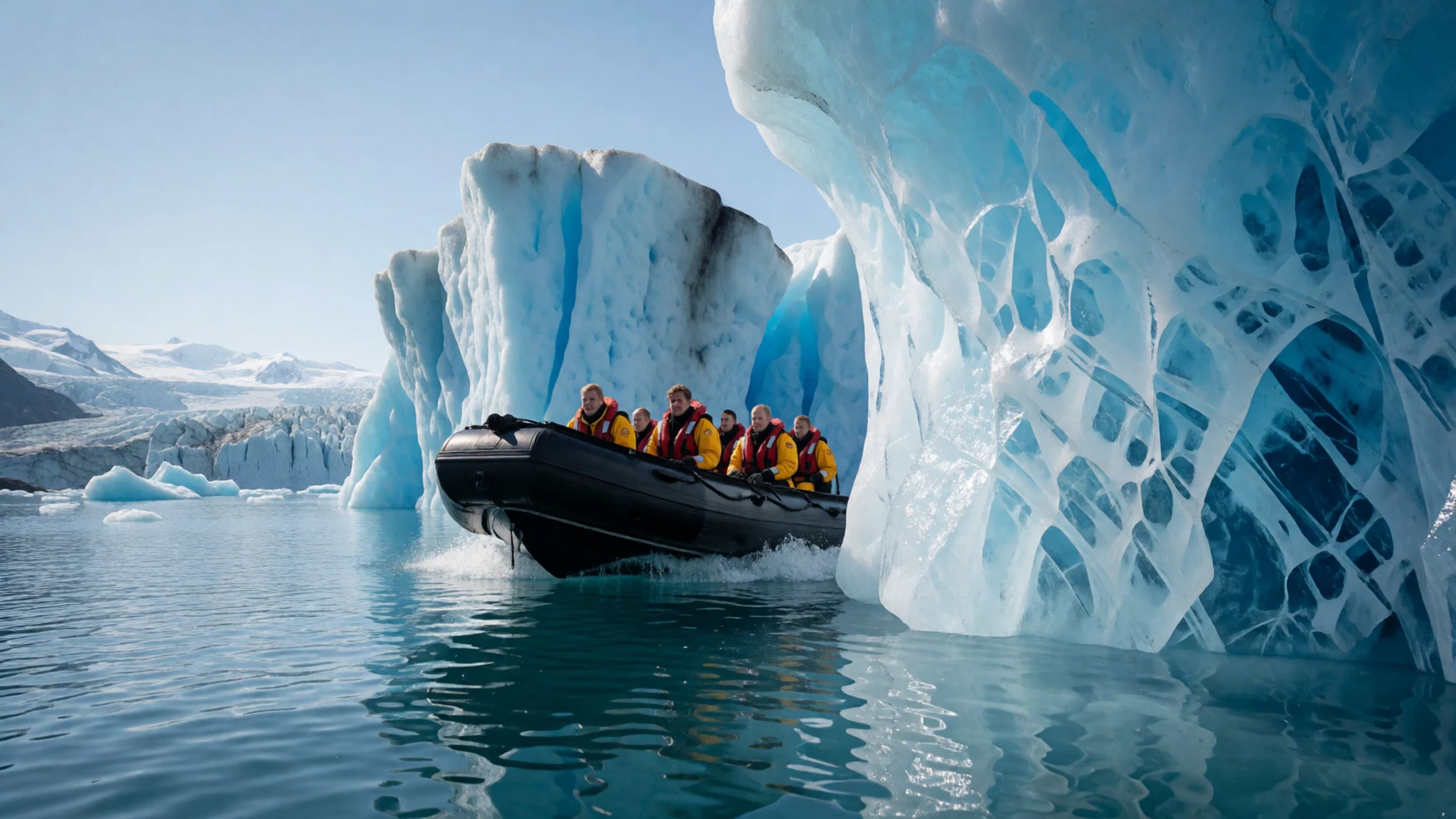
- Diamond Beach — Ocean side of the bridge
Wander across the coastal highway to the black sand shore where ocean waves deposit crystal-clear blocks of glacier ice that resemble giant diamonds scattered across the dark volcanic gravel, creating an extraordinary spot for landscape photography.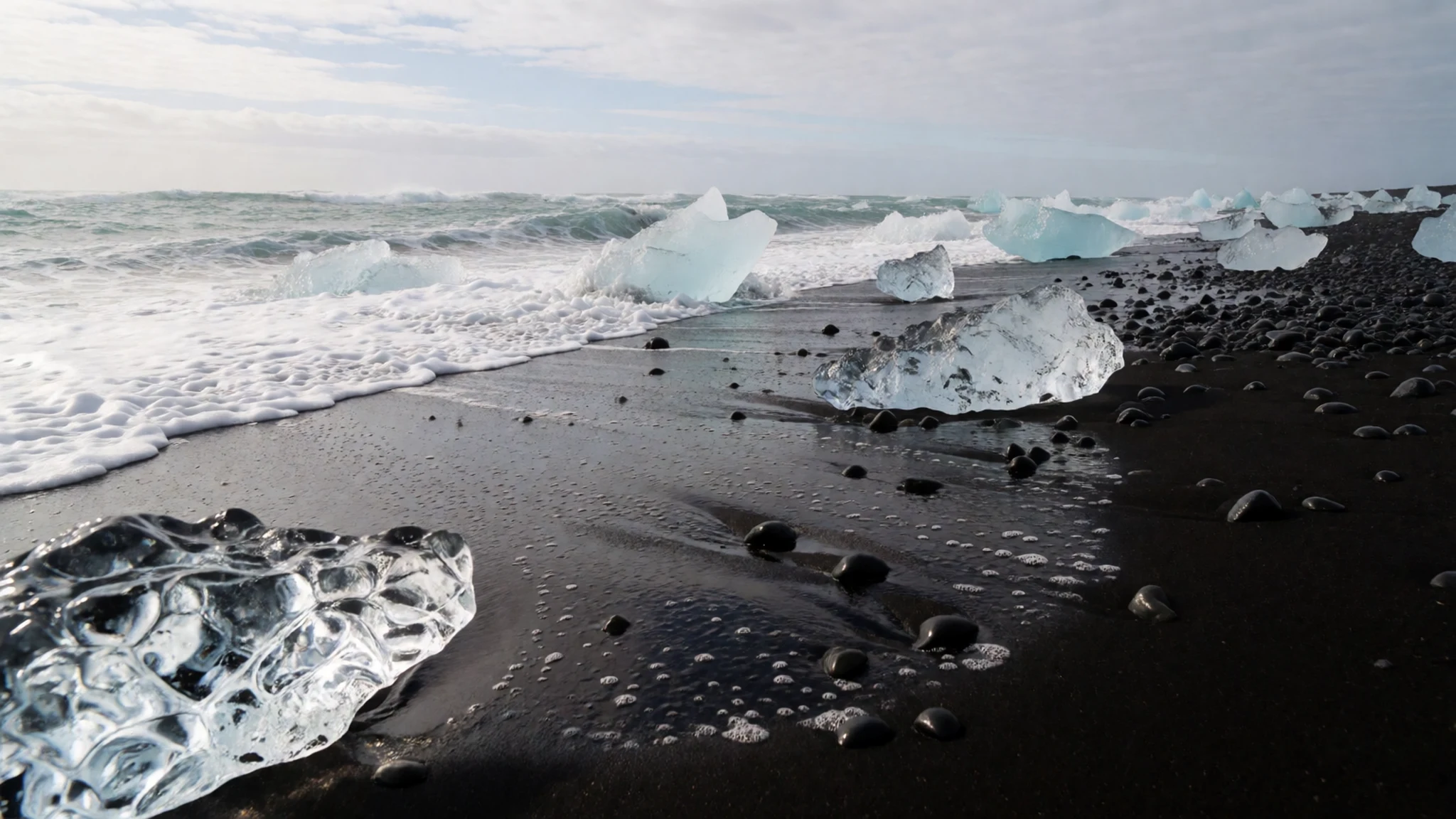
- East and West viewpoints — Both sides of the bridge
Walk up the small hills near the lagoon offices and parking areas for elevated panoramic vistas across the entire body of water, capturing the interplay of drifting ice, nesting seabirds, and distant mountain peaks under changing weather conditions.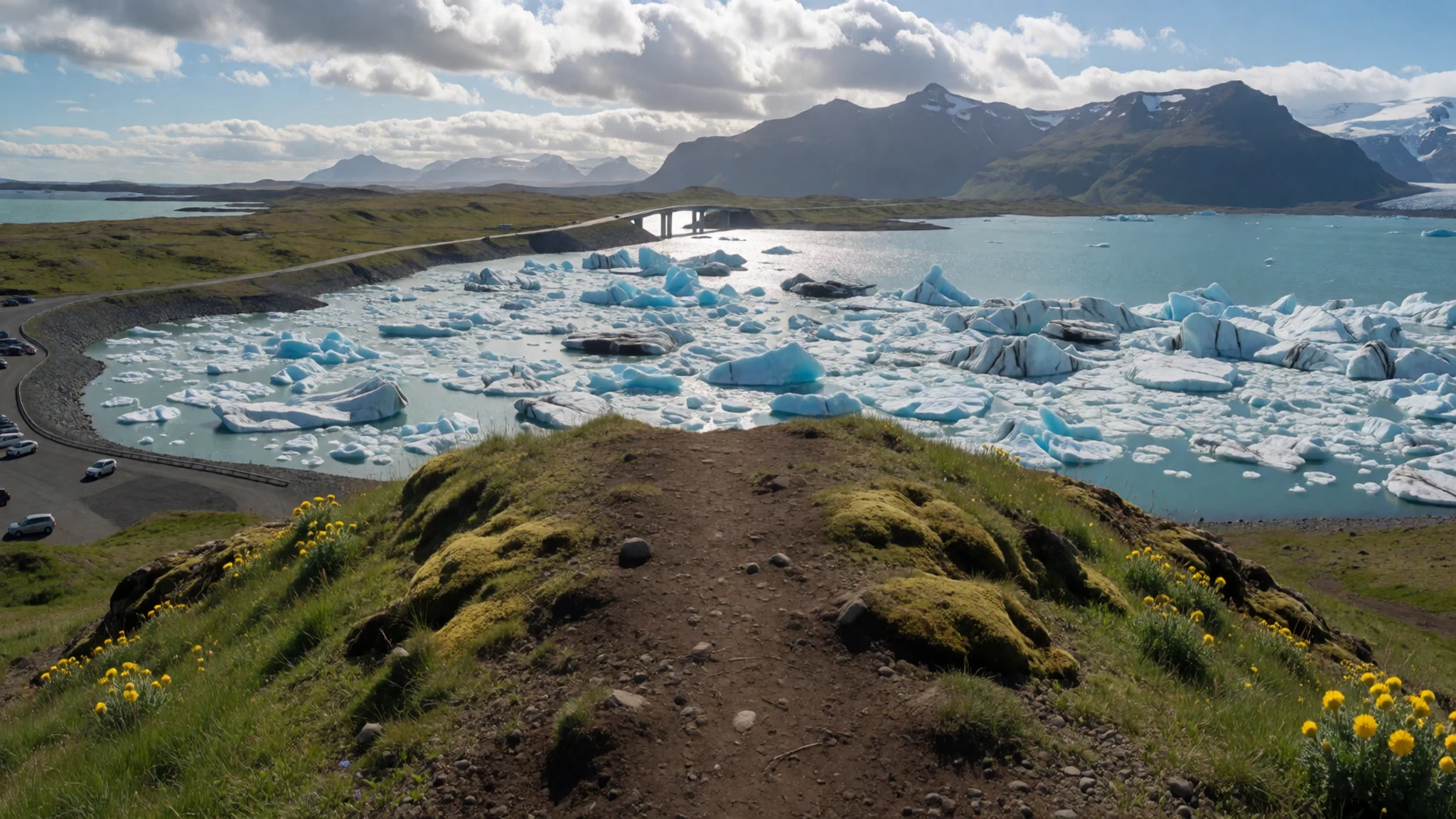
- Seal observation banks — Quiet water edges
Stand quietly along the calm eastern and western banks of the lagoon to spot curious common seals bobbing between the ice fragments or hauling themselves onto floating blocks of ice to rest in the cold Arctic air.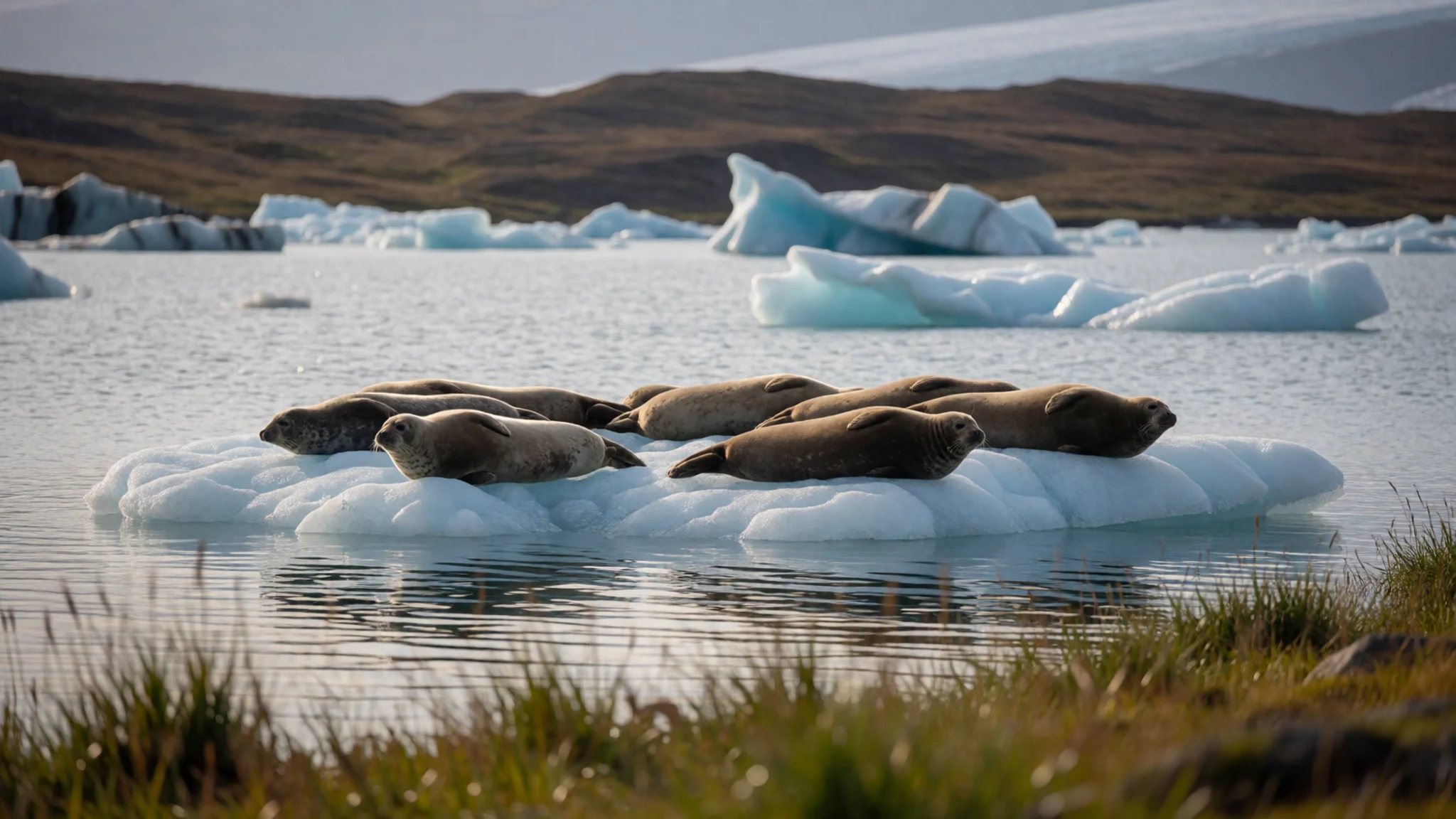
Culture
Jökulsárlón sits within a stark landscape where human presence has historically been dictated by the formidable power of ice, water, and volcanic activity. While the southeastern region of the island was traditionally sustained by hardy coastal fishing and scattered hill farming, modern local life around the lagoon revolves around stewardship of the delicate natural environment and welcoming international travellers who come to witness the retreating ice sheet. The surrounding community maintains a deep respect for the unpredictable forces of the North Atlantic, where sudden storms and rapid weather shifts demand constant vigilance from everyone working or travelling near the water. Traditional folklore throughout this coastal zone is rich in tales of hidden subterranean beings, spectral entities, and dramatic transformations of the physical terrain brought about by glacial floods and shifting weather patterns. Visitors engaging with Jökulsárlón are encouraged to appreciate the fragile balance of this proglacial ecosystem, recognising that the glowing blue icebergs visible today are vanishing testaments to a rapidly warming climate. Always maintain a safe distance from the water's edge and never attempt to climb onto floating ice fragments in the lagoon.
What to wear
Traditional wear across rural and coastal areas of Iceland developed around heavy, weather-resistant textiles designed to withstand extreme cold, relentless moisture, and biting winds. Hand-knitted woollen garments, particularly traditional patterned sweaters crafted from local fleece, remain an essential part of the cultural textile heritage, prized for their natural water-repellent qualities and warmth. Today, locals and workers at Jökulsárlón wear modern, high-performance technical outerwear capable of enduring sudden Arctic gales, freezing rain, and sub-zero temperatures. Visitors to the lagoon must dress in proper layers, starting with thermal base garments made from wool or advanced synthetics, followed by insulating mid-layers, and topped with a completely windproof and waterproof outer shell. Sturdy, waterproof hiking boots with excellent grip are absolutely mandatory for navigating the uneven, muddy, and gravelly terrain around both the lagoon banks and the nearby coastal shores. Bring warm gloves, a wind-resistant woollen hat, and a durable scarf to protect against the biting chill that sweeps off the glacier waters.
What to eat
- Traditional Icelandic fish soup — The small service building next to the lagoon parking area
A rich, creamy broth loaded with fresh chunks of white fish, scallops, and shrimp, simmered with root vegetables and herbs to provide instant warmth during a cold day exploring the glacial lagoon.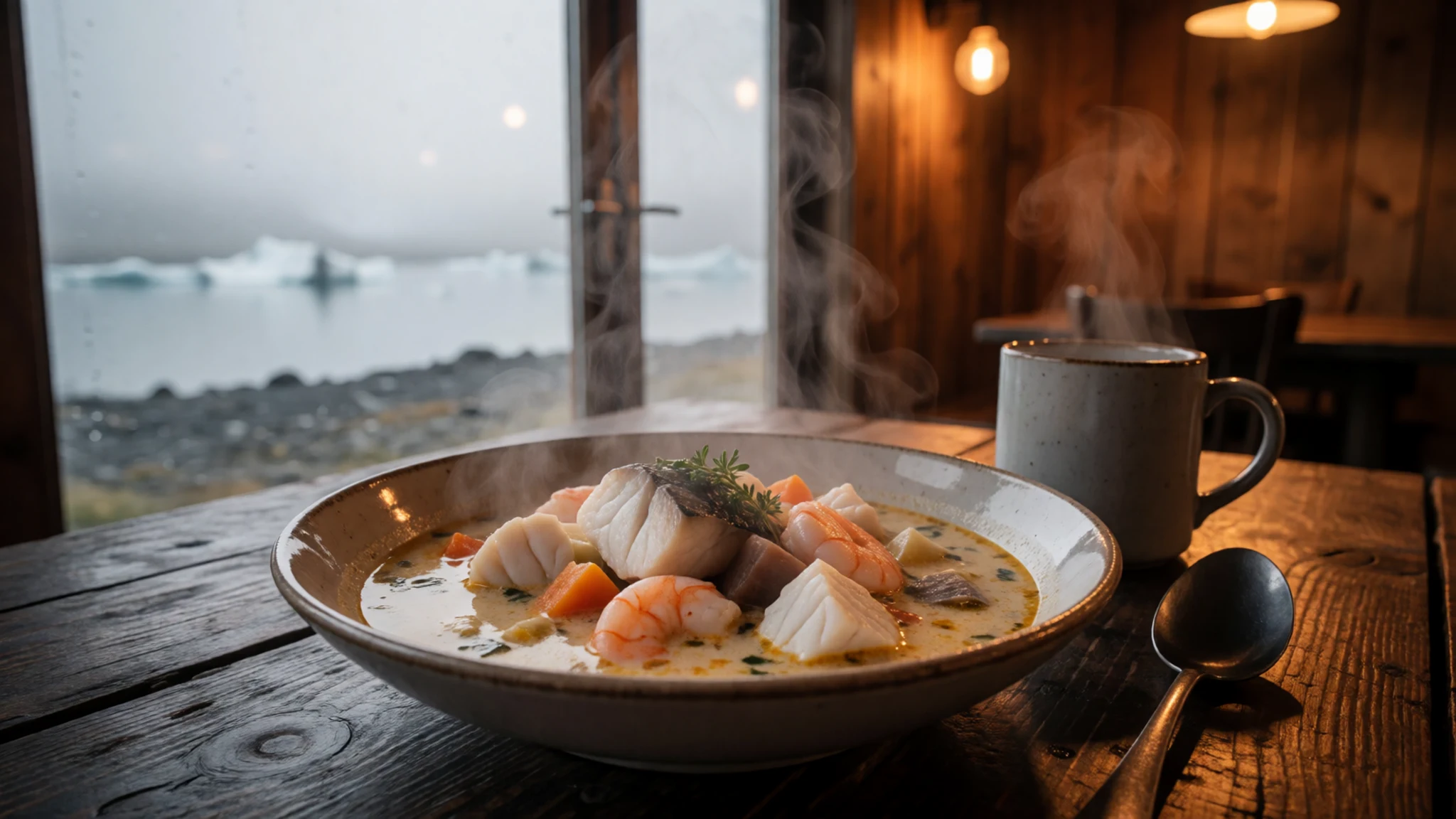
- Hotdog with all the toppings — The lagoon side cafe kiosk
A quintessential local favourite made from a blend of lamb, pork, and beef, served in a warm bun and traditionally ordered with crispy fried onions, raw onions, ketchup, sweet mustard, and remoulade.
- Hot chocolate and coffee — The main ticket and information office
Steaming hot beverages served in generous mugs, offering a comforting shield against the icy winds that blow off the water and across the viewing hills.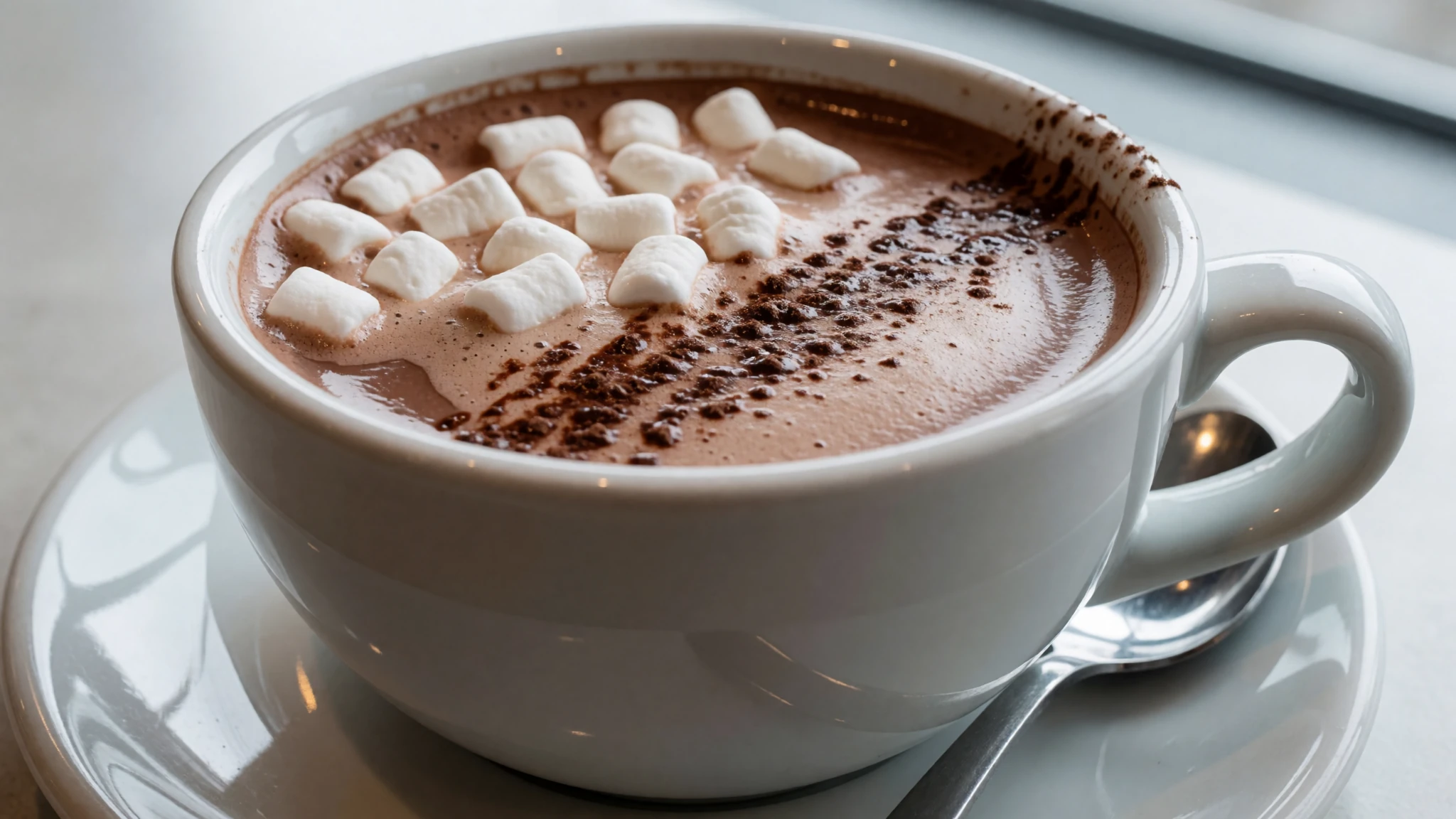
- Rúgbrauð dark rye bread — Local roadside eateries and guesthouses in the southeastern region
A dense, sweet, dark rye bread traditionally baked in pots buried near geothermal hot springs, often served buttered alongside hearty soups or smoked fish. - Smoked Arctic char — Regional food stops between Skaftafell and Höfn
Delicately smoked freshwater fish sourced from nearby icy rivers and lakes, valued for its rich flavour and tender texture, usually enjoyed on crisp flatbread.
Plan it
Best time. May to September offers the most accessible road conditions and extended daylight hours for photography, while boat tours run from May until mid-November and winter brings dramatic snowscapes and ice cave expeditions.
How long. 1–2
Getting there. Fly into Keflavík International Airport, rent a vehicle, and drive east along the Ring Road (Route 1) for about five hours, or approach from Höfn to the east.
Budget. mid
Tips
- Arrive early in the morning or late in the evening during summer to experience the lagoon without heavy tour bus crowds.
- Keep a safe distance from the water's edge on the ocean beach because powerful sneaker waves can sweep people into the sea without warning.
- Dress in windproof and waterproof layers because the wind coming off the glacier can lower temperatures rapidly.
- Check road conditions and weather forecasts daily on official national transport portals before embarking on the southeastern drive.
- Book boat tours well in advance during peak summer months to secure your preferred departure time.
Etiquette
- Never climb onto icebergs floating in the lagoon or washed up on the diamond beach, as they can roll over or break apart unexpectedly.
- Pack out all of your rubbish and respect the fragile volcanic moss and gravel ecosystems surrounding the water.
Nearby
Sources
- Wikidata Q511933 (CC0)
- Wikipedia (CC-BY-SA 4.0)
- Wikivoyage (CC-BY-SA 4.0)