Johannesburg
Johannesburg, South Africa
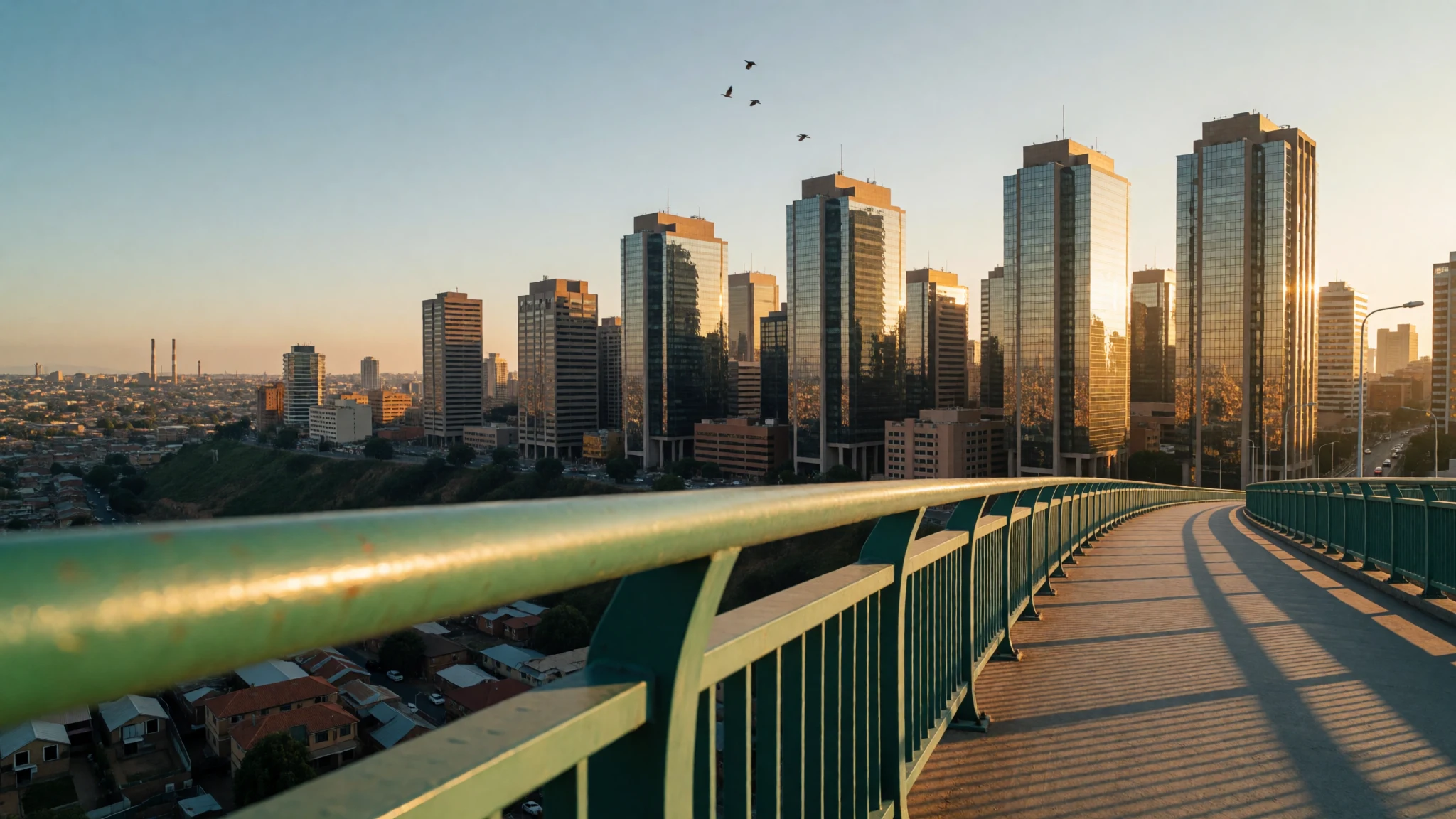
Johannesburg is South Africa's largest city, a high-altitude gold-rush capital of galleries, markets and township life beside a working skyline.
The place
Johannesburg — Joburg or Jozi in everyday speech, and the City of Gold as an older nickname — is South Africa's largest city and Gauteng's provincial capital. The City of Johannesburg Metropolitan Municipality counts about 4.8 million people, set on the Witwatersrand at 1,753 metres. Xhosa speakers call it eGoli and Zulu speakers iGoli, names that point back to the gold reef under the ridge. The settlement began in 1886, when mining followed a gold find across land that had been farmed, and the camp grew into the country's commercial centre. Johannesburg is not the judicial capital — Bloemfontein holds that title — but the Constitutional Court sits here, so the highest court and the main stock exchange share one city. The map is a joining-together of towns, suburbs and townships that once stood apart, and apartheid-era planning still shows in the long distances between where people live and where they work. Towers pack the central business district; north of them lie leafy suburbs, while university streets and former townships keep separate characters. The Johannesburg Stock Exchange draws commuters from across South Africa, and galleries have pulled evening life back into inner neighbourhoods. At this height the sky is bright, and highways stitch districts that do not share a street grid.
Its story
Johannesburg's ground was lived on long before anyone pegged out a mining camp. San hunter-gatherers left stone tools across the high country, and traces of their presence reach back many centuries. By the eighteenth century, Sotho-Tswana communities held much of the wider region: villages, chiefdoms and walled towns ran from the Bechuanaland Protectorate, today's Botswana, south towards Lesotho and east into the Pedi country of what is now Limpopo. Stone-wall ruins of those settlements still lie scattered through the old Transvaal, including the belt of land where Johannesburg later rose. Wars that spread out of Zululand in the late eighteenth and early nineteenth centuries — remembered as the mfecane or difaqane — broke many of those towns and pushed people off their fields. A Zulu offshoot, the Ndebele — Sotho-Tswana neighbours knew them as the Matabele — then raised a kingdom northwest of the future city, around present-day Rustenburg. The modern city itself dates from 1886. Prospectors had already struck the main Witwatersrand reef on the farm Vogelstruisfontein, work associated with Jan Gerritse Bantjes, and once that reef was understood the rush followed. Gold drew workers from across southern Africa and from overseas, and the diggings hardened into a city. Apartheid's spatial split, with dormitory townships set far from the mines and the offices, still shows in the daily commute.
What to see
- Central Business District — Central Business District
Johannesburg's central business district packs the towers that mark the skyline from the ring roads. A poor reputation has eased as galleries and small art rooms open between the office blocks. Traders from across the continent use the centre as a shopping stop, filling wholesale outlets on weekdays. The streets repay a daytime wander, with the high-rises as a constant landmark.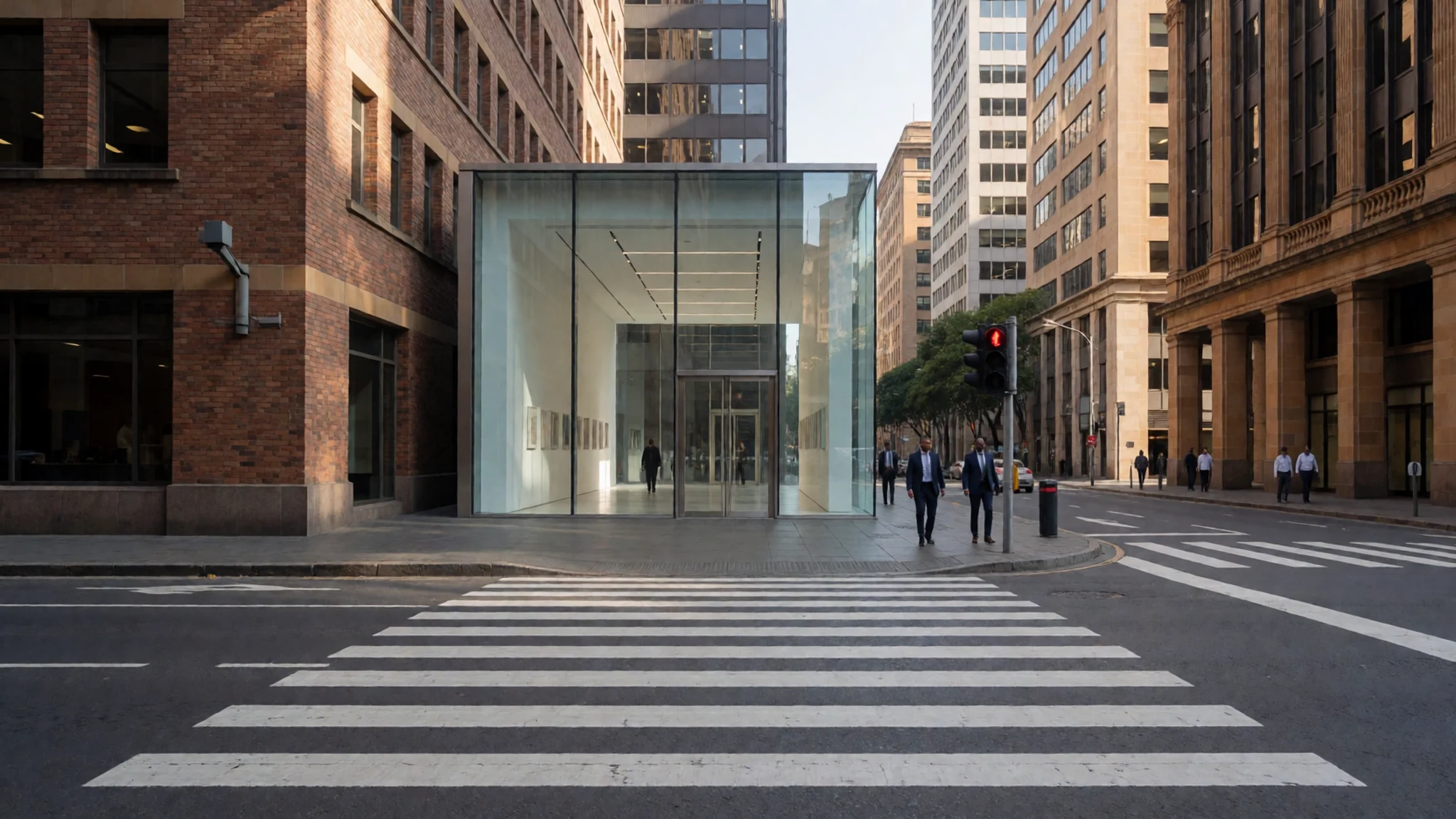
- Newtown and Nelson Mandela Bridge — Newtown
Newtown is Johannesburg's cultural precinct, reached from the highway across Nelson Mandela Bridge, with the central towers behind the span. The Market Theatre neighbourhood holds live-music rooms and bars, and the streets feel built for an evening rather than a hurried errand. Come for a show or a walk between venues; the bridge itself is the photograph, when the office lights start coming on over the inner city.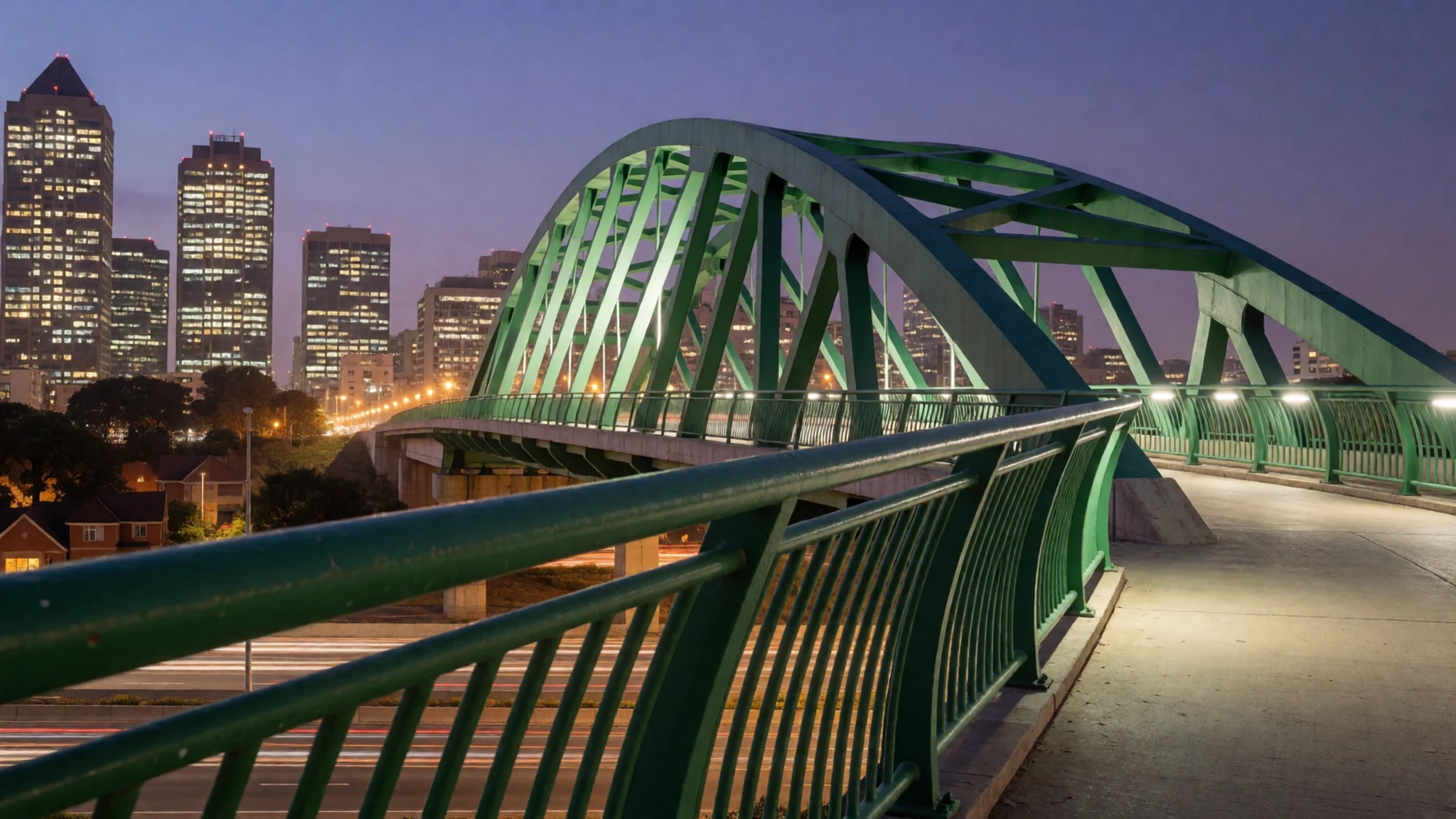
- Johannesburg Art Gallery — City centre
The Johannesburg Art Gallery, in the city centre, presents a long span of European and African painting and sculpture, from older court and church pictures through to work made now. Its columned portico is the public face of the building. The collection is among the notable fine-art holdings on the continent, which is why the rooms deserve a slow hour rather than a lobby glance.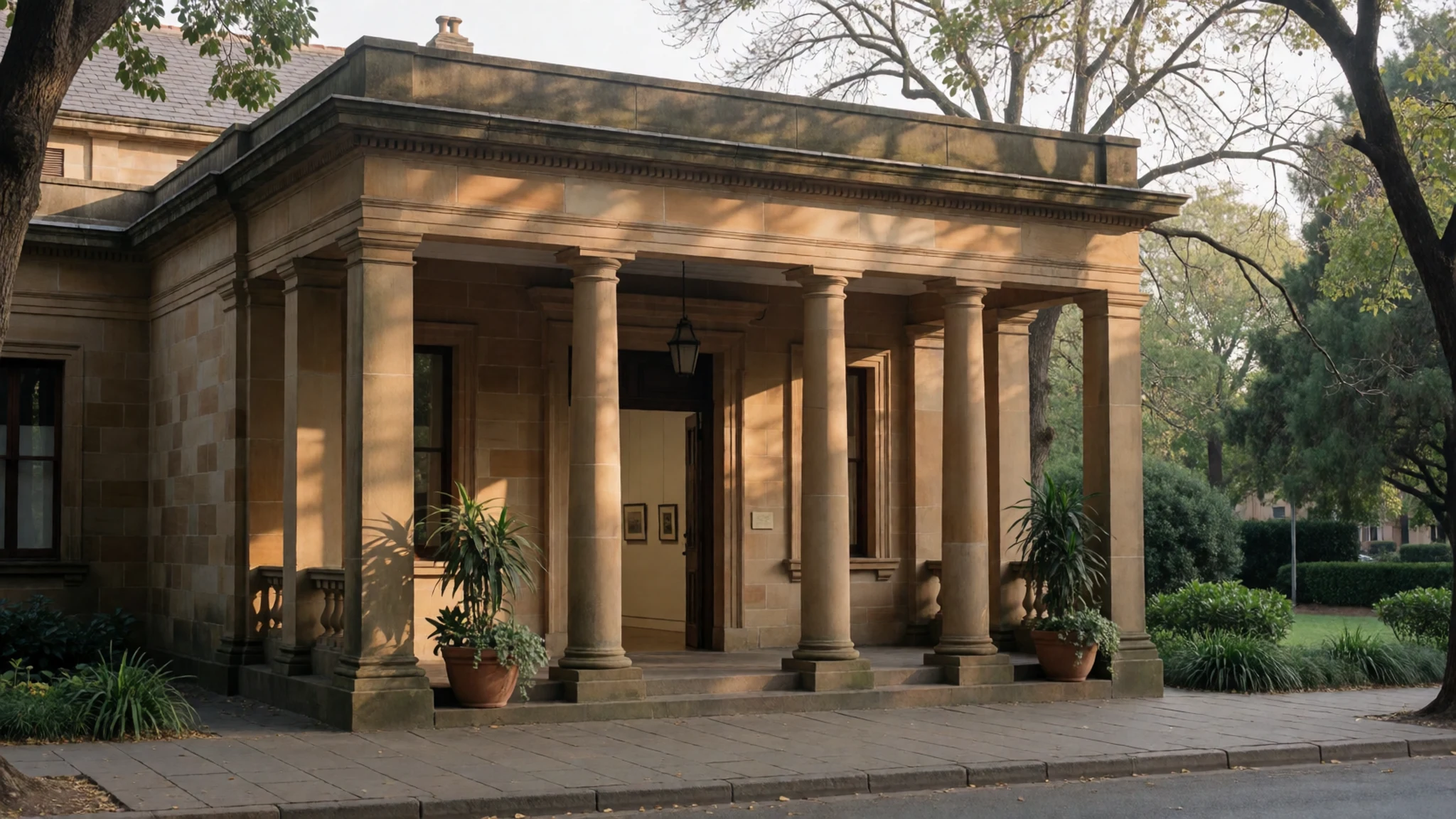
- Maboneng Precinct — Maboneng, east side
Maboneng Precinct, on Johannesburg's east side, gathers studios, cafes and Arts on Main into a walkable cultural pocket. Sundays bring a market, and The Bioscope screens independent films in a small cinema that locals treat as a neighbourhood room rather than a multiplex. Main Street Life sits in the same cluster. The precinct suits a half-day of browsing and a film.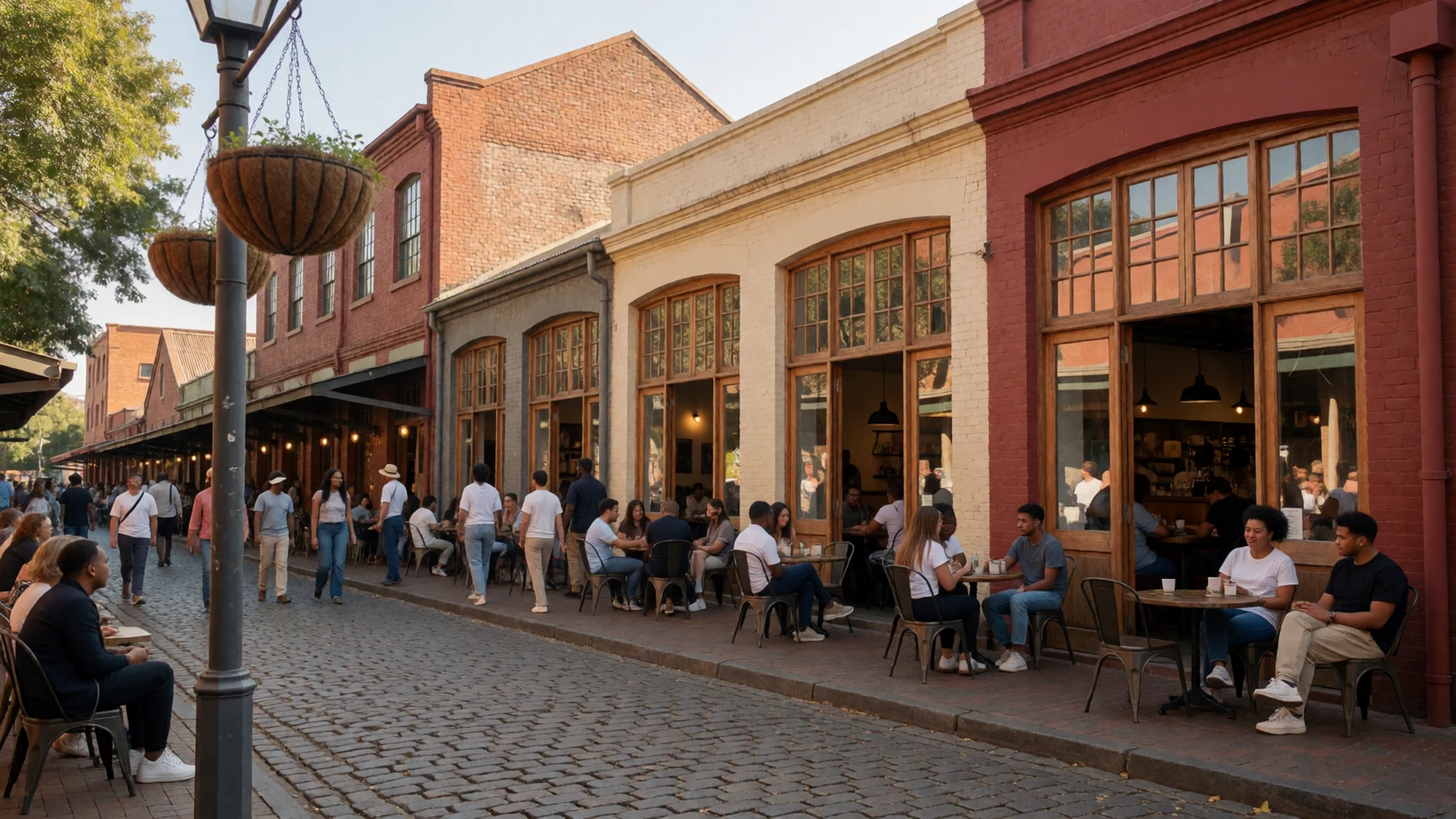
- Braamfontein — Braamfontein
Braamfontein is Johannesburg's university quarter, arts-minded and loud after dark, with a Saturday market that draws the neighbourhood out of doors. Night life clusters around small venues and student crowds. By day the same blocks can feel quiet, so time a visit for the market or for the evening rather than a midweek morning. Wits Art Museum, strong on historic and contemporary African work, rewards a longer look.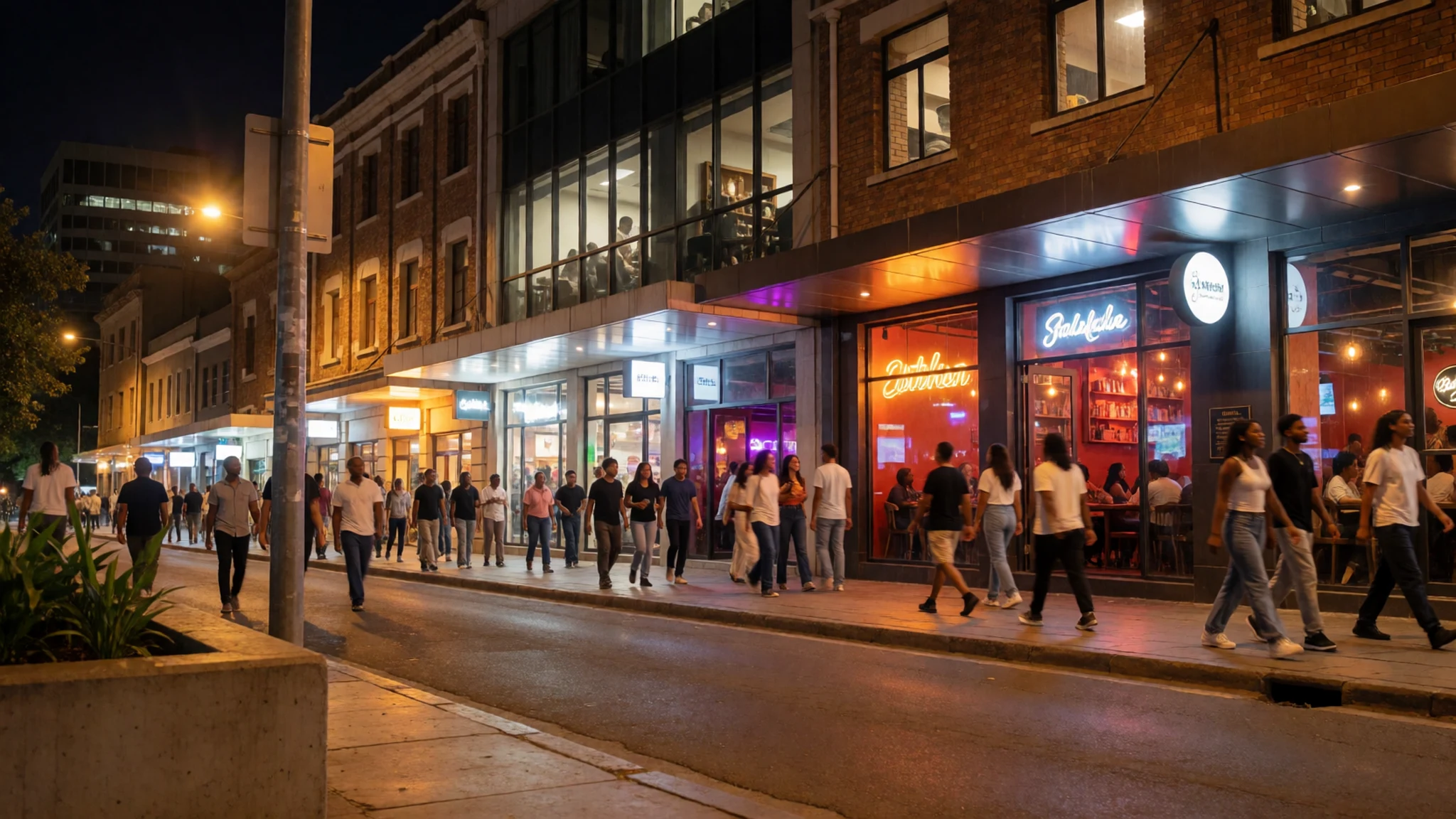
Culture
Johannesburg is a working cultural centre in South Africa, with training grounds and stages spread from the inner city to the university belt. The National School of Arts trains performers in the inner city, while Wits runs its own School of the Arts up in the university belt. The South African Ballet Theatre keeps a company in the city too. Mary Fitzgerald Square anchors one cluster of public space used for gatherings and festivals, while theatres, galleries and libraries fill the blocks around it. The Johannesburg City Library stands in the central business district, a civic reading room in the middle of the commercial towers. The Johannesburg Art Gallery holds European and African work across several centuries, and Wits Art Museum in Braamfontein concentrates on historic and contemporary African art. Private collections and commercial galleries cluster in the northern suburbs, a short hop from the public museums. Ask before you photograph people in markets, townships or on the street, and take no for an answer.
What to wear
Johannesburg has no single traditional costume, because the city gathers Zulu, Sotho, Xhosa, Ndebele and Afrikaans communities, each with cloth of its own. Shweshwe, a cotton printed with small geometric motifs, is cut into dresses, shirts and skirts for weddings and for Heritage celebrations. Zulu dress brings beadwork, the married woman's isidwaba and, for ceremony, the isicholo hat; Basotho blankets, heavy wool panels with bold bands, turn up when the highveld wind is cold; Ndebele beadwork and bright stacked rings appear at cultural days. On a weekday the business districts run on jackets and dresses, while Braamfontein and the townships favour denim, sneakers and layered streetwear. Summer afternoons are warm enough for short sleeves; at 1,753 metres the evenings and the dry winter cool quickly, so residents keep a jacket to hand. Visitors do well with the same logic: breathable layers, a sun hat, and comfortable closed shoes for long pavements and uneven market ground. At places of worship and some family ceremonies, cover shoulders and knees.
What to eat
- Boerewors — Township yards, park braai stands and markets
Boerewors, a coiled spiced-beef sausage cooked over a braai, is everyday Johannesburg food. It turns up at weekend gatherings in township yards, at park braai stands and at markets where the smoke hangs over the stalls. Squeeze on a sharp tomato relish if it is offered.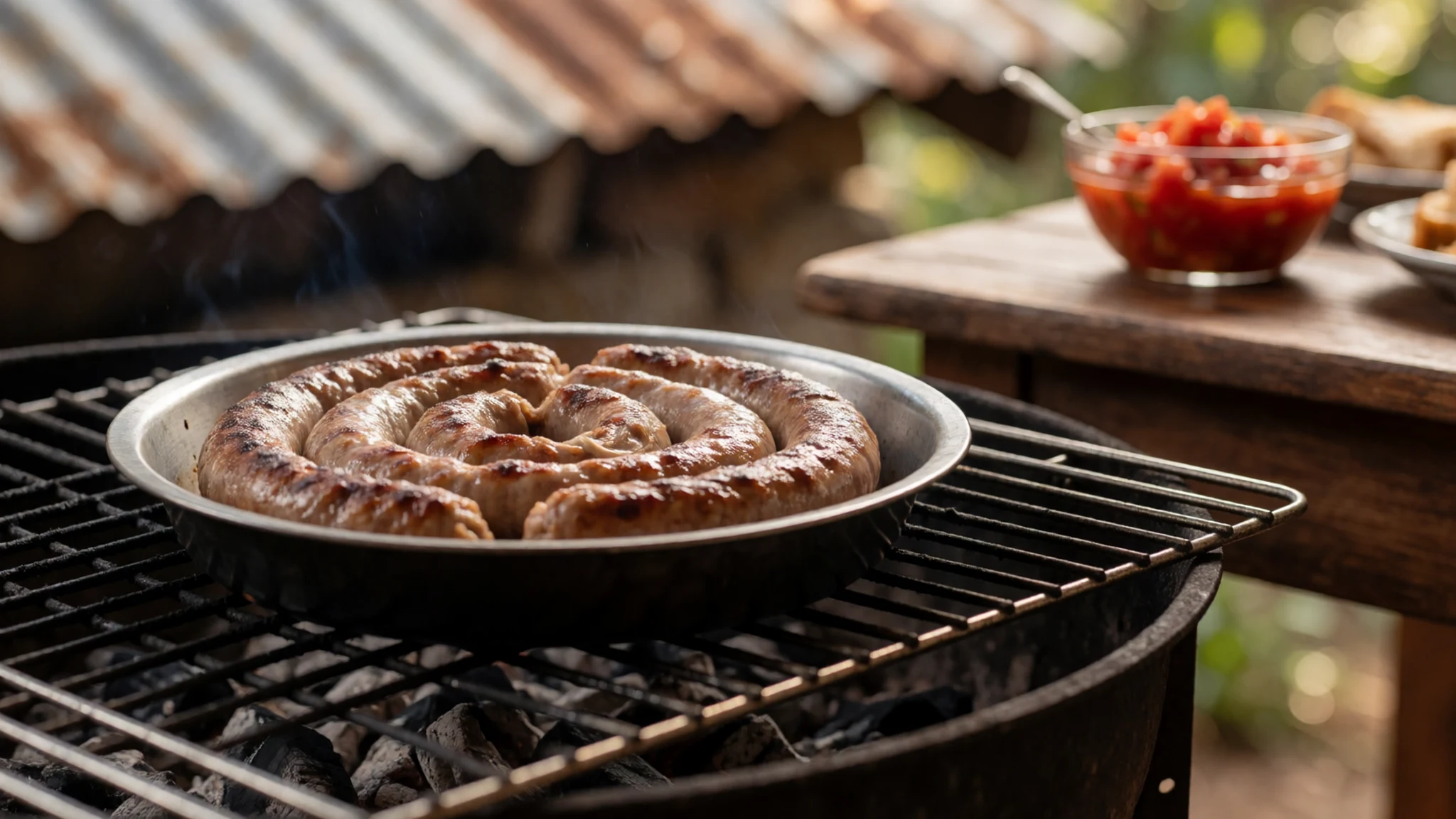
- Pap and chakalaka — Township eateries and braai spots
Pap, a firm maize porridge, is the plate that anchors many Johannesburg meals, often with chakalaka, a spicy tomato relish, or with a tomato gravy. Township eateries and braai spots serve it beside grilled meat. The texture should be stiff enough to break with the fingers, not soft.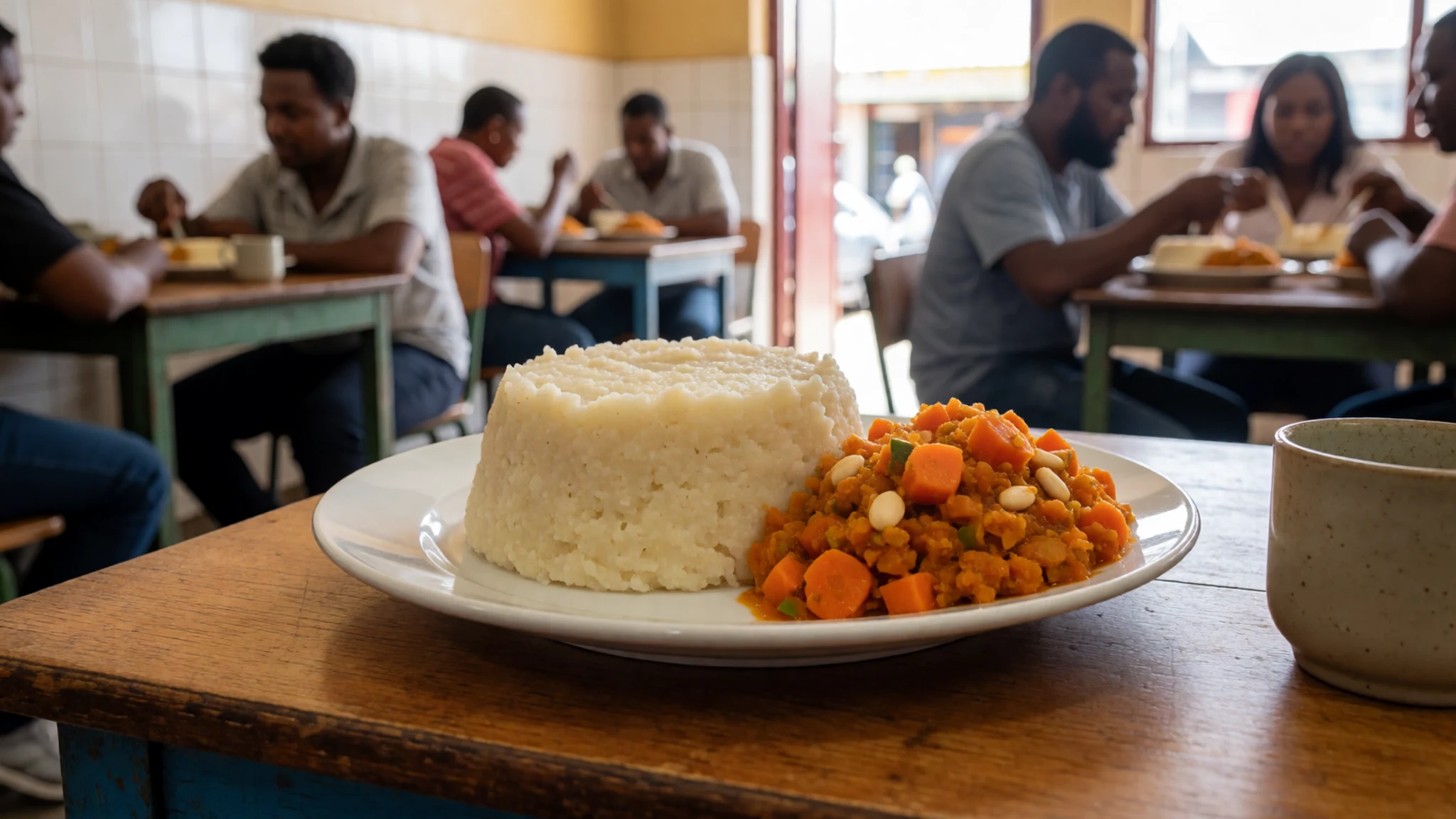
- Kota — Soweto pavement vendors and takeaways
A kota, also called a spatlo, is Johannesburg township street food: a hollowed quarter-loaf stuffed with chips, a sausage or patty, and a sauce. Soweto pavement vendors and spaza-side takeaways build them to order. It is a full meal in one hand, before the bread softens. - Amagwinya — Township stalls, taxi ranks and Saturday markets
Amagwinya, also known as vetkoek, are deep-fried dough balls sold hot from township stalls and from weekend markets across Johannesburg. Plain, they are a snack; split and filled with mince, cheese or polony, they become lunch. Look for the fryers at taxi ranks and Saturday markets. - Biltong — Butchers, supermarket counters and market stalls
Biltong is air-dried, spiced beef or game, sliced thin and sold by weight at Johannesburg butchers, supermarket counters and market stalls. It is the city's portable snack, saltier and drier than a fresh sausage, and fine for a long drive. Droëwors, the dried-sausage cousin, hangs beside it.
Plan it
Best time. March to May is a comfortable stretch on Johannesburg's highveld, after the heaviest summer storms and before the coldest nights. September and October are another good window. December to February brings heat and sudden thunderstorms; June to August is dry, sunny and chilly after dark. At 1,753 metres, pack for sun and a cool evening.
How long. 3–4
Getting there. O. R. Tambo International Airport lies east of Johannesburg's city centre, with international and domestic terminals side by side. Gautrain trains run towards Sandton, and taxis or ride-hailing cars finish the trip. Highways arrive from Cape Town, Durban, the Kruger side and Kimberley. Weekday mornings and late afternoons are slow, so leave spare time.
Budget. mid
Tips
- Check joburg.org.za for city services and event listings before you lock a plan.
- Begin inner-city walking in the morning, when the centre is simpler to cover on foot.
- Expect heavy traffic on weekday mornings and late afternoons, and add slack before any flight.
- Group sights by neighbourhood; Johannesburg is widely spread and crossing town twice wastes the day.
- Carry a bank card and a little cash, because smaller market stalls do not all take cards.
Etiquette
- Ask before you photograph people in markets, townships and on the street.
- Greet a vendor before you haggle or handle goods.
- Cover shoulders and knees at places of worship.
- Visit townships with a host or a booked cultural tour rather than wandering in uninvited.
Nearby
Sources
- Wikidata Q34647 (CC0)
- Wikipedia (rev 1383919864) (CC BY-SA 4.0)
- Wikivoyage (rev 5414929) (CC BY-SA 4.0)
- Johannesburg Central Business District — Evan Bench (CC BY 2.5)
- Johannesburg South Africa — Mark Hillary (CC BY 2.5)
- Johannesburg Art Gallery — Janek Szymanowski (CC BY 3.0)
- Johannesburg Skyline — Chris7cn (CC BY 3.0)
- Nelson Mandela Bridge — South African Tourism (CC BY 2.5)
- FIFA World Cup 2010, Soccer City — Steve Evans (CC BY 2.5)
- Brixton Tower — NJR_ZA (CC BY-SA 2.0)
- Langlaagte — unknown author (Public domain)


