Joensuu
Joensuu, Finland
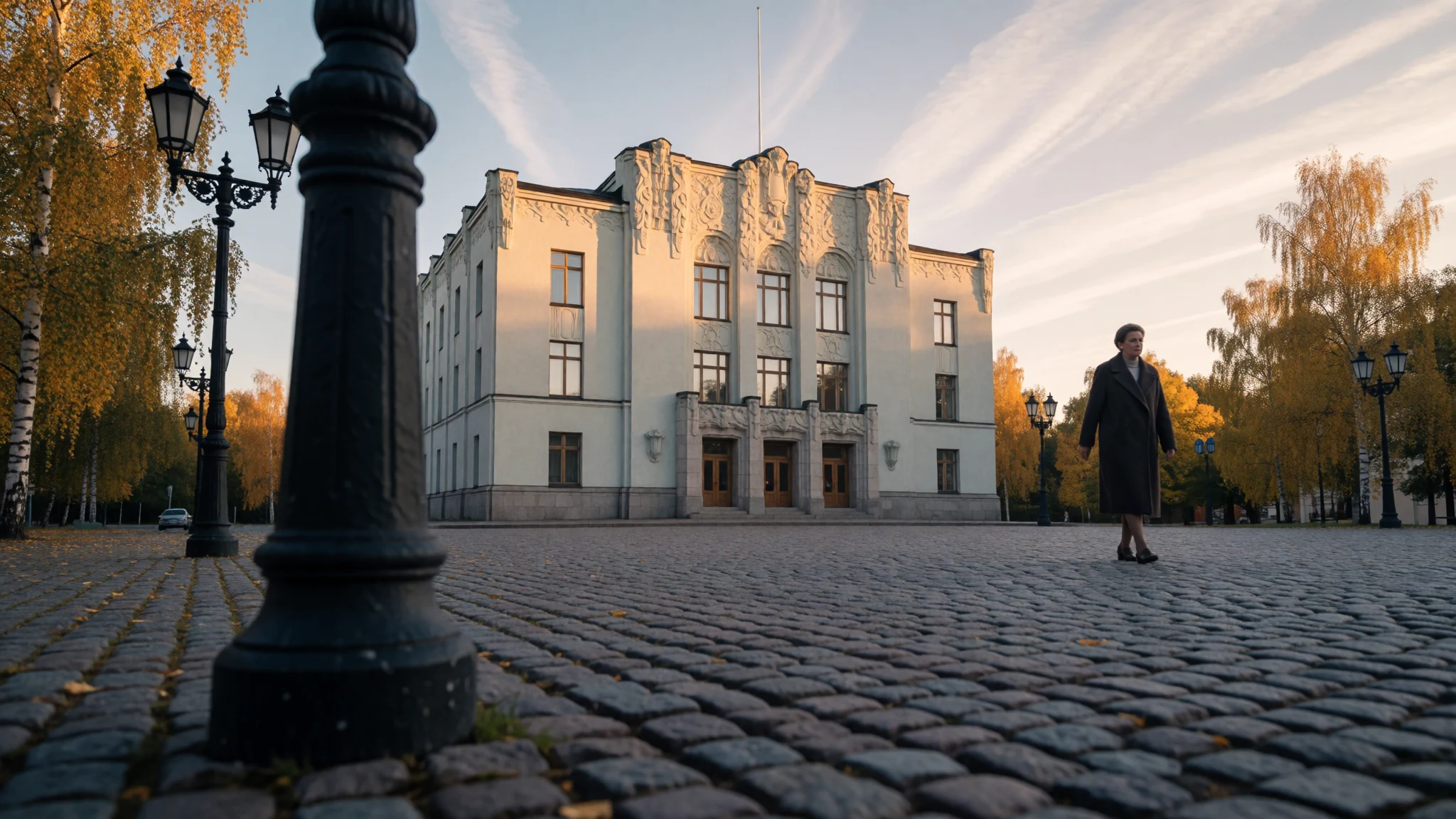
Joensuu is a relaxed lakeland city in eastern Finland, good for Karelian food, wooden architecture, river walks and a gateway to the forests.
The place
Joensuu sits in eastern Finland, in the lake country, where the Pielisjoki river runs out towards Lake Pyhäselkä, an arm of the Saimaa lake system. The name comes from Karelian and means the mouth of the river, which sums up why a town grew here. About 79,000 people live in the city, and it is the regional capital of North Karelia, a province that feels a long way from Helsinki in both distance and temperament.
It is a compact place. The centre is a grid of straight streets laid out in the nineteenth century, with the main square, the market hall and the riverside all within an easy walk of each other. A university campus and a university of applied sciences give the city a young population, so cafés, lunch canteens and live music are better than the size would suggest, at least in term time. Finnish is the everyday language, though English is widely understood among younger people.
The climate is subarctic, edging towards humid continental. In practice that means long, dark, properly cold winters with snow, and a short green summer with very long evenings. Kuopio is the nearest big city, to the west, and Lappeenranta lies further south along Highway 6. Forest, lakes and the Russian border shape the surroundings, and the Koli hills and national park to the north offer a larger landscape for anyone with a day to spare.
Joensuu works as a base for the Karelian side of Finland rather than a city of famous monuments. Travellers who enjoy markets, wooden buildings, river walks and an unhurried pace tend to like it. Those looking for grand sights will find it quiet.
Its story
Joensuu is young by European standards. It was founded in 1848 on the orders of Tsar Nicholas I, when Finland was a grand duchy inside the Russian Empire. The site made sense: timber came down the Pielisjoki from the forests inland, and lake routes led outward from the river mouth.
Early growth rested on wood. After trading rights were granted in 1860, earlier limits on industry were lifted and sawmills multiplied along the water. The Saimaa Canal, opened in 1856, linked the lake system with the Gulf of Finland, so planks and other goods could travel towards St Petersburg and on to markets in Central Europe. Canals in the town itself were finished by 1870. In the busiest years the river carried steamboats, barges and huge rafts of floated logs, and Karelian traders had worked the same water for centuries before that.
The twentieth century changed the picture. Much of the older wooden town was cleared in later decades, and few streets keep their original character today. In the other direction, the city grew into an administrative and educational centre, helped by the creation of the North Karelia region and by steady investment in schools and higher education. Neighbouring municipalities were folded in: Pielisensuu in 1954, then Kiihtelysvaara and Tuupovaara in 2005, which stretched the city far into the countryside.
Karelia as a wider region was divided by Finland's wars with the Soviet Union, and the border lies not far to the east. That history sits behind the local museums, which keep alive places and customs that now lie on the other side of the line.
What to see
- City Hall — Main square, city centre
Joensuu's city hall stands on the main square and is the work of Eliel Saarinen, the architect who also designed Helsinki's central railway station. The Art Nouveau styling is restrained rather than showy, and the likeness to the Helsinki building is easy to spot. The square is the natural start for a walk.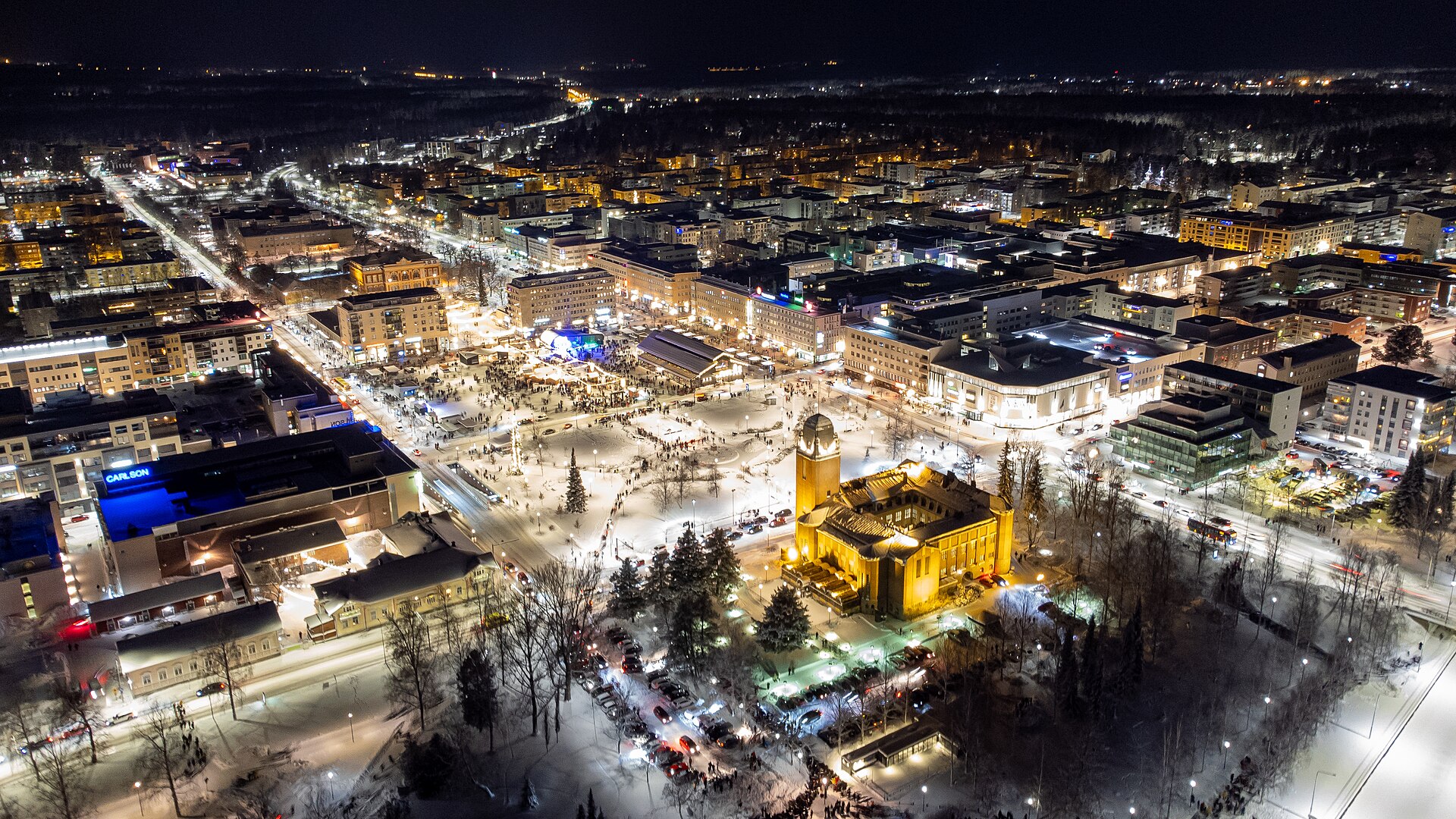
- Joensuu Arena — West of the city centre
The Joensuu Arena is a very large timber-built hall close to the centre, used for sport, fairs, concerts and conferences. Even when nothing is on, the wooden structure is worth a look from outside, a reminder that forestry built this region. Check the city's official site for event dates.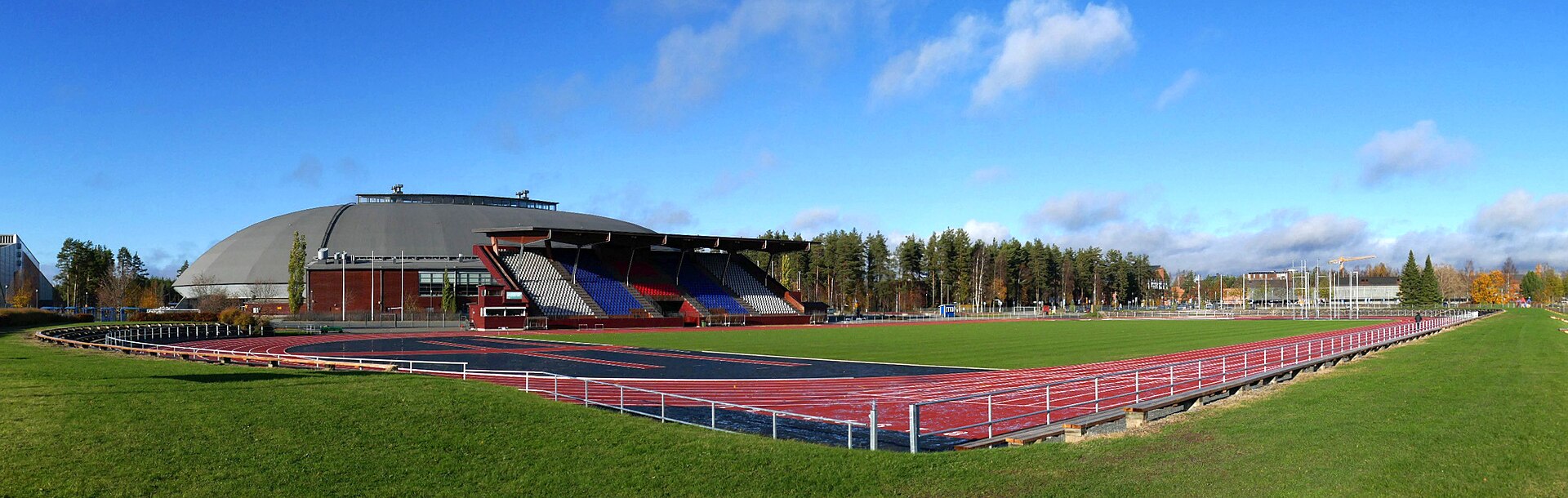
- Pielisjoki riverside and old streets — City centre, along the river
The riverside in Joensuu and the streets around it hold the surviving nineteenth-century wooden houses, along with the canal that once served the steamboat and log traffic. Much of the old town has gone, so the walk is short, but it is pleasant on a summer evening.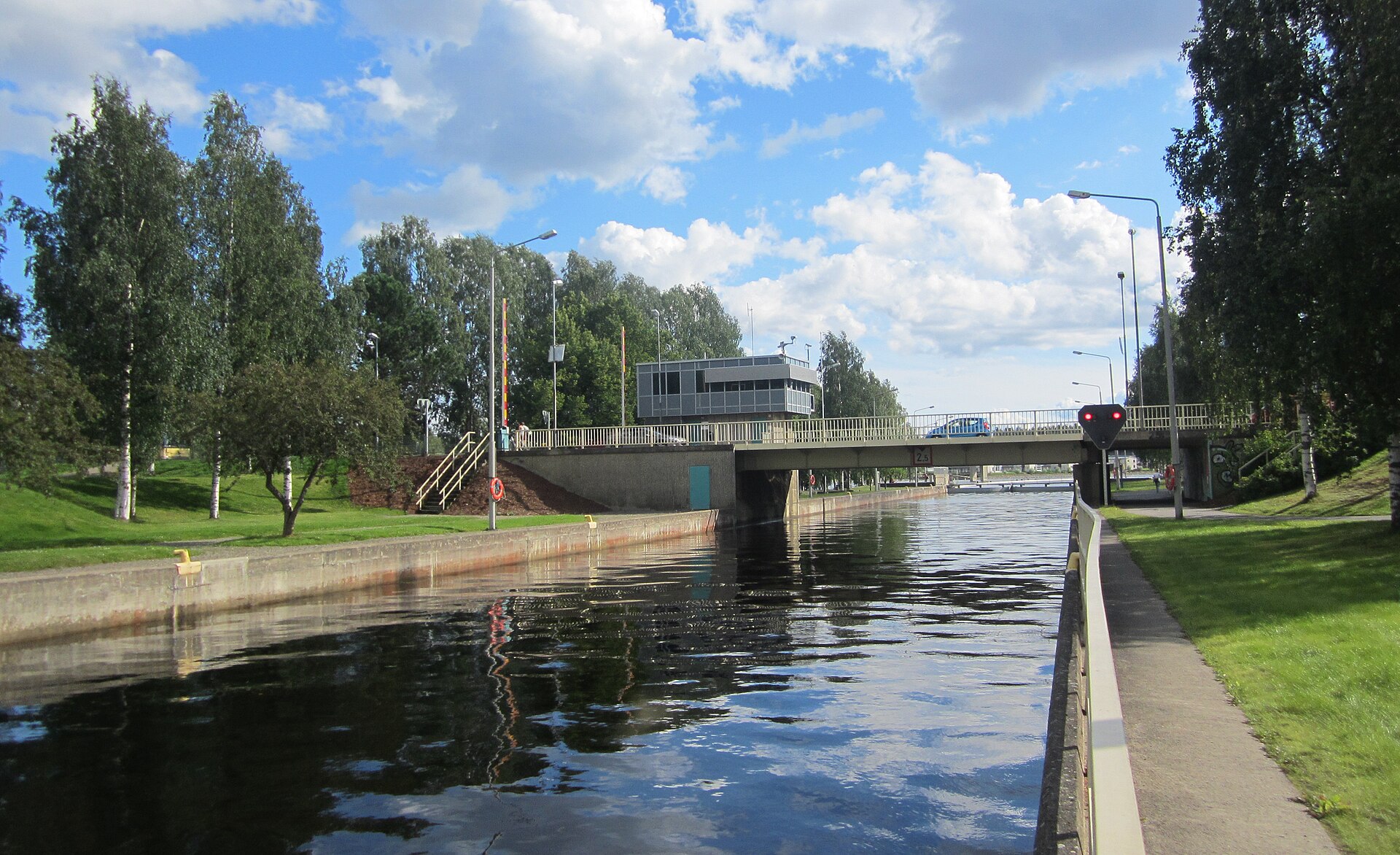
- Carelicum — City centre
Carelicum, the North Karelian museum in Joensuu, shows folk dress, everyday objects, maps and photographs of Karelian life, including villages now across the Russian border. It explains the regional identity better than any signboard, and it is a good wet-weather stop. Check the official site for opening times. - Joensuu Bunker Museum — North-west of the city centre
The Bunker Museum lies a short way north-west of the centre and belongs to the Salpa Line, the chain of defences Finland built against a possible Soviet attack in the Second World War. Concrete bunkers are shown as models, with original weapons and kit. It suits history-minded visitors with a car or time for local buses. - Botania — West Joensuu
Botania is a botanical garden on the western side of Joensuu, opened in 1957 and holding about 2,000 species. In a city with a long winter, a garden of this kind makes a calm change of scene, and it is easy to combine with a walk towards the university area.
Culture
Culture in Joensuu starts with Karelia. The province keeps a distinct regional identity, rooted in a borderland history of trade, migration and war, and many local families trace their roots to areas now in Russia. Carelicum and local folk groups keep songs, crafts and dress traditions in view, and the city's own name comes from the Karelian language. Food carries the identity too, above all the rice-filled Karelian pie.
Day to day, Joensuu feels like a university town. Students fill the cafés and lunch canteens, there is a steady programme of concerts and theatre, and the Ilosaarirock festival, held on the second weekend of July, fills the summer with music and crowds. Summer is also when people head to lakeside cottages, and the city can feel pleasantly empty on a warm weekend.
Finnish manners are quiet and direct. Silence in conversation is comfortable, small talk is brief and personal space is wide, which is friendliness in its own register rather than coldness. Saunas are part of ordinary life, at home, in apartment blocks and at lakeside cottages, and an invitation to one is a real sign of welcome. Lutheran churches are the main religious buildings, with an Orthodox presence that reflects the Karelian heritage.
When invited into a Finnish home, take your shoes off at the door, and in a sauna sit on the towel or seat cover provided.
What to wear
Traditional Karelian dress in the Joensuu region was made largely from home-woven linen and wool. Women's costume centred on a long pinafore-style dress over a white linen blouse, with aprons, headcloths and woven bands, often trimmed with red embroidery. Men wore linen shirts with wool trousers and coats. Examples can be seen at Carelicum. Today these costumes appear mainly at folk-dance events, weddings, festivals and national celebrations.
Everyday clothing in Joensuu is practical and understated: dark jeans, knitwear, sturdy boots and functional jackets. The student population adds a casual, outdoorsy look, and well-made outdoor wear is common because the weather rewards it. In festival season the city fills with rubber boots, rain ponchos and band T-shirts.
Visitors should dress for the season rather than the occasion. In winter that means thermal base layers, a warm hat, gloves, a windproof coat and boots with real grip for snow and ice. Summer is mild and the evenings are long, so light layers and a waterproof are enough, with insect repellent for walks near the water and forest. There is no strict dress code for churches or restaurants, but covering shoulders and removing a hat inside a church is polite. Comfortable walking shoes matter more than anything, since the city is best explored on foot.
What to eat
- Karelian pie (karjalanpiirakka) — The summer café near the market square, and bakeries in the city centre
A thin rye crust wrapped round a rice filling, eaten warm and topped with egg butter. It is the regional signature in Joensuu and tastes best fresh from the oven, with coffee on the side. - Vendace (muikku) — Market square stalls and casual lakeside or riverside restaurants
Small lake fish, usually fried crisp in a coating of rye or wheat flour and served with mashed potato. The season and supply vary, so ask what is fresh before ordering. - Forest berries — The market square in summer and the year-round Market Hall
Blueberries, lingonberries and, when available, cloudberries turn up fresh in summer and in jams, pies and desserts the rest of the year. Eastern Finland is good berry country, and prices follow the harvest. - Coffee and pulla — Cafés in the Market Hall and around the main square
Finns drink a great deal of coffee, and the habit comes with a sweet cardamom bun called pulla. A pause for both is the easiest way to see local daily life, particularly on a cold afternoon. - Karelian stew (karjalanpaisti) — Riverside restaurants and weekday lunch places in the city centre
A slow-cooked stew of pork and beef with onion and allspice, usually served with potatoes. It is plain, filling cooking that suits the climate, and it appears on menus that lean towards regional dishes.
Plan it
Best time. June to August for long light evenings, warm lake days and Ilosaarirock in July. February and March suit snow and winter sports, particularly around Koli. November to January is very dark and cold, as expected from a subarctic climate.
How long. 2–3
Getting there. Finnair flies from Helsinki to Joensuu Airport (JOE), about 11 km north-west of the centre, and local bus lines link the airport with town in about 10 minutes. Trains run from Helsinki via Lappeenranta in about 5 hours, arriving at the small station on Railway Square. A daily bus from Helsinki takes about 7 hours.
Budget. mid
Tips
- Book flights and trains early for July, when the festival fills the city
- Check official sites for museum and bunker opening times, as they vary by season
- Hire a car or plan bus times if you want Koli or the Bunker Museum in one day
- Cards are accepted almost everywhere, so little cash is needed
- Pack a waterproof and mosquito repellent for summer walks
Etiquette
- Take shoes off when entering a private home
- Keep voices low on public transport and queue patiently
- Sit on a towel in the sauna and follow the host's lead
Nearby
Sources
- Wikidata Q186237 (CC0)
- Wikipedia: Joensuu (rev 1385109576) (CC BY-SA 4.0)
- Wikivoyage: Joensuu (rev 5425522) (CC BY-SA 4.0)
- Joensuu 2021 Montage (Cartingcarl, Tiia Monto, Grigur, Sino Yu, J.Mäkinen, manki1, tuohirulla, Tomisti) (CC BY 3.0)
- Joensuu vaakuna 1923 (Eric O. W. Ehrstrom) (Public domain)
- Olof Eriksson Joensuun vaakuna (National Archives of Finland) (Public domain)
- Joensuun Evankelis-luterilainen kirkko (MiskaVout) (CC BY-SA 4.0)
- Joensuun Tori Drone (MiskaVout) (CC BY-SA 4.0)
- Joensuu Canal 1 (Tomisti) (CC BY-SA 4.0)
- Joensuu Areena 2 (Tiia Monto) (CC BY 3.0)
- Agora2009 (Lasitten) (Public domain)


