Jericoacoara
Jericoacoara, Brazil
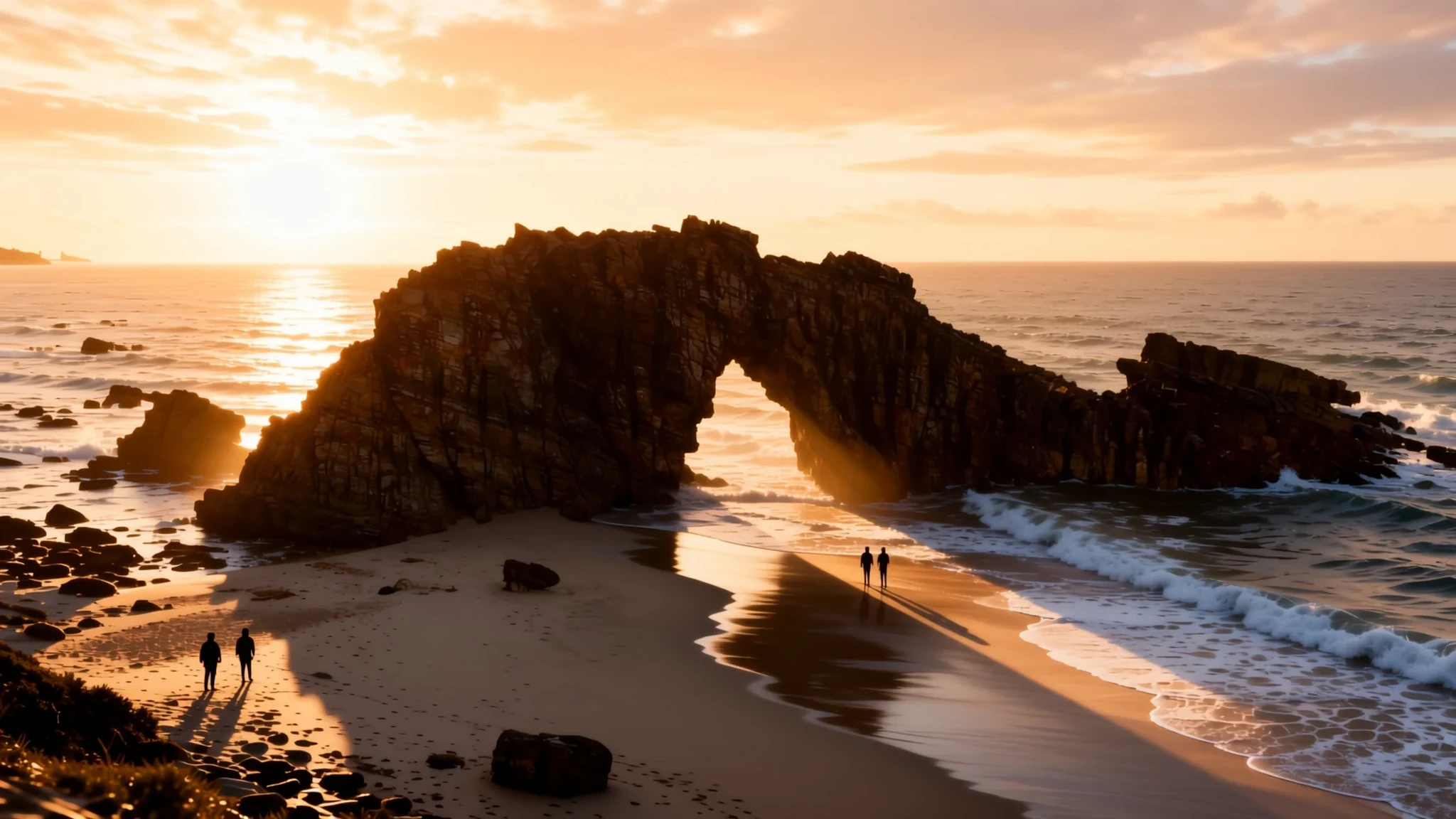
Come for a wide, pale beach, a rock arch at the edge of the village, and steady wind for kitesurfing.
The place
Jericoacoara sits at the northern tip of Ceará, on Brazil's north-east coast, where the shoreline turns to face the open Atlantic. Officially it belongs to the municipality of Jijoca de Jericoacoara, but almost everyone who comes here thinks of the village and its beach first. The village is small: a grid of sandy lanes running down to the sea, with pousadas, cafés and simple restaurants packed in between. Only four main streets are said to exist, and each one ends at the beach, which makes the place easy to learn in a day or two.
The beach is the reason most people come. It is a wide, flat stretch of fine grey sand that firms up as the tide drops, and the water is shallow enough that swimming can feel more like paddling. The wind is the other constant. It blows strongly for much of the year, which has made the bay a well-known spot for kitesurfing and windsurfing, so the shore is busy with schools, rental kit and bright canopies on most afternoons.
Beyond the village the landscape changes quickly. Sand dunes roll inland in every direction, and between them lie freshwater lagoons and small rivers that appear suddenly in the valleys. Dune buggies and jeeps will take you to them, which is a good way to spend a day if you would rather not walk through soft sand.
Life in the village runs more slowly than the beach suggests. Evenings are spent along the main street, where music drifts from the bars and drinks are sold from the beach stalls. Expect to arrive a little dusty whatever you do, because the lanes are sand and paved roads are scarce.
Its story
Jericoacoara's recorded history begins with a sea captain. In 1499 Vicente Yáñez Pinzón, master of the Niña and sailing alongside Columbus's expedition, anchored in the bay. He reported the landing, but the visit never became an official claim, because the Treaty of Tordesillas, agreed in 1494, had already divided newly found lands between Spain and Portugal.
For centuries the bay was known mainly to local fishing families and the occasional passing boat. Their working craft, the jangada, a raft-like sailing boat, remains a symbol of this stretch of coast, and jangada races are still held on the lagoons nearby. Fishing shaped the early settlement, with families living close to the sand and depending on the sea and the wind.
The modern town is much newer. Jijoca de Jericoacoara was established as a municipality in 1991, and its name on maps covers a wider area than the village that most travellers visit. Tourism grew as word spread about the dunes, the arch rock and the wind, first drawing backpackers and then kitesurf schools and small inns. The region gained its own airport in 2017, which brought visitors in faster, though the final stretch to the village is still made by road.
The written record of the bay is short, but the sand, the arch and the wind have shaped its story as much as any document. Each new wave of visitors has been drawn by the same landscape that first caught the eye of those early sailors.
What to see
- Jericoacoara Beach — The village, at the end of the main streets
The village beach is a wide, flat sweep of very fine grey sand that goes firm as the tide drops. It has a reputation for beauty, but the water is mostly too shallow for proper swimming, so it suits walking and paddling. Go at low tide for the most sand, and stay for sunset, when the light is at its best.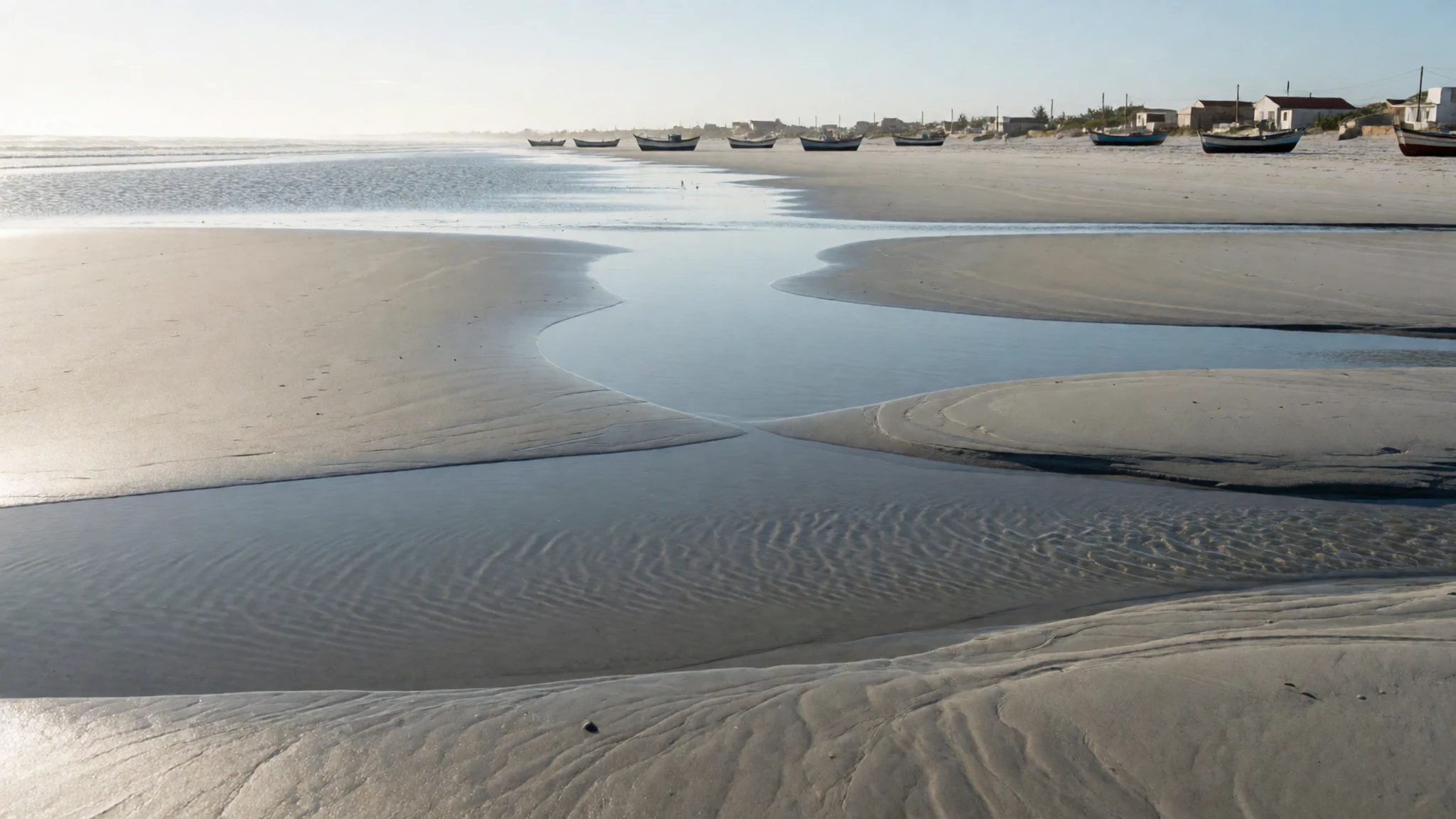
- Pedra Furada — East of the village, along the shore
The arch rock at Pedra Furada has become the symbol of Jericoacoara and gives views in every direction. Walk east from town along the shore, passing Malhada Beach, a smaller surfers' beach, and allow about two hours in total. Go at low tide, wear closed shoes for the rocky patches, and leave soon after sunset, when darkness comes quickly.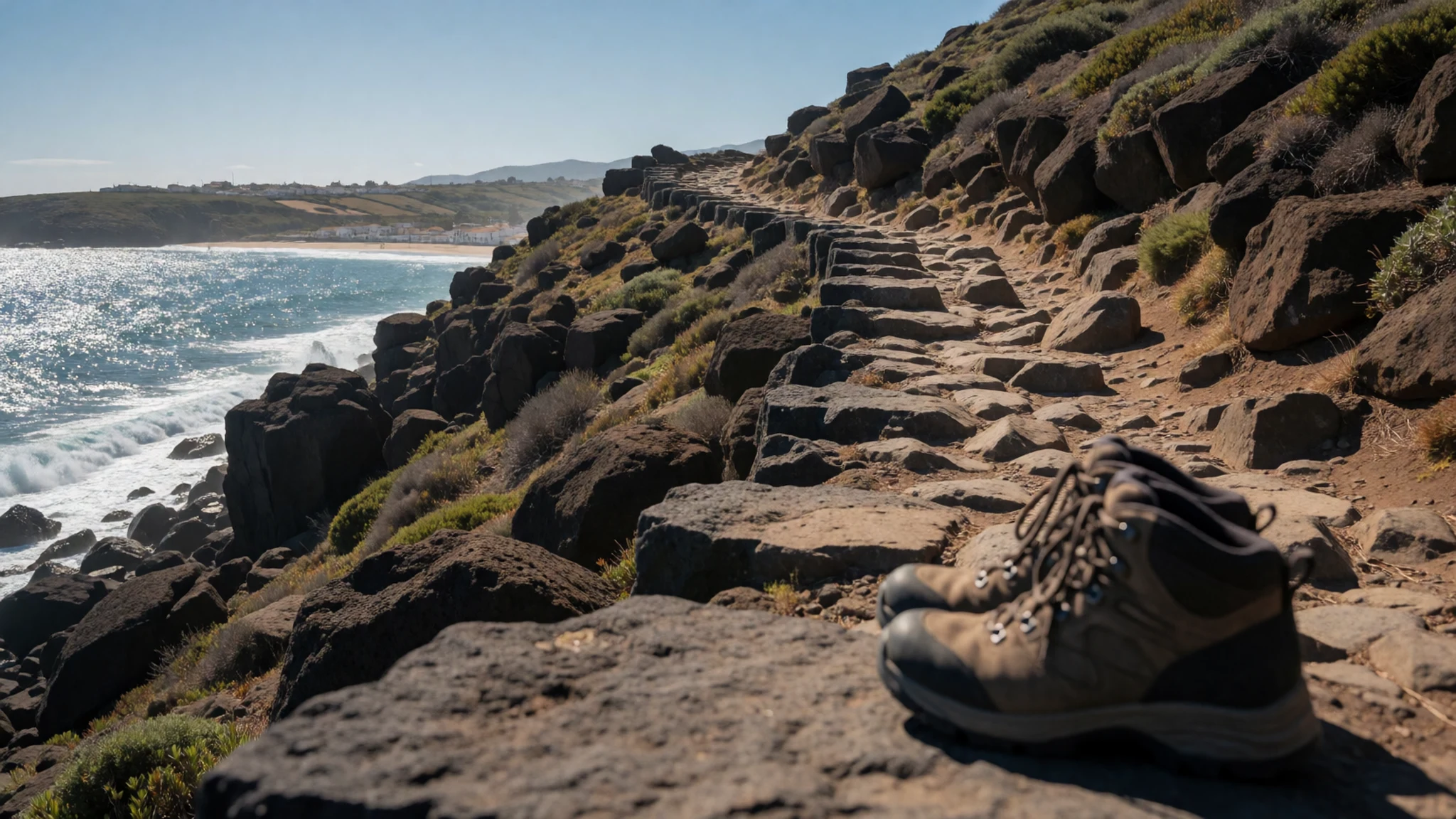
- Lagoa Azul and the dune lagoons — Inland, through the dunes
Lagoa Azul is the destination most people choose for a day trip, a freshwater lagoon set among the dunes. Dune buggies can be chartered from the village to reach it and other lagoons, and the route is sandy and bumpy. Some small villages beyond the dunes offer simple places to stay if you want to go further off the beaten track.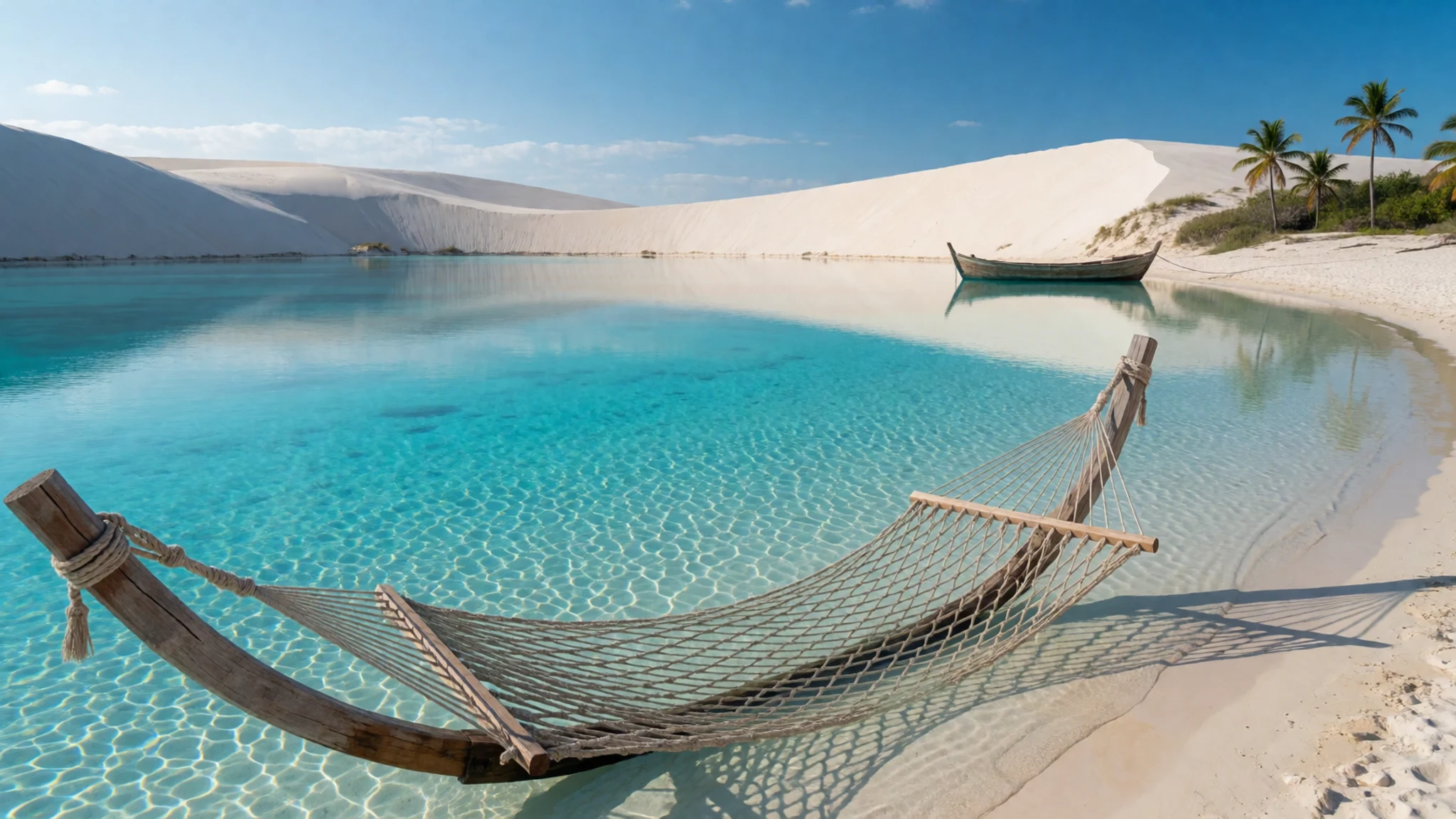
- Kitesurfing on the bay — The flat water of the bay
Kitesurfing is the reason many people return. The Jeri Kite Zone offers plenty of space and flat water, and several schools run lessons, including one whose instructors are fluent in English and Spanish. Windsurf and kite rental is available along the beach. Book lessons ahead in the busiest months and look for an IKO-certified instructor.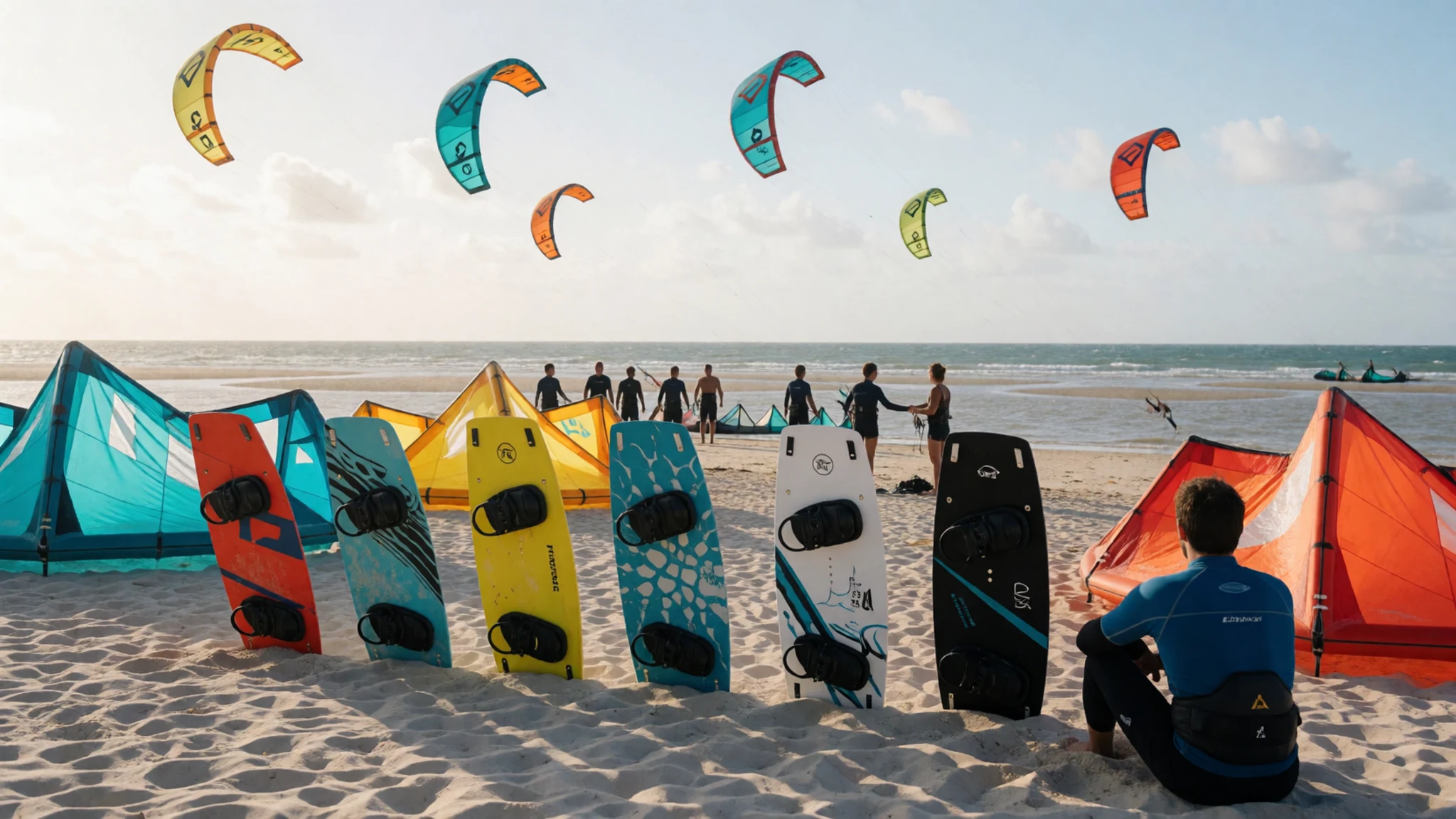
- Forró nights and dance lessons — Dance venues and bars in the village
Forró is the dance of this region, played on accordion, triangle and drums, and it is the easiest way to meet local people. Weekly forró nights are held at a dance venue in the village, usually on Wednesdays and Saturdays, though you should check locally for current nights. A local teacher, Ivonne, also offers lessons in salsa, samba and afroaxé.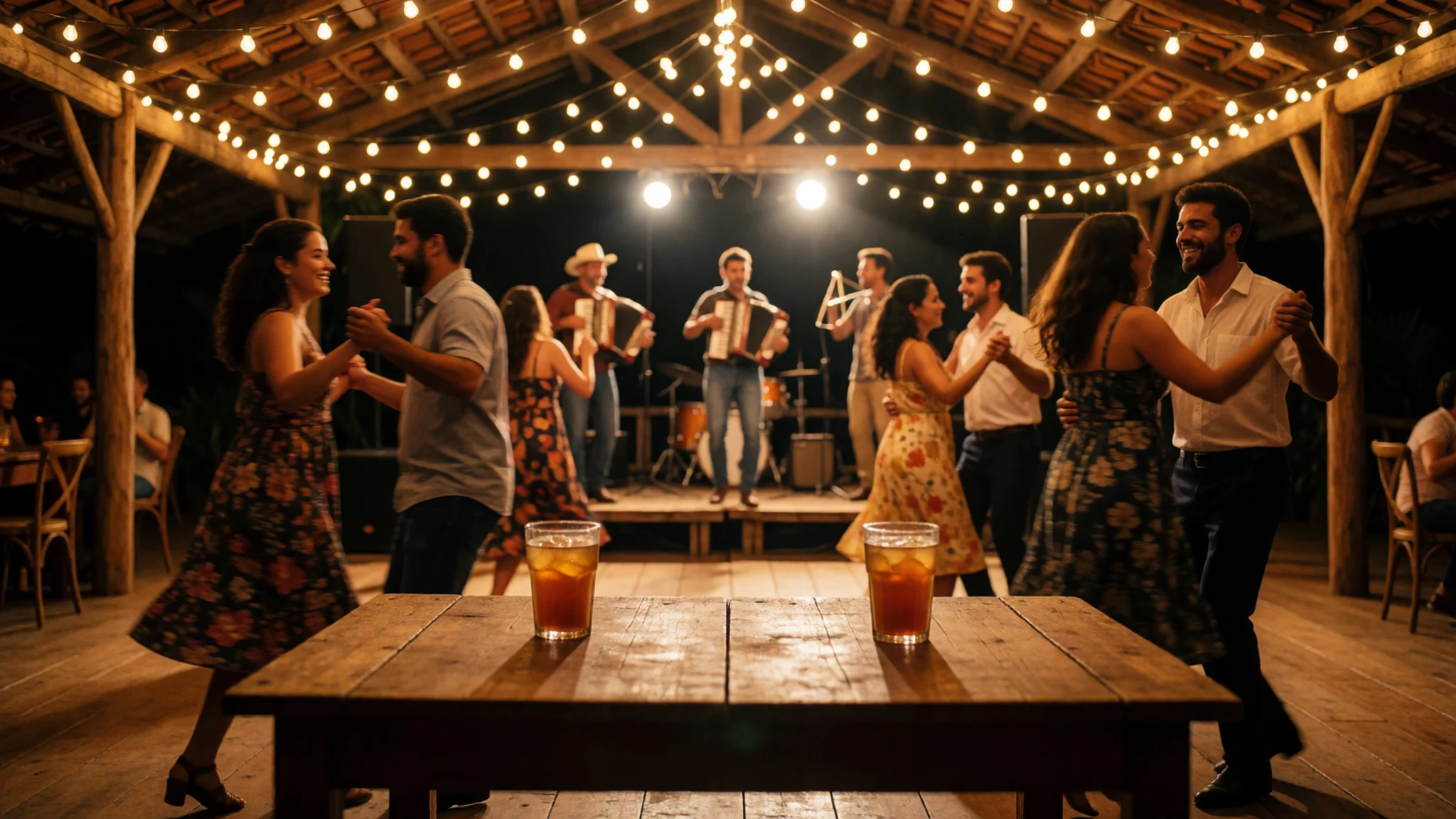
Culture
Jericoacoara's culture is rooted in north-east Brazil, where Portuguese, African and indigenous influences meet in music, food and everyday speech. Forró is the local dance, with couples moving close together to accordion music, and it is common for visitors to be invited onto the floor. Brazilian Portuguese is the everyday language, and a few words go a long way, such as bom dia for good morning and obrigado for thank you. Many people in the tourism trade speak English or Spanish, but the fishing families of the village are most at ease in Portuguese.
The beach is a working space as well as a playground. Fishermen launch and land their boats, and vendors walk the sand with coolers and trays, while the beach bars set up their tables after dark. Time is relaxed here, so a meal may take longer than you expect, and it is better to enjoy the pace than to hurry it.
Tipping is customary in restaurants. A service charge may already be added to the bill, so check before you add more. Ask before photographing fishermen, dancers or stallholders, and leave the boats and nets on the sand alone.
What to wear
Jericoacoara has no single traditional dress of its own. The nearest local textile tradition comes from the fishing families of this coast, who worked with cotton and other natural fibres for sails and nets, and from the festival clothes worn at forró dances, where the dresses have a swing to them as couples turn.
What people wear now is practical and loose. In the day that means shorts, cotton vests and sarongs, with flip-flops on the sand. Kitesurfers wear lycra and rash vests, and most people wear straw hats and sunglasses. In the evening, people dress up a little for restaurants and forró, with light dresses and linen shirts.
What a visitor should wear starts with light, breathable cotton or linen, which suits the heat and the constant wind. Bring a hat and a light layer for the breeze after sunset. Shoes matter: do not walk to Pedra Furada barefoot, and closed footwear helps on the rocky patches and the soft dunes. A sarong or shirt is good for walking from the beach into the village, because swimwear is fine on the sand but less welcome in a restaurant. For the lagoons, take a swimsuit, quick-dry clothes and strong sun protection.
What to eat
- Fresh seafood, grilled or raw — Seafood restaurants on the four main streets
Seafood is the backbone of the menu, and the restaurants on the main streets serve local fish alongside dishes such as sashimi and ceviche. Wood-fired grills are common, and a plate of grilled fish of the day makes a good first meal in town. Ask what came in that morning.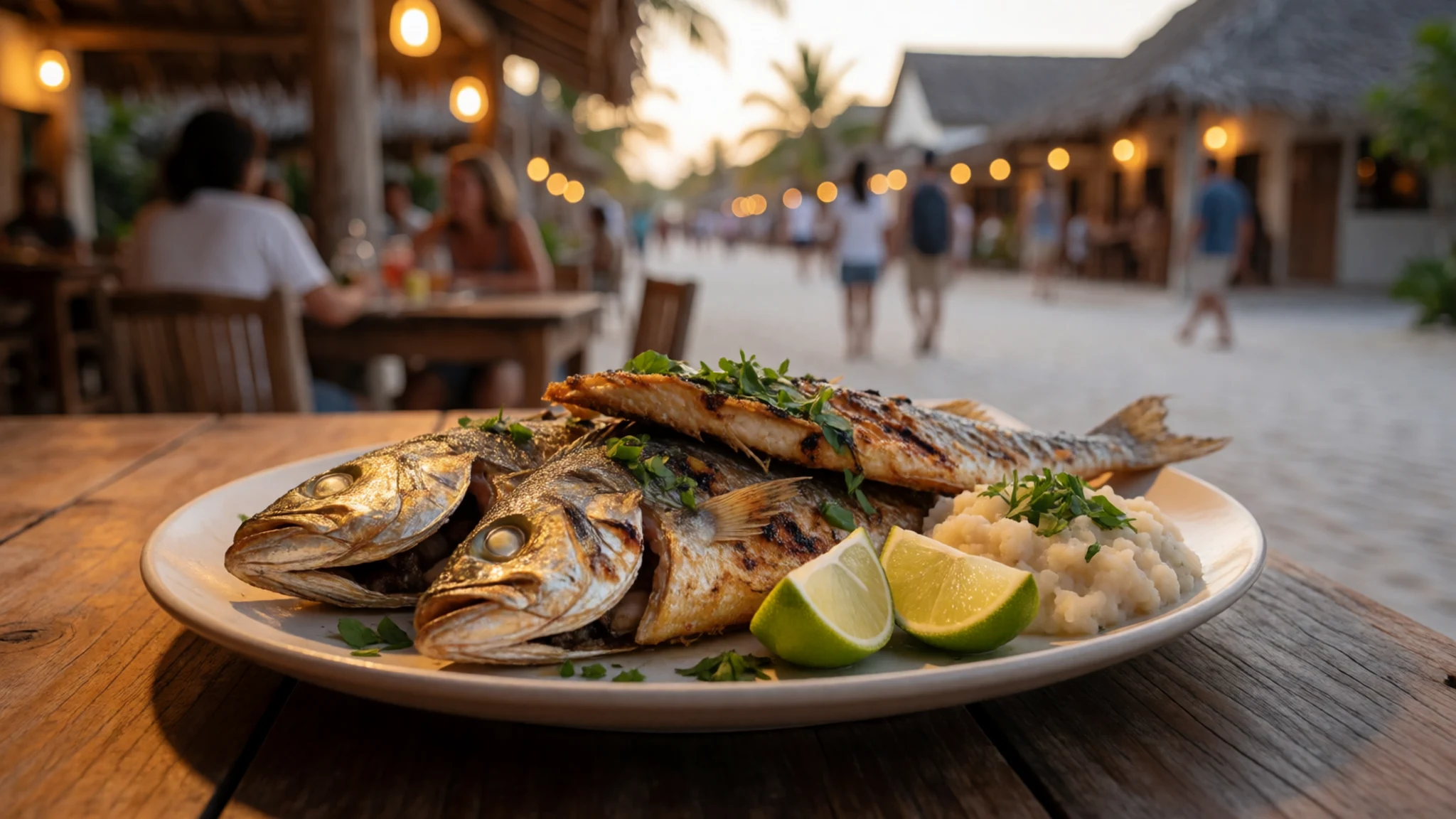
- Wood-fired pizza — Wood-oven pizzerias in the village centre
Pizza is cooked in wood-fired ovens throughout the village, with pasta, meat and salads on the same menus. It is a reliable choice for a relaxed dinner, particularly after a long day on the sand or the dunes.
- Tapioca — Cafés and the morning stalls near the beach
Tapioca is a thin, soft pancake made from cassava starch and filled while it is still warm. Fillings range from cheese and tomato to sweet options, and it is sold as a quick snack or breakfast. It is one of the most typical foods of the north-east. - Lobster crêpes at sunset — Crêpe restaurants facing the western sky
Crêpe places with a view of the sunset serve savoury fillings, including lobster, alongside sweet options. The atmosphere is relaxed, and a crêpe eaten while the sun drops is a common way to end the day. Check the menu for current prices. - Açaí in a bowl — Homemade ice-cream and açaí shops
Açaí is a thick, cold purée made from palm berries, served in a bowl with granola and sliced banana. It is a favourite afternoon treat, and the ice-cream shops make it fresh through the day. It is cool, filling and a good choice in the heat. - Caipirinha and caipiroska — The beach barracas along the shore
The caipirinha is the standard drink, made with cachaça, lime and sugar. A caipiroska uses vodka instead, and fruit versions such as passion fruit are popular. Drinks are sold from the barracas lined up along the beach, which is where most people gather in the evening.
Plan it
Best time. July to December is the most reliable window, with dry days and steady wind for kitesurfing. The rainy months of roughly January to May fill the lagoons but bring showers and can make the sand harder going.
How long. two to three days
Getting there. Most visitors fly into Fortaleza, then change vehicles in Jijoca, the nearest town with paved roads. The final stretch to the village is made by 4x4 or shared minivan over sand and dune tracks. A small airport opened in 2017 serves the area directly.
Budget. mid
Tips
- Book your transfer ahead in peak season, because seats can run short
- Walk to Pedra Furada at low tide and leave soon after sunset
- Take some cash, since small stalls and barracas may not accept cards
- Drink bottled water, and if your stomach is sensitive, buy drinks at bars and restaurants
- Look for an IKO-certified instructor before booking kitesurf lessons
- Check the official municipal website for current transport and park information
Etiquette
- Ask before photographing people, especially fishermen and dancers
- Stay on the marked paths through the dunes and leave the vegetation alone
- Take your rubbish with you from the beach and the lagoons
Nearby
Sources
- Wikidata Q1367980 (CC0)
- Wikipedia, Jijoca de Jericoacoara (rev 1377395061) (CC BY-SA 4.0)
- Wikivoyage, Jijoca de Jericoacoara (rev 5405835) (CC BY-SA 4.0)
- Photo 01, Anderps (CC BY 3.0)
- Photo 02, Helio Bastos Salmon (CC BY-SA 4.0)
- Photo 03, Claudio Oliveira Lima (regata de jangadas) (CC BY 3.0)
- Photo 04, Casal Partiu (CC BY-SA 2.0)
- Photo 05, Claudio Oliveira Lima (4x4 transfer) (CC BY 3.0)
- Photo 06, Claudio Oliveira Lima (Rua aberta por Tião) (CC BY 3.0)
- Photo 07, Janjusto (kitesurf) (CC BY-SA 4.0)
- Photo 08, Claudio Oliveira Lima (Mesquita da Fátima) (CC BY 3.0)


