Jeongbang Waterfall
Jeongbang Waterfall, South Korea
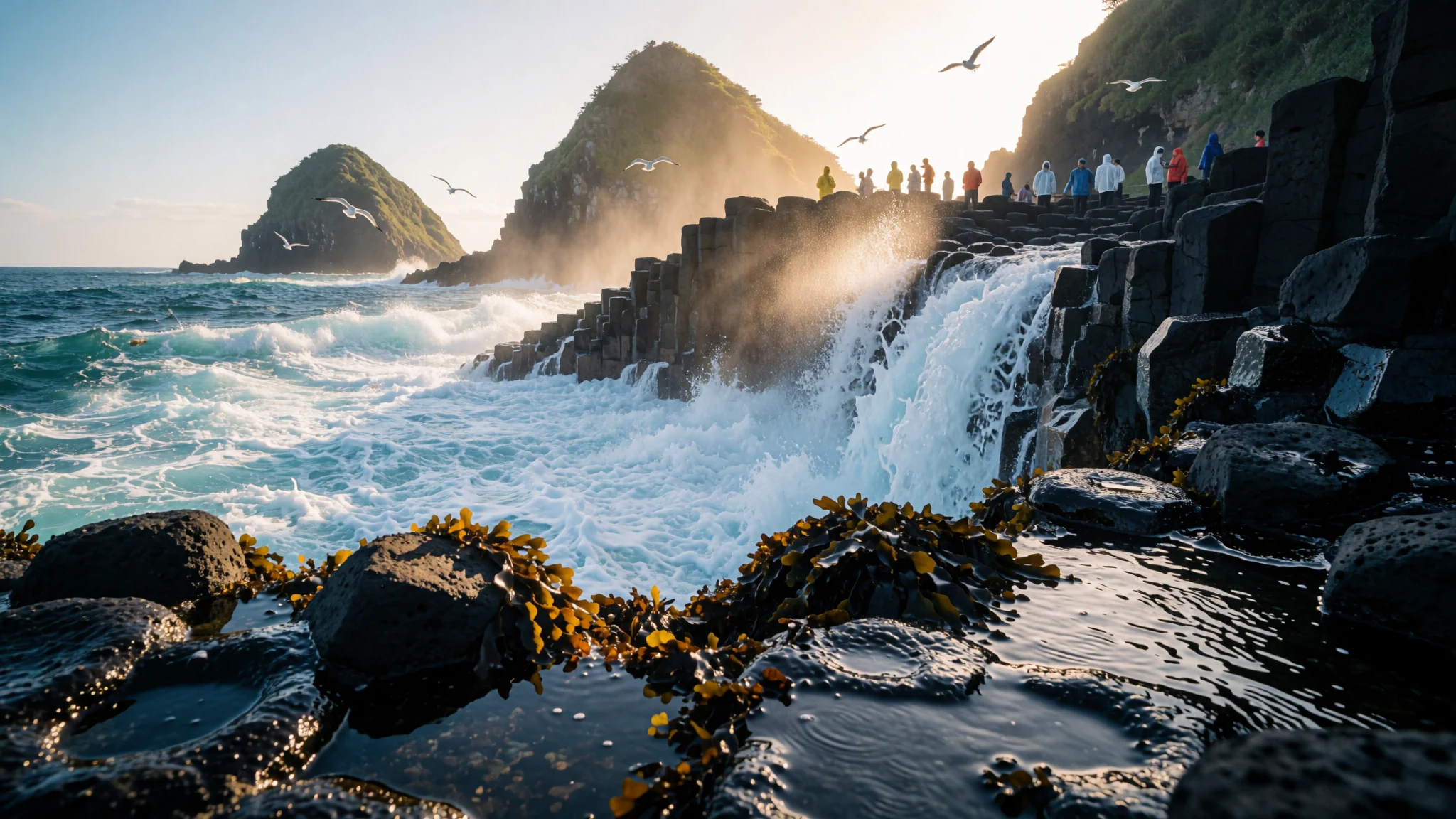
Jeongbang Waterfall drops from a basalt lip straight into the sea on Jeju's south coast, and it is worth the short detour from Seogwipo.
The place
Jeongbang Waterfall sits on the southern coast of Jeju Island, in Seogwipo, where its water falls about 23 m (75 ft) before meeting the ocean. The fall is unusually close to the sea, and that closeness shapes the whole visit. The stream that feeds it is called Donghong-cheon, and its flow depends heavily on recent rain. After a wet spell the fall can spread to around 8 m (26 ft) wide, while in a dry season it thins to a narrow curtain.
The waterfall is counted among Yeongjusipgeong, the ten great scenic wonders of Jeju, and it is one of three famous falls on the island, alongside Cheonjiyeon and Cheonjeyeon. A smaller fall, Sojeongbang, stands about 300 m to the east. Offshore, the islets of Seopeom and Beomseom frame the view, which is one of the more striking sights on the southern coast.
The area around the falls is busy in summer, when day-trippers and tour groups arrive by bus from Jeju City. Early mornings are calmer and make the rocks by the sea easier to reach before the crowds build. The spray is strong on windy days, so the sea-facing spots can be wet even when the sky looks clear. Seogwipo itself is a relaxed town, and most people combine the falls with a walk through the market or a drive along the coast.
Its story
Jeongbang Waterfall carries more legend than most falls of its size, and the oldest of its stories concerns a search for the herb of eternal youth. According to the tale, the first emperor of China sent a servant named Seobul to fetch the herb from Hallasan, the great mountain at the centre of Jeju. He never found it. On the way back he reached the falls and carved a message into the cliff wall, and that carving has since vanished. An inscription reading Seobulgwacha is still said to recall his journey.
Another story holds that a sacred dragon lived beneath the falls. Its spirit was believed to remain in the water and to hold the power to cure illness and bring rain when the island was parched. Nearby, a small fall was said to look like a servant waiting upon a lord, which gave the valley an almost courtly character in local imagination.
The falls also carry a far darker memory. During the 1948 Jeju uprising, civilians swept up in the unrest were killed close to the falls, and their bodies were thrown over the drop. The site is now remembered in that sombre light as well as for its myths. Visitors who know this history tend to speak more quietly at the base of the cliff, and the legends and the memory sit side by side in the same place.
What to see
- Jeongbang Waterfall — Seogwipo, on the coast road
The fall is the reason to come. Water drops roughly 23 m (75 ft) from a basalt lip straight into the sea, fed by the Donghong-cheon stream. The flow changes with the weather, so it looks thin in a dry spell and far fuller after a storm. The rocks nearest the water give the best view, but the spray and the waves both demand respect.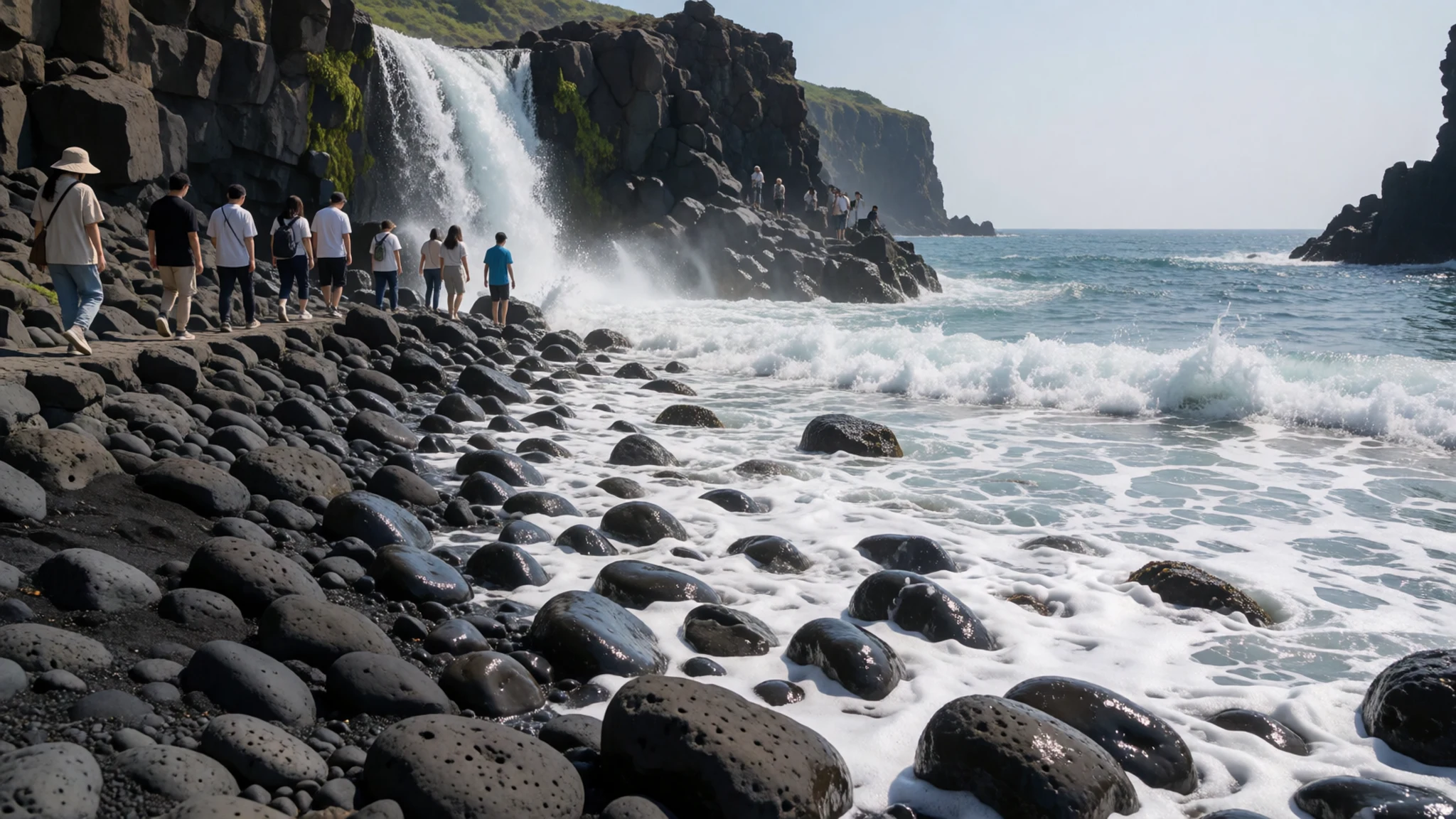
- Jungmun Daepo Jusangjeolli Cliff — Jungmun, west of Seogwipo
Hexagonal columns of basalt rise at the edge of the sea, formed as lava cooled and contracted into neat rows. The rock is designated a protected natural monument, so the columns are sheltered from damage. The pattern looks almost like a tiled floor, and the low light of early morning shows the shapes best.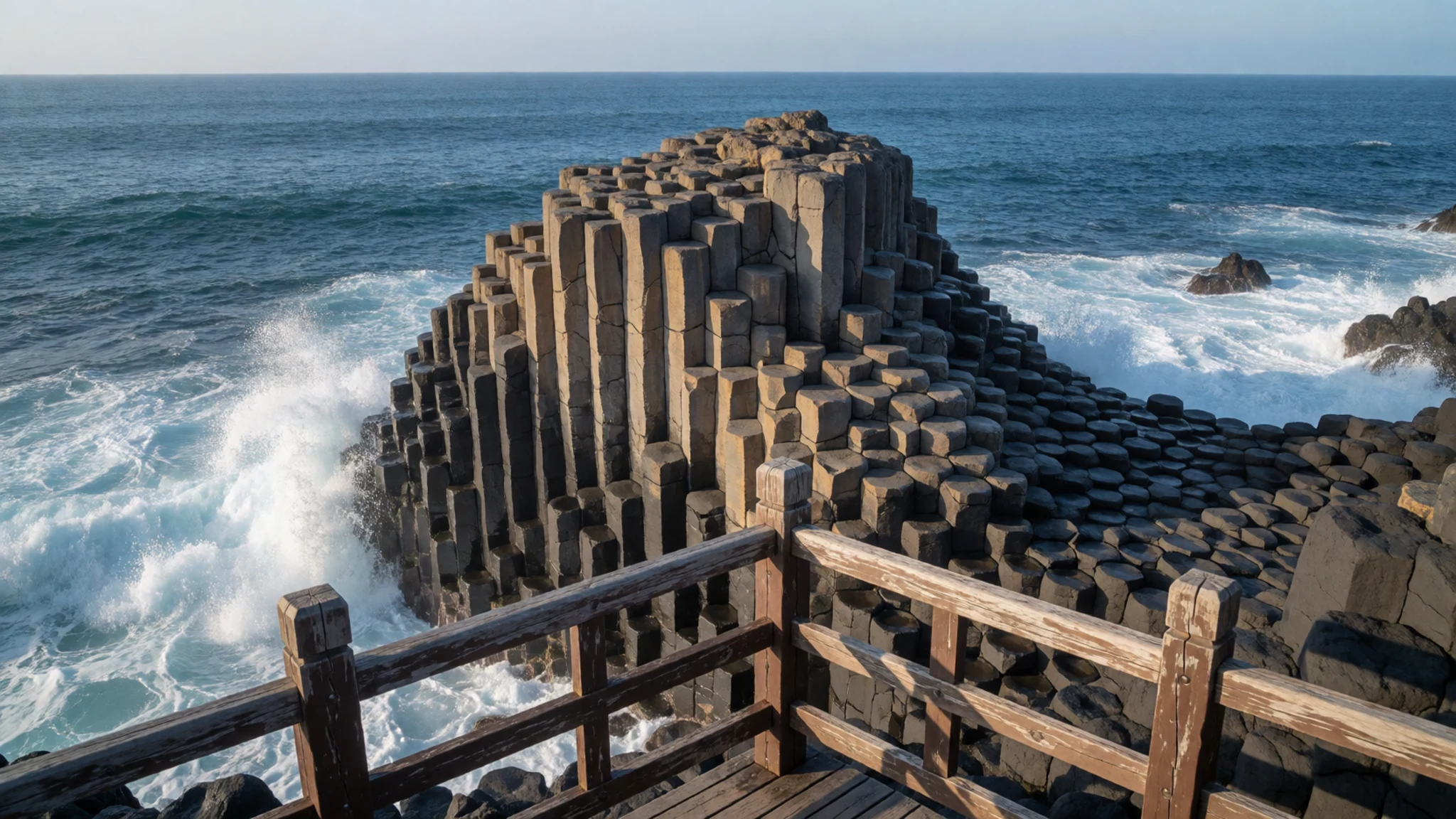
- Gaetkak Jusangjeolli Cliff — Gaetkak, on the south coast
The access road is narrow, and the final stretch is an unpaved path over rough stones by the sea. Walking slowly over the bumpy rock brings the sound and smell of the ocean close. This site suits people who enjoy rugged walking more than polished viewpoints, and sensible shoes are essential.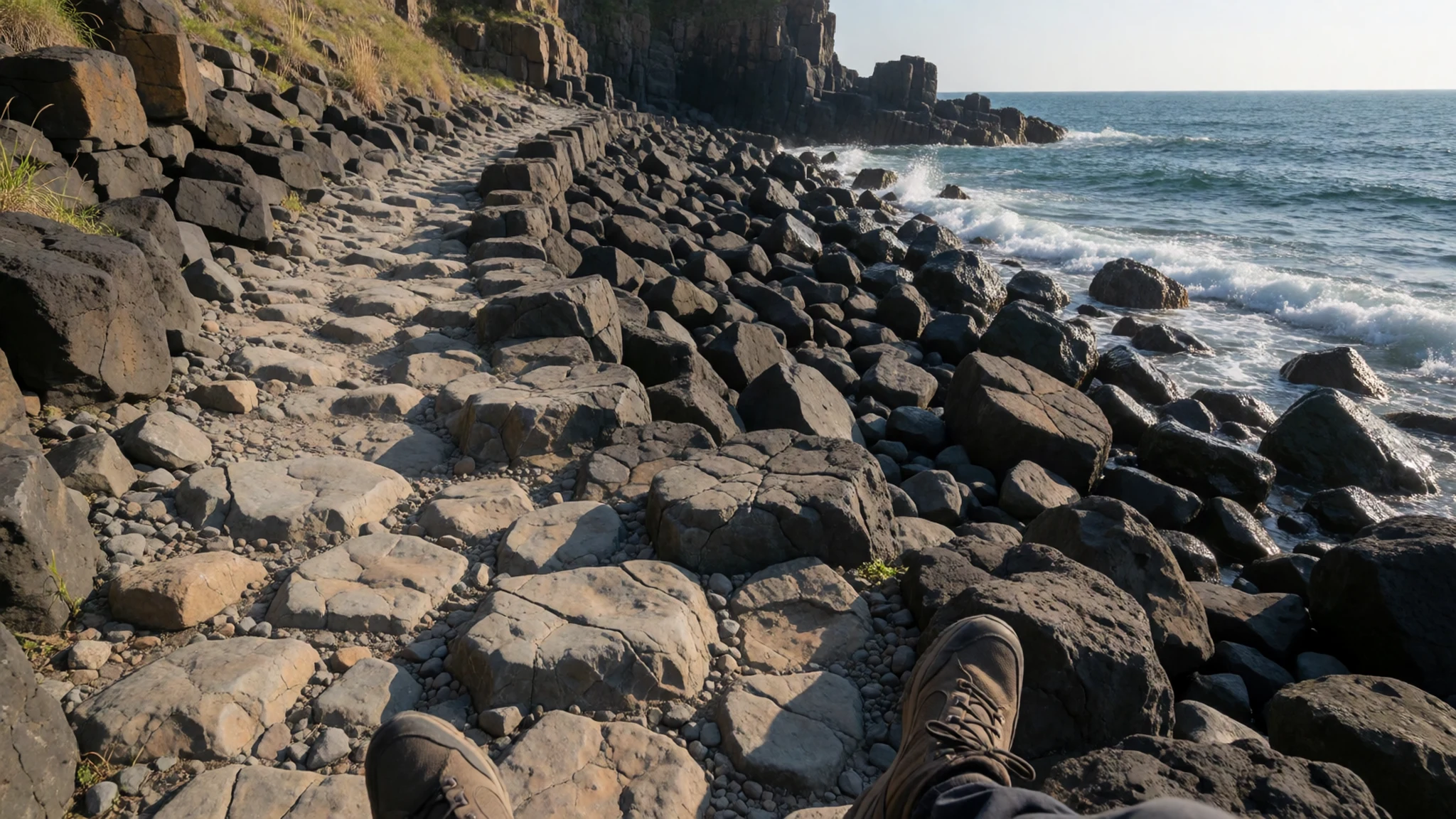
- Andeok Valley — Andeok, inland from Seogwipo
Strange rock cliffs curve around the valley like a folding screen, and clear water moves slowly over flat bedrock. The setting is calm and open, which makes it a good place to spend an unhurried hour away from the coast. It offers a contrast to the sea-edge falls, with quieter paths and more shade.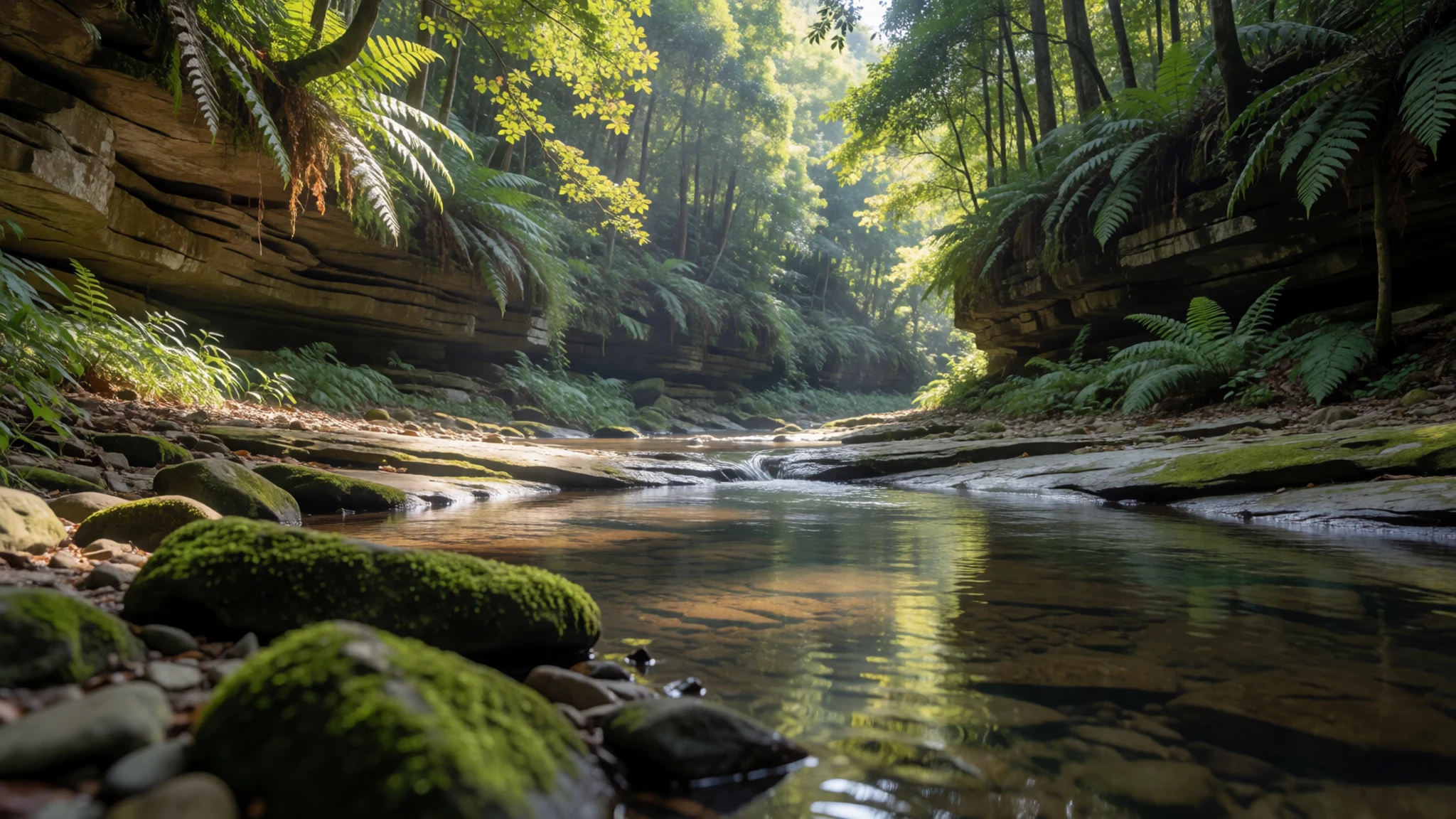
- Seongeup Folklore Village — Seongeup, mid-island
Despite the name, this is a working traditional Jeju village, and some people still live there. Stone walls and older houses line the lanes, giving a sense of how island life was organised. Because it is a place where people live, visitors should walk quietly and avoid entering private courtyards.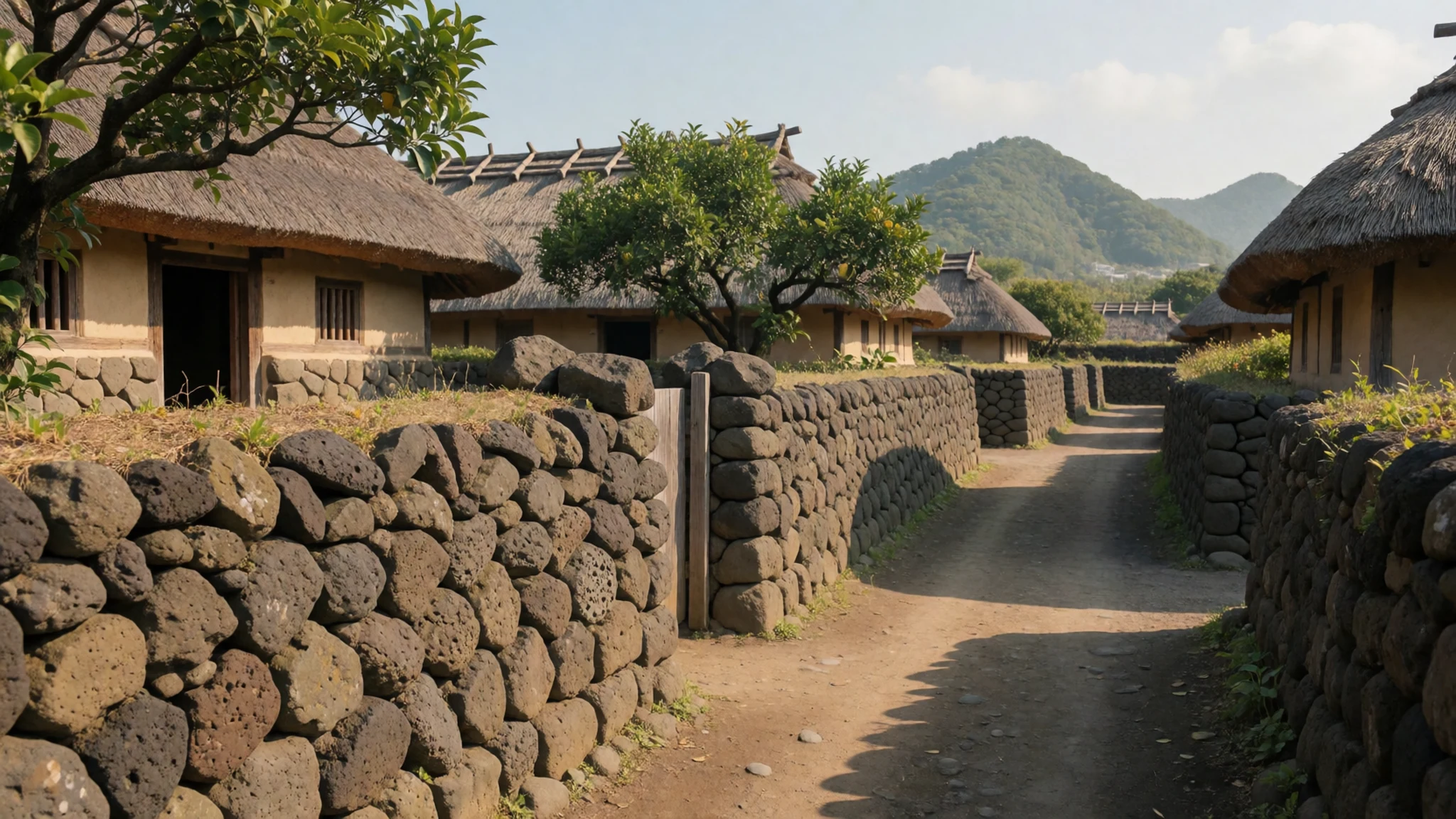
Culture
Jeongbang Waterfall is a place of local belief as well as recent grief, and the best way to visit is to keep both in mind. The dragon legend is still told by people on the island, and the spirit of the falls is treated with a degree of respect. The killings of 1948 are part of the local memory, so the cliff edge and the base of the falls call for a quieter manner than the seaside beaches nearby. Families may come to remember relatives, and small gatherings are not unusual. Photographs of the falls are welcome, but avoid posing in a way that treats the memorial site as a backdrop, and ask before photographing local people at the market or in the village lanes. Shoes are usually worn on the paths, but many people leave food and drink in the car when they walk down to the rocks. Stay behind railings near the cliff edge, and take all litter away with you.
What to wear
Jeongbang Waterfall lies on Jeju, an island whose traditional dress grew out of farming, fishing and the sea. Like the rest of Korea, the island's festive clothing centred on the hanbok, with silk worn for ceremonies and special occasions. Everyday clothing was made from simpler fabrics such as hemp and ramie, often woven at home and sometimes dyed with persimmon juice, which gave a stiff, brown cloth suited to heavy work. Older women on the island were known for practical, durable garments that could handle wet fields and the sea.
Today most people in Seogwipo dress much as city dwellers do across Korea, in jeans, trainers, layered jackets and comfortable walking clothes. Hanbok appears mainly at festivals, weddings and in photographs at heritage villages. Traditional dress is not expected from visitors.
For a visit to the falls, wear light layers that dry quickly, because the spray can soak you on windy days. Choose shoes with real grip, since basalt and wet stone are slippery underfoot. A sun hat and water bottle help in summer. Modest clothing is the norm when visiting village houses or any active memorial site.
What to eat
- Jeju black pork — any grill restaurant in Seogwipo's centre, cooked on a table-top grill
Jeju black pork is known for its chewy texture and rich flavour. It is usually grilled at the table in thick slices and eaten with lettuce wraps, garlic and a dipping sauce. Restaurants in the town centre specialise in it, and the meal is a good way to start an evening in Seogwipo.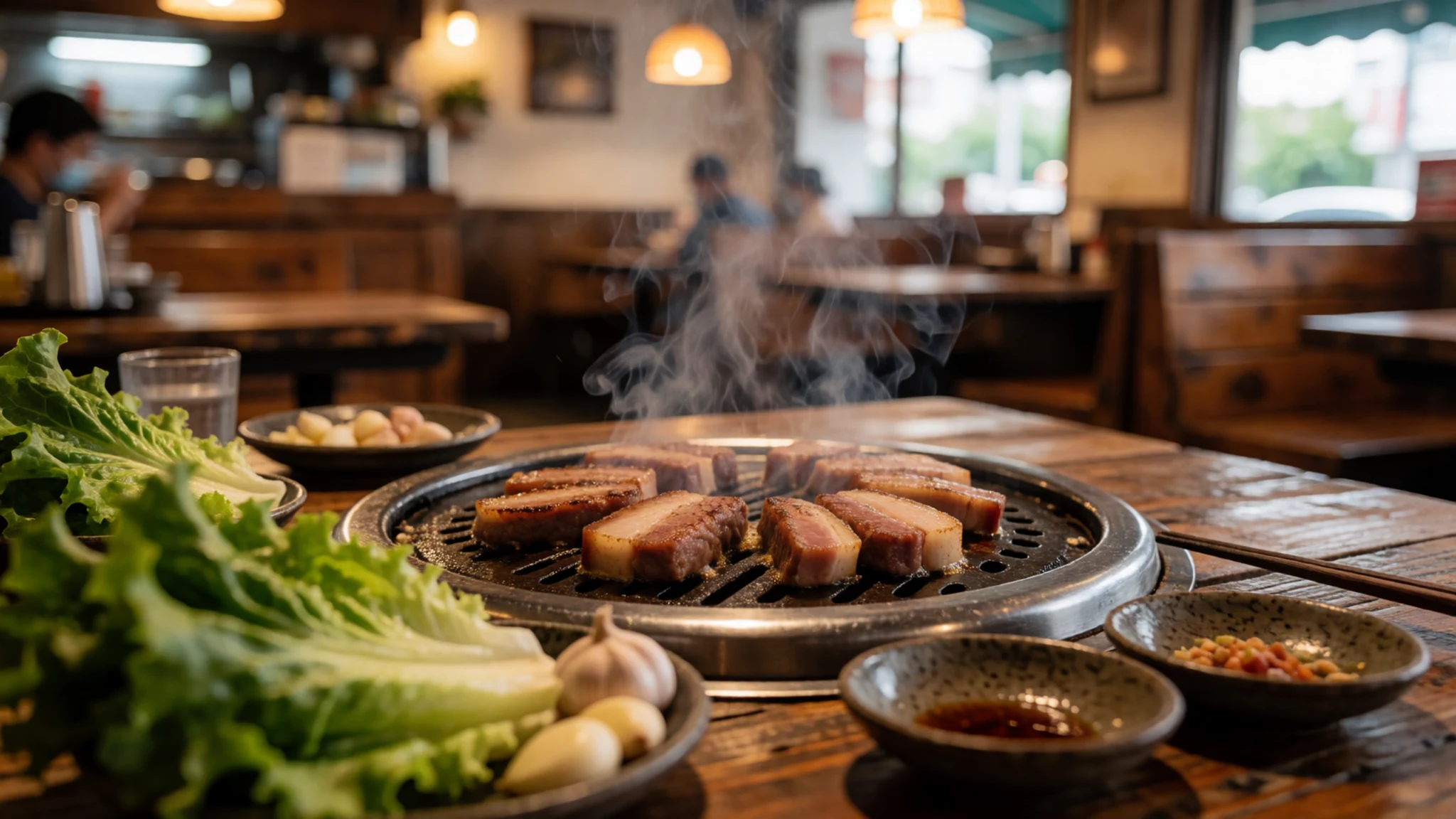
- Hoe (raw fish) — a seafront or harbour-side eatery in Seogwipo
Hoe, the Korean term for sashimi, is excellent on an island with such clean coastal waters. Fish is sliced fresh and often served with side dishes that vary by season. Seafront eateries and small harbour spots are the natural places to order a platter, and it suits a late lunch after the falls.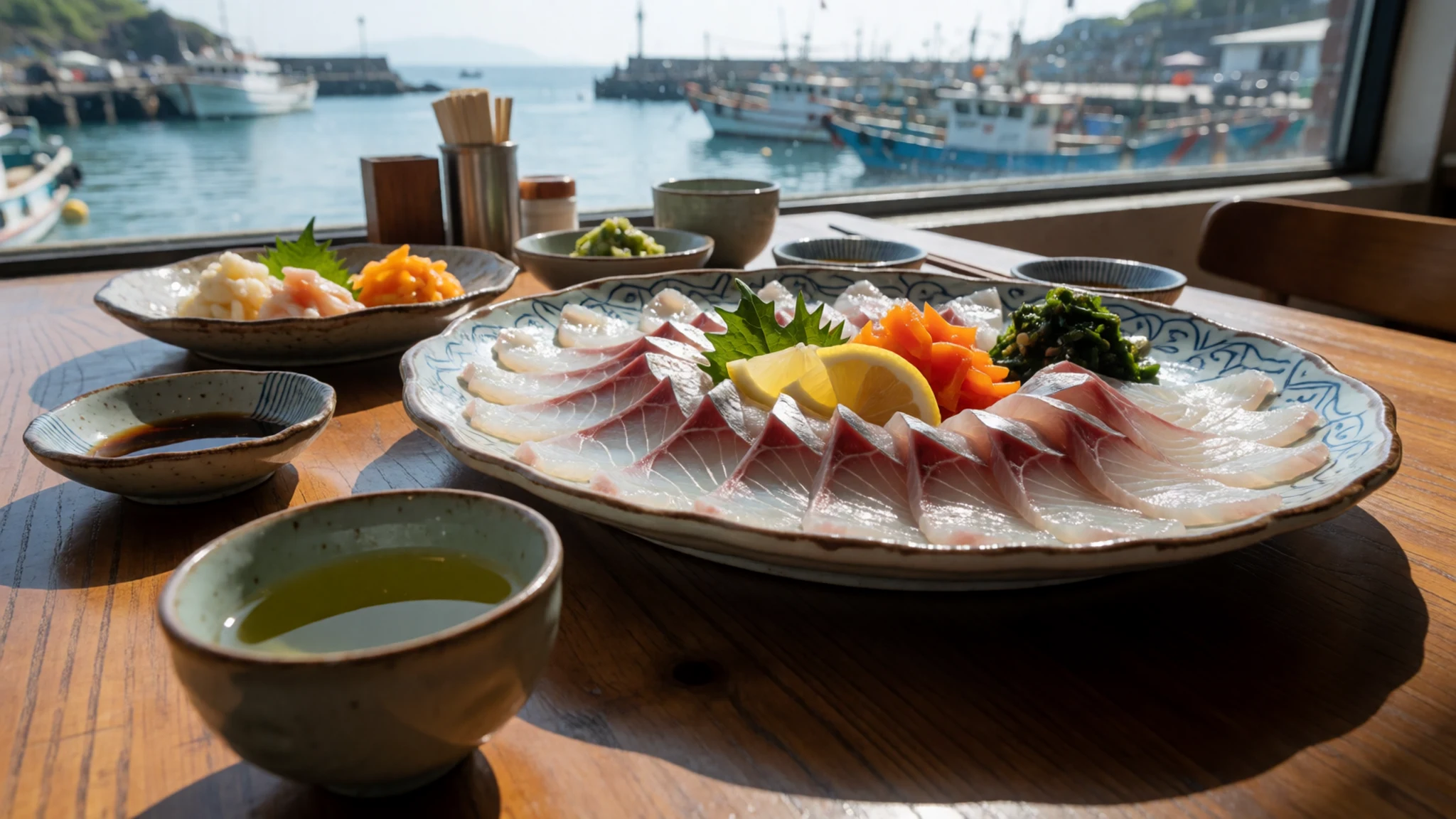
- Bomal kalguksu — a neighbourhood noodle house, the kind that serves local shellfish
Bomal, a type of top shell harvested from Jeju's waters, is used in a clear, savoury noodle soup. The broth is light and clean, and the shellfish gives it a mild sea flavour. Neighbourhood noodle houses are the best places to find it, and they often serve it at lunch. - Gogi-guksu (pork noodles) — a noodle house in the Sanbang area, a type of local eatery
Gogi-guksu is a traditional Jeju dish of thick noodles in a rich pork broth. It is hearty and warming, which suits cooler months or a rainy day. Look for small noodle houses in the Sanbang area, where the dish is served as a daily staple rather than a tourist special. - Market street food — Seogwipo Olle Market, the traditional market
Seogwipo Olle Market is the place for street food, from grilled black pork skewers to fresh seasonal produce. Hallabong, a local citrus, appears in juices and sweets. Eating from the stalls is an easy way to try several small dishes in one visit, and it is a lively contrast to the quiet of the falls.
Plan it
Best time. April and May, and September and October, suit a visit best, with milder air and healthy water after spring and autumn rain. Summer brings the largest crowds and heat, and the falls look most dramatic after heavy rain. In dry spells the flow is thinner, so check the weather before you set out.
How long. 1–2
Getting there. Fly into Jeju International Airport, then take the airport limousine bus to Seogwipo, a journey of around an hour and a quarter. From Jeju City, take bus 100 to the bus terminal, where buses leave for Seogwipo about every 10 minutes and take roughly an hour. The last leg to the falls is a short taxi or bus ride from the town centre.
Budget. low
Tips
- Go after recent rain for the fullest flow
- Arrive early in the morning to avoid tour groups
- Wear shoes with real grip for wet stone and basalt
- Carry some cash for market stalls and small eateries
- Pair the falls with the Olle Market in the afternoon
Etiquette
- Keep to the paths and stay behind railings near the cliff edge
- Speak quietly at the base of the falls, given the site's history
- Take all litter away with you
Nearby
Sources
- Wikidata Q625993 (CC0)
- Wikipedia: Jeongbang Waterfall (rev 1377449451) (CC BY-SA 4.0)
- Wikivoyage: Seogwipo (rev 5391545) (CC BY-SA 4.0)
- Photo 01-jeongbang-falls.jpg (CC BY 3.0)
- Photo 02-jejudo-waterfall.jpg (CC BY 3.0)
- Photo 03-jeongbang-1-jeju-island.jpg (CC BY 2.5)
- Photo 04-jeongbang-from-a-distance.jpg (CC BY-SA 4.0)
- Photo 05-jeongbang-loin-de-la-mer.jpg (CC BY 4.0)
- Photo 06-jeongbang-waterfall-01.jpg (Public domain)
- Photo 07-jeongbang-waterfall-coast.png (CC BY-SA 4.0)
- Photo 08-jeongbang-waterfall-distance-view.png (CC BY-SA 4.0)


