Jaisalmer
Jaisalmer, India
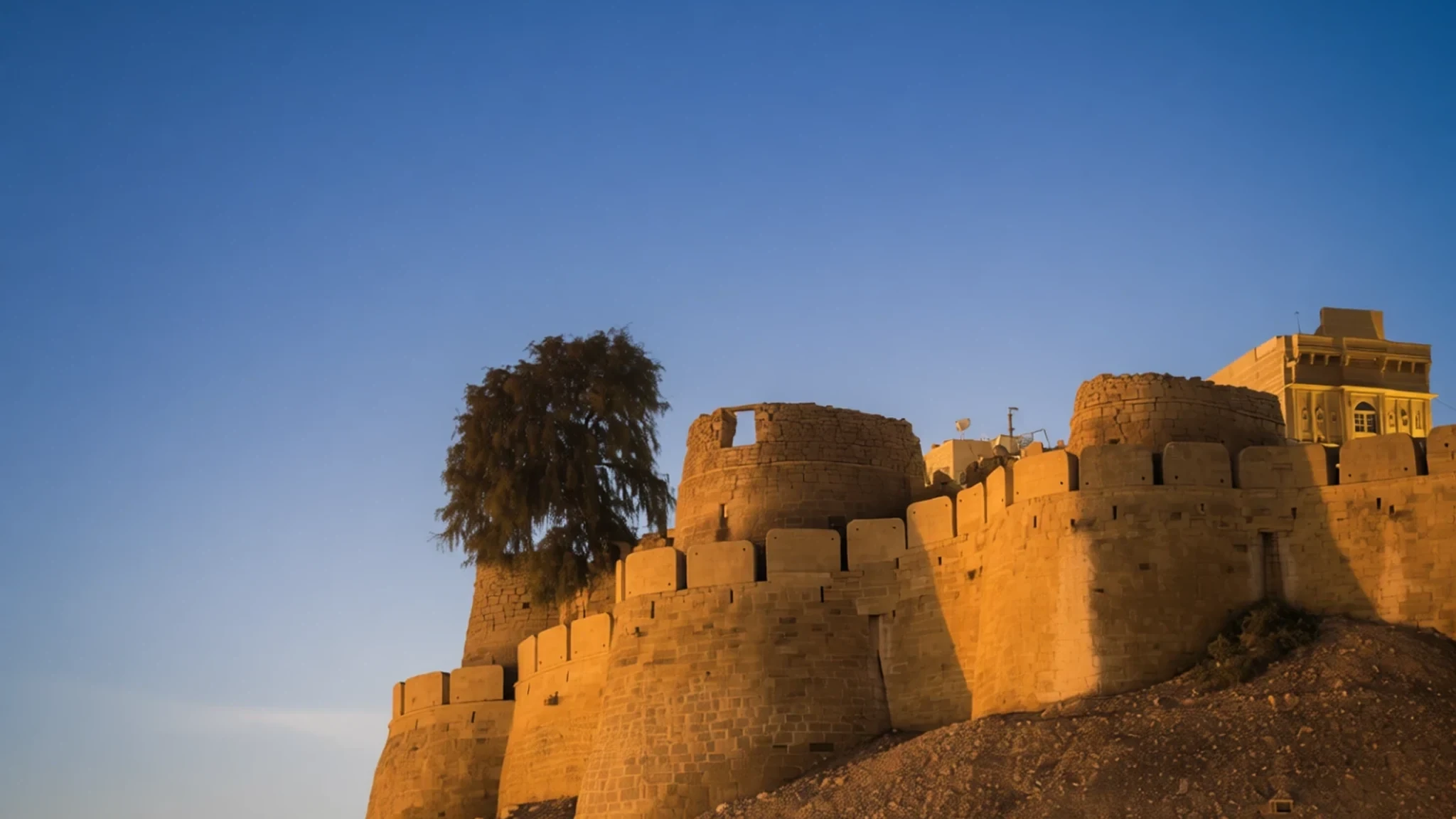
A sandstone citadel rising out of the Thar Desert, best seen in the cool months and at sunset.
The place
Jaisalmer is a desert city in the north-west of Rajasthan, and it earns its nickname, the Golden City, as soon as the light changes. Many of the houses and temples are built from a pale yellow sandstone, so the streets seem to glow in the afternoon and deepen to amber as evening comes on. The heart of the place is the fort, which sits on a low ridge above the town and is still lived in. A good share of the old town's residents live inside its walls, moving between palaces, temples and small shops. Below the fort the newer town spreads out with guesthouses, cafés and Gadisar Lake on its edge. The city sits about 225 metres above sea level, but it is still a desert, with dry air, blowing dust and temperatures that swing sharply between day and night. Plan on the cooler months from November to February, when the days are pleasant and the evenings are cold enough for a jumper. Summer afternoons are fierce, reaching around 40 °C. Treat Jaisalmer as a base for the fort, the havelis and the dunes beyond town rather than a single-sight stop.
Its story
The story of Jaisalmer begins with the Bhati clan, Rajput rulers whose early domain once stretched across a vast area of what is now Afghanistan, Pakistan and northern India. Continuous invasions from Central Asia eroded that empire over time, and the Bhati rulers were pushed south, into the Cholistan desert and finally into the Thar. Rawal Jaisal founded the new capital here in 1156 on a ridge of sandstone, and the state took its name from it. The kingdom's wealth came from caravans. Merchants crossing the desert paid levies to the state, which controlled the routes through its territory. Those land routes lost their value once Bombay grew into a major port and sea trade took over, and the town's income shrank with them. In 1818 Jaisalmer became a British protectorate within the Rajputana Agency. The fort, the carved houses and the Jain temples inside its walls are what remain of that trading prosperity, built when caravans still moved through the sand. Much of the old wealth now survives in stone rather than in the treasury, which is why the town's architecture rewards slow walking.
What to see
- Jaisalmer Fort
Jaisalmer Fort crowns the ridge above the old town, and its sandstone walls look pale yellow in daylight, then darken to gold as the sun drops. Built in 1156 by the Bhati Rajput ruler Jaisal, it is still partly inhabited, and its lanes hold a royal palace, several Jain temples and the Laxminath temple. Go in the late afternoon for the best light.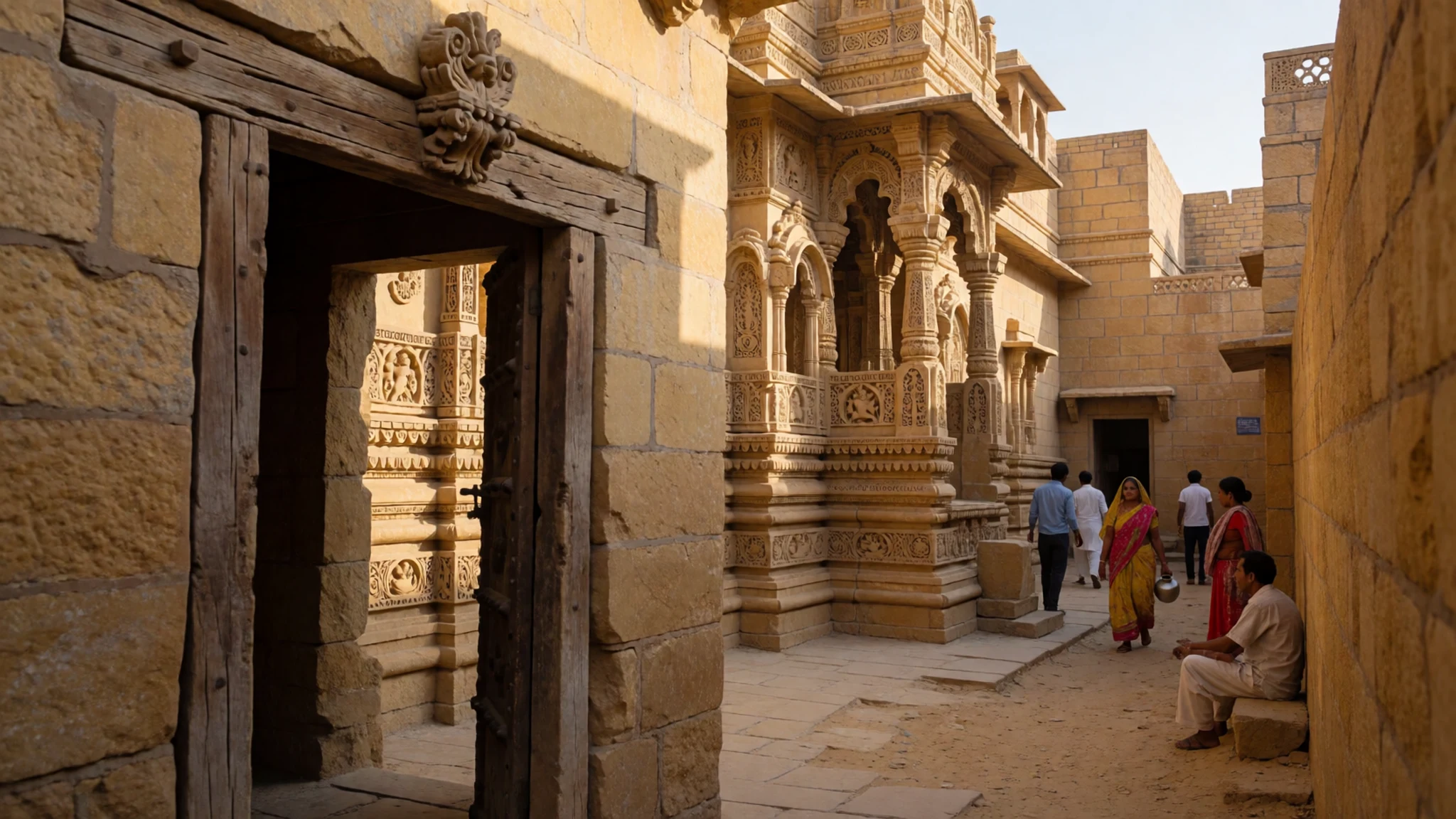
- Gadisar Lake
Gadisar Lake sits just below the town and has been the city's water supply, filled by rain rather than rivers. Temples and the tombs of saints line its banks, and the entrance gateway, Teelon ki Prol, is a carved arch. Boat rides run across the water, and early morning or sunset is the pleasantest time to go.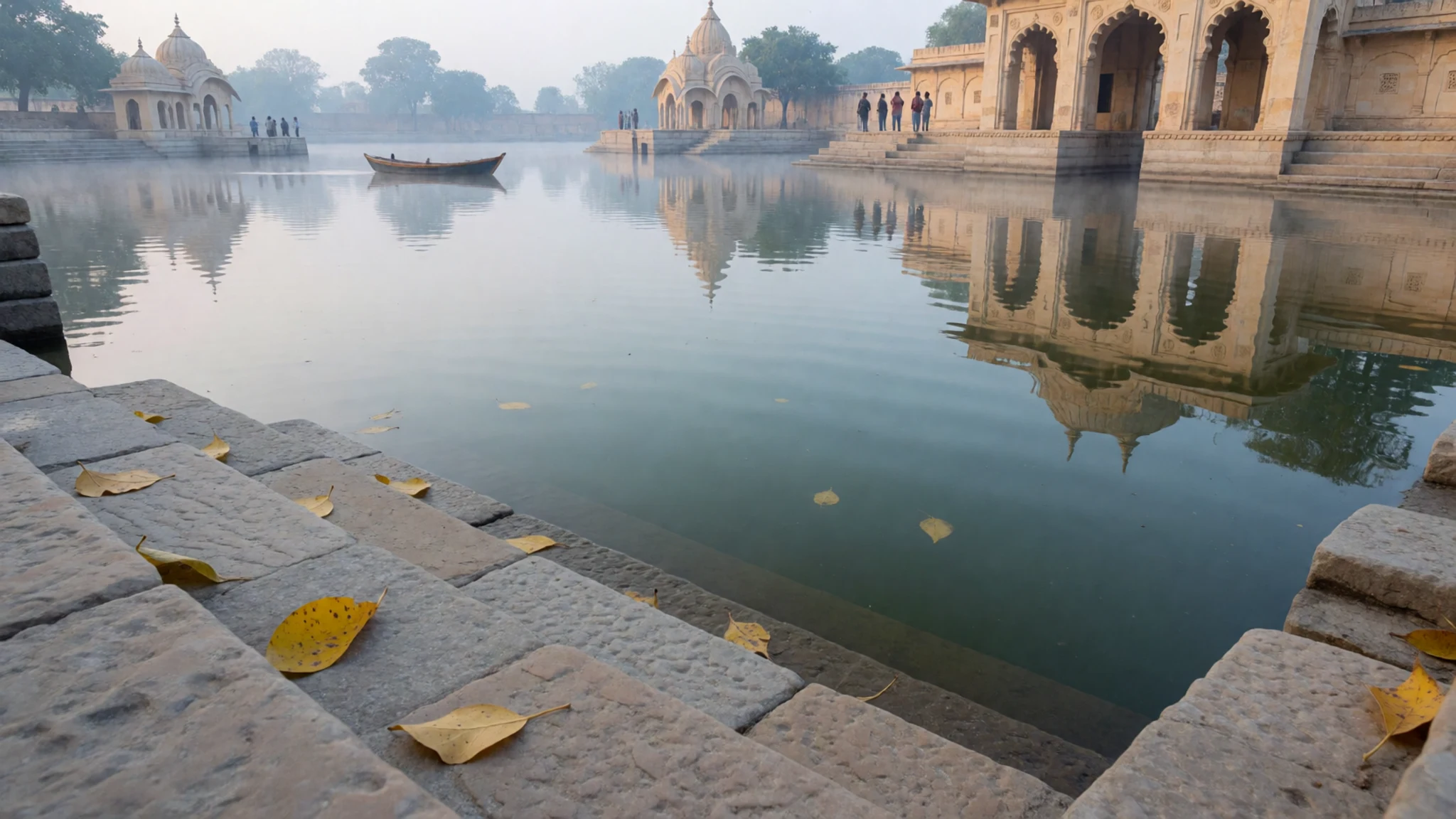
- Patwon ki Haveli
Patwon ki Haveli is one of the town's finest townhouses, its sandstone façade worked into delicate screens and brackets. The carving rewards a close look, so go in the morning, when the light falls on the front and the lanes are quieter. Expect to be approached by guides and sellers; a polite no is enough.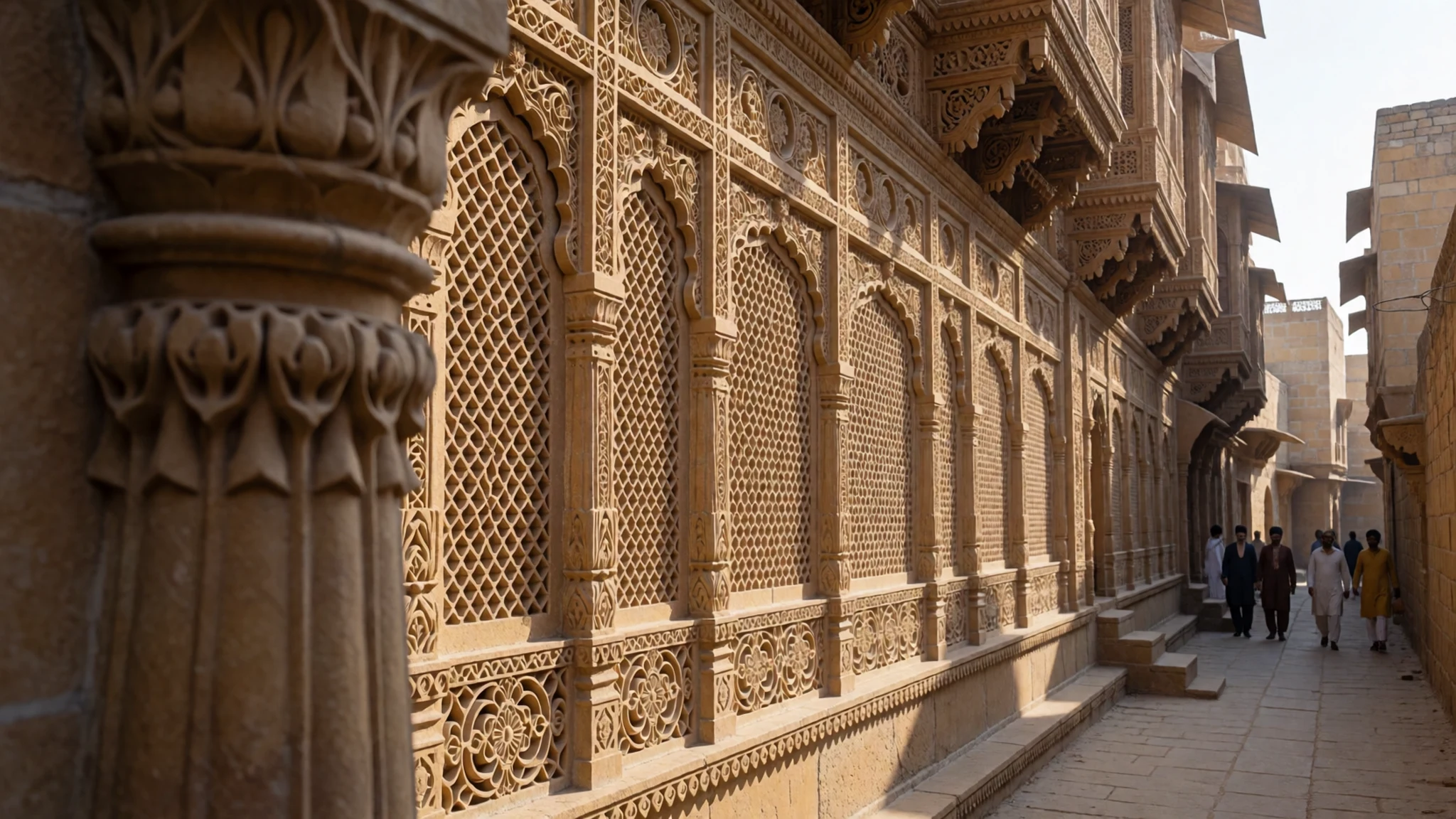
- Jaisalmer Folklore Museum
The Folklore Museum shows Rajasthan's folk heritage, arts and customs in a compact space, with puppets, costumes and crafts. Its evening puppet shows are the highlight of a visit. Check the current timings with the museum or its official listing before you plan your evening, as they can change.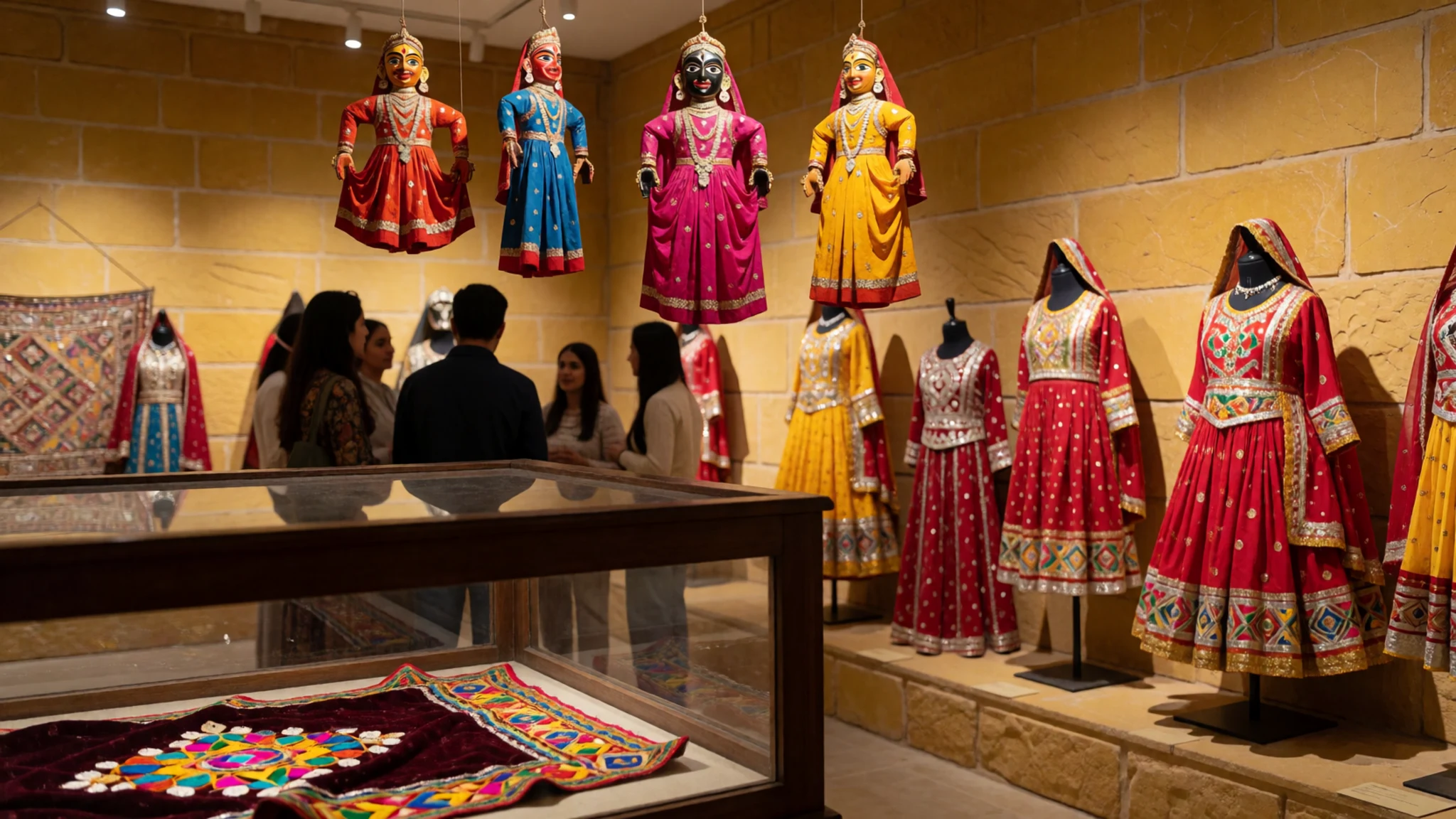
- Sam Sand Dunes
The Sam Sand Dunes lie a long drive out of town, and the sunset from the dunes is the reason to go. Camel rides and overnight desert camps are arranged from Jaisalmer. Choose operators carefully, ask what is included, and agree the terms in writing. Go in the cooler months, because the sand holds heat long after dark.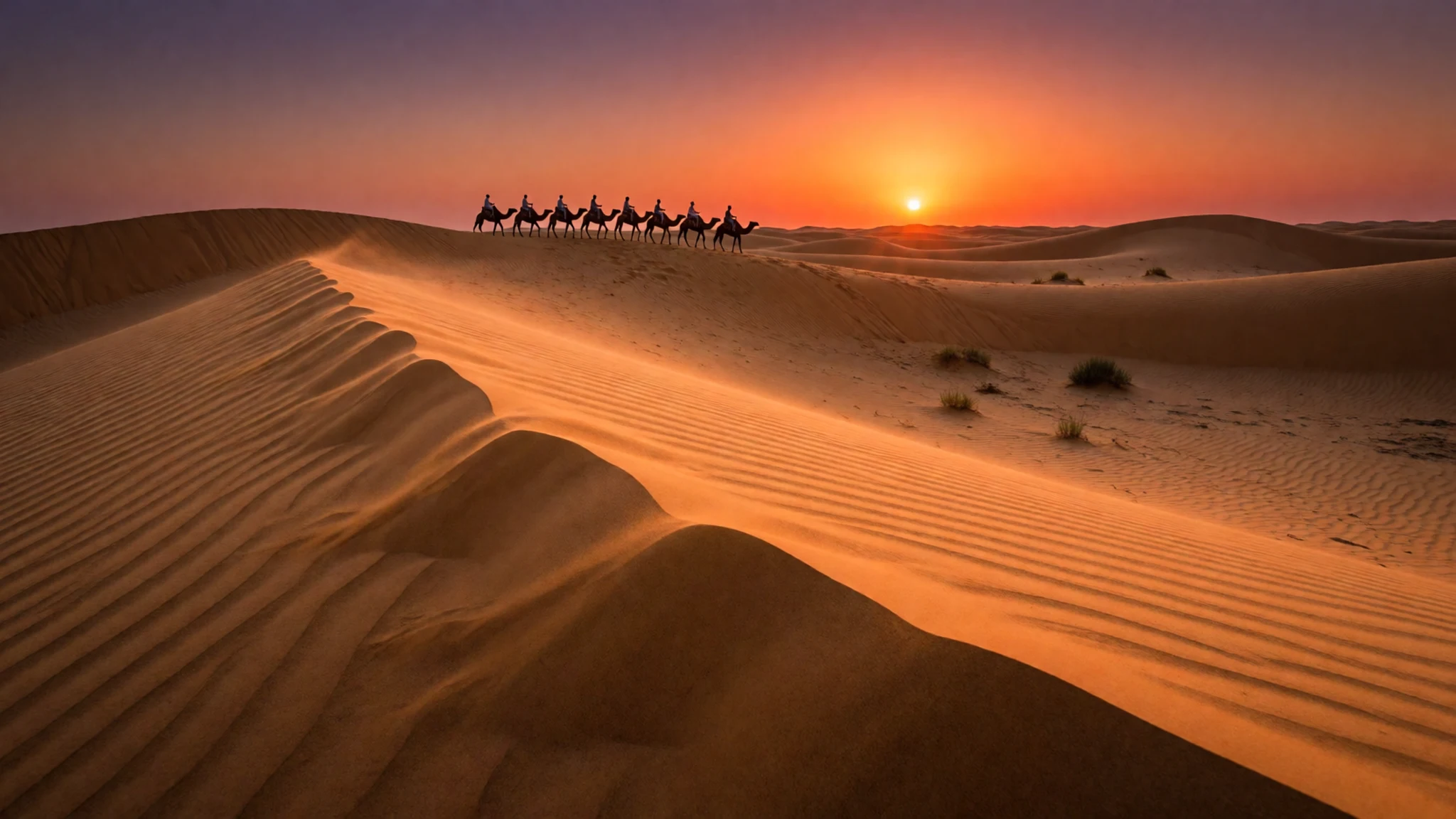
Culture
Jaisalmer is a working city as well as a showpiece, and much of its everyday life runs through the fort and the old town. Many families still live inside the fort walls, so the lanes belong to residents as well as visitors. Doorways, laundry and small shrines sit in plain view, and it is good manners to keep your voice down in narrow streets after dark. The Jain community built many of the town's most ornate temples, including those dedicated to the Tirthankaras Shantinath and Parshvanath, and these remain places of worship rather than museum pieces. Dress modestly when you visit them, step carefully over polished stone, and expect to remove your shoes before entering. Devotees often sit quietly inside, so keep conversations low and avoid lingering on steps in front of shrines. Ask before photographing anyone up close, and never photograph inside a temple where the signs forbid it.
What to wear
Jaisalmer's traditional dress belongs to the wider Rajasthani world, and it is still visible at weddings, festivals and in the villages around the city. Rajasthani women traditionally wear a long flared skirt called ghagra, a fitted blouse called choli and a shawl called odhni, often in bright reds, yellows and greens. Bandhani, a tie-dye technique in which cloth is pinched into tiny knots before dyeing, and block printing are the textiles most associated with the region, while mirror work and embroidery add shine to festival clothes. Men often wear a kurta with a dhoti or loose trousers, and a turban, called a safa, for ceremonies. Day to day, many people in Jaisalmer wear jeans, shirts, kurtas and salwar kameez, with saris for older women and for formal occasions. A visitor should dress for heat by day and cold by night. Choose loose cotton or linen in long sleeves with trousers or a long skirt, which also suit the temples. Carry a light scarf to cover shoulders and knees at shrines, a warm layer for desert evenings, and sturdy closed sandals or walking shoes, because sandstone steps and sand are tiring on thin soles.
What to eat
- Kachori and samosa — sweet shops and snack stalls in the old town, best in the morning
Sweet shops and snack stalls in the old town turn these out fresh in the morning. A kachori is a crisp pastry filled with spiced lentils, often served with a tangy sauce, and samosas make a good companion. Eat them hot, straight from the pan.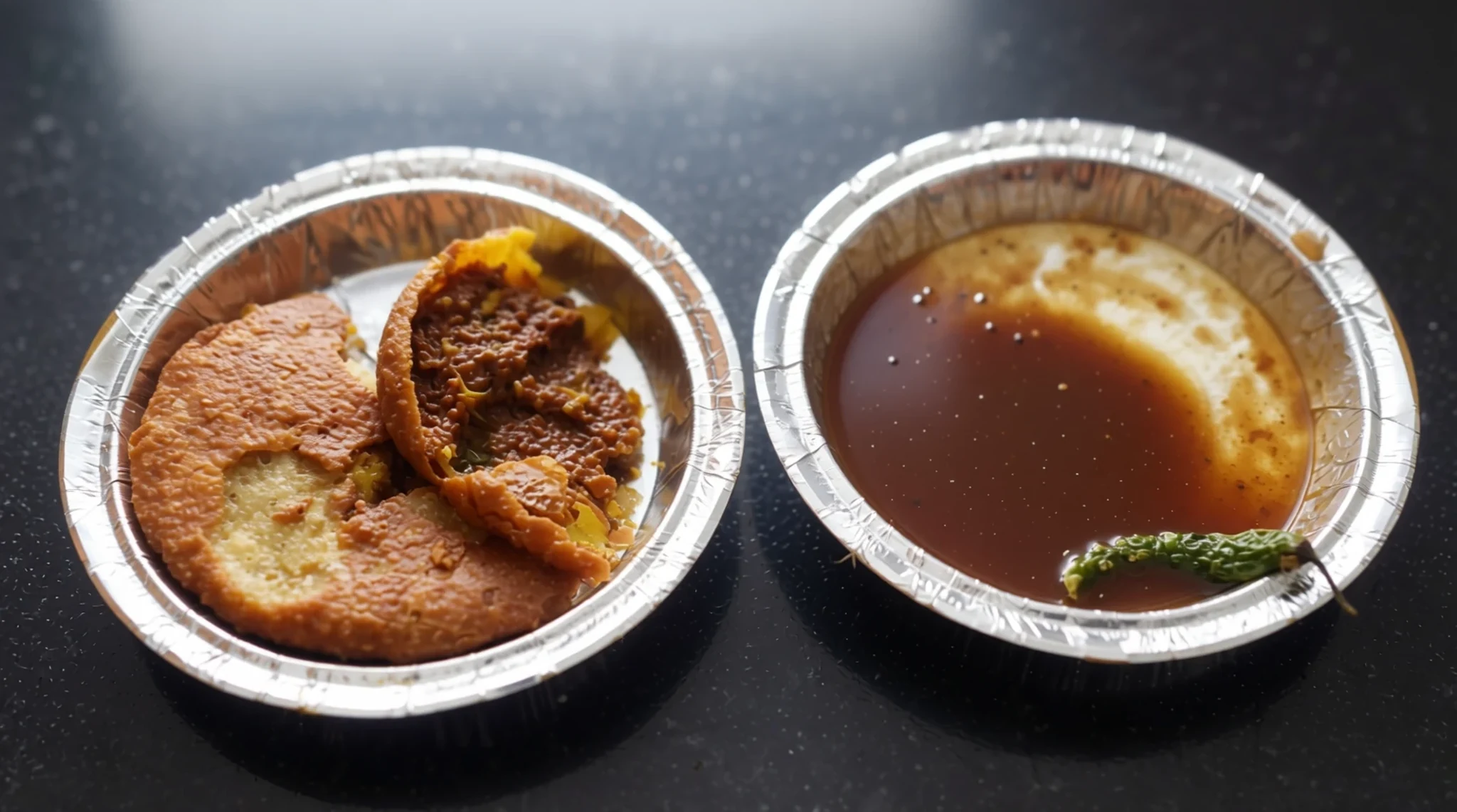
- Lemon cake and a western-style breakfast — bakeries and cafés in the newer part of town, near the fort
Bakeries and cafés in the newer part of town serve lemon cake, almond cookies, croissants and strong tea. It is an easy way to start a day of walking, and many have terraces where you can sit out in the cool morning.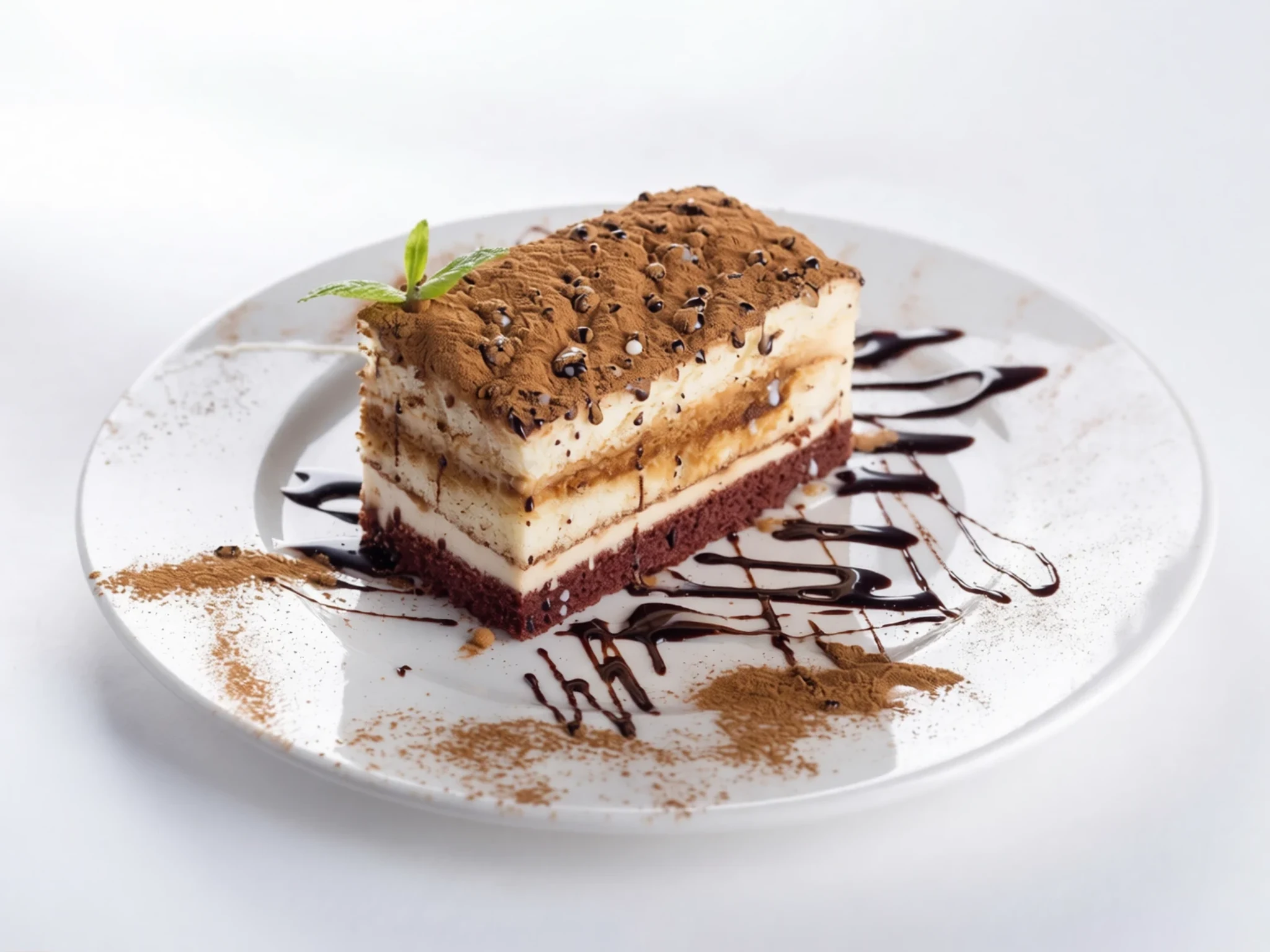
- Momos and noodles on a rooftop — guesthouse and restaurant rooftops in the old town
Several guesthouses and restaurants in the old town have rooftops with fort views. Look for momos, thukpa and stir-fried noodles, reflecting the Tibetan and Chinese cooking common on Indian travel routes. Order at dusk, when the sandstone turns gold. - Pizza and pasta with a fort view — terrace restaurants facing the fort
A few terrace restaurants facing the fort serve pizza with good mozzarella and simple pasta, at low tables with cushions. Go in the evening, when the sandstone glows and the terrace is at its most pleasant. - Dal baati churma — thali restaurants in the bazaar lanes, best at lunchtime
This Rajasthani meal pairs baked wheat balls with spiced lentils and sweet crumbled churma. Thali restaurants around the bazaar lanes serve it, and lunchtime is when the kitchens are busiest and the food is freshest.
Plan it
Best time. November to February is the most comfortable stretch, with warm days and nights that can turn cold. From April the heat builds, and summer afternoons reach around 40 °C.
How long. 2–3
Getting there. Jodhpur airport is about 285 km away, so most visitors arrive by prepaid taxi or bus from there. A direct overnight train runs from Delhi, and buses connect with Jodhpur, Bikaner and Jaipur. Jaipur has the nearest international airport.
Budget. mid
Tips
- Book trains from Delhi early for the cooler months
- Visit the fort in the late afternoon and stay for the sunset
- Carry water and a hat, because the desert sun is strong even in winter
- Carry cash for small shops, guides and tips
- Book dune trips through a reputable operator and agree the price before you set off
Etiquette
- Remove your shoes at temples and in shrine areas
- Ask before photographing people up close
- Dress modestly, especially inside the fort's temples
Nearby
Sources
- Wikidata Q242898 (CC0)
- Wikipedia: Jaisalmer (CC BY-SA 4.0)
- Wikivoyage: Jaisalmer (CC BY-SA 4.0)
- Photo: Jaisalmer, India, Palace, Haveli (Vyacheslav Argenberg) (CC BY 4.0)
- Photo: Jaisalmer Fort (Adrian Sulc) (CC BY 3.0)
- Photo: Patwon ki Haveli (Sreesarkar) (CC BY-SA 4.0)
- Photo: Fort Palace - Jaisalmer (Fulvio Spada) (CC BY-SA 2.0)
- Photo: Resting places (Worldthrumaeyes) (CC BY-SA 4.0)
- Photo: Main entrance of Gadisar Lake (WikiPanti) (CC BY-SA 4.0)
- Photo: Thar desert Rajasthan India (sushmita balasubramani) (CC BY 2.5)
- Photo: Redeveloped Jaisalmer Railway Station at Night 01 (Pyaaz Kachori) (CC0 1.0)


