Jagannath Temple
Jagannath Temple, India
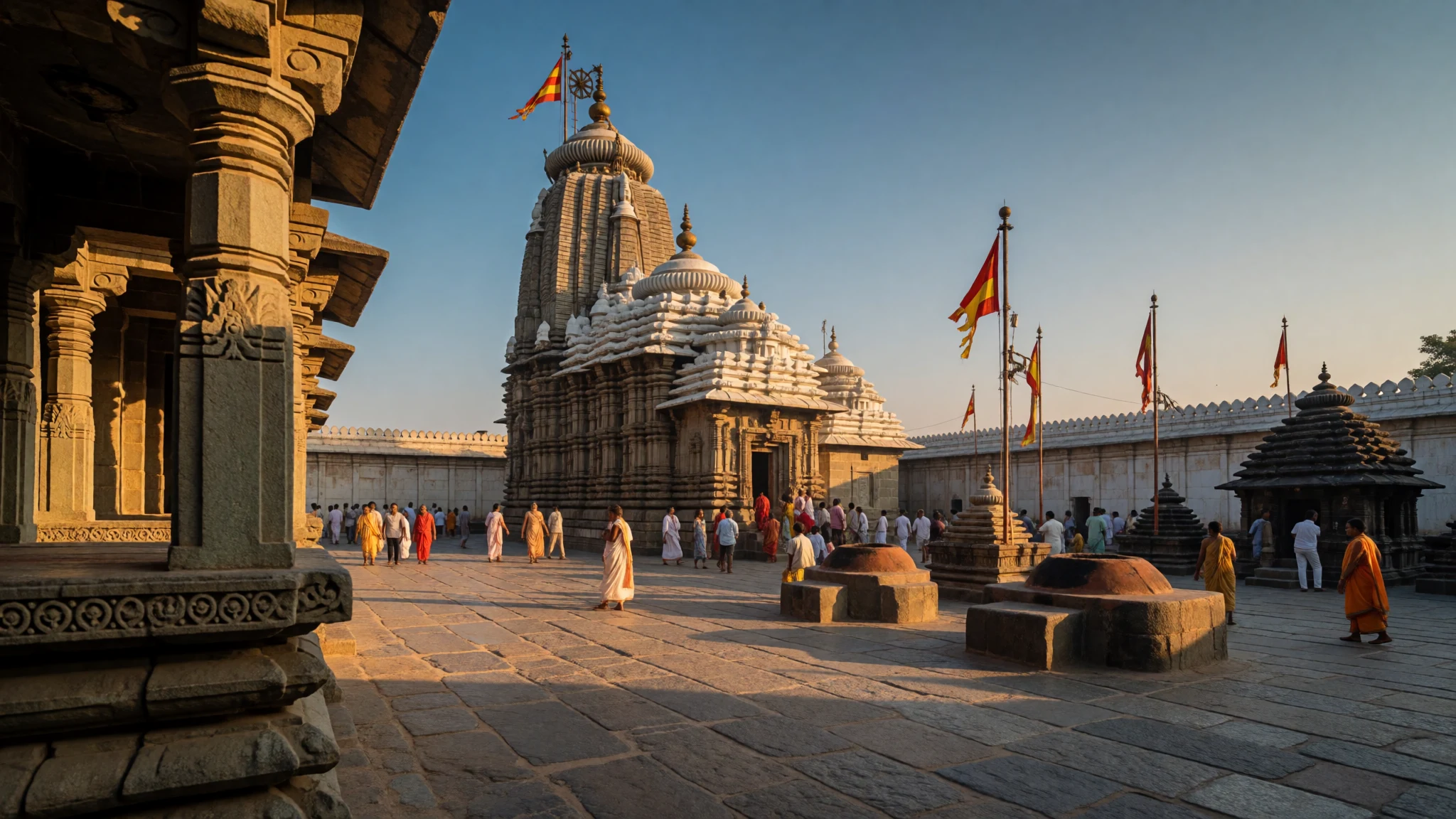
Jagannath Temple in Puri is a major coastal sacred site known for its wooden deities, ancient seaside rituals, and grand annual chariot processions.
The place
Jagannath Temple sits near the Bay of Bengal in the coastal city of Puri, serving as one of the major spiritual hubs of eastern India. Unlike traditional Hindu sanctuaries where main icons are sculpted from hard granite or cast in brass, this temple houses wooden images of the deity Jagannath alongside his siblings Balabhadra and Subhadra. Crafted from sacred neem timber, these figures are periodically replaced in an extensive ritual sequence known as Nabakalebara, preserving an ancient tradition that links early forest worship with orthodox temple practices.
The temple complex is enclosed within high stone walls and elevated above ocean level, featuring four principal entry gates facing the cardinal directions. Inside, dozens of smaller shrines surround the primary sanctuary, along with vast communal kitchens designed to cook immense quantities of rice and sweets over clay hearths. Traditional servitors, whose ancestral lineages trace back to both indigenous forest clans and scholarly priestly communities, carry out the daily cycle of offerings and songs.
Outside the main eastern gate lies Grand Road, a wide artery that accommodates vast gatherings during public ceremonies. The surrounding landscape is defined by flat coastal plains, coconut groves, and sea breezes coming off the nearby shoreline. Coastal humidity shapes daily life around the sanctuary, creating a setting where marine air and aromatic burning resins drift together through stone passages.
Its story
Jagannath Temple stands on a site that held profound religious importance long before the existing stone structures were raised. Ancient Puranic texts refer to the area as Purushottama Kshetra or Nilachala, celebrating it as a coastal sacred precinct dedicated to Vishnu. Monastic traditions record that the philosopher Adi Shankaracharya visited the coastline during the early medieval era, founding a monastery nearby that cemented the town as an influential centre for philosophical thought across the Indian subcontinent.
The foundation of the modern complex took shape during the twelfth century under King Anantavarman Chodaganga, the prominent monarch of the Eastern Ganga dynasty. Seeking to establish a grand central shrine for his realm, Chodaganga initiated the construction of the soaring stone tower and principal assembly halls that define the skyline today. Successive rulers expanded the surrounding walls, added monumental gateways, and endowed land grants to maintain the elaborate daily kitchen and ritual schedule.
Local lore weaves tribal origins into the sanctuary's history. Legend tells of King Indradyumna discovering a tribal chieftain worshipping a blue deity in secret woodland groves, a narrative reflected today in the unique role of Daitapati servitors who manage key ceremonies. Over centuries of dynastic shifts and maritime trade along the Bay of Bengal, Jagannath Temple retained its distinct blend of tribal heritage, devotional poetry, and royal patronage, growing into a cornerstone of Odia identity and culture.
What to see
- Jagannath Temple Sanctuary — Central Puri
The heart of the holy city features a soaring stone tower, four monumental entry gates, and dozens of smaller shrines inside high courtyard walls. Non-Hindu visitors cannot enter the inner sanctum but can view the complex layout and upper architecture from the nearby library roof across Grand Road. - Puri Beach — Southern Puri Coast
Stretching along the Bay of Bengal, this wide expanse of golden sand is popular for evening walks and coastal views. Waves can grow strong during full moons, so swimming requires caution. Local vendors along the shore offer brief horse and camel rides to beachgoers. - Puri–Konark Marine Drive — Coastal Highway
Connecting Puri with neighbouring coastal settlements, this well-paved highway runs parallel to the ocean, passing quiet beaches and river mouths. It provides a scenic coastal drive through casuarina groves, though travellers should stick to marked areas rather than untracked sand banks. - Swargadwar — Seaside District
This seaside precinct is traditional ground for Odia cremation rites, carrying deep spiritual significance as a portal to final liberation. Surrounding streets are lined with bustling markets, sweet shops, and family eateries, creating a lively commercial atmosphere beside the ocean. - Puri Lighthouse — South Beach Road
Situated along the southern end of the beach promenade, this active navigational tower offers sweeping views over Puri's urban layout and the open ocean. Climbing to the top platform rewards visitors with clear vistas of fishing boats returning at dusk.
Culture
Jagannath Temple serves as the cultural heart of Odisha, anchoring a calendar packed with grand rituals and community traditions. The most famous gathering is the annual Ratha Yatra, when the wooden figures of Jagannath, Balabhadra, and Subhadra emerge from the sanctuary to travel down Grand Road on towering timber chariots pulled by thousands of devotees. Another notable period is Anavasara, a fortnight following the sacred summer bathing ceremony when the deities are believed to catch a cold and rest in isolation. During these quiet weeks, public viewings cease, cooked offerings pause, and worshippers travel to the nearby Alarnath shrine to pay respects.
Daily life around the complex relies on shared duties between traditional hereditary servitors and scholarly priests. The temple kitchens, operating on ancient culinary guidelines, prepare Mahaprasad—sacred vegetarian food cooked in earthen pots stacked over open wood fires—which is distributed to pilgrims of all social backgrounds without distinction. Music, devotional song, and classic Odia literature remain closely intertwined with these daily acts of devotion.
Respect temple regulations by leaving leather items, electronic devices, and footwear outside the gates, and observe dress guidelines before approaching the sanctuary perimeter.
What to wear
Textiles around Jagannath Temple are deeply tied to regional weaving heritage and coastal climate. Odisha is famous for fine handloom fabrics, most notably Khandua silk and cotton saris. Khandua silk is traditionally woven with sacred verses from the Gita Govinda, making it the preferred attire for religious ceremonies and wedding rituals. Sambalpuri ikat pattern fabrics, crafted through intricate tie-dye techniques, are also widely worn during festive gatherings.
In daily life, local residents choose practical clothing suited to high coastal heat and humidity. Men frequently wear lightweight cotton dhotis or trousers paired with short-sleeved shirts, while women wear cotton saris or salwar kameez suits in bright earth tones. Priests and servitors wear unstitched cotton garments while performing temple duties.
Visitors should dress modestly and comfortably for the tropical weather. Choose breathable natural fabrics like linen or light cotton that cover shoulders and knees. Footwear must be removed before stepping into sacred enclosures or shops, so slip-on sandals or canvas shoes are the most practical choice for walking along dusty streets.
What to eat
- Original Nrusingha Sweets — Grand Road
Located along the central pilgrimage corridor, this traditional sweet shop serves classic Odia desserts made from fresh chhena cottage cheese. Try traditional khaja pastries and soft milk sweets crafted according to regional recipes. - Shyama — Grand Road, opposite Jagannath Temple
Positioned on the upper floor overlooking the temple gates, this casual eatery serves pure vegetarian thalis. Generous platters feature rice, lentils, seasonal vegetable curries, and local chutneys prepared without garlic or onions. - Ganguram Sweets — Near Handloom Gardens
This established confectionery counter offers a wide selection of milk sweets, fried savouries, and traditional Bengali desserts. It is a popular spot for visitors looking for fresh evening snacks after walking along Grand Road. - Kakatua Sweets — Swargadwar district
Recognisable by its distinctive cockatoo sign near local shrine complexes, this roadside sweet shop serves hot rabri, mishti doi, and freshly fried sweet fritters popular among pilgrims returning from evening seaside walks. - Dada Boudir Restaurant — Swargadwar district
A Puri branch of Kolkata's famous dining spot, serving authentic Bengali fish curries, rice dishes, and mustard-spiced gravies. It caters to the large seasonal population of West Bengal travellers visiting the coastal town.
Plan it
Best time. October to March offers pleasant coastal weather with reduced humidity; April to June is hot, while July to September brings heavy monsoon rains.
How long. 2–3
Getting there. Fly into Biju Patnaik International Airport in Bhubaneswar, located roughly sixty kilometres away, then take a direct train or local bus ride to Puri.
Budget. low
Tips
- Non-Hindu visitors can view the main temple layout from the rooftop of the library across Grand Road.
- Carry small cash notes for local transport, sweet shops, and shoe counters.
- Avoid eating unheated or raw food from beach stalls to prevent stomach upsets.
- Check the official site (https://www.shreejagannatha.in/) for festival schedules and ritual timings before travelling.
Etiquette
- Leave shoes, cameras, leather goods, and mobile phones at dedicated storage counters before entering temple precincts.
- Dress modestly with shoulders and legs fully covered when visiting sacred areas.
Nearby
Sources
- Wikidata Q1678260 (CC0)
- Wikipedia (rev 1384634897) (CC BY-SA 4.0)
- Wikivoyage (rev 5415236) (CC BY-SA 4.0)
- Photo photos/01-shri-jagannath-temple.jpg (CC BY 3.0)
- Photo photos/02-vishnu.jpg (Public domain)
- Photo photos/03-abx-shri-purushottama-kshetra-puri.jpg (CC BY-SA 4.0)
- Photo photos/04-east-gopura-of-rameswaram-temple.jpg (Public domain)
- Photo photos/05-dwarakadheesh-temple-2014.jpg (CC BY-SA 4.0)
- Photo photos/06-badrinath-temple-oct-2014.jpg (CC BY-SA 4.0)
- Photo photos/07-bird-view-of-jagannath-temple-puri.jpg (CC BY 4.0)
- Photo photos/08-1910-sketch-of-plan-jagannath-temple-puri-odisha.jpg (Public domain)


