Jacob's Well
Jacob's Well, Palestine
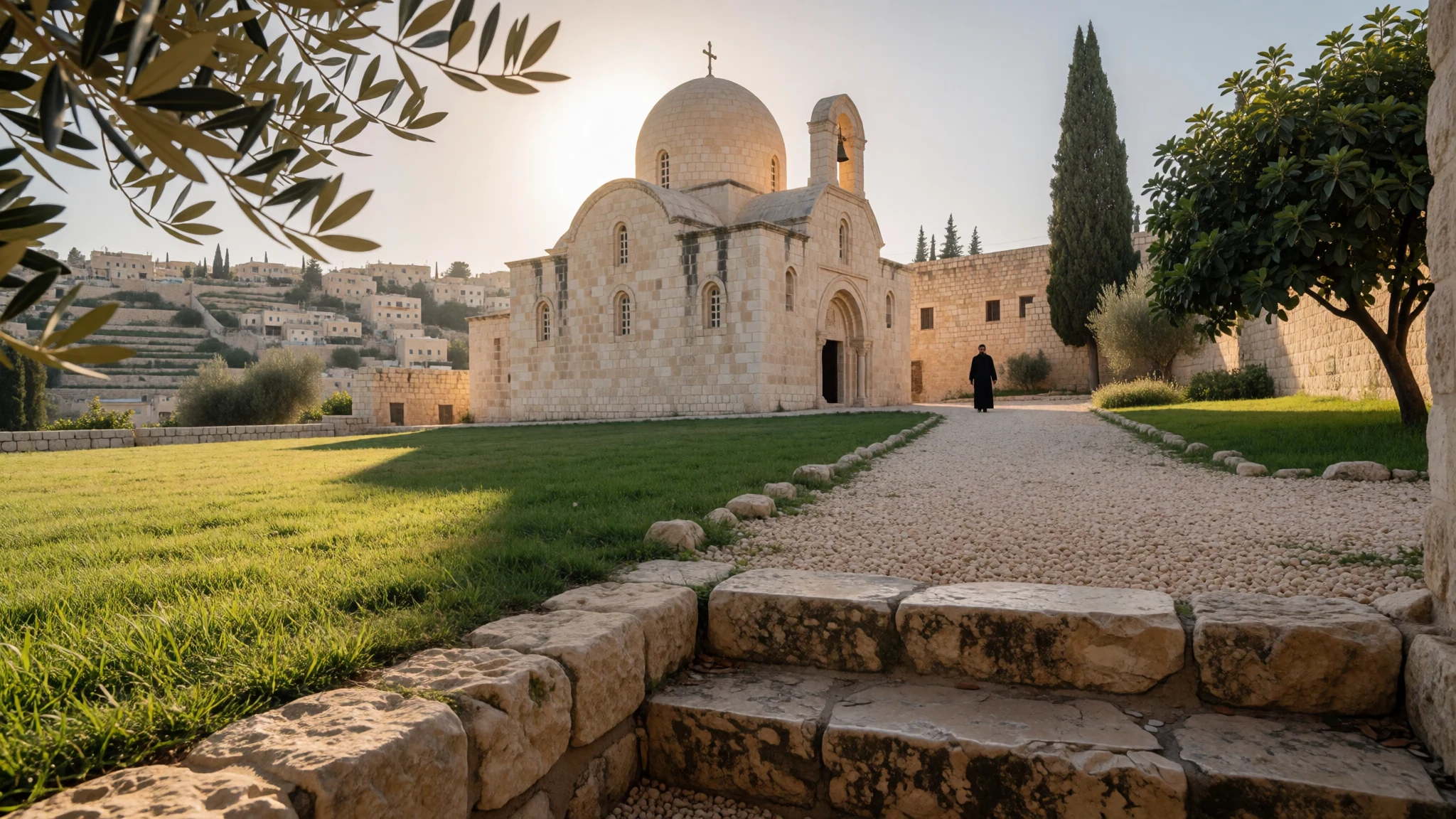
A Christian holy site in Balata, Nablus, where an Orthodox church shelters a well tied to Jacob and Jesus for about two millennia.
The place
Jacob's Well, also called Jacob's Fountain or the Well of Sychar, lies in Balata, a suburb on the edge of the Palestinian city of Nablus in the northern West Bank. The well now sits inside an Eastern Orthodox church and monastery, and the visit is small in scale: a walled compound, a church, and a stairway down to the shaft itself. Tradition has linked it with the patriarch Jacob for roughly two millennia, and it is also the place where, in the Gospel of John, Jesus talks with a Samaritan woman.
The setting is more urban than most people expect from a biblical site. Balata is a dense, busy neighbourhood, and the monastery is a pocket of calm among traffic, shops and apartment blocks. Nablus itself is a working Palestinian city with an old centre of stone lanes, markets and soap-making families, and most visitors combine the well with a morning or afternoon in town.
The West Bank takes its name from the western bank of the Jordan River. It has been under Israeli administration since 1967, and its future status is unresolved between Israel and the Palestinian Authority, so any trip here needs a little more preparation than a typical pilgrimage stop. Roughly 2.5 million Palestinians live in the territory, excluding East Jerusalem.
There are no civilian airports in the West Bank, and the well is best treated as a short, unhurried stop rather than a full day out. Heat, opening times and the security situation all shape a visit, and it is worth checking each shortly before travelling. The site is a working place of worship first and a sight second, which gives it a modest, lived-in feel.
Its story
Jacob's Well has a long paper trail, mostly written by pilgrims. Their accounts show that a succession of churches has stood over the same spot, each replacing the last after destruction or decay. By the fourth century the place had been identified as the setting for Jesus's conversation with the Samaritan woman, and it was probably already used for Christian baptisms.
A cross-shaped church followed before the end of that century, and Saint Jerome mentions it in his writing. It most likely fell during the Samaritan revolts of the fifth and sixth centuries. The Byzantine emperor Justinian I then had a replacement built, and that second church was still standing in the eighth century, possibly into the early ninth.
By the time the Crusaders took Nablus in 1099, the Byzantine church lay in ruins. Early twelfth-century pilgrims describe the well but no building, and one record shows a guardian of the well being appointed under the king of Jerusalem. Later accounts in the same century speak of a freshly built church, which the pilgrim Theoderic describes.
The story does not end tidily there. The site passed through centuries of neglect and rebuilding, and the Orthodox church and monastery that stand today are the latest chapter in that pattern. Old engravings, postcards and survey photographs, some of which survive in public archives, show the well in earlier, plainer settings.
What gives the place its weight is continuity of belief rather than any single dated structure. Christians, Samaritans and others have each held the spot significant, and the repeated rebuilding is the clearest evidence of how much it has mattered.
What to see
- The well in the crypt — Balata, Nablus
Jacob's Well is reached by steps down into a crypt beneath the church, where the stone shaft is the reason for the whole complex. It is dim, cool and quiet, and the atmosphere suits a short, unhurried stay. Candles and icons surround it, and the monks sometimes lower a bucket for visitors.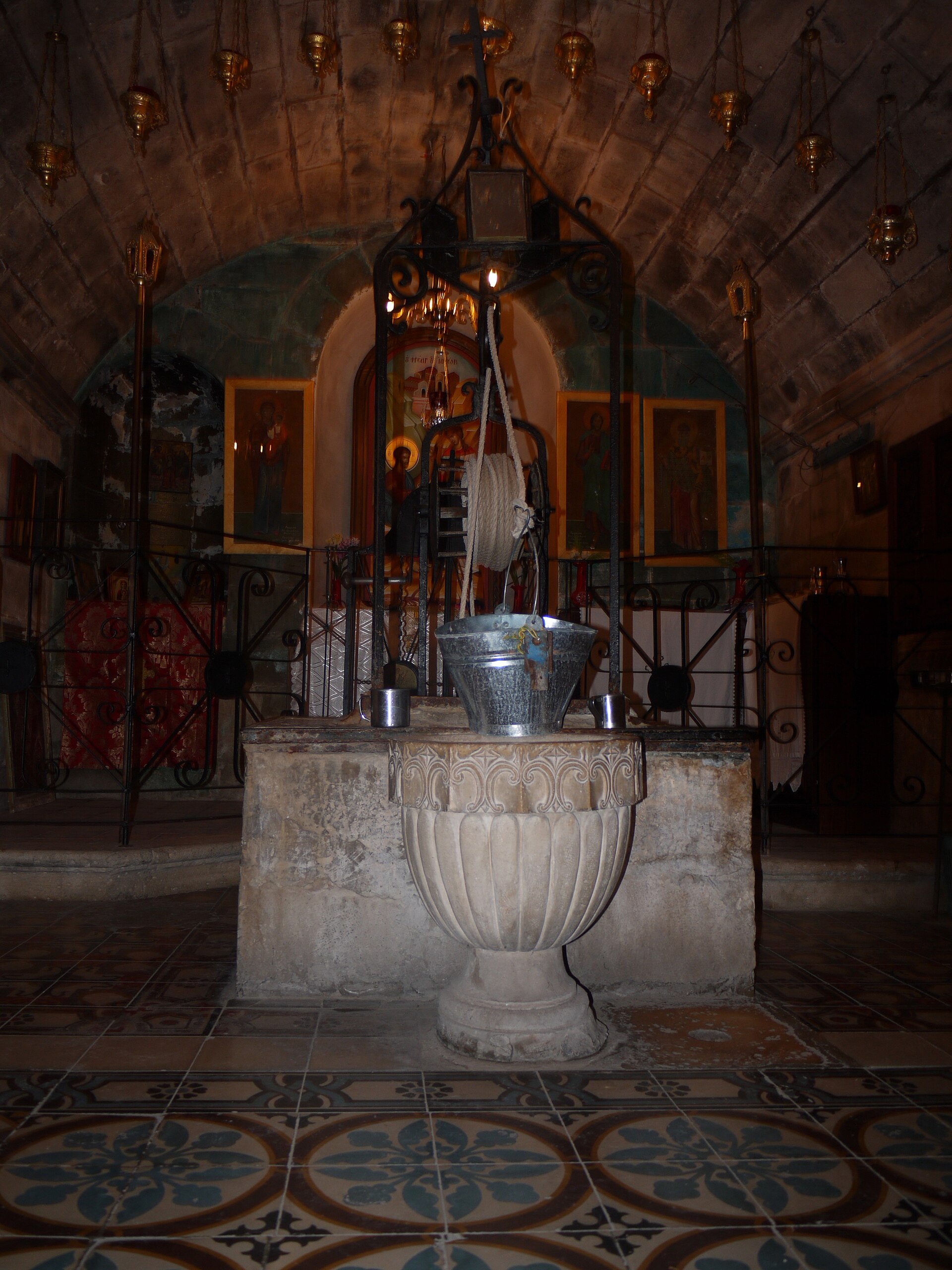
- Church and monastery of Bir Ya'qub — Balata, Nablus
The Eastern Orthodox church above the well is the most recent in a long line of buildings on the site. Its interior is decorated with icons and painted scenes, and the monastery grounds around it are planted and tidy. Seen from within the compound, the church makes a calm contrast with the neighbourhood outside.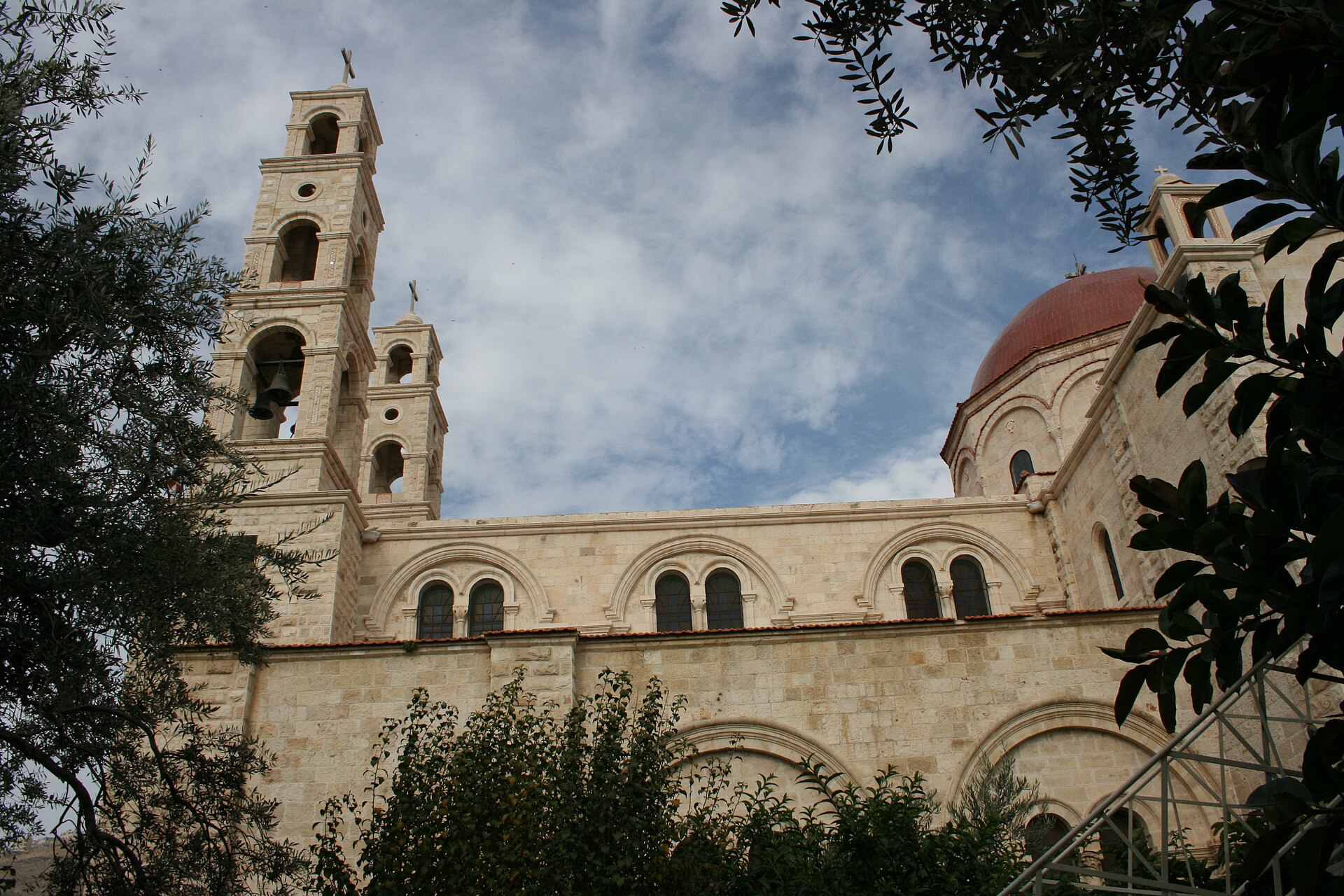
- Balata village and its streets — Balata, Nablus
Balata is an old village that has grown into a busy suburb of Nablus. Walking a few streets around the monastery gives a sense of ordinary life here: small shops, school groups, and children playing outside. Archive survey photographs show how much the area has changed from its earlier village form.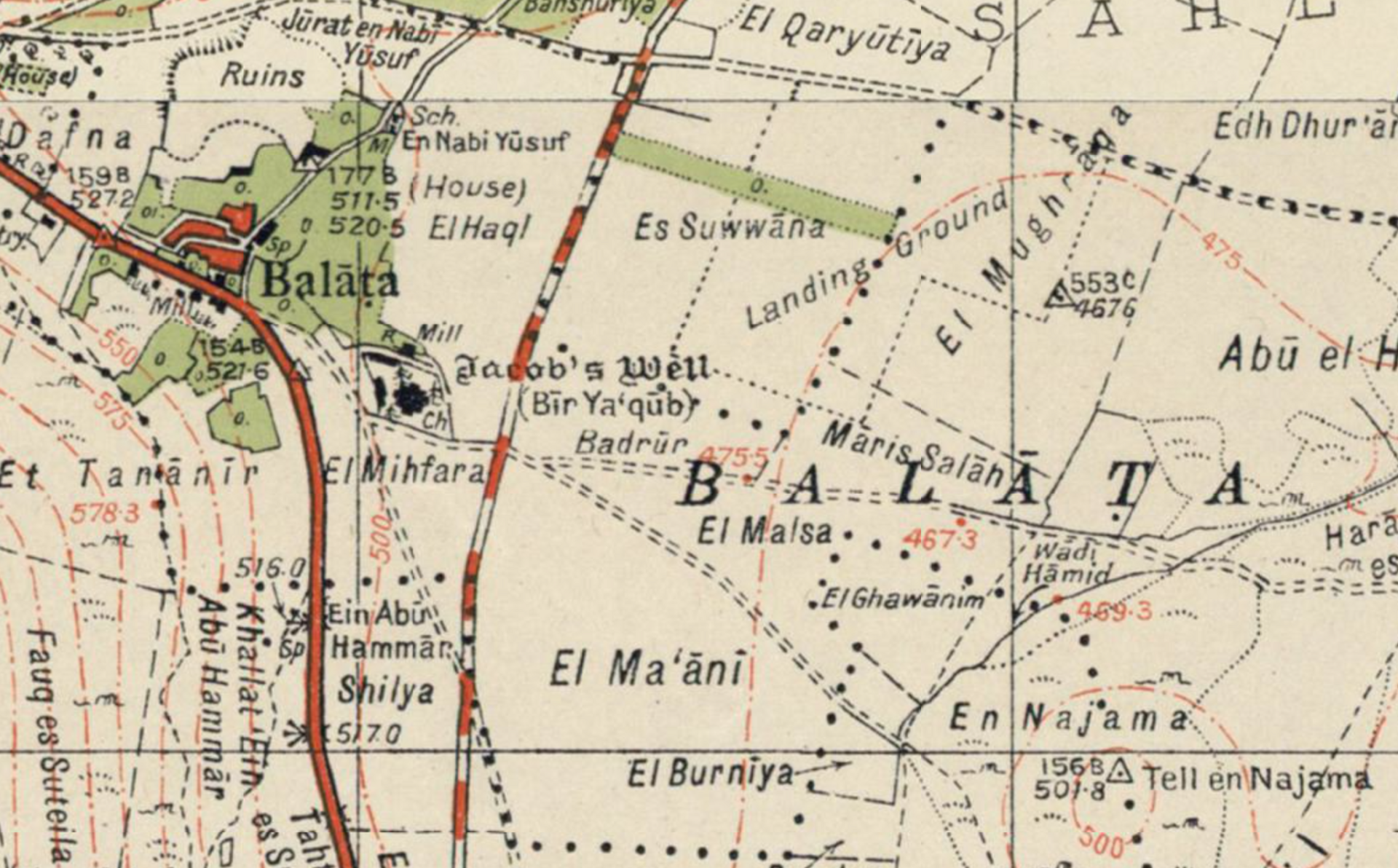
- Tel Dothan — North of Nablus, near Jenin
Tel Dothan is a mound that once held a Canaanite city on a fertile plain west of Jenin. Tradition places Joseph here, sold by his brothers to traders heading for Egypt. It is a place for the landscape and the story rather than for standing ruins, so a guide or good map helps. - Burqin — Near Jenin
Burqin is a small town near Jenin with an early Christian church linked to the healing of ten lepers, with a cave at its heart. The building is modest, and its age gives it importance more than any grandeur. A local contact or the church's caretaker is usually needed to arrange entry. - Zababdeh — North of Nablus
Zababdeh is a Christian Palestinian village built on top of an earlier Byzantine village. It is a quiet farming community, suited to visitors who want to see ordinary village life beyond the larger cities. Its churches are active, so a visit works best around services and with a local host.
Culture
Jacob's Well belongs to a region where Muslims, Christians and Samaritans have lived side by side for generations, and the Nablus area reflects all three. Visitors are generally welcomed warmly, and Palestinian hospitality often means being offered coffee or tea before any business is done.
The West Bank is less conservative than many Arab countries, and women are not expected to be fully covered. Even so, dressing modestly is the sensible default, and it matters most at religious sites. Nablus is a conservative, close-knit city, and small courtesies such as greetings, patience and a willingness to listen are appreciated.
The monastery is an active Orthodox community. Monks look after the site, services take place in the church, and the crypt is a place of prayer for many who come. Photographs of the well are usually fine, but photographing worshippers, the monks or local residents without asking is not.
Politics is a sensitive subject. The Israeli-Palestinian conflict shapes daily life here in ways that visitors may not see at first, and it is wiser to let locals raise it than to open the topic. Opinions vary widely, including between neighbours, and questions can land differently than intended. Alcohol is served in Nablus and Ramallah, though less widely than elsewhere, and it is not part of the monastery visit.
Dress modestly with shoulders and knees covered, speak quietly in the church and crypt, and ask a monk before taking any photograph of people or of the inside of the church.
What to wear
Jacob's Well sits in a region with a rich dress tradition. Palestinian women's thobes are long embroidered dresses, typically made of cotton or linen and stitched in cross-stitch (tatreez) with motifs that vary by village and town. They are worn for weddings, festivals and family occasions, and many families keep older pieces. Men traditionally wore a long robe and a head covering such as the keffiyeh, a cotton cloth that is also used to cover the head in the sun.
Day to day, most people in Nablus dress in a mix of modern and modest styles. Jeans, long-sleeved shirts, trousers and long skirts are common, and many women wear a headscarf, while others do not. Clergy and monks at the monastery wear dark Orthodox robes. Formal dress is common at church services and family events, and young people follow familiar international trends.
Visitors should plan for the climate and for the setting. Light, loose cotton or linen with covered shoulders and knees works in the heat and is appropriate in a church. Women may want a light scarf to cover their head if asked in the sanctuary. Closed, comfortable shoes are best for the uneven stone steps down to the well and for walking through town. Hats, sunglasses and sunscreen help in the open courtyard, and a thin layer is useful for the cool crypt.
What to eat
- Musakhan — Home-style Palestinian restaurants in Nablus
A Palestinian dish of roast chicken piled on flatbread with plenty of onions, olive oil and sumac. It is generous and rich, and often served for family meals. Look for it in home-style Palestinian restaurants and eateries in Nablus. - Knafeh — Sweet shops in Nablus old city
A warm, sweet dessert of melted cheese under crisp pastry, soaked in syrup and eaten fresh. Nablus is widely associated with it. Pastry shops in the old city often serve it straight from large trays, to be eaten while still hot. - Hummus — Small hummus eateries around the town centre
A smooth chickpea paste with tahini, lemon and olive oil, typically eaten with warm flatbread for breakfast or lunch. Simple eateries serve it in shallow bowls, sometimes topped with whole chickpeas, and it is cheap and filling. - Falafel — Street stalls and snack counters in Nablus
Deep-fried balls of ground chickpeas and herbs, served hot in bread with salad, pickles and tahini. It is a quick snack that suits a stop between sights, and the best are fried to order. - Maqluba — Family-run restaurants and home-style eateries
A one-pot dish of rice, vegetables and meat that is cooked in layers, then turned upside down at the table. It is a family and festival meal, and some restaurants serve it on request or on particular days.
Plan it
Best time. March–April and October–November, when the weather is mild enough for walking and for visiting the crypt in comfort. Summer is hot, and winter can be cool and wet.
How long. 1–2
Getting there. There are no civilian airports in the West Bank. Most visitors fly to Tel Aviv's Ben Gurion Airport or to Amman Queen Alia International Airport, then travel overland. Entry rules differ by route and nationality, so check them carefully. The last leg is by road to Nablus and then to Balata, usually by taxi or arranged transport.
Budget. low
Tips
- Check the current security situation and your government's travel advice before setting out, and again just before you travel
- Confirm visiting times with the monastery beforehand, as they can change; there is no official website in the available data
- Visit in the morning to avoid the heat and to fit the monastery's schedule
- Carry some cash for taxis, small shops and snacks, and bring water
- Hire a local guide or arrange a driver if this is your first time in the West Bank
Etiquette
- Dress modestly and keep your voice low in the church and crypt
- Ask before photographing monks, worshippers or local residents
- Avoid starting conversations about politics
Nearby
Sources
- Wikidata Q1679519 (CC0)
- Wikipedia: Jacob's Well (rev 1364714978) (CC BY-SA 4.0)
- Wikivoyage: West Bank (rev 5422189) (CC BY-SA 4.0)
- Photo: Jacob's Well in 2013, Jeremiah K Garrett (CC BY 3.0)
- Photo: Church of Bir Ya'qub, Tiamat (CC BY 3.0)
- Photo: Tristram 1870, Jacob's Well (Public domain)
- Photo: Karimeh Abbud postcard of Jacob's Well (Public domain)
- Photo: Bir Eyub (Job's Well), NYPL, cropped (Public domain)
- Photo: Bir Eyub (Job's Well), NYPL (Public domain)
- Photo: Balata village, Survey of Palestine (Public domain)
- Photo: Samaritans at work near Nablus, Félix Bonfils (Public domain)


