Itsukushima Shrine
Itsukushima Shrine, Japan
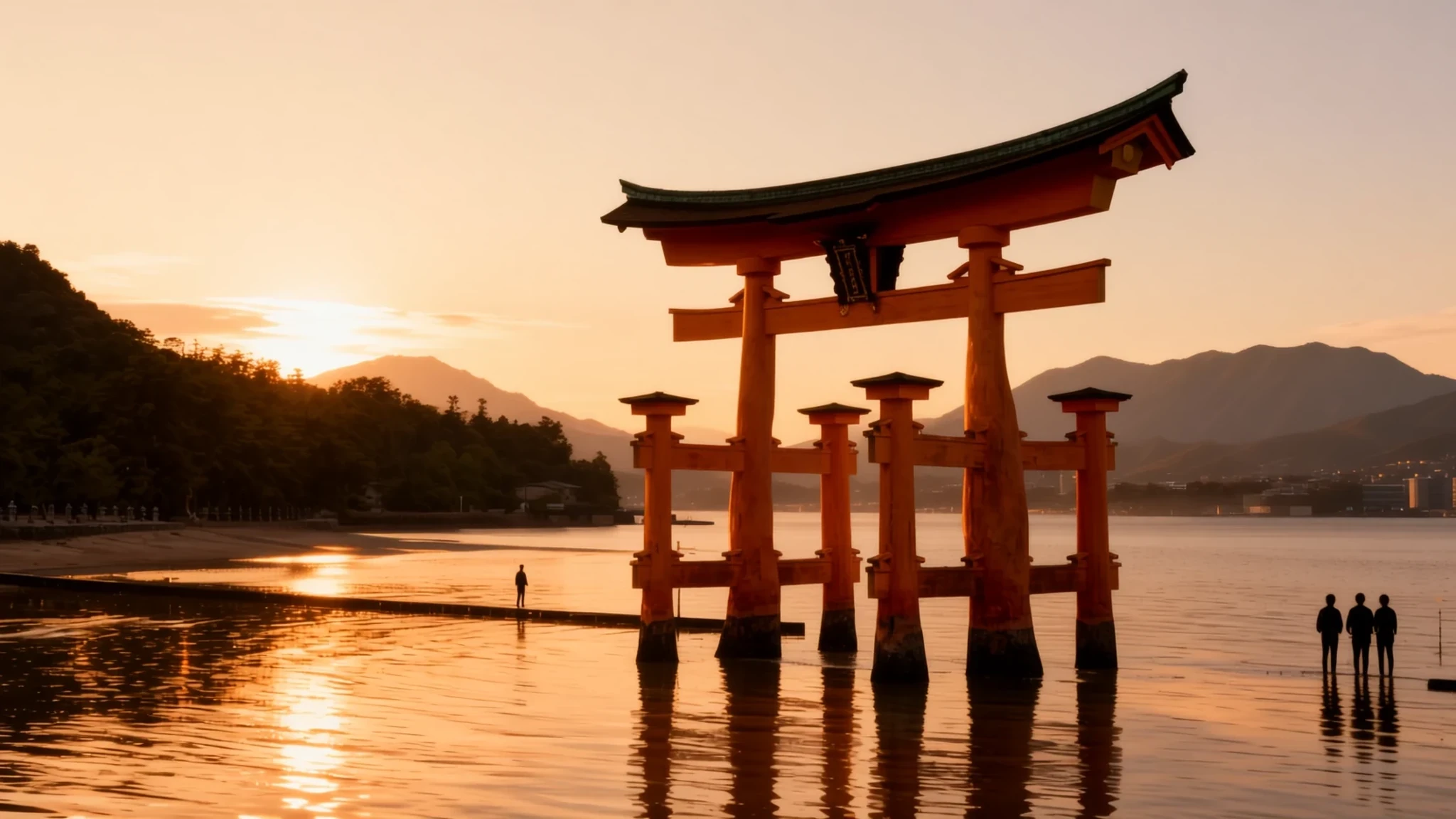
Go for the vermilion torii that seems to stand in the sea, on a wooded island a short ferry ride from Hiroshima Prefecture's mainland.
The place
Itsukushima Shrine sits on the island of Itsukushima, usually called Miyajima, in the city of Hatsukaichi in Hiroshima Prefecture. You reach the island by ferry from Miyajimaguchi Station on the mainland, and the short crossing is part of the experience. The shrine is a UNESCO World Heritage Site, and several of its buildings and possessions are designated National Treasures by the Japanese government.
The draw is the torii, the great gate standing out in the bay. At high tide it appears to float on the water, and at low tide it can stand on exposed mud, so the view changes through the day. Behind it, a set of covered walkways and halls is built out over the water on stilts, so the complex seems to sit on the sea rather than on the shore.
The complex has two main buildings, the Honsha and the Sessha Marodo-jinja, along with many smaller halls and structures. The island is hilly and wooded, with Mount Misen rising above the shrine and forest paths running behind the town. Expect crowds. The approach street and the shrine fill with day-trippers from late morning, and the ferry queues build steadily. Arrive early or stay overnight to see the shrine with fewer people around.
Its story
Itsukushima Shrine was the chief Shinto shrine of Aki Province, the old name for this part of Hiroshima. It was counted among the three great shrines of the province, alongside Take Shrine and Hayatani Shrine. Tradition credits the first torii on the site to the sixth century, but the record of a gate standing there dates from 1168, and the present shrine buildings date largely from 1875.
The shrine's wealth and reputation owe much to Taira no Kiyomori, the powerful noble who governed Aki Province in 1168. He ordered the main hall built as a tribute to the kami of seafarers and as a base for the Taira family's trade across the Inland Sea. Miyajima became a Taira family shrine, and the family's involvement with maritime trade with the Song dynasty gave the island its importance. Kiyomori also seems to have chosen the site partly to set himself apart from conventional pilgrimage customs of the court.
Later, the warlord Mōri Motonari rebuilt the main hall in 1571. He had earlier fought an engagement on the island in 1555, and because shedding blood on sacred ground broke strict Shinto purity taboos, that battle was remembered as a spiritual problem for the shrine. The Kyakuden, the guest-god's shrine, is the only surviving Kamakura-period structure on the site.
What to see
- The torii gate — Shoreline in front of the shrine
The great vermilion torii stands in the bay in front of the shrine, and it is the image most people come for. Walk out along the shoreline to see it from different angles as the tide moves. At high water the gate seems to float, while at low water you can walk close to its base on the sand and mud. Photographs from the shore are the classic view.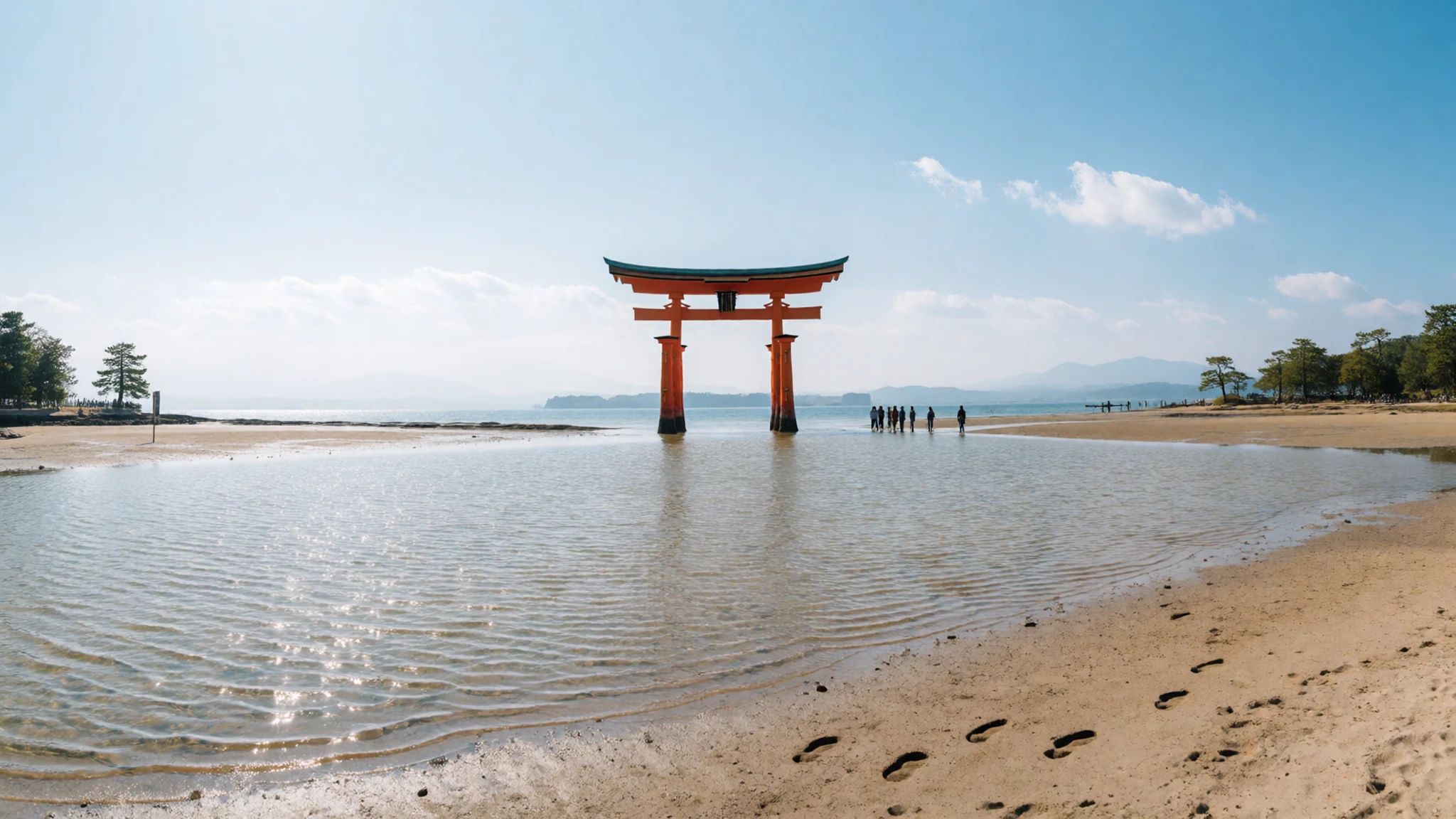
- The main shrine buildings — The shrine precinct on the shore
The covered walkways and halls are built out over the water on stilts, linked together in a long, low complex. Inside, the Honsha is the principal hall, and the Sessha Marodo-jinja stands alongside it. Look for the restored halls and the Kyakuden. Go in shoes off, keep to the marked route, and allow time to walk the whole circuit.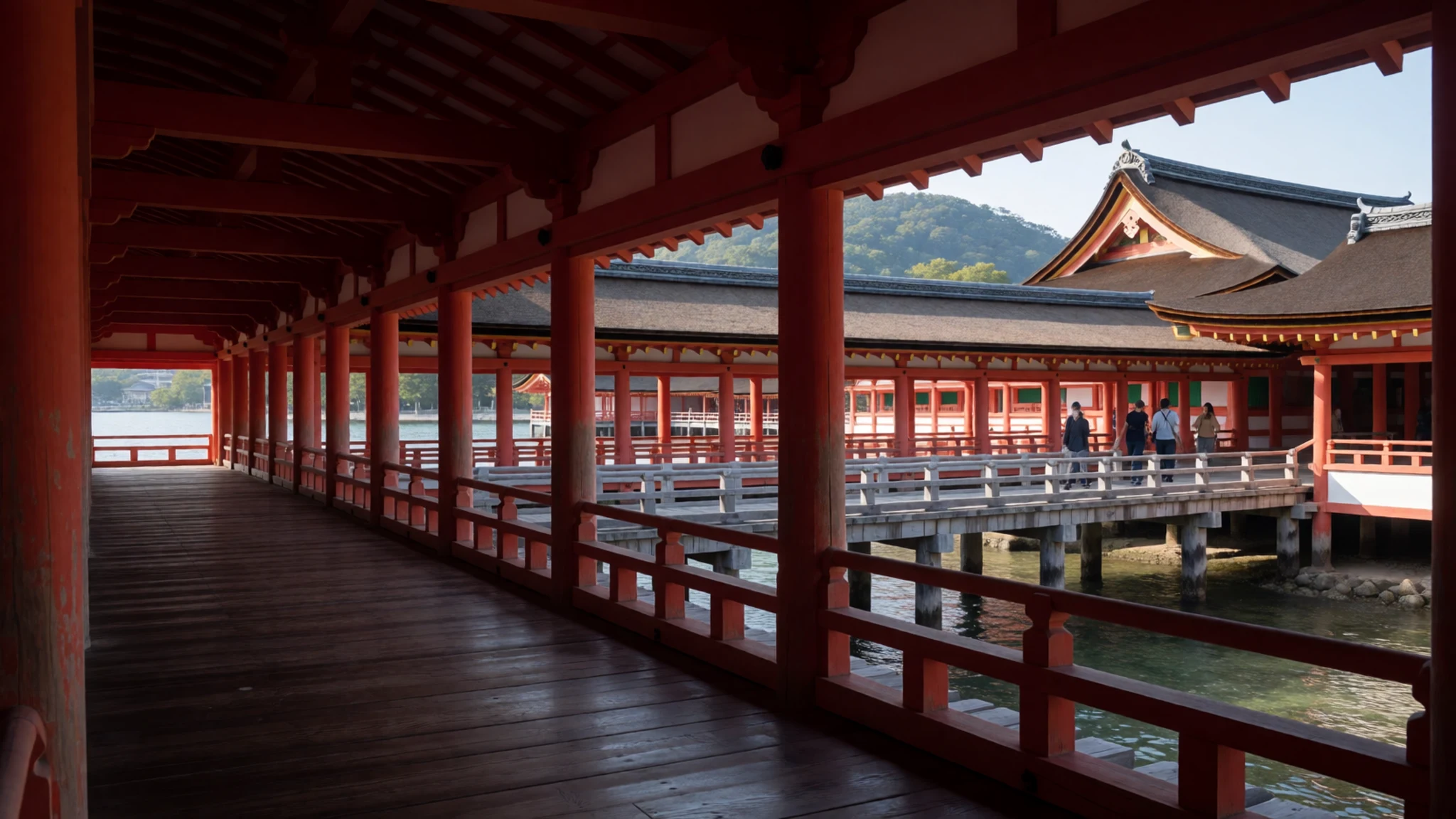
- Mount Misen — The island's interior, above the shrine
The sacred peak rising behind the shrine is reached by cable car or on foot along forest trails. The summit gives wide views over the Seto Inland Sea. The walk is steep in places, so wear sturdy shoes and bring water, especially in summer. Check the cable car times at the station before you set off, as they change by season.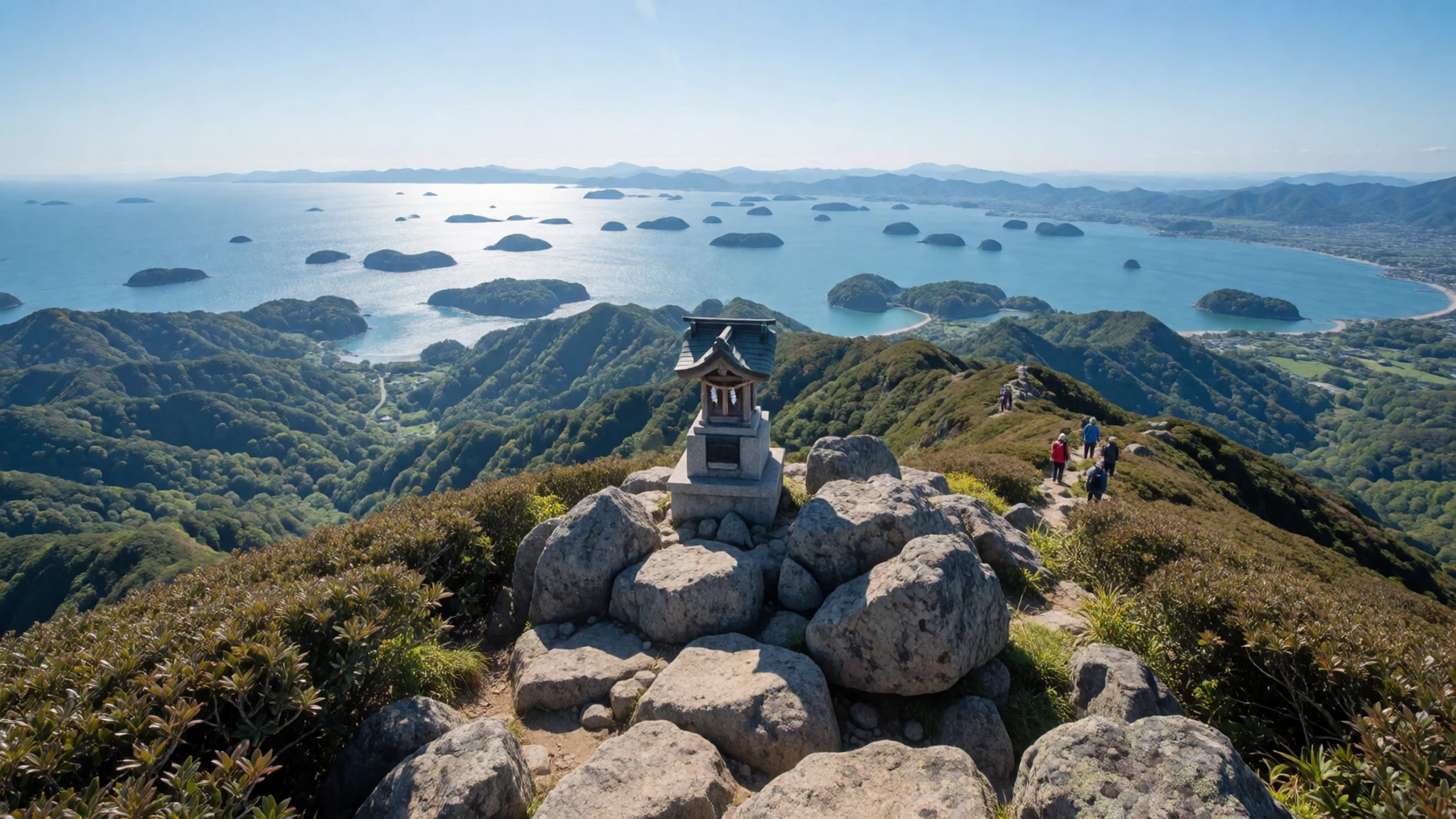
- Sea View Forest Museum — Forested hills, away from the shrine
This small museum holds a collection that is mostly Japanese art from the Middle Ages to the modern era. Its highlights include modern Japanese paintings from Kyoto, many by Takeuchi Seiho. It makes a quiet break from the shrine crowds, and it sits in the island's forest rather than in the town centre.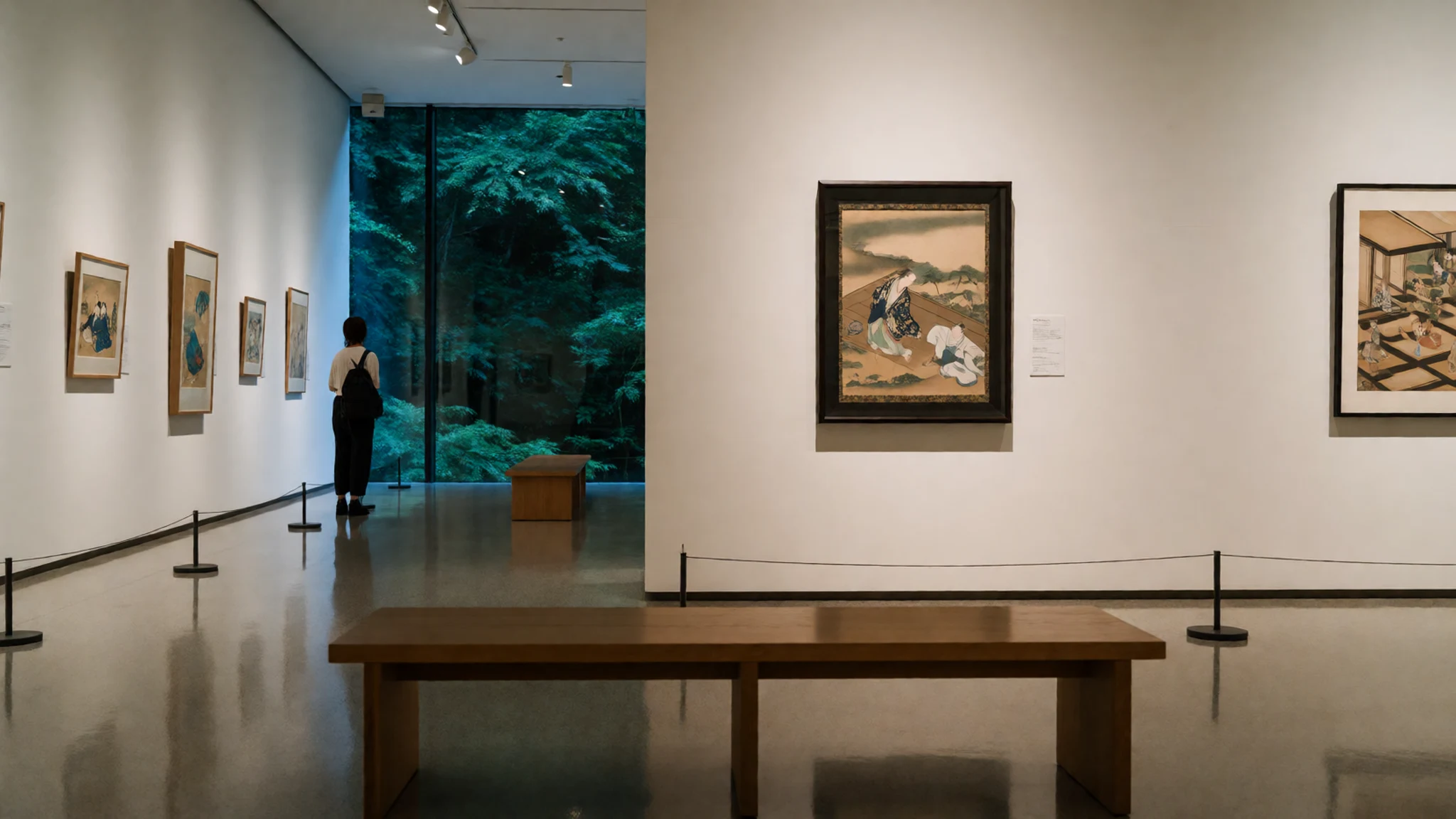
- Miyao Castle ruins — Hillside above the town
The remains of Miyao Castle sit on the hillside above the island, a reminder of the military history that ran alongside the shrine's religious story. The site is a climb rather than a visit to a restored building, so expect uneven paths and little shade. It suits a slower morning when the shrine is still busy.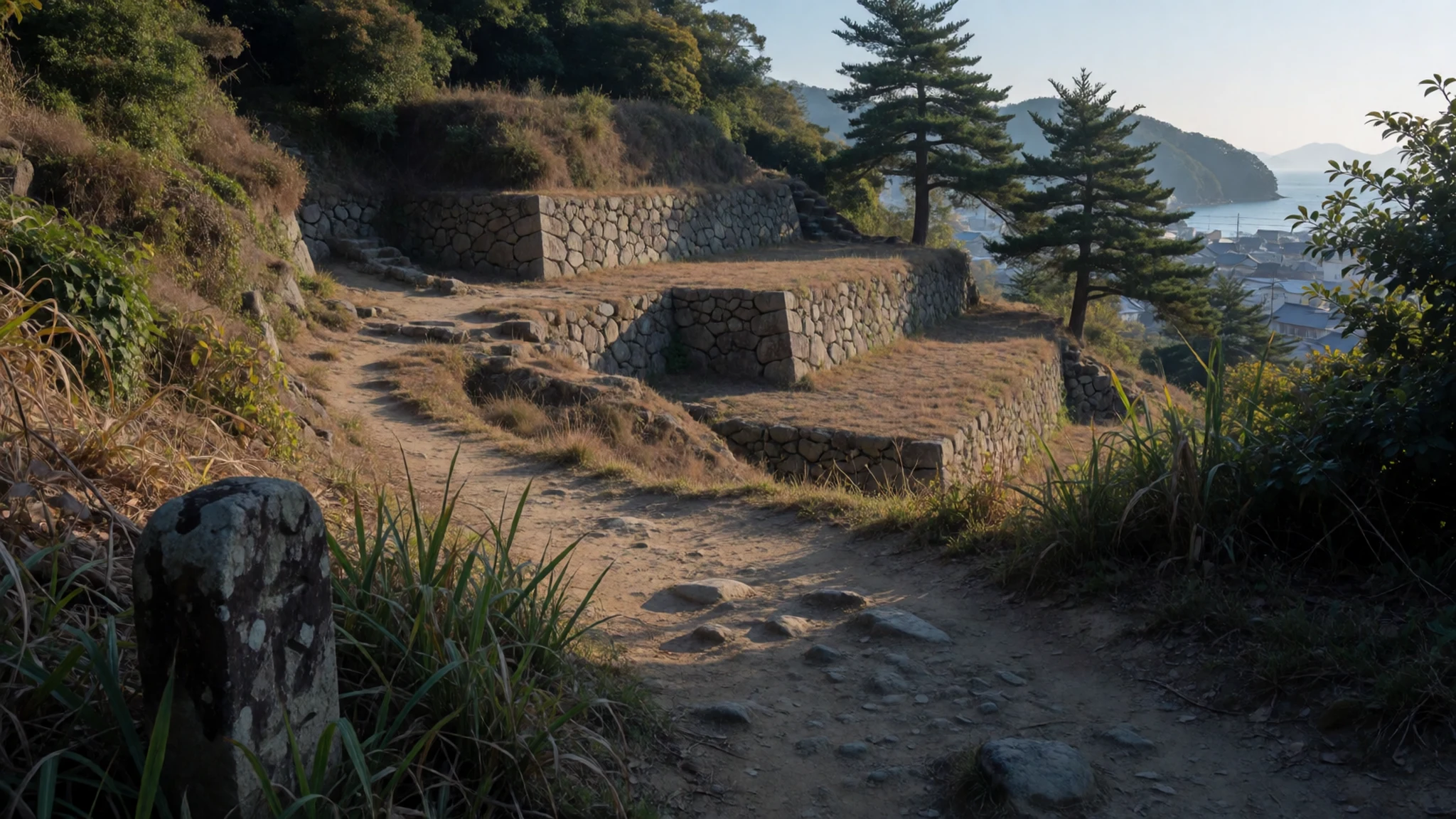
Culture
Itsukushima Shrine is a working Shinto shrine, and its rituals are part of the island's life rather than a performance laid on for visitors. The best known is the Kangen-sai, a ritual performed on the water in front of the shrine, and the shrine holds other ceremonies through the year. If you see a ceremony in progress, stand back and keep your voice low.
The shrine's taboos also shape daily custom. Shinto places treat purity seriously, which is why the shrine's history includes the 1555 battle on the island and the purification that followed. Visitors are expected to respect the grounds. Shoes come off at the buildings where the floors are raised, and you should follow the marked route rather than wandering into off-limits areas.
Photographing the shrine is generally welcome from outside and along the walkways, but priests and worshippers should not be photographed without asking. Keep the crowds moving at the torii, don't climb on the gate or its base, and don't drop litter near the deer that roam the island. Remove your shoes where the floors are raised, and keep your voice down inside the halls.
What to wear
Traditional dress at Itsukushima Shrine follows the usual Shinto pattern. Priests wear layered robes called kariginu or hakama, usually in plain silk, with shades and cuts that mark rank and role. Shrine maidens, the miko, wear white kosode tops with red hakama skirts, typically in lightweight silk or cotton weaves. These garments show up at ceremonies rather than in everyday visits.
In daily life, most people on the island wear ordinary clothes: jeans, trainers, light cotton and waterproof jackets. Local shopkeepers and staff dress for the weather and the crowds, and the older residents often wear simple muted colours. Few visitors wear anything traditional, though some rent kimono in Hiroshima and wear them around town.
For a visit, dress for the weather and the walking. Summer is hot and humid, so choose breathable cotton or linen and a sun hat. Autumn and spring call for a light layer. Wear shoes that slip off easily, since you will remove them at the raised floors, and that are comfortable on steps and forest paths. Avoid revealing clothing inside the shrine precinct, and keep shoulders covered for the most respectful look.
What to eat
- Grilled Miyajima oysters — Eateries along the shopping street from the ferry pier
Oysters from the Seto Inland Sea are a famous island speciality, often grilled in their shells over charcoal with a splash of soy or a little sauce. The shell opens with the heat and the meat stays juicy. They are seasonal and sell out at some places by late afternoon, so eat them at lunch.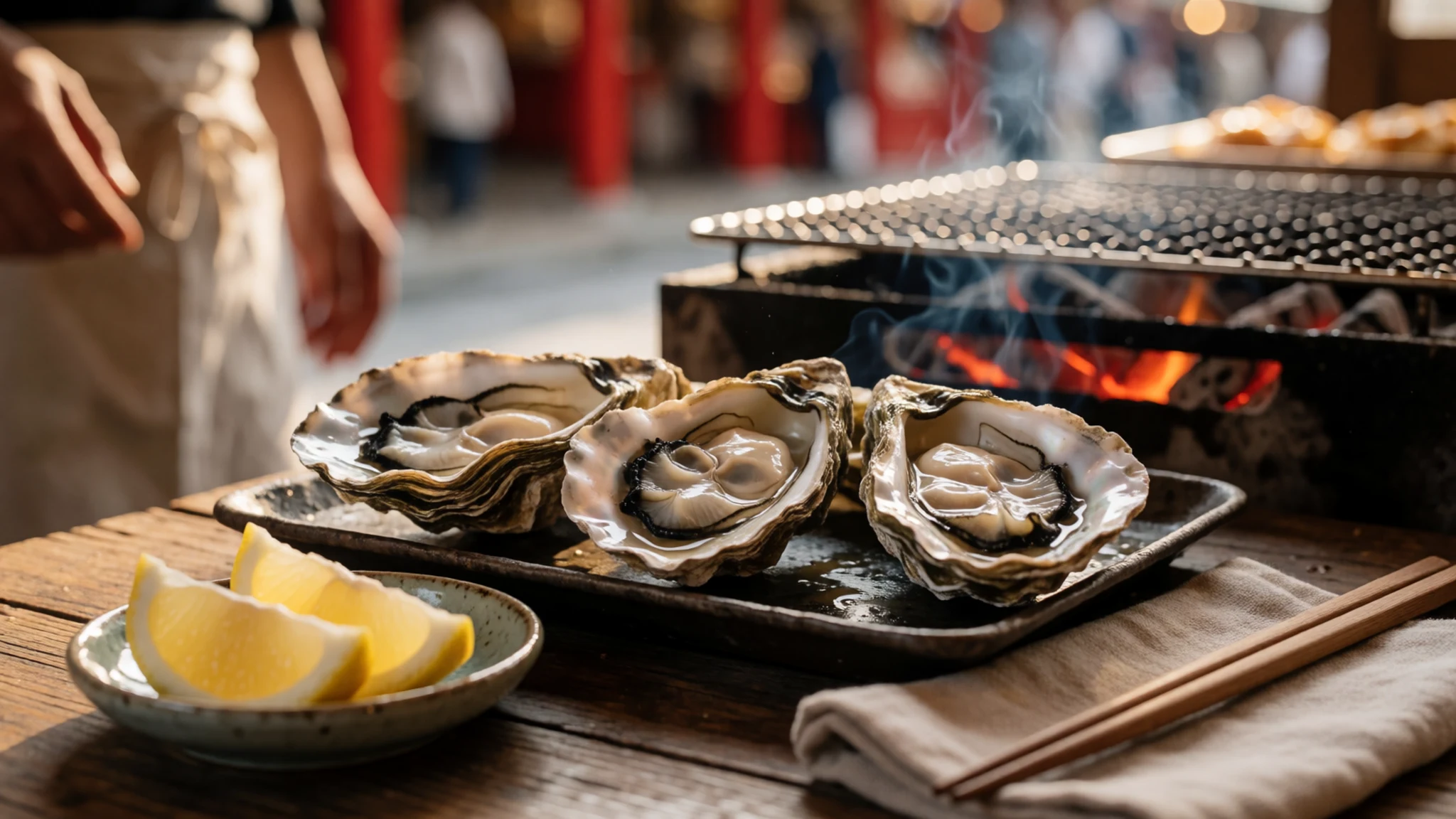
- Momiji manju — Souvenir shops on the approach street
These small cakes are shaped like maple leaves and filled with sweet bean paste, custard or chocolate. They are a classic souvenir, and you will see them piled in shop windows along the approach. Buy a box to take home, or eat a warm one from a stall as you walk.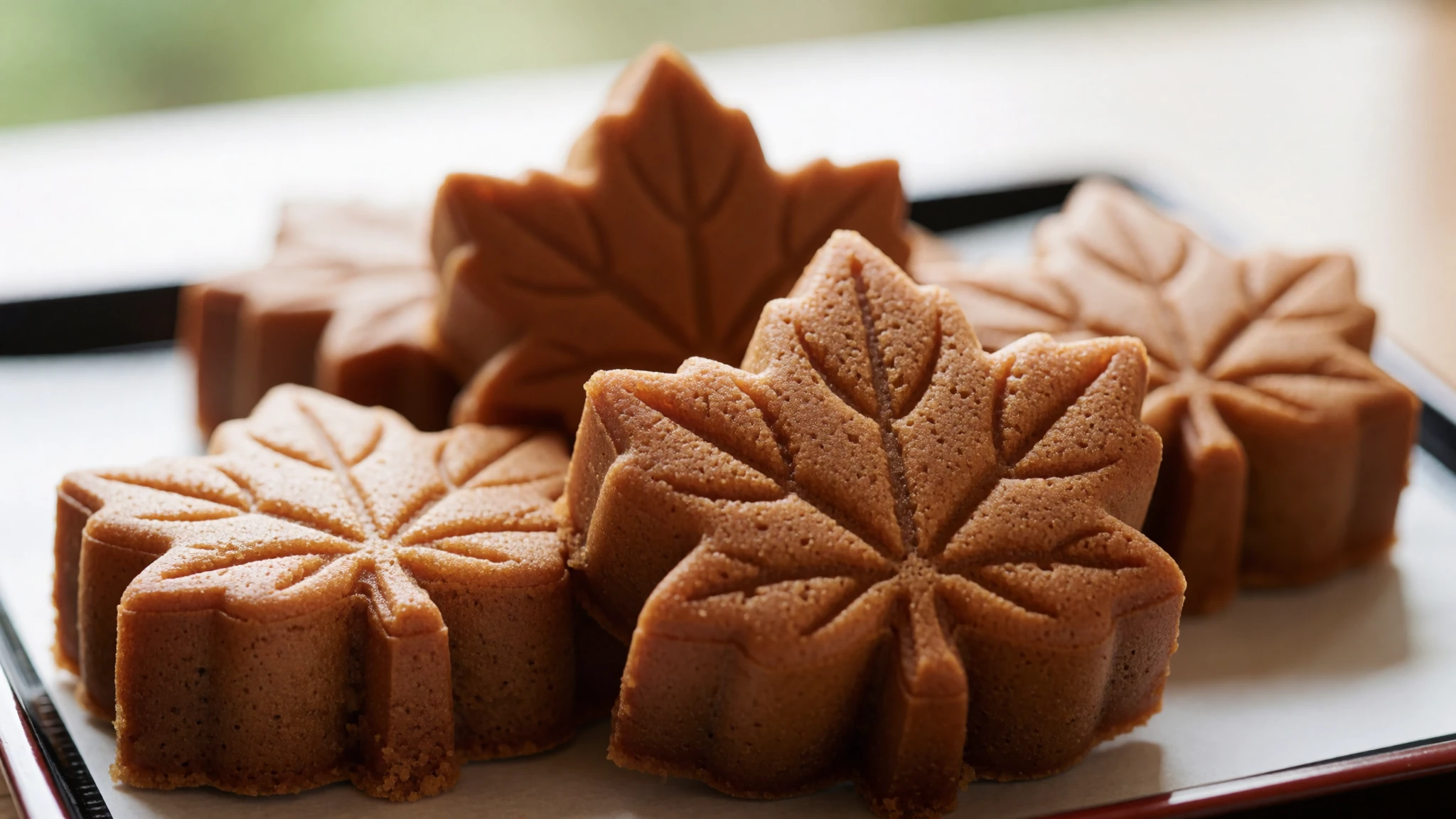
- Anago meshi — Lunch-time eateries near the ferry terminal
Sea eel grilled over charcoal, glazed with a sweet soy sauce and served on rice, is a local favourite in the Hiroshima area. It is rich, so a modest portion goes a long way. Look for it on lunch menus in eateries near the pier. - Hiroshima-style okonomiyaki — Griddle restaurants in Hiroshima city centre
This layered savoury pancake is built with cabbage, noodles and sauce, cooked on a griddle in front of you. The city's version stacks the ingredients rather than mixing them. It is a short trip from the island, so make it a mainland stop on the way back. - Momiji-themed sweets from the market — Small confectioners on the main approach street
Beyond the maple cakes, small shops on the island sell pastries and sweets built around local seasonal flavours. Look at what the shop is making that day rather than expecting a fixed menu. Sampling a few small pieces is an easy way to eat your way through the island's approach street.
Plan it
Best time. Spring, from late March to April, is the busiest and most scenic season, with blossom around the island. Late October to November gives autumn colour and cooler air. June is the rainy season, and summer is hot and humid, so the forest walks and shrine walkways are harder work then.
How long. 2
Getting there. Fly or travel to Hiroshima, then take the train to Miyajimaguchi Station on the mainland. From there, the ferry crosses to the island, and the crossing takes only a few minutes. Check the ferry timetables and the station information before you travel, as schedules vary.
Budget. mid
Tips
- Arrive before 8 am to see the torii and shrine with few people around
- Check tide times before you go, since the gate looks different at high and low water
- Carry cash for small shops and stalls, and check the official site for the current shrine information
- Bring water and sturdy shoes if you plan to climb Mount Misen
- Book an overnight stay on the island if you want to see the shrine in the evening or early morning
Etiquette
- Remove your shoes where the floors are raised, and follow the marked route inside
- Ask before photographing worshippers or ceremonies, and keep your voice low inside the shrine
- Do not feed or chase the deer, and dispose of litter in the bins provided
Nearby
Sources
- Wikidata Q191763 (CC0)
- Wikipedia: Itsukushima Shrine (rev 1381490386) (CC BY-SA 4.0)
- Wikivoyage: Hatsukaichi (rev 5351624) (CC BY-SA 4.0)
- Photo: The torii gate at Itsukushima Shrine (01-itsukushima-gate.jpg) (CC BY 3.0)
- Photo: Itsukushima Shrine Torii Gate (02-itsukushima-shrine-torii-gate-13890465459.jpg) (CC BY-SA 2.0)
- Photo: High tide view from within the shrine (03-itsukushima-shrine-at-high-tide.jpg) (CC BY 3.0)
- Photo: Itsukushima Shinto Shrine (04-itsukushima-shinto-shrine.jpg) (CC BY-SA 2.5)
- Photo: Torii gate 01 (05-tori-gate-01.jpg) (CC BY 3.0)
- Photo: Honden of Itsukushima-jinja (06-itsukushima-jinja-honden.jpg) (Public domain)
- Photo: Itsukushima Honden Haiden (07-itsukushima-honden-haiden.jpg) (CC BY 2.5)
- Photo: Kangen-sai ritual (08-kangen-4.jpg) (CC0 1.0)


