Ithaca
Ithaca, Greece
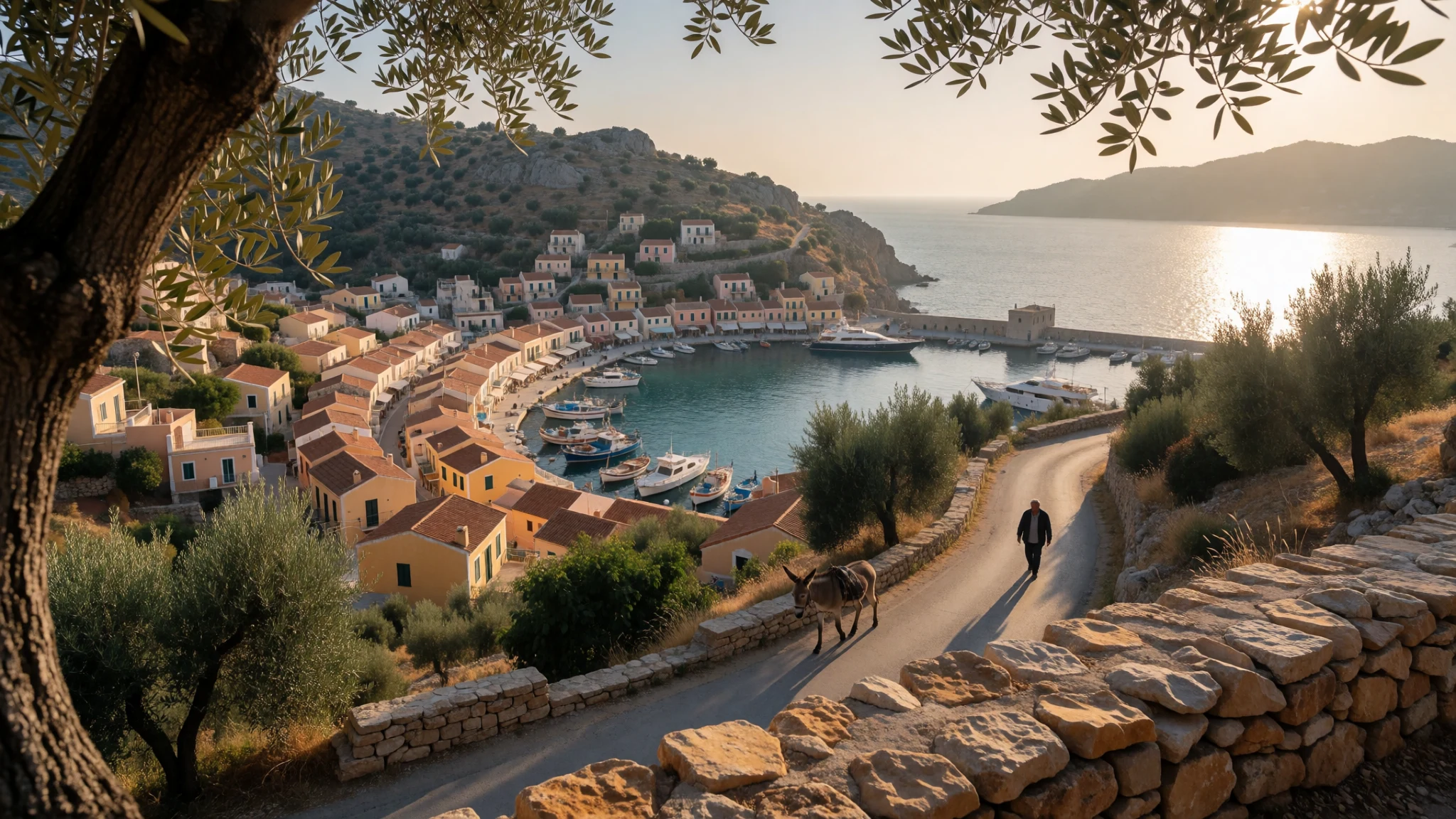
Ithaca is a quiet Ionian island of olive terraces and sheltered harbours, long tied to Odysseus and the journey home.
The place
Ithaca, called Ithaki in Greek, is a small island in the Ionian Sea, set just off the north-east coast of Kefalonia, with the mainland a pale haze to the east. Roughly 3,200 people live here. The island is long and thin, about 23 km from end to end, and nearly cut in two by the isthmus of Aetos, which is only 600 metres wide. The two halves curl around the deep bay of Molos, and an inner arm of that bay forms the harbour of Vathy, the capital and the largest settlement. Stavros, in the northern half, is the second village. The land is mountainous and stony with little flat farmland, so life has always gathered in a few harbours and on terraced slopes of olives. Roads twist along the ridges and drop to small coves with pebble beaches and very clear water. A tiny islet, Lazaretto, sits at the mouth of Vathy's harbour and carries a church and the ruins of an old prison. Most visitors come for walking, swimming, sailing and slow evenings by the water rather than for nightlife or big resorts. Ithaca is widely identified with Homer's island, the home of Odysseus in the Odyssey, although other places have been proposed over the centuries. The legend gives the island a sense of purpose, but the everyday scene is fishing boats, village cafés and goats on the hillsides.
Its story
Ithaca has been settled since the fourth millennium BCE, and traces of walls, buildings and a road show that people stayed on through the early Bronze Age. In the Mycenaean period it may have been the centre of a small kingdom, which fits the Homeric picture of Odysseus as its ruler, though the poem is legend and not a record. Later the island passed to Rome, then to the Byzantine Empire. In the 13th century the Normans held it, and after a brief spell of Ottoman control it came under Venice. The Napoleonic era brought a quick succession of masters. France took the island in 1797, a Russian and Ottoman force removed the French in 1798, France returned in 1807, and Britain took over in 1809. After 1815 Ithaca belonged to the United States of the Ionian Islands, a British protectorate, and that British chapter explains some of the older public buildings and the island's long familiarity with English speakers. In 1830 the local community asked to join the newly formed Greek state. That wish was only met in 1864, when Britain handed over the Ionian Islands to Greece, partly as a gesture of goodwill toward the new king, George I. Through all these changes Ithaca's fame rested on a poem. The idea of a hard journey ending at a small rocky home has made the island a symbol far beyond its size.
What to see
- Vathy and the Lazaretto islet — Vathy
Vathy is the island's capital, a horseshoe of pastel houses around a deep, sheltered harbour. The best way to see it is on foot: walk the waterfront, sit at a café, and watch ferries and yachts come in. The small Lazaretto islet at the harbour mouth, with its church and old prison ruins, can be seen from the quay.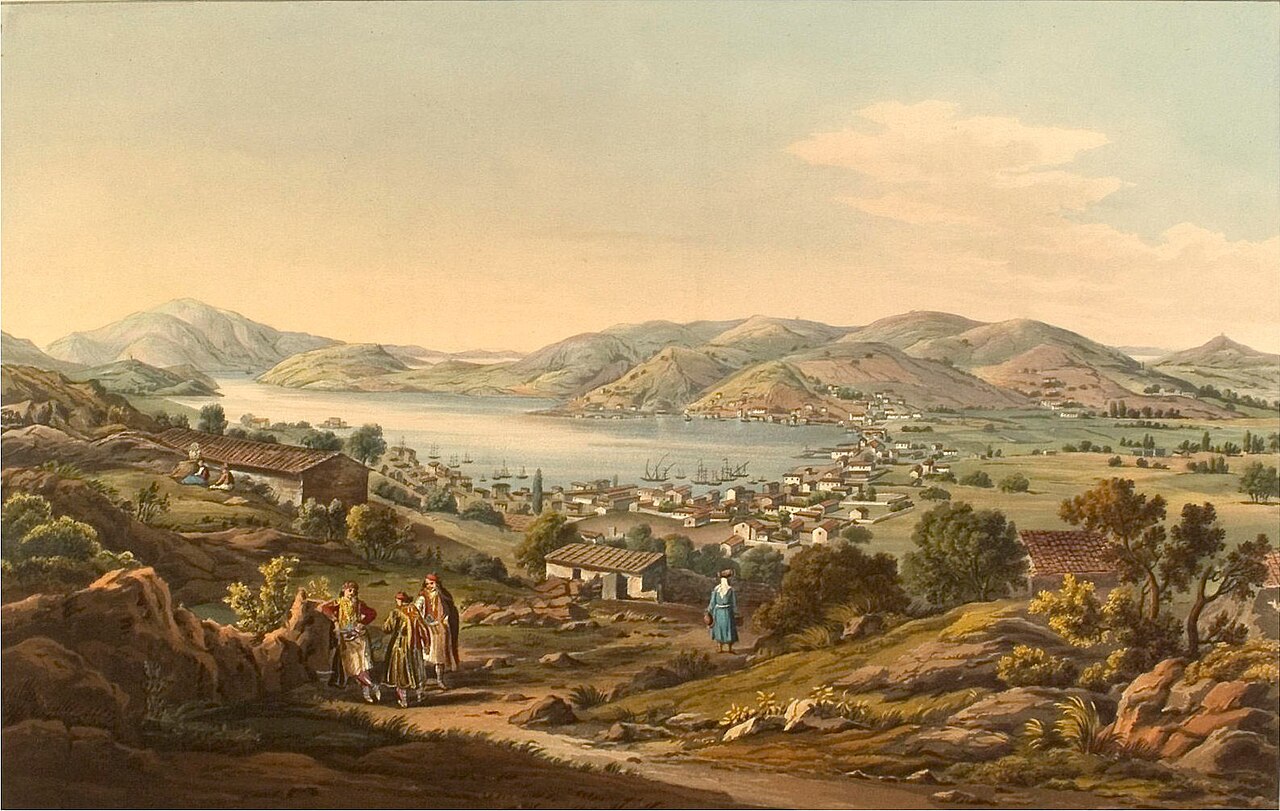
- Polis Bay and the Odysseus cave — Polis Bay, north-west
Polis Bay, on the north-west coast, is associated with a cave said to honour Odysseus. Whatever its true history, the setting is atmospheric: a cliff-backed bay with a pebbly shore. Go early or late for quiet, and check locally on access, because paths and signs can change between seasons. - Stavros and the northern hills — Stavros, north
Stavros is the main village of the northern half and a good base for hill walks. The surrounding slopes are rocky and dotted with olives, and the views open out toward Kefalonia and the mainland. The village has a small square with simple eateries, and it feels more rural than the harbour towns.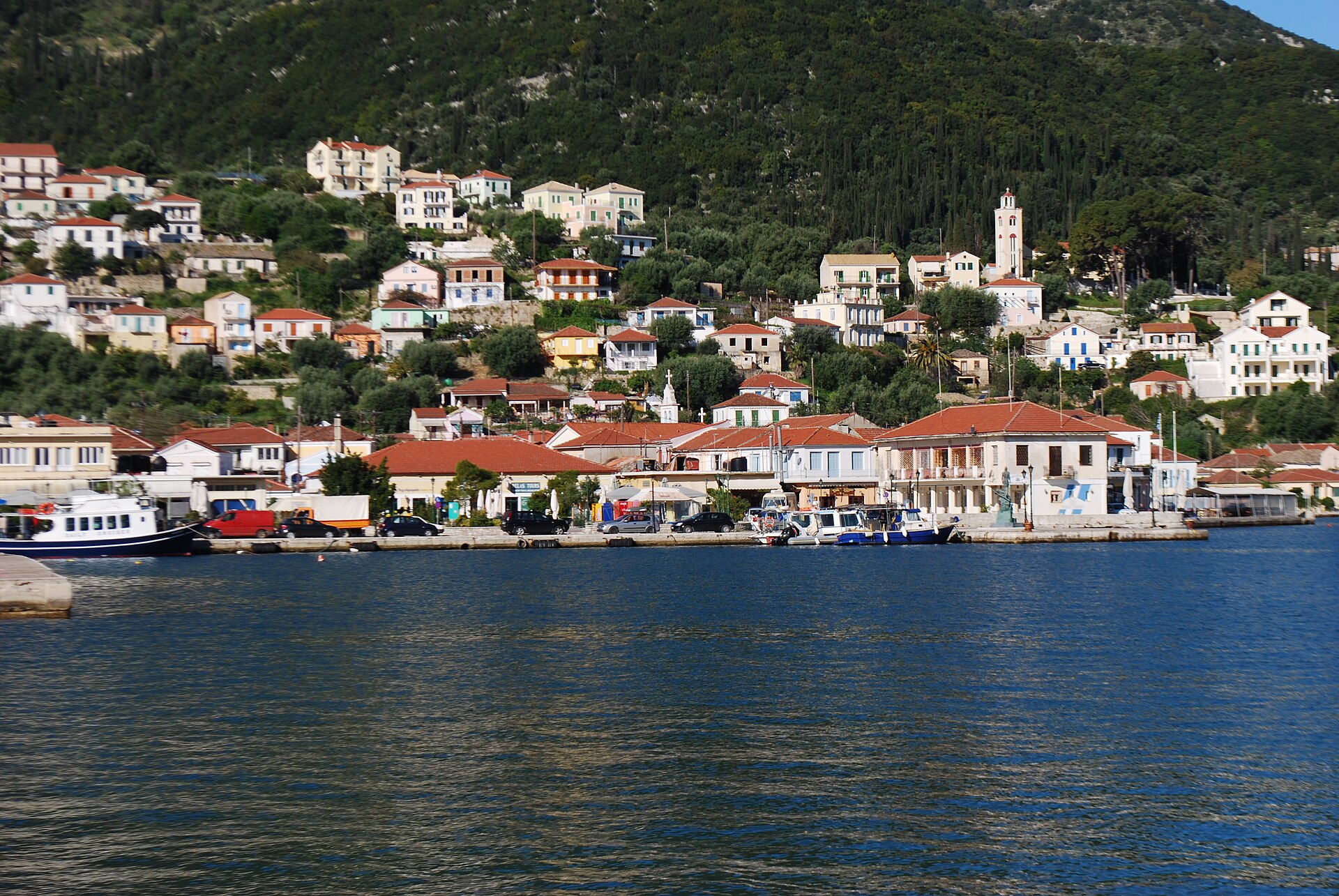
- Kioni and Frikes — North-east coast
Kioni and Frikes are small harbour villages on the north-east coast. Both are favourites with sailors, and in summer the quays fill with boats. Kioni, tucked into a steep bay, is especially photogenic in late afternoon light. Both suit a long lunch by the water and a swim from nearby rocks or pebbles.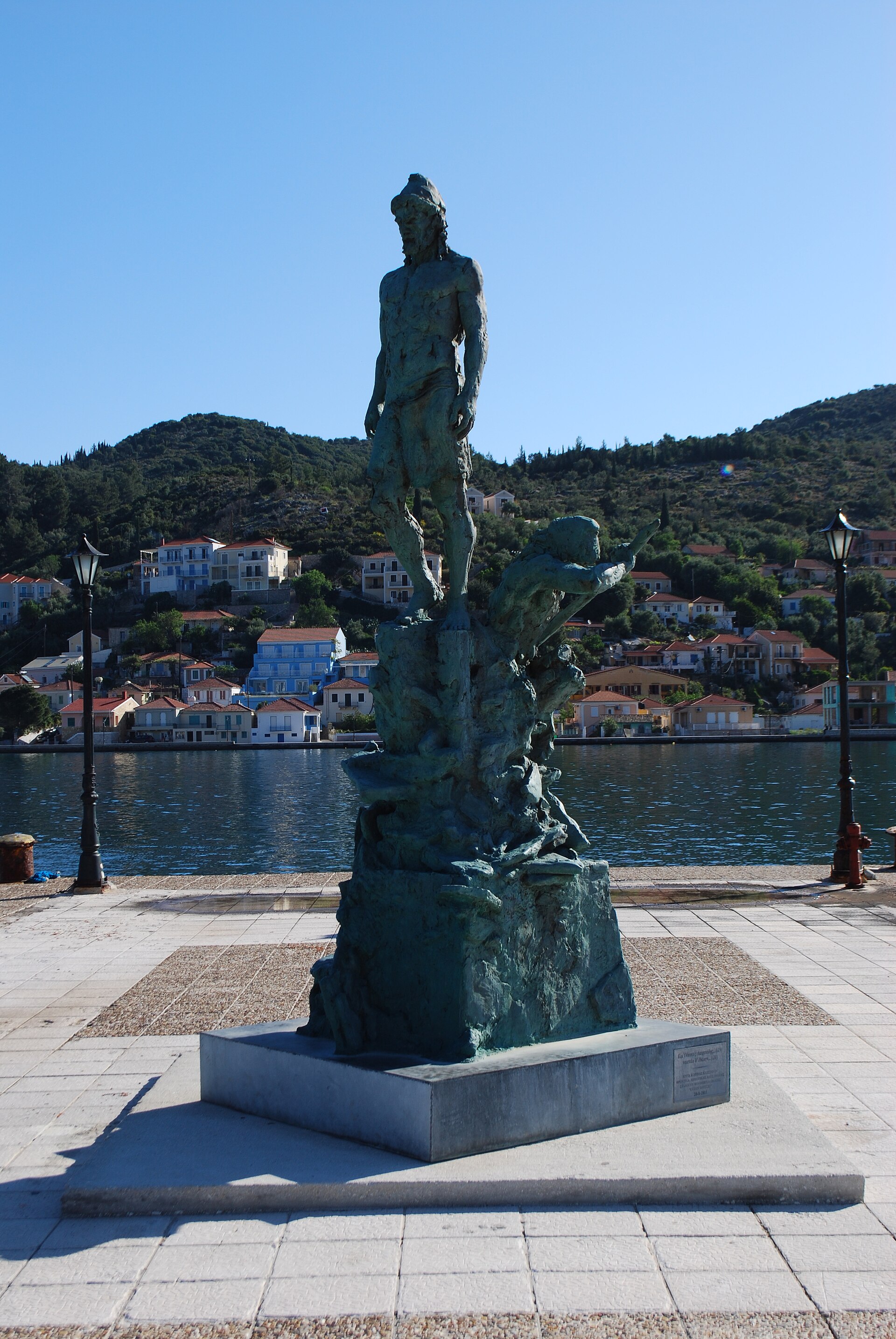
- Aetos isthmus and Molos Bay — Centre of the island
The narrow isthmus of Aetos joins the two halves of the island and gives fine views over both coasts. It is a good place to understand Ithaca's shape, with the bay of Molos opening to one side. Stop at a viewpoint on the road for a sense of the scale and the surrounding hills.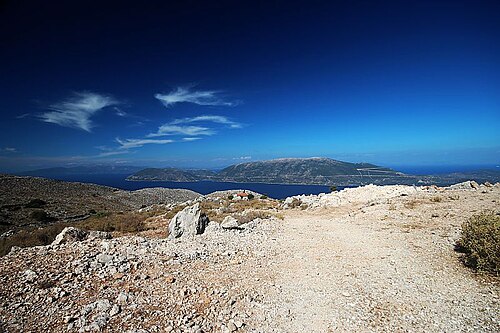
Culture
Ithaca's culture is shaped by Greek Orthodox faith, seafaring and a long, proud attachment to Homer. Village life revolves around the church, the harbour and the seasonal calendar, and many festivals fall on saints' days, when a village may hold a service followed by music, food and dancing. Easter and the 15 August feast of the Virgin are the most widely observed dates across Greece, and Ithaca follows the same rhythm, so a visit around them can mean closed shops but a warm local atmosphere. Because the island is small, people tend to know one another, and greetings in shops and cafés matter. Learning a few Greek words such as kalimera and efharisto is appreciated. The Homeric connection is part of local identity, and it appears in place names, in the names of businesses and in the island's guidebook tales, but residents live with it lightly and enjoy a visitor's curiosity more than a lecture. Traces of Venetian and British rule survive in architecture and in the occasional phrase. Evenings are social, with long meals that begin late, especially in summer, and a slow pace is part of the experience. Cover your shoulders and knees before entering any church or monastery, and keep your voice low if a service is under way.
What to wear
Ithaca has no single famous costume, but festive dress across the Ionian islands has long included embroidered cotton and linen blouses, wool or velvet bodices and decorated aprons for women, with waistcoats and sashes for men. Today these appear mostly at folk-dance events, school parades and church festivals, particularly around national holidays, rather than in daily life. Everyday clothing is relaxed island wear: cotton shirts, linen trousers, light dresses, sandals and sun hats, with fleeces or wool jumpers for winter and for evenings on the water. Older villagers often dress a little more formally for church, and locals tend to look tidy even in simple clothes. Visitors will be comfortable in breathable fabrics in summer, with a light layer for breezy evenings at sea. Walking is a main pleasure here, and the paths are rough and stony, so shoes with a good grip are far more useful than flat sandals; trainers or light boots work well. Bring a hat, sunglasses and high-factor sun cream, as shade is limited on the coast and hillsides. Swimwear is for the beach and the boat, so pull on a shirt or sarong for the village. For churches and monasteries, pack a scarf or shawl and lightweight trousers or a long skirt that cover knees and shoulders.
What to eat
- Grilled fresh fish — Harbour tavernas in Vathy, Kioni and Frikes
Fish caught by local boats is grilled simply with olive oil, lemon and herbs. Ask what came in that day rather than choosing by name alone, as the catch varies with season and weather. It is usually served by weight with a salad and bread. - Baked goat or lamb — Village tavernas in Stavros and the hill villages
Slow-baked goat or lamb with potatoes, herbs and lemon is a classic island Sunday dish. The meat is tender and well seasoned, and portions are generous. It often needs ordering ahead or suits a shared table, especially in the quieter months. - Greek salad with local olive oil — Any taverna or village café
A plain bowl of tomatoes, cucumber, onion, olives and feta, dressed with local olive oil, is a good way to taste the island's main crop. The oil is grassy and peppery. Eat it with bread to soak up the juices. - Cheese pies — Bakeries in Vathy and the larger villages
Small pies filled with local cheese, and sometimes greens, are baked in flaky pastry and sold fresh through the morning. They make a cheap, filling breakfast or walking snack, best eaten warm with a coffee. - Ravani syrup cake — Pastry shops and cafés around the harbour
Ravani is a soft semolina cake soaked in sweet syrup, usually flavoured with lemon or orange. It is a common dessert on the Ionian islands and goes well with strong coffee. Look for a slice at the end of a meal or in a pastry shop.
Plan it
Best time. May–June and September–October, when the sea is warm, the days are bright and the island is less crowded than in high summer. July and August are hot and busier, and ferries and rooms fill up. Winter is quiet, wetter and cooler, and many seasonal businesses close.
How long. 3–4
Getting there. The nearest airport is on Kefalonia; from there take a road transfer to Sami and a short ferry to Ithaca. Ferries also run from Patras on the mainland. Check the current ferry operators' timetables, as schedules change by season. Ithaca's official site is http://www.ithaki.gr/.
Budget. mid
Tips
- Check ferry timetables before you travel, as services change by season and weather
- Book rooms early for July and August, and do not rely on finding a bed on arrival
- Hire a car or scooter if you want to reach the northern coves, and drive slowly on the winding roads
- Carry some cash for small villages and cafés, as card machines are not universal
- Take water and sun protection on every walk, because shade is scarce
- Wear sturdy shoes for stony paths, and start long walks early in the day
Etiquette
- Cover shoulders and knees when you enter a church or monastery
- Ask before photographing people, especially at religious events
- Take litter with you from beaches and paths
Nearby
Sources
- Wikidata Q187471 (CC0)
- Wikipedia: Ithaca (island), rev 1384789803 (CC BY-SA 4.0)
- Wikivoyage: Ithaca (Greece), rev 5078044 (CC BY-SA 4.0)
- Andy / Andrew Fogg, On top of the world (CC BY 2.5)
- Jean Housen, Vue d'Ithaque (094) (CC BY 3.0)
- Pitichinaccio, Locator map of Ithaca municipality (CC BY 3.0)
- Rien Post, Olive tree on Ithaca (CC BY 3.0)
- Carlo Sellitto, Leonardo di Tocco, Duke of Zakynthos (Public domain)
- Edward Dodwell, Port Bathy and Capital of Ithaca (Public domain)
- Francesco Hayez, Odysseus at the court of Alcinous (Public domain)
- Jean Housen, Vue d'Ithaque (131) (CC BY 3.0)


