Islamabad
Islamabad, Pakistan
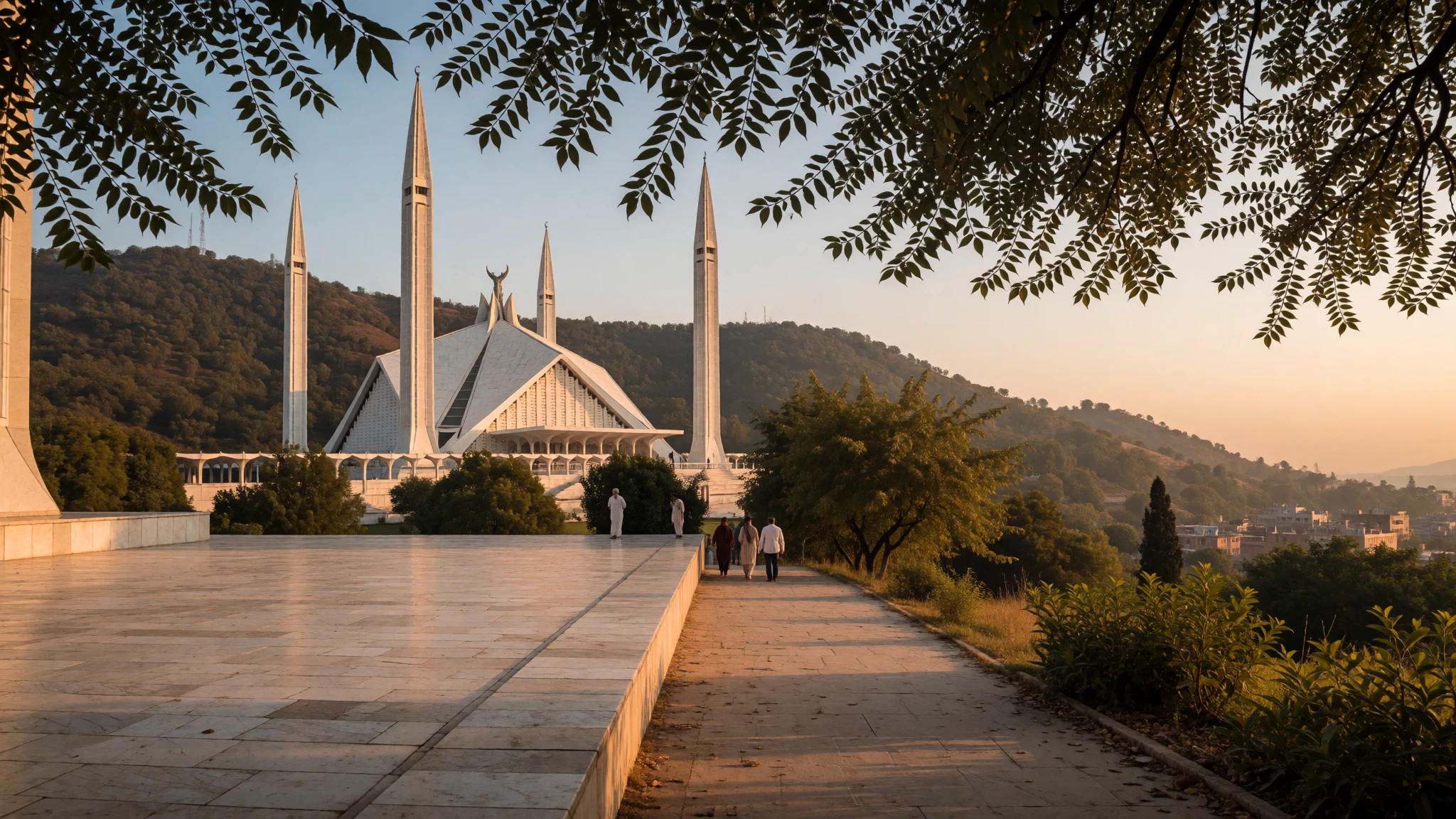
Islamabad is a calm, leafy planned capital under the Margalla Hills, good for museums, hill trails and a first, gentle taste of Pakistan.
The place
Islamabad is a capital that was drawn on a drafting table before it was built, and it still feels like it. The city sits at about 490 metres on the northern edge of the Punjab plains, with the wooded Margalla Hills forming a green wall behind its northern sectors. Work began in 1960, when Pakistan moved its government away from Karachi, and the Greek planner Constantinos Doxiadis laid out a grid of broad avenues and self-contained neighbourhoods called sectors, each with a letter-and-number name and its own market, schools and park. The result is calm, orderly and unusually green by South Asian standards: wide roads, low houses behind hedges, and long stretches of forest kept as park land. Just over a million people live in the city itself. Rawalpindi, its older and far busier neighbour, runs into it on the south side and supplies much of the noise, bazaar life and bus traffic that Islamabad lacks. Ministries, embassies and universities set the daily rhythm, so weekdays are brisk while weekends are for the hills and café terraces. Anyone expecting a medieval bazaar city will be disappointed. Those who want trails, museums, quiet evenings and an easy base for the north will find it very workable. Summers are hot, winter nights are properly cold, and the monsoon turns the hillsides a vivid green.
Its story
Islamabad is a young city standing on very old ground. The Pothohar Plateau, which holds the capital, has given up Stone Age tools from the terraces of the Soan River, showing that people were shaping stone here in the warmer breaks between ice ages, long before farming. Later excavations point to Neolithic communities settled along the same river, and the wider region later belonged to the Indus Valley world. For most of history the plateau was a corridor rather than a destination. Armies heading into the subcontinent from Central Asia crossed it, among them those of Babur, Genghis Khan, Timur and Ahmad Shah Durrani. The Gakhars, a local ruling clan, built the forts of Pharwala and Rawat in the surrounding country, and small settlements such as Saidpur grew up at the foot of the hills. The modern city is a product of the early republic. Karachi, the first capital, was replaced by a purpose-built seat of government placed near the hills, and construction started in 1960. Officials, builders and their families arrived in stages, and the sectors filled in one after another over the following decades. That slow, planned growth explains the city's character: its age shows more in the size of its trees than in its buildings, and the older landscape of forts, villages and river terraces lies just beyond the last avenue.
What to see
- Faisal Mosque — Foothills of the Margalla Hills
The Faisal Mosque is the city's signature building, a modern white structure shaped like a desert tent with four slender minarets, set right against the Margalla foothills. Go in the late afternoon, when the light softens and the marble glows. Visitors are generally welcome outside prayer times, with modest dress and a scarf for women.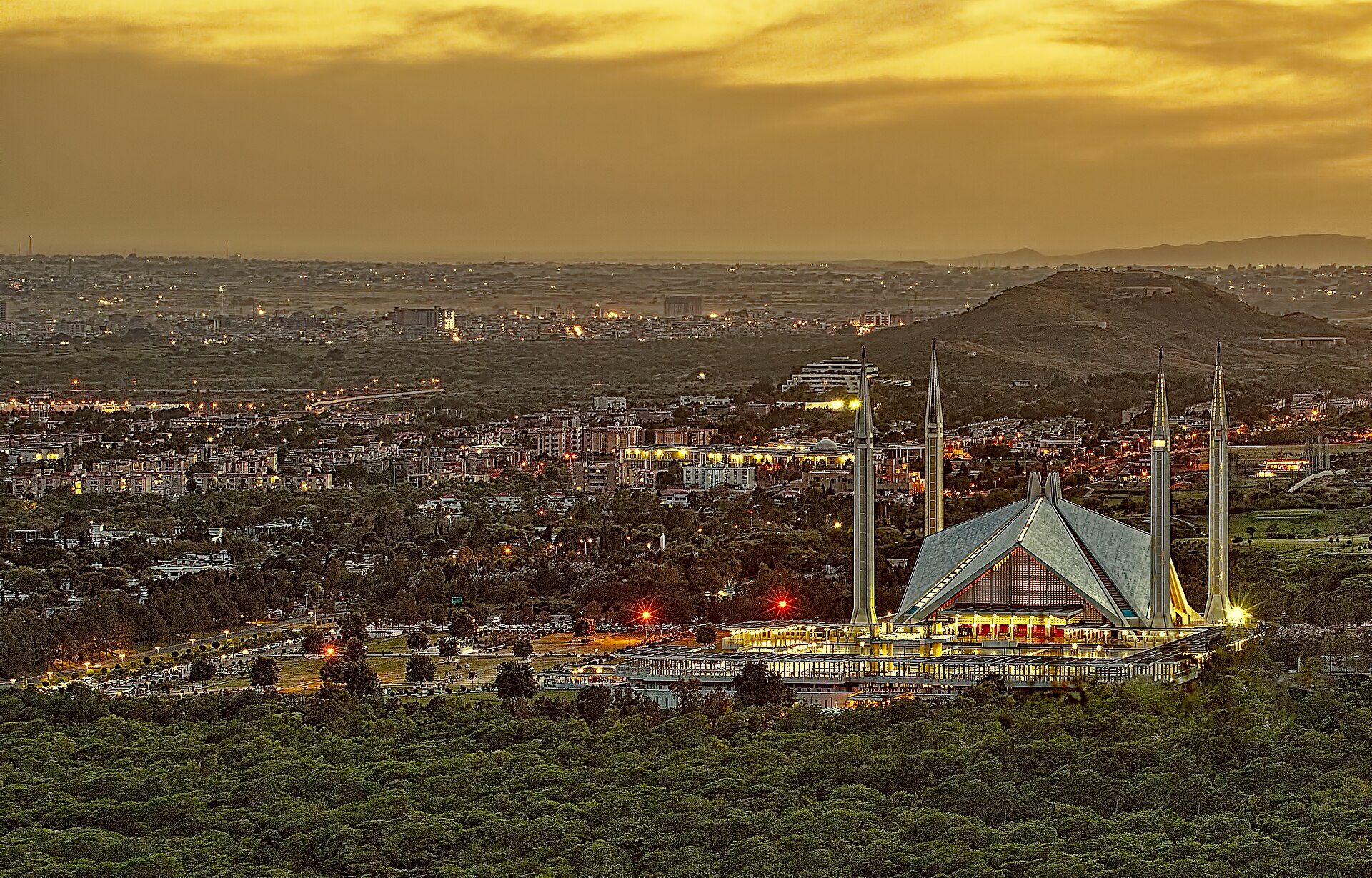
- Daman-e-Koh — Margalla Hills, above the northern sectors
Daman-e-Koh is a viewing terrace on the hillside above the northern sectors, looking over the grid of the city to the haze of the plain. On a clear day or night the layout of Doxiadis's plan is easy to read, and the mosque appears small below. Monkeys are common, so keep food out of sight.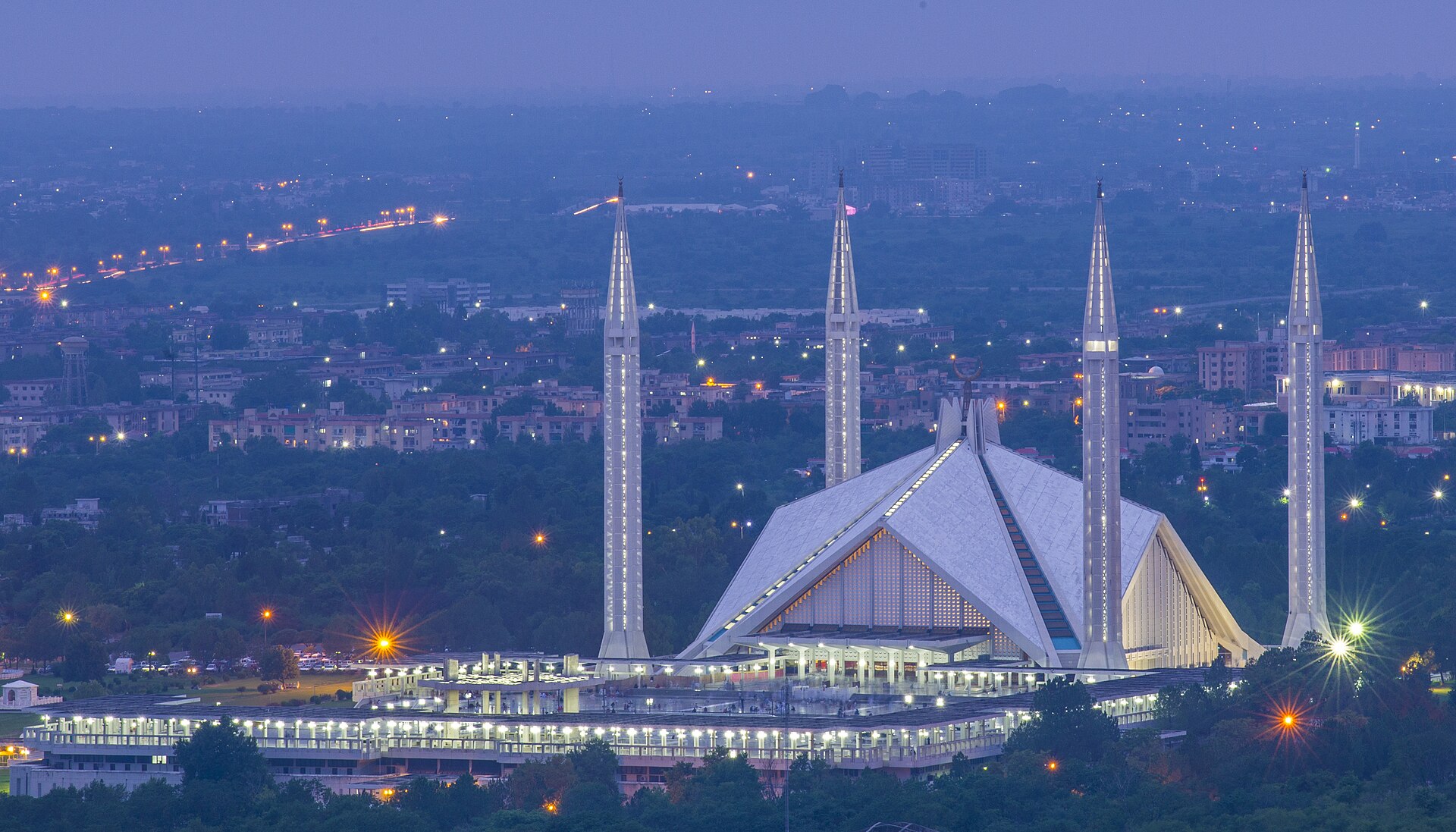
- Lok Virsa Museum — Shakarparian area, south-east of the centre
The Lok Virsa Museum is the capital's main museum of living culture, with large galleries of costume, crafts, musical instruments and village life from across Pakistan. Displays also trace links with Iran, Central Asia and China. It is a good first stop for making sense of the regional dress and food met elsewhere in the trip. - Pakistan Monument — Shakarparian hills
The Pakistan Monument is a petal-shaped landmark on a rise, its four large curved walls forming a blossom when seen from above. Inside, panels and exhibits explain the national story. It is best at blue hour, when the stonework is lit and the surrounding Shakarparian hills turn dark and quiet.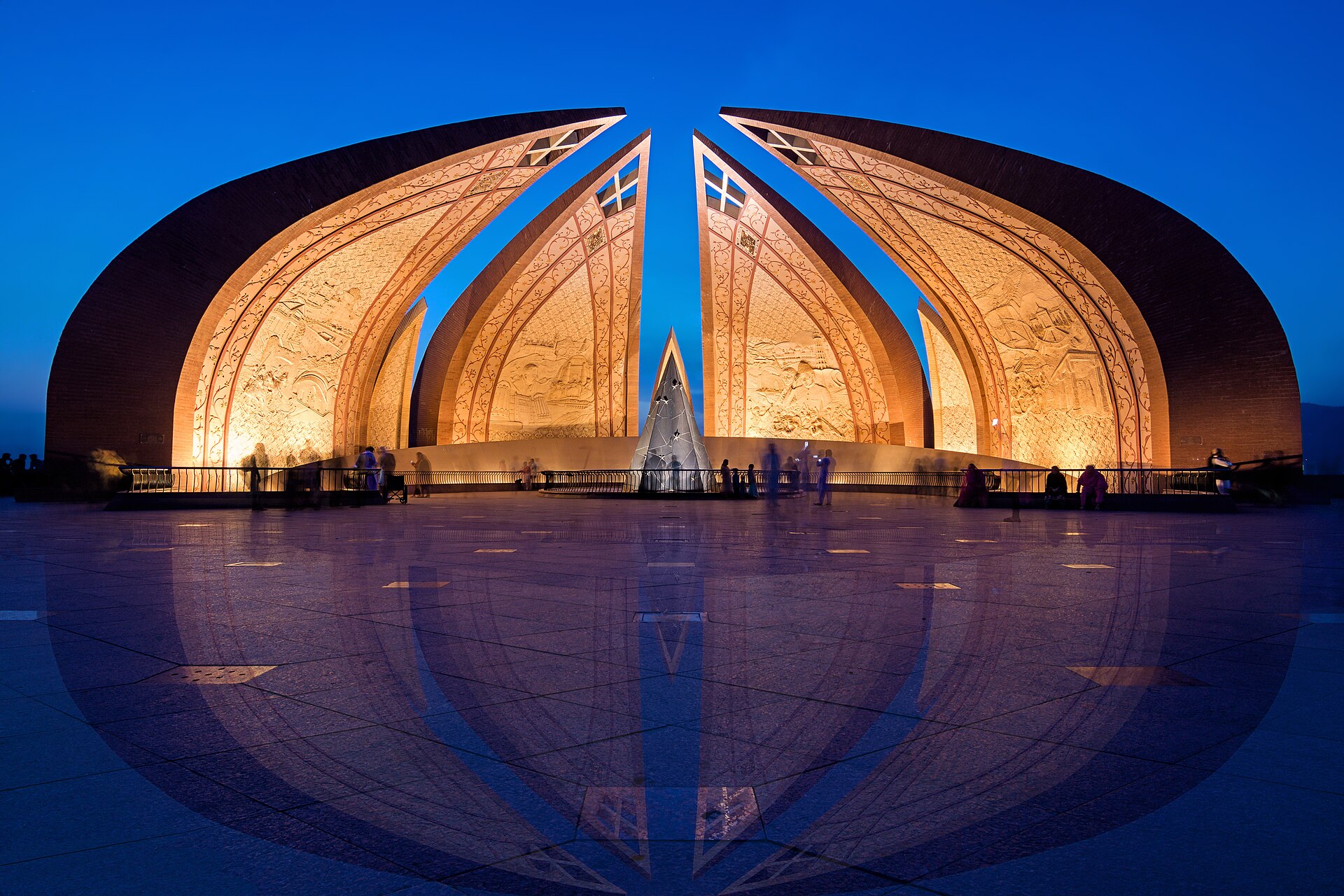
- Golra Railway Heritage Museum — Golra Sharif, west of the city
The Golra Railway Heritage Museum occupies a renovated station house from the days of the North Western Railway, with a small collection of period objects and old locomotives and carriages standing outside. It is a short drive from the centre and suits rail enthusiasts and anyone wanting a quiet, unhurried hour away from the avenues. - Saidpur Village — Margalla Hills foothills, north-east
Saidpur is an old village tucked into the foothills, restored as a small cluster of lanes, craft shops and eateries. It also keeps ponds and a preserved Hindu temple, a reminder that the area had a mixed religious past long before the capital arrived. Evenings are lively, so visit before dusk.
Culture
Islamabad is a capital of settlers. Civil servants, diplomats, soldiers and students have come from Punjab, Khyber Pakhtunkhwa, Sindh, Balochistan and beyond, so Urdu works as the common language while Punjabi and Pashto are heard everywhere, and the food, dress and festivals on show are drawn from the whole country. The city is Muslim in character, and the rhythm of the day follows prayer: shops and offices slow around Friday midday prayers, and Ramadan changes opening hours and eating habits, with restaurants often quiet by day and crowded after sunset. Eid is the most important holiday, with families travelling home and the markets full beforehand. Older layers of history lie close by. The Gakhar forts at Pharwala and Rawat stand in the countryside, and Saidpur village keeps ponds and a small Hindu temple that show how mixed the area once was. Hospitality is a point of pride, and a visitor invited for tea will rarely be allowed to refuse it for long. Conversation about family, cricket and travel breaks the ice faster than politics. Public life is more formal than in many capitals, and security checkpoints are routine and best met with patience and a smile. Cover your shoulders and knees, carry a scarf, and always remove your shoes and ask before photographing people when entering a mosque or someone's home.
What to wear
Islamabad dresses mostly in the shalwar kameez, the long tunic over loose trousers that is worn across Pakistan by men and women alike. Cotton and lawn are the summer fabrics, while khaddar, a coarse hand-spun cloth, and wool shawls come out in winter. Women add a dupatta, a long scarf draped over the shoulders or head, often in printed or embroidered silk, chiffon or cotton. Men may wear a waistcoat over the kameez, and a sherwani, a long fitted coat, for weddings and formal occasions, together with leather Peshawari sandals or chappals. Eid and weddings bring out heavy embroidery, mirror work and bright colours. Day to day, the capital is more varied than other Pakistani cities. Office workers and students wear a mixture of local and western clothes, young people in jeans and kurtas, and the diplomatic and business crowd in suits. Visitors should dress modestly to feel at ease: loose, light cotton that covers shoulders and knees works for both sexes, and women will find a scarf useful for mosques and shrines. Summers are hot, so breathable fabric and a sun hat matter, while winter evenings need a jacket or shawl. Comfortable closed shoes suit the Margalla trails, and slip-on footwear makes mosque visits simpler. Buying a shalwar kameez locally is cheap, practical and appreciated.
What to eat
- Seekh and chapli kebabs — Evening barbecue stalls in sector markets and Rawalpindi
Minced meat kebabs grilled over charcoal, or the flat, spiced chapli style from the Pashtun tradition, served with naan and chutney. Look for smoky barbecue counters in busy sector markets and around Rawalpindi, especially in the evening. - Chicken or mutton karahi — Roadside eateries and dhaba-style restaurants
A tomato, ginger and green-chilli curry cooked and served in a wok-shaped pan, eaten scooped with fresh naan. The better versions are simple, with little more than fat, salt and spice. It is a standard order at roadside eateries. - Nihari and paye — Old-style breakfast restaurants, especially around Rawalpindi
Slow-cooked beef or trotter stews, rich and thick, traditionally eaten at breakfast or on cold mornings with naan, lemon and sliced ginger. They are heavy, so share a bowl. Early opening is part of the point. - Halwa puri breakfast — Bakeries and breakfast counters in neighbourhood markets
A weekend breakfast of fried puffed bread with sweet semolina halwa, spiced chickpeas and potato curry, washed down with sweet milky tea. It is filling, cheap and social, and often queues form on holiday mornings. - Pulao and biryani — Family restaurants and lunch counters in commercial sectors
Fragrant rice dishes cooked with meat and whole spices, the pulao being milder and the biryani spicier. Both come with raita, yoghurt with cucumber, and are common lunch choices on weekends and during family gatherings. - Doodh patti chai — Tea stalls and café terraces across the city
Strong tea boiled with milk and sugar, served in small cups at tea stalls and cafés all day. Pashtun-style kehwa, a green tea with cardamom, is popular in winter. Both are good for a short pause between sights.
Plan it
Best time. March–April and October–November, when days are warm and clear and the hills are green or turning. June brings fierce heat, July and August bring humid monsoon rain, and December to January is cold at night.
How long. 2–3
Getting there. Fly to Islamabad International Airport. From there, take the orange line Metro Bus or a taxi into the centre, agreeing the fare before you set off. Long-distance buses mostly arrive in Rawalpindi, a taxi ride away, so book ahead.
Budget. mid
Tips
- Check current security and travel advice before you go, and carry your passport and a photocopy for checkpoints.
- Walk the Margalla trails early in the morning, in cool weather, and carry water.
- Carry some cash, since small eateries and shops often do not take cards.
- Use ride-hailing apps or agree taxi fares in advance.
- For official information, see http://www.islamabad.gov.pk/.
Etiquette
- Dress modestly and remove shoes before entering a mosque.
- Ask permission before photographing people, and do not photograph government buildings or checkpoints.
- Eat and drink discreetly in public during daylight in Ramadan.
Nearby
Sources
- Wikidata Q1362 (CC0)
- Wikipedia: Islamabad (rev 1384375291) (CC BY-SA 4.0)
- Wikivoyage: Islamabad (rev 5425825) (CC BY-SA 4.0)
- Photo: King Faisal Mosque, Tahsin Shah (CC BY-SA 4.0)
- Photo: Faisal Mosque, Islamabad III, Fassifarooq (CC BY-SA 4.0)
- Photo: Blue Hour at Pakistan Monument, Muhammad Ashar (CC BY-SA 4.0)
- Photo: Fatima Jinnah Park baradri, Ibnazhar (CC BY 3.0)
- Photo: Parliament House, Islamabad, Usman.pg (CC BY 3.0)
- Photo: Supreme Court of Pakistan, Usman.pg (CC BY 3.0)
- Photo: Faisal Masjid from Daman-e-Koh, Abdul Baqi (CC BY 3.0)
- Photo: Islamabad City Flag, Aml-401 (CC BY-SA 1.0)


