Isla Mujeres
Isla Mujeres, Mexico
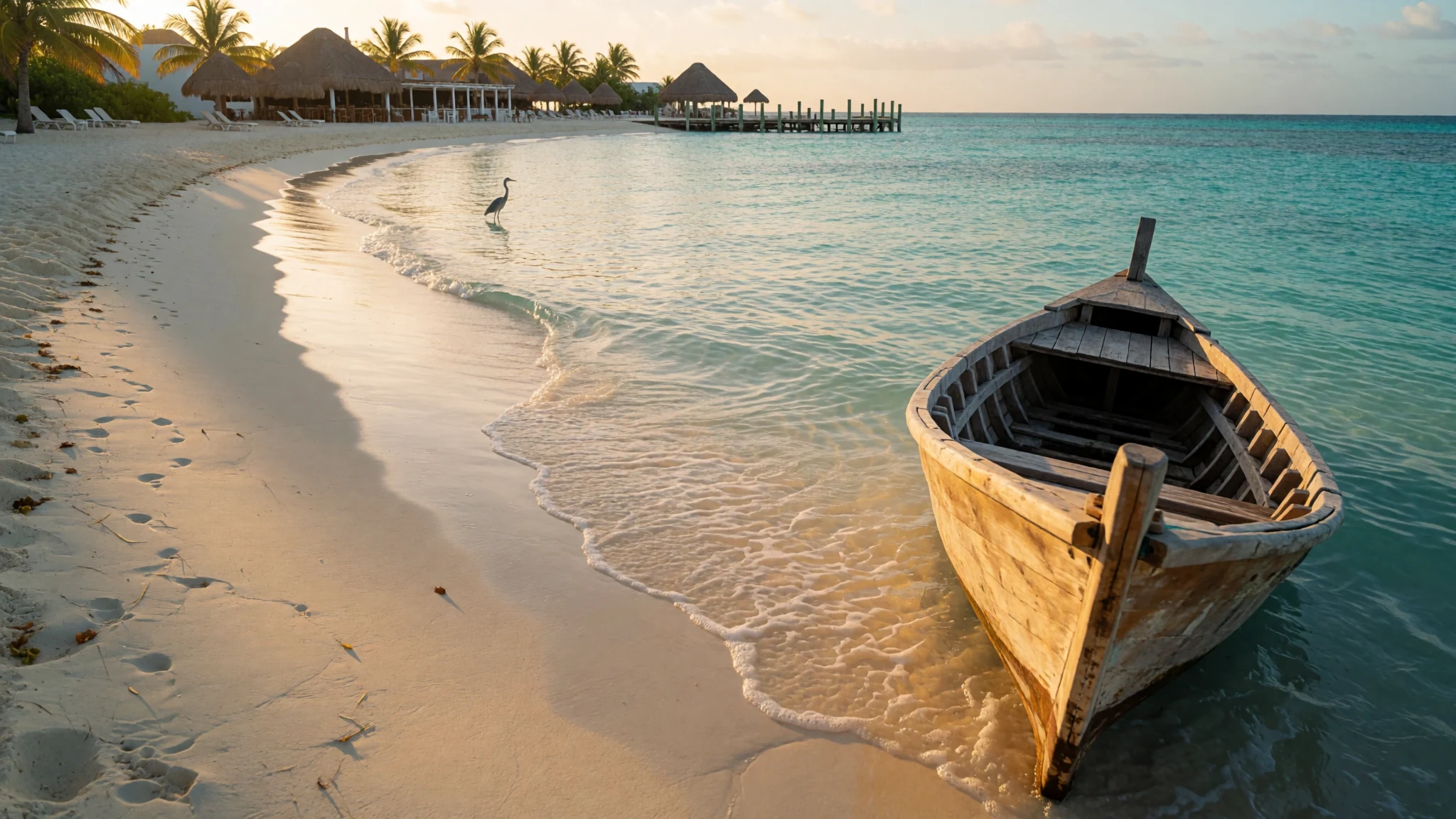
A small, unhurried island off Mexico's Caribbean coast, with calm beaches, a lagoon and Maya ruins within easy reach.
The place
Isla Mujeres sits where the Gulf of Mexico meets the Caribbean Sea, a long, slender island lying just offshore from the Yucatán Peninsula in the Mexican state of Quintana Roo. Its town, which shares the island's name and serves as the seat of the municipality, is home to 13,174 people, so it feels more like a village by the sea than a city. The island rises barely a metre above the water, and its low, sandy profile is part of its character.
The two shores could hardly be more different. The eastern side faces the open Caribbean, where the surf is stronger and the coast is rocky. The western side looks across calmer water toward the skyline of Cancún, and it is here that most swimmers and snorkellers spend their days. Part of that western coast falls within Costa Occidental de Isla Mujeres National Park, which keeps some stretches of shoreline free of building.
The town centre is small enough to explore on foot in an afternoon. Streets hold guesthouses, dive shops, bakeries and taco stands, and bicycles and golf carts are a common way of covering the rest. Life follows the ferries, which bring day visitors across from the mainland through the morning and carry them back in the evening, so the beaches are busiest in the middle of the day and quieter at either end.
The island suits people who want a slow pace after a busier trip. It works equally well for a few days of beach and seafood, for a dive or snorkel trip, or for a long lunch with the sea in view. Expect a relaxed, friendly atmosphere rather than polished resorts, and expect prices to rise in the busiest weeks.
Its story
Long before Spanish ships reached the coast, this place was held in reverence as a shrine to Ixchel, a Maya deity associated with childbirth and healing, and worshippers journeying along the shoreline came to visit it. The Spanish, who reached the region in the sixteenth century, named it Isla Mujeres, or Women's Island, after the many female figures and idols they found there.
The island formed part of the Maya province of Ekab, one of several provinces in what is now Quintana Roo. Its salt was especially valuable. Salt formed in small inland lagoons, and the Maya used it to preserve food, as medicine and as a kind of currency, which gave the island a steady place in regional trade.
A temple to Ixchel once stood on the site now occupied by the Hacienda Mundaca, a reminder of how deep the older religious life of the island ran. The shallow lagoon on the mainland side later became a useful refuge for seafarers, who could wait out storms, scrape their hulls and trade for salt. In the early nineteenth century the island was a favourite stop for pirates, and Jean Lafitte and Mundaca both spent time there, while Henry Morgan is linked with it from an earlier era.
Mundaca lived on the island for years and built a large hacienda in the hope of winning a local woman, Martiniana (Prisca) Gómez Pantoja, as his wife. She married someone else, and the house became a monument to a romance that never happened. Local settlers later founded the village of Dolores, which grew into the modern town. Today the hacienda's gardens, walls and arches are among the island's most visited sights.
What to see
- Hacienda Mundaca — Town, on the island's built-up side
A nineteenth-century hacienda built by the pirate Mundaca, set in gardens with walls, arches, exotic plants and an orchard. Birds nest in the grounds, and there are cattle and fruit trees, so it makes a quiet break from the beach. Walk the arches slowly, then sit in the shade of the gardens and take in the story behind the house.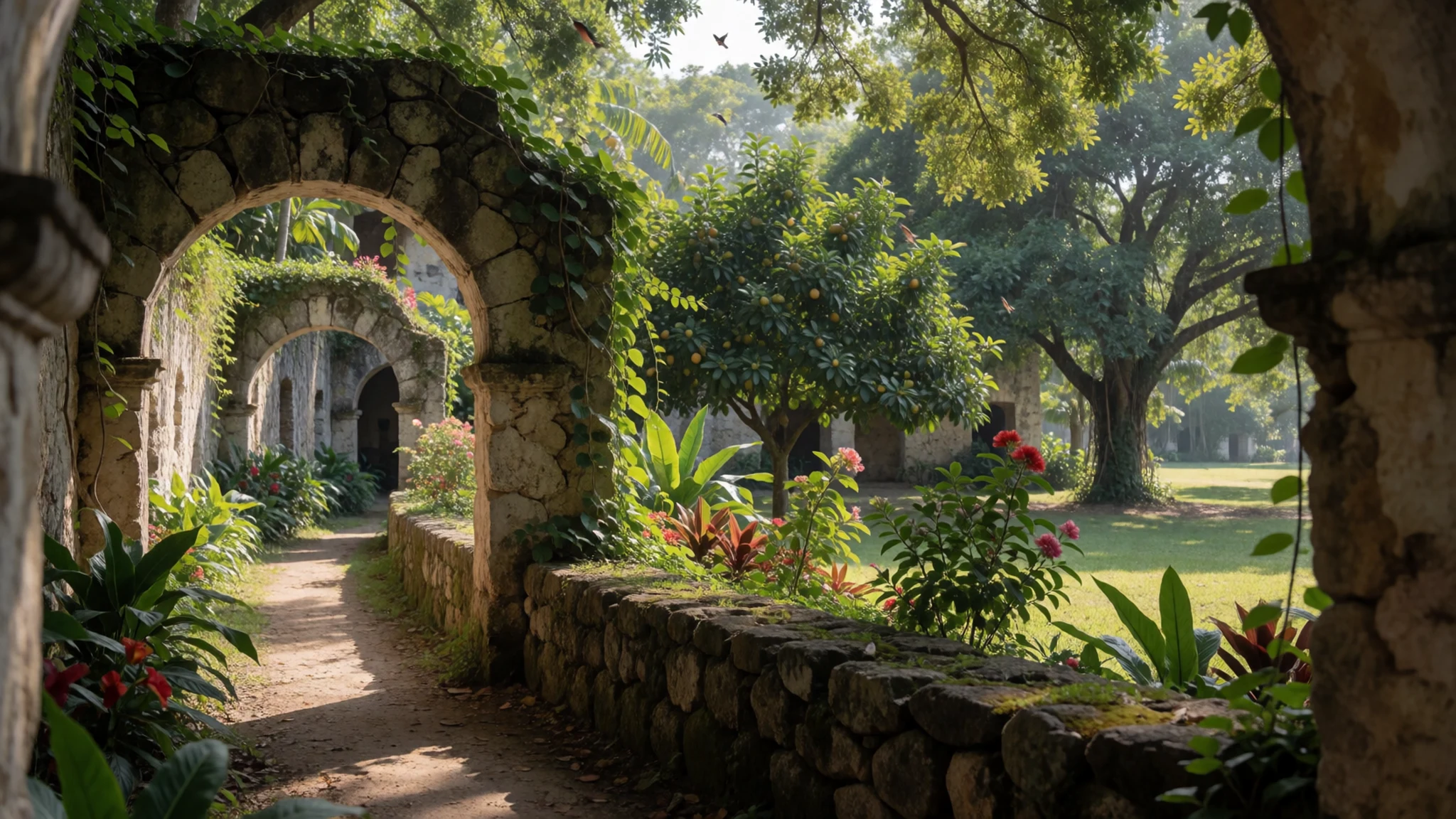
- North Beach — Northern end of the island
The long stretch along the island's northern end, with shallow water and very white sand. It is the liveliest part of the island, lined with restaurants, bars and hotels, so it fills up through the afternoon and at weekends. Arrive in the morning for space, or stay on into the evening when the crowds thin out.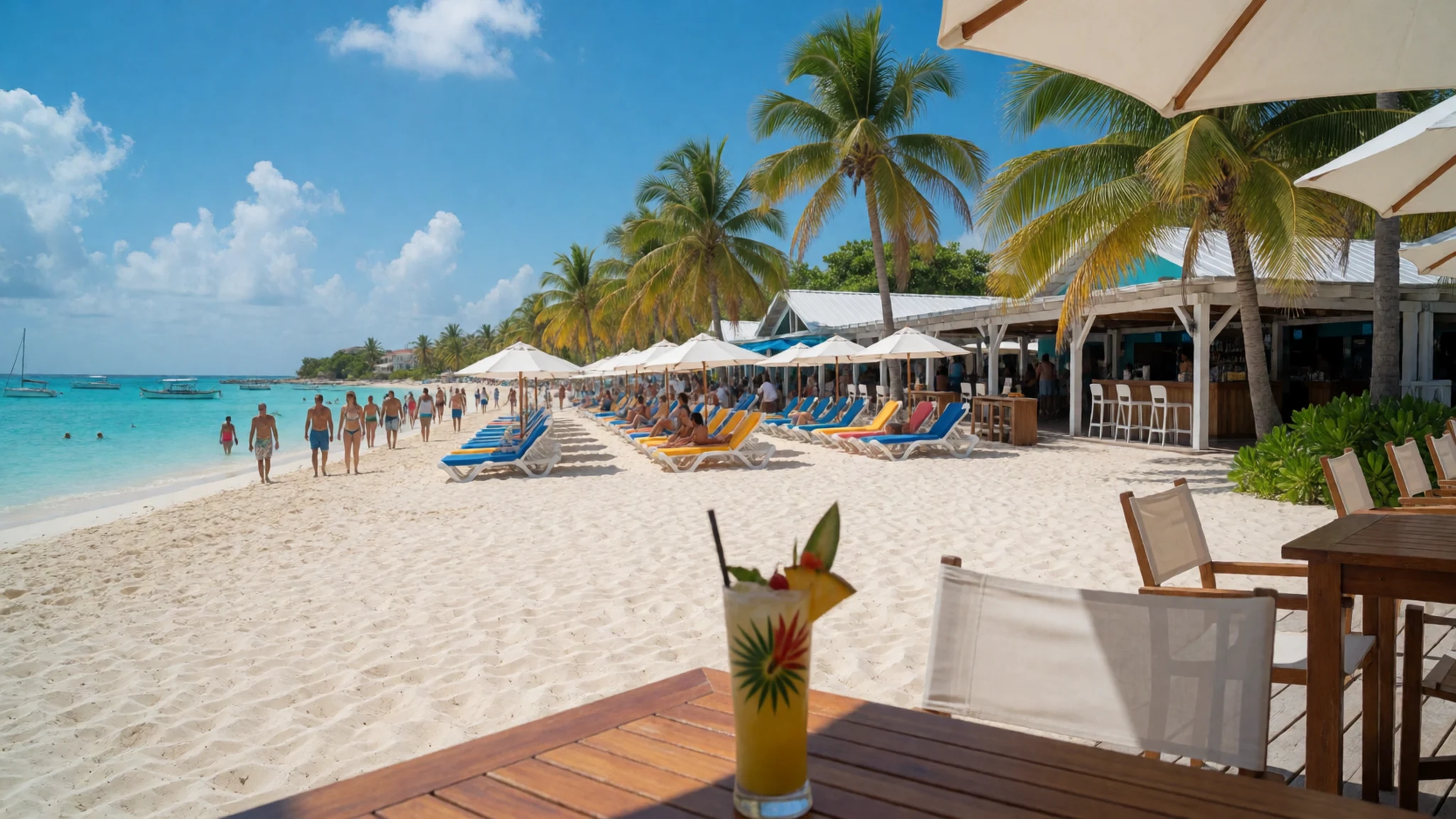
- Playa Sol — North-western tip, beside North Beach
At the north-western tip, next to North Beach, Playa Sol is the place many people pick for sunset. It is usually a little quieter than its neighbour, and the western light over the water is the reason to come. Bring some cash for a drink at the beach stalls, as small vendors may not take cards.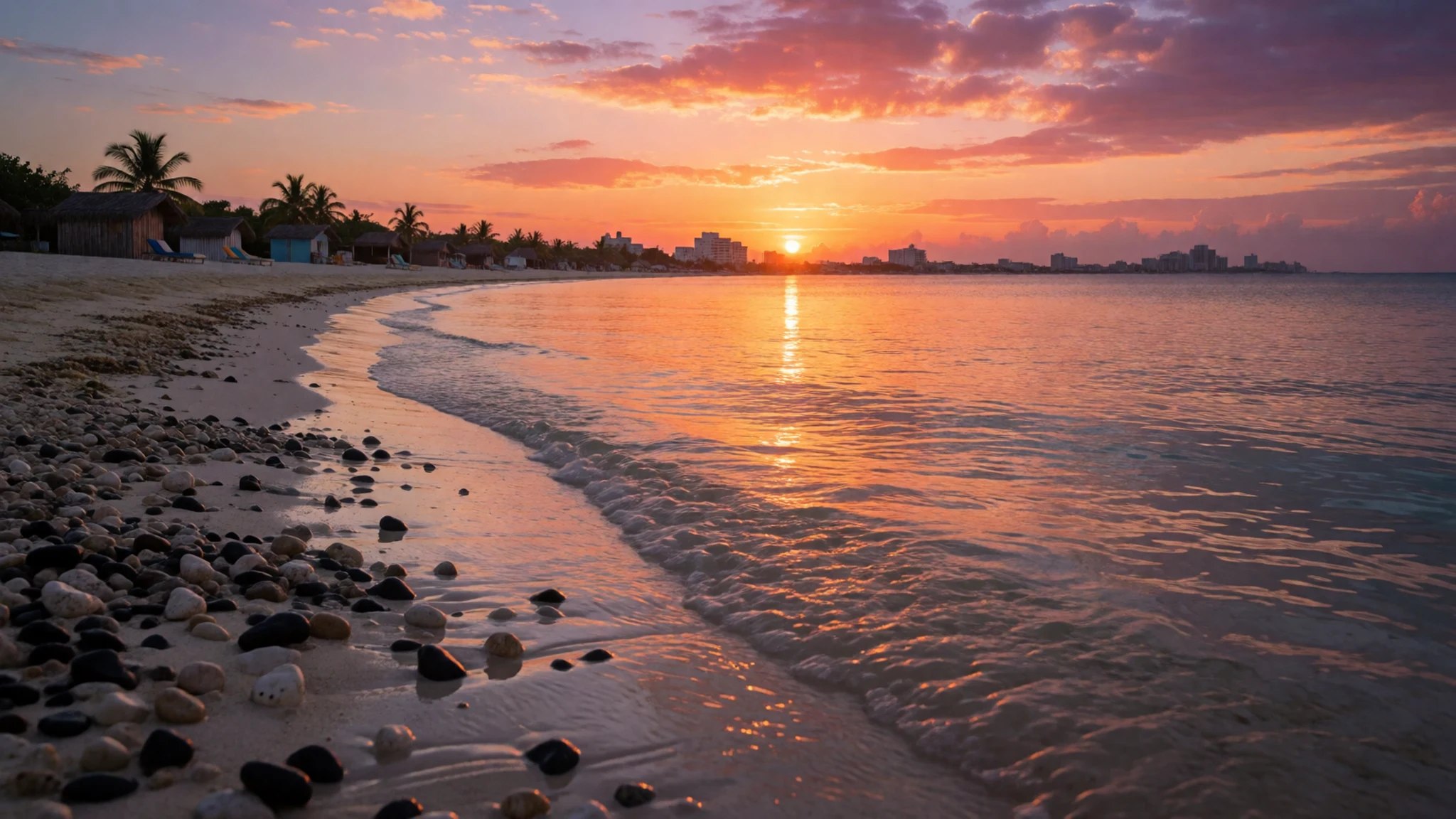
- Punta Sur — Southern tip of the island
The island's southern tip, where a small ruin once served as a lighthouse and a temple to Ixchel. A modern sculpture park sits in the grounds, and the views across the water are wide. The site is reached by road, so plan visits for the morning or late afternoon and bring water for the open ground.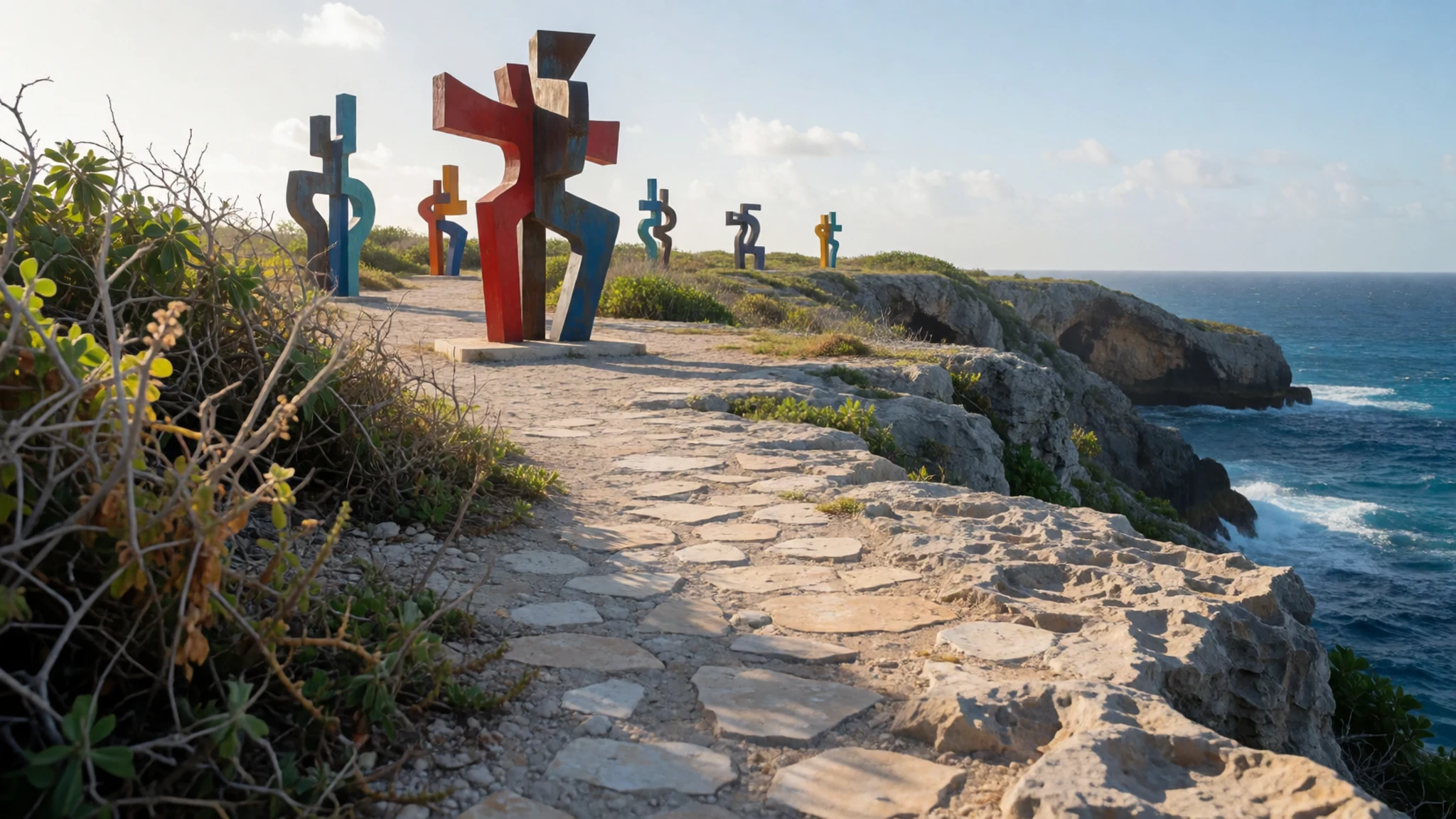
- Museo Subacuático de Arte — Western shore, reached by boat
An underwater sculpture garden that has become a home for tropical fish, coral and sea turtles, so the reef is as much the attraction as the art. Snorkel or dive with a licensed operator who gives a proper safety briefing before you enter the water. Visibility and currents change through the day, so ask the operator about conditions that morning.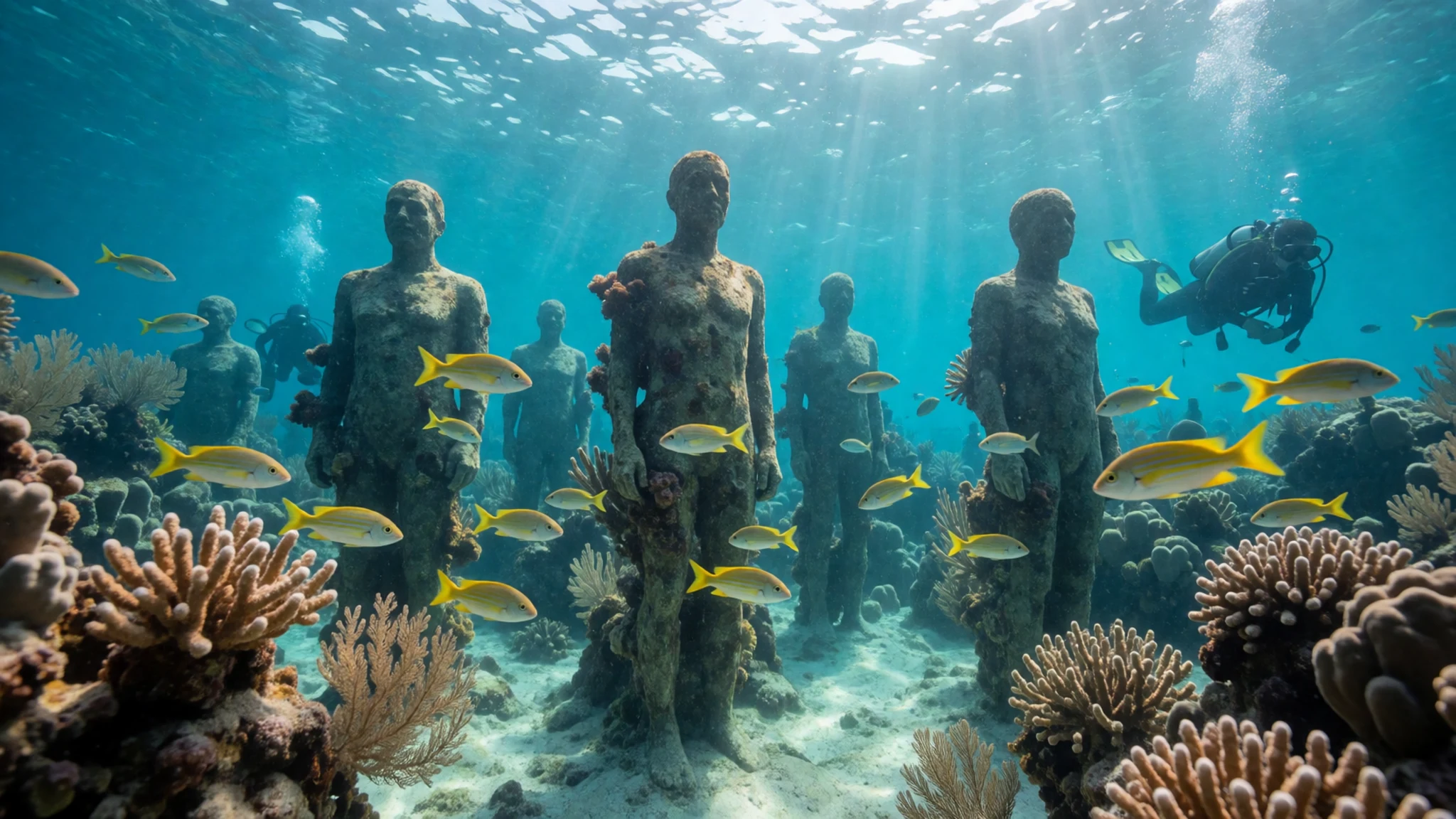
Culture
Isla Mujeres carries a Maya past that still matters to many people, and its ruins and sacred sites should be treated with that in mind. Punta Sur and the other older sites are open to visitors, but their stonework is fragile and the ruins are not playgrounds. Greetings matter in the town. A simple buenos días or buenas tardes is the usual way to open a conversation in a shop or restaurant, and Spanish is the everyday language for most residents, although many people working in tourism speak English. Shopkeepers and taco vendors are used to visitors photographing food and stalls, but the people behind them are another matter, so asking first is the courteous choice. Beach life is relaxed, and swimwear is normal on the sand, but walking through the town centre and into shops or restaurants calls for a shirt or cover-up. Keep to marked paths at the archaeological sites and in the national park, and never climb on the ruins.
What to wear
On Isla Mujeres, traditional dress comes from the wider Yucatán, where the huipil is the long-standing everyday garment of Maya women: a loose tunic of white cotton, often embroidered at the neck and hem with floral and geometric motifs in coloured thread. For fiestas and dances, women wear the terno, a fuller dress of embroidered cloth associated with the peninsula, and men have long worn the guayabera, a pleated shirt-jacket of cotton or linen. Among islanders today, most people dress much as they do along the coast elsewhere in Mexico: shorts, cotton tops, sundresses and sandals by day, with smarter clothes for evenings out, while fishermen work in plain shirts and rubber boots. Visitors should pack lightweight, quick-drying clothes in cotton or linen, which breathe in the humid heat. A wide-brimmed hat, sunglasses and a high-factor sunscreen matter more than anything else on the island. Swimwear suits the beach, but a light cover-up or shirt is expected in town, and shoulders should be covered when you enter a church. Choose flat sandals or water shoes for the rocky shore on the eastern coast, and bring closed shoes for rougher walks in the national park.
What to eat
- Grilled fish of the day — Beach restaurants on the north shore, close to the ferry dock
Snapper and grouper come off the morning boats and are grilled whole over charcoal, then served with rice, beans, tortillas and lime. Choose a place where the catch is laid out on ice, and ask what was landed that morning. Eat it where the sea is in view.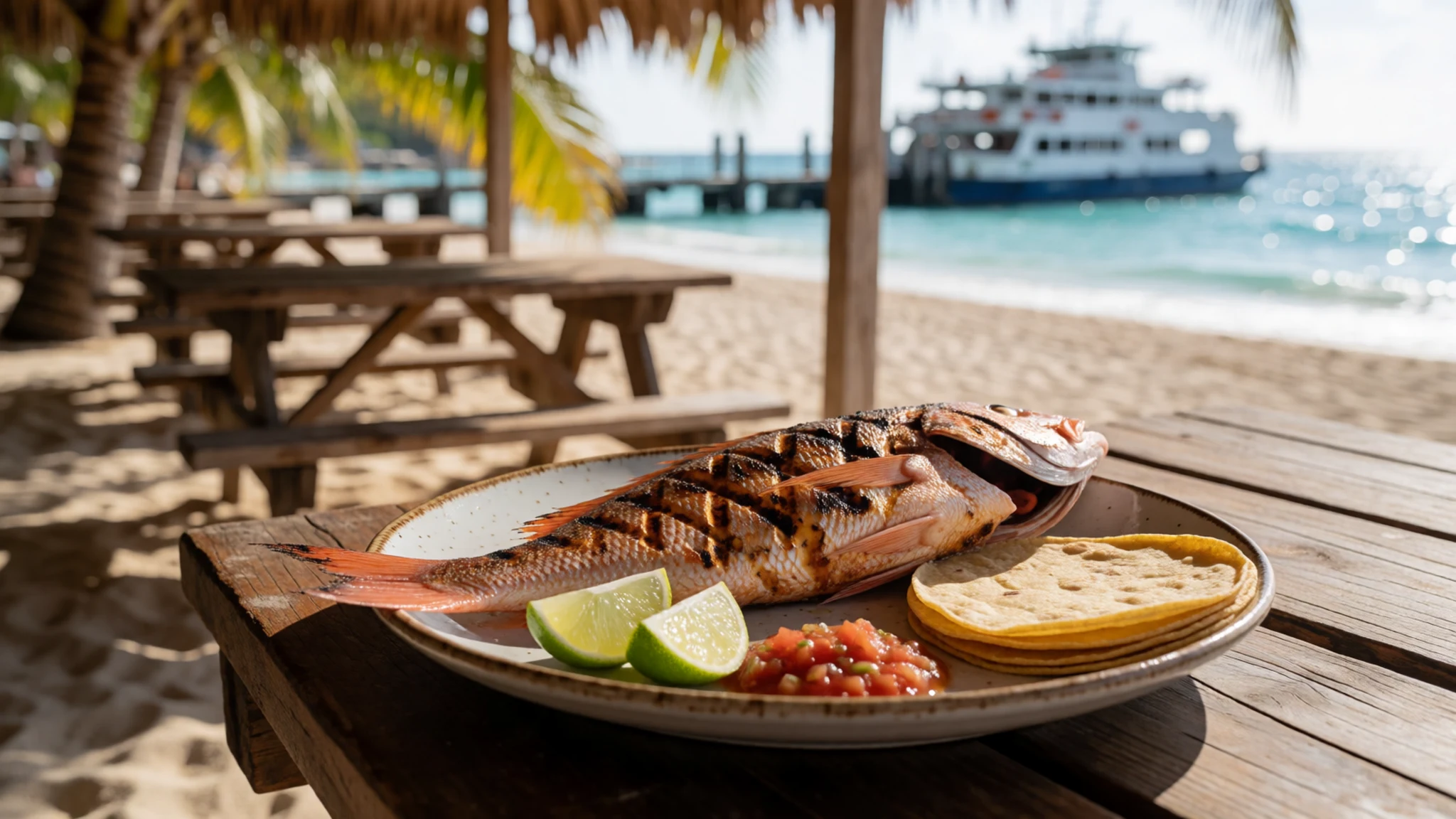
- Garlic shrimp — The beachfront grills along the north beach
Shrimp cooked in garlic butter or oil with chilli, a dish the island's seafood places do well. It arrives sizzling and is best eaten with bread to soak up the juices. Order it at a grill on the beachfront, where the shrimp are often caught the same day.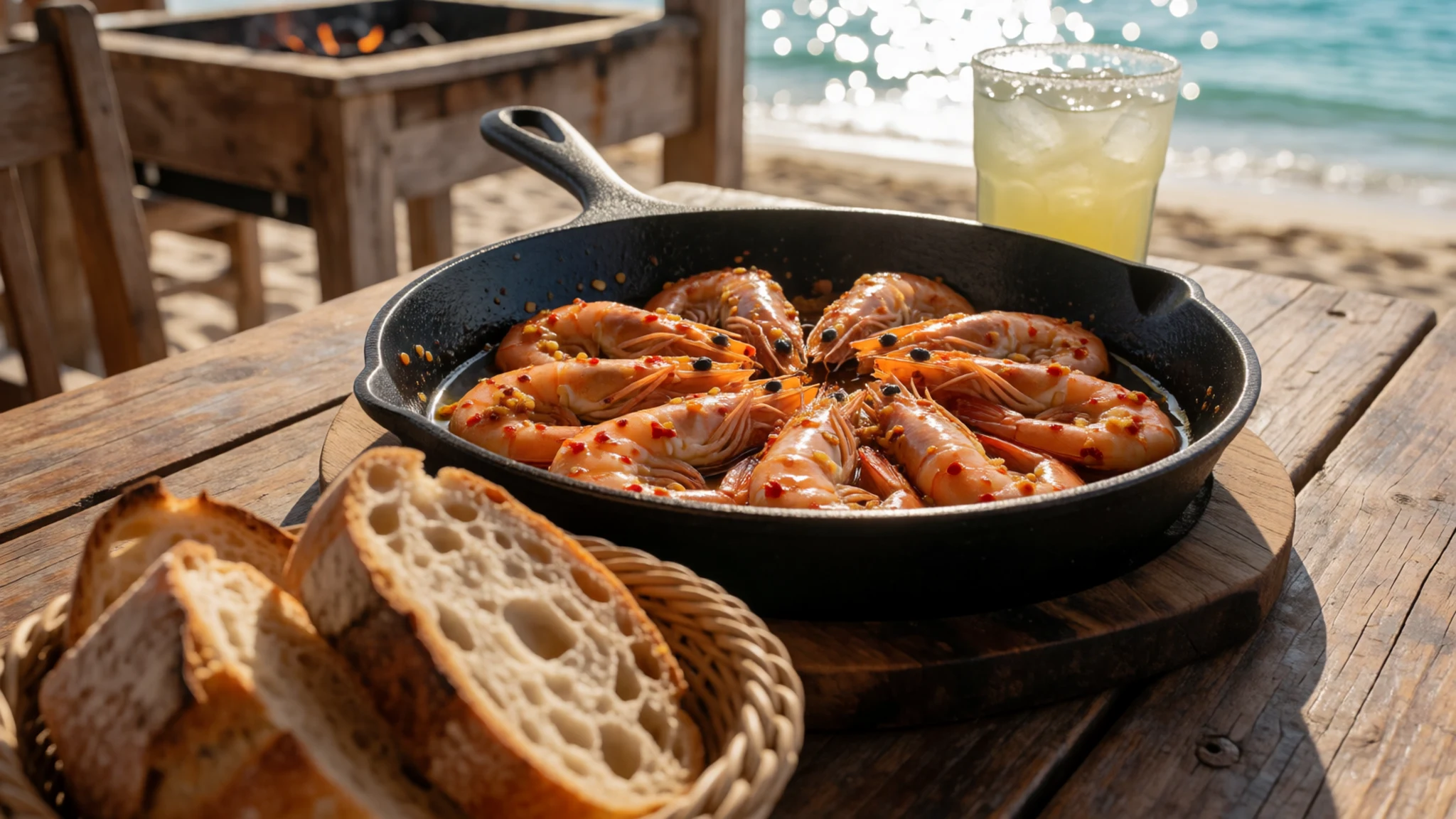
- Street tacos with a salsa bar — A street taquería in the town centre, the kind with a salsa bar
Small corn tacos filled with grilled meat, fish or spiced pork, served with a choice of salsas and condiments from a self-serve table. Order two or three of each filling, try the green salsa first and then the hotter red one. Evenings bring the liveliest stalls. - Ceviche — Fish stalls and market counters near the town's ferry dock, in the morning
Raw fish or shrimp cured in lime juice with chilli, onion, tomato and coriander, a light dish that suits hot days. Morning is the best time, when the fish is freshest, often served with crisp tostadas. Check it is kept cold and eaten the same day. - Cochinita pibil — Home-style eateries in the town centre
Pork marinated in achiote and sour orange, wrapped in banana leaves and slow-cooked until it falls apart. It is a Yucatecan staple, served shredded with pickled onions and warm tortillas. Lunchtime is when it is most often sold, and it may run out by mid-afternoon.
Plan it
Best time. December to March, the winter months, when temperatures are cooler and the island is most comfortable for walking and swimming. June to September is sweltering, with blazing sun and very high daytime heat, although whale sharks gather in nearby waters from mid-May through September.
How long. 2–3
Getting there. Fly into Cancún International Airport, then take a passenger ferry from Puerto Juárez, about 18 minutes across, which runs frequently through the day. Ferries also leave from Playa Caracol and Playa Tortugas in the hotel zone, and car ferries run from Punta Sam.
Budget. mid
Tips
- Check the official ferry timetable before you travel, as schedules change by season.
- Carry cash in pesos for small stalls, taxis and beach vendors.
- Go to North Beach early for space, and save Playa Sol for sunset.
- Plan outdoor sights for early morning or late afternoon, and carry water and a hat.
- Book boat and snorkel trips with licensed operators, and check the official site at islamujeres.gob.mx.
Etiquette
- Dress covered in the town and cover up when you leave the beach.
- Ask before photographing people at markets or on the fishing boats.
- Stay on marked paths at the ruins and in the national park.
Nearby
Sources
- Wikidata Q1020769 (CC0)
- Wikipedia, Isla Mujeres (rev 1376383903) (CC BY-SA 4.0)
- Wikivoyage, Isla Mujeres (rev 5405483) (CC BY-SA 4.0)
- Isla Mujeres, Mexico, own work Jan 2007 (Public domain)
- Birds eye view of Isla Mujeres (Šarūnas Burdulis) (CC BY-SA 2.0)
- Alice D. Le Plongeon, Ancient Shrine, Island Mugeres (Public domain)
- Isla Mujeres, México (Kleidy Yomara Cruz Ordoñes) (CC BY-SA 4.0)
- A Glimpse of Isla Mujeres, Mexico (dronepicr) (CC BY 2.5)
- Isla Mujeres Beach (Ivyrjohnson) (CC BY-SA 4.0)
- Quinta Region Naval (Base), Isla Mujeres (Shari Garland) (CC BY-SA 4.0)
- Panoramio, Fanta.Rostislav (5) (CC BY 3.0)


