Ishigaki Island
Ishigaki Island, Japan
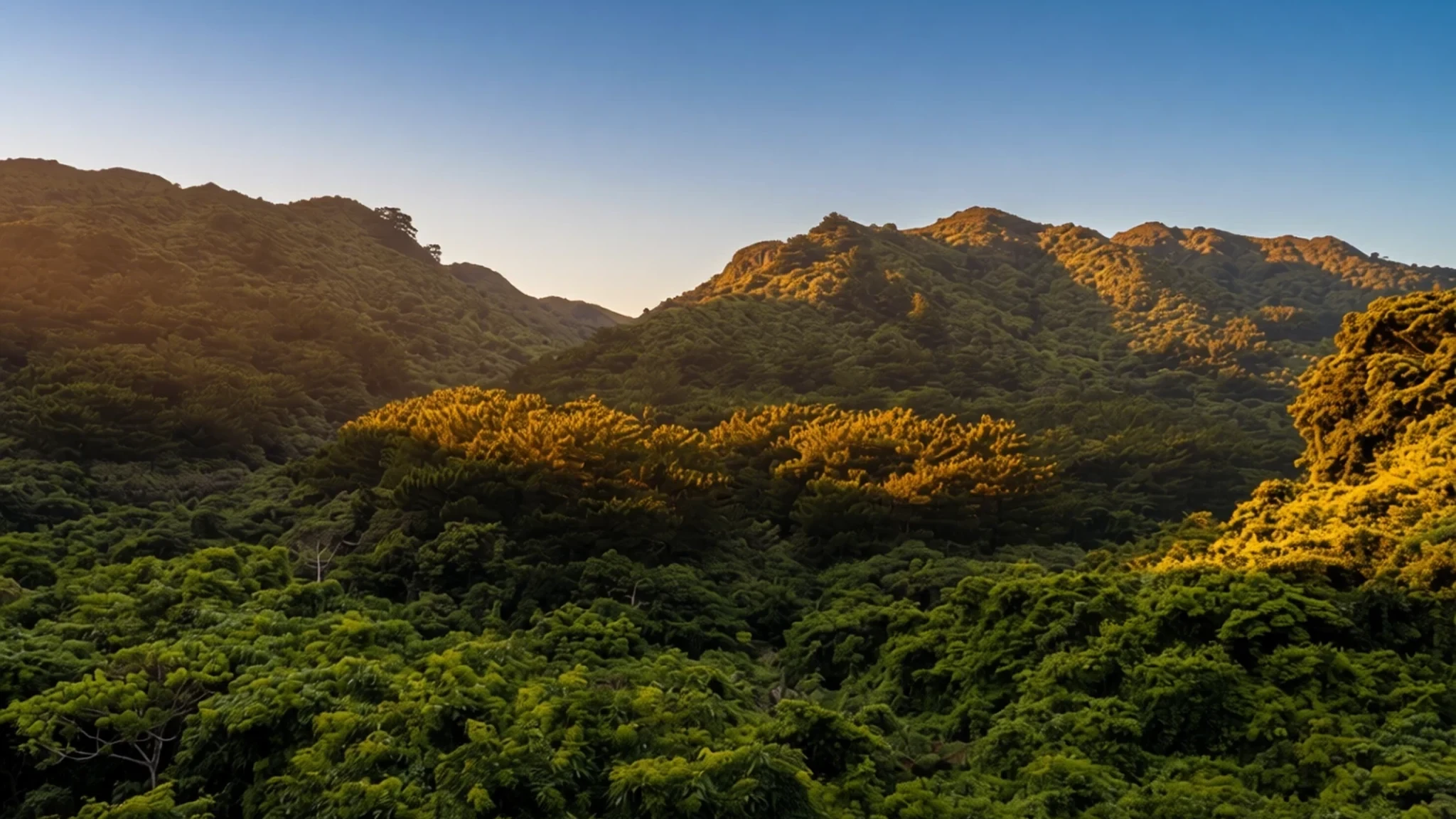
Ishigaki Island is the working hub of the Yaeyama group, with clear water, national park coastline and a slower pace than Okinawa's main island.
The place
Ishigaki Island is the second-largest island in the Yaeyama group, a chain in the far south-west of Okinawa Prefecture, and it is where most people in the archipelago live and work. The island's recorded elevation is 529 metres, so the landscape is a mix of low hills, farmland and coral-fringed coast rather than high mountains. Around 48,000 people live here, and most of them are in the central town, which acts as the business and transport centre for the whole group. The city's port is the place where ferries leave for the smaller islands, and the island's airport is the largest in the Yaeyamas, so nearly every trip to this part of Japan passes through town at some point.
The coastline is the main draw. Much of the island and the waters around it, including Mount Omoto and Kabira Bay, sit inside Iriomote-Ishigaki National Park, which has kept the shoreline relatively undeveloped. Expect beaches, snorkelling spots and boat trips rather than resort towers. Ishigaki is often described as less dramatic than its western neighbour Iriomote, and that is a fair description: the scenery is pleasant rather than spectacular, and the sights are modest. What you get instead is an easy base, good seafood and noodles, and quick access by ferry to quieter islands. Culturally the island sits between Japan and Taiwan, and you notice that in the food and the old houses. Plan on warm, humid weather for most of the year.
Its story
Ishigaki's past is shaped by the sea. A tsunami of record height struck the island in 1771, and the event is still part of how local people talk about the coast. Ishigaki's position, far south of the main Japanese islands and within sight of Taiwan's waters, meant that its people were always in contact with trade routes that ran well beyond Okinawa. Ships called here, goods moved through the port, and the island became the administrative centre for the surrounding islands.
More recent events have also left marks. The island is the place where one of the men involved in the Tokyo subway sarin attack was caught, far from the scene of the crime, which is a reminder that Ishigaki has always been part of Japan's wider national story even while it feels remote. In more recent years, residents have protested against the Japanese military's presence on the island, and the debate over defence and local life remains a live topic in town. If you talk to people about this, listen first; views vary, and the subject is serious rather than tourist talk. The island's modern history is therefore one of connection and distance at once, and that tension still shapes local identity today.
What to see
- 730 Monument — Central Ishigaki, by the port
A black rock on a concrete plinth in the centre of town, next to the port and the start of a main road. It is not much to look at, but it is an easy landmark to find, and the number on it is the sort of local curiosity that makes a short stop worthwhile before a ferry.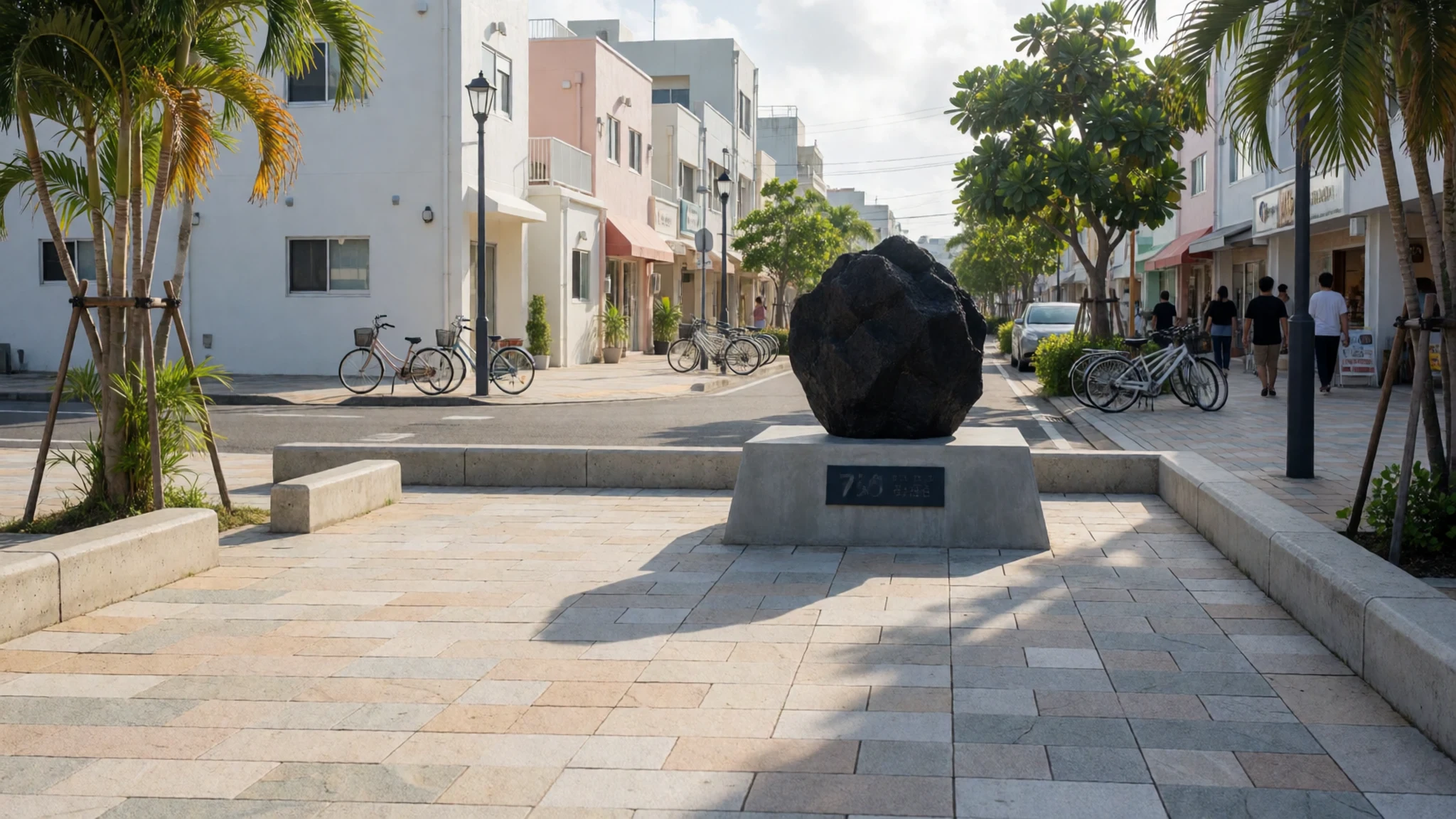
- Yoko Gushiken Bronze Statue — Ishigaki Port
A bronze statue of Ishigaki-born boxer Yoko Gushiken, a former world champion, stands at the port. It is a popular photo stop and a useful thing to look at while you wait for a ferry. Go in the early morning or late afternoon for softer light.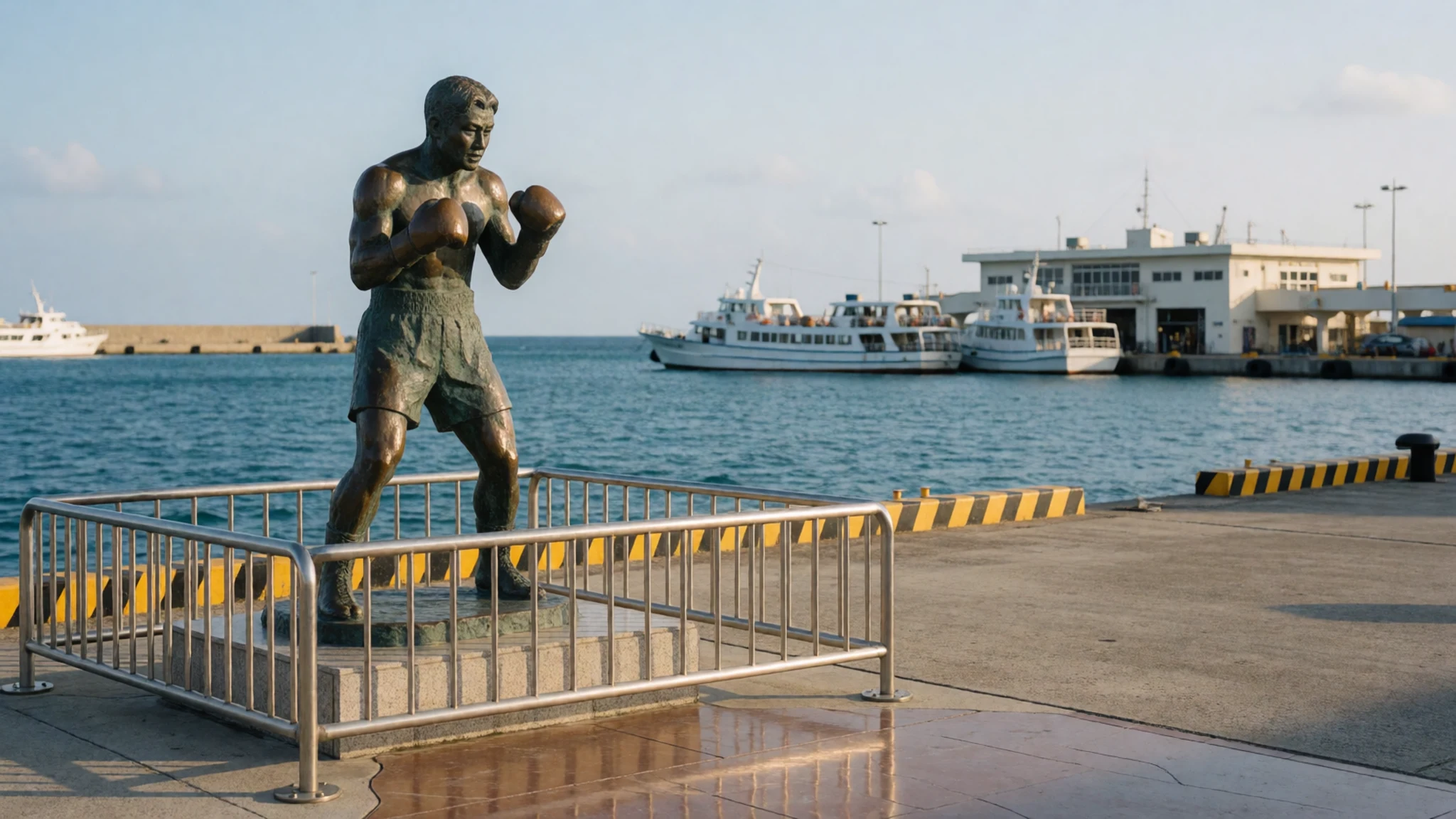
- Yaeyama Peace Memorial Museum — Southern Ishigaki, near the Yoko Gushiken Memorial Hall
A small museum that explains everyday life on the island during the Second World War, with a focus on how malaria spread through the population at that time. It is quiet and sobering. Allow an hour, and check opening times on the official site before you go, as small local museums often close on set days.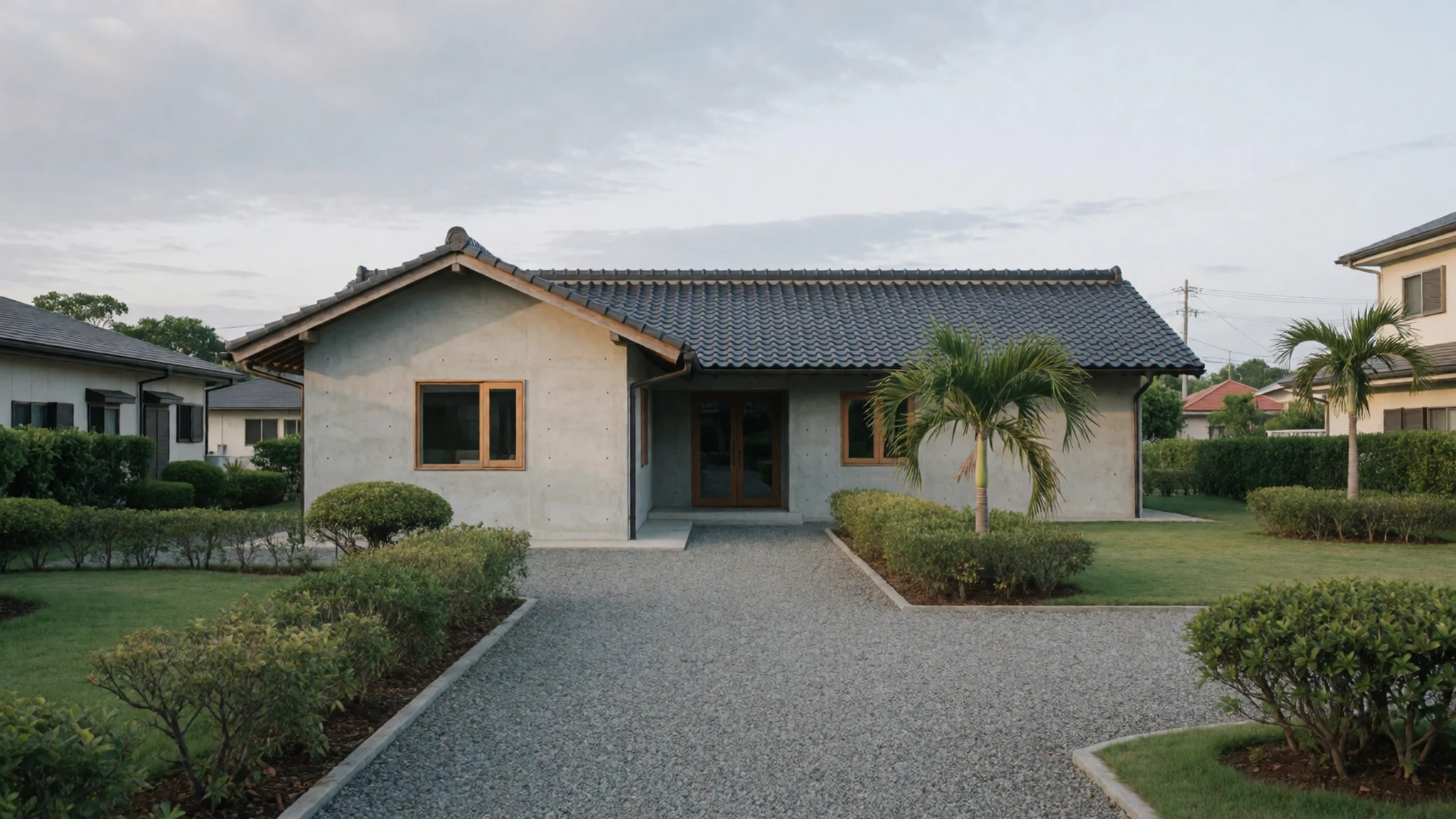
- Tojinbaka — North-west coast
An ornately decorated Chinese-style grave that commemorates Hokkien Chinese workers who mutinied and ran aground on Ishigaki while bound for California. The tomb stands on a headland in the north-west, and it makes a good half-day with the nearby lighthouse and small temple. Visit in daylight and keep to the paths.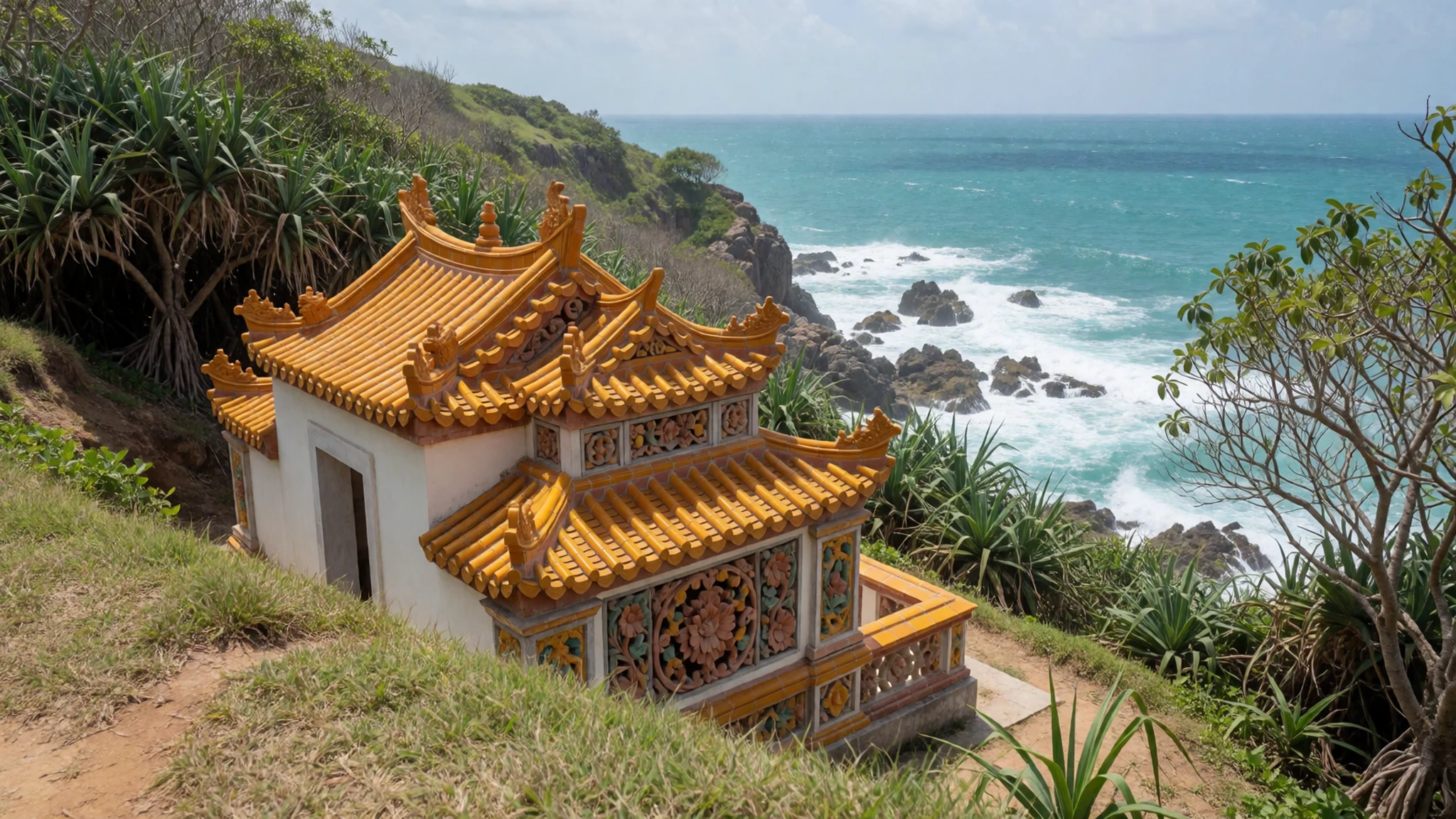
- Okanzaki Lighthouse
A popular spot for a view across the strait, and on a clear day you can see Iriomote island from here. It is a simple walk to the viewpoint rather than a major outing. Choose a day with good visibility, because haze and cloud can hide the far islands completely.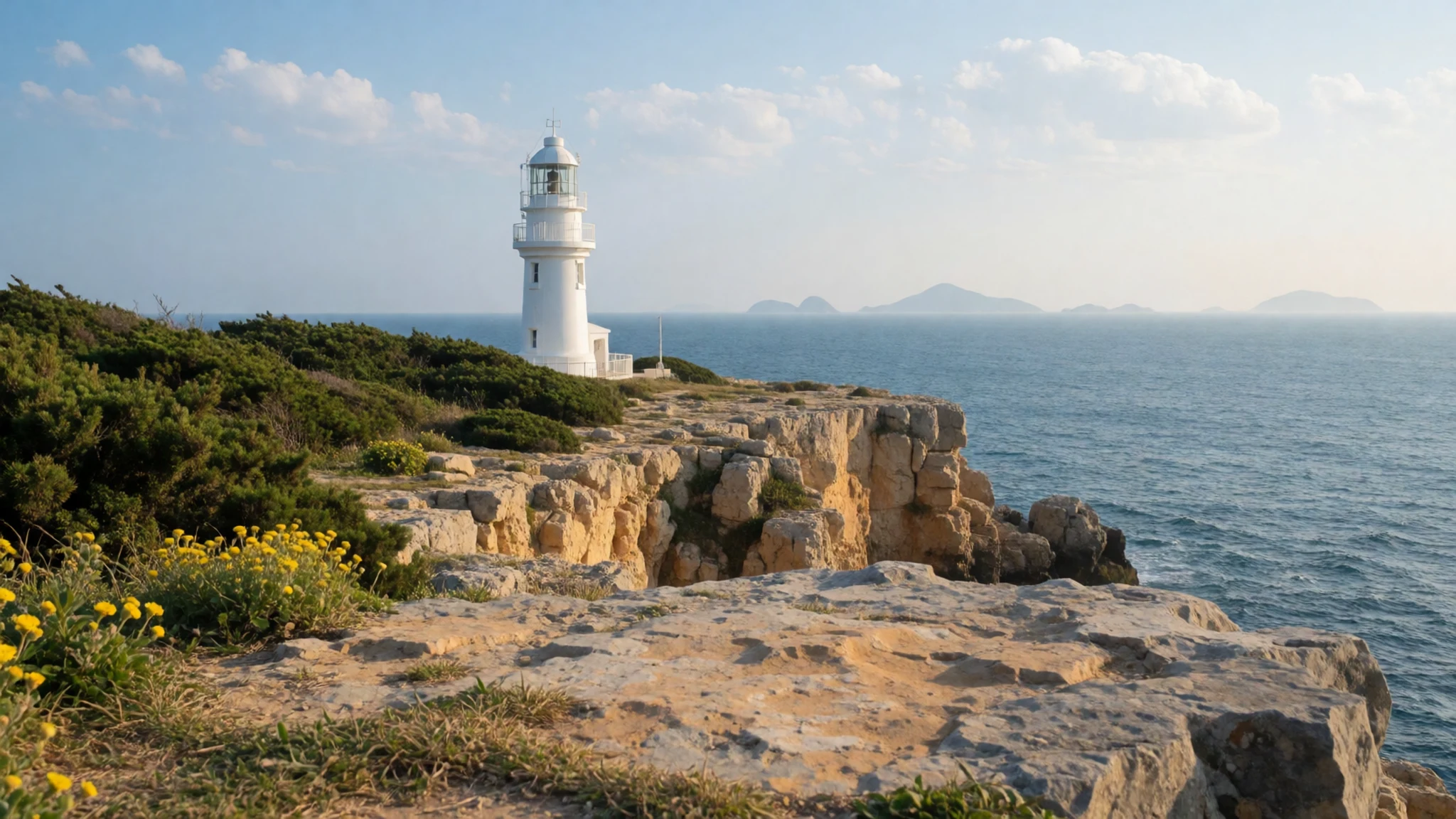
Culture
Ishigaki's culture is closer to the rest of the Yaeyama islands than to mainland Japan, and it shows in the houses, the food and the pace of daily life. Old residences from the early nineteenth century survive in the countryside, and one of them, built by a local governor, has been given protected status as a good example of the island group's architecture. Respect for these buildings means treating them as lived-in homes and places of worship rather than museum pieces.
People here are generally polite and reserved with visitors, and small courtesies go a long way. Shops and restaurants expect quiet conversation, and the usual Japanese habits apply: bow slightly when you greet someone, say thank you when you leave, and do not walk and eat in busy streets. Religious and community sites on the island are used by local families, so keep your voice down, and follow the signs at any shrine or temple. Festivals in the Yaeyama islands can be lively, but the people taking part are not performers, so ask before filming them closely. At small temples and family graves, do not step on the stone platforms or touch offerings. Take off your shoes where you see a step up and slippers waiting, and never enter a private home without an invitation.
What to wear
Ishigaki shares its traditional dress with the wider Yaeyama islands. The classic cloth is bashōfu, a fine woven textile made from the fibre of the banana plant and dyed in natural tones. It is light, crisp and breathable, which suited the hot, humid climate, and it was traditionally worn for everyday work as well as for ceremonial occasions. Today you will mostly see it in craft shops, museums and at festivals, where it appears in garments, scarves and bags. Weaving is slow work, and good pieces reflect real skill, so expect to pay for quality.
In daily life, people in Ishigaki dress much as people do across Japan: simple summer clothes, practical shoes and a neat appearance in town. Office workers wear conventional business dress, and older residents often favour loose cotton. As a visitor, dress for heat and sun. Pack light cotton or linen, a hat, sunglasses and high-factor sun cream, and bring a light layer for air-conditioned buses and restaurants. Shoes matter as much as clothes: slip-on sandals or sturdy trainers are easy for temples and shrines, and water shoes help on rocky shores and reef edges. Cover your shoulders and knees at religious sites, and keep swimwear for the beach and boats.
What to eat
- Taco rice — Casual cafés in central Ishigaki's shopping streets and malls
Okinawa's signature dish: a bowl of rice topped with seasoned minced meat, shredded lettuce, cheese and salsa. It is a legacy of American influence and is eaten as a casual lunch. Look for it at friendly café-style eateries in the central shopping areas, where the standard version and a more local one are both common.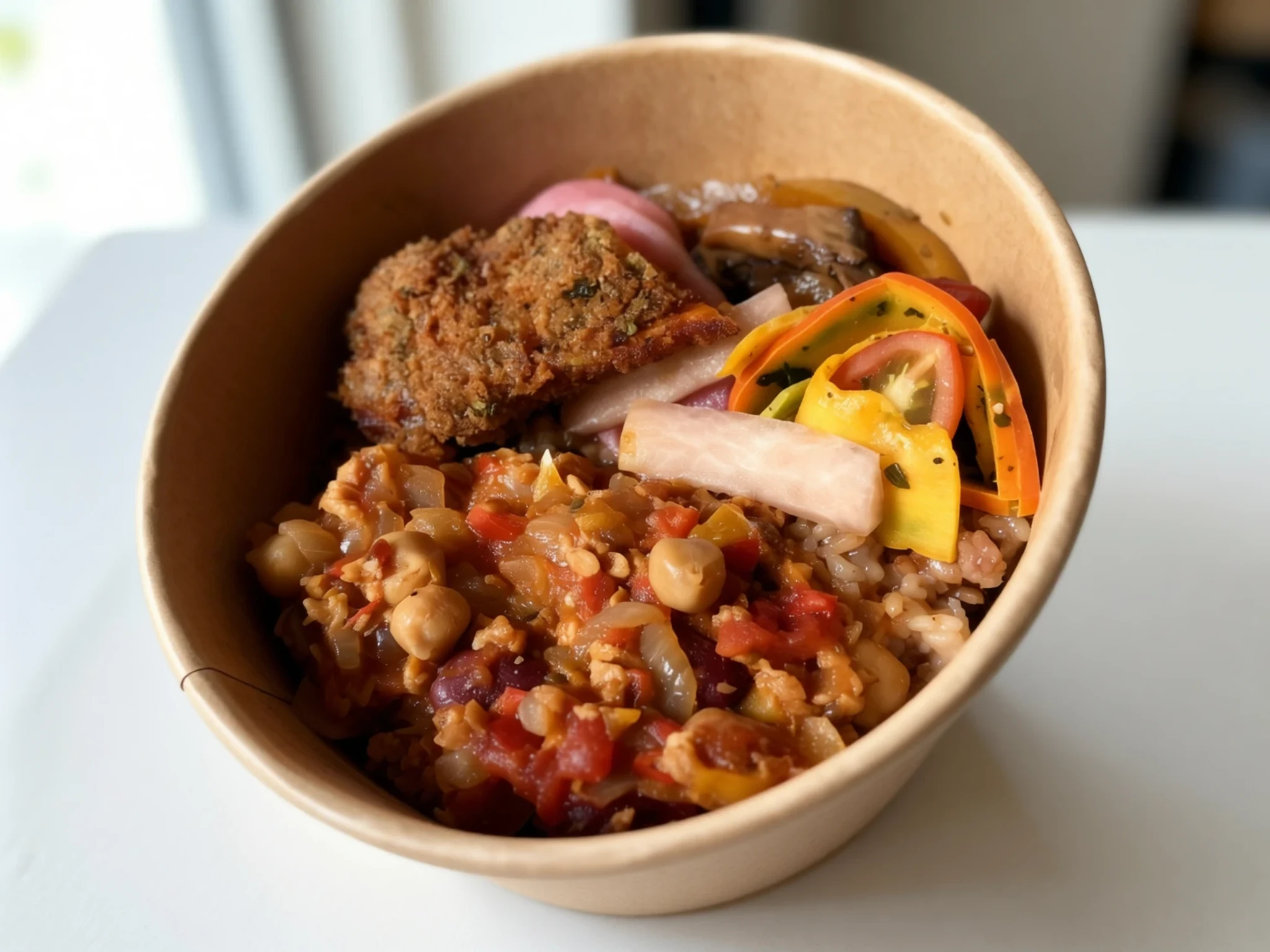
- Yaeyama soba — Noodle shops in the town centre, near the bus terminal
The island's local noodle: thick wheat noodles in a clear, rich broth, often topped with pork. It is one of the Yaeyama islands' most characteristic dishes, and the basic bowls are generous and filling. Eat it at a neighbourhood noodle shop, where locals queue for lunch, and check the menu for the richer pork version.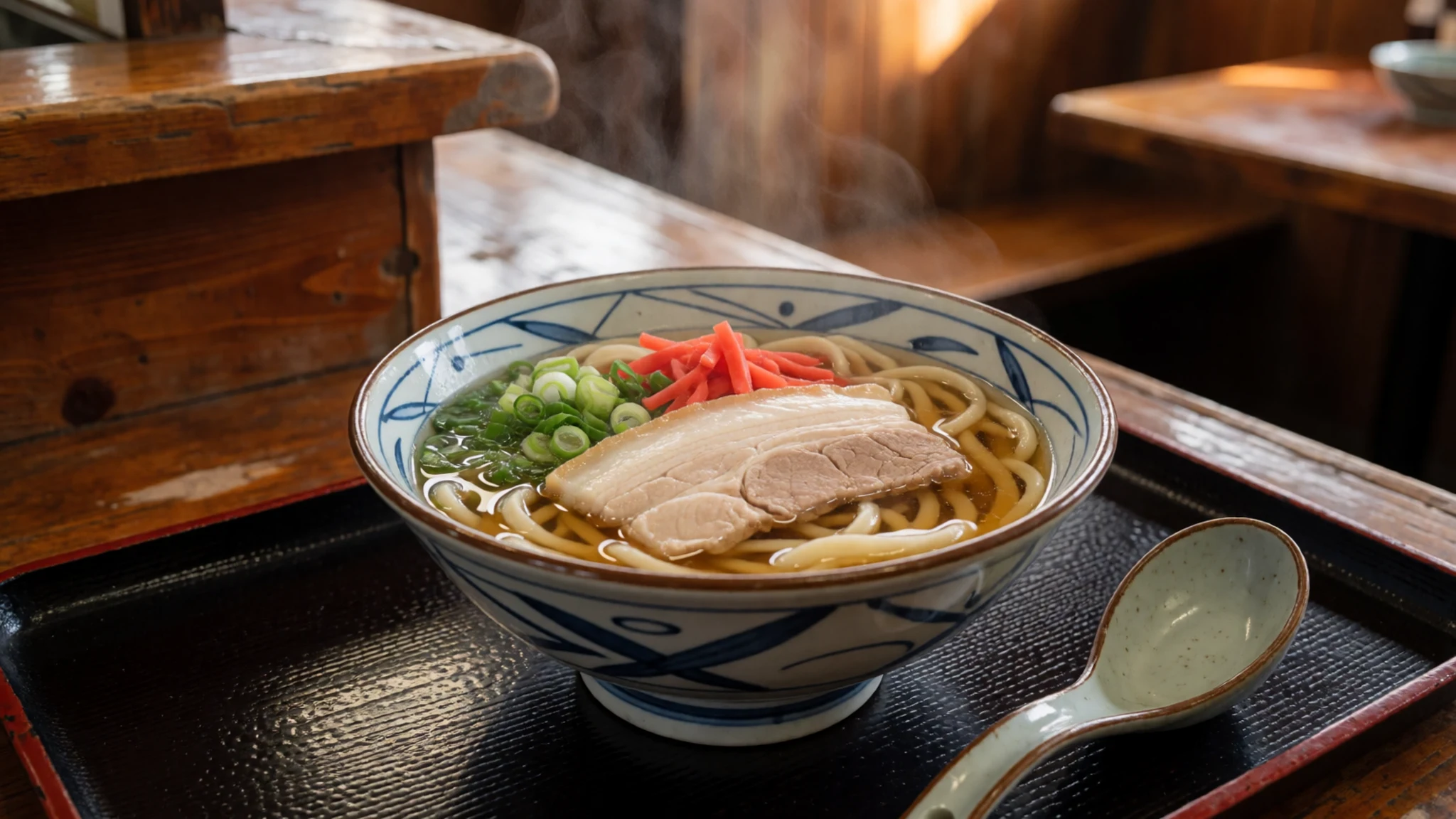
- Ishigaki beef — Steak and yakiniku restaurants in the central town, mostly evenings
Beef from the island's own cattle, known for a tender, fine texture. It is the main splurge on the island, and a steak will cost well above a typical lunch, so plan it as an evening meal. Restaurants that serve it are generally in the town centre and many open only for dinner, so book ahead if you can. - Ebi soba — Traditional noodle houses on the main streets of central Ishigaki
A bowl of soba-style noodles with local prawns, a simpler and lighter alternative to the pork versions. It suits a hot day and pairs well with a cold drink. Look for it at traditional noodle houses, and ask staff which items are made in-house if you want the most local option. - Milk soft cream — Dairy-farm shops and ice cream stands around the island
Soft-serve ice cream made from the milk of the island's own cows, with a rich, slightly tangy taste. It is an easy treat after a beach morning. Dairy-farm shops on the island sell it, and it is worth a visit as much for the cow-milk flavour as for the drive out into the countryside.
Plan it
Best time. Spring and autumn are the usual suggestion for warm sea and fewer heavy days, and the facts block lists March, April, October and November as the best months. Summer is hot and humid with a higher chance of storms, so check the forecast closely before you book boat trips, since weather can cancel ferries and tours at short notice.
How long. 3–4
Getting there. Fly into New Ishigaki Airport, which is the main air link for the island and the largest airport in the Yaeyamas. There are no scheduled services from the port to mainland Japan, so the last leg is by road into the city centre, where you can take a bus or taxi. Ferries from Ishigaki Port run daytime services to the nearby islands.
Budget. mid
Tips
- Check ferry timetables before you plan a day trip, because services run mainly in daylight and frequency varies by destination
- Book boat tours and snorkelling trips a few days ahead in busy months, and have a backup day in case of wind or rough sea
- Start beach and viewpoint visits early in the morning, when the water is calmer and the car parks are quieter
- Carry cash for small noodle shops and markets, and use cards mainly at larger shops and hotels
- Drink plenty of water and wear sun protection, because the heat and humidity build quickly by midday
Etiquette
- Take off your shoes where you see a step up and slippers waiting, especially in homes, shrines and temples
- Ask before photographing people, particularly at festivals or family graves
- Keep your voice low in restaurants and on buses, as locals expect a quiet atmosphere
Nearby
Sources
- Wikidata Q714339 (CC0)
- Wikipedia, Ishigaki Island (rev 1381903463) (CC BY-SA 4.0)
- Wikivoyage, Ishigaki (rev 5405467) (CC BY-SA 4.0)
- Kabira Bay, Ishigaki Island (663highland) (CC BY 3.0)
- Ishigaki Port (399scout) (CC BY-SA 4.0)
- Japan Coast Guard Kunigami-class vessel at Ishigaki (399scout) (CC BY-SA 4.0)
- Aerial view of Ishigaki, Taketomi and Kohama (Junpei Abe) (CC BY 2.5)
- Kabira Bay, Ishigaki Island (663highland) (CC BY 3.0)
- Ishigaki Island from the ISS (NASA Johnson Space Center) (Public domain)
- Torinji Gongendo Buddhist Temple (Paipateroma) (CC BY 3.0)
- Shirahoreef and New Ishigaki Airport (松岡明芳) (CC BY-SA 4.0)


