Ishak Pasha Palace
Ishak Pasha Palace, Turkey
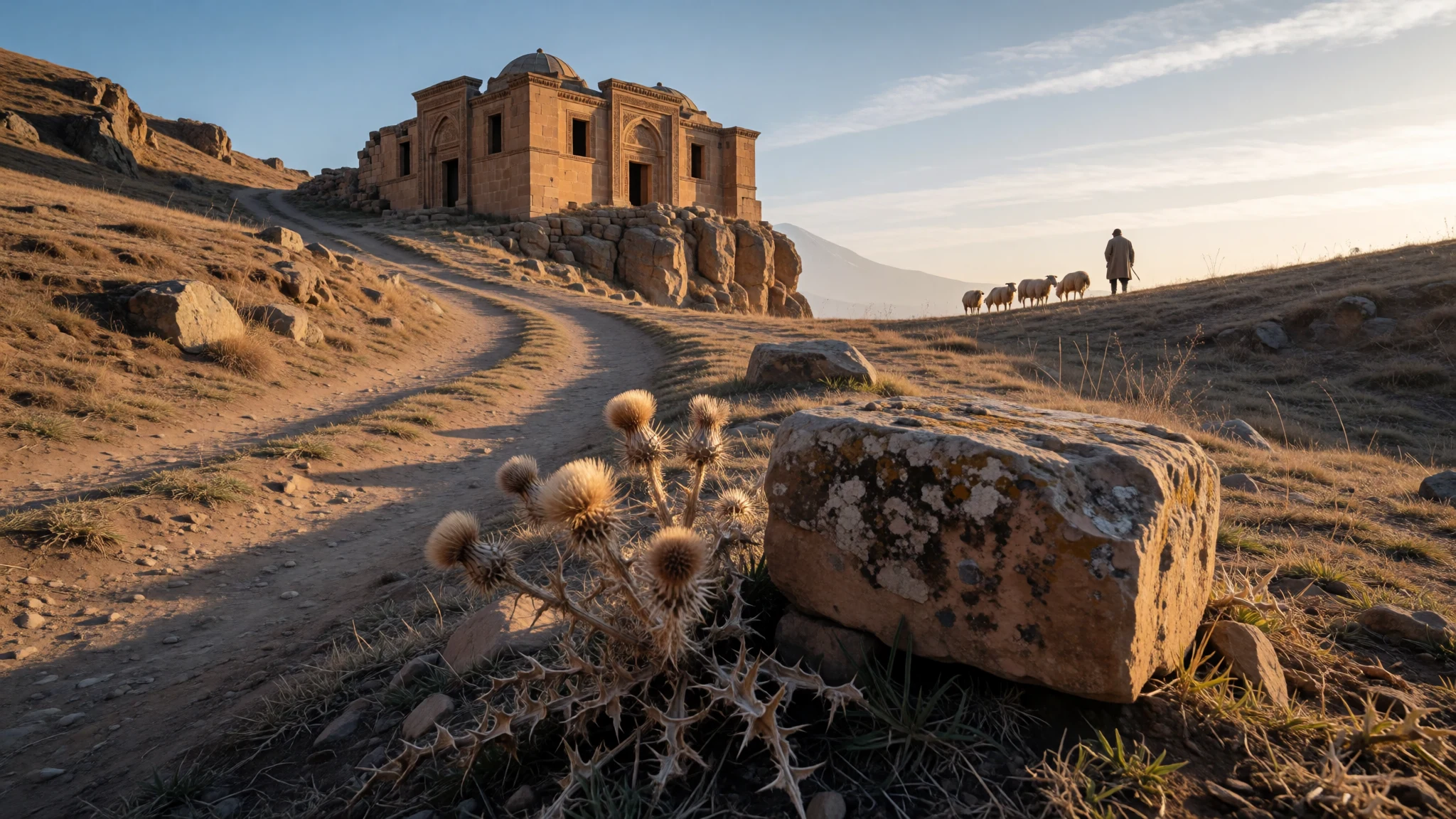
Ishak Pasha Palace is a half-ruined hilltop fortress-palace on the old Silk Road, near Mount Ararat and the Iranian border.
The place
Ishak Pasha Palace stands on a rocky shelf above Doğubeyazıt, a border town in Ağrı province, far eastern Turkey, close to the Iranian frontier. It is a palace and administrative complex, and its position explains its fortress-like look: from that height the household could watch caravans moving along the Silk Road below. Much of it is now ruined, with roofless rooms and broken walls, yet enough survives to follow the plan of courtyards, a mosque, a harem wing, a tomb and the working quarters of a provincial court.
The setting does a good share of the work. Dry steppe and bare ridges surround the site, an old castle sits on a crag to the east, and Mount Ararat rises to the north-east on clear days. The stone is pale and warm, going honey-gold in late light, which is when photographers tend to gather. The building carries two names in daily use, İshak Paşa Sarayı in Turkish and Qesra Îshaq Paşa in Kurdish.
The district is mostly Kurdish, and the palace belongs to that story as much as to the Ottoman one. A family of hereditary Kurdish governors commissioned it, while the carving and building were done by craftsmen from further afield. It even appeared on a Turkish banknote, so many Turks know the silhouette before they have made the journey.
For travellers, the palace is the main reason to stop in Doğubeyazıt, a plain and busy town that doubles as a base for Mount Ararat, the road to Iran and the long drives towards Van, Kars and Erzurum. Distances are big and services thin, so the place suits a slow, unhurried stop rather than a quick dash.
Its story
Ishak Pasha Palace took roughly a century to finish. Work began in 1685 under Colak Abdi Pasha, a governor of the Beyazit province from the Cildirogullari, a hereditary Kurdish family, and passed to his descendant Ishak Pasha, who gave the building its name. An inscription over the door of the harem wing gives 1784 as the date that part was completed.
Its style puzzles scholars. The plan took the royal palaces of Ottoman cities such as Bursa, Edirne and Istanbul as a model, yet the finished building draws on Anatolian, Iranian and northern Mesopotamian traditions instead. Armenian and Georgian craftsmen did the building, and the domes resemble those of Armenian churches, a reminder of how mixed the region's workforce and taste were.
The palace has lived hard since. An earthquake in 1840 left it empty for a while, and repairs over the following two decades were only partial. Fighting in the Russo-Turkish War of 1877–1878 caused more harm, and in the First World War it was occupied and hit by gunfire. It later served as the area's administrative centre, then as a military post until 1937. After that, local people took stone from it for new houses, which is part of why it is a ruin today.
Turkey placed the palace on its UNESCO Tentative List in 2000, a preliminary step towards a World Heritage nomination rather than inscription. A restoration in 2004 uncovered serious structural problems that were never fully fixed, so its long-term conservation remains an open question.
What to see
- The palace complex — Doğubeyazıt, above the town
The main complex rewards a slow loop. Start in the outer courtyard, then work through the gateway to the harem wing with its dated door inscription, the mosque and the surviving domes. Carved doorways are the detail to look for. Ask locally about opening times before setting out, as they can change.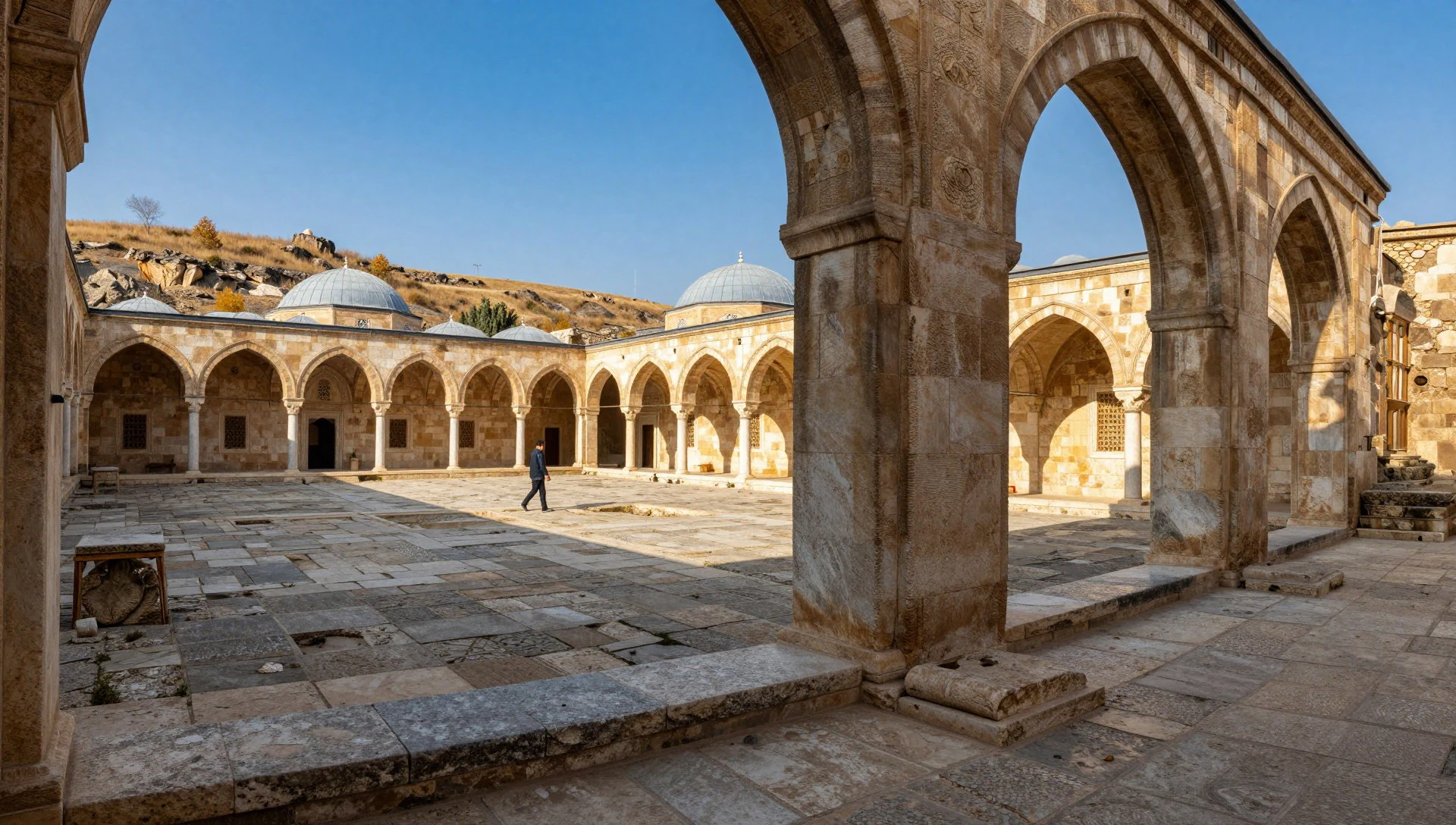
- Carved portals and façade reliefs — Palace entrances and façade
The stonework around the entrances is the best close-up reason to come. Bands of relief carving frame the doorways, and the mix of motifs reflects the Armenian, Georgian and Iranian hands behind the building. Soft side light brings the detail out, so late afternoon works better than the flat glare of midday.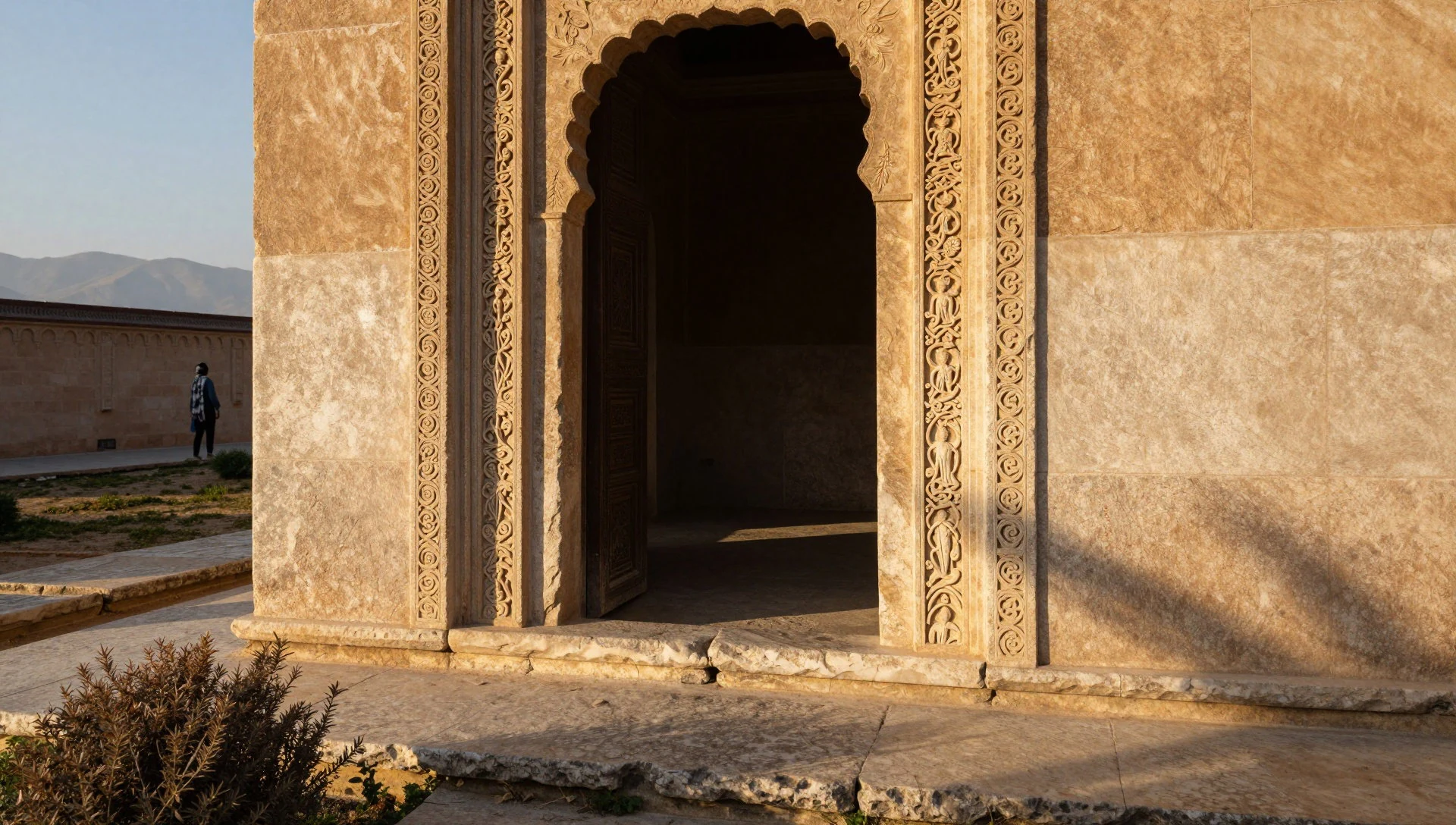
- Eski Beyazıt Mosque and the tomb of Ehmedê Xanî — East of the palace
A short walk east of the palace stands the old Beyazıt Mosque, a sixteenth-century building, and beyond it the multi-domed tomb of Ehmedê Xanî, a Kurdish writer remembered for the romance Mem and Zin. Together they make a quiet half-hour that adds local meaning to the palace visit.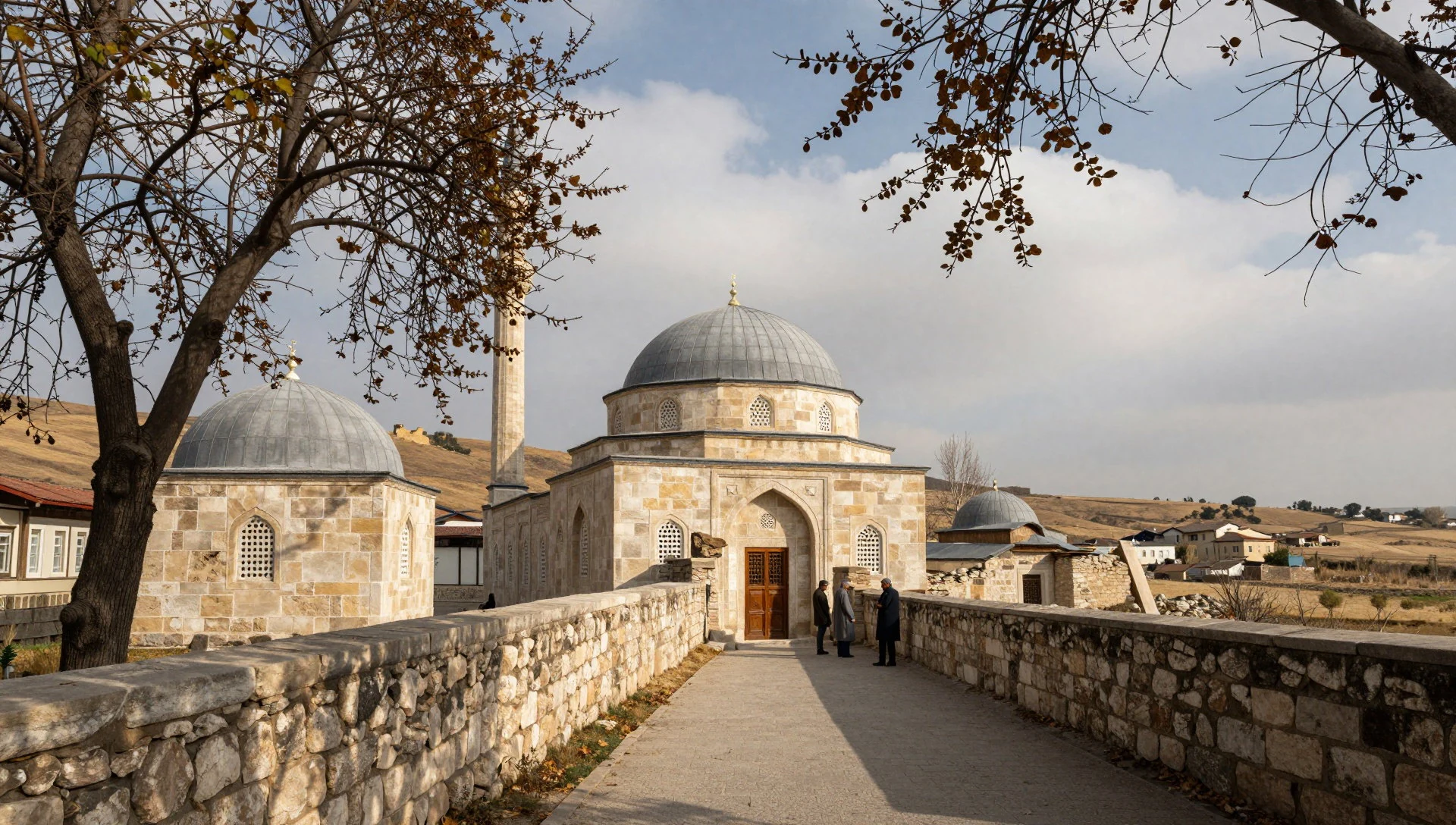
- Doğubeyazıt Castle — Crag east of the palace
On the crag east of the palace, the old castle has an oldest layer from the Urartian era, with repairs by whoever held it afterwards. The scramble up is steep and loose underfoot, but it gives the clearest sense of how the palace sits against the plain and the road. Wear sturdy shoes and avoid the midday sun.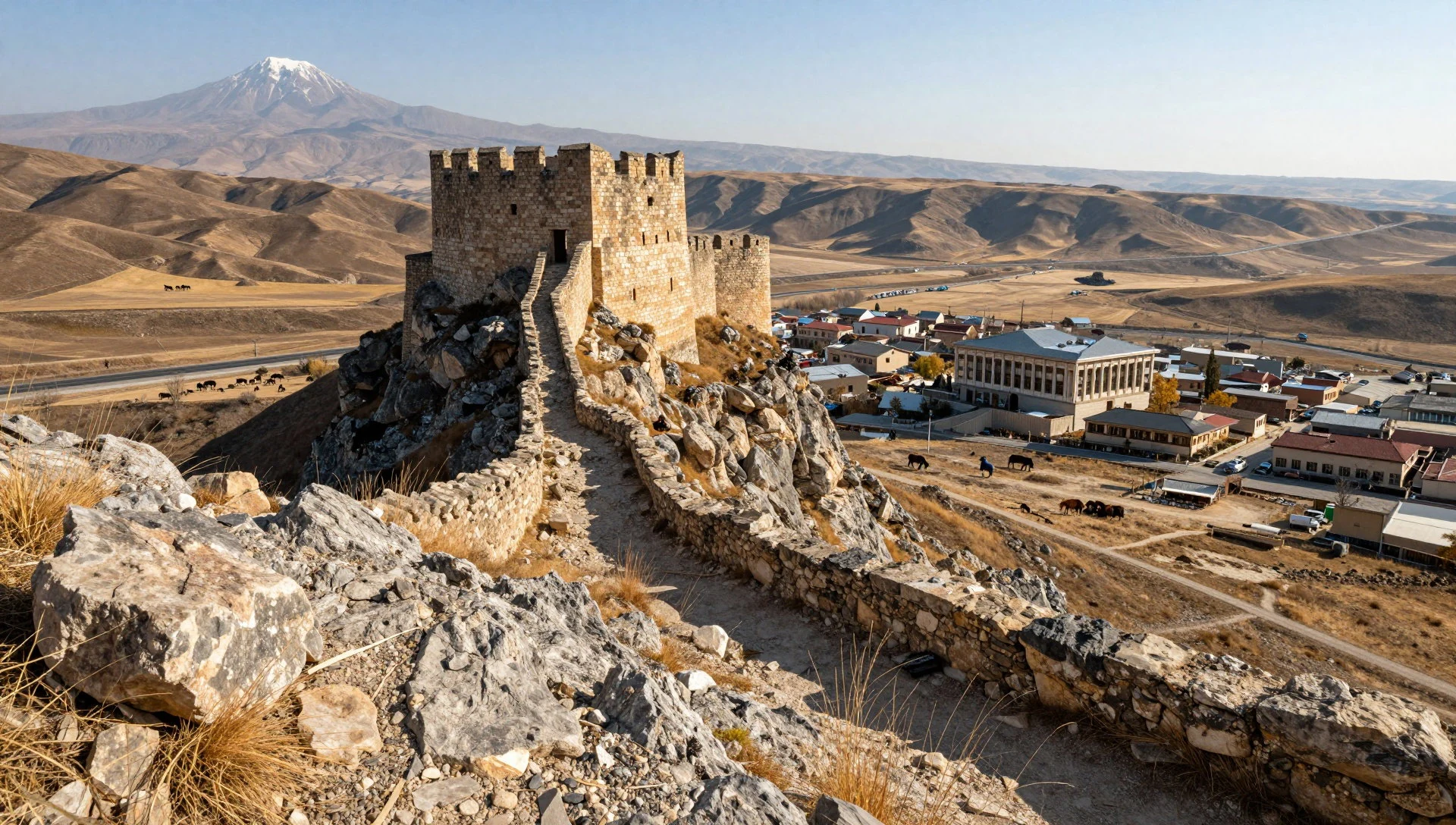
- El-Hani Museum — İshak Paşa Street, below the palace
On the road up towards the palace, El-Hani Museum is a small ethnography display with waxwork figures. It suits a short stop on the way, especially for anyone wanting a quick picture of local customs and household life before the ruins. Opening hours are limited, so check in town first.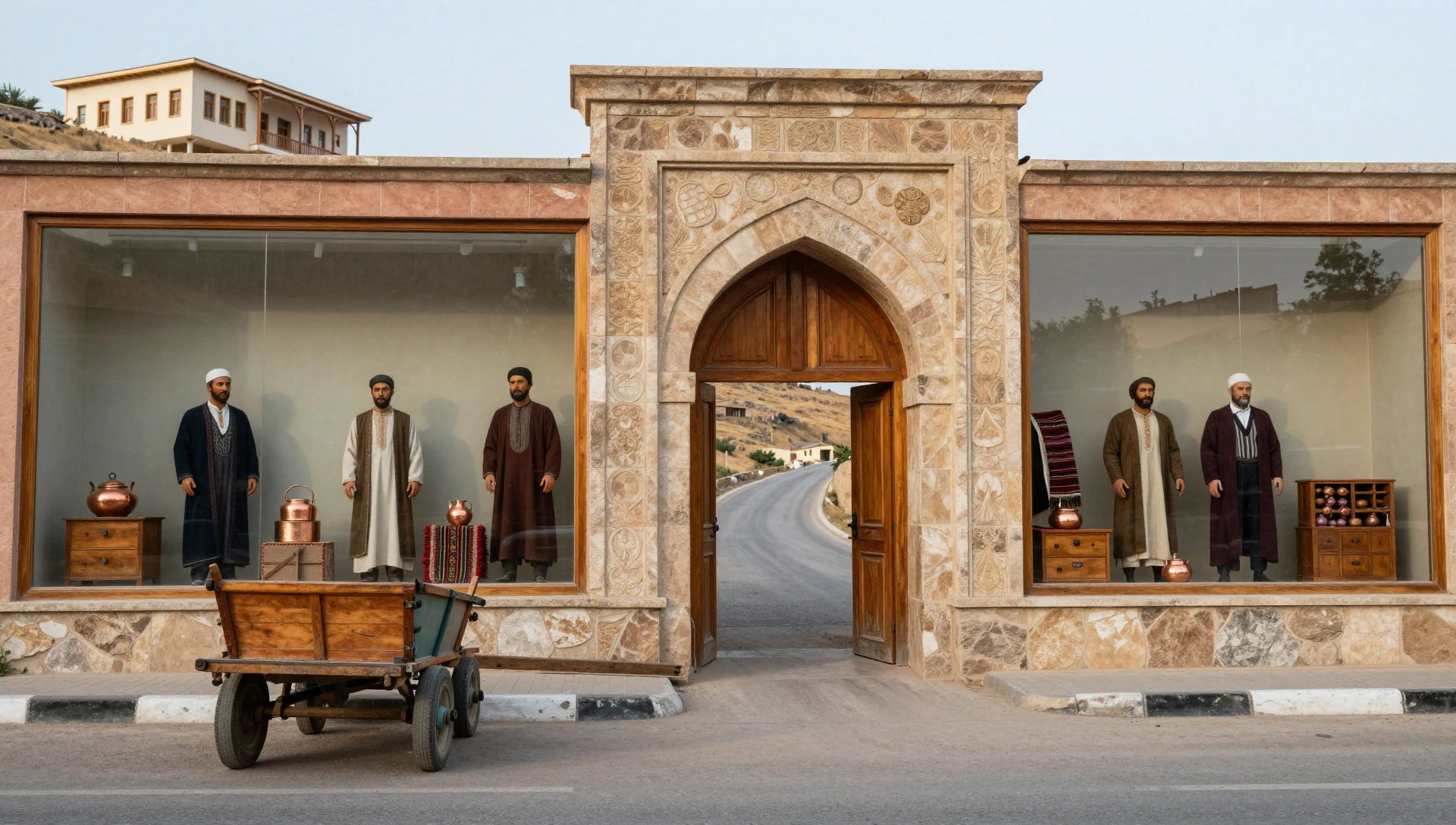
- Mount Ararat viewpoints — North-east of Doğubeyazıt
North-east of town, Mount Ararat is a glacier-topped volcano that dominates the skyline on clear days. Climbing needs permits and a licensed guide arranged in advance, so most visitors settle for viewpoints along the road. Haze and cloud often hide the summit, so allow a spare morning for a second try.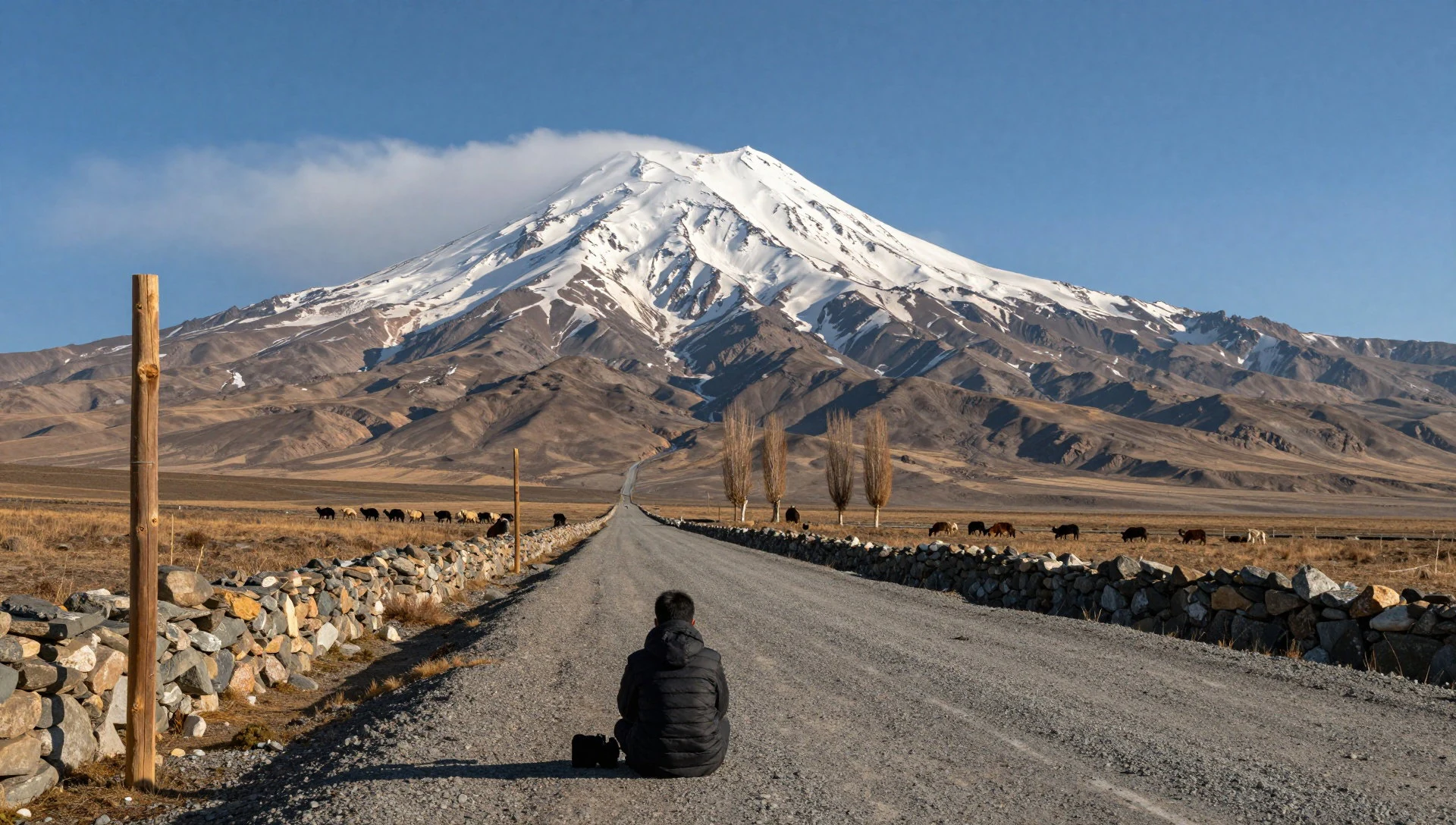
Culture
Ishak Pasha Palace sits in a mostly Kurdish district of eastern Turkey, and local culture shapes a visit as much as the stonework does. Kurdish and Turkish are both spoken in Doğubeyazıt, and the palace carries a name in each. Hospitality is a point of pride across the region: a shopkeeper or a family at a viewpoint may offer tea, and accepting is the friendly response. Islam sets the rhythm of the day in town, and the palace has its own mosque, while the old Beyazıt Mosque stands close by.
The region's history is layered and still sensitive. The Ararat rebellion of 1930, the Ottoman governors, the Armenian and Georgian craftsmen and the border position all feature in local memory, and people hold their own views about each. Listening goes further than debating, and politics is best left to those who know each other well.
Literature matters here too. Ehmedê Xanî, whose tomb lies near the palace, wrote Mem and Zin, a love story that many Kurds regard as a foundational text of their literature. Mentioning it, or simply asking about him, tends to start friendly conversation.
The border zone also means army and police posts are common and road checkpoints are routine. Carrying a passport and answering questions politely keeps these stops short.
Ask before photographing people, especially women and anyone in uniform, and keep the camera away from military posts and checkpoints.
What to wear
Ishak Pasha Palace lies in Kurdish country, and the traditional dress of the district is the best place to start. Men's formal dress is often a jacket and wide-legged trousers cut from heavy wool, worn with a broad sash and a patterned scarf wound around a cap. Women's dress is brighter: long, layered gowns in velvet or shimmering synthetic cloth, trimmed with metallic embroidery and sequins, topped with scarves, shawls and gold-toned jewellery. These outfits appear at weddings, spring Newroz celebrations and other festivals rather than on an ordinary weekday.
Everyday clothes in Doğubeyazıt are plainer and practical. Jeans, jackets, tracksuits and padded coats are common, with older rural men sometimes in baggy trousers and many women in headscarves, though styles vary by age and family. Winters are cold, so heavy layers dominate for half the year.
For visitors, comfort and modesty both matter. The palace is outdoors, with uneven stone, steps and little shade, so sturdy closed shoes are better than sandals. The plateau is sunny and windy, so bring a hat, sunscreen and a light jacket even in summer, plus proper warm layers outside it. In town and at mosques, cover shoulders and knees; women should carry a scarf for covering their hair when entering a mosque, and everyone should expect to take shoes off at the door.
What to eat
- Abdigor köfte — Eateries along İnegöl Avenue in the town centre
A large, fist-sized meatball served over rice, and the dish most often named as the local speciality. It is filling and simple, best eaten as a main meal after a morning at the palace.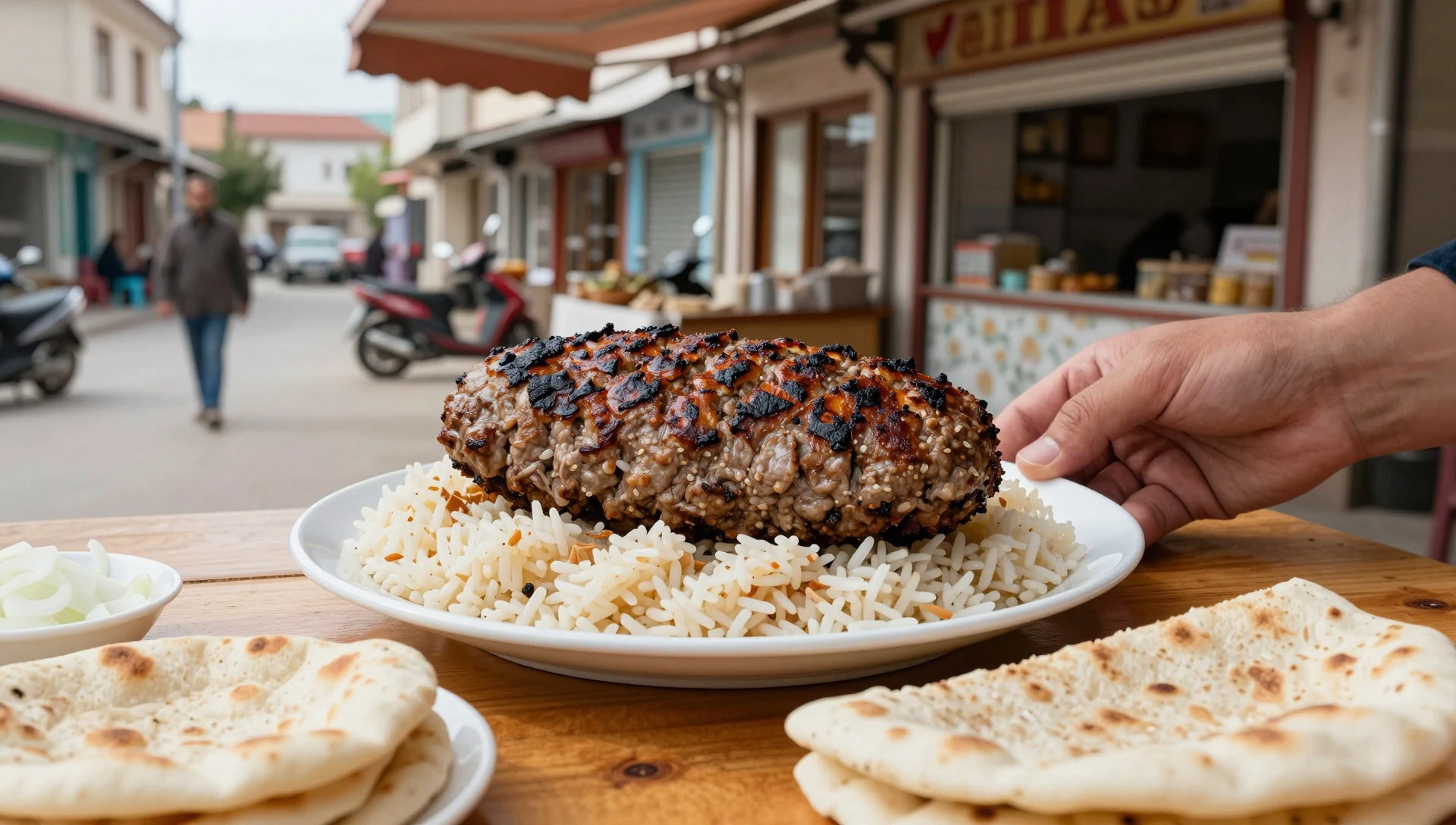
- Ciğer — Specialist ciğer eateries in the town centre
Chopped or skewered liver grilled over charcoal and served with flatbread, onion and herbs. It is a regional favourite for a hearty lunch, and the specialist ciğer eateries usually also offer ordinary kebabs for anyone who prefers them.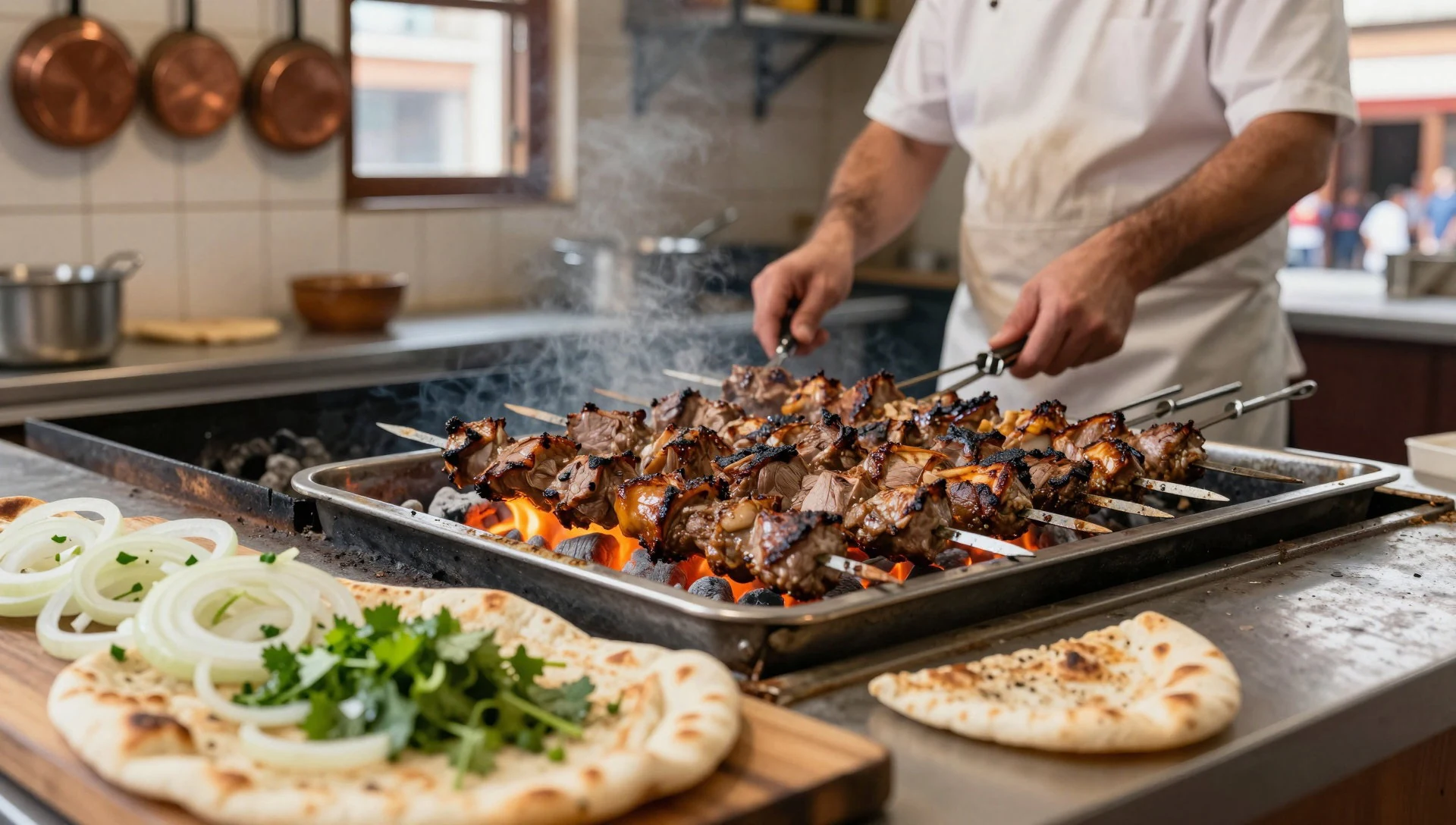
- Döner — Döner shops along İnegöl Avenue
Sliced döner in flatbread or on a plate is the quick, dependable choice in town, and portions are generous. It works well as a fast meal between the palace, the mosque and the castle. - Village-style breakfast — Breakfast rooms and small eateries in town
Eastern Turkey takes breakfast seriously: fresh bread, white cheese, olives, honey, butter and plenty of tea, often eaten slowly. It sets a visitor up well before a day of climbing around the ruins and the crag. - Çay — Tea houses and any eatery in town
Tea, served in small tulip-shaped glasses, is the drink that holds the day together. Expect it offered with meals, in shops and sometimes as a gesture of welcome. Coffee is less central here.
Plan it
Best time. April and October are the most comfortable, with milder days and clear roads; May, June and September run hot, July and August are hotter still and dry on the plateau, and winter is cold and snowy, which can affect travel and hide Mount Ararat in cloud.
How long. 1–2
Getting there. Fly to Iğdır (IGD) or Ağrı (AJI), the two nearest small airports, both with daily flights from Istanbul and Ankara; book hire cars ahead, as facilities are limited. Buses and dolmuşes reach Doğubeyazıt's new bus station, northwest of the centre, and taxis or local transport climb to the palace.
Budget. low
Tips
- Book car hire well ahead, as the nearby airports are small and supply is limited
- Go early or late in the day for softer light and cooler temperatures
- Carry cash for small eateries and tea houses, and bring water, as shade is scarce
- Dolmuşes mostly leave in the morning, so do not leave onward travel until the afternoon
- Check current travel advice and local conditions before visiting the border area
Etiquette
- Remove shoes before entering mosques and dress modestly in town
- Ask before photographing people, and avoid photographing military posts
- Accept tea politely when it is offered
Nearby
Sources
- Wikidata Q1501534 (CC0)
- Wikipedia: Ishak Pasha Palace (rev 1369140244) (CC BY-SA 4.0)
- Wikivoyage: Doğubayazıt (rev 5401264) (CC BY-SA 4.0)
- Photo: W. Bulach, Ishak Pasha Palace (CC BY-SA 4.0)
- Photo: Volcanicaa, İshak Paşa Sarayı (CC BY-SA 4.0)
- Photo: Myararat83, Ishak Paşa Palace (CC BY 3.0)
- Photo: Safa.daneshvar, Ishak Pasa Palace (CC BY-SA 4.0)
- Photo: Adam Jones, Bas-Reliefs on Facade (CC BY-SA 2.0)
- Photo: W. Bulach, The Ishak Pasha Palace (CC BY-SA 4.0)
- Photo: Myararat83, Interior view (CC BY 3.0)
- Photo: Jean & Nathalie, inner part of the palace (CC BY 2.5)


