Inle Lake
Inle Lake, Myanmar
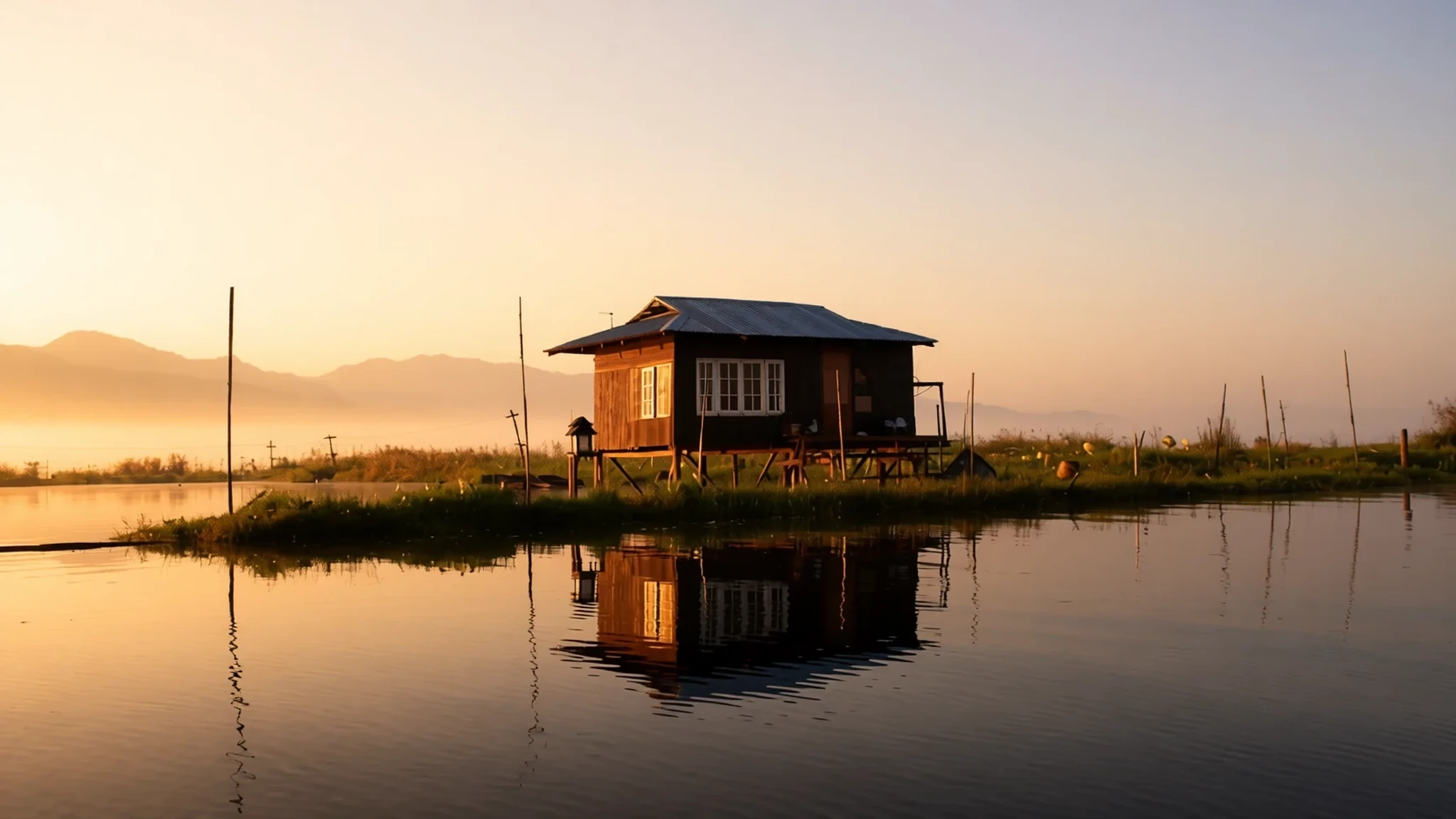
Inle Lake offers a rare window onto floating gardens, stilted wooden villages, and legendary fishermen who row with one leg.
The place
Inle Lake sits high within the Shan Hills of Myanmar, cradled by mountain ridges and sustained by a complex watershed that feeds its clear, slightly alkaline waters. Large expanses of the surface are dominated by dense floating vegetation, creating a unique wetland ecosystem where water hyacinth and reeds tangle beneath the tropical sun. Life here is intimately bound to the water. Communities do not merely live near the lake; they inhabit it entirely, constructing vast networks of stilted villages directly over the shallows. Wooden houses stand upon tall piles above the channels, connected by narrow waterways where long wooden boats serve as the primary means of transport for villagers, monks, and market vendors alike. Submerged beneath the surface lies a fragile aquatic world containing numerous species of fish, snails, and crabs found nowhere else on earth, alongside seasonal flocks of migratory gulls that arrive in the cooler months. The surrounding hills shelter diverse ethnic minority groups, including the Pa-O and Intha people, whose farming practices and cottage industries have shaped the landscape for generations. Despite its designation as a protected Ramsar site and a biosphere reserve, the lake faces mounting ecological pressures from agricultural runoff, siltation, and invasive plants that threaten the delicate balance of this extraordinary inland aquatic environment.
Its story
For centuries, the waters of Inle Lake have been shaped by human ingenuity and adaptation. The principal inhabitants, the Intha people, whose name translates as 'sons of the lake', developed an extraordinary agricultural technique known as floating gardens. Farmers collect tangled masses of lake weeds and water hyacinth, anchor them to the muddy bottom with long bamboo poles, and cover them with rich silt dredged from the lakebed. These fertile artificial islands rise and fall with the seasonal water levels, allowing villagers to cultivate abundant crops of tomatoes, beans, and flowers directly on the open water. Alongside agriculture, the Intha perfected a singular method of navigation that defines their identity to this day. Standing precariously on the very edge of flat-bottomed wooden skiffs, fishermen wrap one leg around a long oar while using both hands to handle conical fish traps and nets. This athletic technique leaves their arms free to work while allowing them to spot movement through the dense aquatic weeds below the surface. Inland, ancient traditions endure within stone pagodas and hillside monasteries that have overlooked the valley for centuries. Artisans still practice delicate crafts passed down through generations, from hammering silver and weaving cotton on handlooms to extracting fine microscopic threads from lotus stems to create sacred robes for temple statues. Through decades of shifting political landscapes and modern pressures, the communities of the lake have maintained an independent rhythm of life tied entirely to the monsoon rains, the rising waters, and the enduring bounty of the wetland.
What to see
- Kakku Pagodas — Southeast hills
Tucked away in the hills southeast of the lake, this remote archaeological site contains over two thousand ancient Buddhist stupas dating back centuries. It serves as an important religious gathering place for the local Pa-O community, featuring intricate stucco carvings and bells that chime softly in the mountain breeze.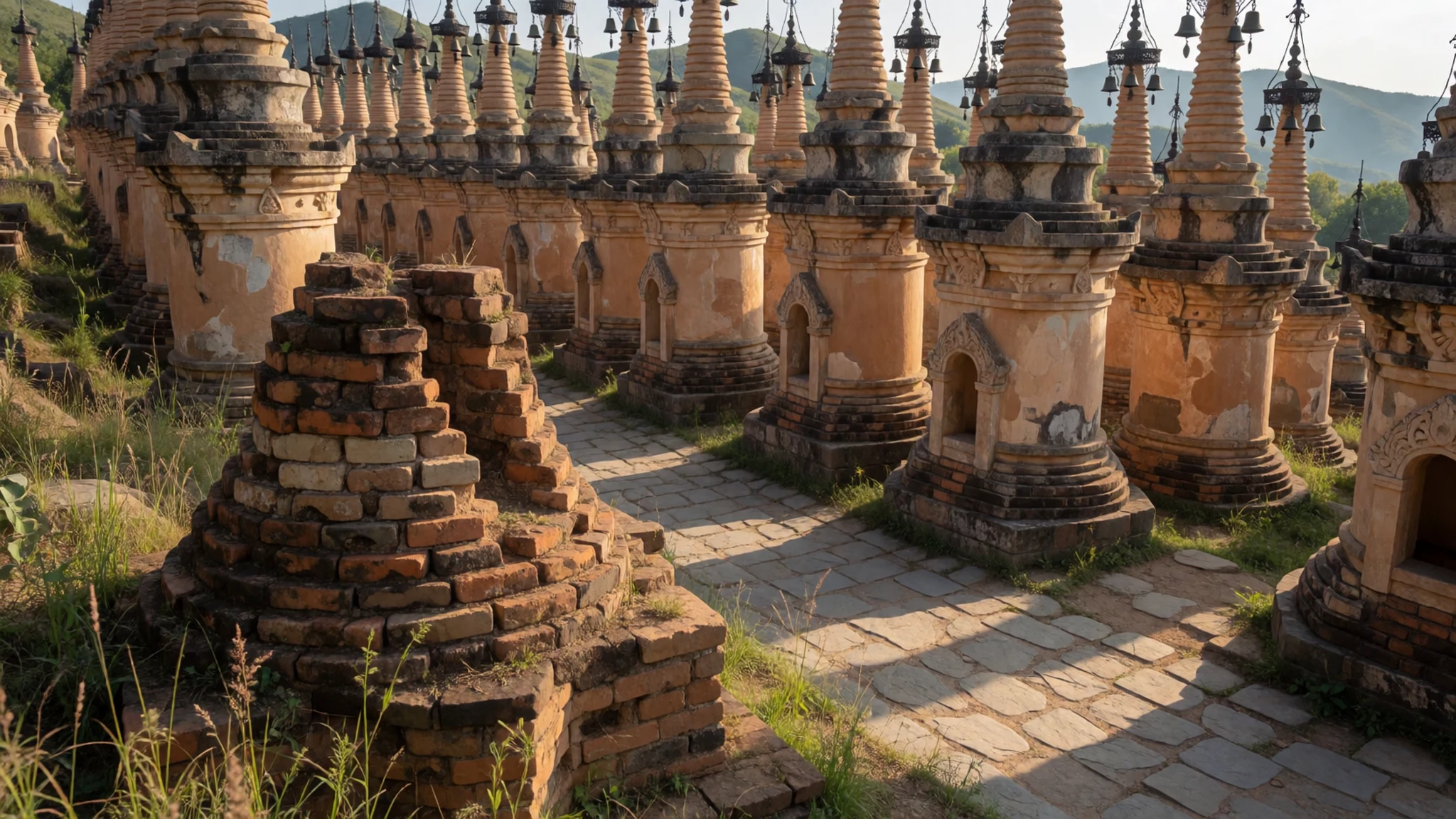
- Shwe Inn Dein Pagoda — Western shore near Tone Le
Often described as a forgotten stupa forest, this atmospheric complex features hundreds of weathered, plant-overgrown shrines clustered near the western shores of the water. Exploring the narrow pathways reveals crumbling brick structures, carved stone details, and quiet courtyards reclaimed by ancient trees and tropical vines over generations.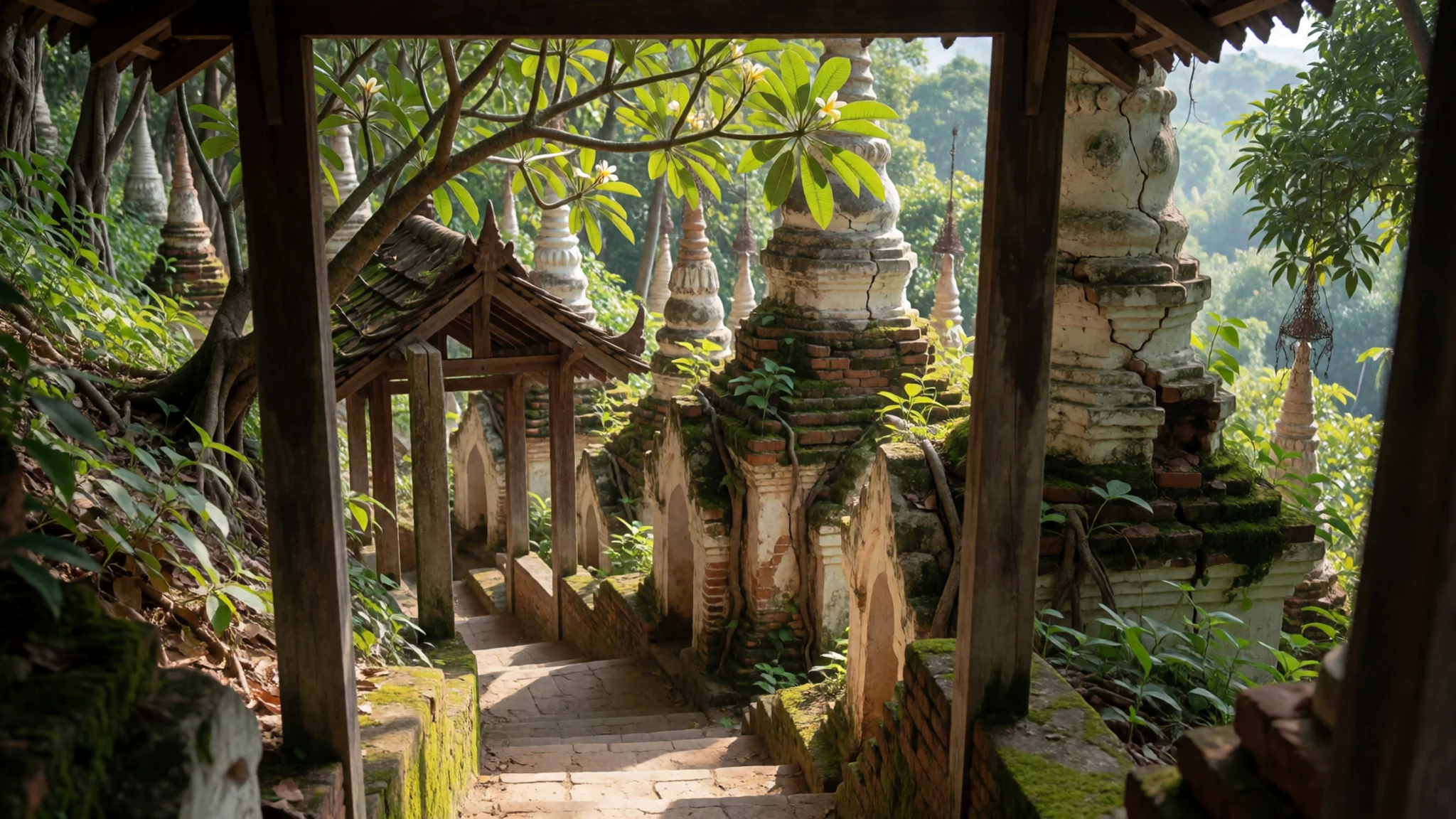
- Kaung Daing Village — Western shore
A traditional fishing settlement on the western shore, easily reached by bicycle or boat across the lake. The village is known for local tofu production, narrow lanes shaded by bamboo fences, and nearby hot springs where visitors can relax after a long day of cycling through the rural countryside.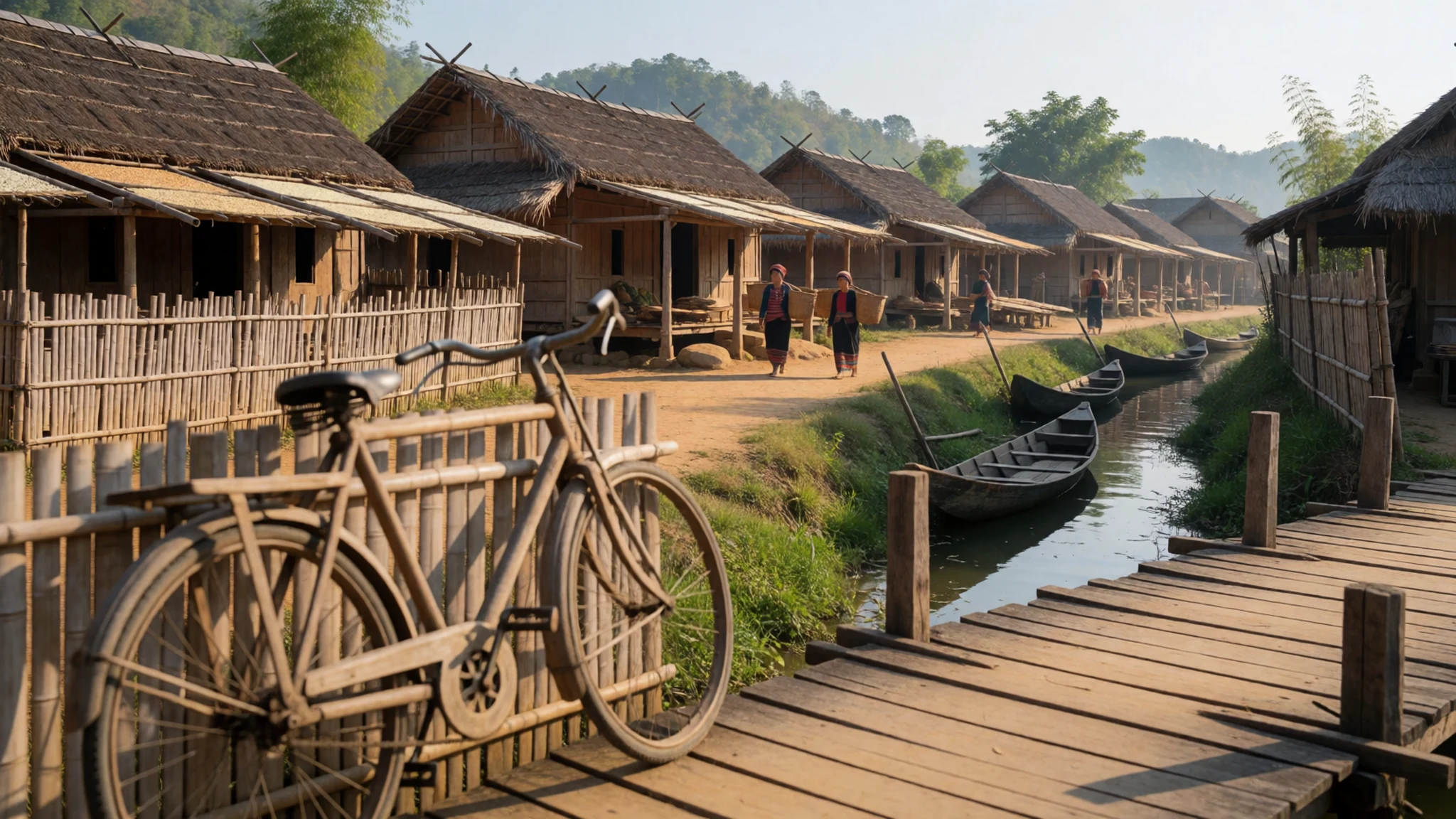
- Maing Thauk Village and Monastery — Eastern shore
A fascinating community built partly on wooden stilts over the water and partly on dry land against the hillside. A long wooden footbridge connects the two sections, while a steep path leads up through the trees to a quiet hilltop monastery offering panoramic views across the entire lake valley.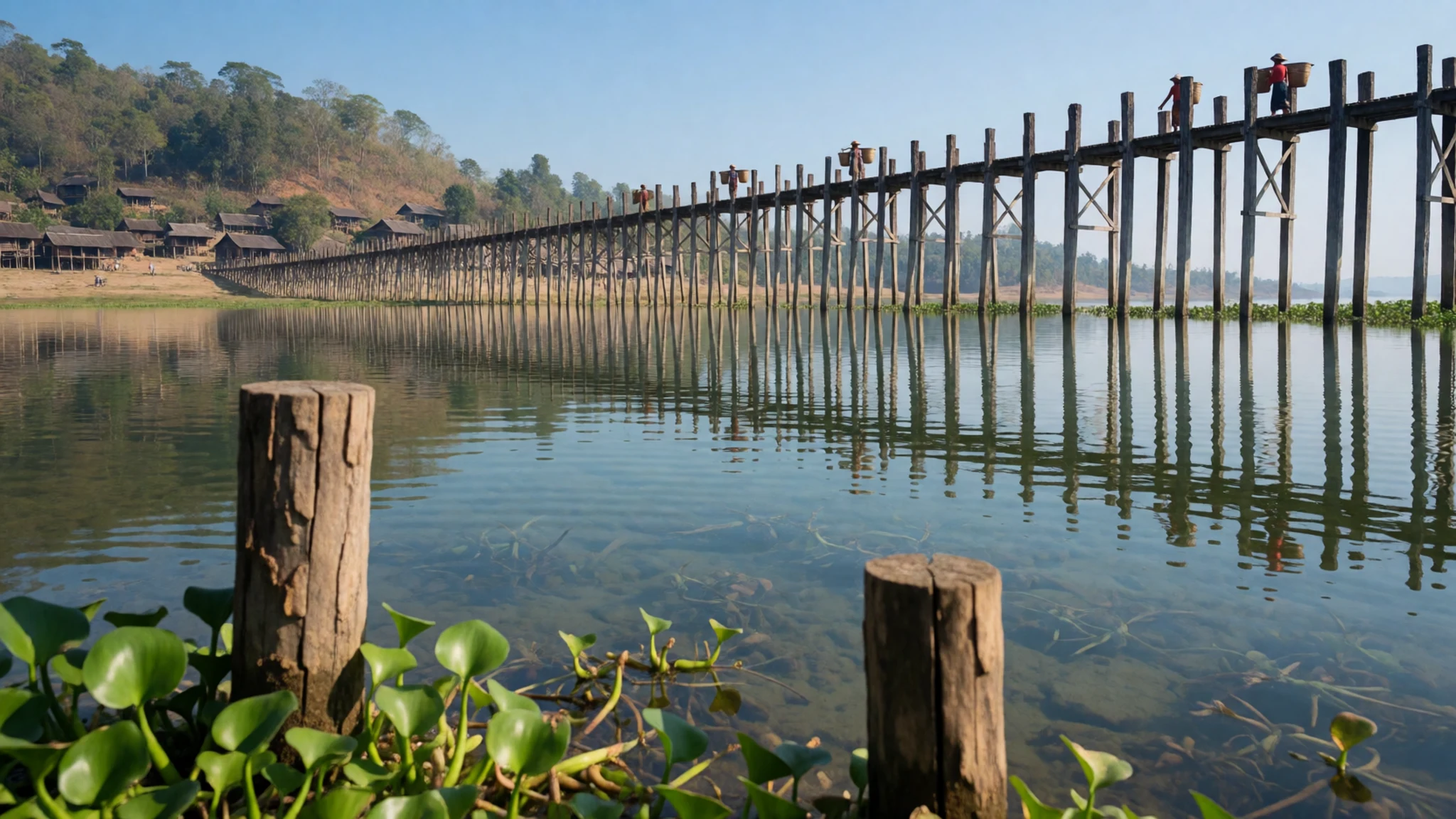
- Aung Puppet Show — Nyaungshwe town
An intimate cultural performance preserving the traditional art of Myanmar string puppetry in the main lakeside town. Operated by a multi-generational family of puppeteers, the show features skilled wooden puppets dancing in traditional costume to classical music, offering a charming glimpse into local theatrical heritage.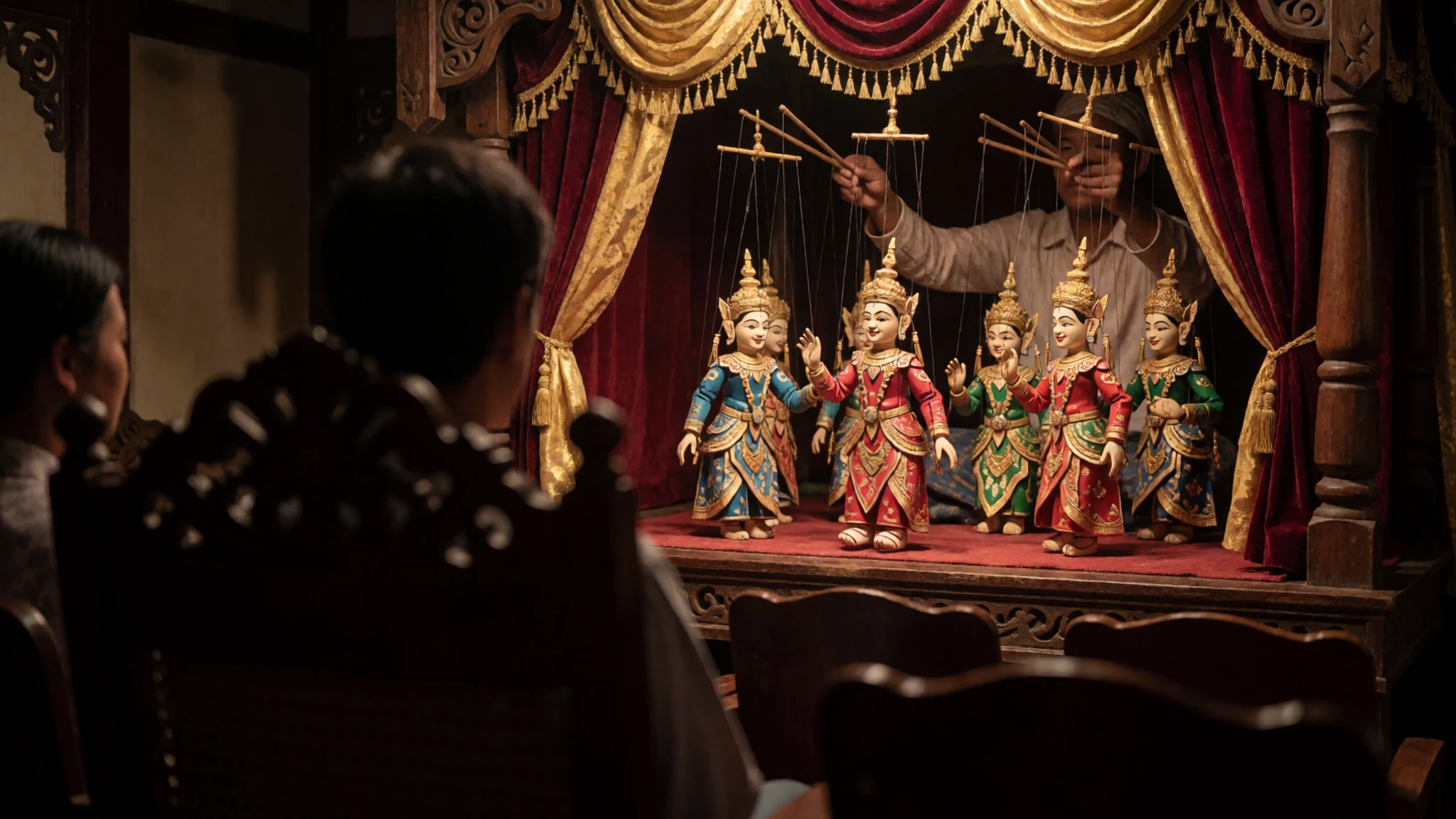
Culture
Daily life around the lake is deeply influenced by Theravada Buddhism, which shapes community values, respect for elders, and daily interactions. Monasteries serve as the spiritual and educational heart of every village, where young novices study scriptures and local families gather to make merit through offerings of food and flowers. Traditional craftsmanship remains a source of immense pride, particularly the laborious extraction of lotus fibre, which is spun into fine yarn to weave sacred robes for temple statues. Social etiquette emphasizes modesty, gentleness, and community harmony, with interpersonal conflicts rarely displayed openly in public spaces. Visitors will find that a polite greeting and a respectful smile open many doors, reflecting the warm hospitality of the Shan State people. When visiting temples, monasteries, or private homes, always remove your shoes and socks at the entrance gate before stepping onto the sacred premises.
What to wear
Traditional attire across the Shan Hills reflects both practical needs and enduring ethnic identities. Local men often wear loose-fitting cotton trousers or traditional longyi wrap-around skirts paired with simple cotton shirts and traditional embroidered jackets, while women frequently wear colourful blouses alongside woven longyis and light headscarves to protect against the intense sun on the water. Handwoven textiles, featuring geometric patterns and natural dyes, remain central to local dress traditions. In everyday contemporary life, younger residents in lakeside towns wear casual shirts, jeans, and modern sandals, though traditional garments are still widely preferred for religious festivals, temple visits, and formal family gatherings. For travellers exploring the region, dressing modestly is essential out of respect for local customs. Lightweight, breathable cotton or linen clothing that covers both the shoulders and knees is appropriate for visiting villages, markets, and sacred sites. Because mornings and evenings on the water can turn surprisingly cool, especially during the winter months, bringing a light fleece, sweater, or windproof jacket is strongly recommended for early boat excursions.
What to eat
- Shan Noodles — Any morning market or local teashop
A beloved regional staple featuring thin rice noodles served in a clear, savoury broth or tossed in a sticky garlic oil sauce with minced pork, peanuts, and pickled mustard greens. - Inle Lake Fried Fish — Floating village eateries and lakeside restaurants
Fresh catches from the lake lightly spiced and pan-fried until crisp, typically served with a tangy tamarind dipping sauce and fresh garden herbs. - Handmade Pasta and Wood-Oven Pizza — Main street restaurants in Nyaungshwe
Unexpectedly popular Italian dishes prepared by local chefs using fresh regional ingredients, offering a hearty alternative after days of traditional Burmese cuisine. - Tofu Nway — The morning market and street stalls
A comforting morning porridge made from warm chickpea flour paste served over rice noodles, drizzled with chilli oil and coriander. - Banana Pancakes with Chocolate — Backpacker cafes along the main road
Sweet, crispy pan-fried pancakes filled with fresh local bananas and drizzled with chocolate, popular with travellers seeking a comforting sweet treat.
Plan it
Best time. November to February offers the most pleasant weather, with clear skies, comfortable daytime temperatures, and cooler nights.
How long. 3–4
Getting there. Fly into Heho airport, then take a taxi or shared car for the 45-minute drive down to the lakeside town of Nyaungshwe.
Budget. mid
Tips
- Hire a boat early in the morning to experience the calmest water and best light for photography.
- Carry sufficient physical cash in local currency, as ATMs can be unreliable and credit cards are rarely accepted.
- Book your airport transfer through your guesthouse in advance to secure a fair rate.
- Pack a warm fleece or jacket for chilly early morning boat rides on the open water.
Etiquette
- Always remove your shoes and socks completely before entering any pagoda, temple, or monastery.
- Ask for permission before photographing local fishermen or villagers up close.
Nearby
Sources
- Wikidata Q1043461 (CC0)
- Wikipedia (rev 1371809422) (CC-BY-SA 4.0)
- Wikivoyage (rev 5405183) (CC-BY-SA 4.0)
- Photo 01-inle-lake-fisherman-on-the-boat-2-myanmar.jpg (CC BY 4.0)
- Photo 02-inle-lake-myanmar.jpg (CC BY 2.5)
- Photo 07-img-lotus-thread.jpg (CC BY 3.0)


