Indore
Indore, India
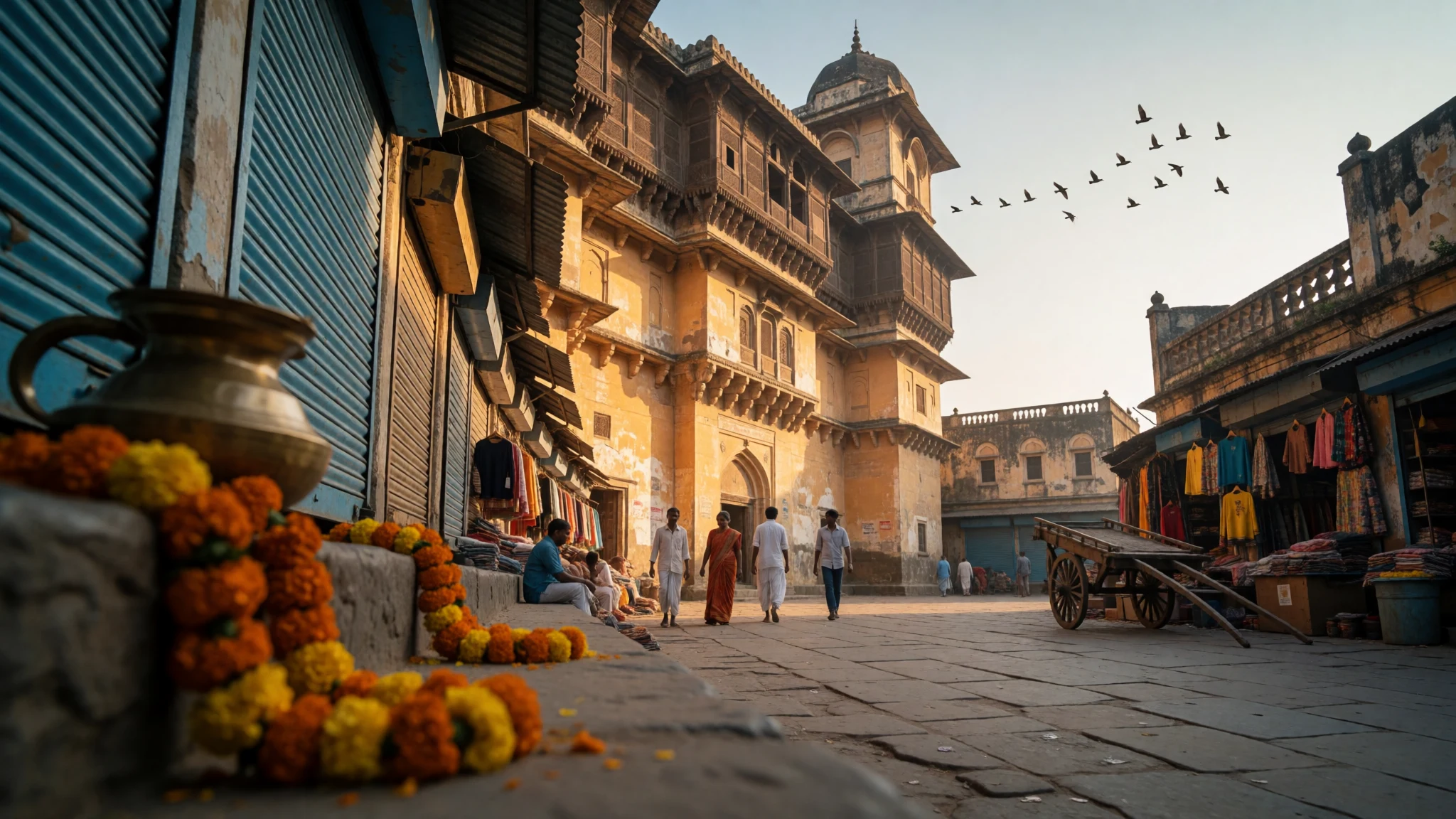
Indore pairs Holkar-era palaces and riverside cenotaphs with a street-food scene that carries on well into the night.
The place
Indore sits on the Malwa plateau in western Madhya Pradesh, about 553 metres above sea level, and is the state's biggest city, with roughly 2 million people in the city proper. It grew beside the Kanh and Saraswati rivers, two modest streams that now thread through a dense urban core, and it began as a trading stop between the Deccan to the south and Delhi to the north. That crossroads role still defines it. Highways and railways converge here, and the wider metropolitan region, which takes in Ujjain, Dewas, Pithampur and Nagda, works as the commercial engine of the state.
On the ground the city is busy, flat and a little untidy, more a working town than a showpiece. The old centre around Rajwada is a knot of lanes, jewellers, cloth sellers and snack stalls, while newer districts such as Palasia hold shopping streets, cafés and temples built in recent decades. Traffic is heavy at most hours of the day, and summers are hot, so most sightseeing happens early in the morning or after the sun drops.
People rarely come to Indore for one single monument. It works better as a place to spend two or three days, combining a Holkar palace, a few temples, a museum of carved stone and long evenings in the food markets. It also makes a practical base for day trips to Ujjain and Mandu, though journey times should be checked locally before planning a full day around them.
Its story
Indore's recorded history begins earlier than its reputation as a Holkar city suggests. A copper-plate inscription from the Gupta period names the settlement Indrapura and records a gift from the king Skandagupta to keep up its sun temple, which two local merchants, Achalavarman and Bhrikuntasimha, had built. The town was evidently a place of trade and religious patronage long before any palaces arrived.
Under the Mughals, the land around Indore was split between the administrative districts of Ujjain and Mandu, and the future city was a small settlement inside the sub-division of Kampel. That arrangement began to unravel in the early eighteenth century, when Maratha forces pushed into Malwa and demanded chauth, a tax paid in exchange for being left alone, from the Mughal officials. Local landholders, led by Nandlal Chaudhary, agreed to pay rather than fight, and the Mughal administrator retreated to Ujjain. A Mughal governor soon defeated the Marathas near Kampel, but the shift in power could not be held back for long.
Once the Peshwa Baji Rao I had taken Malwa, Indore passed under the Maratha Empire and the Holkar family became its rulers. They made it their seat and left behind the Rajwada palace, a row of riverside cenotaphs and many temples. The Holkars later came under the British East India Company, and Indore continued as a princely state of the British Raj until Indian independence. Trade money and royal taste still show in the city's buildings today.
What to see
- Rajwada — Old town, central Indore
Rajwada is the old Holkar palace at the heart of the old town, a tall, weathered building that rises straight out of a crowded market square. Shops and stalls press against its walls, so the mood is lively rather than hushed. Go in the morning, and check the official site for current opening arrangements.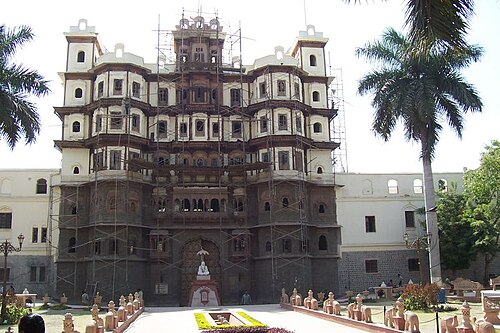
- Chhatris (Krishnapura) — Riverbank near Rajwada
The chhatris are memorial cenotaphs raised for Holkar rulers and their families, standing beside the Kanh river a short walk from Rajwada. Domes, arches and carved stone sit above the water, and the Maratha style is easy to read. Late afternoon light flatters the stonework, and the riverbank is a quiet change from the market.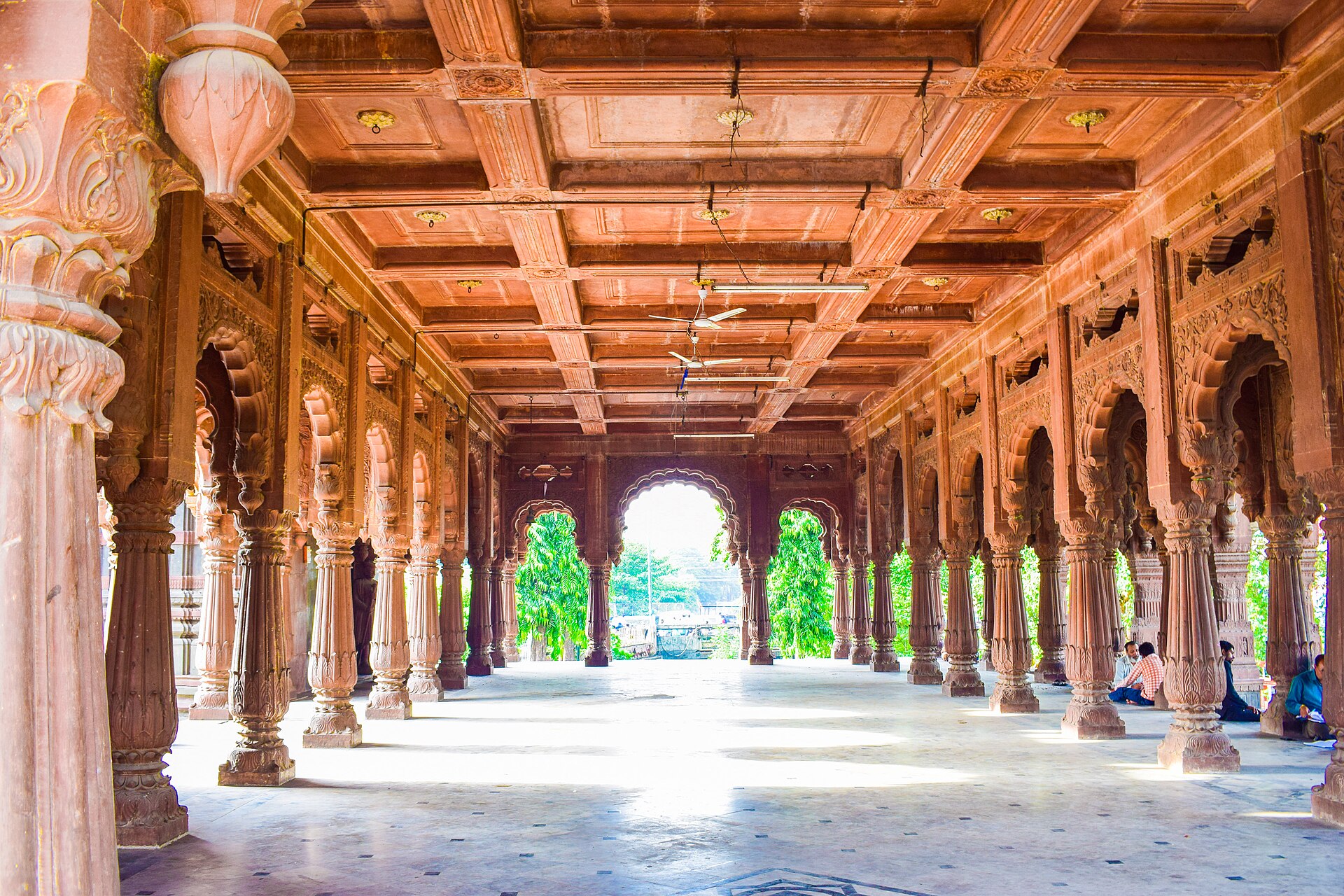
- Lalbagh Palace — South-western Indore
Lalbagh Palace was a Holkar residence, built for entertaining and show, and its formal façade and large grounds reflect European tastes mixed with local craft. Access and opening arrangements have changed over time, so check the official site before going. Even a visit to the gates gives a sense of how the rulers lived.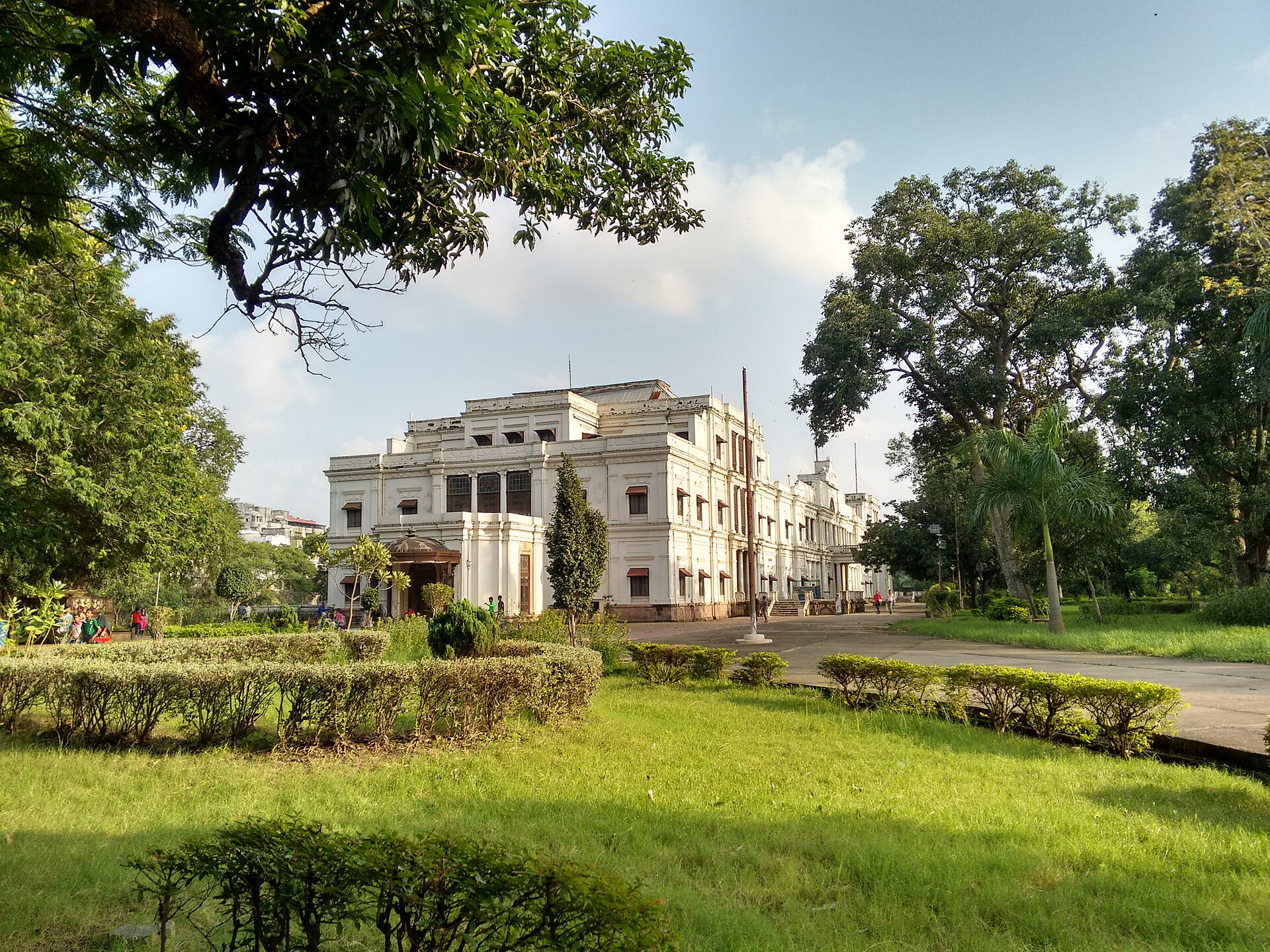
- Kanch Mandir — Old town, near Itwaria Bazaar
Kanch Mandir is a Jain temple whose interior is covered almost entirely in glass and mirror work, with coloured pieces set into the walls, ceiling and floors. The effect is dazzling rather than solemn. Shoes come off at the door, and photography rules vary, so ask the attendant before lifting a camera.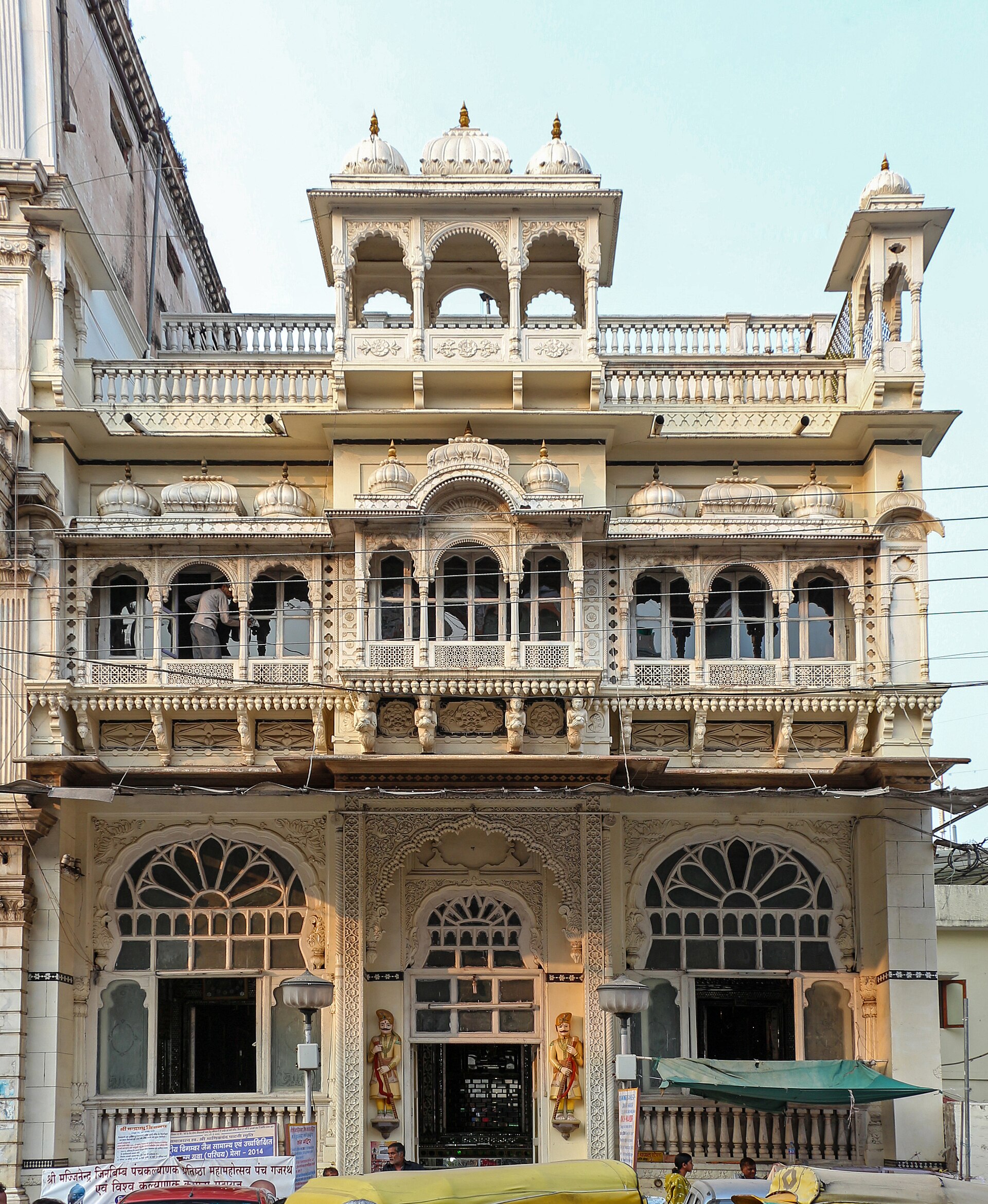
- Bada Ganpati — Central Indore
Bada Ganpati is known for the sheer size of its Ganesh idol, which towers over worshippers inside the temple. The building itself is more recent than many Indore sights, and the draw is the figure and the devotion around it. Wednesdays and festival days bring crowds, so mornings on other days are calmer. - Central Museum — Central Indore
The Central Museum holds a strong collection of Parmar-period stone sculpture from Hinglajgarh, with carefully proportioned figures carved in detail. It is a quiet counterpart to the street life outside and gives context to the region's older, pre-Holkar history. Check the official site for current opening days before making the trip.
Culture
Indore's culture is a layered mix, shaped by centuries as a Maratha-ruled trading town on the edge of Rajasthan and Gujarat. Marathi, Malwi, Rajasthani and Gujarati habits all show up in speech, festivals and above all in cooking, and the city takes pride in feeding people well. Evening outings to the food markets are a normal family routine, not a tourist activity, and it is common to see three generations sharing a late snack around a stall.
Religious life runs through daily routine. Ganesh temples draw crowds on Wednesdays, goddess shrines fill during Navratri, and Jain communities, with their strong trading tradition, maintain temples such as Kanch Mandir. The Holkar legacy is visible in the chhatris and in the city's pride in its royal past, and many families still tell Holkar stories as local history rather than distant heritage.
City life is friendly but fast. Shopkeepers in the old lanes bargain amiably, strangers readily give directions, and conversations about food start easily. Evening is the sociable hour, when heat eases and markets fill. Festivals bring music, processions and closed roads, so a day of sightseeing may need to bend around them.
At any temple in Indore, remove your shoes before the entrance, cover your shoulders and knees, and ask before photographing worshippers or the inner shrine.
What to wear
Traditional dress in Indore follows the wider Malwa and Maratha pattern. Women wear sarees, among them Maheshwari sarees, a light cotton and silk weave from the nearby town of Maheshwar that has long been linked with the Holkar court. The nine-yard Maharashtrian nauvari and the Rajasthani bandhani odhni also appear at weddings and festivals. Men wear a dhoti or kurta with a turban or safa on formal occasions, and the Malwi safa still turns up at celebrations.
Day to day, people dress much as in other Indian cities. Office workers wear shirts and trousers, students favour jeans and kurtas, and women wear salwar kameez, sarees or western clothes depending on age and occasion. Festival evenings bring out brighter silks and embroidery, and weddings are lavish.
Visitors should plan for heat and for temples. Light cotton or linen in loose cuts works best for most of the year, and a thin scarf or shawl helps in temples and at the air-conditioned museum. Shoulders and knees should be covered at religious sites, and shorts or sleeveless tops are better left for hotels and cafés. Footwear should be easy to slip off, because shoes come off often, and comfortable sandals or trainers suit the uneven pavements of the old town. In winter mornings and evenings, a light jacket is useful, and during the monsoon a compact umbrella earns its space.
What to eat
- Poha with jalebi — Morning breakfast stalls and sweet shops across the city
Poha, flattened rice cooked with onion, mustard seed and a squeeze of lemon, is Indore's signature breakfast, often topped with sev and eaten alongside crisp hot jalebi. It is cheap, filling and sold from early morning at roadside stalls and sweet shops across the city. - Kachori and samosa — Snack corners around Rajwada and the old town
Crisp fried kachori, stuffed with spiced lentil or onion, and samosas are standard morning snacks, usually served with chutney. They are best eaten hot and fresh, when the pastry is still crackling. Tea sellers and snack corners in the old town turn them out all morning. - Shikanji — The Chappan Dukan food street
Shikanji is a spiced, sweetened lemon drink, and Indore's version is rich and fizzy, sometimes finished with milk or dry fruit. It is a welcome break in the afternoon heat and a good way to cool down after a walk through the crowded lanes. - Bhutte ka kees — Night stalls, especially around Sarafa Bazaar
Bhutte ka kees is grated fresh corn cooked in milk with spices and green chilli, then finished with coriander and lemon. It is a seasonal dish, best in the monsoon when corn is in the markets, and is sold from stalls that set up after dark. - Malpua and rabdi — Sweet shops and the night market at Sarafa Bazaar
Malpua are fried sweet pancakes soaked in syrup, often served with thick reduced-milk rabdi. Indore also has a wide range of other sweets, from imarti and gulab jamun to kaju katli. Order at a sweet counter after the main meal. - Namkeen — Namkeen shops throughout the city
Indore is known for its savoury snack mixes, called namkeen, made from fried gram flour, lentils, peanuts and spices. Shops across the city sell them by weight, and a packet makes a practical gift or train snack. Sample before buying, as heat levels vary.
Plan it
Best time. October to February is the most comfortable period, with dry, mild days and cool evenings that suit the night markets. March to May is hot, with strong midday sun, and June to September is the monsoon, which brings humid, wet weather but greener surroundings.
How long. 2–3
Getting there. Indore airport is about 8 km from the city centre, with flights from major cities such as Mumbai and Delhi; private taxis wait outside. Trains arrive at Indore Junction and other stations, and long-distance buses run from Mumbai, Jaipur, Gwalior and Bhopal. The last leg is by taxi, auto-rickshaw or app cab.
Budget. low
Tips
- Sightsee in the morning and eat in the evening to avoid the hottest hours
- Carry some cash for small food stalls and old-town shops
- Drink bottled or filtered water and choose busy stalls with fast turnover
- Check the official site, https://indore.nic.in/, for current opening arrangements at monuments and museums
- Avoid the state-run buses where possible and use private operators or trains instead
Etiquette
- Remove shoes before entering temples and cover shoulders and knees
- Ask before photographing worshippers, shrines or stall owners
- Queue patiently at busy food counters and temples on festival days
Nearby
Sources
- Wikidata Q66616 (CC0)
- Wikipedia: Indore (rev 1383292936) (CC BY-SA 4.0)
- Wikivoyage: Indore (rev 5405107) (CC BY-SA 4.0)
- Photo: Indore Rajwada (Deolekar) (CC BY 3.0)
- Photo: Indore Rajwada (DeepakNigam) (CC BY-SA 4.0)
- Photo: Lalbagh Palace, Indore (Shibnaths2) (CC BY-SA 4.0)
- Photo: The Krishnapura Chhatris, Indore (DipankarSn) (CC BY-SA 4.0)
- Photo: Chhatri, Indore (Abhishek727) (CC BY 3.0)
- Photo: Kanch Mandir, Indore (Bernard Gagnon) (CC BY 3.0)
- Photo: Khajrana Ganesh Temple (Vishwa Sundar) (CC BY-SA 4.0)
- Photo: Maharajah d'Indore study, Musée des arts décoratifs (Jean-Pierre Dalbéra) (CC BY 2.5)


